Home Office Desk for Sale: A Columbus Buyer’s Guide


A lot of homeowners are still working at a surface that was never meant to carry the day. A dining table becomes a desk. A spare console takes on a monitor, paperwork, cords, and coffee cups. A lightweight work surface starts to wobble once a second screen or a desktop computer lands on it. The room functions, but it never feels resolved.
That frustration usually isn't about office equipment. It's about permanence. A home office desk for sale might look like a practical search term, but the fundamental question underneath it is simpler: what belongs in a finished home, and what only belongs there temporarily?
The answer changes once work becomes part of daily life instead of occasional paperwork. The desk stops being a stopgap and starts acting like architecture. It needs to carry weight, support posture, suit the room, and still look right years later when paint colors, technology, and routines evolve.
Table of Contents
- From Makeshift Table to Permanent Masterpiece
- The Solid Hardwood Standard
- Finding the Perfect Fit for Your Space and Workstyle
- The Art of Customization at Vinson Fine Furniture
- Completing Your Home Office with Style and Comfort
- Your Invitation to the Easton Town Center Design Studio
From Makeshift Table to Permanent Masterpiece
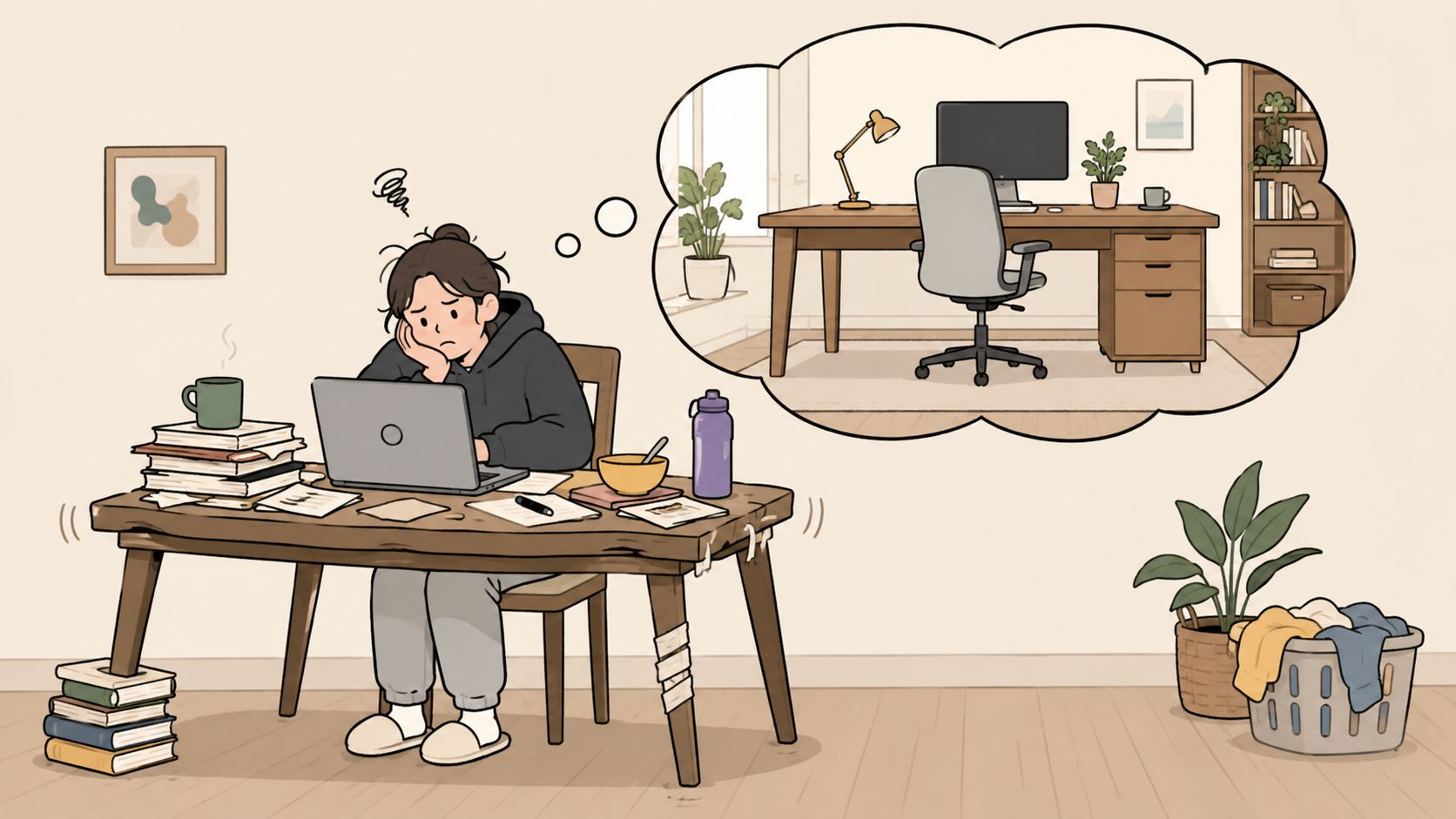
The temporary home office has a recognizable look. The chair is borrowed from another room. Storage is improvised. Cables stay visible because the desk was never designed to manage them. The surface gets crowded fast, and by the end of the day the whole setup feels like it was assembled in a hurry because, in many homes, it was.
Why the desk changed meaning
That shift didn't happen in isolation. The remote-work surge after 2020 changed what people expected from a workspace at home. 27% of U.S. consumers prioritized a desk for their home office, and desks saw 62.8% sales growth during the pandemic, according to Loctek Motion's summary of home office ergonomics statistics. A desk became a household essential, not a niche purchase.
That helps explain why a search for a home office desk for sale often starts with irritation, but ends with a broader design decision. Buyers aren't just replacing a failed piece of furniture. They're correcting a room that never fully caught up with how the home is used.
A good desk changes the way a room works. A great desk changes the way the room feels at 8 a.m. and at 8 p.m.
The strongest upgrade usually isn't a more technical-looking workstation. It's a desk with enough visual authority to belong in the home even when the laptop is closed. That's why many homeowners gravitate toward forms that read more like furniture than office gear, including modern farmhouse desks designed for everyday use.
What a permanent desk does differently
A permanent desk earns its place in three ways:
- It settles the room visually. The office stops looking borrowed from another phase of life.
- It supports daily work without apology. There is space for a monitor, keyboard, writing tasks, and storage without crowding.
- It ages with dignity. Years later, it still feels intentional rather than outdated.
That last point matters most. Disposable pieces rarely fail all at once. They disappoint gradually. The finish wears unevenly. The top loses its crispness. Hardware feels loose. The whole desk starts asking to be replaced long before the homeowner is ready to think about furniture again.
A serious desk should do the opposite. It should become more integrated into the home over time, the way a well-made dining table or a properly built bed does. Once that standard is clear, the buying process gets simpler.
The Solid Hardwood Standard
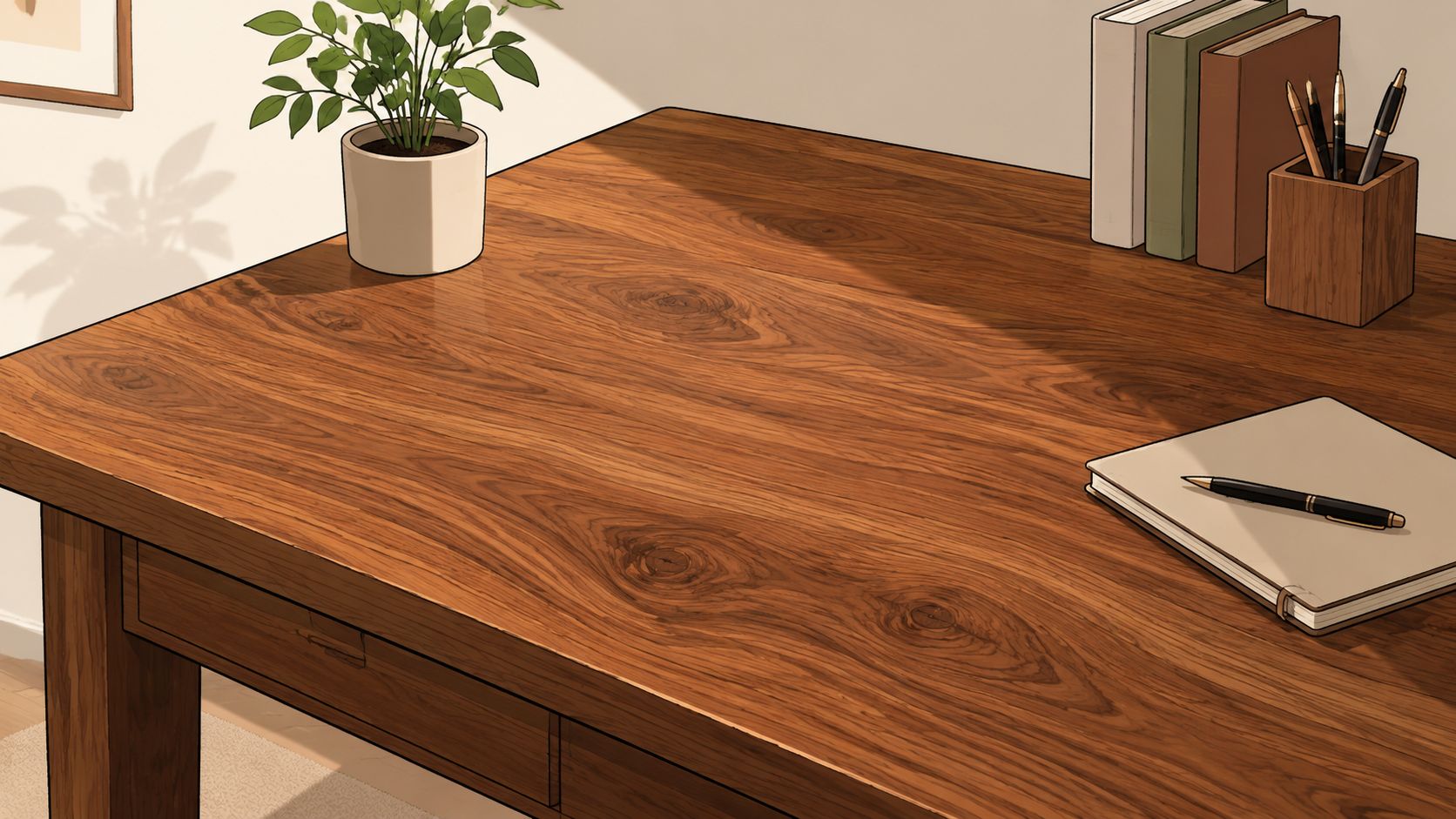
The first difference in a solid hardwood desk is physical. It has weight. The top doesn't sound hollow when a notebook lands on it. The edges feel substantial in the hand. Grain isn't a printed effect or a thin surface treatment. It has depth, variation, and the kind of quiet irregularity that signals real material.
What buyers feel immediately
Solid cherry brings warmth and a refined glow. Oak has presence and visible grain that suits both classic and cleaner-lined interiors. Maple reads tighter and more refined. Walnut introduces depth and richness that can make a home office feel more like a private library than a utility room.
Those species don't just look different. They wear differently, too. A bench-made solid wood desk can absorb years of use with more grace because the material has integrity all the way through.
Practical rule: If a desk is meant for daily work, the material should improve with age, not merely survive it.
That matters when equipment gets heavier and work becomes more complex. Published desk specifications can reach 120 kg (265 lb), and Boulies' desk dimensions guide notes that this level of capacity matters for monitor-heavy setups. The more important long-term takeaway is qualitative: solid wood can be repaired, refinished, and kept in service for decades rather than treated as a short-cycle purchase.
For buyers comparing options, solid wood home office furniture makes sense not because it's trendy, but because it aligns with how investment homeowners already think about flooring, millwork, and cabinetry.
Total cost matters more than sticker price
Short-term price tags can distort the decision. The better question is what the desk will cost over the years it stays in the home.
| Consideration | Solid hardwood desk | Disposable desk mindset |
|---|---|---|
| Surface wear | Can age attractively and often be renewed | Usually shows wear as decline, not patina |
| Structural life | Built for repeated daily use | Often chosen around immediate need |
| Repairability | Scratches and finish issues are often addressable | Damage usually pushes replacement |
| Visual value | Feels integrated with the home | Often reads as temporary equipment |
That same logic appears elsewhere in the house. Homeowners weighing durable finishes often look beyond the initial invoice and consider resale, longevity, and visual quality. The same thinking shows up in this guide to home resale ROI with flooring, and it applies just as well to furniture that anchors a room.
A home office desk for sale shouldn't be judged only by dimensions and color. It should be judged by whether it deserves to stay in the home for the long haul. Solid hardwood gives the clearest yes.
Finding the Perfect Fit for Your Space and Workstyle
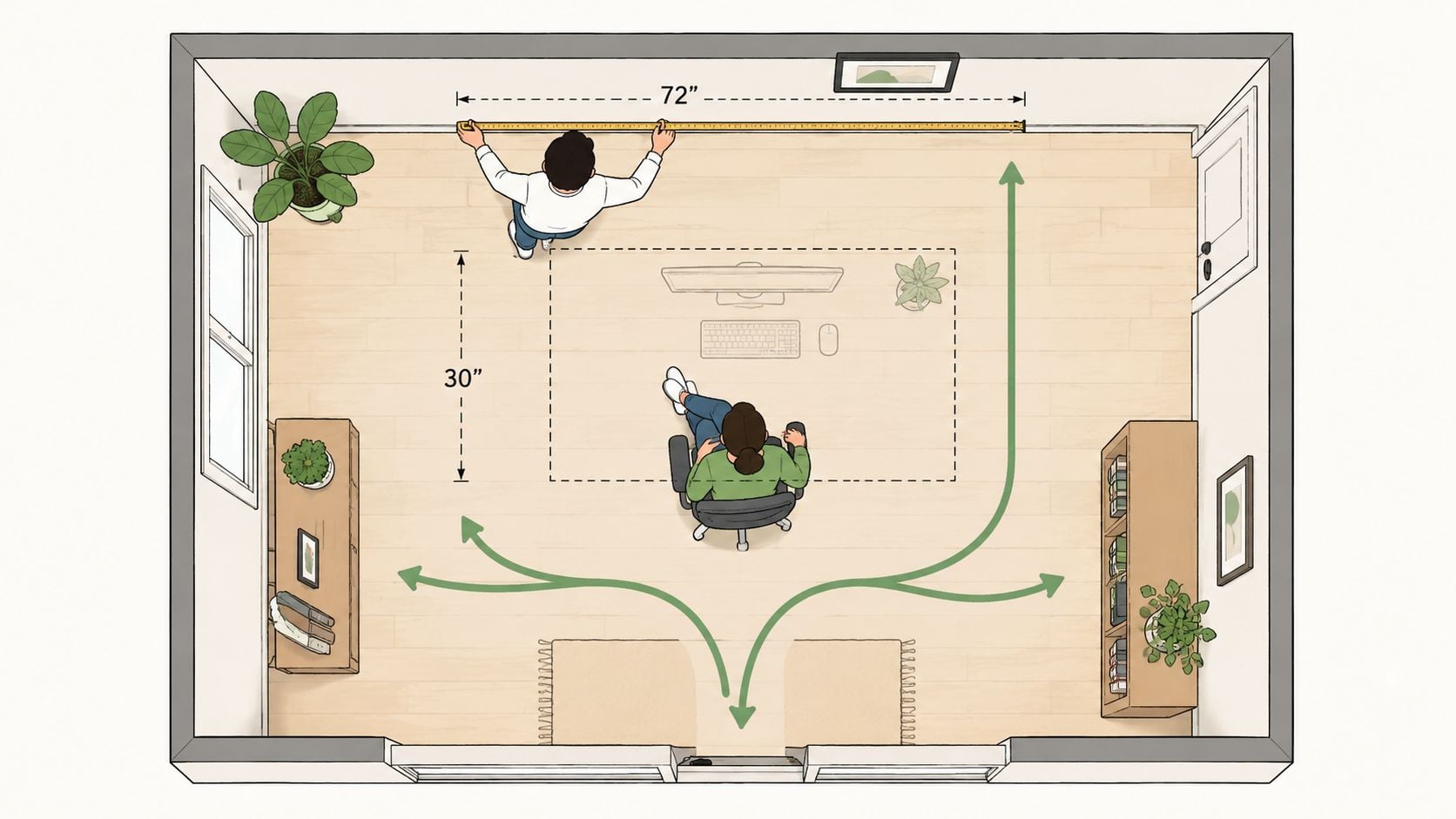
A beautiful desk can still be the wrong desk if the proportions don't fit the room or the routine. Most buying mistakes happen before style enters the conversation. They happen at the tape-measure stage, when a buyer checks whether a desk can physically fit, but doesn't check whether it will function well once the chair, monitor, lamp, and daily traffic are part of the picture.
Start with the room, not the product photo
Measure the wall. Then measure the usable room around the desk. Door swing, window trim, heating vents, nearby casegoods, and the path behind the chair all affect whether the office feels composed or cramped.
Three planning questions help immediately:
- Will the chair clear comfortably? A desk that fits tightly against the room's dimensions may still fail once a seated user needs space to move back.
- What does the desk face? Looking into a blank wall can work. Looking straight into circulation often doesn't.
- What else must live nearby? Printers, files, task lighting, and guest seating change the footprint of the office.
A desk should also match the way work happens. Someone using only a laptop can tolerate a smaller footprint. Someone working between keyboard, monitor, legal pad, and reference materials needs a deeper, broader surface that doesn't force constant shuffling.
The measurements that affect comfort
Depth matters more than many listings admit. For standard computer use, a depth of 24 to 30 inches is the practical range, and deeper surfaces become more comfortable when multiple monitors or larger work zones are involved. Office Furniture Plus explains why desk depth is central to usability. The monitor needs to sit far enough back to preserve visual comfort while leaving room for keyboard placement and forearm support.
A few benchmarks help sort compact desks from true work desks:
- Compact laptop use can work at around 36 x 24 inches.
- Mixed computer and writing tasks typically work better closer to 60 x 30 inches.
- Standard desk height usually falls around 28 to 30 inches.
- Adjustable sit-stand desks commonly span roughly 28 to 46 inches, with some specs expressed as 61.5 to 127 cm.
The seated fit still comes down to posture. Elbows should stay near 90 degrees with forearms roughly parallel to the floor. If the desk is too high, shoulders creep upward. If it's too low, the user collapses forward.
The desk isn't comfortable because it looks spacious. It's comfortable when the body can stay neutral without constant adjustment.
For buyers sorting through layouts, home office furniture guidance based on room use and scale can help narrow the shape before the finish is chosen. That sequence matters. Proportion first. Material and detailing second. Buyers who reverse that order usually end up compromising on comfort.
The Art of Customization at Vinson Fine Furniture
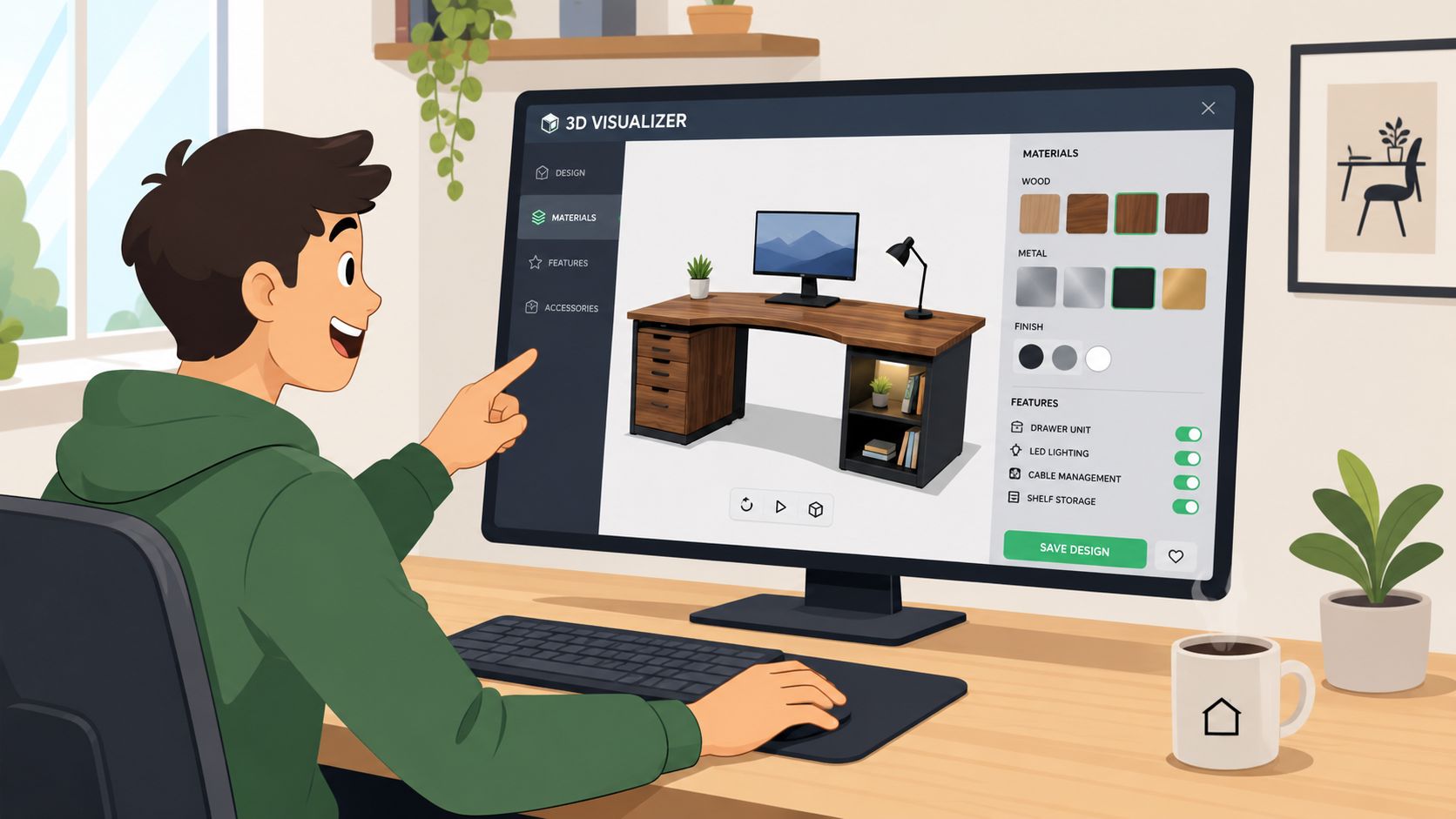
The mass market is full of desks that ask buyers to adapt their home to the product. Custom ordering flips that logic. The room, the workflow, and the material preferences come first. The desk follows.
That approach has become more relevant as the category keeps expanding. Mordor Intelligence estimates the home office furniture market at USD 41.21 billion in 2026, up from USD 38.40 billion in 2025, and projects it to reach USD 58.63 billion by 2031 at a 7.31% CAGR. The same report notes that desks and tables accounted for 33.74% of revenue in 2025 and the online channel captured 41.88% of market share in 2025, as shown in Mordor Intelligence's home office furniture market report. Large markets tend to produce large volumes of sameness. Customization is the clearest way out of that pattern.
A desk should match the room and the routine
Customization isn't only about style. It solves practical mismatches that ready-made furniture often leaves unresolved.
Consider the variables a discerning buyer may want to control:
- Wood species such as solid cherry, oak, maple, or walnut.
- Finish character ranging from lighter and casual to deeper and more formal.
- Scale that respects the architecture of the room instead of overpowering it.
- Storage layout that supports paperwork, technology, or a cleaner writing-desk profile.
Buyers who want a clearer framework for the difference between made-to-order and one-size-fits-all pieces may find this explanation of true bespoke furniture useful. It helps separate decorative customization from genuine specification.
Where custom ordering pays off
The strongest custom process is collaborative, not overwhelming. A homeowner might begin with a broad idea such as “something in solid maple with a quieter profile than an executive desk.” From there, dimensions, finish, storage, and surrounding pieces can be resolved with more precision.
That is where Vinson Fine Furniture becomes relevant as one practical option. Its custom-made office furniture program includes a Custom Order Program, complimentary design consultations, and in-store design support with 3D visualizers. Those tools matter because they help buyers see proportion and finish before committing. They also connect the desk decision to broader room planning through brands such as Canadel, Mavin, and Smith Brothers of Berne.
Customization works best when it removes compromise, not when it adds decoration for its own sake.
For an investment homeowner, that distinction is everything. A custom desk isn't valuable because no one else has the exact same piece. It's valuable because the dimensions, wood, finish, and function are aligned from the start.
Completing Your Home Office with Style and Comfort
A desk should anchor the room, but it shouldn't carry the entire burden of comfort or character by itself. The office feels complete when the seating, lighting, and supporting pieces hold the same standard of material and presence.
The desk is the anchor, not the whole room
The quickest way to undermine a fine desk is to surround it with pieces that feel temporary. A home office deserves the same coherence as a dining room or bedroom. That often means pairing the desk with a substantial chair, a case piece with real visual weight, and lighting that supports focus without flattening the room.
A strong composition often includes:
- An upholstered work chair in top-grain leather or another refined covering that looks appropriate in a living space.
- Occasional seating such as a swivel chair, rocker, or glider when the office doubles as a reading room.
- Storage with presence so books, files, and accessories don't force clutter onto the desktop.
Comfort should look as refined as the desk
Comfort isn't separate from aesthetics. In a well-resolved office, the chair invites long use and still looks dignified from across the room. That's where bench-made seating earns attention. Smith Brothers furniture at Easton often appeals to buyers who want precisely crafted silhouettes, premium leathers, and motion options that don't advertise themselves visually.
Lighting deserves the same care. Many home offices rely on lamps rather than overhead fixtures, especially in multipurpose rooms. This practical guide to lighting a room with no overhead lighting offers useful ways to layer light so the office feels warm and usable instead of overly task-driven.
For buyers weighing the chair side of the equation, guidance on choosing a writing desk chair can help align posture, movement, and visual style. The ideal office doesn't feel assembled from categories. It feels furnished.
Your Invitation to the Easton Town Center Design Studio
The final step in buying a home office desk for sale shouldn't happen from a product grid alone. It should happen in person, where scale, finish, seat comfort, drawer action, and wood character can be judged.
What an in-person visit solves
A showroom visit answers questions that photos rarely can:
- How does the wood read in light? Cherry, oak, maple, and walnut shift noticeably depending on finish and surrounding materials.
- Does the desk feel substantial? Weight, joinery, and edge treatment are physical experiences.
- Will the chair support daily use? Seating needs a sit-test, especially when swivel, rocker, glider, or power motion enters the decision.
- Can the whole room be planned together? A desk often leads to decisions about shelving, upholstery, leather, and lighting.
That in-person process matters even more for buyers furnishing beyond the office. Homeowners looking at solid wood furniture Ohio, Amish-made dining sets, Custom leather sectionals Columbus, Smith Brothers furniture Easton, or Mavin bedroom furniture usually want one thing above all else. Confidence that the pieces share a standard of quality and will live together well.
Why the showroom still matters
The Easton Town Center setting makes that easier because the shopping trip can be treated like a design appointment rather than a rushed errand. Buyers can review finish options, compare silhouettes, and use complimentary design consultations to resolve layout questions before ordering. The In-Store Design Studio is especially useful for those balancing a home office with nearby living or guest spaces.
The practical value proposition matters, too. A Low Price Guarantee with a 110% refund of the difference if a lower local authorized-dealer price is found within 30 days, plus a Clearance Gallery with savings up to 70%, gives buyers a route to value without dropping standards. White-Glove Delivery also matters for large hardwood pieces because proper placement and setup are part of protecting the investment.
A well-made desk shouldn't arrive as another experiment. It should arrive as the piece that ends the search.
For homeowners ready to replace a temporary setup with a lasting piece, Vinson Fine Furniture offers a practical next step at Easton Town Center. A showroom visit allows buyers to feel solid hardwood in person, compare top-grain leather seating, use complimentary design consultations, explore custom options through the Design Studio, and review immediate value in the Clearance Gallery before making a decision that should last for years.