Shop Modern Farmhouse Desks at Vinson Fine Furniture

A lot of homeowners start in the same place. They’re working from a spare bedroom, a dining room corner, or a loft landing, and the desk they bought in a hurry no longer fits the way they live. It may be too office-like, too flimsy, or out of step with the rest of the home.
That’s where modern farmhouse desks make sense. They soften a workspace without making it feel decorative for decoration’s sake. You still get a practical surface for a laptop, files, and screens, but the room feels grounded by wood tone, texture, and a shape that belongs in a home instead of a cubicle row.
For an investment-minded homeowner in Columbus, that distinction matters. A desk isn’t just a task piece. It’s something you see every day, touch every day, and ask a lot from over the years. When the proportions are right and the materials are chosen well, it can carry a room for a long time.
Welcome to the Modern Farmhouse Home Office
A familiar scenario plays out every week. A homeowner wants a proper office, but every desk they’ve seen falls into one of two camps. One looks cold and corporate. The other looks overly rustic, as if it belongs in a themed cabin instead of a refined home.
Modern farmhouse sits comfortably in the middle. It keeps the warmth of natural wood and the ease of lived-in texture, but it edits out the heaviness. The result is a workspace that feels settled, clean, and welcoming enough to use all day.

Many people are drawn to this look because they want their office to feel like part of the house, not an afterthought. If your home has warm floors, painted trim, mixed metals, or layered textiles, a sleek glass desk can look disconnected. A modern farmhouse desk tends to bridge those elements more naturally.
That’s especially true when the room has to do several jobs. A guest room office, a study nook off the kitchen, or a second-floor landing all benefit from furniture that feels residential first and functional second. That’s one reason so many homeowners lean toward desks with wood grain, quieter finishes, and storage that doesn’t scream office equipment.
Why this style feels easier to live with
The appeal isn’t only visual. This style usually supports the way people work at home:
- A calmer presence helps the office blend with nearby living spaces.
- Visible texture adds character without needing lots of accessories.
- Straightforward silhouettes make the room feel organized, even on busy days.
- Practical storage keeps work tools close without turning the desk into a filing station.
A good home office should help you focus during work hours and disappear gracefully into the background after them.
If you’re refining a workspace and want inspiration that feels livable, ideas for creating an inspiring home office can help you think beyond the desk alone and consider the whole room.
Understanding the Modern Farmhouse Desk
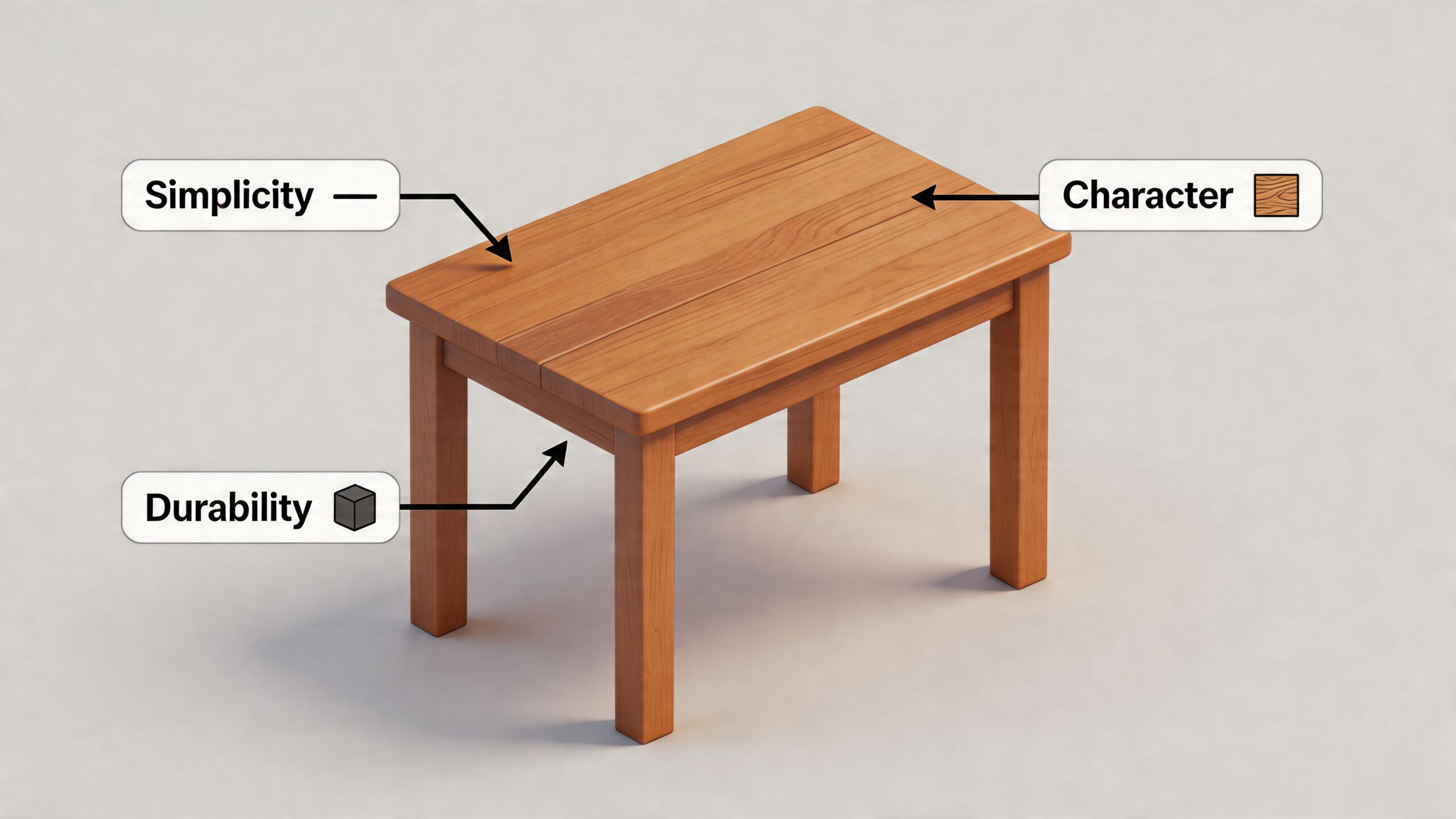
The phrase gets used loosely, so it helps to define it clearly. A modern farmhouse desk isn’t just any wood desk with a rustic finish. It combines two design instincts that can seem opposite at first glance: simplicity and character.
The style emerged prominently in the mid-2010s, popularized by TV shows like Fixer Upper. Its appeal grew with remote work. By 2020, Google searches for “farmhouse desk” surged over 150% year over year as 42% of Americans set up home offices, looking for furniture that mixed clean lines with sturdy, rustic character, according to Pew Research’s reporting on work changes during the pandemic.
What makes it modern
The modern side shows up in restraint. The lines are cleaner than traditional country furniture. You’ll usually see uncomplicated tops, straightforward drawer fronts, and a balanced shape that doesn’t overpower the room.
Color matters too. Instead of highly saturated stains or ornate painted details, modern farmhouse desks often lean into:
- Soft wood tones
- Weathered grays
- Muted black accents
- Warm whites
- Natural finishes that let grain stay visible
These choices keep the desk easy to pair with different homes, whether yours leans classic, transitional, or more contemporary.
What makes it farmhouse
The farmhouse side brings warmth and substance. That can come from a thicker top, a gently distressed finish, visible grain, planked texture, or sturdy legs that feel grounded. Hardware tends to be simple and useful rather than decorative.
People sometimes confuse modern farmhouse with purely rustic style. They’re not the same.
| Style | Visual feel | Typical effect in a home office |
|---|---|---|
| Rustic | Rougher, heavier, more rugged | Can feel charming, but sometimes visually busy |
| Modern | Crisp, minimal, pared back | Looks clean, but can feel cold if overdone |
| Modern farmhouse | Clean lines with warmth and texture | Balanced, relaxed, and easy to integrate |
The details that signal quality
When you’re shopping, look past the label and study the combination of features. A desk usually reads as true modern farmhouse when it includes several of these traits together:
- Simple silhouette rather than carved ornament
- Natural-looking finish that highlights the surface
- Substantial proportions that feel stable
- Mixed materials such as wood with dark metal accents
- Useful storage integrated into the form
Practical rule: If a desk looks too sleek to soften a room or too distressed to work in a refined setting, it’s probably missing the balance that defines this style.
That balance is why modern farmhouse desks have staying power. They don’t ask your whole home to revolve around them. They support the architecture and let the room feel collected over time.
Selecting the Right Material for Lasting Quality
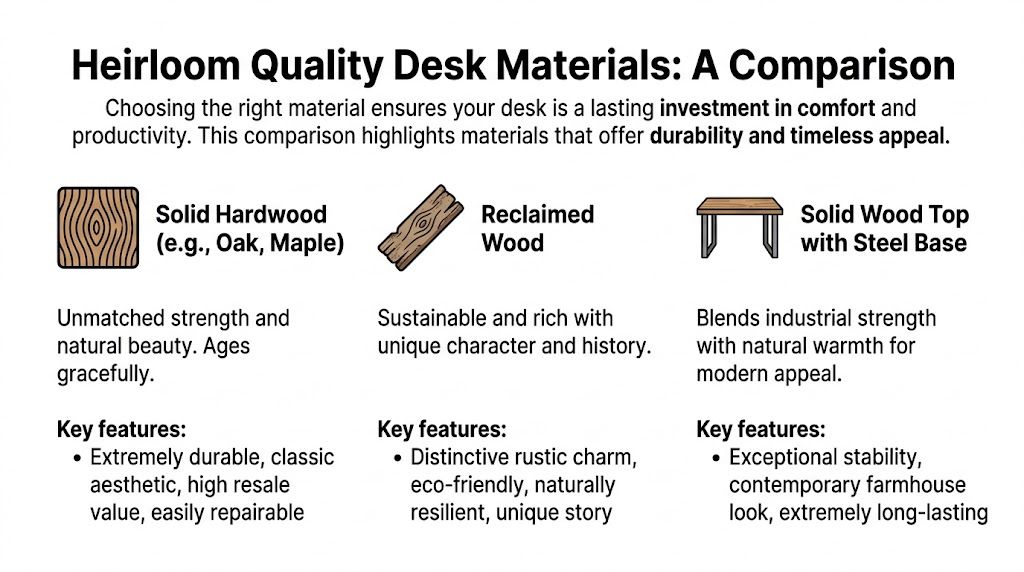
When homeowners talk about wanting an heirloom-quality desk, they’re usually talking about two things at once. They want a desk that looks better than flat-pack furniture, and they want one that won’t disappoint after a few years of daily use.
Material choice is where that decision starts. Not every handsome desk is built for the same life span, and not every engineered component is a compromise. In fact, some modern farmhouse desks use high-grade MDF and engineered wood in ways that are practical and structurally sound. Certain L-shaped models are built to support up to 600 lbs, and that dense core helps resist warping while keeping the surface flat and stable, as described on Pottery Barn’s Modern Farmhouse Executive Desk product information.
Solid wood and engineered construction aren’t enemies
Many buyers fall into a common trap, assuming “solid wood everywhere” is always the only premium choice. Sometimes it is. Sometimes a thoughtful combination performs better for the application.
A solid hardwood desk offers obvious strengths. It has authenticity, repairability, and the kind of depth that only real wood develops over time. It’s often a strong fit for buyers who want solid wood furniture Ohio homeowners traditionally keep for decades.
Engineered construction has its place too. For a wide desktop, a return, or a piece that needs a very stable work surface, a quality engineered core with a wood veneer can be smart. The surface stays flatter, and the visual finish can still feel rich and substantial when the veneer is well selected.
How to judge value beyond the label
The better question isn’t “solid wood or engineered wood?” It’s “how was this desk built, and where will it live?”
Look for these signals:
- Joinery and assembly quality matter more than marketing language. A desk that feels rigid and planted will usually age better than one that racks or shifts.
- Finish quality affects daily satisfaction. Hand-applied or thoughtfully layered finishes tend to show depth and wear more gracefully.
- Edge treatment and thickness tell you a lot. Thin, hollow-feeling tops often look tired sooner.
- Drawer action is one of the quickest tests in a showroom. Smooth extension and clean alignment usually indicate better construction standards.
If you run your hand across the top and it feels flat, substantial, and calm under pressure, that’s not a small detail. It changes the way the desk works every single day.
Modern Farmhouse Desk Material Comparison
| Material | Key Characteristics | Best For |
|---|---|---|
| Solid hardwood | Natural grain variation, repairable surface, strong long-term character | Buyers who want a traditional heirloom feel and don’t mind natural movement in wood |
| Reclaimed wood | Distinct texture, aged patina, visible history | Homes that lean more rustic and owners who value one-of-a-kind character |
| Engineered wood with wood veneer | Stable surface, consistent performance, clean finish possibilities | Larger desks, L-shapes, and homeowners who want scale with dependable flatness |
| Solid wood top with steel base | Strong structure, mixed-material appeal, modern edge | Offices that want farmhouse warmth with a sharper silhouette |
Match the material to the room
A desk in a bright bonus room behaves differently from one in a darker den or a narrow second bedroom. Material should suit both the space and the homeowner.
For example:
- A lighter oak or maple look can open up a compact office.
- A deeper, more distressed finish can anchor a larger room with tall ceilings.
- A stable engineered L-desk may be the wiser choice for a heavy monitor setup.
- A solid-wood writing desk often suits a simpler workflow and a more furniture-like presentation.
If you want a deeper look at species, grain, and long-term wear, this guide to choosing the right hardwood for longevity and style is a helpful companion.
For homeowners who value handcrafted pieces and Amish-made furniture, this is often the turning point. Once you understand the material logic, you stop shopping only by style and start shopping by life span.
Matching Desk Size and Features to Your Workflow
The prettiest desk in the showroom can still be the wrong desk for your day. A writing surface that feels generous for a laptop user may feel cramped by noon for someone juggling files, a printer, and two screens.
That’s why the buying decision should start with how you work, not just how you want the room to look.
Start with the room, not the product tag
Measure the room first. Then measure the area the desk can realistically occupy without making the space feel blocked. People often forget to account for the chair pulling back, drawer clearance, and the walking path behind the seat.
If your office shares space with a guest bed, bookcase, or window wall, those relationships matter more than the desk’s standalone dimensions. A desk can be beautiful and still create friction if it crowds a doorway or cuts into natural light.
For practical measuring help before you shop in person, this furniture measuring guide walks through the basics homeowners often miss.
Think in work zones
Instead of asking, “Do I need a large desk?” ask, “What needs to happen on the surface at the same time?”
One homeowner may need only a laptop, a notebook, and a table lamp. Another may need a keyboard tray area, charging zone, files, and space to spread out printed plans. Those are completely different desks.
A useful way to sort it out is to identify your primary desk type:
Writing desk
Best for paper-light work and rooms where the desk should read more like furniture.Single-pedestal or drawer desk
Good for daily utility when you want storage but don’t want visual bulk.L-shaped desk
Ideal when you need separate zones for computer work and active paperwork.
The category growth reflects that shift toward more demanding home setups. In modern farmhouse design, 70% of models include at least one drawer, and sales of L-shaped desks grew 40% from 2022 to 2025 to support the 62% of remote workers who use dual monitors for hybrid work, according to Upwork’s Future Workforce reporting.
Features that change daily use
Storage and access details matter more than people expect. A center pencil drawer can keep the top clear. Deeper side drawers help contain office supplies that otherwise migrate into piles.
Use this quick filter when evaluating features:
- If you hate visual clutter, prioritize drawers and closed storage.
- If you spread out documents, choose a broader uninterrupted top.
- If you use multiple screens, consider an L-shape or a wide executive profile.
- If the room is compact, keep leg placement and drawer swing in mind so the desk doesn’t feel heavier than the space can handle.
The right desk should support your habits as they are, not the habits you hope you’ll suddenly develop after delivery.
A sit-test helps too. The desk height, the drawer placement, and even how your knees fit beneath the apron all become clear in person. That’s often the moment a homeowner realizes which option will still feel right after long workdays, tax season, or late-night household admin.
Styling Your Desk and Home Office
A modern farmhouse desk does a lot of visual work on its own, but the room around it determines whether the office feels settled or unfinished. The styling shouldn’t compete with the desk. It should support it.
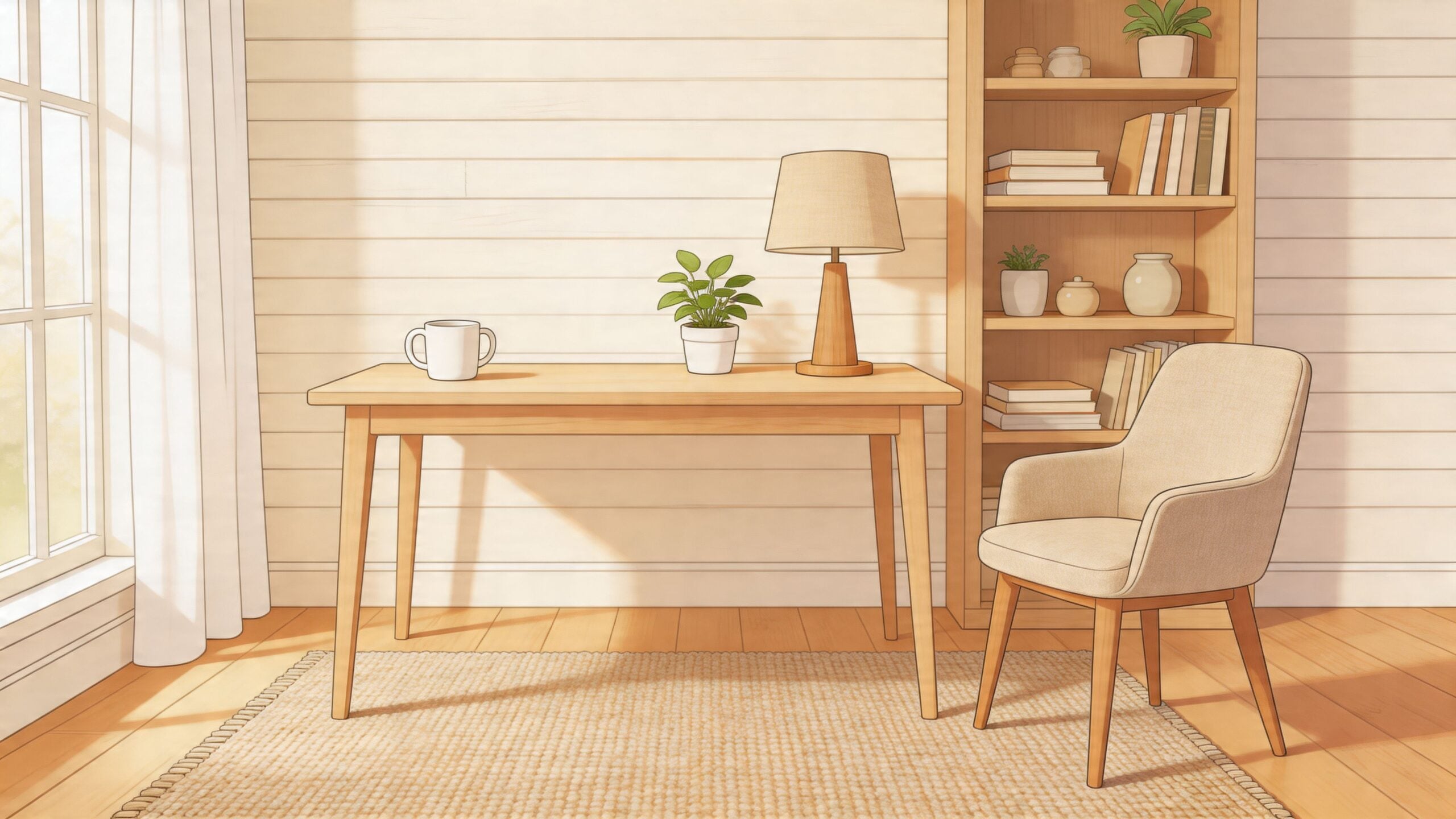
Three ways the same desk style can live differently
One homeowner chooses a pale wood desk with a simple drawer and keeps the rest of the room spare. The chair has a clean profile. A ceramic lamp, a small tray, and one framed print are enough. In that setting, the modern side of the desk leads the conversation.
Another homeowner uses a desk with a slightly weathered finish and layers in texture. A woven rug softens the floor. Linen drapery filters the light. A basket holds extra cords and notebooks. The office feels gentler, more collected, and very much part of the home.
A third homeowner needs a serious work zone but doesn’t want the room to look technical. The desk is wider, the monitor setup is intentional, and accessories stay disciplined. Black hardware on the desk can echo the monitor arms or lamp base, so the practical pieces feel integrated rather than improvised.
Keep the supporting pieces honest
Modern farmhouse styling works best when each layer earns its place. That means choosing a few pieces with purpose instead of many small decorations.
Try this balance:
- Chair with comfort first, then shape and finish to echo the desk
- Lighting that gives task support without looking harsh
- Storage accessories like trays, boxes, or baskets that hide small clutter
- Textiles that soften acoustics and add warmth
- Greenery for life and color without visual noise
What often goes wrong
The most common mistake is over-theming. Too many signs, distressed accessories, or novelty farmhouse details can make the room feel dated very quickly.
The better approach is quieter. Let the desk carry the style, then reinforce it with texture and proportion.
A well-styled home office should feel edited. You notice the materials first, not the accessories.
If you’re styling shelves near the desk, these ideas for decorating shelves in any room can help you keep the office cohesive without adding clutter.
Design guidance offers significant value. A homeowner may know they like the modern farmhouse look but struggle with the last ten percent of the room. That final layer often comes down to scale, finish coordination, and knowing when to stop.
Creating Your Custom Modern Farmhouse Desk
An off-the-floor desk can work beautifully when the room is straightforward and your needs are standard. But many Columbus homes aren’t standard. Older houses have alcoves, radiators, angled ceilings, and trim details that complicate sizing. Newer homes often ask one room to do several jobs at once.
That’s why customization isn’t indulgent. It’s often the most practical path to long-term satisfaction.
Custom sizing solves real problems
A desk that’s a little too deep can crowd a narrow office. A desk that’s a little too shallow can leave your monitor too close and your paperwork stacked awkwardly. A finish that’s almost right can bother you every time you walk into the room.
Custom ordering lets you correct those almosts.
You can tailor a desk around the room’s actual constraints:
- Adjust width so the desk fills the wall without swallowing it
- Refine depth for comfortable chair movement
- Choose storage placement based on whether the desk faces a wall or floats in the room
- Coordinate finish with flooring, cabinetry, or nearby casegoods
- Select hardware and leg style so the desk feels native to the house
Functional details are where custom work earns its keep
Customization also affects how the desk performs. That matters just as much as appearance.
For example, full-extension drawers improve access, and heavy block splayed legs with anti-tip mechanisms can increase safety by 40% compared with vertical legs, according to BIFMA standards information referenced in the provided data. Those are practical details, not cosmetic upgrades.
A well-designed custom desk can answer very specific daily needs:
- A shallow center drawer for pens and charging cables
- A file drawer where your dominant hand naturally reaches
- A return on the correct side for your room layout
- A leg shape that feels substantial without blocking movement
- A finish that hides everyday wear more gracefully
Small specification choices often make the difference between “I like this desk” and “this desk fits the way I live.”
The process should remove guesswork
The strongest custom programs help homeowners see decisions before they commit. That’s especially valuable when you’re trying to balance desk size, finish tone, and storage.
One available route is getting started with custom order, where homeowners can work through dimensions, finishes, configurations, and visual planning tools before a piece is built. A program like this is useful when an off-the-shelf desk gets close, but not close enough.
For buyers who care about long-term value, custom work also reduces the chance of replacement. You’re less likely to outgrow a desk that was chosen around your room and your workflow from the beginning.
When custom is the wiser investment
Customization tends to make the most sense in a few situations:
| Situation | Why custom helps |
|---|---|
| Tight or unusual room layout | Standard desk sizes may waste space or create clearance problems |
| Matching existing wood tones | Finish options help the desk feel integrated |
| Dual-use office and guest room | You can fine-tune scale and storage to keep the room flexible |
| Long-term renovation planning | A tailored piece is easier to keep through future updates |
That logic is simple. If a desk is meant to stay, it should fit in more than a rough, approximate way.
The Vinson Furniture Advantage in Columbus
Furniture buying gets easier when the product and the process are both considered carefully. That matters with a desk because this purchase tends to sit in a middle category. It’s practical, but it also affects the look and rhythm of the home every day.
For many homeowners, the showroom experience is where the decision finally becomes clear. You can compare finishes in real light, test drawer action, and see whether a desk feels substantial or merely styled to appear that way. That kind of evaluation is hard to replicate online, especially for buyers searching for a furniture store Columbus Ohio homeowners visit when they want more than a quick transaction.
Value means more than the sticker
A desk has value when it lasts, fits the room, and continues to look appropriate as the home evolves. Sometimes that means custom ordering. Sometimes it means spotting a strong floor sample or discontinued finish that delivers quality at a better price.
For shoppers who watch value carefully, the Vinson Fine Furniture Clearance Gallery includes premium, heirloom-quality styles with savings of up to 70% off. That can be a smart route for homeowners who want substance without waiting on a custom timeline.
The buying experience matters too
A thoughtful purchase experience usually includes more than product selection. It helps when the store can support planning, budgeting, and delivery without leaving the homeowner to coordinate the details alone.
That tends to matter most in four areas:
- Design guidance helps translate ideas into real dimensions, finishes, and pairings.
- Customization tools such as visualizers make it easier to commit with confidence.
- Flexible financing can make a larger, longer-term purchase manageable.
- White-glove delivery protects the investment at the final step, especially for heavier desks that need careful placement and assembly.
Why the showroom visit still matters
For an investment piece, in-person evaluation is still the most reliable filter. You can tell whether the scale is right, whether the finish has depth, and whether the desk belongs in your house instead of merely matching a search term.
That’s especially useful if you’re already furnishing beyond the office. Homeowners who care about continuity often want their workspace to relate to other rooms, whether that means borrowing cues from custom dining sets, coordinating with solid wood furniture Ohio craftsmanship, or planning larger whole-home updates. Some buyers even combine a furniture visit with mattress shopping, since Easton is also a destination for people researching the best mattresses Easton Town Center shoppers compare in person.
The right desk purchase doesn’t end when you choose a style. It ends when the piece is placed, assembled, and feels right in the room.
If you’re ready to refine your home office, Vinson Fine Furniture offers a place to compare materials, explore custom options through the Design Studio, review Clearance Gallery opportunities, and arrange white-glove in-home delivery. For homeowners around Easton and greater Columbus, it’s a practical next stop when “close enough” no longer feels like the right standard.