Custom Bedroom Furniture: A Buyer’s Guide to Lasting Quality


The bedroom usually becomes the holding zone for compromise. A bed that was “good enough” in the last house. Nightstands that never matched. A dresser that fit the budget but not the wall. After a few years, the room looks finished on paper and unsettled in person.
That's the moment many Columbus homeowners reach before they start looking at custom bedroom furniture seriously. They're not chasing novelty. They're tired of replacing disposable pieces that never fit the architecture, never feel substantial in the hand, and never make the room feel calm.
A bedroom should work like a sanctuary, not a storage problem with lamps. Good proportions, quiet drawer movement, the weight of solid wood, and a finish that gets richer with age all change how the room is used every day. Even small upgrades in layout and material choice can support rest, and thoughtful expert sleep environment advice helps reinforce that idea from the bedding side of the room as well.
For homeowners furnishing a primary suite, refining a guest room, or finishing a new build in Columbus, the shift is simple. Stop shopping for placeholders. Start commissioning pieces that belong to the home and to the people living in it.
Table of Contents
- From Disposable Pieces to a Personal Sanctuary
- What Truly Defines Custom Bedroom Furniture
- The Custom Design Journey from Vision to Reality
- Choosing Your Materials The Language of Heirloom Quality
- Budgeting for a Lifetime Understanding Costs and Value
- Caring for Your Investment and the Local Advantage
From Disposable Pieces to a Personal Sanctuary
The difference between a furnished bedroom and a settled bedroom is easy to feel. One has objects. The other has proportion, calm, and material integrity.
A typical upgrade story looks the same. A homeowner buys a bed online, adds a dresser later, then squeezes in nightstands that are either too narrow to use or too bulky to move around. Nothing fails at once. Everything disappoints slowly. The drawers feel light. The finish looks flat. The room never quite relaxes.
Custom bedroom furniture changes that pattern because it starts with the room and the homeowner's habits. It asks better questions. Does the sleeper read in bed and need reachable lighting and charging? Does the wall line force a lower headboard? Does the room need deep storage, or does it need cleaner circulation around the bed? Those answers shape a better result than any boxed set ever will.
A sanctuary should feel tailored
The right custom bedroom doesn't announce itself with ornament. It feels right the moment someone enters the room. The bed sits in the proper position. The case pieces align with the architecture. The wood reflects light with depth instead of glare.
A bedroom earns its luxury through permanence. If the piece still feels right ten years later, that's quality.
That's why investment homeowners in Columbus often move toward Amish-made craftsmanship and bench-made hardwood construction when they're ready to stop cycling through replacements. They want furniture that feels grounded, personal, and durable enough to become part of the house's story.
Easton is where the process becomes real
This kind of purchase still benefits from seeing and touching the materials in person. Easton Town Center remains one of the few places where a homeowner can compare solid cherry against solid maple, open drawers, test finishes under showroom light, and judge scale with confidence.
The emotional value matters, but the practical value matters just as much. A bedroom that fits properly gets used differently. It feels quieter. It functions better. It stops asking for corrections.
What Truly Defines Custom Bedroom Furniture
“Custom” gets used loosely in furniture. A fabric swap isn't the same thing as a custom build. A different stain on a standard dresser isn't the same thing as changing the dresser's width, drawer layout, base profile, and hardware to suit a specific room.
Customization isn't just a finish choice
True custom bedroom furniture usually includes several layers of decision-making:
- Dimensions that fit the room: Bed width, case piece height, nightstand scale, and clearance planning should reflect the actual architecture.
- Material selection: Solid cherry, oak, maple, and walnut each bring a different weight, grain pattern, and visual temperature.
- Construction details: Joinery, drawer boxes, backs, hardware quality, and finish application all affect how the piece performs over time.
- Functional adjustments: Storage beds, charging integration, mirror placement, and internal drawer organization should serve daily routines.
- Style editing: Headboard shape, footboard presence, leg profile, and hardware finish should support the home's overall design language.
That's the standard worth paying for. Anything less is usually configuration, not customization.
Solid hardwood changes the entire experience
A serious bedroom piece should feel substantial before a drawer is ever opened. Solid hardwood has a density and warmth that thin substitute materials can't imitate. It carries detail better, ages better, and can be refinished when life leaves its marks.
For buyers who want to understand what quality construction looks like up close, a close read on common wood joints in fine furniture helps separate decorative language from real craftsmanship. Terms like mortise-and-tenon and dovetail matter because they describe how the furniture holds itself together year after year.
The practical side matters too. Furniture testing standards note that dressers and chests should withstand 100–200 lb of static load per drawer for 10,000 cycles without failure according to furniture strength benchmarks from the GSA. That's the level of performance thoughtful custom work should anticipate in a high-use home.
Practical rule: If a dresser looks good but the drawer action feels light, noisy, or unstable, the beauty won't last.
Solid Hardwood vs Engineered Wood A Quality Comparison
| Attribute | Solid Hardwood (Oak, Cherry, Maple) | Engineered Wood (MDF, Particle Board) |
|---|---|---|
| Feel in the hand | Dense, weighty, warm, substantial | Lighter-feeling, flatter, less tactile depth |
| Aging over time | Develops character and patina | Tends to show wear without gaining beauty |
| Repair potential | Can often be refinished or restored | Limited restoration options |
| Joinery compatibility | Supports robust joinery and bench-made construction | More limited in long-term structural performance |
| Edge and profile detail | Crisp shaping with natural grain expression | Less natural depth and definition |
| Long-term ownership | Suited to heirloom use | Better suited to short replacement cycles |
Amish-made quality is about discipline, not trend
Amish-made bedroom furniture has enduring appeal because it's disciplined. The lines are often cleaner than people expect, the proportions are thoughtful, and the emphasis stays where it belongs. On wood selection, joinery, drawer fit, and finish integrity.
That's why solid wood furniture in Ohio continues to resonate with homeowners who care about permanence. A chest built in solid maple with proper joinery and calm design won't need to chase trends. It only needs to do its job beautifully for a very long time.
The Custom Design Journey from Vision to Reality
The process feels intimidating only when it's vague. Once the steps are clear, commissioning custom bedroom furniture becomes enjoyable.
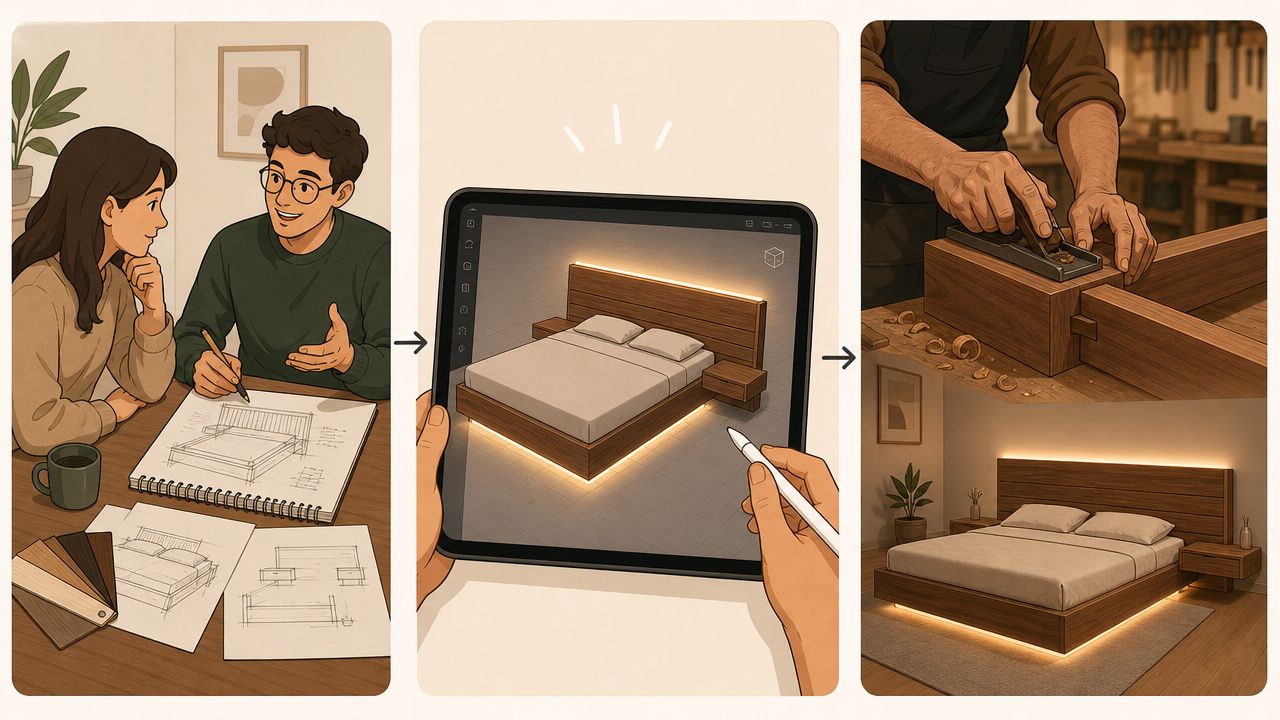
Start with the room, not the catalog
The strongest projects begin with measurements, photos, and a frank conversation about how the bedroom is used. That's where an in-store design setting earns its keep. A homeowner brings inspiration, room dimensions, finish ideas, and pain points. The designer translates all of that into choices that fit the space instead of overwhelming it.
A good consultation should cover:
- Room layout first. Bed wall, circulation paths, window placement, and sightlines.
- Storage needs second. Drawer count, case good depth, hidden storage, and bedside function.
- Material and style third. Wood species, finish tone, hardware, upholstery, and silhouette.
Homeowners who want a preview of that collaborative process can review what a custom furniture order involves, including the planning work that happens before production starts. Even outside Ohio, design firms often stress the value of early collaboration, and Henson's Designs free consultation reflects the same practical point. Early guidance prevents expensive second-guessing.
Use visual tools, then refine by touch
Custom no longer means sketching blindly and hoping for the best. By 2024–2025, between 30–40% of upscale bedroom furniture buyers in North America and Europe reported requesting at least one custom element, and that shift aligns with online configuration tools that help shoppers design bedroom sets through retailers and regional manufacturers, according to bedroom furniture market data from Grand View Research.
That matters because visualizers make choices more precise. A homeowner can test finish direction, compare hardware, and judge proportions before the piece is built. Brands such as Mavin bedroom furniture, Canadel, and Smith Brothers of Berne have made this easier through custom order programs and 3D visual tools.
The tactile step still matters more. Fabric can look elegant on a screen and feel wrong in person. A stain can seem warm digitally and turn too red under natural light. That's why the showroom visit remains indispensable.
Good custom work uses technology for clarity and the showroom for conviction.
Delivery should feel finished, not chaotic
A quality project doesn't end at the receipt. It ends when the bed is placed correctly, the drawers are checked, the hardware sits straight, and the room feels settled.
The most reliable process usually follows this sequence:
- Approved specifications: Dimensions, wood, finish, hardware, and any custom changes are confirmed in writing.
- Production lead time: Bench-made pieces take time because they aren't pulled from warehouse inventory.
- Receiving and inspection: Pieces should be checked before they ever enter the bedroom.
- White-glove setup: Placement, assembly, and packaging removal should be handled without leaving the homeowner with cleanup or guesswork.
That final step is where high-touch service changes the experience. A custom bed delivered badly still feels like a problem. A custom bed placed correctly feels like a finished room.
Choosing Your Materials The Language of Heirloom Quality
Materials determine how a bedroom feels at first touch and after ten years of use. You notice it when your hand meets the edge of a nightstand in the morning, when a drawer closes with weight instead of rattle, and when the surface of a dresser reflects Columbus winter light with warmth instead of glare.
Wood has personality before it has stain
Start with the species. Stain can shift color, but it cannot change the character of the wood under your fingertips.
Solid cherry feels quiet and cultivated. Light moves across it softly, and the color deepens over time into a richer tone that suits bedrooms meant to calm the mind for evening relaxation. In a Columbus home with older trim, plaster walls, or warmer natural light, cherry often settles in beautifully.
Oak has more presence. Its grain is clear, confident, and architectural, which makes it a strong choice for panel beds, substantial dressers, and framed mirrors. If you want the room to feel anchored, oak does that work without apology.
Maple reads cleaner and smoother. It supports simpler lines and a more restrained palette, especially in transitional or contemporary spaces. Walnut brings the opposite mood. It is darker, silkier in appearance, and naturally dramatic. Used well, it gives a bedroom depth and seriousness that painted case goods rarely achieve.
If you want a clearer sense of how species affect wear, color, and longevity, this guide to choosing the right hardwood for longevity and style is a strong starting point.
Upholstery changes the mood of the room
Bedrooms need relief from hard surfaces. A well-made upholstered bench at the foot of the bed, a reading chair by the window, or a fully upholstered headboard adds softness your body registers immediately.
The material matters as much as the silhouette. Top-grain leather feels cool, smooth, and composed. It gives a bedroom sitting area a more polished, dressed look. Performance fabrics feel gentler and more relaxed, and they make sense for clients who want comfort without treating every use like a formal occasion.
Choose upholstery with discipline. One or two soft pieces usually do more for the room than filling corners with extra seating that never earns its footprint.
What to specify without turning the process into homework
Keep the palette edited and the decisions clear:
- Choose the wood species first. It sets the emotional tone of the room more than stain ever will.
- Match the finish to the light in the space. North-facing Columbus bedrooms often benefit from woods and finishes that keep the room from feeling cold.
- Use upholstery where the body meets the furniture. Headboards, benches, and reading chairs should feel inviting on contact.
- Select hardware with restraint. Good hardware supports the form, feels solid in the hand, and never steals attention from the piece itself.
The best bedrooms do not feel busy. They feel composed.
That standard should hold across the whole room. Whether you are commissioning a bed, a dresser, or a full suite, the materials should speak the same language. The goal is not a collection of options. The goal is a room that feels grounded, personal, and satisfying to live with every day.
Budgeting for a Lifetime Understanding Costs and Value
A bedroom feels expensive or disappointing every single day. You notice it when your hand closes around a drawer pull before sunrise, when the drawer opens with weight and control instead of a rattle, and when the bed sits in the room with the calm authority of something built to belong there. That is how you should judge cost.
Custom furniture earns its price over years of use, not during a quick Saturday comparison against mass-produced pieces. Buyers keep turning toward custom for a simple reason. Replacing furniture that never fit the room, the house, or the way they live gets old fast.
What changes the price
The cost of a custom bedroom project usually comes down to four decisions.
- Wood species: Walnut, oak, and maple each carry a different price because they offer a different look, density, and character in the hand.
- Scale: Wider beds, deeper dressers, taller chests, and added storage require more material and more shop time.
- Complexity: Curves, specialized joinery, custom headboards, and unusual dimensions increase labor.
- Finish work: Stain matching, layered finishes, and hand-applied detailing add time because they should.
Start with the piece you will feel and use the most. In many Columbus homes, that is the bed or the primary dresser. If your daily irritation is poor storage, put more of the budget into drawers that glide properly, interiors sized for what you own, and casework that fits the wall without wasting space. If the room already functions well but lacks presence, invest in the bed first and let it set the tone.
Where value shows up
Long-term value comes from durability, daily comfort, and service that respects the size of the purchase.
For Columbus clients, practical buying terms matter too:
- Price protection: A low price guarantee with a 110% refund adds accountability to the quote.
- Flexible payment structure: If you prefer to spread out the investment, no-interest furniture financing options can make a solid-wood purchase easier to plan.
- Clearance opportunities: A clearance gallery with savings up to 70% can be a smart option when a floor sample or overstocked premium piece fits the room and shortens the wait.
Vinson Fine Furniture, a family-owned showroom at Easton Town Center, gives Columbus homeowners a place to sit with materials, review scale in person, and make budgeting decisions with more confidence. Its in-store design studio, custom order programs from leading furniture makers, white-glove delivery, and pricing policies help turn a large purchase into a clear process.
A well-made piece costs more at the start. A bedroom full of furniture that feels right, works hard, and still looks composed years from now is the better value.
Caring for Your Investment and the Local Advantage
The biggest mistake homeowners make after buying quality furniture is treating it like it's fragile. Solid hardwood isn't fragile. It's meant to live in a real home. It needs sensible care and better placement decisions than disposable furniture does.

Simple care keeps solid wood beautiful
Good maintenance is straightforward. Dust with a soft cloth. Keep surfaces dry. Use pads under objects that stay in one place. Don't park furniture in harsh direct sun if the room allows a better layout.
For owners who want practical upkeep guidance, this overview on how to care for wood furniture covers the habits that preserve finish clarity and surface integrity over time.
A few habits matter most:
- Respect climate swings: Bedrooms with extreme dryness or humidity can stress wood over time.
- Lift, don't drag: Moving a nightstand by its top or dragging a dresser across the floor invites damage.
- Clean spills promptly: Wood finishes are durable, not invincible.
- Rotate decorative objects occasionally: That helps surfaces age more evenly where light exposure changes through the year.
Local guidance matters most in difficult rooms
The strongest argument for shopping locally isn't sentiment. It's accuracy.
Awkward bedrooms defeat generic furniture plans all the time. Slanted ceilings, shallow alcoves, radiators, projecting trim, off-center windows, and older Columbus floor plans all require judgment. A 2024 Houzz report noted that nearly 30% of homeowners changed their design plans mid-remodel because they underestimated the headroom and clearance custom furniture would require in angled rooms, as cited in this discussion of odd-shaped bedroom planning.
That's where the showroom matters. The sit-test matters too. The homeowner can feel the weight of a drawer, judge the smoothness of a glide, compare top-grain leather against performance fabric, and decide whether a rocker, glider, swivel chair, or power reclining piece belongs in the bedroom suite at all.
Custom furniture shouldn't be chosen only by photograph. The hand knows things the screen can't tell it.
Easton Town Center gives Central Ohio homeowners a practical advantage. They can bring measurements, test materials, refine dimensions, and leave with decisions that are calmer and more exact than any purely online purchase allows.
A bedroom shouldn't be a collection of temporary fixes. It should be composed with intention, built in solid hardwood, and crafted for the way the home is lived in. Homeowners who are ready to explore custom bedroom furniture, compare wood species in person, or start with a design consultation can visit Vinson Fine Furniture at Easton Town Center, browse the Clearance Gallery, or begin with the online Design Quiz.