Elevate Your Home Office Desk Decor: Timeless Ideas

A lot of homeowners are working at a desk that was never meant to become part of the house. It may be a spare table pushed against a wall, a corner setup that gathers cords and chargers, or a surface covered in accessories that still somehow feels unfinished. The room looks busy, but it doesn't feel settled.
That's why strong home office desk decor starts earlier than generally understood. The desk isn't just the place where decor sits. It's the piece that decides whether the room feels grounded, permanent, and worthy of the hours spent there each day.
Beyond the Temporary The Case for an Inspired Workspace
A home office stopped being a temporary fix a while ago. Across the broader category, the global home office decor market is valued at $82.84 billion in 2025 and projected to reach $151.43 billion by 2032, growing at a 9.0% CAGR according to global home office decor market analysis. That kind of growth reflects a simple shift. Homeowners are no longer treating the office as leftover space.
The mistake is easy to spot. People shop for small objects first. A lamp. A tray. A framed print. A plant. Those pieces matter, but they can't rescue a desk that feels light, temporary, or visually restless. The room will still read as improvised.
A more durable approach starts with the desk as the hero piece. The scale of the top, the weight of the wood, the way the grain catches light, and the proportion of the base all shape the room before a single accessory is added. That's also why visual references help most when they show the whole mood of the workspace, not just tabletop styling. For artwork ideas that support a finished office rather than clutter it, Striped Circle home office inspiration offers useful direction.
What changes when the desk comes first
- The room feels intentional. A substantial desk gives the office a center of gravity.
- Decor gets easier to edit. Fewer accessories are needed when the furniture already has presence.
- Work feels more defined. A proper workspace creates a clearer boundary between household life and focused time.
Practical rule: If the desk looks like a placeholder, the entire office will feel like one.
A settled office usually begins with better furniture decisions, not more tabletop objects. For a deeper look at that planning mindset, creating an inspiring home office is a useful starting point.
The Foundation of Style Choosing Your Solid Wood Desk
The strongest home office desk decor begins with material honesty. A desk in solid cherry, oak, maple, or walnut carries visual weight in a way lighter construction rarely can. It looks quieter. It feels steadier. It asks less from everything placed on top of it.
That matters because the desk occupies the visual center of the room. If the top has depth, grain, and a finish that shows the character of the wood, the office already feels furnished before the accessories arrive. The decor becomes supporting cast, not a rescue plan.
Why solid hardwood changes the room
Solid hardwood does more than hold a computer. It contributes texture, permanence, and proportion.
| Material choice | What it contributes to the office |
|---|---|
| Solid maple | A lighter, cleaner look with crisp grain and a tailored profile |
| Solid oak | Honest texture, visible character, and a grounded presence |
| Solid cherry | Warm undertone and a richer, more traditional depth |
| Solid walnut | Dark elegance, fine grain movement, and executive-level polish |
For the investment homeowner, those differences aren't minor. They determine whether the office feels architectural or disposable.
The other benefit is psychological. The verified guidance on desk styling often leans toward multiple visible accessory categories, but there's a strong counterargument. As noted in this desk decor analysis, quality over quantity can support better focus, especially when the desk is anchored by one heavy, natural-material item such as a leather pad instead of several lightweight decorative pieces competing for attention.
A desk with real weight doesn't need constant visual help. It already looks finished.
What works and what doesn't
What works is restraint built on substance:
- A broad wood surface that leaves breathing room around a laptop, notebook, and task light
- A top-grain leather blotter that softens the touch points and visually anchors the work zone
- Visible grain and joinery that give the desk its own character
What doesn't work is trying to manufacture importance through clutter. Too many small objects create noise. Too many novelty accents flatten the architecture of the desk itself.
Amish-made craftsmanship is particularly evident. In a well-built solid-wood desk, the eye notices the thickness of the top, the confidence of the legs, and the quiet precision of the construction. That's why terms like Solid wood furniture Ohio and Mavin bedroom furniture often signal a broader design philosophy, not just a product category. The homeowner is choosing pieces made to belong to the house.
For a practical guide to wood selection, choosing the right hardwood for longevity and style is worth reviewing before settling on a finish.
Desk Style The Minimalist's Focus Zone
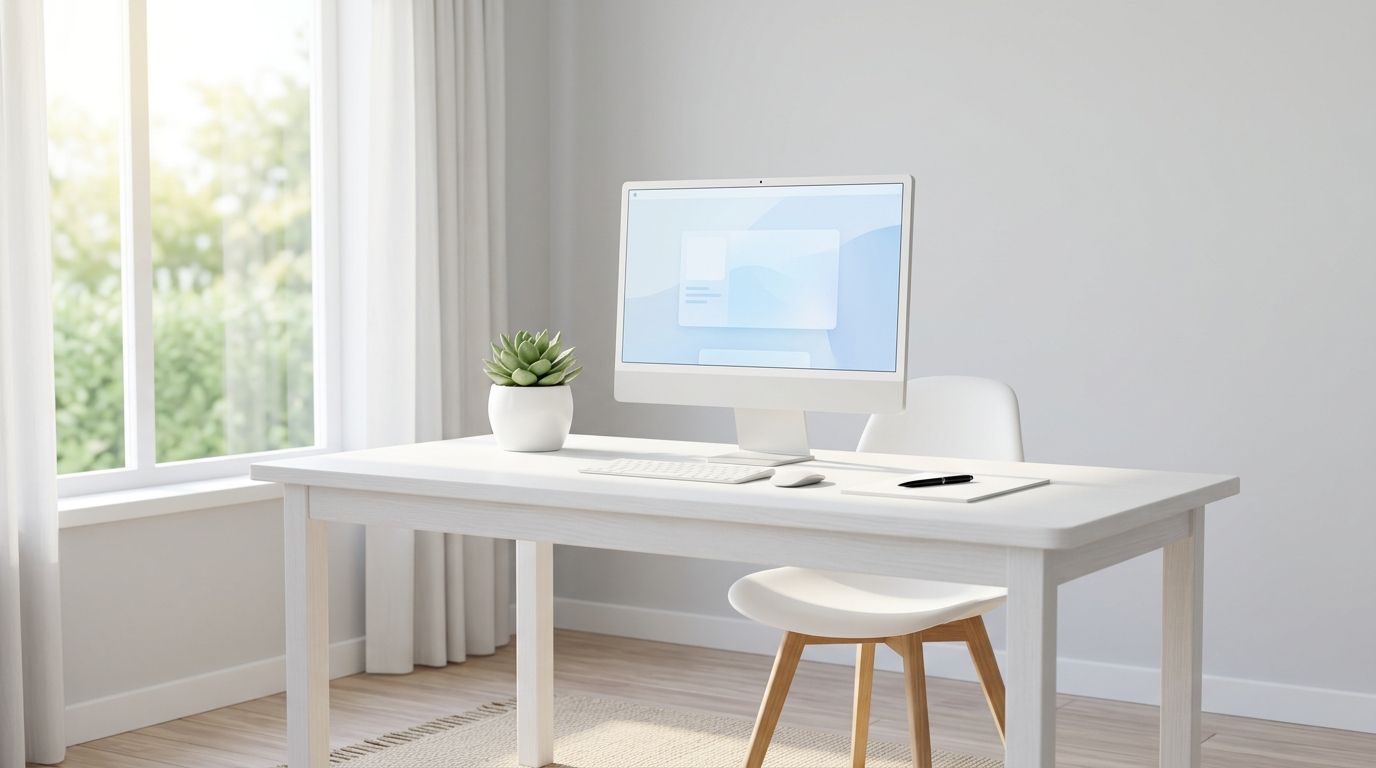
Minimalism works best when it feels composed, not sparse. In a home office, that usually means a solid maple desk with clean lines, generous open surface area, and only a few objects allowed to stay visible. The result isn't cold. It's calm.
A pared-back desk has one advantage over almost every other style. It makes distraction obvious. If an object doesn't support the day's work or strengthen the visual order of the room, it doesn't earn space on the desktop.
The edited version of minimalism
A refined minimalist setup often includes:
- One architectural lamp with a focused pool of light rather than broad glare
- A leather mouse pad or desk pad to define the primary work area
- A single pen cup in wood, ceramic, or metal
- One natural element that softens the edge of screens and hardware
The natural element matters more than many people expect. According to office design trends for 2026, biophilic design has emerged as the peak trend in home office interiors, with potted olive trees and natural wood textures supporting wellbeing and focus. The same source also notes a move toward less clutter, more elegance, which aligns perfectly with a minimalist desk.
The trade-off nobody mentions
Minimalist desks fail when homeowners confuse empty space with useful space. A beautiful desk still needs enough function to support the workday. The lamp has to illuminate paperwork without throwing harsh reflections. The plant has to be scaled so it softens the setup instead of blocking sightlines. The open area has to remain open.
The best minimalist desk doesn't look undecorated. It looks edited.
Here, a lighter hardwood shines. Solid maple has enough warmth to keep the room from feeling sterile, especially when paired with a quiet natural finish and one living element. For homeowners trying to personalize a cleaner office without losing control of the surface, mastering minimalism without feeling cluttered offers a helpful framework.
Desk Style The Rustic Heritage Workspace
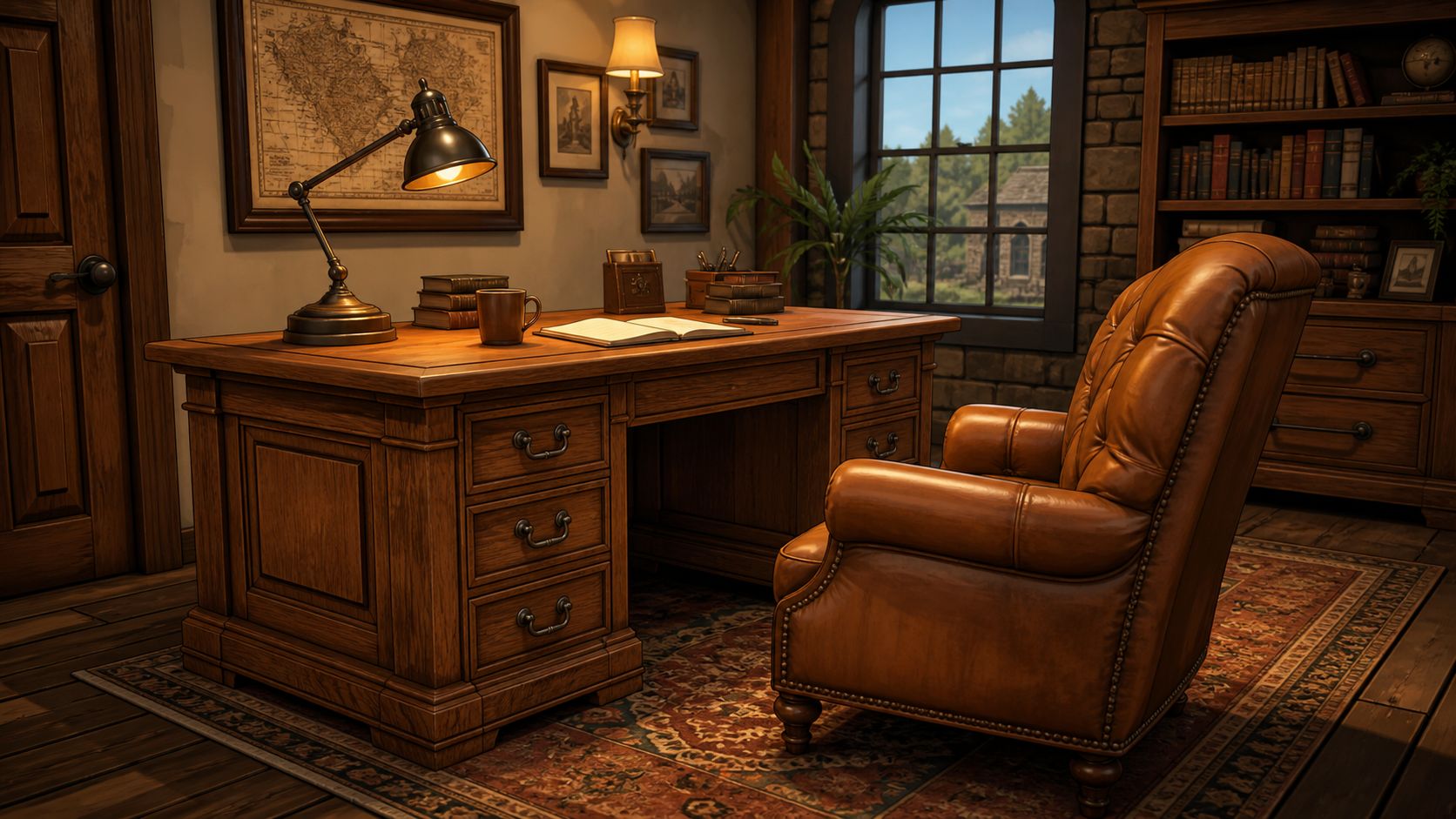
Some offices need polish. Others need depth. A rustic heritage workspace does its job by making the room feel rooted. The desk is usually larger, warmer in tone, and visibly crafted from solid oak or cherry with enough character in the grain to hold the eye even when the desktop is nearly clear.
This style works especially well in a den, library, guest room office, or any space where the homeowner wants the office to feel integrated with the rest of the house rather than carved out of it. The mood is quieter and more tactile. Aged brass, leather, woven texture, and warm wood all belong here.

What gives rustic style credibility
The desk needs real presence. In Amish-made furniture, that usually shows up in the honest proportions, the substantial top, and joinery that feels built rather than assembled for quick turnover. The same standards that make Amish-made dining sets so enduring also translate beautifully to a home office.
A convincing rustic workspace often includes:
- A solid oak or cherry desk with visible grain and a warm hand-applied finish
- A leather blotter that feels weighty rather than slick
- A lamp with aged metal or ceramic character
- Framed art or scenic depictions instead of novelty desk accessories
For homeowners collecting ideas beyond the desktop, transform your space with rustic style can help clarify how rustic elements should support the room without turning theatrical.
The common mistake
Rustic style slips quickly into theme if every object insists on looking antique. The stronger version is simpler. Let the desk provide the heritage. Let the accessories stay restrained.
That's why this style pairs so naturally with solid cherry and solid oak. Those woods already have enough visual history in them. They don't need layers of decorative storytelling piled on top.
A homeowner considering this direction should also think beyond the desk itself. Nearby storage, bookcases, and side seating should carry the same quiet integrity. A small office can still feel substantial when every piece shares the same honest material language. For that balance of warmth and restraint, mindfully rustic design ideas are worth a look.
Desk Style The Luxe Executive Suite
A luxe office doesn't come from excess. It comes from fewer pieces with better material presence. In most homes, that starts with a solid walnut desk. Walnut brings depth without visual heaviness, and its dark movement in the grain gives the room a sense of permanence that lighter surfaces can't imitate.
The chair matters just as much. A high-back seat in top-grain leather changes the feel of the office immediately. The hand reads the leather before the eye even finishes reading the room. It should feel supple, substantial, and refined, especially if the office also includes swivel or power-motion seating elsewhere in the home. That broader language of comfort matters for homeowners already shopping categories such as Custom leather sectionals Columbus or Smith Brothers furniture Easton and wanting the office to feel equally resolved.
The executive look that still works daily
The strongest version of this style keeps the desktop disciplined:
| Piece | Role in the room |
|---|---|
| Walnut desk | Establishes authority and visual richness |
| Top-grain leather chair | Adds comfort, status, and tactile softness |
| Layered lighting | Supports work tasks and shapes evening atmosphere |
| One sculptural accent | Gives personality without clutter |
There's also support for this more curated approach. 68% of remote workers report higher satisfaction and focus when their desk includes layered lighting, biophilic elements, and personalized styling, according to home office desk market analysis. The key word is layered. A good executive office doesn't rely on one harsh overhead source.
Where luxury goes wrong
Too many offices mistake expensive objects for refined design. Heavy materials only work when the composition stays controlled. One mineral accent can be striking. A shelf full of showpieces becomes visual chatter. For homeowners who want a single sculptural object, a genuine malachite cube accent is a strong example of how one weighty piece can finish a desk without crowding it.
Luxury reads more clearly when every visible item has space around it.
The result should feel like an office with purpose, not a stage set. Rich wood. top-grain leather. a clean task lamp. excellent paper. one object with gravity. That's enough.
Design Your Enduring Workspace at Vinson
Inspiration is easy to collect. A durable office takes decisions. The desk has to fit the room, support the work, and still look settled years from now. That's where many homeowners benefit from seeing materials in person instead of trying to judge them through small images and product descriptions.
At Easton Town Center, Vinson Fine Furniture gives homeowners a place to compare wood tones, sit in leather seating, and evaluate scale at room level. That matters when the goal isn't short-term styling, but a workspace built around heirloom-quality furniture. The company is family-owned, formerly known as Kitchen Tables & More, and focused on solid hardwood furniture rather than temporary casegoods.
What to evaluate before ordering
A serious home office should be tested in four ways:
- Wood species and finish. Solid cherry, oak, maple, and walnut all create different moods.
- Desktop function. The surface has to support actual work, not just styling.
- Chair movement and comfort. Swivel, reclining, rocker, and glider motion all change how a seat performs in daily use.
- Whole-room fit. The desk shouldn't overpower the office or disappear inside it.
There's also a practical layout question that many decor guides skip. Compact offices still need enough clearance to work well. Guidance in this home office layout video reference points to 36 inches behind the chair and 30 inches at the sides or front walkways as important ergonomic buffers. Decorative storage, floor lamps, and side cabinets shouldn't steal that space.
A desk can look built-in and still fail the room if the chair can't move cleanly.
Customization matters more in an office than most rooms
A home office is one of the few rooms where finish, proportion, and hardware all affect both use and atmosphere. The Custom Order Program allows shoppers to work through options for brands such as Smith Brothers of Berne, Canadel, and Mavin, including fabrics, finishes, and digital visualizers. For high-quality, American-made Amish furniture, the typical production timeline is 8 to 16 weeks according to custom order program details.
That timeline is worth it when the desk is intended to become part of the house, not a placeholder until the next redesign. A solid-wood office built with care ages differently. It takes on familiarity instead of weariness.
The process is easier when the homeowner walks in with a few priorities already decided:
- Choose the room's tone. Minimal, rustic, or executive.
- Pick the wood first. The species determines much of the room's personality.
- Edit accessories ruthlessly. The desk should carry the visual weight.
- Match nearby seating and storage. A beautiful desk looks isolated if the rest of the room speaks a different language.
Value should still be part of the conversation
Investment furniture doesn't mean ignoring value. The in-store Design Studio offers complimentary design consultations, which is especially useful for homeowners trying to coordinate office furniture with adjacent bedroom, library, or living spaces. Those consultations can make the difference between a desk that merely fits and a workspace that feels composed.
There are also straightforward savings mechanisms. The Low Price Guarantee offers a 110% refund of the price difference if a customer finds a lower price at a local authorized dealer within 30 days. The Clearance Gallery offers savings of up to 70% on floor samples, overstocks, and seasonal closeouts from premium brands. For anyone balancing permanence with budget discipline, that's a practical way to shop without lowering standards. Homeowners comparing made-to-order possibilities can also review getting started with custom order before visiting the showroom.
A thoughtful home office begins with a desk that deserves the room around it. Homeowners who want to compare solid hardwood, explore custom finishes, and test top-grain leather seating in person can visit Vinson Fine Furniture at Easton Town Center.