Mission Dining Chair: Design, Fit, and Custom Options


The dining room often reveals a furnishing decision before the rest of the home does. A table may be beautifully chosen, yet the surrounding chairs feel unrelated, wobble under daily use, or look dated before the room has had time to settle. A Mission dining chair offers a more deliberate answer: clean geometry, visible craftsmanship, and a solid presence designed for everyday meals rather than a short-lived trend.
Why the Mission Dining Chair Still Fits Modern Homes
Mission furniture traces directly to the late-19th-century Arts and Crafts movement in the United States. One of the earliest documented Mission-style pieces was made in about 1894 by A.J. Forbes for the Swedenborgian Church in San Francisco, with a design inspired by California's Spanish missions and the movement's preference for simplicity, comfort, and function over ornamentation (Mission furniture history). By 1901, Joseph McHugh had promoted a full line called “McHugh Mission,” while Gustav Stickley expanded the style's reach through The Craftsman magazine (Mission furniture history).
That history matters because Mission seating wasn't created as decorative nostalgia. Straight rails, strong legs, visible joinery, and solid wood gave dining chairs a clear purpose. The result feels grounded beneath the hand, with a back that reads as architectural rather than ornamental and a frame that can remain at home through changing paint colors, rugs, and table styles.
A useful alternative to mismatched seating
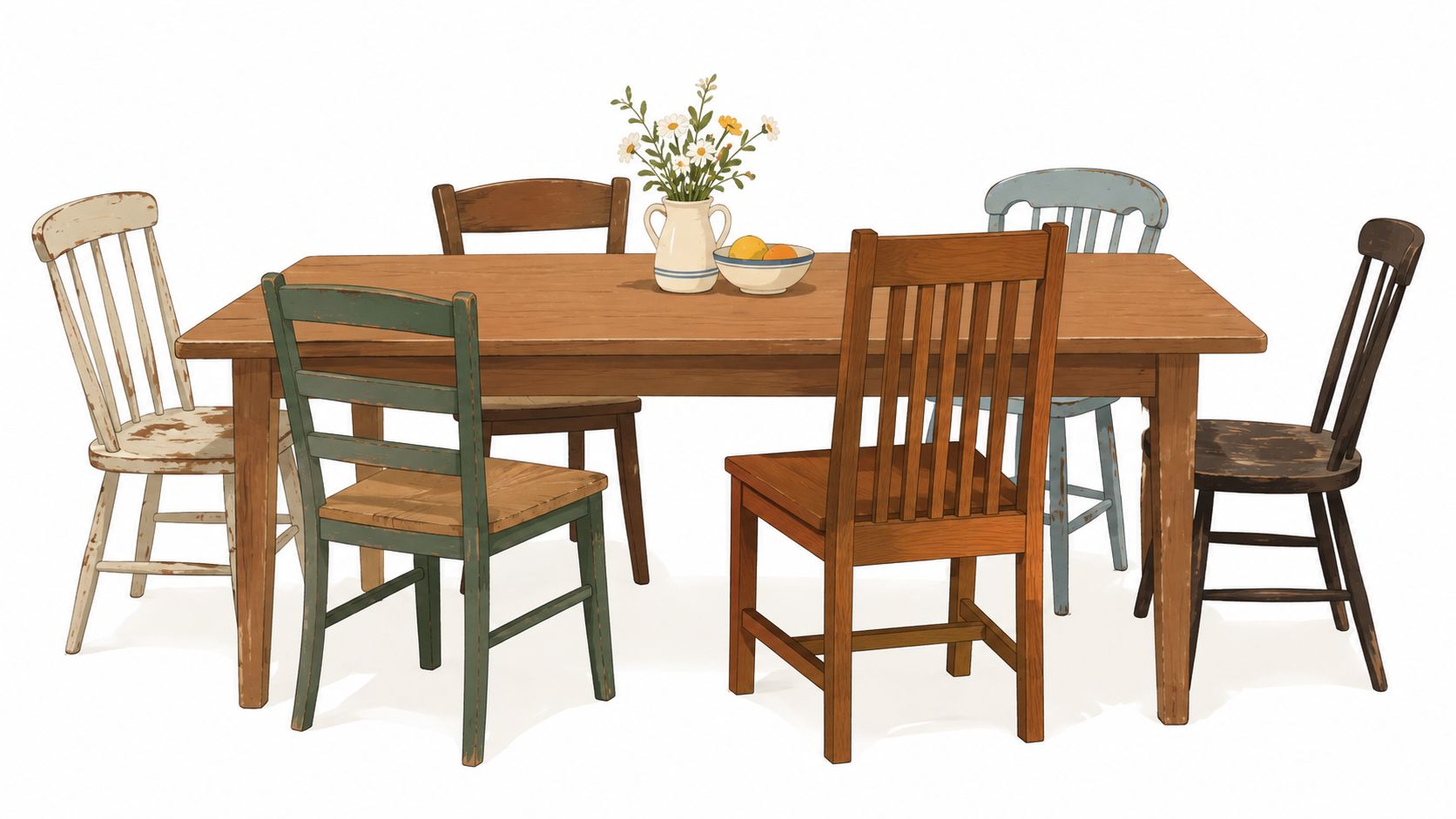
A room with mismatched chairs can feel collected and personal, but it can also lack visual rhythm. Mission chairs create cohesion without demanding a museum-like period interior. Their vertical backs echo window muntins, stair spindles, and built-in cabinetry, while their restrained profiles can sit comfortably beside transitional or modern furnishings.
The style's staying power also comes from its connection to durability. Later scholarship describes renewed interest in Arts and Crafts furniture during the 1960s, when clean lines and sturdy construction again attracted buyers (Mission-style furniture history). For a Columbus homeowner choosing an investment piece, that long presence suggests a chair can feel established without feeling frozen in the past.
For guidance on combining established craftsmanship with newer silhouettes, the guide to mixing furniture styles offers a useful design reference. The central principle is simple: match the room's visual weight and finish language, not every individual piece.
What Defines Mission Style Dining Chair Design
A Mission chair becomes easier to identify once its visual vocabulary is understood. The design relies on a small number of elements working together, and each one affects both appearance and use.
Read the frame from the floor upward
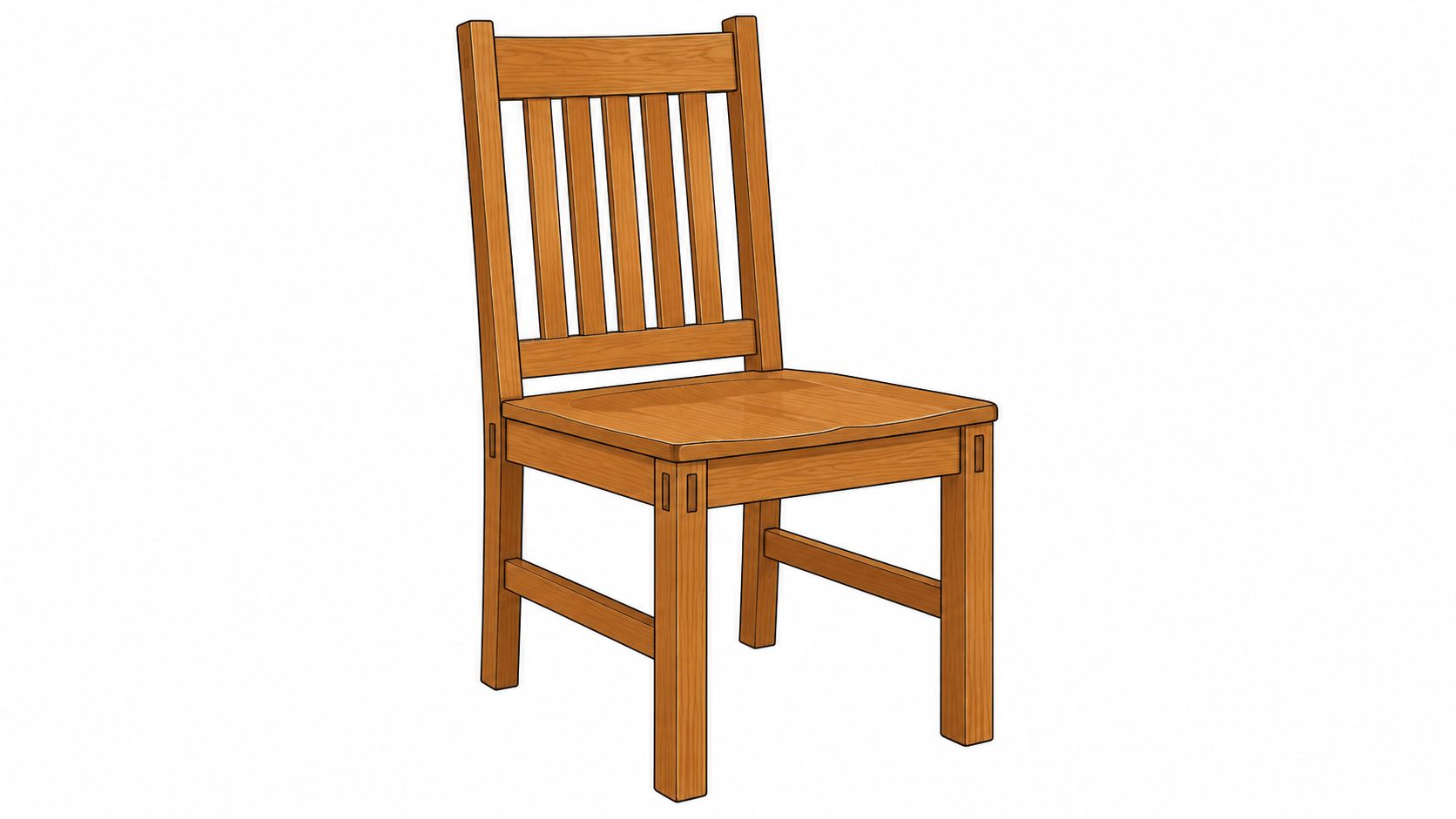
- Squared legs give the chair a planted stance. They make the frame feel stable rather than delicate, especially when the chair is pulled across a hardwood floor.
- Vertical slats create a repeating pattern of light and shadow. They add back support while keeping the chair visually more open than a broad, uninterrupted panel.
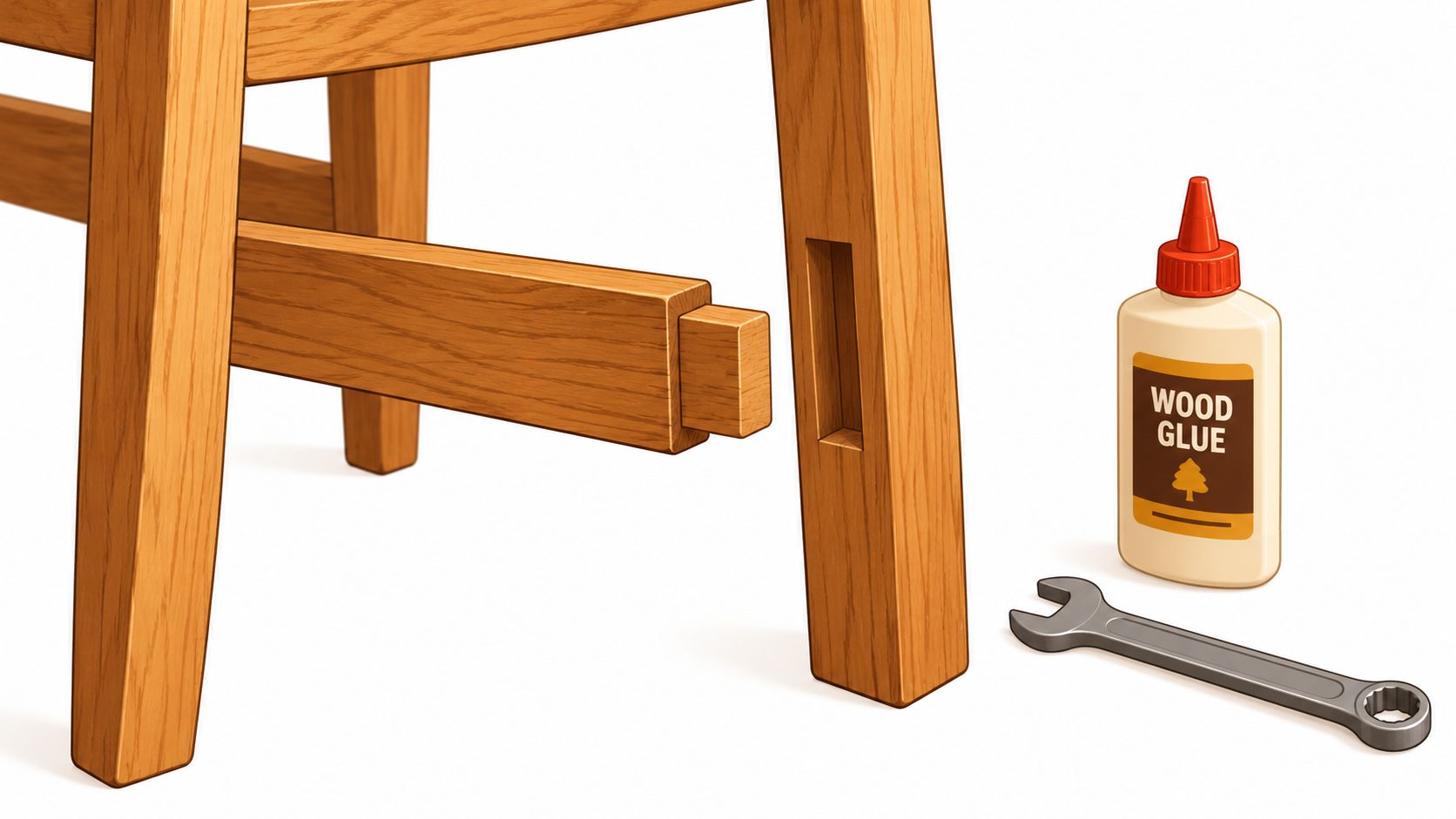
- Exposed joinery makes the construction legible. Mortise-and-tenon connections, when carefully executed, show how the rails and posts meet instead of hiding the structure beneath surface decoration.
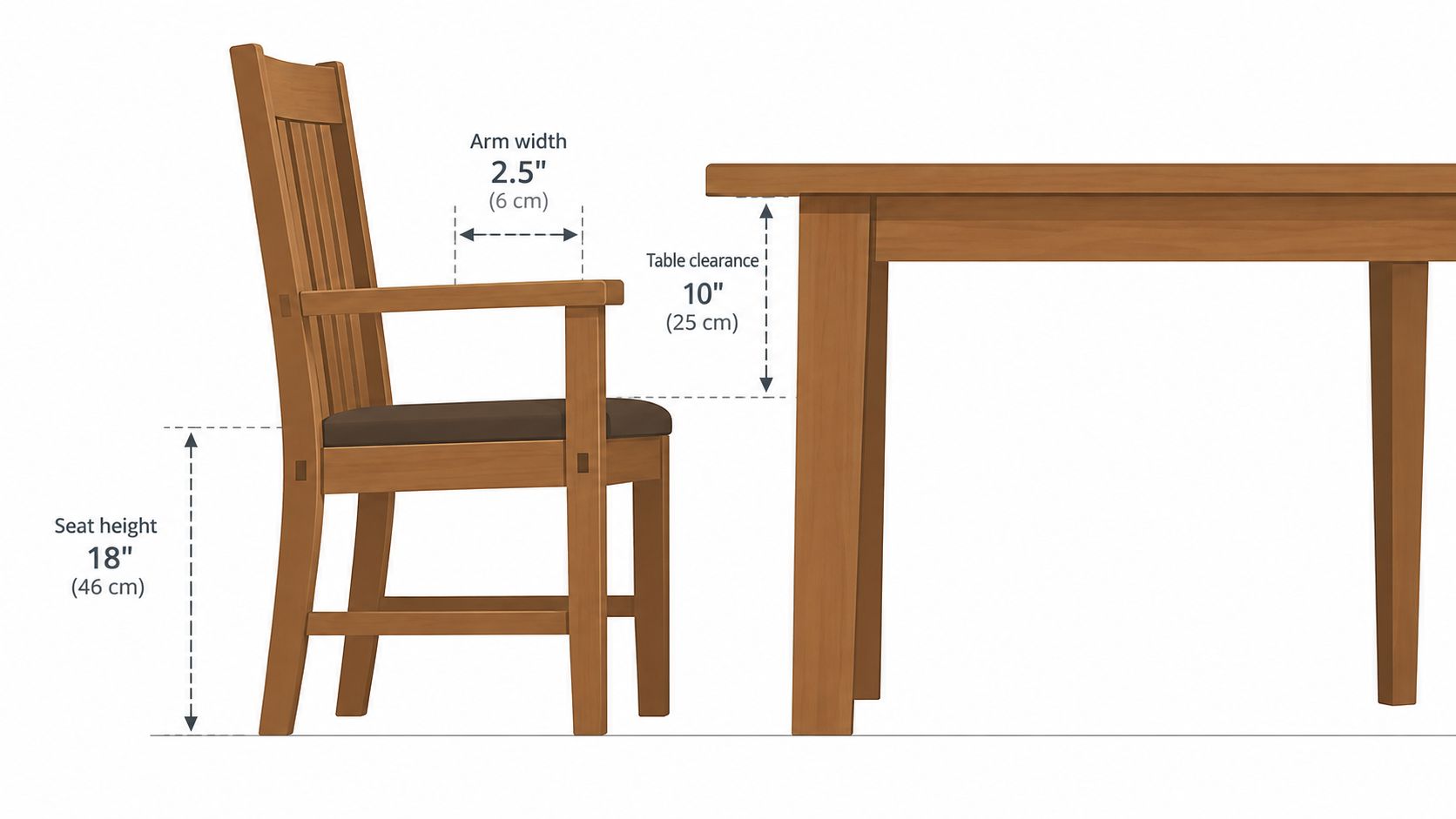
- Low-profile arms add support without turning the chair into an oversized lounge seat. Arm height still needs to clear the dining table apron, so the feature should be evaluated in the actual room.
- Contoured backs and seats bring comfort to a style known for straight lines. A carefully shaped wooden seat or upholstered cushion can reduce the rigid feeling associated with purely rectangular furniture.
Mission and Craftsman are often used interchangeably in everyday furniture language, although the labels can describe slightly different interpretations. A broader look at types of building architecture can help place the style's rectilinear, structural character alongside other architectural traditions.
Distinguish structure from decoration
A chair can borrow a slatted back and still miss the spirit of Mission design if the frame feels insubstantial or the proportions are awkward. Buyers should run a hand along the posts, inspect how the rails meet, and sit long enough to notice whether the back supports the natural curve of the body.
Practical rule: Mission design should be visible in the way the chair is built, not only in the pattern applied to its back.
The same language can extend beyond the dining room. A related Mission-style TV stand collection shows how straight rails, substantial posts, and visible wood character can create continuity across adjoining rooms without requiring identical furniture.
Solid Hardwood Choices and Finish Comparisons
Wood species changes the emotional temperature of a Mission dining chair. Oak can feel architectural and textured, cherry brings warmth and depth, maple reads more understated, and walnut introduces darker contrast. Each can preserve the style's structural character when the chair is made from solid hardwood and finished to reveal, rather than disguise, the grain.
| Wood Type | Grain Character | Color Range | Durability Level | Finish Flexibility |
|---|---|---|---|---|
| Solid oak | Pronounced grain with visible movement | Light tan through warm brown | High | Broad, from natural to deeper stains |
| Solid cherry | Smooth, refined grain | Warm pink-brown that deepens with age | High | Excellent for clear, warm, and darker finishes |
| Solid maple | Subtle, close grain | Pale cream through gentle honey tones | High | Works well with light, natural, and selected darker finishes |
| Solid walnut | Rich, varied grain | Medium brown through deep chocolate tones | High | Strong natural presence, with restrained finish choices |
Oak suits a dining room with stone, plaster, or darker architectural details because its grain can hold its own visually. Cherry softens a formal room and pairs naturally with warm flooring. Maple can help a compact dining area feel calmer, while walnut creates a more refined, library-like mood.
Finish is part of the design decision
A finish should protect the surface while allowing the chosen species to remain recognizable. A low-sheen finish emphasizes the tactile quality of the wood, while a richer tone increases contrast in the slats and joinery. The right choice depends on the existing table, floor, cabinetry, and natural light, not only on a sample viewed under showroom lighting.
Mission seating can also shift through upholstery. Top-grain leather gives the chair a supple, refined surface that develops character through use, while performance fabric offers a softer visual texture and practical support for active dining rooms. These options preserve the frame's identity while changing how the chair feels during a long meal.
For a deeper explanation of species, grain, and longevity, the solid hardwood furniture guide provides useful selection context. The important standard remains consistent: the wood should feel substantial, the finish should suit the home, and the surface should age with dignity.
Scale, Ergonomics, and Real Dining-Room Fit
A Mission chair can look perfectly proportioned in a showroom and still crowd a dining room at home. Measurement determines whether the chair slides beneath the table, leaves enough room for a guest to move behind it, and allows armchairs to function at the table rather than becoming attractive obstacles.
Contemporary Mission dining chairs commonly have a seat height of about 17.5 to 18 inches and an overall height of roughly 38 to 43.5 inches. Side-chair widths often sit near 18.5 inches, while armchairs typically expand to about 25 to 26 inches (Mission dining chair dimensions). A seat near 18 inches generally aligns with standard dining-table clearances, but the table apron and arm height still need to be checked together.
Side chairs and armchairs serve different layouts
Side chairs are usually the efficient choice for the long sides of a table. Their narrower footprint can preserve a comfortable path around the dining set, particularly in an open-concept room where the table shares circulation space with the kitchen or living area.
Armchairs offer lateral support and a more defined seat at the head of the table, but their broader footprint can reduce the number of chairs that fit and increase the turning radius needed in a compact room. A homeowner who wants two armchairs should measure the table ends, the wall behind them, and the path required to pull each chair out fully.
Measure the chair in motion, not only at rest.
Seat depth matters as well. A deeper upholstered seat may feel welcoming during a lengthy dinner, yet it can bring the sitter farther into the circulation zone when the chair is pulled back. A shaped wooden seat offers a crisper profile and simpler maintenance, while a cushion changes both comfort and visual weight.
Upholstery care deserves practical attention. For upholstered seating, a specialist resource on professional upholstery steaming can help explain the difference between routine care and professional cleaning. Before ordering, Columbus homeowners should also use Vinson's furniture measuring guide and bring room measurements to the showroom for a sit-test.
Matching Mission Chairs to Tables and Interiors
Mission chairs work best when the room respects their visual weight. A substantial trestle table can reinforce their architectural character, while a slimmer modern table can create a deliberate contrast. The goal isn't to make every surface identical. It's to make the relationship between the pieces feel intentional.
Four useful room pairings
- Farmhouse dining: A solid oak or cherry Mission chair can support the farmhouse table's grounded character without relying on distressed decoration. A quieter finish keeps the room from becoming visually overworked.
- Modern farmhouse: Pairing a slatted chair with a cleaner table profile creates balance. Upholstered seats can soften the harder lines, especially when the room already includes stone, metal, or exposed architectural elements.
- Transitional interiors: Cherry or maple can bridge traditional millwork and contemporary lighting. The chair supplies craftsmanship without forcing the room into a strictly historical vocabulary.
- Minimalist rooms: Walnut or a restrained natural finish can make Mission geometry feel sculptural. Open slats help preserve light around the chair, while the solid frame adds warmth to an otherwise sparse setting.
Matching wood tones can create calm continuity, especially when the table and chairs sit on the same visual plane. Contrast can be more effective when the room already contains a strong floor or cabinet finish. For example, a darker chair around a lighter table can define the dining area, while a lighter chair can prevent a dark table from dominating a compact room.
Lighting changes the reading of the chair throughout the day. Side light reveals grain and joinery, while overhead light emphasizes the slat pattern and seat contours. Flooring matters too. A Mission chair can feel airy against a pale floor and more substantial against dark flooring, so the surrounding architecture should guide the finish decision.
Why Solid Hardwood Construction Matters Long Term
A functional heirloom earns that description through more than appearance. Solid hardwood construction gives a Mission dining chair a tangible surface, a repairable structure, and a material presence that remains apparent every time the chair is pulled from the table.
Mortise-and-tenon joinery connects one solid wood component to another through a fitted joint designed for strength. In Mission furniture, that construction is often visible as part of the design rather than concealed. A product description for Mission chairs specifically identifies solid hardwood construction and mortise-and-tenon joinery as features supporting strength and durability (Mission chair construction details).
Durability includes future care
A solid hardwood chair can often be maintained, adjusted, or refinished as its surroundings change. That matters in a dining room, where chair legs encounter repeated movement, seats experience daily contact, and finishes may eventually need attention. The environmental question also deserves nuance. A heavier chair may require more material and transport energy, but long service life, repairability, and responsible wood sourcing are central to any serious sustainability discussion (sustainability and Mission furniture context).
Vinson's hardwood standard centers on solid cherry, oak, maple, and walnut. The business doesn't sell or promote engineered wood, MDF, laminate, or particle board, keeping the material conversation focused on solid hardwood and the craftsmanship required to shape it well.
That philosophy aligns with Amish-made dining sets and North American manufacturing. Mavin is Amish-made in Ohio, USA, while Smith Brothers of Berne is made in Indiana, USA. Canadel is handcrafted in Quebec, Canada, giving Columbus buyers access to North American-crafted furniture alongside American-made options.
How Custom Ordering Works at Vinson Fine Furniture
A custom Mission dining chair decision becomes clearer when the homeowner can test the proportions before committing. At the Easton Town Center showroom, the process starts with sitting in the chair, checking the back angle, resting the arms beside the table height, and noticing whether the seat supports a relaxed posture.
The custom path in practical terms
- Start with the room. Measurements, table dimensions, walkway needs, and existing finishes establish the limits before a style is selected.
- Test the frame. A design consultant can compare side chairs, armchairs, wood seats, and upholstered versions so comfort is evaluated physically rather than guessed from a photograph.
- Choose the hardwood and finish. Solid cherry, oak, maple, and walnut each change the room's color balance and visual weight.
- Coordinate the upholstery. Top-grain leather and performance fabric can be selected when the chair design supports an upholstered seat or back.
- Review the visualizer. The Custom Order Program uses fabrics, finishes, and 3D visualizers for partner brands including Smith Brothers, Mavin, and Canadel, helping the buyer review the intended combination before production.
- Confirm the build. The final order should reflect the table clearance, preferred seat height, arm width, and the way the dining room is used.
Vinson Fine Furniture is a family-owned Central Ohio business, formerly known as Kitchen Tables & More, with an In-Store Design Studio and Complimentary Design Consultations. The custom order guide explains how those conversations become a specific furniture plan rather than a vague search for “something Mission.”
The same service model extends to other rooms. Buyers considering Smith Brothers furniture in Easton, Mavin bedroom furniture, or custom leather sectionals in Columbus can discuss finish, fabric, and motion needs within one design conversation. Premium motion options include motorized power reclining, swivel chairs, rockers, and gliders, all built around the same expectation of comfortable, durable use.
Making Your Mission Dining Chair Decision
The right Mission dining chair brings four decisions into alignment:
- Style: Straight lines, slats, visible joinery, and balanced proportions should feel intentional in the room.
- Material: Solid cherry, oak, maple, or walnut should complement the table, floor, cabinetry, and natural light.
- Fit: Seat height, overall width, arm clearance, and chair movement must work around the actual dining table.
- Longevity: Solid hardwood and well-executed mortise-and-tenon joinery support a purchase intended for sustained use.
A showroom sit-test remains valuable because the hand and body notice details that a product image cannot show. The back may support the shoulders differently than expected, an arm may meet the table apron, or a finish may appear warmer beneath the showroom's lighting than it does in the home.
Vinson's Low Price Guarantee provides a 110% refund of the difference when its qualifying conditions are met, and the Clearance Gallery offers savings of up to 70% on selected pieces (Vinson Clearance Gallery). White-glove delivery typically includes in-home placement, unpacking, assembly or installation, and packaging removal (white-glove delivery details), but services aren't standardized, so buyers should confirm the exact scope before delivery (white-glove service guidance).
Visit Vinson Fine Furniture at Easton Town Center to sit-test Mission dining chairs, compare solid hardwoods, and review custom fabrics and finishes with the In-Store Design Studio. The Columbus showroom also offers Complimentary Design Consultations, North American-crafted furniture, the 110% Low Price Guarantee, and White-Glove Delivery for a more considered long-term purchase.