Heritage Amish Furniture: A Buyer’s Guide to Lasting Craft


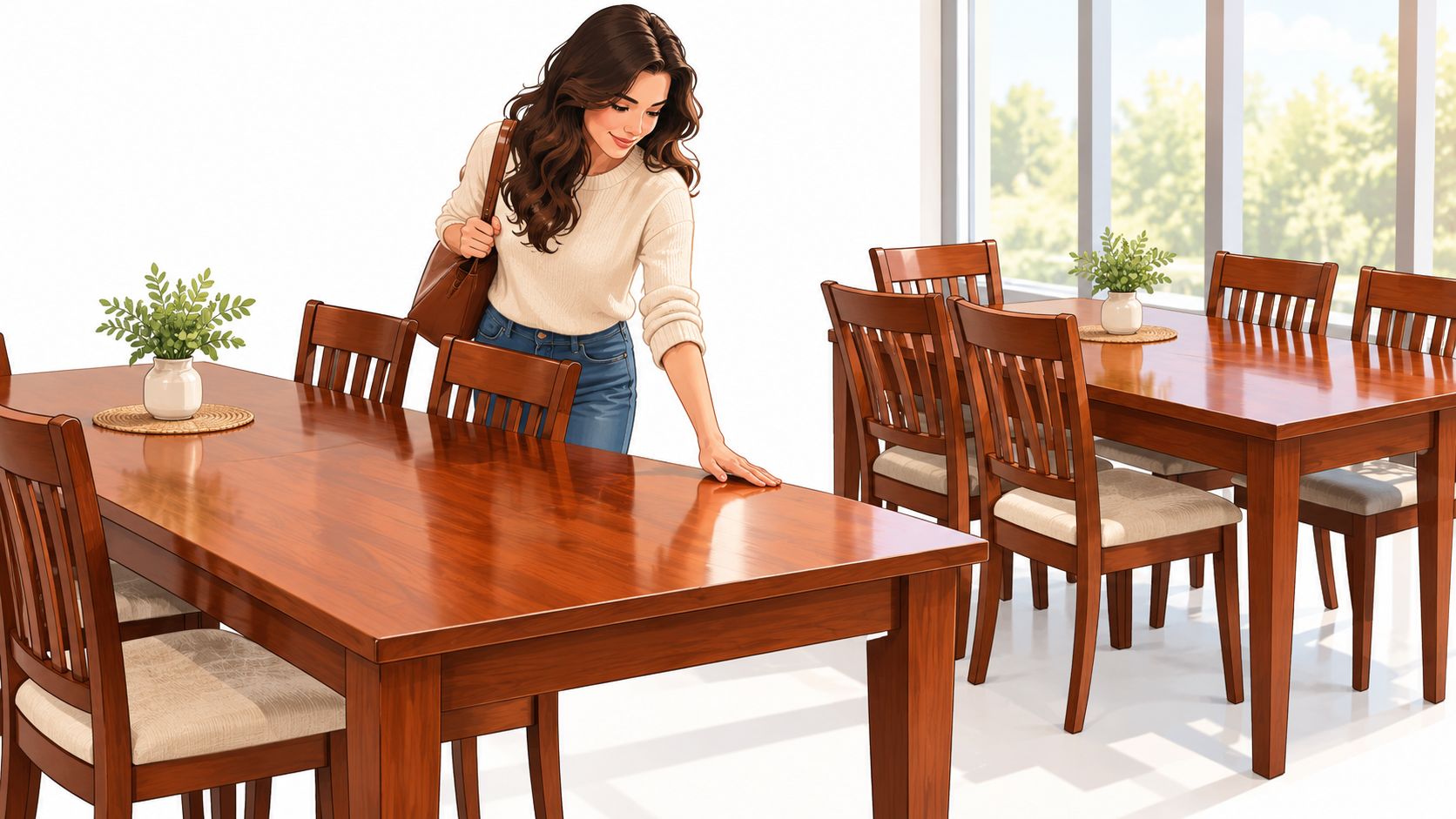
A buyer in a Columbus showroom may run a hand across two dining tables that appear nearly identical from across the room. Up close, one feels dense and settled, with a smooth edge, consistent grain, and drawers that close with a quiet sense of precision. The other may look attractive but reveal little about how it was built. That difference is the starting point for understanding heritage Amish furniture.
The Amish label should never be the only reason to buy a piece. Serious buyers examine the wood, joinery, finish, repairability, and customization options. A well-made table or bedroom case should fit the room today, remain useful through changing household needs, and offer enough structural integrity to justify keeping it for the long term.
Why Heritage Amish Furniture Draws Serious Buyers
Judge the construction, not the label
A first-time buyer may see two tables with similar shapes and finishes. The useful comparison begins where a sales label ends: beneath the top, inside the drawers, along the joints, and at the back of the case. Heritage Amish furniture is best understood as a set of verifiable construction choices, not a guarantee created by a name.
Look for solid cherry, oak, maple, or walnut, carefully fitted frames, traditional joints, and a finish that keeps the wood's character visible. Weight can provide an early clue, but it proves little on its own. A better inspection asks whether the piece feels intentional from every accessible angle and whether its parts work together without looseness or awkward gaps.
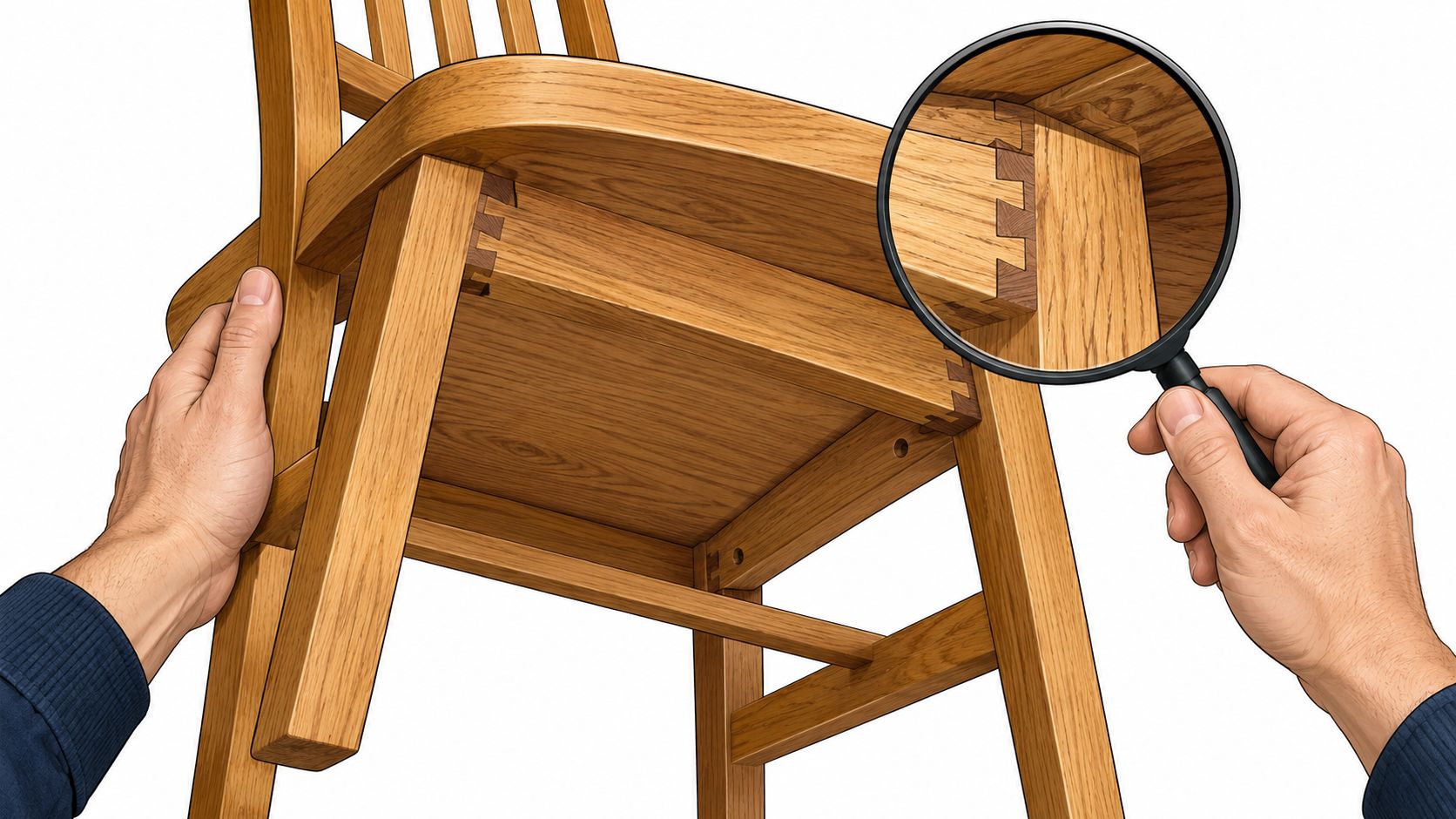
A dining table should remain steady when you apply gentle pressure to the top. A drawer should travel squarely and close without scraping. Examine its corners. Dovetail construction resembles interlocking fingers, spreading the joint's holding power instead of relying on a quick fastening method. Grain on visible surfaces should also appear thoughtfully arranged, with boards selected to work together rather than assembled at random.
Practical rule: A furniture label starts the conversation. The underside, drawer corners, joints, and finish decide whether the conversation is credible.
The regional history adds context without replacing a hands-on inspection. In Holmes County, just 3% of Amish heads of household worked in the secondary wood sector in 1973, compared with 14% by 1997. Employment in general manufacturing plus primary and secondary wood manufacturing rose from 16% to 34% during the same period, according to research on Ohio's Amish furniture cluster. That shift helped establish a durable network of small woodworking businesses and explains the category's strong regional identity.
What serious buyers are purchasing
A future heirloom does not require ornate styling. A Shaker-inspired dining set, a modern bedroom collection, or a traditional Mission table can serve for decades when its construction supports regular use and future repair.
A practical buyer checks four areas:
- Structural confidence: Chairs, tables, and case pieces should feel balanced and resist unwanted movement.
- Repairable materials: Solid hardwood can generally be refinished, adjusted, or repaired more readily than furniture built around fragile surfaces.
- Useful customization: Dimensions, finish, hardware, and upholstery should suit the room and the household's needs.
- A lasting silhouette: Good proportions can remain appropriate as surrounding décor changes.
Try two drawer boxes side by side. Open each one, support the front with one hand, and notice whether the box feels square or twists under light pressure. Run a finger along the edges, inspect the joint corners, and listen as the drawer closes. That short test can reveal more about fit and workmanship than a photograph.
The heritage furniture collection offers a setting for this kind of examination at the Easton showroom. Touch, weight, drawer action, edge treatment, and seating comfort provide evidence that images cannot communicate. Serious buyers leave with observations they can explain, not merely an impression that a piece looks traditional.
The Roots of Amish Craftsmanship in Ohio
From farm work to family workshops
Ohio's Amish furniture tradition grew from a change in how woodworking fit into community life. In areas centered around Holmes County and nearby settlements, families first used building skills alongside farm work. Over time, some of that work shifted into dedicated shops serving a wider furniture trade. The result was a regional production culture shaped by small businesses, family knowledge, local reputation, and practical household needs.
The change from farm-based work to shop-based production helps explain why heritage Amish furniture became associated with recognizable Ohio production regions. Craftsmanship moved from an occasional household activity toward a sustained way of making furniture. That history gives the label context, but it does not prove that every piece carrying the label has the same construction quality.
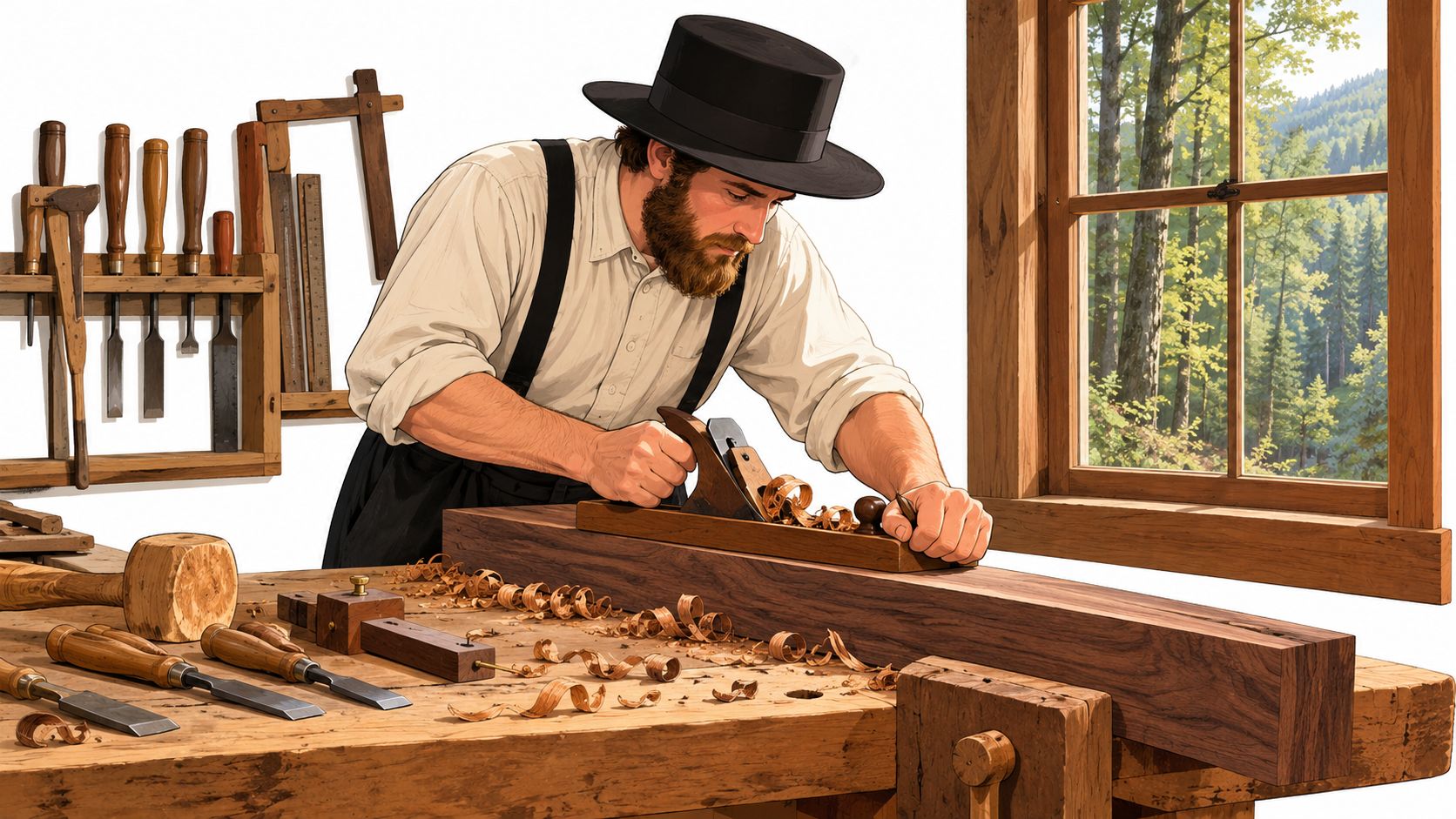
A shop may combine hand tools with stationary machinery while retaining the judgment associated with bench-made work. Machinery can size boards consistently and prepare parts efficiently. A craftsperson still decides how a surface should feel, how an edge should be eased, or whether a fitted component needs adjustment before finishing. The process resembles a custom garment: machines establish repeatable dimensions, while a skilled worker makes the final decisions that determine fit and feel.
Why regional production still matters
A close community can make workmanship easier to investigate. Builders depend on repeat customers and local relationships, so consistent lumber preparation, fitting, sanding, and finishing affect more than one sale. Buyers should still examine the actual piece and ask about the workshop, because geography is a starting point for questions, not a guarantee of quality.
Regional identity can also work with several decorating approaches. An oak dining table may support contemporary upholstery, while a walnut case piece can add warmth to a restrained modern room. Homeowners creating a rural-modern interior can find farmhouse style canvas art that complements the furniture without making every surface part of a matching theme.
Ohio's production history also helps explain the use of reclaimed material in selected designs. Reclaimed barn wood can retain knots, weathering, nail marks, and differences in tone. New solid hardwood usually offers more predictable grain and color. The Ohio barn wood table collection shows how a region's material history can become a visible part of a dining table's character.
Heritage is most useful when treated as a working tradition, then checked against the object in front of you. Ask where the piece was made, which parts use the stated wood species, how its components are fitted, and how the finish is intended to handle daily use. Those answers turn a regional story into evidence you can assess in person.
Solid Hardwood and Joinery Explained Simply
You are examining a dining table in a showroom. The label says “solid hardwood,” but the useful question is what that description covers. Ask whether the top, legs, drawer fronts, sides, and frame all use the stated species. A heritage Amish piece is best judged as a construction choice you can verify, not as a label you must blindly trust.
Solid hardwood means the principal structural parts remain hardwood rather than relying on a wood-based core with a thin surface layer. Some designs may still use different materials in backs, drawer bottoms, or other secondary components, so the showroom should identify those parts clearly. This construction guide offers another reference point for examining how furniture components are assembled.
Wood also moves with its surroundings. A board behaves somewhat like a sponge, expanding as it absorbs moisture and contracting as the air becomes drier. Kiln-dried lumber is typically conditioned to roughly 6% to 8% moisture content before assembly to reduce later shrinkage, which helps limit warping, splitting, and loose joints. The figure is construction guidance, not a guarantee that a piece will remain unchanged in every home.
Reading the joints
Joinery determines how loads travel through a piece. Mortise-and-tenon construction fits one shaped member into an opening in another, creating a mechanical interlock and a broad glue surface. Dovetails use angled pins and tails that resist separation, which makes them especially useful at drawer corners.
| Joinery Type | Typical Use | Strength Rating | Common Locations |
|---|---|---|---|
| Mortise and tenon | Connecting rails to legs | Very strong for repeated structural stress | Table bases, chair frames, bed rails |
| Dovetail | Locking box corners together | Very strong against pullout | Drawer boxes |
| Tongue and groove | Aligning boards and controlling movement | Strong when properly fitted | Case backs, panels, table components |
| Dowels | Aligning adjoining parts | Strong when accurately drilled and glued | Frames, cabinet components |
| Pocket screws | Concealed reinforcement and alignment | Useful when supported by sound joinery | Selected interior or secondary connections |
A glued and screwed connection can work well when the joint is designed for its expected load. A wedged or pinned through-tenon adds a visible mechanical lock and allows stress to pass through the joined members. The appropriate method depends on the location, the direction of force, and the wood's expected movement. A guide to various wood joints can help first-time buyers recognize these terms before a showroom visit.
Drawers provide a useful test because they face repeated opening, closing, and side pressure. Check for dovetailed corners, a properly fitted bottom, and smooth, well-supported glides. These details often reveal more about construction than an elaborate exterior finish.
Finish is part of construction
A finish protects the surface while leaving the wood species visible. Heritage furniture commonly uses catalyzed conversion varnish or a similar hard coating over hand-sanded hardwood, giving the surface resistance to household moisture and everyday abrasion. This furniture finish guidance provides additional context for comparing preparation and coating choices.
Inspect the piece instead of judging it only by its shine:
- Grain continuity: Panels should appear deliberately selected rather than randomly patched.
- Edge treatment: Smooth, proportionate edges indicate careful sanding and finishing.
- Drawer interiors: The inside can expose construction quality more clearly than the front.
- Backs and undersides: Hidden surfaces should remain clean, fitted, and appropriately finished.
- Surface reflection: Excessive gloss can distract from the wood and make uneven preparation harder to assess.
Homeowners caring for hardwood throughout a house can also consult Savera Wood Floor Refinishing restoration for useful context on how preparation and surface care influence wood's appearance over time.
Choosing the Right Wood Species for Your Home
Wood species should follow the room's demands, not just a showroom preference. Solid oak, maple, cherry, and walnut each bring a different balance of grain, color, visual weight, and resistance to everyday wear.
A light-filled dining room may benefit from the gentle warmth of cherry or the clean surface of maple. A darker interior can handle walnut's richer visual presence, while oak brings pronounced grain that remains readable under a wide range of stains.
Four species, four personalities
The table below uses relative descriptions rather than unsupported hardness figures. Buyers can confirm the exact species, cut, and finish with the showroom consultant because those details affect how a finished piece looks and feels.
| Species | Janka Hardness | Color and Aging | Best Room Match | Key Trade-Off |
|---|---|---|---|---|
| Oak | Strong everyday performance | Open grain, with stain variation that remains visible | Busy dining rooms and traditional interiors | Pronounced grain may feel more visually active |
| Maple | Higher relative hardness among common furniture species | Tight grain and a cleaner, more uniform appearance | High-use dining tables and crisp contemporary rooms | Tight grain can show less stain variation |
| Cherry | Moderate furniture-grade hardness | Warm reddish-brown tone that deepens with light exposure | Formal dining rooms and refined bedrooms | Surface color changes over time, which should be expected |
| Walnut | Moderate furniture-grade hardness | Deep brown color with expressive, often flowing grain | Statement dining and bedroom pieces | Darker tone can make a room feel visually heavier |
Cherry's changing color is part of its appeal, not a defect. Maple offers a restrained surface when a homeowner wants the table shape and room architecture to lead. Oak can create a more tactile, traditional impression, while walnut works well when the furniture should serve as a focal point.
Matching species to household use
A family dining table needs a surface and finish suited to regular meals, cleaning, and movement around the chairs. A formal dining table may allow more delicate visual choices because the room sees less frequent use. Bedroom furniture can prioritize grain character and proportion, since nightstands and dressers generally face different stresses than a dining top.
Quarter-sawn oak can offer a distinctive grain pattern and useful dimensional stability when properly built. Maple's dense surface can suit high-contact tables. Cherry and walnut can serve extremely well in dining or bedroom settings when the finish and care routine match the household.
A species decision also affects upholstery and hardware. Warm cherry pairs naturally with cream, tan, and muted green fabrics. Walnut can anchor top-grain leather seating in a living room. Oak and maple can support lighter performance fabrics without making the room feel overly formal.
The wood furniture selection guide gives buyers a useful vocabulary for discussing grain, tone, and intended use. A design consultation should then connect those preferences to table dimensions, edge profiles, stain, and the amount of daily wear the furniture must accommodate.
Inspecting Quality Before You Buy
A showroom inspection should be deliberate but not intimidating. The goal isn't to dismantle a piece. The goal is to ask small questions that reveal whether the furniture was designed for service or only for a quick visual impression.
A practical inspection sequence
Open every accessible drawer. Check whether it moves evenly and closes squarely. Look at the corners from inside, where dovetail construction is easier to identify.
Inspect a hidden edge. Buyers should examine the underside of a tabletop, the back of a case piece, or the underside of a chair rail. Solid hardwood, clean sanding, and consistent finish work should continue beyond the most visible surfaces.
Test the frame gently. A chair should feel balanced when weight shifts from side to side. A table should resist unwanted racking when a buyer applies light pressure to the top.
Study the finish under angled light. Even coverage, smooth transitions, and a consistent sheen suggest careful preparation. Roughness, trapped debris, or uneven sheen deserves a question.
Ask about maintenance. The finish should match the room's use, cleaning habits, sunlight, and expectations for future repair.
Details worth confirming
A table with leaves should use the same species and a compatible finish across the top and extensions. Case goods should offer access to corner braces or other adjustment points when the design calls for them. Drawers should use glides suited to repeated operation, and soft-close hardware can improve everyday use when the mechanism is properly installed.
Buyers should also ask how the furniture was dried and acclimated before assembly. Kiln-dried stock prepared for indoor use is less likely to undergo disruptive movement after delivery than wood rushed into construction without appropriate preparation. The relationship between moisture and movement is explained in this guide to identifying real wood furniture.
A close inspection can include a simple weight and balance check, but lifting a large table should be done only with staff assistance. Weight alone doesn't certify quality. It becomes meaningful when it accompanies sound joinery, correctly fitted parts, and a finish that follows the contours of the wood.
Showroom habit: Buyers should inspect the part of the furniture that a camera would usually hide. The back, bottom, drawer box, and hardware often provide the clearest evidence.
The same approach applies to upholstered and motion furniture. For top-grain and performance leathers, buyers should sit, recline, swivel, and test the controls. Motorized sectionals, power recliners, swivel chairs, rockers, and gliders should move smoothly, remain stable, and fit the household's actual routines rather than just adding features to a specification sheet.
Longevity, Sustainability, and Real Value
A heritage Amish piece earns its value through years of use, not through a label alone. Consider a dining table, chair, bed, dresser, or sectional as part of the household's daily infrastructure. Its practical value depends on how well it performs, while its financial and environmental value grows when the household keeps, repairs, refinishes, and continues using it instead of replacing it during the next style change.
Solid hardwood supports that pattern because it remains workable over time. A worn surface can often be renewed, a joint can be adjusted, and a damaged frame may be repairable without discarding the entire piece. Traditional construction does not make furniture indestructible. It gives future repairers more sound material and structure to work with, much like a well-built house leaves better options for later renovation.
Sustainability depends on ownership
A handcrafted dining set creates a stronger environmental case when the household maintains its finish, keeps it in service, and passes it along or refinishes it rather than treating it as disposable décor. A durable piece discarded during the next renovation has not reached its full potential, regardless of how carefully it was made.
Material origin and regional production also belong in the same conversation. Ohio-made Amish furniture, American-made lines, and Canadian craftsmanship can all fit within a North American purchasing framework. Buyers should still ask where the wood came from and how the workshop uses, stores, and minimizes waste from its materials.
Ohio's furniture cluster has substantial raw-material relevance. Research estimated annual wood use at 44 million board feet, equal to 11% of Ohio's total hardwood lumber production and 19% of the state's hardwood lumber used in appearance-based applications, according to the U.S. Forest Service report. These figures place the category within a significant hardwood economy, rather than treating it as a small decorative niche.
When the investment makes sense
Heritage Amish furniture suits homeowners who expect to remain in a property, care about tactile quality, and want dimensions or finishes matched to the room. A custom dining table sized for the household, a solid-hardwood bedroom collection, or a top-grain leather sectional can address a specific need while maintaining a consistent design language.
The choice may be less practical for a temporary rental, a short-term furnishing plan, or a room likely to change function soon. Portability and immediate availability may matter more in those situations than long-term customization.
Use these questions to judge value in person:
- Keepability: Can the design remain useful if the room changes?
- Repairability: Can a qualified professional adjust or refinish the piece?
- Daily suitability: Do the finish, upholstery, and motion system match actual household use?
- Emotional durability: Will the owners still enjoy its proportions after current trends fade?
Sustainability should support comfort and manageable care, not compete with them. Stain-resistant surfaces, supportive seating, and easier maintenance may be appropriate for a busy household. The stronger choice is the piece that provides those practical qualities while using sound construction to remain useful for many years. Its longevity becomes verifiable through the materials, joinery, finish, and repair options a buyer can inspect, rather than through the heritage name alone.
Bringing It All Together at the Showroom
A showroom visit lets you test whether a furniture label is supported by construction details. Bring room measurements, photographs of existing finishes, and a short list of daily requirements. Note seating capacity, storage needs, traffic patterns, door clearances, and the level of maintenance your household can manage. These details give you a practical standard for judging fit, rather than relying on a style name.
The In-Store Design Studio can apply that information to dimensions, edge profiles, hardware, upholstery, and finish. Complimentary Design Consultations also let buyers compare a solid oak dining set with a maple alternative, view how walnut responds to the room's light, and test whether a top-grain leather sectional should include reclining, swivel, or other motion features. Sit in the furniture and examine the working parts. A finish sample may suggest color, but the piece itself reveals comfort, scale, and construction.
Customization with a clear purpose
The Custom Order Program supports fabrics, finishes, and 3D visualizers for brands including Smith Brothers of Berne, made in Indiana, Mavin, Amish-made in Ohio, and Canadel, handcrafted in Quebec. Their origins describe different parts of the North American furniture market. Smith Brothers and Mavin support an American-made discussion, while Canadel represents Canadian craftsmanship.
Customization should solve a measurable problem. A homeowner might need a dining table at a specific length, a sectional with power motion and performance leather, or bedroom storage sized for an unusual wall. A visualizer helps the household review proportion before ordering. Ask which options affect durability, cleaning, comfort, and future repair, not only which choices change appearance.
Price terms deserve the same attention. The Low Price Guarantee provides a 110% refund of the price difference when the exact same item is found for less at another local authorized store within 30 days, as described in the published price-protection policy. The Clearance Gallery includes selected floor samples, overstocks, and closeouts with savings of up to 70%.
Delivery is part of the purchase
White-glove delivery commonly includes room-of-choice placement, assembly when required, inspection, and packaging removal. Buyers should confirm these details before scheduling, using this white-glove delivery overview and this delivery workflow as general reference points.
A careful delivery crew checks for visible damage, records concerns with photographs, and confirms that the furniture is assembled and functioning before departure. This matters for large dining tables, beds, motion seating, and solid hardwood pieces that need thoughtful placement.
The final test connects construction, room fit, comfort, origin, customization, price protection, and delivery. A buyer who asks specific questions and examines the furniture in person can judge heritage Amish furniture as a verifiable construction choice, not merely a label.
Vinson Fine Furniture offers an Easton showroom sit-test, an In-Store Design Studio with Complimentary Design Consultations, and custom options across Smith Brothers, Mavin, and Canadel. Visit Vinson Fine Furniture with room measurements and photographs to evaluate solid hardwood dining, living room, and bedroom furniture in person.