Custom Furniture Design: A Complete Guide to Tailored Pieces


A dining alcove can be six inches too narrow for a standard table. A living room may have an architectural reveal that turns a straight sofa into an obstacle, while a stair landing or tight doorway can stop an otherwise perfect piece before it reaches the room. These aren't decorating inconveniences. They're signals that the furniture needs to respond to the home, rather than forcing the home to accommodate a catalog dimension.
Custom furniture design gives homeowners a way to make those decisions deliberately. The process includes more than selecting a stain or fabric. It considers the room's measurements, the way people move through it, the feel of the materials, the construction beneath the surface, and whether full custom, semi-custom, or in-stock furniture makes the most practical investment.
When Standard Furniture Stops Fitting the Room
A homeowner in Columbus might measure a dining niche, find the walls closing in around a conventional table, and begin subtracting chairs from the plan. Another household may find that the only clear path through an open living room runs directly across the footprint of a standard sectional. In both cases, the room has already answered the first design question. It needs a piece with a particular width, depth, height, or configuration.
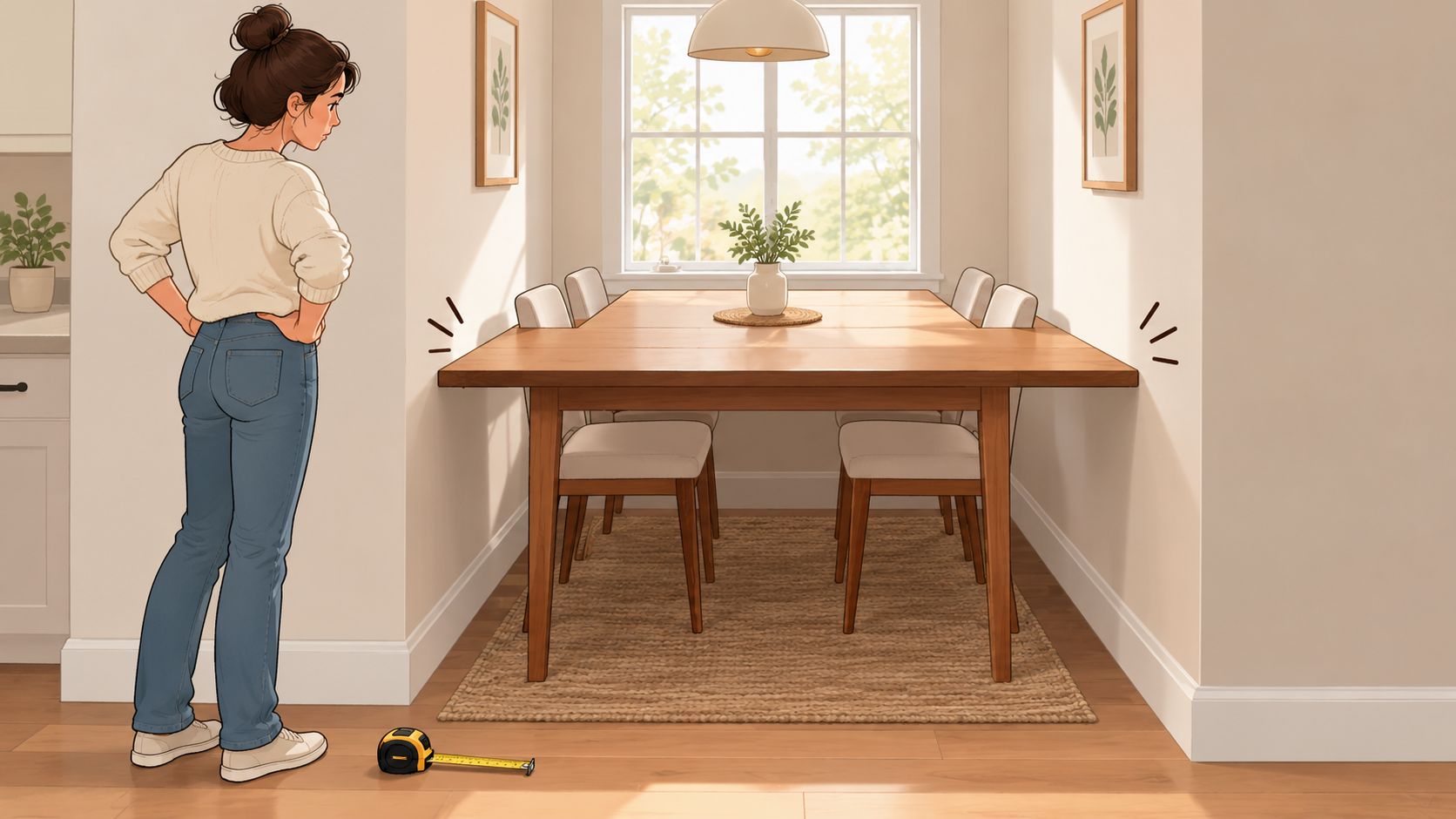
Measured gaps matter. So do off-center windows, built-ins, radiator locations, door swings, and the route a child takes from the kitchen to the family room. A sofa that's technically the right length can still feel wrong if its depth blocks a walkway. A dining table can fit between two walls but leave too little room for chairs to pull out comfortably.
Homeowners often recognize the problem through daily friction:
- The dining table crowds the passage: A slightly narrower top or a different leg placement may restore circulation without reducing the seating plan.
- The sofa overwhelms the room: A shallower frame can preserve comfortable seating while keeping sightlines open.
- The bedroom storage feels stranded: A case piece built for the available wall can align with trim, windows, and existing nightstands.
- The delivery route is restrictive: Door widths, turns, elevators, and stair landings can influence whether a sectional arrives as separate units or requires another configuration.
A measured room brief turns those quirks into useful design inputs. The same logic applies to specialized work areas, where a homeowner researching best sewing tables for tight spaces may also need to account for chair clearance, storage access, and the swing of nearby doors.
Practical rule: The best custom dimension solves a daily movement problem first, then expresses the homeowner's style through proportion, wood, upholstery, and finish.
Before a consultation, homeowners can follow Vinson's guidance on how to measure furniture. The result isn't a vague wish for something “custom.” It's a room-specific brief that tells the designer what the furniture must do.
What Custom Furniture Design Really Means
Custom furniture design is a working relationship between the homeowner, the showroom designer, and the maker. The homeowner identifies how the piece must function. The designer translates that need into dimensions, materials, and visual proportion. The craftsman then builds those decisions into a piece that can support real use.
At Vinson, the hardwood standard is direct. The business sells solid hardwood furniture, centered on solid cherry, oak, maple, and walnut. Its product philosophy excludes engineered wood, MDF, laminate, and particle board. That standard places attention on the qualities homeowners can feel and inspect, including grain continuity, edge treatment, joinery, drawer action, and the way a finish sits on the surface.
Three levels of control
The word “custom” can describe different degrees of choice. The distinction becomes clearer when the homeowner asks who controls each decision.
| Furniture path | Homeowner typically selects | Best fit |
|---|---|---|
| In-stock | A finished design, available configuration, and existing finish or upholstery | A room with standard proportions and an immediate need |
| Semi-custom | Options within a collection, such as fabric, finish, size, or seating arrangement | A homeowner who wants personalization without changing the entire design |
| Full custom | Bespoke dimensions, species, finish, upholstery, proportions, and construction details | A room with unusual constraints or a highly specific functional brief |
A solid hardwood frame should support the design rather than merely decorate it. Mortise-and-tenon joinery can create strong structural connections. Dovetailed drawers offer a precise, durable form of case construction. Hardwood-to-hardwood construction, carefully fitted components, kiln-dried domestic hardwoods, and hand-rubbed finishes all contribute to a piece that can be maintained and refinished over time.
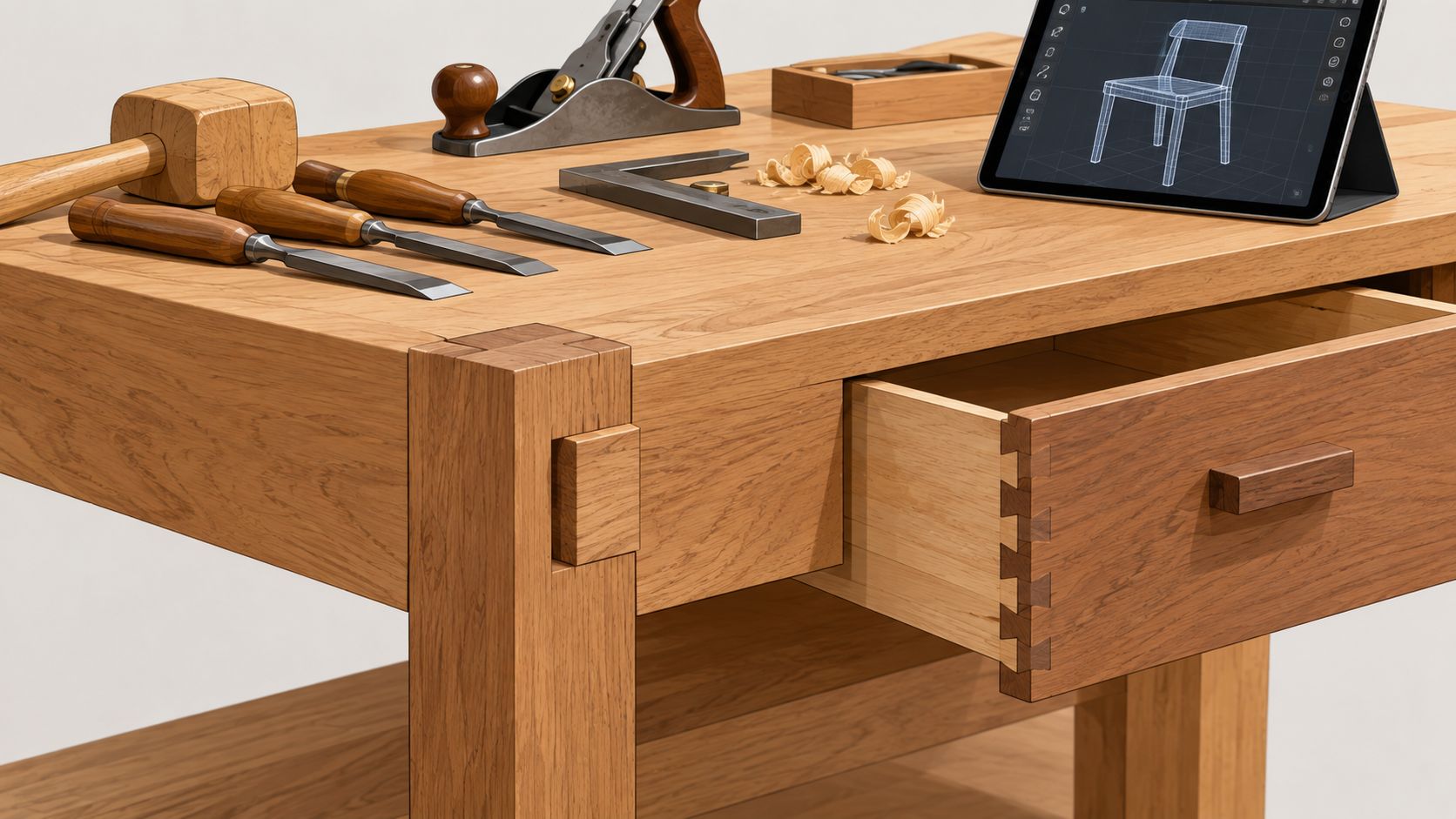
The homeowner also controls smaller choices that change the experience of the finished piece. Seat depth affects posture. An edge profile changes how a dining top feels against an arm. Leg shape changes visual weight. Hardware influences whether a bedroom case feels traditional, or restrained.
A useful starting point is Vinson's guide to custom solid wood furniture. It helps establish the vocabulary for a showroom conversation, so “custom” means more than a color selection. It means choosing the elements that determine fit, touch, serviceability, and character.
Why Homeowners Are Choosing Custom in 2026
A sectional arrives, but its chaise blocks the walkway. A dining table fits the room's length, yet leaves too little clearance for chairs. These moments explain why homeowners are looking beyond standard sizes. The decision is not whether a custom finish looks attractive. It is whether the piece solves a room, use, and timing problem better than semi-custom or in-stock furniture.
The custom category has grown beyond a niche craft market. One industry analysis estimates worldwide custom furniture sales at $23.51 billion in 2021, with a projection of $74.60 billion by 2033 and a projected 10.1% compound annual growth rate. The same analysis places the market near $34.55 billion by 2025, pointing to sustained demand for specific dimensions, finishes, and functional arrangements. Cognitive Market Research
Consumer behavior adds context. A 2025 market summary reports that 71% of customers want personalized furniture, 54% are willing to pay more for it, and online purchases rose from 18.2% in 2020 to 31.4% in 2025, a 13.2 percentage-point increase in digital adoption. Those figures suggest that buyers increasingly value control over fit and specification, even when they begin the process online. Straits Research
For a homeowner, the practical reasons are easier to see than the market totals. Open-plan rooms may need furniture that defines zones without closing them off. Multigenerational households may benefit from deeper seating, supportive cushions, or a dining arrangement suited to different ages and mobility needs. A sectional may require power motion, a swivel seat, or an arrangement that faces both the television and the conversation area.
The room's constraints should determine the level of customization. In-stock furniture suits a straightforward space when the dimensions, function, and delivery schedule already work. Semi-custom is useful when the basic form fits but the homeowner needs a different fabric, finish, configuration, or selected dimension. Full custom earns its place when unusual architecture, accessibility needs, exact proportions, or a demanding daily use case make standard options poor compromises.
Lead time belongs in the decision as well. A custom piece is not automatically the smarter investment if the room must be furnished immediately. It can make sense when the item anchors a central room for many years and the homeowner values repairability, personalized fit, and durable materials over rapid replacement. Compare use, fit, construction, price, and lead time, then let those factors guide the choice rather than aesthetics alone.
Inside the Vinson Custom Order Process
A homeowner arrives with a room that almost works. The sofa leaves an awkward passage, the dining table crowds the kitchen route, or the finish looks different from the floor at home. The custom-order process addresses those details in sequence, so each decision supports the next. At the Easton Town Center showroom, the In-Store Design Studio begins with a complimentary design consultation, focused on the room rather than a product name.

Phase one starts with the room
The designer reviews measurements, walking routes, sightlines, existing pieces, and delivery access. A living room brief may record the preferred conversation direction, lamp locations, and whether a sectional must separate into manageable sections. A dining brief may cover wall clearance, chair count, extension needs, and the table's relationship to the kitchen.
This produces a working design brief, not a promise to choose one silhouette. It also clarifies the appropriate level of customization. If the room accepts a standard size and the delivery schedule matters most, in-stock furniture may be the sensible choice. If the basic form works but the homeowner needs a different fabric, finish, configuration, or selected dimension, semi-custom can solve the mismatch. Full custom is better reserved for unusual proportions, demanding daily use, accessibility requirements, or architecture that makes standard furniture a poor fit.
Homeowners preparing for the appointment can review getting started with a custom order before arriving.
Materials turn the brief into a piece
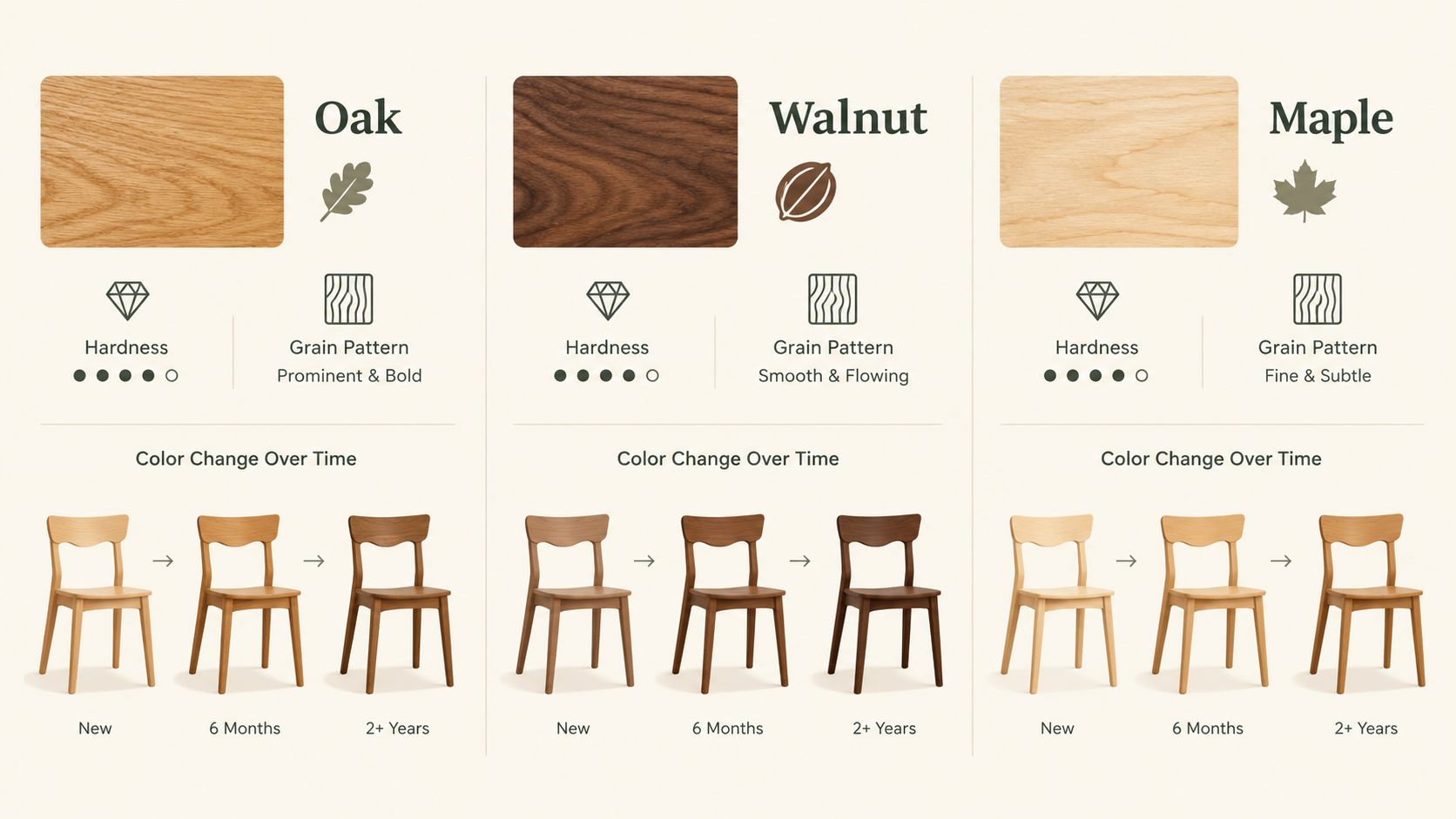
Solid oak, maple, walnut, and cherry create different grain patterns, colors, and visual weight. The designer discusses how each species relates to the room's architecture, whether the grain should stand out or remain quiet, and how the finish will respond to daylight and interior lighting.
Construction decisions belong in the same conversation. A solid-wood dining top must accommodate seasonal movement across the grain. Wood is anisotropic, so tangential movement is typically about 2%, radial movement about 1%, and longitudinal movement is minimal. Wide panels therefore need room to expand and contract, with details such as floating panels, slotted screw holes, or breadboard ends. Thos. Moser
For upholstered seating, the discussion covers frame construction, cushion feel, fabric performance, and whether top-grain or performance leather suits the household. Partner collections can broaden the available choices while keeping the conversation centered on use, care, and fit.
Samples make abstract choices tangible
A finish should be examined on an actual wood board whenever possible. Stain can look warmer or cooler beside different flooring, wall colors, and daylight. Matte, satin, and gloss sheens also change the formality of a piece. Fabric swatches belong beside the room's existing rug and upholstery, not only beneath showroom lights.
A digital visualizer can show fabrics, finishes, configurations, and approximate scale before the order is placed. It works like a paper floor plan with color added, helping homeowners spot an awkward proportion before materials enter production. 3D furniture configurator information
Confirmation ends with service planning
After dimensions, materials, finish, upholstery, and price are approved, the order enters production. The confirmation should list the agreed specifications and realistic lead time, allowing the homeowner to weigh patience against the room's urgency.
Vinson's White-Glove Delivery completes the process by bringing the furniture into the home, placing it, assembling it when needed, and removing packaging.
Timelines Costs and the Custom Spectrum
A dining room that must be ready for an upcoming gathering may call for an in-stock piece. An irregular living room, however, may justify waiting for a sectional sized around its walls and walkways. Semi-custom furniture serves the middle ground, offering meaningful choices within an established collection.
The practical decision depends on three conditions: how the room must function, how much adjustment it needs, and when the furniture is required. A faster purchase can be the wiser investment when the existing size and finish already work. Full custom earns its place when standard dimensions would leave unusable space or compromise daily comfort.
The following ranges are Vinson-specific planning benchmarks described for this buying framework, not universal industry prices. Final pricing depends on dimensions, materials, construction, upholstery, delivery requirements, and the selected partner collection.
Custom Spectrum at Vinson Fine Furniture
| Tier | Lead Time | Price Range (USD) | Flexibility |
|---|---|---|---|
| In-stock | Immediate pickup | Entry price points | Existing design, size, finish, and upholstery |
| Semi-custom | Typically 6 to 10 weeks | Dining tables: $1,500 to $4,500; case goods: $1,200 to $4,000; upholstered seating: $2,000 to $7,500 | Collection-based finish, fabric, and configuration changes |
| Full custom | Typically 12 to 16 weeks, including consultation and delivery | Dining tables: $3,500 to $12,000; case goods: $2,500 to $9,000; upholstered seating: $4,000 to $15,000 | Bespoke dimensions, species, design, finish, and upholstery |
A semi-custom dining set can suit a homeowner who wants a particular finish and seating arrangement without developing an entirely new form. Semi-custom upholstered seating can adjust fabric, leather, sectional arrangement, or motion features while retaining an established frame and collection structure. Coordinated solid wood bedroom furniture or occasional seating may also work well within this tier when the room needs a consistent material language.
Full custom makes more sense when a structural constraint cannot be solved by standard dimensions, or when the homeowner has a clear long-term brief. Specialty finishes, unusual dimensions, and customer-supplied fabric can extend the schedule. COM fabric also requires time for shipping, inspection, approval, and production handling.
For dining-specific planning, homeowners can review Vinson's information on a custom dining room table. The useful question is which tier solves the room's actual problem without paying for flexibility the room does not need.
Popular Customization Options Worth Choosing
A dining table may look right in a showroom yet crowd the walkway at home. That is why customization should begin with use, clearance, and maintenance, then move to appearance. Choose full custom when the room has a structural problem or the piece must meet a precise long-term brief. Semi-custom suits a homeowner who wants selected changes within an established design. In-stock furniture remains sensible when the room fits standard dimensions and the lead time matters more than tailoring.
Wood and finish choices
Wood species set the visual and tactile foundation. Grain is like the room's background texture, while color determines how strongly the piece speaks against floors, walls, and nearby furnishings.
| Choice | Visual character | Useful consideration |
|---|---|---|
| Solid oak | Defined grain and a grounded presence | Works well when texture should remain visible |
| Solid maple | Cleaner, more even appearance | Suits lighter, quieter compositions |
| Solid walnut | Deep color and pronounced richness | Can anchor a room with fewer decorative elements |
| Solid cherry | Warm tone that develops character | Complements traditional and transitional interiors |
Finish sheen changes how the surface behaves in the room. Matte feels relaxed and tactile. Satin gives a balanced glow for many dining and living spaces. Gloss reflects more light and can make the form feel formal, while also making surface marks and surrounding reflections easier to notice.
Edge and leg details influence the piece in the hand and at a distance. A softened edge feels approachable around a family dining table. A more architectural edge can make a broad top appear lighter. Tapered legs reduce visual weight, while a substantial trestle or pedestal gives the table a steadier stance.
Upholstery should match the household
Performance fabrics designed for spill and pet resistance can suit homes with frequent use. Natural fibers offer a softer, more organic hand, but their care requirements should be clear before selection. A fabric that looks beautiful under showroom lighting still needs to tolerate the household's actual routines.
Customer-owned material programs provide another path for a specific color or texture. Confirm yardage, shipping, inspection, approval, and compatibility before production begins. Cushion construction changes the sit as much as the fabric changes the look:
- High-resilience foam: Structured support with a more consistent shape.
- Down-wrapped cushion: A softer surface around a supportive inner core.
- Spring-down cushion: A responsive, layered sit for buoyancy with softness.
For upholstered furniture, abrasion testing commonly uses ASTM D4157, Wyzenbeek, and ASTM D4966, Martindale. ACT guidance identifies different abrasion performance levels for lower- and higher-traffic settings, so the rating should match the room rather than serve as a standalone quality label. ACT abrasion performance guidelines
Motion adds function and weight
Sectionals with power motion options, adjustable headrests, USB ports, or lay-flat mechanisms can improve comfort, especially in rooms used for extended sitting. Each mechanism also adds weight, moving parts, and installation requirements. Confirm doorway width, turns, final placement, and electrical access before approving the configuration.
Homeowners testing a layout on a phone or tablet may find a general guide to top furniture placement apps for realtors useful for judging scale before visiting the showroom. Digital planning helps establish proportion. A showroom sit-test still reveals cushion support, recline angle, swivel range, and the feel of the leather or fabric. Those observations often determine whether semi-custom adjustments are enough or whether full custom work is justified.
Preparing for Your Design Consultation
A consultation becomes more productive when the homeowner arrives with evidence from the room. The meeting isn't a sales visit to browse without direction. It's a working session where measurements, photographs, routines, and preferences become a usable design brief.
Bring the room into the conversation
The preparation checklist is straightforward:
- Measure wall-to-wall: Record length, width, ceiling height, door widths, stair landings, and tight turns.
- Photograph natural light: Capture several angles, including the view toward windows, built-ins, flooring, and adjacent rooms.
- Collect visual references: Bring two or three images that express the desired mood, scale, or silhouette rather than copying one complete room.
- Gather material samples: Flooring, rugs, paint cards, cabinetry, and existing upholstery help anchor wood and fabric choices.
- Describe real use: Explain whether the dining table handles family meals, homework, frequent entertaining, or all three.
The designer should also hear about constraints that may not appear in a photograph. A sectional may need to clear a hallway. A bedroom case may need to avoid a baseboard heater. A recliner may need enough space behind it to operate safely.
Useful questions cover construction method, joinery, wood sourcing, finish samples that can be viewed at home, warranty terms, care requirements, and realistic lead times. Vinson's guide to interior design initial consultation questions can help homeowners organize those topics before visiting the Easton showroom.
A productive consultation compares trade-offs. The homeowner doesn't need every answer in advance, but should know which compromises are acceptable and which ones would affect daily life.
Investing in Pieces Built to Outlast Trends
A custom piece earns its keep through years of daily use. A solid hardwood dining table, bedroom case, or fitted living room piece can remain useful as the room changes because its proportions, materials, and construction serve the household rather than a seasonal style.
Solid hardwood furniture is often described as lasting 20 to 50 or more years with basic care, and high-quality pieces can exceed 100 years. Oak and Loom The number matters less than what supports it: sound construction, a suitable environment, regular maintenance, and appropriate use. Those factors help explain why hardwood is treated as heirloom-grade instead of a short-cycle furnishing.
The room should guide the investment. In-stock furniture makes sense when standard dimensions fit and the timing is tight. Semi-custom works when a collection provides the required fabric, finish, or configuration without a fully individualized build. Full custom deserves consideration when awkward clearances, demanding routines, or a long-term need for precise fit justify added lead time and price.
Vinson Fine Furniture is a family-owned business serving Central Ohio, formerly known as Kitchen Tables & More, with North American manufacturing across Ohio, the United States, and Canada. Its value options include a documented 110% Low Price Guarantee, subject to conditions such as an identical item, a qualifying lower price, and the stated time window, plus a Clearance Gallery with savings of up to 70% on select pieces. Vinson's low-price guarantee information These choices let homeowners weigh a custom order against immediate clearance availability while considering use, fit, and longevity alongside appearance.
Visit Vinson Fine Furniture at Easton Town Center for a complimentary design consultation, practical sit-test, and guidance on solid hardwood dining, bedroom, and living room pieces. The In-Store Design Studio, Custom Order Program, 3D visualizers, Clearance Gallery, 110% Low Price Guarantee, and White-Glove Delivery support a path from room needs to furniture built for lasting use.