Best Furniture for Pet Owners: A Complete Buying Guide


Most advice about the best furniture for pet owners starts with a fabric swatch and ends there. That's the wrong starting point. A sofa can resist stains and still fail because a cat can reach its loose weave, a large dog launches onto an unsteady cushion, or muddy paws enter directly from the back door.
Pet furniture works better as an access system. The right choice accounts for claws, shedding, moisture, jumping, sleeping habits, room circulation, cleaning time, repairability, and the way people use the home. Dogs and cats create different pressures, and an indoor-only senior animal has different needs from a young, active pet that spends time outdoors.
Central Ohio homeowners also need furniture that supports a long ownership horizon. Vinson Fine Furniture, formerly Kitchen Tables & More, has served the Columbus area as a family-owned showroom focused on North American manufacturing, including Ohio, Indiana, and Canadian craftsmanship. The practical question isn't just which upholstery looks pet-friendly. It's which living room, dining room, and bedroom pieces will remain comfortable, attractive, serviceable, and sensible to maintain over the years.
Why Most Pet Furniture Advice Falls Short
The phrase pet-friendly fabric suggests that one material can solve every household problem. It can't. Upholstery faces separate demands from fur, claws, drool, muddy paws, urine, repeated jumping, and odor, while the frame, cushions, legs, and room layout face their own demands.
Pet ownership is far from a niche concern. Approximately 94 million U.S. households, about 71% of all households, owned at least one pet in the 2024–2025 National Pet Owners Survey, with dogs present in 68 million households and cats in 49 million. Those figures overlap because some homes own both, but they show why pet compatibility belongs in mainstream furniture planning. The American Pet Products Association reported approximately $158 billion in U.S. pet spending during 2024, further demonstrating the scale of pet-centered household decisions. The American Pet Products Association survey and industry report provides the broader context.
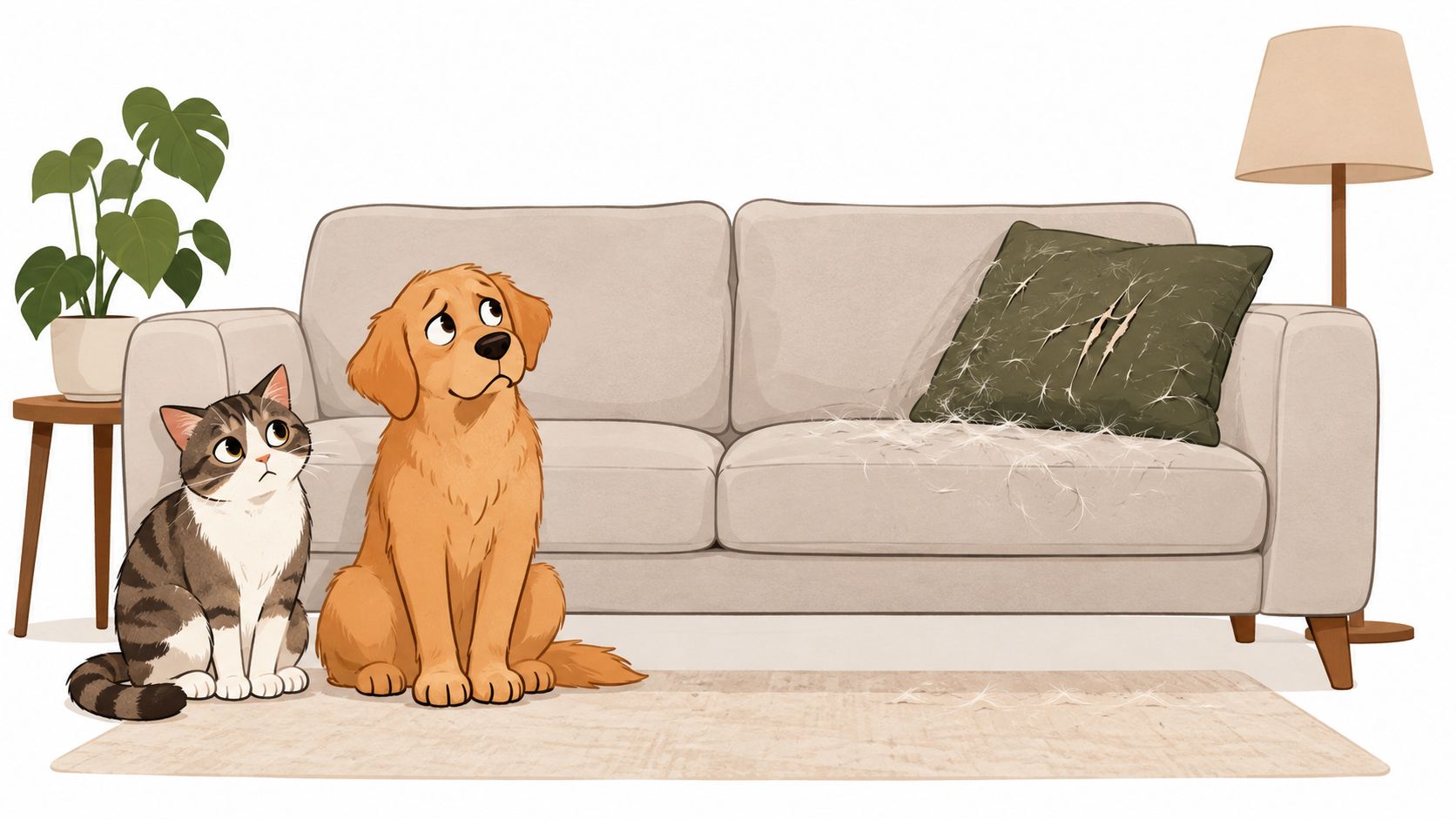
Furniture is part of the pet's route
A dog may enter through the mudroom, cross the living room, jump onto a sectional, and settle on one corner. A cat may climb from a console to a chair arm, scratch the side of a sofa, and sleep on a bedroom bench. A piece that performs well in isolation can still create problems if it sits directly in a launch path or blocks the animal's preferred route.
Cats deserve particular attention. A 2024 peer-reviewed study of 1,211 domestic cats documented sofas and chairs as scratching targets. In one reported category, 32.4% scratched only sofas, 7.5% scratched only chairs, and 5.5% scratched only furniture. The comparison category recorded 26.7%, 3.0%, and 1.6%, respectively. The study also associated undesirable scratching with factors such as play duration, nocturnal activity, playfulness, and the presence of children, with reported significance at p ≤ 0.05. The peer-reviewed feline scratching study supports placing a scratching post near a frequently used sofa or chair, not across the room as an afterthought.
Practical rule: A durable sofa paired with sensible access and nearby pet alternatives usually performs better than an expensive sofa chosen only for a high abrasion label.
The buying decision therefore has four parts. Select a resilient material, match the construction to the animal, plan the room around movement, and account for recurring maintenance. That framework produces better decisions than asking whether a fabric is "pet proof," a promise no responsible showroom consultant should make.
Pet-Friendly Fabrics and Frames Built to Hold Up
A pet-ready furniture choice starts with specifications, not a fabric name. Ask how the upholstery was tested, how it handles snagging and cleaning, and what supports it underneath. Apply the same scrutiny to the frame. A sofa that survives daily use but fails at the structure level becomes an expensive replacement.
Read the abrasion rating correctly
Wyzenbeek double rubs and Martindale cycles use different test methods. Wyzenbeek rubs fabric along the warp and weft, while Martindale uses repeated circular rubbing against standard wool textile. Their counts cannot be compared directly.
For a heavily used sofa or upholstered chair, look for at least 30,000 Wyzenbeek double rubs or 30,000 Martindale cycles. 40,000 Martindale cycles or more provides a wider durability margin. Kvadrat's upholstery performance indicators explains why the testing method matters.
Abrasion is only one part of the specification. Ask about:
- Tear strength and yarn slippage, which show how the textile responds to pulling and concentrated force.
- Snag behavior, particularly in homes with cats or dogs whose nails catch exposed yarns.
- Dimensional stability and colorfastness, which influence how the fabric looks after cleaning.
- Cleaning code and approved products, so accident treatment does not harm the finish.
- Cushion access, including removable, reversible, or replaceable components that can lower maintenance cost over time.
Tightly woven microfiber and dense performance weaves give claws fewer individual yarns to catch. Loose loops and delicate textures create more snag points. Smooth top-grain leather releases hair with little effort, but determined claws can leave visible marks. Choose leather when wipe-clean upkeep matters more than preventing every sign of use.
Put the frame on the same standard
A solid hardwood frame, including solid cherry, oak, maple, or walnut, gives a pet household a stronger foundation than upholstery alone. Careful joinery, dense foam, and properly supported seating help the piece handle repeated sitting, jumping, and shifting loads. For bedrooms and dining rooms, solid-wood construction provides a sensible baseline. Custom upholstered seating lets homeowners specify fabric, leather, cushion, and motion choices together.
A custom order program can support fabric and finish selection, with 3D visualizers that let homeowners review the proposed result before production. Handcrafted furniture from Quebec, Canada, offers a North American option while remaining distinct from American-made lines.
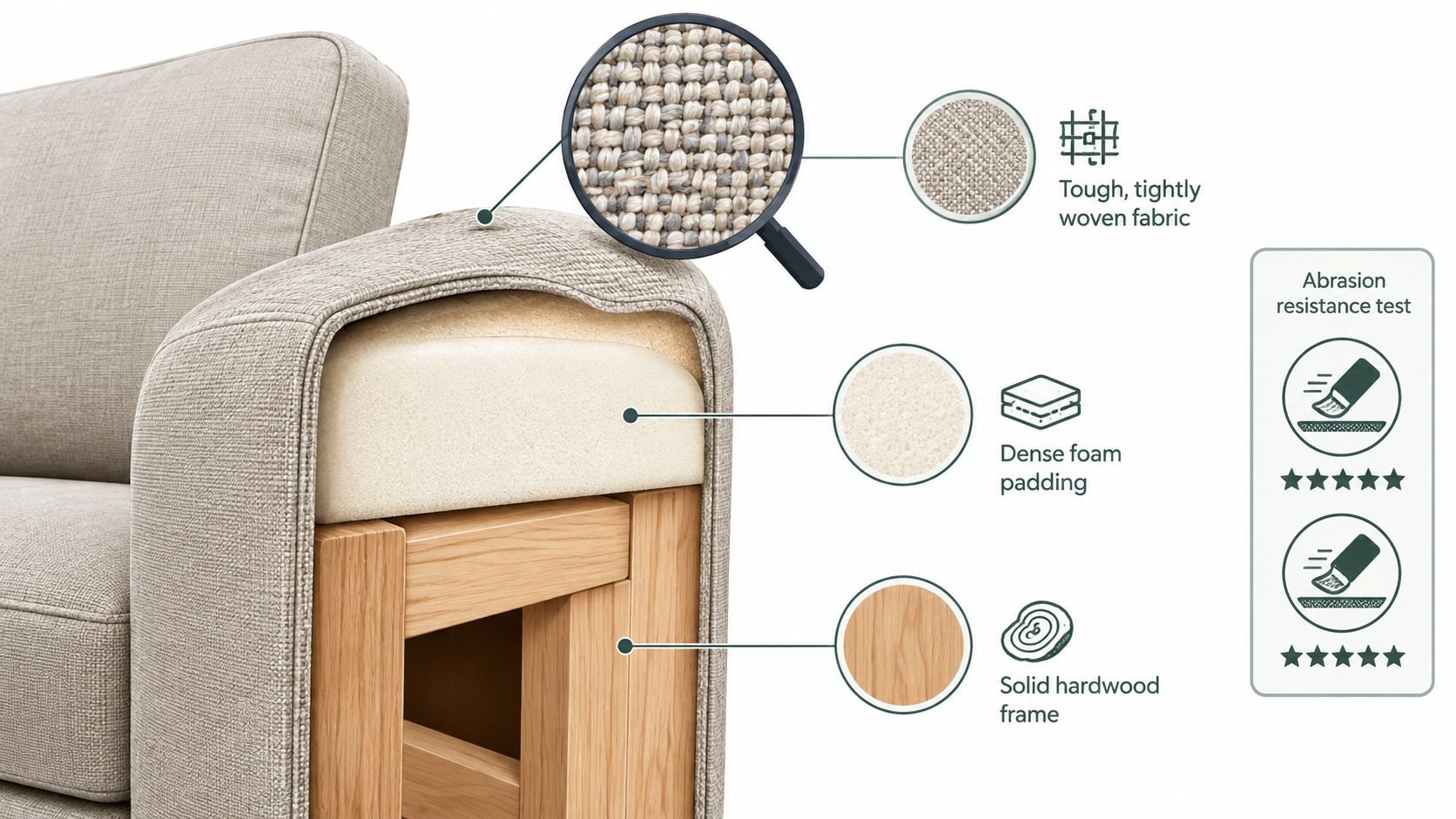
Review Vinson's guide to pet-friendly furniture fabrics before bringing your room dimensions, pet behavior, and cleaning routine into the showroom. The strongest package combines high abrasion resistance, low snag potential, solid hardwood construction, cleanable upholstery, and serviceable cushions. That combination reduces replacement risk and keeps maintenance manageable throughout the furniture's working life.
Matching the Furniture to the Pet and the Household
The right material depends on what the animal does. A shedding dog, a climbing cat, a senior pet, and a pair of young animals can all use the same sofa differently.
| Pet Profile | Primary Risk | Upholstery Priority | Configuration Notes |
|---|---|---|---|
| Outdoor or muddy dog | Moisture, grit, repeated entry traffic | Tightly woven, cleanable fabric or suitable leather | Place a washable throw or paw-cleaning station near the entry path |
| Heavy-shedding dog | Hair across cushions and seams | Smooth leather or dense, low-pile textile | Favor accessible cushions and avoid deep hair-catching texture |
| Large or young dog | Jumping, launching, concentrated impact | Strong abrasion performance and stable cushions | Choose broad, secure seating with no wobbling access point |
| Indoor cat that scratches | Claw snagging and surface damage | Dense, tight weave with low loop exposure | Put a scratching post beside the preferred sofa or chair |
| Senior dog or cat | Slipping, awkward climbing, joint strain | Supportive cushions and predictable access | Select lower-risk entry points and avoid forcing the animal to leap |
| Multi-pet household | Combined hair, traffic, and odor | Cleanable, resilient upholstery with replaceable parts | Create separate resting zones to distribute use |
Cats deserve a behavior-specific plan. The feline study cited above found that scratching posts worked better when placed in areas the cat frequented. That means a post beside the favorite chair has more practical value than a decorative post hidden in an unused corner. The sofa should also avoid loose-loop upholstery, while the room should provide an acceptable climbing and scratching route.
Dogs create a different pattern. Outdoor dogs bring mud and moisture, while large or youthful dogs can land with force on one cushion or arm. A stable sectional, a protected high-contact corner, and a washable throw zone are more useful than choosing fabric by color alone. Medium-to-dark heathered or patterned textiles can reduce the visual impact of hair and minor discoloration, but they don't replace proper cleaning.
Household cost also varies by breed, size, grooming needs, and likely maintenance burden. Homeowners considering the broader cost of living with a particular dog can consult PetCostEngine breed cost data as one planning resource, then apply those realities to the furniture decision.
Delicate boucle, loose linen, and high-pile chenille belong in low-contact settings, not on the main seat where claws, paws, and daily traffic meet. For a more detailed decision filter, Vinson's kid-friendly and pet-friendly furniture guide can help translate household behavior into a practical shortlist.
Room-by-Room Furniture Planning With Pets in Mind
A pet-ready home doesn't need to look defensive. It needs clear routes, stable landing points, and materials assigned to the places that receive the most contact.
Living room
A Columbus family with an active dog and an indoor cat may start with a sectional, but the configuration matters more than the label. A chaise or corner seat can become the dog's regular resting zone, while a nearby swivel chair gives a cat a raised position without turning the sofa arm into a launch platform. A pet perch or bed should sit close enough to compete with the human seating, not be exiled to a distant corner.
Power reclining and motorized motion require special attention. Keep cords protected, preserve the full travel path, and avoid placing a recliner where an animal can hide beneath moving components. Rockers, gliders, and swivel chairs can work beautifully in pet homes when their base is stable and their movement is kept clear of sleeping animals.
A washable throw over the highest-contact cushion protects the upholstery without hiding the entire piece. Sectional size should follow the room's traffic pattern, not a wish list for maximum seating. A useful family sofa buying guide can help homeowners think through scale before a showroom sit-test.
Dining room
Dining furniture faces fur, crumbs, damp wiping, and chair-leg traffic. Solid oak, maple, cherry, or walnut tables with an appropriate finish provide a durable surface for routine cleaning, while chair upholstery should be selected for the household's actual spill and shedding profile.
Leg design matters. Smooth, less exposed structural components can reduce chewing opportunities, and metal legs may reduce the particular risk of wood clawing or chewing. A solid hardwood bench can simplify hair removal and reduce the number of upholstered surfaces, but it should remain comfortable enough for people to use daily.
Canadel's handcrafted Quebec construction offers a North American dining option through the Custom Order Program. The right finish still depends on the manufacturer's care instructions, because a durable table isn't permission to use any cleaner.
Bedroom
A bench at the foot of the bed creates a designated transition point for a cat or dog. It gives the animal a place to pause, climb, or rest without making an upholstered headboard the default landing zone. A washable bed throw can then protect the primary sleeping surface while remaining easy to remove before human use.
Mavin bedroom furniture, made in Ohio, brings solid hardwood construction to the room where pets often spend quiet hours. The Vinson guide to furnishing a new home offers a broader framework for coordinating room scale, circulation, and long-term selections.
The best layout feels calm because it anticipates movement. Entry routes, pet beds, scratching posts, benches, and seating should work together rather than forcing pets to improvise on delicate furniture.
Cleaning, Maintenance, and the Cleaning Code
A durable textile still needs a routine. Cleaning codes tell the homeowner which methods the manufacturer permits, but they don't make every upholstery fabric suitable for every accident.
Understand what the code permits
- W: Water-based cleaning may be permitted, subject to the manufacturer's instructions.
- S: A solvent-based cleaner may be required or permitted, because water can create rings or affect the finish.
- W-S: Either water-based or solvent-based methods may be allowed, but testing remains necessary.
- X: Vacuuming or light brushing may be the only approved maintenance, with professional advice needed for stains.
A performance label isn't enough. Ask whether the claim applies after repeated cleaning, whether the fabric has a moisture barrier, and which household products are approved. Water repellency can delay penetration, but it doesn't guarantee odor control. Once urine, vomit, or another biological fluid reaches foam, residue and odor become harder to remove.
Research on engineered superhydrophobic polyester illustrates why surface behavior and soil removal are separate performance questions. Furniture buyers should prioritize tightly woven, low-absorption upholstery, protective liners, and removable covers where the design allows them.
Use a repeatable care routine
Daily: Remove visible fur, crumbs, and grit before they work into seams. A soft brush or approved handheld attachment is safer than aggressive scraping.
Weekly: Vacuum cushions, seams, backs, and the gap beneath removable seats with an upholstery tool. A stiff floor head can pull at textile surfaces and create unnecessary wear.
After an accident: Let loose debris dry when appropriate, remove it gently, and blot the affected area with a clean cloth. Don't scrub. If the cleaning code permits mild soap and water, test the solution in an inconspicuous location first, then document any change in color, texture, or finish. Vinson's upholstery stain-removal guidance provides a useful reference for this process.
Quarterly: Review seams, cushion zippers, legs, and motion mechanisms. Rotate or reverse cushions when the manufacturer permits it, and arrange professional cleaning according to the fabric and leather care instructions.
Leather needs its own protocol. Remove hair with a soft cloth, treat spills promptly, and use only approved leather products after testing a concealed area. Homeowners dealing with outdoor pet odors may also find practical context in this guide to removing dog urine smell from turf, especially when planning the transition between outdoor and indoor spaces.
Total Cost of Ownership and Long-Term Value
The best furniture for pet owners isn't automatically the piece with the highest initial price. It's the piece that keeps serving the household after maintenance, repair, cushion replacement, and daily inconvenience are counted.
A useful ownership review asks:
- What will require cleaning? Check the fabric code, approved products, and access to professional care.
- What can be replaced? Reversible or replaceable cushions, covers, and hardware can extend the useful life of the main frame.
- What does the warranty exclude? Pet damage may be excluded even when ordinary structural defects are covered.
- How will the piece be repaired? A documented manufacturer, available parts, and serviceable construction matter when the household uses furniture heavily.
- Will the layout reduce damage? A nearby pet perch, protected landing zone, or designated throw can reduce concentrated use.
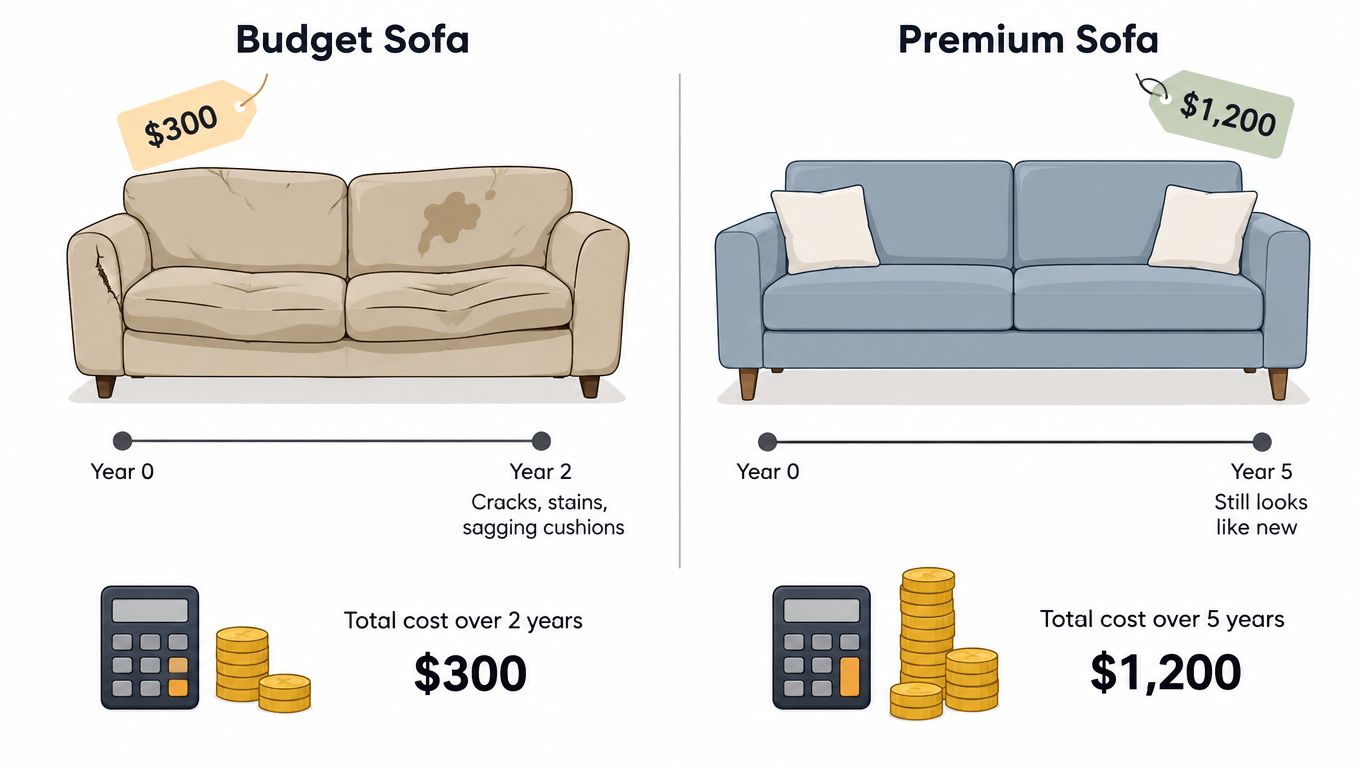
A premium sectional with a documented cleaning code, replaceable cushions, and a stable frame may require more at purchase but offer better control over future maintenance. A lower-value sofa without those features can become difficult to clean, impossible to match after damage, and expensive to replace when one cushion or arm fails. The comparison should focus on the full ownership period, not an isolated showroom price.
Solid hardwood supports the investment
Solid hardwood construction gives homeowners a stronger repair and longevity foundation. In an Ohio Amish furniture cluster study, the U.S. Forest Service estimated annual hardwood consumption at approximately 43.5 million board feet, equivalent to about 11% of Ohio's total hardwood-lumber production and 19% of its appearance-grade hardwood production. The study also estimated roughly 2,991 jobs in the Ohio cluster and associated Amish furniture with solid-wood construction and quality craftsmanship. The U.S. Forest Service research on Ohio's Amish furniture cluster offers useful regional context for evaluating solid hardwood as a long-term household investment.
That standard aligns with Vinson's focus on solid cherry, oak, maple, and walnut rather than disposable construction. Smith Brothers furniture in Easton can address custom upholstered seating, Mavin bedroom furniture supports Ohio-made solid-wood planning, and Canadel provides handcrafted Quebec dining options within a North American approach.
The Vinson guide to furniture longevity can help homeowners evaluate frame construction, maintenance, and serviceability before choosing a major piece. At the Easton Town Center showroom, the In-Store Design Studio and Complimentary Design Consultations add the practical sit-test: clients can compare sectionals, reclining and power motion pieces, swivel chairs, rockers, gliders, top-grain leather, and performance fabrics in person. The Low Price Guarantee provides a 110% refund of the difference when its terms are met, while the Clearance Gallery offers savings of up to 70% on qualifying floor samples, overstocks, and seasonal closeouts.
Visit Vinson Fine Furniture at Easton Town Center for a complimentary design consultation and a real sit-test of solid hardwood dining, bedroom, and living room furniture suited to the household's pets. The Custom Order Program can compare fabrics, finishes, 3D visualizers, top-grain leather, performance upholstery, and motion options from Smith Brothers, Mavin, and Canadel, with White-Glove Delivery available for the finished selection.