Your Guide to How to Furnish Living Room with Style


An empty living room creates a strange mix of possibility and pressure. The walls are finished, the flooring is down, the light is right, but the room still doesn't feel like home. More often, the challenge isn't starting from nothing. It's dealing with a mismatched sofa, a table that's too small, chairs that never quite relate to each other, and a layout that makes conversation feel awkward.
That's where most fast-furniture advice falls short. It treats furnishing as a checklist of disposable purchases instead of a long-term decision about comfort, scale, and construction. A better approach starts with the idea that the living room carries daily life. It hosts quiet mornings, visiting family, movie nights, and the routines that define a home over time.
The wider market supports that shift toward thoughtful buying. The global living room furniture market reached $240.4 billion in 2026 and is projected to grow to $339.6 billion by 2035 at a 3.9% CAGR, with growth tied to modular furniture, compact living, and smart integration, according to Global Market Insights reporting summarized here. That scale reflects how seriously homeowners take foundational living room purchases.
For homeowners refining the finishing layer after the main furnishings are chosen, thoughtful artwork helps a room feel collected rather than staged. A resource on decorating with Brooklyn wall art offers a useful example of how smaller visual pieces can personalize a room once the core furniture is settled.
From Empty Space to Enduring Style
A well-furnished living room doesn't begin with accessories. It begins with restraint. The strongest rooms are built the same way well-made furniture is built: with sound structure first, then character layered in.
That matters even more for the investment homeowner. A sofa or sectional isn't a seasonal experiment. Neither is a solid-wood coffee table, a swivel chair with real comfort, or a leather recliner with smooth motion engineering. These pieces set the tone for the room's lifespan.
Furnishing a living room well means choosing fewer, better pieces and letting them carry the room.
In Central Ohio, that long-view mindset has special weight. Homes range from classic suburban plans to custom builds with open great rooms, fireplaces, and challenging sightlines. Those rooms need more than trend-driven styling. They need furniture with presence, scale, and materials that improve with age.
A family-owned showroom rooted in the legacy of Kitchen Tables & More and now serving Columbus from Easton Town Center approaches that problem with a clear philosophy: buy the bones of the room once, and buy them well. That means heirloom-quality construction, local and regional craftsmanship, Amish-made excellence in solid wood, and customization that allows the room to feel personally designed instead of assembled.
Laying the Foundation with Space Style and Budget
Before a single sofa is selected, the room needs a working plan. This is the step many homeowners skip, and it's usually why expensive purchases still leave the room feeling unsettled.
Start with measurements that affect real life
A floor plan should answer practical questions before it addresses style.
- Measure the room envelope: Note wall lengths, window placement, fireplace depth, door swing, and where the television will live if it shares the room.
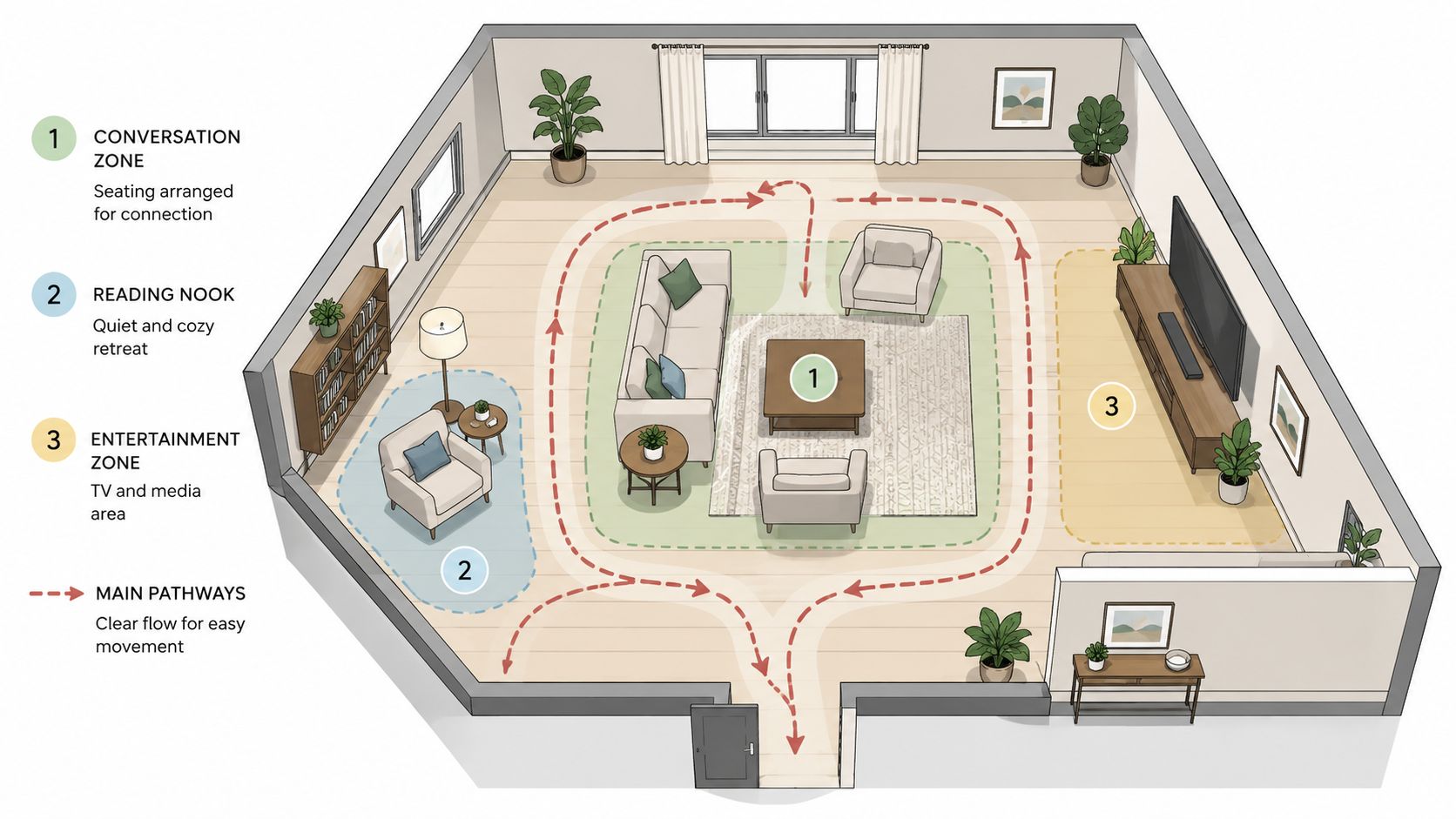
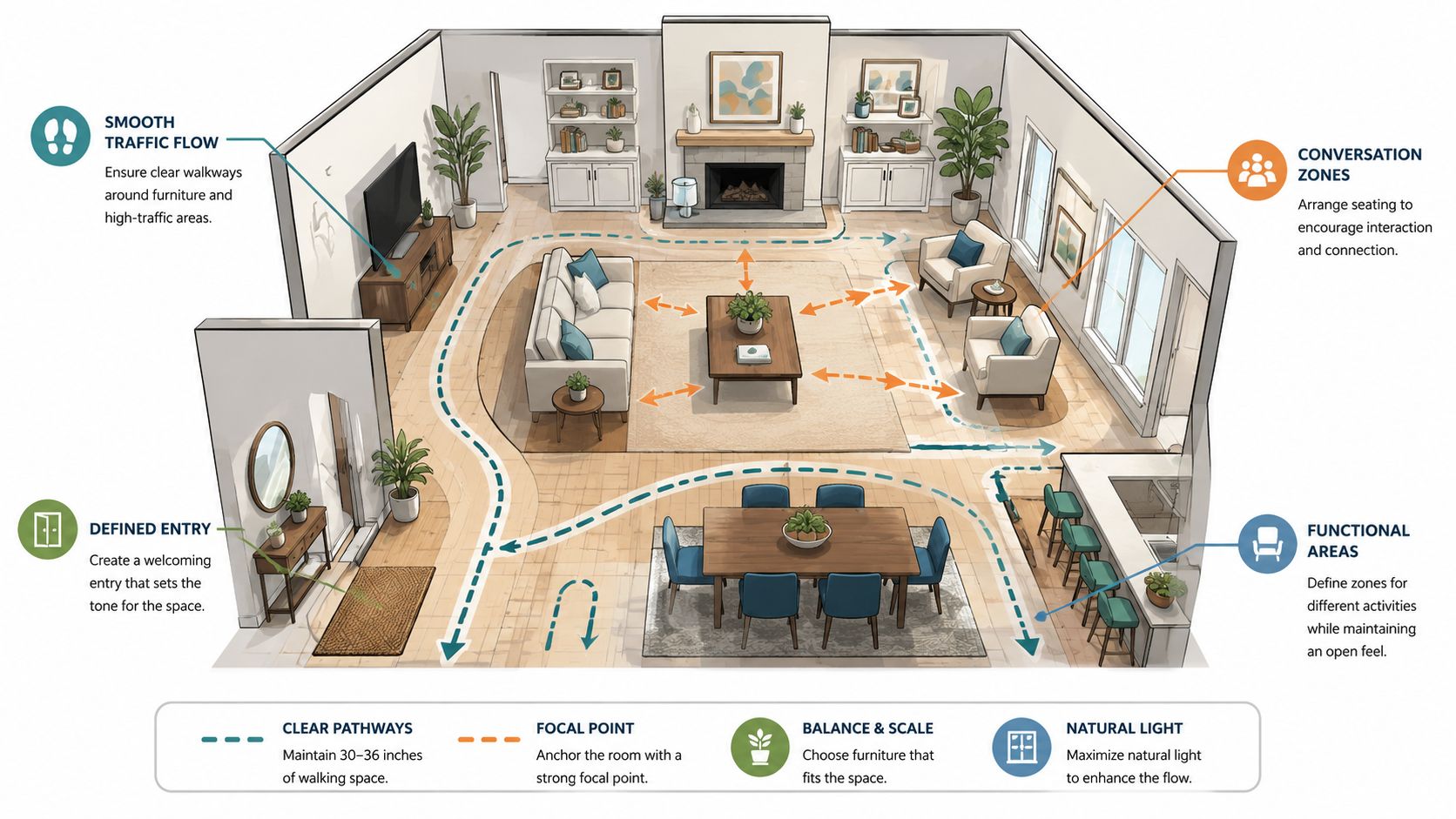
- Track traffic paths: Mark the route people naturally take from entry to seating, from seating to adjoining spaces, and around key furniture.
- Choose one primary focal point: In some rooms it's the fireplace. In others it's the view, a media wall, or the main seating arrangement itself.
Rooms rarely fail because of one bad piece. They fail because circulation and focal points were never resolved. A homeowner trying to learn how to furnish living room spaces efficiently should think in zones rather than isolated objects.
Define style without chasing every trend
Style should guide the room, not trap it in one moment. That's why core furniture should feel trend-resistant even when the room has personality.
Minimalist Scandinavian and contemporary designs commanded 38% of the market in 2025, according to Dataintelo's living room furniture market report. The more useful takeaway isn't only that minimalism is popular. It's that homeowners increasingly build around enduring pieces first, then shift the room's mood with smaller accents. The same reporting notes rising interest in richer wood finishes such as solid walnut and cherry, which points to a desire for permanence and quality.
A helpful way to narrow style is to sort preferences into three buckets:
Architecture of the room
Formal fireplace? Open-concept great room? Tall ceilings? The architecture should influence the furniture silhouette.Surface preference
Some homeowners want buttery top-grain leather, others prefer specialized performance fabric, while many want solid walnut, maple, cherry, or oak to ground the room.Mood of the space
Calm and quiet. Warm and layered. Clean and contemporary. Those are mood decisions, and they shape everything from arm profile to finish depth.
For homeowners who want help translating loose preferences into a workable room plan, an in-store design consultation or a guided resource like this article on how to start the interior design process for a room can make the first decisions much clearer.
Practical rule: Don't build the room from accent pieces outward. Build it from the largest, longest-lasting items inward.
Set a budget around lifespan, not impulse
Budgeting for a living room works better when the categories are separated by longevity.
- Anchor purchases: seating, primary table surfaces, major storage
- Support pieces: side tables, occasional chairs, lighting
- Flexible layer: pillows, art, throws, smaller decorative accents
That framework protects the budget from a common mistake. Homeowners often overspend on short-term styling, then compromise on the sofa or sectional they'll use every day. A better allocation gives the strongest share of the budget to the pieces that carry structural comfort, visible weight, and daily use.
Choosing Your Anchor Pieces with Confidence
A couple walks into the showroom with paint samples, a floor plan, and one familiar concern. They do not want to buy a sofa twice. That is the right starting point, because anchor pieces set the comfort, scale, and staying power of the whole room.

The anchor is usually the sofa, sectional, or primary motion seating. It holds the most visual weight, takes the hardest daily use, and has to keep its shape and comfort through years of family life. If that piece is undersized, overstuffed, or built with weak internal support, every other decision in the room starts compensating for it.
What strong seating feels like
Well-made seating feels settled the moment you sit down. The frame stays quiet. The cushion recovers cleanly. Top-grain leather has depth and softness instead of a slick surface finish. Motion features should operate smoothly and stop precisely where you want them.
For homeowners shopping for custom leather sectionals in Columbus or custom living room seating near Easton, differences usually come from construction details that are easy to miss on a screen:
- Frame integrity: solid hardwood or other durable bench-made construction that resists racking and loosening
- Seat support: suspension and cushion design that keep their comfort instead of flattening out early
- Upholstery quality: top-grain leather and better-grade fabrics that wear in with character
- Motion engineering: reclining and power mechanisms that feel controlled, quiet, and dependable
That is why the sit-test matters so much. Online photos can help with style direction, but they cannot tell you whether the seat depth supports a proper conversation posture, whether the back angle suits an evening of reading, or whether the arm height feels right every day. In the showroom, those answers come quickly.
Customization solves practical problems
A good sofa choice is rarely just about color. It is about fit, proportion, and how the piece will live in the room for the next decade or longer.
The right arm profile can free up inches in a tighter floor plan. A firmer cushion can serve taller homeowners better than a softer, deeper seat. A sectional with the correct return can preserve a clean path to windows, a fireplace, or the hall instead of blocking movement. Those are the decisions that separate a room that merely looks finished from one that feels right every day.
At Vinson Fine Furniture, custom ordering helps clients adjust those details before the piece is built. Fabric, top-grain leather, configuration, cushion feel, and scale are not small cosmetic choices. They are how a showroom model becomes a long-term piece that belongs in your home.
A practical buying framework helps narrow the field:
| Decision Point | What to Look For | Why It Matters |
|---|---|---|
| Seat depth | Upright support or deeper lounge seating | Changes daily comfort and posture |
| Arm shape | Track, rolled, sculpted, or slim profiles | Affects visual mass and usable seat width |
| Upholstery | Top-grain leather or performance fabric | Influences feel, care, and long-term aging |
| Motion | Power recline or stationary design | Changes convenience, profile, and placement |
| Configuration | Sofa, sectional, swivel pairing, recliners | Shapes conversation and traffic flow |
Motion seating deserves a closer look
Motion furniture has improved, but it still deserves careful evaluation. Some pieces offer comfort for a short showroom sit and lose their appeal once they dominate the room visually. Better examples keep a refined profile when closed, offer full support when open, and feel mechanically smooth rather than busy or oversized.
I usually advise clients to judge motion seating in two positions. First, look at it across the room as a design piece. Then sit in it long enough to notice head support, footrest position, and how naturally the mechanism responds. Both matter if the goal is a living room that will age well rather than feel dated after a few seasons.
A focused guide on what to look for when buying a sofa can help refine those decisions before an in-person visit.
Good anchor seating earns its place through comfort, proportion, and construction. Style matters, but lasting value starts inside the piece.
The Hardwood Standard for Tables and Storage
A living room shows its age fastest in the pieces people touch every day. Coffee tables collect feet, trays, books, and the occasional dropped remote. End tables get dragged a few inches at a time. Drawer boxes and cabinet doors either keep working cleanly, or they start to loosen and complain.
That is why tables and storage deserve the same scrutiny as seating. In our showroom, these pieces are built from solid hardwood rather than engineered wood, MDF, or particle board. The difference shows up in weight, joinery, repairability, and how the surface looks after years of real use. For a closer look at species, grain, and long-term performance, see this guide to choosing the right hardwood for longevity and style.
Why solid wood changes the room
Solid wood adds structure to a room visually and physically. It has depth under the finish, variation in the grain, and a natural presence that thinner materials rarely match. Light moves across it differently through the day. Small marks usually read as lived-in character, not failure.
That matters to homeowners seeking the same integrity in adjoining living spaces. Clients who care about lasting construction usually want living room tables and storage that can stay with the house, adapt through redesigns, and still feel right twenty years from now. Fast furniture rarely offers that flexibility.
Solid Hardwood Characteristics at a Glance
| Wood Type | Grain Pattern | Natural Color | Best For |
|---|---|---|---|
| Cherry | Fine, smooth, elegant | Warm reddish brown | Refined tables, storage pieces, classic interiors |
| Oak | Pronounced, strong, visible | Light to medium brown | Heavily used tables, grounded traditional rooms |
| Maple | Subtle, clean, even | Creamy light tone | Transitional designs, cleaner silhouettes |
| Walnut | Rich, flowing, refined | Deep brown | Statement tables, darker and more tailored spaces |
What each hardwood contributes
- Cherry: Warm and subtly distinctive. It suits rooms where the wood should add richness without demanding attention.
- Oak: Clear grain and visible substance. It works well for households that want durability to show, not hide.
- Maple: Cleaner in appearance, with a more controlled grain. It fits transitional spaces and simpler silhouettes.
- Walnut: Deep in tone and naturally expressive. It pairs especially well with top-grain leather and gives a room a settled, lasting presence.
A good coffee table should hold up to daily life, but it also has to earn its place visually. The best pieces do both. They anchor the seating area, provide useful surface area, and age in a way that still feels intentional years later.
Tables and storage should not be disposable fillers. They should be the hardwood pieces that make the room feel established from day one and worth keeping for decades.
Perfecting Room Flow and Layout
A well-made sofa or solid hardwood table will never feel right in a room that is awkward to move through. Layout decides whether the space feels settled, welcoming, and easy to live in for years.
Use conversation distance instead of guesswork
Start with the seating group, because that is where daily life happens. Seats should be close enough for easy conversation and open enough that nobody feels crowded. Vinson shares practical placement advice in this guide on how to arrange a living room, and the principle is straightforward. People should be able to talk comfortably without raising their voices across the room.
Large rooms often create the same mistake. Homeowners spread every piece outward to fill square footage, then wonder why the room feels formal and disconnected. A better plan is to pull the main seating inward and let the open areas around it stay open.
Protect the walkways
Movement matters as much as the view. Clear paths between major pieces let people cross the room naturally, reach a chair without sidestepping a table, and sit down without shifting half the layout.
Floating seating slightly off the wall often improves the room more than buying another accent piece. It gives the arrangement depth, keeps the perimeter from feeling heavy, and helps the center of the room read as one deliberate living area. I often advise clients to stop treating every wall as a parking space for furniture. Better rooms breathe a little.
If a household is planning a relocation before setting the room up, your ultimate guide to moving furniture can help with the practical side of getting larger pieces into place safely.
Anchor the room with the right rug
A rug should hold the seating group together, not sit under the coffee table like an afterthought. The strongest layouts allow the front legs of the sofa and chairs to rest on the rug so the room reads as one complete composition.
This is especially important with heirloom-quality furniture. A substantial leather sofa, a hardwood coffee table, and well-scaled occasional chairs deserve visual structure under them. If the rug is too small, even excellent furniture looks scattered. If the rug is properly sized, the room feels grounded and finished.
A practical layout check
- Build the room around conversation: Place seating where people will gather.
- Keep main paths open: Walking through the room should feel easy and direct.
- Pull key pieces off the perimeter: A little space around the edges gives the layout depth.
- Use a rug that supports the full group: It should visually connect the seating, not isolate the table.
- Test the arrangement in person: Sit in each seat, check the sightlines, and confirm the spacing feels natural before committing.
That last step matters. Fast-furniture guides rarely account for how a room feels once people sit down, reach for a drink, or move around the coffee table. In the showroom, those details become clear quickly, and they are often the difference between a room that looks finished for a season and one that lives well for decades.
Bringing Your Vision Home with Confidence
Late in the process, confidence comes from knowing the room was furnished to live well for years, not merely to look complete on delivery day. The sofa has passed the sit-test. The tables have the weight and joinery to earn their place. The leather, wood finish, and scale all support the way the household spends time together.

Value matters when the pieces are built to last
Long-term furniture should come with clear pricing and clear expectations. That matters even more with solid hardwood case goods, custom upholstery, and top-grain leather seating, because these are purchases people expect to keep for a decade or longer. A low price guarantee helps remove doubt. So do well-chosen clearance pieces, especially floor samples and closeouts that give buyers access to better materials without settling for disposable construction.
I often advise clients to look at total value, not only the ticket price. A cheaper room can cost more if cushions flatten early, veneers chip, or undersized pieces need replacing once the household changes. A well-made living room usually asks for more thought up front, but it rewards that discipline with comfort, repairability, and a look that does not date itself in two seasons.
Delivery should match the quality of the purchase
The final handoff matters. Heavy hardwood tables, leather motion seating, and custom pieces need careful placement, assembly, and inspection once they reach the home. Good delivery service protects corners, flooring, doorways, and the furniture itself. It also saves clients from the common mistake of forcing a large piece into a room before checking the turn, the staircase, or the exact wall clearance.
For households coordinating a relocation, your ultimate guide to moving furniture is a useful planning reference for timing, access, and room preparation before larger pieces arrive.
Homeowners who want a clearer picture of setup and in-room placement can review what white-glove delivery service includes before scheduling delivery.
The room feels finished when each piece arrives safely, lands in the right spot, and works the way it should from the first evening at home.
The living rooms that hold up over time usually come from steady decisions. Accurate measurements. Honest budgeting. A willingness to sit in the furniture before ordering it. In our Easton showroom, that process becomes tangible. Clients can test seat depth, compare wood species, examine finish samples in person, and make informed choices that favor permanence over trend. That is how an empty room becomes a lasting one.