Oak vs White Oak: A Buyer’s Guide to Solid Hardwood


The most popular advice about oak vs white oak is also the least useful: white oak is not “better oak.” Red oak and white oak belong to different botanical groups, with different pore structures, grain behavior, finishing responses, and moisture performance. The right selection depends on the room, the finish, the maintenance habits, and whether the furniture needs to tolerate everyday family life or mainly host formal occasions.
For a homeowner choosing a solid hardwood table intended to stay in the family for decades, prestige is a poor decision rule. Pore structure, tyloses, grain orientation, finish quality, and humidity exposure matter more than a label. The same logic applies to dining tables, bedroom casegoods, living room tables, and occasional seating.
At the Easton design studio, the practical question is simple: which species makes sense for the way the household lives? The answer may point toward red oak in one room and white oak in another.
Why Oak vs White Oak Is the Wrong Question to Ask First
White oak has earned a premium reputation for good reasons. It has a tighter pore structure, stronger moisture resistance, and a refined grain that works beautifully under a clear matte finish. But those qualities don't make red oak an inferior material. They make the two species better suited to different jobs.
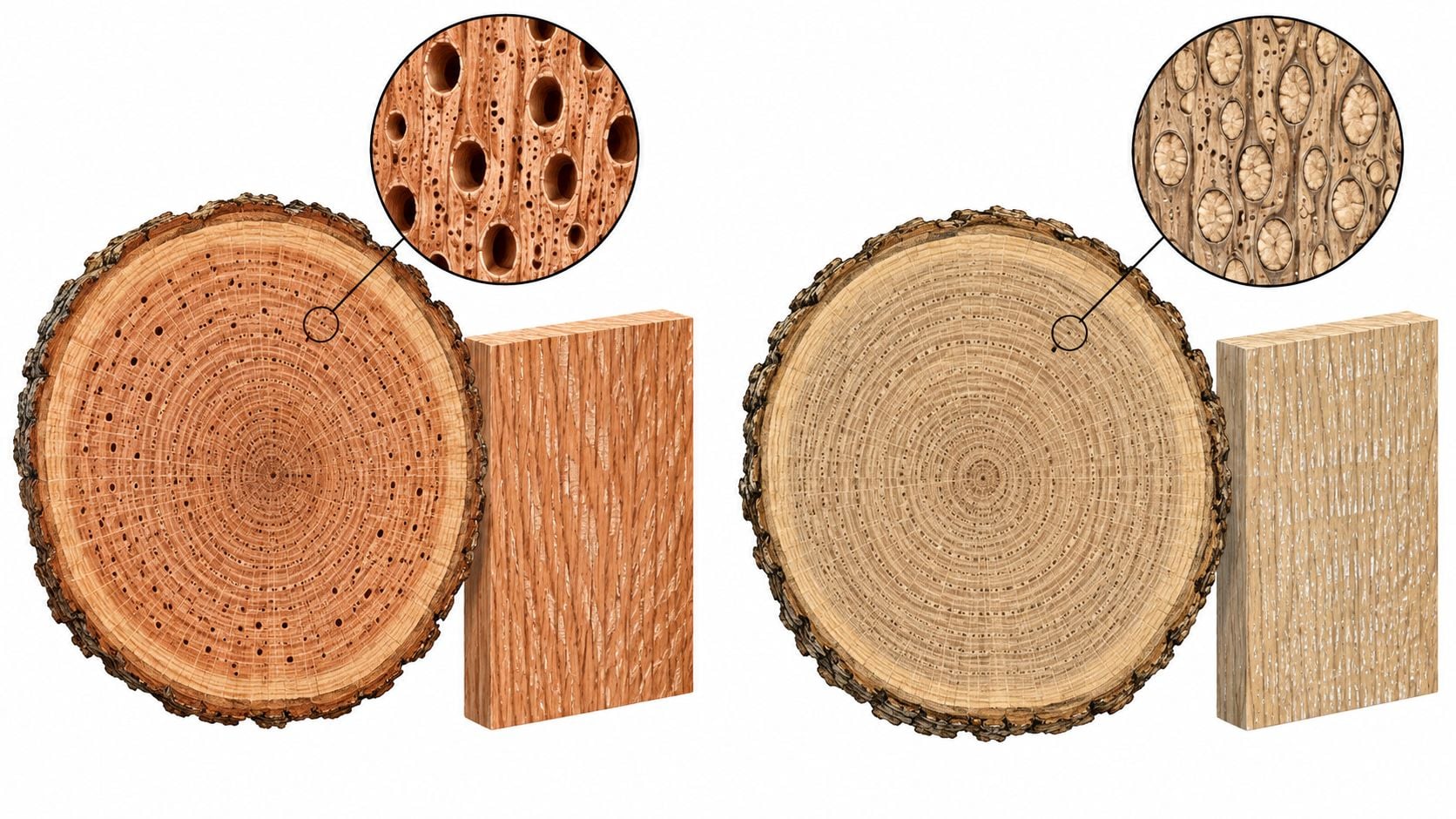
The distinction begins inside the wood itself. White oak contains tyloses, natural structures that plug many pores. Those plugged pores slow water movement and help white oak resist decay and permeability more effectively than red oak. Red oak has more open pores, so it absorbs moisture more readily. That can be a disadvantage around spills and damp conditions, but it can also produce the warm, expressive grain that defines traditional furniture.
Quality isn't the same as suitability
Both species can become excellent solid hardwood furniture when the lumber is properly selected, dried, machined, joined, and finished. A well-built red oak table with sound joinery can be a better purchase than a poorly made white oak table. Species alone can't compensate for weak construction or an unsuitable finish.
The buyer should ask four questions before comparing stain samples:
- Where will the piece live? A dining room with controlled conditions presents different demands from a busy kitchen or enclosed porch.
- How will the surface be used? Homework, meals, crafts, and daily cleanup call for a different tolerance than occasional holiday dining.
- What finish is desired? Clear finishes reveal figure, while darker stains emphasize pore variation.
- What visual language fits the room? Red oak brings pronounced grain and warmer pink undertones. White oak tends toward a quieter, more linear appearance.
Practical rule: Choose white oak for its environmental advantages, not because a showroom label makes it sound more prestigious.
North American white oak is also a substantial commercial resource. The species accounts for 15.5% of total U.S. hardwood growing stock, with an estimated 2.26 billion cubic meters of growing stock, while annual growth exceeds harvest by a net increase of 20.0 million cubic meters, according to the American Hardwood white oak resource profile. That scale matters because white oak isn't a novelty material reserved for a narrow luxury category. It remains a major hardwood choice for furniture, flooring, and cooperage.
Vinson's guide to choosing the right hardwood for longevity and style offers useful broader context, but the final decision should remain use-based. A Columbus homeowner should compare actual samples, actual finishes, and the actual table profile rather than choosing by species reputation alone.
How Red Oak and White Oak Are Actually Different
Red oak and white oak aren't two stains applied to the same board. They represent separate groups of oak species, and their internal anatomy explains most of the practical difference.
Think of wood pores as tiny drinking straws running through the board. In red oak, many of those straws remain open and can carry liquid through the grain. In white oak, tyloses plug many of the straws, creating a more closed pathway. The result isn't waterproof wood, but it is a meaningful reduction in permeability.
Read the grain before trusting the color
Color is the least reliable identifier. A red oak board can be finished to look brown, muted, or nearly neutral. White oak can be stained warm, dark, or gray. Finish formulas, exposure to light, and the board's heartwood or sapwood can all change the appearance.
A closer inspection reveals more:
- Look at the end grain. Red oak's open pores are often easier to see as uninterrupted channels. White oak's pores appear more frequently blocked.
- Study the figure. Quartersawn white oak can show ray fleck, the silvery or ribbon-like figure created when the board crosses the wood's radial rays.
- Follow the growth rings. Growth rings are the tree's seasonal timeline. Their spacing, curve, and contrast contribute to the board's visual rhythm.
- Compare weight by hand. White oak is generally denser and has a more substantial feel, although board dimensions and moisture content affect the comparison.
White oak's ray fleck is especially visible in quartersawn stock. The figure can look formal and architectural, while plain-sawn boards show broader cathedral patterns. Red oak typically presents a more open, assertive grain that suits mission and early American forms.
A homeowner planning long-term care should also review these practical maintenance tips for white oak before committing to a clear finish. The essential lesson is that white oak resists moisture better, but it still needs sensible care.
Vinson's explanation of quarter-sawn and plain-sawn lumber helps buyers recognize why two tables made from the same species can look dramatically different. Sawing direction changes the figure, stability characteristics, and the way light moves across the top.
Side-by-Side Comparison of Oak and White Oak
Oak versus white oak is a use-case decision, not a prestige contest. Choose red oak for warmer color and stronger grain movement. Choose white oak for greater density, lower permeability, and a calmer surface when humidity and spills are part of daily life. Sit-test Mavin, Smith Brothers, and Canadel solid hardwood samples in the Columbus showroom before committing to a table meant to last thirty years.
Oak vs White Oak at a Glance
| Attribute | Red Oak | White Oak |
|---|---|---|
| Common color range | Lighter, warmer, and often pinker | More muted, with green-brown or gray-brown tendencies |
| Janka hardness | About 1,290 lbf (hardness comparison) | About 1,360 lbf |
| Dried density | Roughly 44 lb/ft³ | Roughly 47 lb/ft³ |
| Grain figure | Broad, open, and visually active | Tighter-looking, often more linear, with ray fleck in quartersawn stock |
| Moisture behavior | More absorbent because of open pores | Less permeable because tyloses plug many pores |
| Finishing personality | Shows pore variation and stronger stain movement | Supports a controlled clear or lightly tinted finish |
| Typical design direction | Mission, early American, rustic, and traditional farmhouse | Contemporary farmhouse, Shaker, refined traditional, and quartersawn styles |
| Price tier | Often chosen for value and expressive grain | Often chosen for moisture resistance, figure, and refinement |
The hardness difference matters, but it does not make white oak indestructible. Top thickness, edge profile, joinery, finish, and grain orientation affect daily performance. A dropped object can mark either species, so construction deserves as much attention as the wood label.
What the table does not tell buyers
White oak earns the advantage in homes with frequent spills, damp cleaning, entryway traffic, or changing indoor humidity. Its plugged pores reduce permeability, giving the material more margin around moisture exposure. That does not replace prompt cleanup or appropriate care.
Red oak earns the advantage when visual warmth is the priority. Its open pores create stronger grain movement and accept a more pronounced stained-grain effect. A Smith Brothers table suits a traditional room where texture should remain visible. Mavin and Canadel samples help buyers judge whether white oak's quieter figure feels right at full scale, rather than relying on a small finish chip.
The decision also depends on what else is in the room. Vinson's walnut versus maple comparison shows why color, hardness, and grain belong in the same evaluation. For a Columbus homeowner, the practical test is simple: compare finished tops under showroom lighting, place a hand on the edges, and choose the species whose maintenance demands match the room's use.
How Each Species Takes Stain and Finish
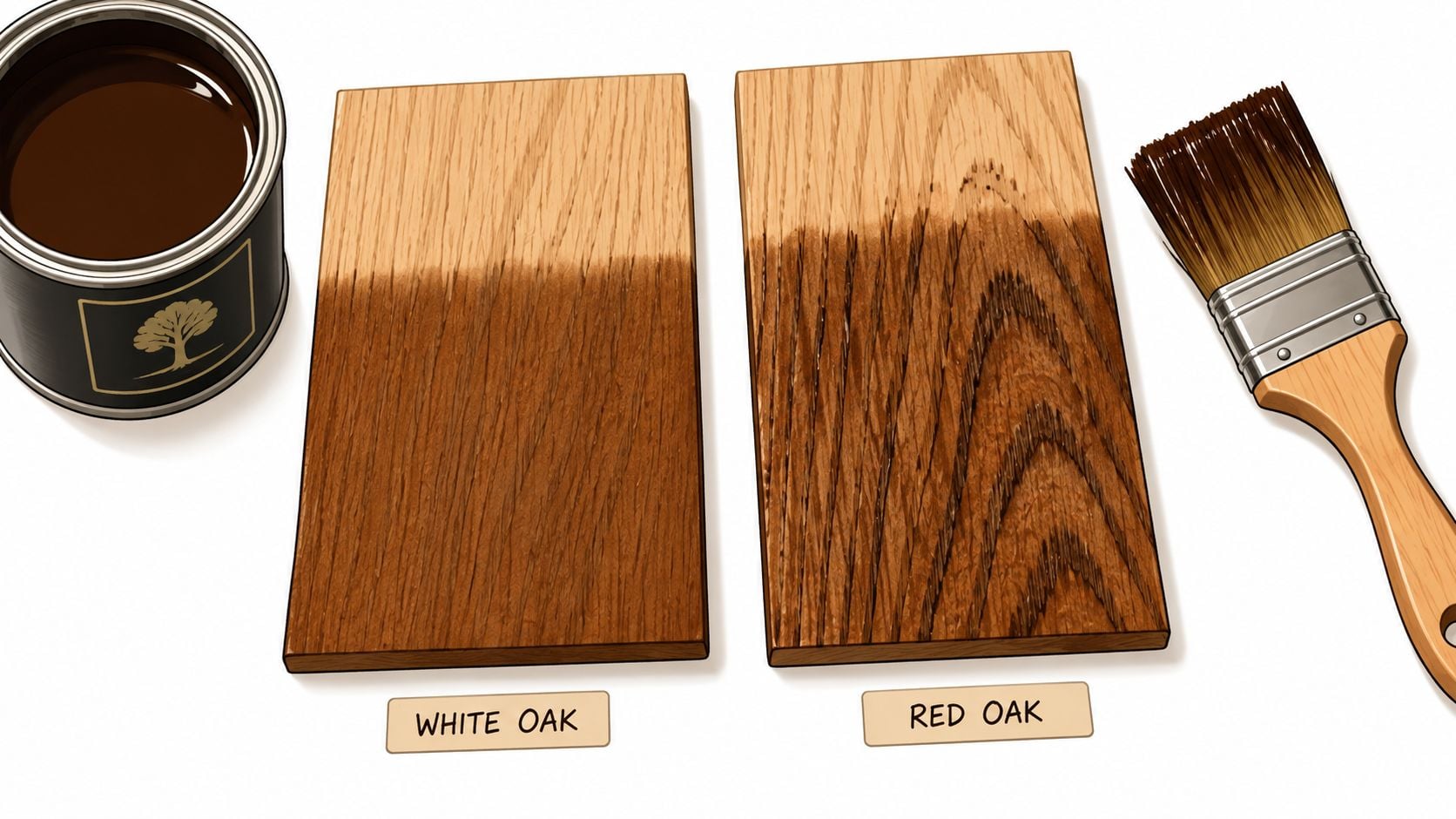
Finish behavior begins with the pores. Red oak's open grain gives stain more room to travel, while white oak's plugged pores create a more controlled surface. Neither response is automatically superior. The right result depends on whether the finish should highlight movement or quiet it.
White oak usually suits clear matte finishes, lightly tinted oils, and restrained contemporary stains. Its grain can read as calm and linear, while quartersawn boards add visible ray fleck. On a Mavin dining top, that figure can become the principal design detail without relying on a heavy color.
Red oak rewards deliberate finishing
Red oak's open pores can absorb pigment unevenly, especially with dark stains. A careless application may produce a blotchy appearance, and raised grain can remain visible under some lacquer systems. A skilled finisher can manage those traits with sanding discipline, conditioning, controlled wiping, and grain filler where a smoother profile is required.
That same porosity can be useful. Red oak can pull a wipe-on gel stain into the grain, supporting warm early American, mission, and farmhouse finishes. Smith Brothers of Berne's American-made furniture is a natural fit for buyers who want red oak's visible texture to remain part of the design rather than disappear beneath a uniform color.
Paint changes the equation. Red oak's grain can telegraph through a painted surface unless the finisher fills and seals it properly, but a well-prepared red oak casegood can still produce a crisp, durable profile. Solid hardwood construction remains preferable for furniture that needs to be repaired, sanded, or refinished over its useful life.
Finish selection should follow the room
A clear matte finish on white oak can age toward a warm honey character without forcing the grain into a dark amber tone. Red oak can also look excellent under clear finish, but its pinker undertones and broader pore pattern will remain more apparent.
Vinson's natural wood finish guide gives buyers a useful vocabulary for comparing sheen and color. The showroom finish matters more than a stain name printed on a card. The same label can look different on red oak and white oak, and the final result depends on preparation and application.
Pre-catalyzed conversion varnish generally offers a stronger furniture finish than ordinary polyurethane, but the applicator's preparation and technique matter more than species in most showroom pieces. Buyers should inspect a large sample under natural and indoor light, not judge from a tiny swatch.
Best Furniture Uses for Oak and White Oak
The best species depends on what the furniture has to tolerate and what the design is trying to express. Red oak belongs in rooms where visible grain, warmth, and traditional character carry the composition. White oak earns its place where a tighter visual field, moisture resistance, and refined figure matter more.
The following applications give a practical starting point for a Columbus homeowner.
Oak vs White Oak Furniture Applications
| Furniture Category | Oak (Red) | White Oak | Partner Line |
|---|---|---|---|
| Daily dining table | Warm, expressive grain suits family and farmhouse settings | Better choice when spills and damp cleanup are recurring concerns | Mavin |
| Formal dining table | Works well in traditional and mission interiors | Strong fit for refined, Shaker, and quartersawn designs | Smith Brothers of Berne |
| Bedroom casegoods | Broad grain supports early American and rustic styles | Calm grain suits a tailored, quieter bedroom | Mavin |
| Outdoor-friendly furniture | Limited by greater permeability and interior-use suitability | More appropriate where moisture exposure is part of the setting, though it still needs protection | Canadel |
| Accent chair frame | Both species perform well when the frame is concealed | Same practical advantage, with no meaningful visual benefit unless exposed | Smith Brothers of Berne |
| Rustic farmhouse furniture | Mineral variation and warm undertones become part of the appeal | Linear figure creates a cleaner modern farmhouse look | Mavin and Canadel |
White oak's plugged pores explain its long association with boatbuilding, water-holding applications, and outdoor furniture. It resists water and decay better than red oak, but it still isn't waterproof. End grain, fastener holes, joints, and damaged finish areas remain vulnerable.
Red oak excels in traditional dining chairs, mission side chairs, rustic tables, and casegoods where the grain is meant to announce itself. It can also offer strong value within a solid hardwood specification. For upholstered accent chairs, the frame is usually hidden, so fabric, suspension, cushioning, and motion hardware matter more than the oak species.
The construction details deserve equal attention. A serious dining table should have a properly prepared top, dependable joinery, well-fitted movement provisions, and a finish suited to the room. Solid hardwood is central to Vinson's offering, with furniture built around solid cherry, oak, maple, or walnut rather than lesser wood categories.
For living rooms, the oak decision often shifts to the frame and visible legs. Upholstered pieces can use top-grain or performance leather, with sectionals, reclining seating, swivel chairs, rockers, and gliders evaluated through an actual sit-test. A table may be the visual anchor, but comfort and motion determine whether the surrounding room gets used.
Maintenance and Long-Term Durability by Use Case
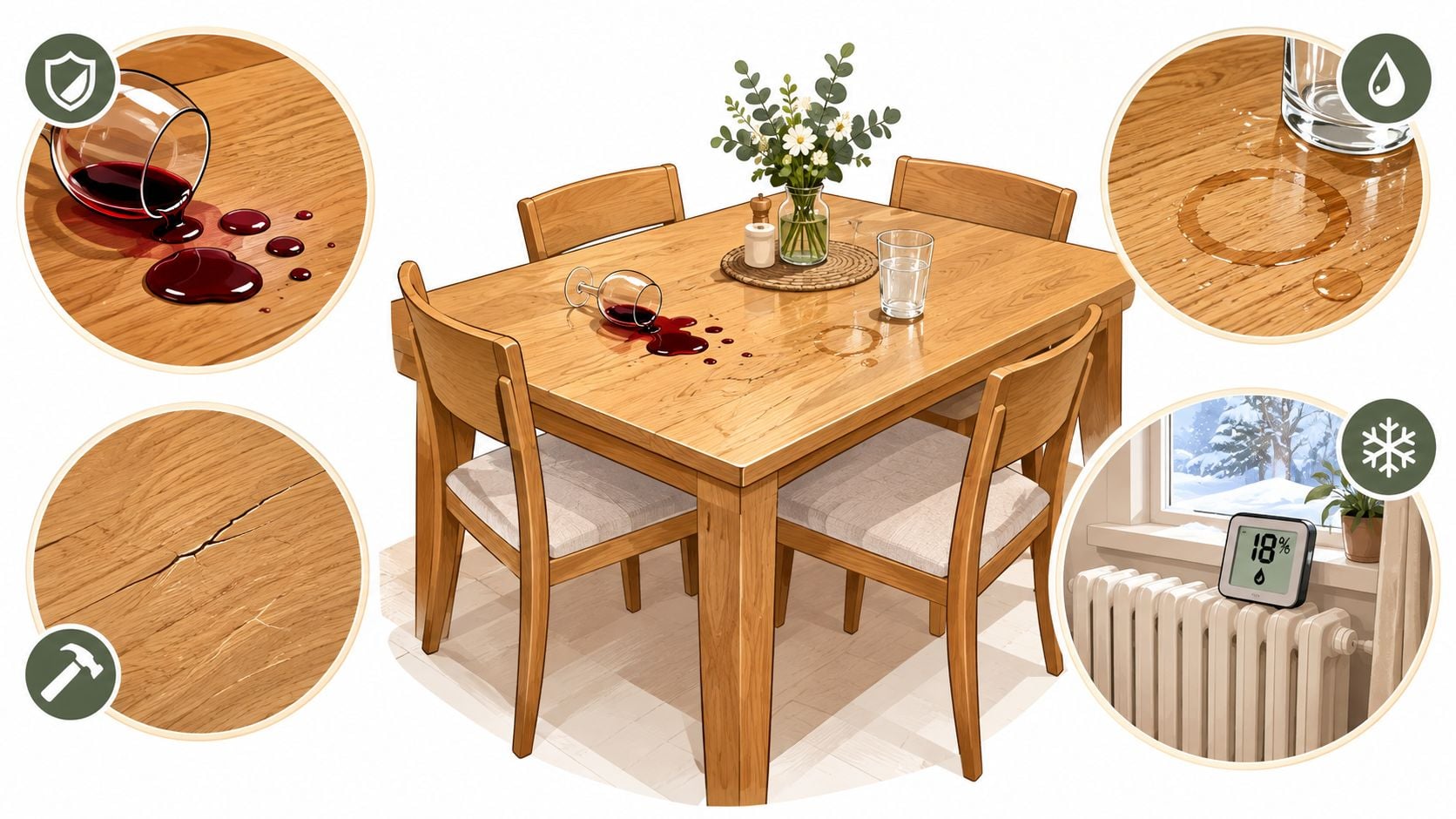
A thirty-year table is not ruined by choosing the wrong color. Moisture, heat, seasonal movement, impact, and neglected finish create the main problems. White oak gives a household more room to react to spills because tyloses slow moisture movement through its pores. Red oak requires faster cleanup, especially when liquid reaches unfinished end grain, an exposed joint, or a damaged edge.
A wet glass left overnight is usually manageable on a sound, well-finished surface. Neither species is maintenance-free. Wipe red wine, damp cloths, and cleaning residue promptly, and never saturate the top. White oak offers a practical moisture advantage, not waterproof protection.
Four rooms, four different answers
Growing family kitchen table: White oak gets the performance nod. Daily meals, homework, damp wiping, and accidental spills create frequent moisture exposure. Red oak remains a sound choice when a warmer traditional look matters and the household will clean spills quickly.
Formal dining room: Choose white oak. Holiday use does not prevent spills, and its tighter pore structure gives the finish more support when a glass tips or food lands near a joint.
Lake-house sun porch: White oak is the safer oak choice, but neither species belongs in an unprotected exposure. Sun, condensation, temperature changes, and wet air can damage any finish. A protected indoor setting remains safer than an exposed porch.
Basement bar: White oak has the advantage around damp glasses and changing conditions. Red oak can work when the bar stays dry and the finish receives regular attention, but its open pores leave less room for delay after a spill.
Hardness affects dent resistance, but it does not decide durability alone. Top thickness, grain orientation, joinery, finish quality, and the force of an impact often matter more than the species label. Sit-test the actual Mavin, Smith Brothers, or Canadel table you are considering, then inspect the top and edges closely.
A sensible refinishing checklist
- Inspect first: Look for rings, darkened areas, chipped edges, open joints, and damage around fasteners.
- Sand methodically: Remove the failing finish without flattening the profile or cutting through the usable surface.
- Decide on grain filler: Red oak may need filler for a smoother appearance. Its open grain can also remain visible when texture is desirable.
- Seal consistently: Apply the selected furniture finish according to the manufacturer's system and the existing coating.
- Recoat before failure: A maintenance recoat is easier than repairing a surface after repeated water and abrasion damage.
Use this wood furniture care guide to establish a regular cleaning and protection routine. Keep furniture away from direct heat, wipe spills promptly, and avoid soaking the surface during cleaning.
Which One Belongs in Your Home and How to Decide
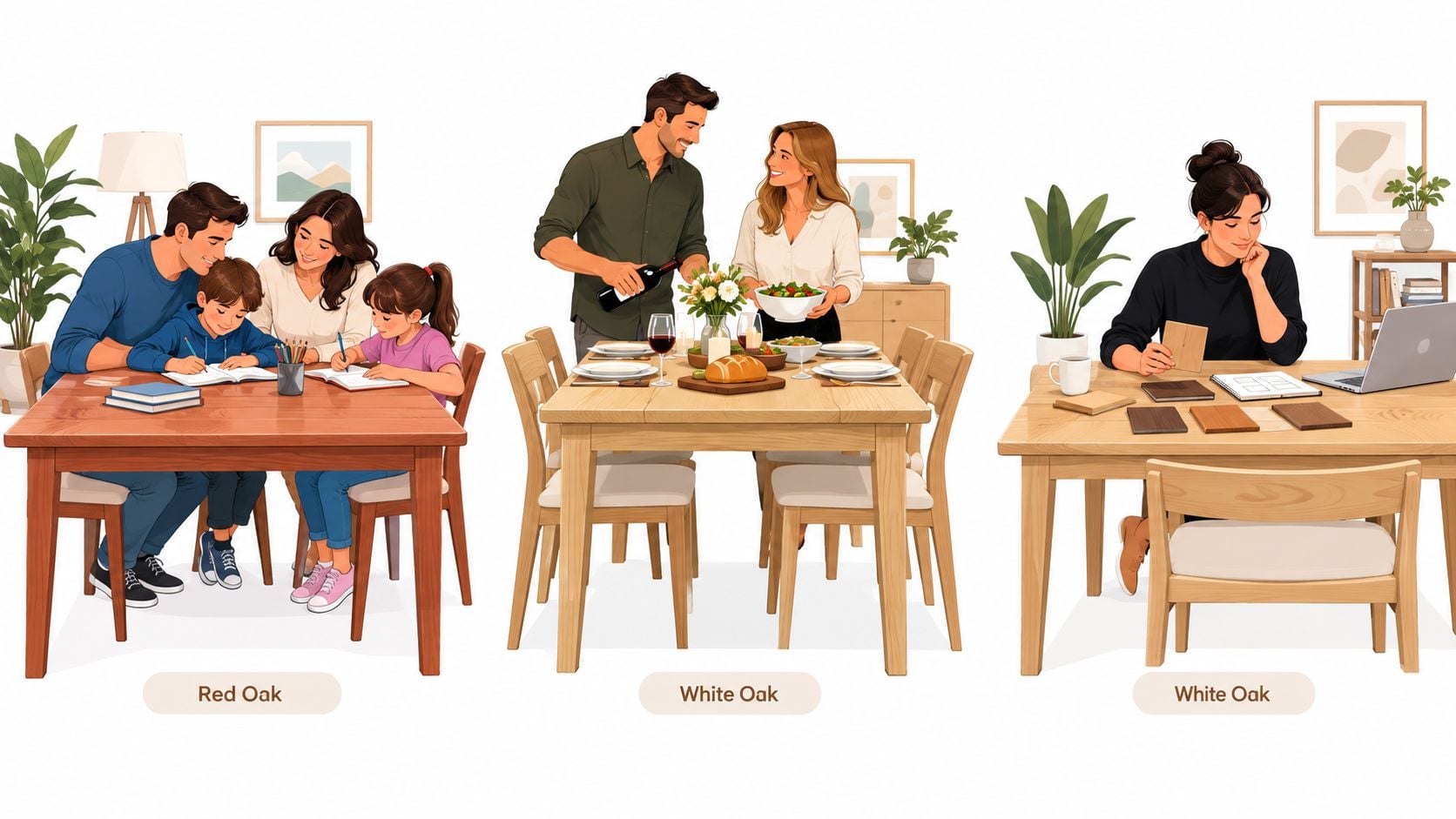
Three buyer profiles make the oak vs white oak decision much clearer.
The first is the growing family. Children use the dining table as a place for meals, homework, art projects, and conversation. Red oak suits this household when its open grain and warmer appearance are desirable, particularly under a forgiving traditional stain. The recommendation is Mavin's solid wood dining collection, including rough-sawn options that can bring a more relaxed farmhouse character to an Easton dining room.
The second is the formal dining buyer. This table may sit unused between holidays, but those occasions involve serving dishes, drinks, damp glasses, and rushed cleanup. White oak makes more sense because its tighter pore structure and tyloses offer greater moisture resistance. Smith Brothers of Berne's Mission or Shaker extension tables give this buyer a way to pair practical durability with a disciplined American-made design.
The third is the multi-generational heirloom planner. This buyer wants the table to remain relevant after a move, a renovation, or a change in family size. Quarter-sawn white oak deserves serious consideration because its vertical grain and ray-fleck figure create a distinctive surface with a formal presence. Canadel's handcrafted-in-Quebec dining lines provide a North American option for buyers who want customization alongside that visual character.
The showroom decision path
A buyer shouldn't order a large solid hardwood table sight unseen. The correct process is tactile and specific:
- Bring room photos and measurements. The finish must work with the existing floor, cabinetry, and light.
- Request rough samples of both species. Compare the uncolored grain before stain influences the judgment.
- Review the on-site finish library. Look at large boards, not tiny chips.
- Use the Custom Order Program. Fabrics, finishes, and 3D visualizers help coordinate dining, bedroom, and living room pieces from Mavin, Smith Brothers, and Canadel.
- Sit-test the actual table. Check edge comfort, leg placement, chair clearance, extension operation, and visual scale.
For buyers restoring an older piece or planning future care, this resource on restoring wood finishes with Restore My Kitchen offers useful perspective on bringing warmth back to tired wood surfaces.
The In-Store Design Studio at Easton provides Complimentary Design Consultations for space planning, finish coordination, and furniture selection. The showroom also offers the Low Price Guarantee, including a 110% refund of the difference under its stated terms, plus a Clearance Gallery with savings of up to 70% on qualifying floor samples, overstocks, and closeouts. White-glove delivery typically includes in-home placement, unpacking, setup or assembly, and removal of packaging, which matters when a solid hardwood table or leather sectional arrives at a finished home.
Vinson also carries premium motion and leather options for the rest of the room, including top-grain and performance leathers, motorized or power sectionals, reclining seating, swivel chairs, rockers, and gliders. Columbus homeowners can compare a dining table with the living room pieces that will share the space, rather than treating the wood decision as an isolated purchase.
Visit Vinson Fine Furniture at Easton Town Center for a Complimentary Design Consultation, compare red oak and white oak samples in the finish library, and sit-test the actual tables before ordering. The team can also show solid hardwood dining and bedroom pieces from Mavin, Smith Brothers of Berne, and Canadel, then coordinate the selection with custom leather seating and white-glove delivery.