Walnut vs Maple Wood: Which Is Best for Your Furniture?


The decision often starts in a room that still feels unfinished. A family stands in a dining space at the center of the home, looking at paint samples, fabric swatches, and the patch of floor where a table will sit for years. Holiday meals will happen there. Homework will happen there. Quiet coffee on winter mornings will happen there. The wood chosen for that table will shape how the room feels every single day.
That's why walnut vs maple wood isn't merely a matter of dark versus light or hard versus less hard. It's a choice about mood, maintenance, and the kind of visual presence a homeowner wants from solid wood furniture Ohio buyers expect to keep for decades. One wood offers brightness, order, and versatility. The other brings depth, movement, and a more defined sense of drama.
For investment homeowners, the better question isn't “Which wood is best?” It's “Which wood fits the life of this home?” A busy kitchen-adjacent dining room may ask for one answer. A calmer bedroom retreat or a statement sideboard in a formal space may ask for another.
That approach reflects the heirloom mindset behind choosing the right hardwood for longevity and style. Solid hardwood furniture earns its place through weight, repairability, age, and character. It doesn't need to chase trends because it improves with use.
Table of Contents
- Choosing Your Forever Furniture An Introduction
- The Visual Story of Walnut and Maple
- Built for a Lifetime A Hardness and Durability Comparison
- The Finishing Touch How Stains Transform Each Wood
- Where They Shine Best Uses in Your Home
- The Vinson Advantage Customization and Value
- Making Your Choice Final Recommendations
Choosing Your Forever Furniture An Introduction
A homeowner planning a central room rarely struggles because both options are poor. The challenge is the opposite. Both walnut and maple are premium solid woods with enough presence to define the home around them. The decision feels weighty because it is.
In a bright breakfast area, maple can look calm and steadfast. Its lighter tone keeps the room lifted, especially when walls, upholstery, and flooring already carry visual weight. In a more formal dining room, walnut often feels composed and architectural. It reads like a finished choice, not a placeholder.
That difference matters most when furniture is meant to stay.
A legacy decision, not a temporary one
A solid-wood dining table, bedroom set, or sideboard becomes part of family routine. Chairs scrape in and out. Lamps leave soft halos on the surface. Hands learn the shape of the edge. Over time, a bench-made piece takes on familiarity in a way mass-market furniture never does.
For that reason, the best walnut vs maple wood comparison starts with character:
- Maple leans bright: It suits homeowners who want clarity, freshness, and a clean foundation for changing décor over time.
- Walnut leans rich: It suits homeowners who want natural depth, warmth, and a wood surface that feels distinctive from the first glance.
- Both belong in heirloom settings: Each can anchor Amish-made dining sets, bedroom collections, and occasional pieces when built with care.
Practical rule: If the room needs light, maple usually helps. If the room needs gravity, walnut often does the work better.
Matching the wood to the household
An active family with daily meals, school projects, and constant use may prioritize resilience and a more forgiving visual backdrop. A homeowner furnishing a quieter primary bedroom or a refined living room may care more about grain character and atmosphere.
That's where many buyers get stuck. They assume one wood is “better” in every category. It isn't. Maple and walnut excel in different ways, and those differences become clearer when color, grain, wear, and finishing are considered together.
The Visual Story of Walnut and Maple
The first reaction to wood is never technical. It's emotional. A person enters the room and feels either calm, warmth, order, depth, softness, or contrast before noticing joinery, finish, or hardware.
How walnut changes a room
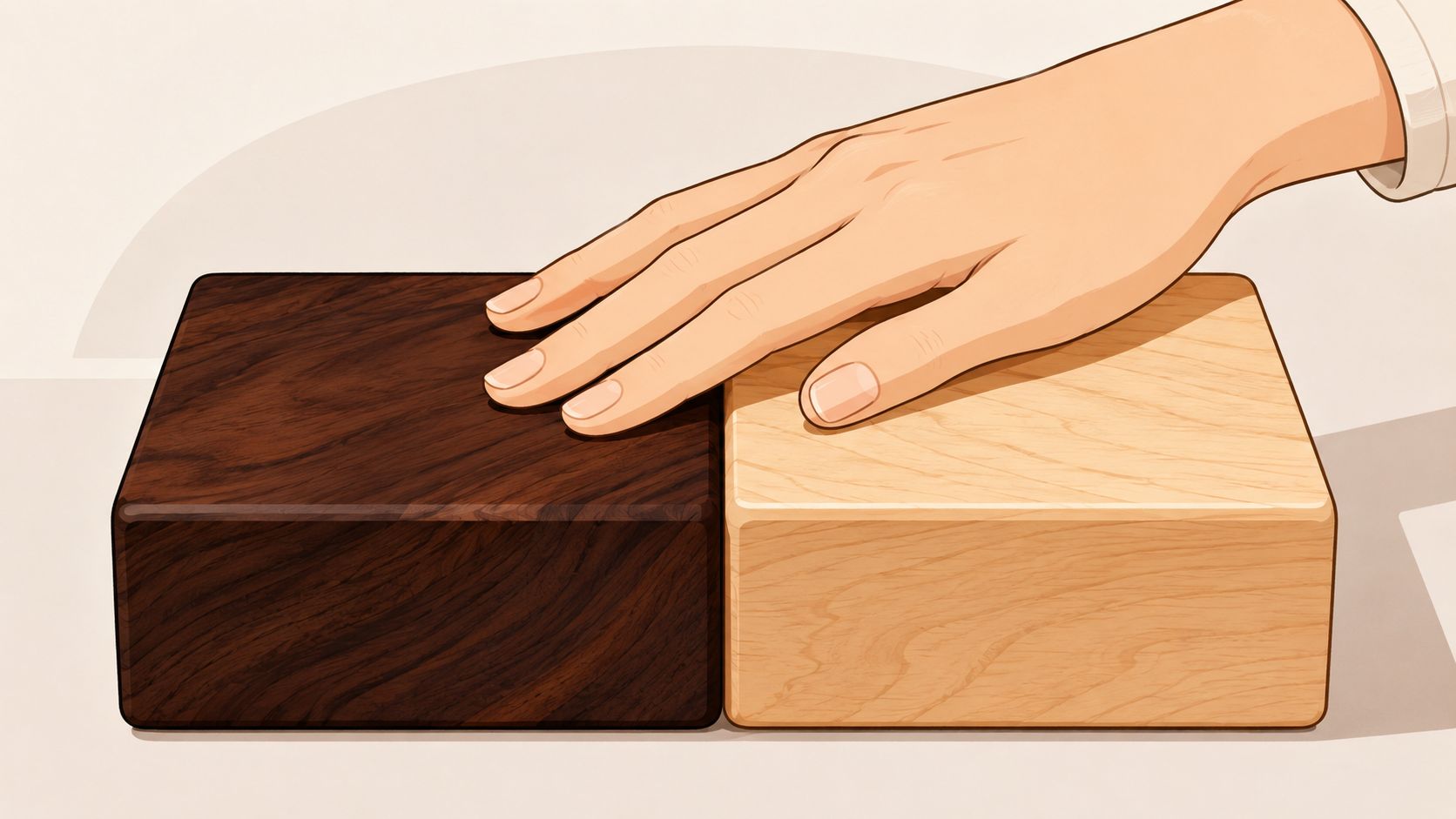
Walnut carries a deep brown tone that can read as chocolate, coffee, or even slightly plum in certain light. Its grain often shows more movement than maple, so the eye notices it. That movement gives walnut its particular, expressive quality. A walnut tabletop rarely disappears into the room. It becomes part of the room's identity.
That's why walnut works so well when a homeowner wants furniture with presence. A sideboard in walnut can anchor a wall without extra styling. A bed in walnut can make a large bedroom feel settled. A dining table in walnut often brings immediate contrast against lighter walls and upholstery.
Readers exploring color variation in more detail may find this guide to what color walnut wood is helpful, especially when trying to predict how walnut will sit alongside flooring and trim.
How maple opens a space
Maple has a different kind of beauty. Its color often feels creamy, pale, and polished. Instead of bold grain shifts, it tends to present a more consistent surface. That consistency is one reason maple feels so composed in modern, transitional, and Scandinavian-leaning interiors.
In smaller rooms, maple can make the footprint feel more open. In homes with limited natural light, it can keep the furniture from looking heavy. Homeowners considering that lighter, sleek mood in adjacent spaces may also appreciate examples of a modern kitchen with maple cabinets, where maple's clean tone helps rooms feel airy rather than crowded.
Walnut delivers drama and depth. Maple delivers serenity and light.
Grain matters as much as color
Many buyers focus only on stain or shade, but grain is what creates the longer relationship with a piece. Walnut's pattern tends to feel individual and organic. Maple's pattern tends to feel orderly and restrained.
That difference affects more than style labels:
- Walnut suits statement furniture: dining tables, headboards, sideboards, and coffee tables that should be noticed.
- Maple suits quiet architecture: pieces that support the room without dominating it.
- Mixed materials change the effect: leather, stone, brushed metals, and woven textiles all play differently against dark and light wood.
A top-grain leather chair beside walnut feels moody and layered. The same chair beside maple feels sharper and more contemporary. The wood doesn't just sit under the design. It directs the whole composition.
Built for a Lifetime A Hardness and Durability Comparison
Beauty starts the conversation. Durability usually closes the sale. A homeowner buying forever furniture wants to know how the surface will behave through years of real use, not just how it looks on delivery day.
Walnut vs Maple At a Glance
| Property | Solid Maple | Solid Walnut |
|---|---|---|
| Visual tone | Light, bright, clean | Deep, warm, dramatic |
| Grain character | Subtle and more uniform | More expressive and varied |
| Best fit | High-use tables and family spaces | Statement pieces and refined everyday furniture |
| Finishing personality | Flexible with custom color options | Often best with natural-looking finishes |
| Overall impression | Crisp and steady | Rich and tailored |
What the numbers mean in daily life
The clearest performance measure here is the Janka hardness scale. Black walnut (Juglans nigra) has a Janka hardness rating of 1,010 lbf (4,490 N), while rock maple scores about 1,450 lbf. Black walnut is approximately 20% lower than rock maple, and maple's rating makes it one of the hardest domestic woods for high-impact furniture like dining tables that endure physical stress, according to this hardness comparison.
That tells buyers something useful, but it needs translation. Maple is the stronger candidate for the most demanding surfaces in the house. A busy family table, a breakfast nook that never gets a day off, or an Amish-made dining set expected to absorb years of constant use often benefits from maple's extra hardness.
Walnut still belongs firmly in the conversation. A rating of 1,010 lbf is not fragile. It's a medium-density hardwood that handles normal furniture use well. Bedroom furniture, console tables, nightstands, coffee tables, and dining pieces in households with a gentler rhythm can all age beautifully in walnut.
Harder doesn't automatically mean better. It means more resistant to impact. The right choice depends on where the piece will live and how the household uses it.
Durability is also about construction
Homeowners often confuse wood species with overall build quality. They're related, but they aren't identical. A solid-maple table with weak joinery won't outperform a well-built walnut table with proper structure, thoughtful proportions, and stable construction.
That's especially relevant when evaluating Amish-made dining sets or Mavin bedroom furniture. Bench-made quality, solid hardwood construction, and lasting joinery matter because the wood has to be supported by craftsmanship. Material selection and construction should work together.
For readers who want a deeper look at how maple performs under pressure, this guide on maple hardwood hardness offers a useful reference point.
The Finishing Touch How Stains Transform Each Wood
A raw board is only the starting point. Finish determines how the wood reflects light, how much grain shows through, and how closely the final piece aligns with the rest of the home. With a finish, walnut and maple begin to separate even more clearly.
Walnut usually asks for restraint
Walnut already arrives with visual richness built in. Because of that, many of the most handsome walnut pieces wear a simple clear finish or an oil-based look that lets the natural color and figure do the work. A heavy-handed stain can flatten the very qualities that make walnut special.
That's why walnut often appeals to homeowners who want authenticity rather than transformation. They're not asking the wood to impersonate another species. They're choosing walnut because they want walnut.
A natural finish can also make the tactile experience better. The wood feels more immediate. Hands register grain, warmth, and subtle variation rather than a thick visual treatment sitting on top.
Maple rewards careful finishing
Maple is far more of a chameleon. Its lighter tone gives it broad design flexibility, which is a major advantage for homeowners matching existing flooring, cabinetry, trim, or upholstered seating. It can stay pale and fresh. It can shift warmer. It can move toward a deeper, moodier finish when the design calls for contrast.
That flexibility is one reason custom programs matter. Brands known for broad finish libraries make maple especially useful in customized dining and bedroom projects, because the wood becomes a strong canvas for personalization rather than a fixed statement.
Homeowners comparing finish aesthetics may find these residential wood staining options helpful for understanding how color choices affect grain visibility and mood across different wood surfaces.
A natural walnut finish showcases the wood itself. A maple finish often shapes the room's broader color story.
Why professional finishing matters
Maple's smooth, tight appearance can be beautiful, but it also means finishing needs discipline. A custom finish should look intentional, not forced. Professional finishing methods help preserve clarity and keep the final color aligned with the design plan.
That's why many shoppers gravitate toward custom-order solid wood collections rather than trying to guess from a tiny sample alone. Reviewing a natural wood finish in person often helps a homeowner decide whether the room needs walnut's built-in richness or maple's range of possibilities.
Where They Shine Best Uses in Your Home
The best way to settle walnut vs maple wood is to place each species in the rooms where it performs and feels most convincing. Once the use case becomes concrete, the decision often gets easier.
Maple for hardworking rooms
Maple shines in spaces where furniture has to hold up and still look composed. Dining rooms, kitchen-adjacent eating areas, and family spaces benefit from its clean tone and practical strength. It works especially well in homes that lean modern, transitional, or traditional.
In those settings, maple often suits:
- Daily-use dining tables: especially for active households that want a bright surface with long-term resilience.
- Amish-made dining sets: where durability and straightforward beauty matter as much as style.
- Light-toned bedrooms: for homeowners who want an uncluttered, restful look.
- Coffee and console tables in smaller rooms: because maple doesn't visually crowd the footprint.
For buyers considering tables as investment pieces, this roundup of the best solid wood dining tables is a practical next step.
Walnut for focal-point furniture
Walnut is often the better answer when the piece should feel memorable. It naturally suits rooms that need one strong visual note, not several competing ones. A walnut bed, sideboard, or dining table can carry that responsibility with very little help from accessories.
That makes walnut especially compelling for:
- Mavin bedroom furniture: where rich wood tones can create a grounded, custom retreat.
- Dining tables in formal or design-forward rooms: where grain and color should be part of the atmosphere.
- Living room anchor pieces: such as coffee tables, media consoles, and bookcases.
- Homes with mid-century, classic, or layered interiors: where warmth and contrast matter.
Pairing wood with upholstery and motion seating
Wood doesn't live alone. It sits beside upholstery, area rugs, lighting, and seating. That's why a dining table choice often connects to other categories in the home.
A lighter maple table can complement custom leather sectionals Columbus homeowners select in warm neutrals, soft gray, or creamy performance leathers. Walnut often pairs beautifully with deeper top-grain leather tones and occasional seating like swivel chairs, accent chairs, rockers, and gliders. In open-concept rooms, those relationships matter because the eye reads the furniture as a set of connected materials.
The same principle applies to Smith Brothers furniture Easton shoppers often consider for sectionals and reclining pieces with power motion. Maple tends to sharpen the room. Walnut tends to soften it with depth.
The Vinson Advantage Customization and Value
A raw-material comparison only goes so far. Most homeowners aren't buying lumber. They're buying a finished piece that has to fit their room, coordinate with existing materials, and justify its place over many years. That's where customization and value become part of the wood decision.
Customization reduces uncertainty
Maple and walnut don't exist in the abstract once a custom order begins. The homeowner starts choosing scale, edge profile, finish, fabric, leather, and surrounding pieces. For dining, that might mean exploring Canadel configurations. For bedroom furniture, it may involve Mavin. For seating, many shoppers look closely at Smith Brothers of Berne for custom upholstery, sectionals, reclining, swivel, rocker, and glider options.
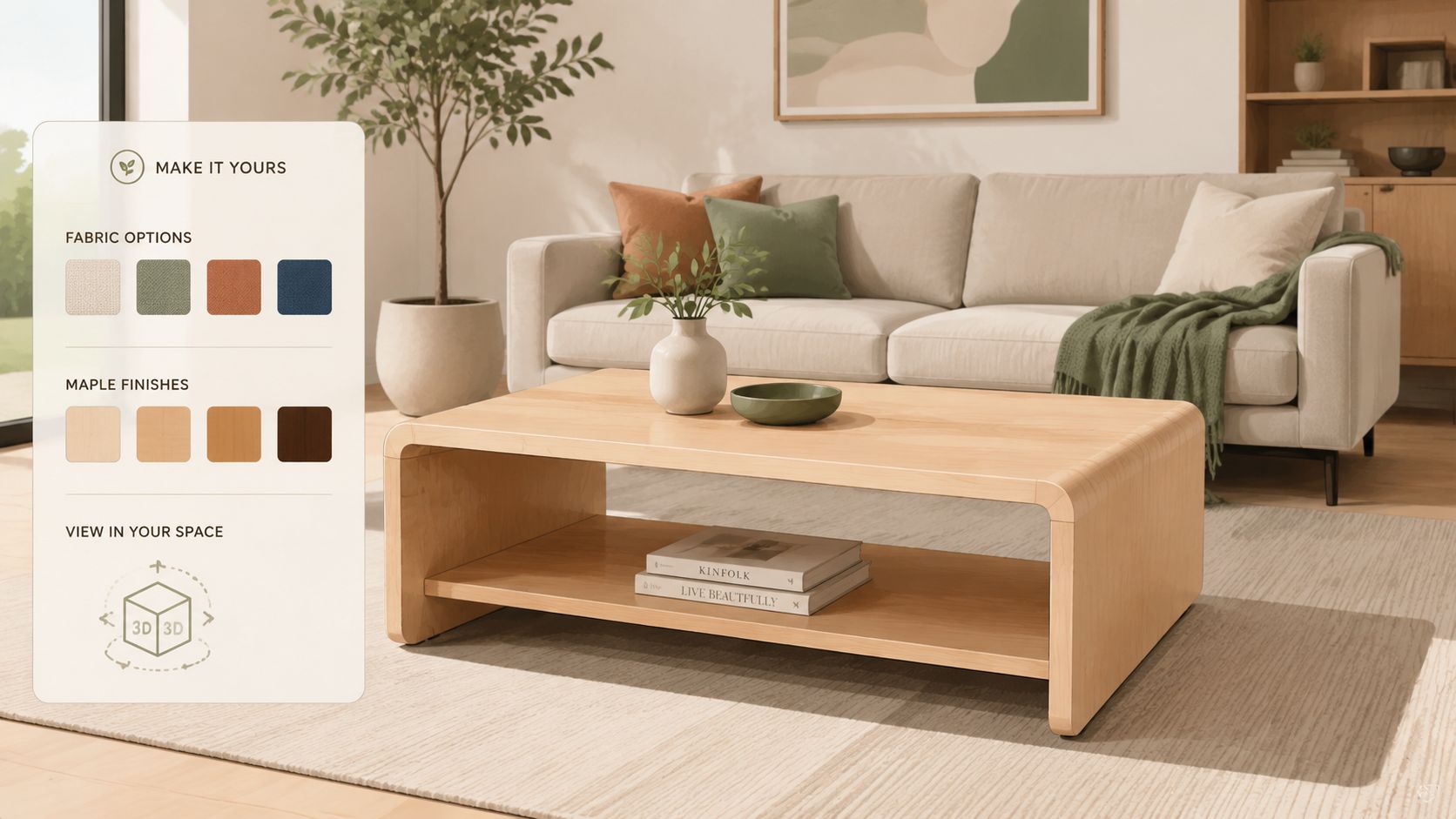
The strongest custom programs make those choices easier to trust. Advanced 3D visualizers used in custom order programs have reduced post-delivery modification requests by 30 to 40 percent by allowing customers to preview the exact piece before production, as noted in this overview of custom-made furniture visualization tools.
That matters because wood tone, scale, and upholstery all interact. A visualizer can reveal when walnut is making a room feel heavier than expected, or when maple needs a warmer finish to connect with flooring and leather.
The more personal the order, the more important it is to preview the finished result before production begins.
Value goes beyond the ticket price
Walnut is often perceived as the more premium raw material, while maple is frequently the pragmatic favorite. But the better lens is long-term value. A well-specified maple table that fits the household perfectly can outperform a more expensive walnut piece that's wrong for the room. The reverse is also true.
That's why serious furniture buyers tend to look beyond base pricing and focus on what the retailer adds:
- Design guidance: an In-Store Design Studio and complimentary consultations help homeowners coordinate finishes, scale, and room flow.
- Customization depth: fabrics, finishes, and digital previews reduce second-guessing.
- Protection of value: a 110% refund Low Price Guarantee gives buyers confidence that they're receiving strong regional value.
- Clearance opportunities: a Clearance Gallery with savings up to 70% can make premium solid wood and top-grain leather pieces more attainable.
- Delivery quality: white-glove delivery protects the condition of substantial, bench-made furniture on the final leg of the purchase.
For homeowners furnishing multiple rooms, that full-service support often matters as much as the wood species itself.
Making Your Choice Final Recommendations
Most buyers don't need another abstract debate. They need a clear direction.
Choose maple if these priorities lead the project
- The room needs lightness: Maple helps a dining room, breakfast area, or bedroom feel open and fresh.
- The furniture will take daily punishment: Active family use tends to favor maple's stronger surface resistance.
- The design plan needs flexibility: Maple works well when stain and finish options must coordinate with flooring, cabinetry, or upholstery.
- The home leans modern or transitional: Its clean visual rhythm supports simpler lines and calmer palettes.
Choose walnut if the room wants presence
Walnut is often the right answer when the homeowner wants the furniture to supply warmth, distinction, and a sense of permanence from the first day. It suits formal dining spaces, refined living rooms, and Mavin bedroom furniture where natural character is part of the appeal.
It's also a strong fit for anyone who values wood as a visual material, not just a durable one. Walnut tends to show more personality board to board, and that variation is often exactly what makes a piece feel special.
The best choice is the wood that supports the way the home lives and the way the homeowner wants the room to feel.
A final decision rarely happens on a screen. Solid wood has to be seen in person. The finish has to catch real light. The tabletop edge has to be touched. If the project also includes motion upholstery, reclining, swivel seating, or top-grain leather, the sit-test matters just as much as the wood sample.
For homeowners ready to compare solid maple and walnut in person, Vinson Fine Furniture at Easton Town Center offers the full experience. The showroom brings together solid hardwood dining and bedroom collections, Amish-made craftsmanship, Smith Brothers of Berne seating, Canadel customization, Mavin bedroom furniture, premium motion options, and a thoughtful design process. A visit lets shoppers feel the weight of the wood, review finish samples, explore the In-Store Design Studio, take advantage of complimentary design consultations, and see how the Custom Order Program, Low Price Guarantee, Clearance Gallery savings, and White-Glove Delivery turn a furniture purchase into a confident long-term investment.