What Is Transitional Design: Your Guide to Timeless Style

A lot of Columbus homeowners land in the same place. They admire the comfort of a deep, well-crafted sofa, the permanence of a solid maple table, and the character that traditional rooms carry so well. At the same time, they want a home that feels lighter, cleaner, and less formal than the rooms they grew up with.
That tension usually shows up when furnishing a real room. A family might love classic wall moldings and a warm oak floor, then hesitate over whether a sleek leather sectional will feel too modern. Or they may inherit a substantial dining piece they value, but want the rest of the room to feel current rather than heavy. The result is often a stalled project, not because taste is lacking, but because the labels seem too rigid.
That's where what is transitional design becomes the right question. Transitional design gives homeowners a way to build spaces that feel settled, practical, and polished without forcing every choice into a single style camp. In a solid-wood home, that often means pairing the honest weight of cherry, oak, maple, or walnut with cleaner silhouettes, quieter color, and fewer decorative distractions.
Table of Contents
- Are You Caught Between Classic and Contemporary Style
- The Enduring Appeal of Transitional Design
- Key Characteristics of a Transitional Home
- Transitional vs Traditional and Contemporary Styles
- Achieving the Transitional Look Room by Room
- Common Mistakes and How to Mix Elements Like a Pro
- Your Partner in Transitional Design in Columbus
Are You Caught Between Classic and Contemporary Style
A homeowner walks into a room with great bones. There may be trimmed windows, a handsome staircase, or a dining space that calls for a table with real presence. Yet when that same homeowner starts shopping, ornate pieces feel too formal, and ultra-minimal pieces feel cold.
That's the design gap transitional style fills.
The in-between feeling is common
Many homes in Central Ohio aren't purely one thing. They may have traditional architecture but open layouts. They may need family-friendly comfort but still benefit from restraint. In those spaces, a carved pedestal table or a glossy modern sofa can both feel slightly off.
A transitional room solves that by editing, not erasing. It keeps the warmth. It removes the fuss.
A well-resolved transitional room usually feels calmer than a traditional one and more welcoming than a stark contemporary one.
Homeowners often find clarity once they start understanding architectural styles. The architecture often explains why certain furniture feels natural in the room and why other pieces fight it.
Transitional isn't a halfway measure
People sometimes hear “blend of styles” and assume the result will look indecisive. In practice, the opposite is true. Transitional interiors work best when each piece feels chosen, grounded, and useful.
That might look like:
- A substantial sofa with simpler lines that still feels inviting for daily use.
- A solid oak dining table with a clean profile instead of heavy ornament.
- A top-grain leather chair that brings richness through texture rather than decoration.
- A bedroom in walnut or maple that feels well-suited and quiet instead of overly formal.
The effect is polished and effortless. That matters to the investment homeowner, because rooms like this usually age more gracefully than rooms built around extremes.
The Enduring Appeal of Transitional Design
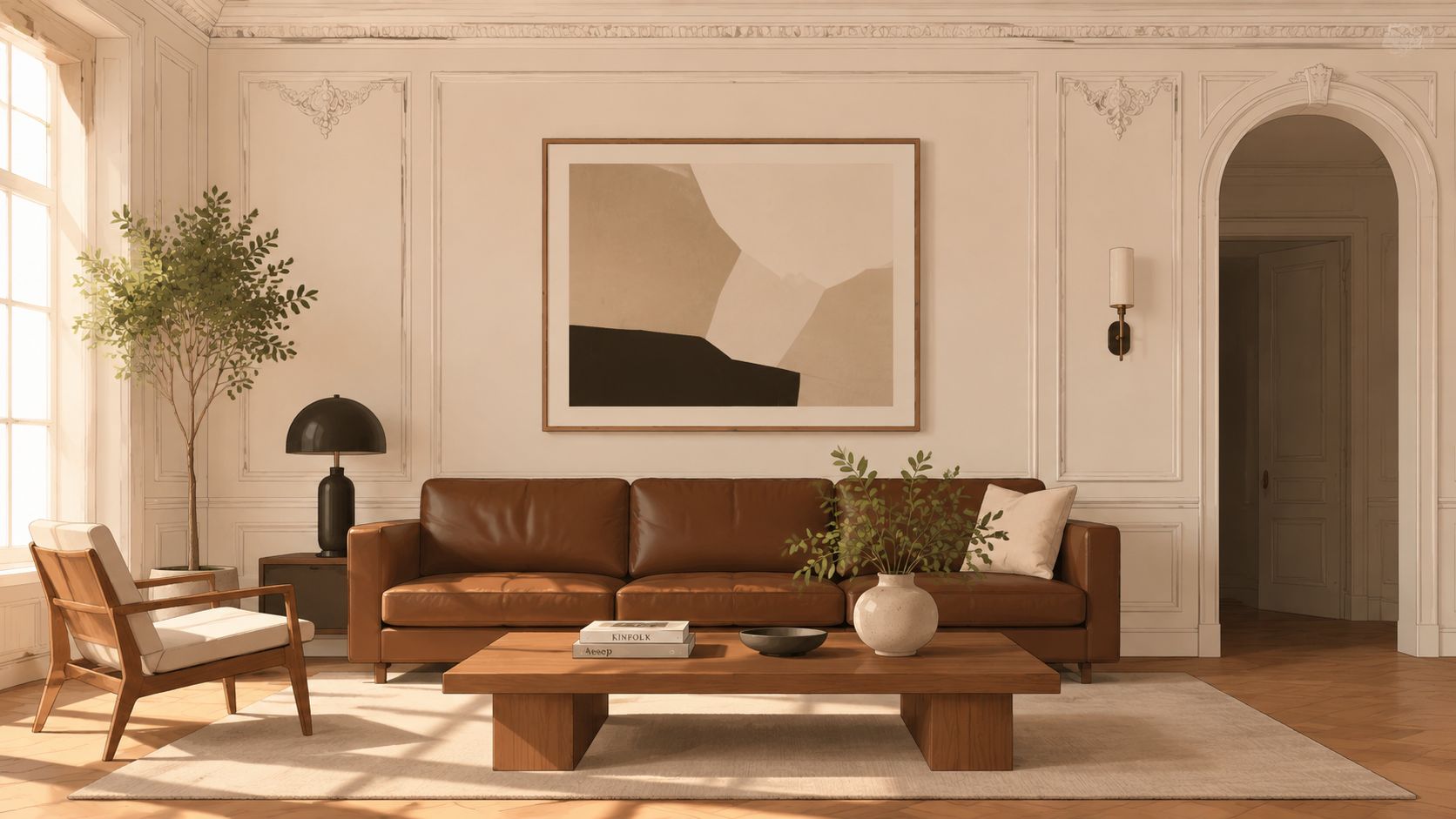
Transitional design first emerged in the 1950s as a response to the mid-century modern era. In 2012, the National Kitchen & Bath Association reported that Transitional displaced Traditional as the most popular interior theme in the U.S., and that preference continues today (historical overview of transitional styling).
A style built from tension, not compromise
That history matters because it explains why transitional design doesn't feel like a short-lived trend. It began as a deliberate answer to a real design problem. Many people appreciated modern simplicity, but didn't want to give up the comfort and familiarity of classic interiors.
So the style developed around a practical idea. Keep the symmetry, comfort, and lasting quality people trust. Strip away the excessive ornament that can make a room feel dated.
A good primer on the foundational language of interiors appears in these interior design basics. Transitional design makes the most sense when homeowners understand how line, proportion, texture, and spacing affect the way a room feels.
Why it lasts
Transitional rooms hold up because they avoid extremes. They don't lean on ornate detail for personality, and they don't depend on hard-edged minimalism to feel current. Instead, they create balance.
That balance often shows up in ways a homeowner can feel immediately:
- Clean lines that give furniture a refined appearance.
- Open visual breathing room so a space doesn't feel crowded.
- Classic comfort in seating that invites people to stay.
- Practical surfaces in solid wood that can handle daily life with dignity.
Practical rule: Transitional design succeeds when a room feels finished but not overfilled.
This is why the style works so well with heirloom-quality furniture. A bench-made frame, a top-grain leather seat, or a solid-maple top already carries visual weight. Transitional design lets those materials do the talking.
Key Characteristics of a Transitional Home
One reason homeowners ask what is transitional design is that the term can sound abstract. In a finished room, though, the clues are easy to spot. The style has a distinct feel.
What the room looks and feels like
The palette stays quiet. Transitional rooms rely on a monochromatic neutral range with tones such as taupes, tans, and creamy vanillas. Texture does much of the work that bright color or ornate pattern would do in another style, and the look often balances luxury with comfort through pairings like structured chairs and subtly curved sofas, or velvet with silk (description of transitional color and texture).
That means the room rarely depends on loud contrast. Instead, it gains depth from material changes and shape.
A helpful comparison appears in this look at traditional design style, especially for homeowners trying to identify whether their instincts lean more formal or more edited.
Why solid wood and leather matter here
Transitional spaces need substance. If everything is visually quiet, the materials have to carry the room.
- Solid hardwood matters. A solid cherry dining top, a maple dresser, an oak nightstand, or a walnut coffee table adds depth through grain, edge detail, and weight. That's why searches for Solid wood furniture Ohio often lead homeowners toward this style. It rewards quality materials.
- Top-grain leather brings warmth. In a neutral room, leather adds character without clutter. A well-suited leather chair can anchor a seating group through tone and touch alone.
- Metal works best as a clean accent. A lamp base, pull, or table detail can sharpen the room without making it feel industrial.
- Textiles should layer, not shout. Nubby upholstery, smooth leather, soft area rugs, and a few tactile pillows can make the room feel complete without looking busy.
| Material choice | What it adds to a transitional room |
|---|---|
| Solid oak, cherry, maple, or walnut | Depth, permanence, natural variation |
| Top-grain leather | Supple texture, visual warmth, tailored polish |
| Soft woven fabric | Comfort and softness against cleaner lines |
| Restrained metal accents | Crisp contrast without visual noise |
The most inviting transitional rooms don't look empty. They look edited.
The furniture itself usually has simple silhouettes, but it shouldn't feel flimsy. Transitional style favors pieces with presence. A well-scaled dining table, a substantial bed, or a generously cushioned chair gives the room gravity even when the lines stay clean.
Transitional vs Traditional and Contemporary Styles
Some homeowners know exactly what they don't want, but still struggle to name what they do want. A side-by-side comparison usually clears that up fast.
A kitchen-focused read that helps sharpen these distinctions is this guide to compare contemporary and traditional kitchens. The same visual logic carries into living, dining, and bedroom furniture.
For a furniture-centered view, this overview of contemporary vs traditional design styles can help homeowners translate broad style labels into actual pieces.
Style Comparison Traditional vs Transitional vs Contemporary
| Feature | Traditional | Transitional | Contemporary |
|---|---|---|---|
| Furniture silhouette | More decorative, shaped, and formal | Clean, tailored, and substantial | Sleek, simplified, often sharper |
| Color approach | Richer layering and more pattern | Neutral foundation with texture | Often neutral, sometimes cooler and more graphic |
| Wood presence | Strong and often more ornate | Strong but simplified | Can be lighter visually or mixed with other materials |
| Detail level | Higher ornament and trim | Edited detail | Minimal detail |
| Overall mood | Formal, classic, established | Calm, balanced, comfortable | Crisp, streamlined, current |
| Best fit for | Homes leaning formal or historic | Homes needing warmth and freshness | Spaces wanting a cleaner edge |
How to tell where a room lands
Traditional rooms usually prioritize decorative detail. Contemporary rooms usually prioritize visual reduction. Transitional rooms ask a different question. How can a room feel current without losing comfort?
That's why transitional often suits homeowners who want:
- A real wood table instead of a trend-driven statement piece
- A custom leather sectional Columbus families can live with
- Accent chairs, swivel chairs, rockers, or gliders that feel polished but still relaxed
- Spaces that don't look locked into one decade
This middle ground isn't vague. It's disciplined. Every item has to support both comfort and clarity.
Achieving the Transitional Look Room by Room
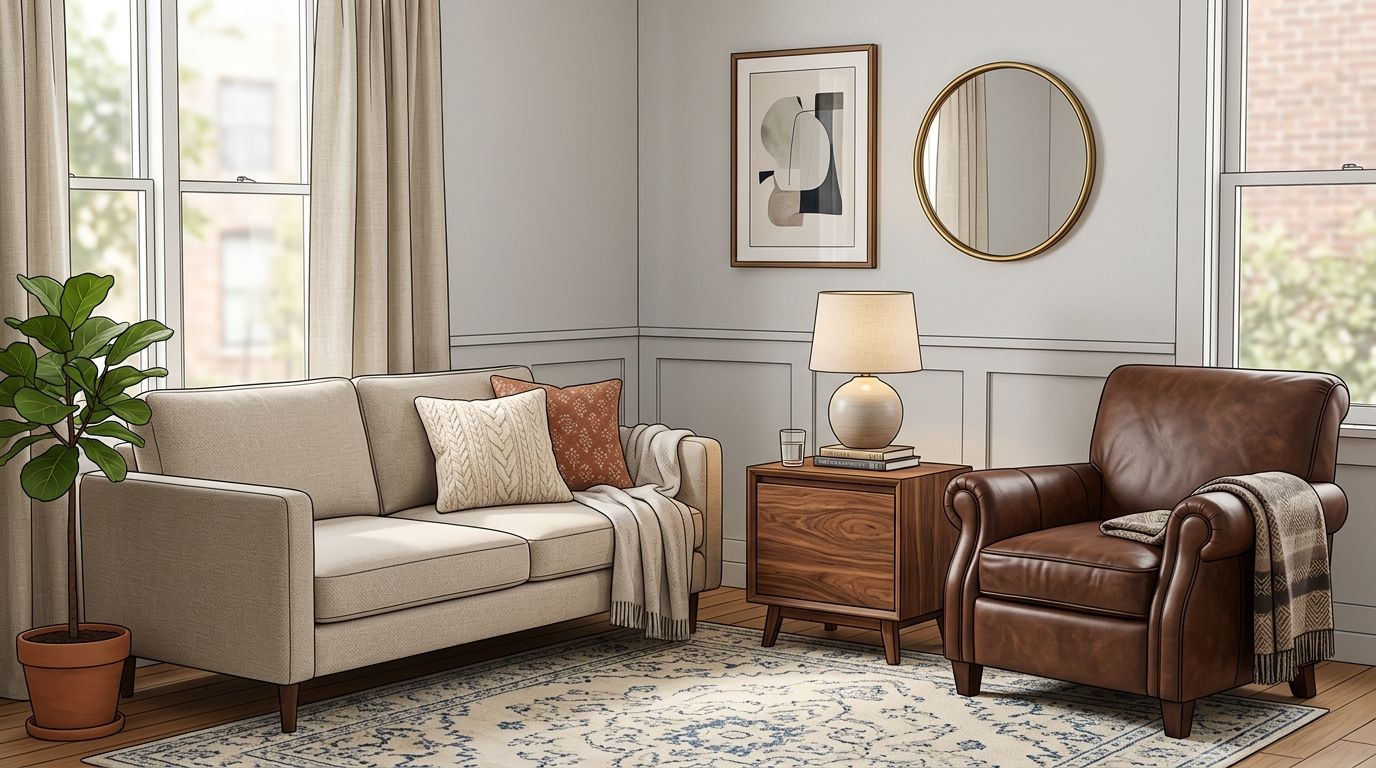
The easiest way to understand transitional design is to build it in real rooms. Once the style moves off a mood board and into a floor plan, the decisions become more practical.
Homeowners planning updates alongside a renovation often benefit from reading about planning your dream modern home, especially when they need architecture and furnishings to feel aligned rather than pieced together later.
Living room
A transitional living room usually starts with seating that feels generous, not bulky. A Smith Brothers furniture Easton shopper might gravitate toward a clean-lined sofa or sectional in top-grain leather, then soften it with a textured rug and a fabric swivel chair. If the room calls for motion, power reclining features can fit comfortably here as long as the silhouette stays refined.
The supporting pieces matter just as much. A solid walnut or oak coffee table gives the arrangement weight. Clean lamp shapes and restrained metal accents keep the eye moving without visual clutter.
A transitional living room should feel ready for company and ready for a long evening at home. Both at once.
Dining room
This style often shines brightest in the dining room because solid wood naturally bridges old and new. Amish-made dining sets in oak, cherry, maple, or walnut bring craftsmanship, joinery, and permanence. Cleaner chair profiles and simpler table bases keep that craftsmanship from feeling formal.
A homeowner searching for a table with history and flexibility may lean toward Canadel for custom dining or toward an Amish-built piece that highlights the grain instead of decorative carving. The result is grounded, but not heavy.
Useful markers in a transitional dining room include:
- A solid wood surface with visible grain and a calm finish
- Chairs with simple lines rather than ornate backs
- A statement light fixture that feels updated but not flashy
- Enough open space around the table to preserve the room's ease
Bedroom
Bedrooms benefit from transitional design because the style naturally supports quiet. A bed in oak, maple, or walnut can carry the room, especially when paired with modest hardware, layered bedding, and symmetrical nightstands. Mavin bedroom furniture often makes sense in such settings for homeowners who want Amish-made integrity without visual heaviness.
A look at transitional bedroom furniture can help homeowners picture how simpler casegoods, balanced proportions, and solid hardwood work together in a restful setting.
Searches for Mavin bedroom furniture and Solid wood furniture Ohio often come from homeowners who are tired of disposable pieces. Transitional bedrooms answer that concern with furniture that feels settled, tactile, and calm from the first touch of the drawer pull to the weight of the bed rail.
Common Mistakes and How to Mix Elements Like a Pro
Transitional style looks effortless when it's done well. It goes sideways when people treat it like a formula instead of a judgment call.
The ratio myth
Many online sources repeat a fixed traditional-to-modern ratio. That's too rigid. Effective transitional design adapts the balance to the home's architecture and the homeowner's taste, rather than forcing an arbitrary 25/75 or 40/60 split (discussion of contextual balance in transitional design).
That point matters in real homes. A brick colonial may need more visible classic structure to feel honest. A cleaner-lined newer build may support more modern silhouettes. The right blend depends on context.
A useful read on how to mix furniture styles can help homeowners make those calls with more confidence.
Mistakes that throw a room off
The most common missteps usually come from overcorrecting in one direction.
- Too much ornament. If every piece has turned legs, heavy trim, or decorative carving, the room drifts back into formality.
- Too little softness. If every surface is hard and every line is straight, the room can feel sterile.
- No material hierarchy. Transitional rooms need a few anchor materials. Solid wood and leather often do that work beautifully.
- Confusing “mixed” with “random.” Contrast needs structure. A curved chair beside a cleaner-lined sofa works when scale, color, and finish relate.
- Over-accessorizing. Transitional rooms need breathing room. A few thoughtful objects usually outperform many small ones.
Start with the investment piece first. A solid dining table, a well-scaled bed, or a substantial leather sofa gives the room something true to revolve around.
A practical way to mix elements is to let one category stay classic and let another category sharpen the room. For example, a room may keep traditional architecture and pair it with simpler furniture. Or it may use a classic wood table and surround it with cleaner dining chairs. The balance should feel natural, not calculated.
Your Partner in Transitional Design in Columbus

A homeowner in Columbus often reaches the same point. The room is partly clear in their mind, but the last decisions feel harder than expected. A dining table in solid walnut may feel beautifully grounded in one home and too visually heavy in another. A cleaner-lined chair may sharpen the room in a good way, or it may leave the space feeling a little thin. Transitional design asks for judgment, not a formula.
That is why the old 40/60 rule misses the point. The balance between classic and current changes with the house itself. A brick Tudor with deeper trim and older flooring may need more warmth, more grain, and a little more visual weight. A newer home with simpler architecture may feel best with quieter profiles and less ornament. The goal is not to hit a ratio. The goal is to make the room feel settled.
At Vinson Fine Furniture in Easton Town Center, that process becomes easier to see and feel in person. Homeowners can compare full-scale pieces instead of guessing from small samples and product photos. That matters in transitional rooms, where a half inch of edge detail, the softness of top-grain leather, or the tone of a wood finish can change the mood of the whole space.
The tactile part matters just as much. Solid cherry, oak, maple, and walnut each bring a different kind of presence. Cherry feels warm and refined. Oak shows more grain and a little more texture. Walnut tends to read deeper and richer. Top-grain leather adds another layer of balance because it can soften clean silhouettes and give a modern shape the comfort people usually associate with more traditional rooms.
Vinson offers complimentary design consultations, an In-Store Design Studio, and a Custom Order Program that help homeowners sort through those details with more confidence. Digital visualizers are useful, but the strongest test is still physical. Sit in the chair. Open the drawer. Stand back and look at the table from across the room. Good transitional design should feel calm to the eye and honest in the hand.
The practical side of the purchase matters too:
- Low Price Guarantee. If a lower price is found at a local authorized dealer within the stated period, the refund is 110% of the difference.
- Clearance Gallery. Floor samples and closeouts can offer savings up to 70%.
- White-Glove Delivery. Placement and setup help the room land the way it should.
- Motion seating choices. Sectionals, reclining seating, swivel chairs, rockers, and gliders can work in a transitional home when scale, shape, and material fit the space.
For many homeowners, that final layer of reassurance comes from testing comfort and materials side by side. A leather sofa may look right online, then feel either too firm, too cool, or exactly right once you sit down. A wood finish may seem neutral on a swatch, then reveal a warmth that ties together the floor, trim, and lighting once you see it on a full piece.
That kind of comparison is where transitional design becomes real. It stops being a style definition and starts becoming a home that feels collected, balanced, and built to last.
A homeowner ready to refine that balance can explore custom options, browse the Clearance Gallery, or narrow preferences with the Design Quiz.