Credenza and Hutch: The Solid Wood Guide

A dining room can look finished until the storage problem appears. Serving pieces need a home, glassware must stay accessible, and everyday clutter shouldn't take over the table or buffet surface. A credenza and hutch can solve that tension, but only when the combination respects the room's architecture, the household's storage habits, and the quality expected from a long-term furniture investment.
For homeowners in Columbus and Central Ohio, the decision deserves more attention than a quick showroom glance. The right piece should sit firmly, open comfortably, carry real household use, and contribute to the room's character. A solid hardwood credenza and hutch does more than fill a wall. It establishes proportion, creates useful layers, and can become part of the home's legacy.
Understanding the Credenza and Hutch
A credenza is the grounded portion of the arrangement, usually a long, low storage cabinet with drawers, doors, or both. It gives a dining room a substantial serving surface while keeping linens, tableware, and less decorative belongings out of sight. In a living room, the same low profile can support a television or anchor a wall without making the room feel crowded.
A hutch adds height. It may use enclosed cupboards, glass-front doors, open shelves, or a combination of those elements. That upper section brings dishes, glassware, books, and collected objects into view, which makes the furniture part of the room's composition rather than a purely concealed storage solution.
The names also carry a long history. The word credenza traces to fourteenth-century Italy, where it referred to a ritual of trust involving the tasting of food and drink for poison before nobility was served. By the sixteenth century, the term had shifted from the ritual to the furniture, and by the 1500s through the 1700s, it described dining-room storage for dishes, silverware, and linens. The history is outlined in this guide to the difference between a hutch and a china cabinet.
Why the combination still works
The hutch has older linguistic roots. It comes from the Old French word huche, meaning a coffer or chest, and historically described a box-like container for grain, bread, tools, and textiles. In contemporary furniture, the hutch became the upper section placed over a sideboard or credenza, preserving the original storage logic while using vertical space more efficiently.
That evolution explains the appeal of the pair today. The credenza keeps the room visually anchored, while the hutch uses wall height for display and access. In a dining room with limited floor area, the arrangement can provide storage without requiring several separate cabinets.
A homeowner should still choose by use rather than terminology. If the room needs a calm, low surface and concealed storage, the credenza may be enough. If dishes should remain visible and reachable, the full combination earns its height. The investment becomes worthwhile when the piece supports daily rituals, family gatherings, and the visual language of the home for years.
Comparing Design and Functional Differences
The lower and upper sections work together, but they don't perform the same job. A credenza is the weight-bearing foundation. A hutch is the vertical extension that adds display and organization without consuming another section of floor.
The proportions are deliberate
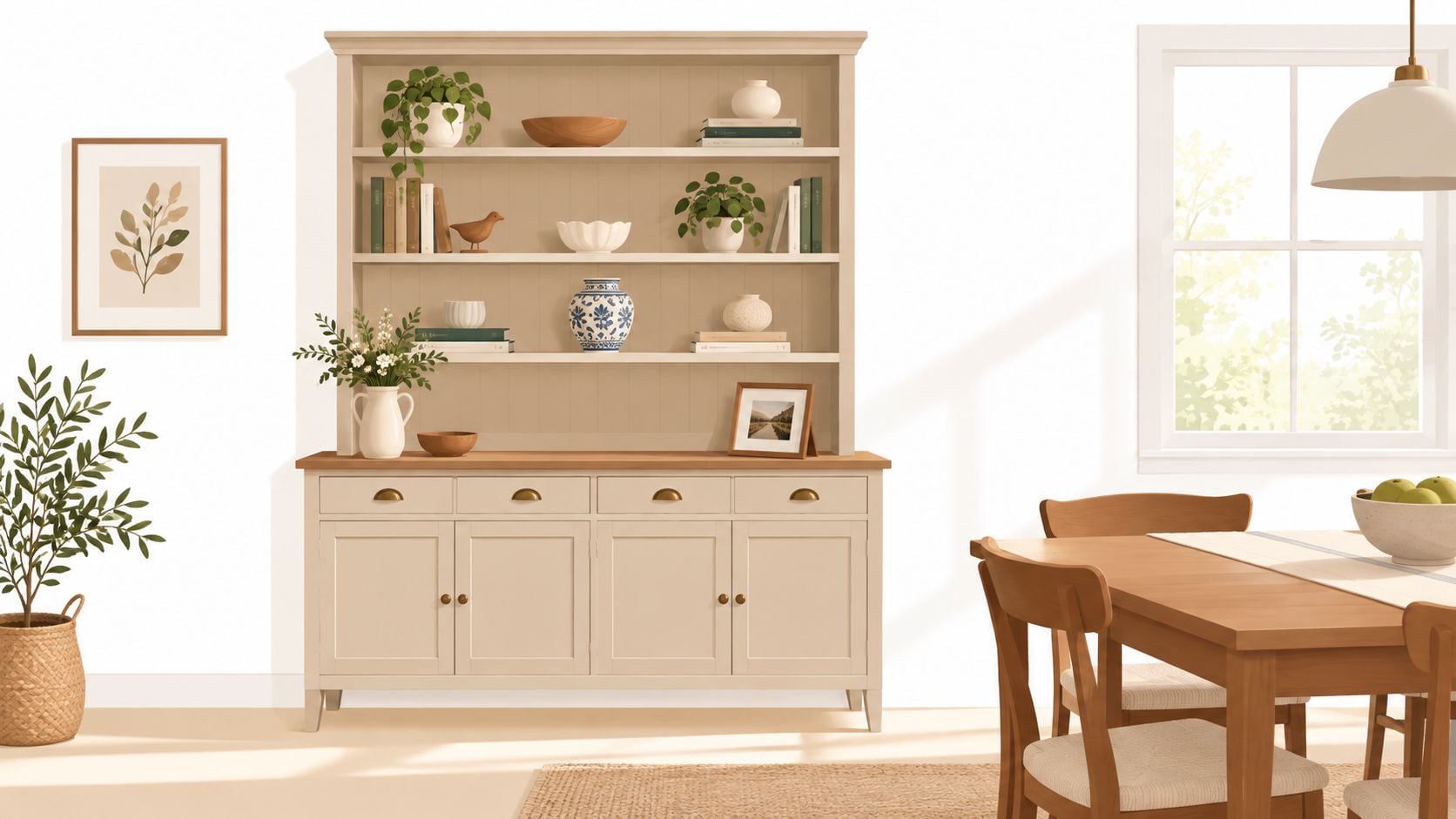
A common modular design separates the depths. Credenzas typically measure about 22 to 24 inches deep and 30 inches high, while the hutch above is often about 13 to 16 inches deep and 41 to 57 inches high, according to the dimensional pattern shown by this credenza and hutch system. The shallower upper section reduces visual bulk and keeps the hutch from projecting too far into the room.
That difference also supports practical use. The deeper base provides a comfortable surface for serving or display, while the shallower upper shelves keep frequently handled objects within a more manageable reach. A properly designed unit transfers the upper load into the matching base, so the buyer shouldn't treat the hutch as an unrelated cabinet placed on top.
| Component | Primary role | Design effect |
|---|---|---|
| Credenza | Concealed storage and serving surface | Grounds the wall and keeps visual weight low |
| Hutch | Display and vertical organization | Extends storage upward and introduces architectural height |
| Combined unit | Integrated storage system | Creates a coordinated furniture wall without separate pieces |
Choose the base, the top, or both
A standalone credenza suits an open-plan room where windows, artwork, or a low architectural line should remain visible. It also works well when the homeowner wants flexible storage that can later move between dining and living spaces.
A full credenza and hutch combination makes stronger sense when the household owns serving ware, glassware, or collections that benefit from organized display. The practical guidance in this overview of a hutch for a buffet supports that distinction. Open shelving creates useful access, but it also asks the homeowner to curate what stays visible.
The recommendation is direct. Select the complete combination for purposeful vertical storage, not because a taller piece automatically offers better storage. Select the credenza alone when visual quiet, flexible placement, or a lower sightline matters more than display capacity.
Sizing and Placement for Room Balance
A hutch changes the room's center of gravity. The credenza occupies the wall; the upper section directs the eye upward. That can make a compact dining area feel more efficient, but it can also compete with windows, crown molding, artwork, or an existing focal point.
Start with the wall, not the furniture catalog. Measure the usable width between corners, trim, doors, and adjacent openings. Then record ceiling height and the clear space below any window or architectural feature. A tall hutch should look intentional, not squeezed beneath the ceiling.
A reliable measuring sequence
Map the wall. Record overall width, baseboard depth, outlets, switches, vents, and nearby door swings. The furniture needs usable clearance, not merely an empty rectangle.
Measure upward. Check ceiling height and the distance from the floor to window trim, picture rails, or other visual boundaries. Leave enough breathing room for the upper profile to read as furniture rather than built-in obstruction.
Test the circulation. Mark the proposed footprint with painter's tape. Walk around it while carrying a serving tray or opening an imagined cabinet door. A beautiful piece that narrows the dining path will frustrate the household.
Plan the delivery route. Measure entry doors, hallways, stairwells, elevators, turns, and the final room entrance. The delivery path matters as much as the destination, particularly for tall, heavy solid hardwood furniture. Vinson's furniture measuring guide gives homeowners a useful preparation framework.
Confirm the system connection. Ask whether the hutch mounts to the matching credenza and how the combined unit is stabilized. Fit, anchoring, and load transfer are part of the purchase, not afterthoughts.
Let the architecture make the decision
A low credenza often suits a room with strong windows or a clean contemporary line. A hutch becomes the better choice when the wall is underused, floor space is limited, and the homeowner needs upper storage.
The current design conversation has moved beyond the idea that one option is universally superior. Modern interiors may skip the hutch for a calmer architectural profile, while smaller homes often benefit from storage that climbs rather than widens. Fluted panels, soft mid-century silhouettes, and matte finishes can make a tall piece feel more decorative, but proportion still controls the result.
Practical rule: If the hutch competes with the room's primary focal point, choose the lower credenza or commission a slimmer upper section.
Selecting Solid Hardwood Materials and Finishes
Material choice determines whether a credenza and hutch feels temporary or becomes part of the house's inheritance. Vinson's standard is uncompromising: the collection centers on solid hardwood furniture, with no promotion of MDF, particleboard, laminate, or engineered wood.
Solid cherry, oak, maple, and walnut each bring a distinct visual temperature. Natural grain variation gives the surface character, while solid construction supports repairability and long-term load tolerance. Industry coverage also notes that solid wood's grain, variation, and durability contribute to lasting satisfaction, while veneer panels may sometimes be used in selected areas to manage movement and structural integrity, as discussed by Furniture Today.
Solid hardwood species comparison
| Wood Species | Grain & Character | Durability & Best Use |
|---|---|---|
| Solid cherry | Warm, refined grain that deepens in character over time | Suits formal dining rooms and heirloom case pieces |
| Solid oak | Pronounced grain with a grounded, substantial presence | Works well for active dining spaces and traditional interiors |
| Solid maple | Smooth, restrained grain with a clean appearance | Fits transitional rooms and lighter finish palettes |
| Solid walnut | Rich, expressive grain with deep natural color | Makes a strong statement in contemporary or tailored rooms |
Finish selection should respond to the surrounding room rather than follow a passing trend. A warm cherry finish can connect a dining table to architectural millwork. Oak can reinforce a farmhouse or transitional palette, while maple keeps a lighter room visually fresh. Walnut has enough depth to anchor a neutral space without requiring ornate detailing.
Joinery and touch matter
A well-made piece reveals itself through the details. Mortise-and-tenon joinery, carefully fitted drawers, substantial hardware, smooth door movement, and a fully considered back all signal deliberate construction. Shelves should feel stable under the objects the household plans to store, and doors should align cleanly rather than relying on decorative distraction.
For homeowners coordinating a broader renovation, the guide to best kitchen cabinet materials for a remodel offers useful context on how material selection affects a home's overall cabinetry language. The same discipline applies here. A credenza and hutch should harmonize with the kitchen and dining finishes without pretending to be a built-in cabinet.
More guidance on species, construction, and longevity appears in this explanation of wood furniture and hardwood selection. The essential recommendation remains simple. Choose the species that complements the room, then choose the finish and joinery that can support the household's real routine.
Styling Your Storage for Everyday Living
A hutch shouldn't become a display shelf filled with every attractive object in the house. Its upper section needs rhythm, restraint, and enough empty space for the eye to rest. The credenza should carry the less decorative work, including linens, serving pieces, chargers, and dining accessories that need protection from visual clutter.
Build a composition, not a storage dump
Begin with the objects used most often. Place everyday glassware or serving pieces where a hand can reach them without moving a decorative layer. Reserve higher shelves for items used less frequently, and group similar materials so the display feels collected rather than accidental.
A balanced arrangement usually benefits from variation in scale. A low stack of books or folded linens can sit beneath a ceramic vessel, while a framed piece or restrained botanical element introduces height. Repeated tones, such as warm wood, clear glass, cream ceramics, or aged metal, help different objects read as one composition.
Use the credenza surface as a transition between the furniture and the room. A pair of lamps can frame the arrangement when the wall allows it. A single sculptural object may be more effective in a narrow space. Concealed cable management matters if the piece serves as a media console, and ventilation should remain clear around electronics.
Keep the lower storage practical
The lower cabinet should absorb the visual noise that daily life creates. Organize by activity rather than by object type:
- Entertaining: Keep serving platters, table linens, and barware together.
- Family meals: Store everyday dishes where they can be reached quickly.
- Living room use: Reserve drawers for remotes, games, and small accessories.
- Seasonal rotation: Place occasional pieces behind doors so the display remains edited.
For a living room application, homeowners can explore broader built-in entertainment cabinet ideas while preserving the flexibility of a freestanding solid hardwood piece. A credenza can support a television or media arrangement, but its best contribution is often the calm surface and hidden organization beneath it.
The upper shelves should show the household's taste. The lower cabinets should protect the household's sanity.
Lighting deserves careful treatment. Warm, integrated shelf lighting can emphasize grain and glassware, but exposed cords undermine the custom appearance. Any lighting plan should be considered before production so channels, clearances, and access points are resolved cleanly.
Navigating Customization and Buying Options
A ready-made credenza can work, but a custom order makes more sense when the room has unusual proportions, a precise storage requirement, or a strong existing finish palette. Homeowners shouldn't force a standard dimension into a carefully renovated dining room.
The Custom Order Program at Vinson Fine Furniture allows shoppers to adjust fabrics, finishes, wood species, colors, and dimensions for participating lines such as Smith Brothers of Berne, Canadel, and Mavin. Digital 3D visualizers can preview combinations before production, giving the homeowner a clearer sense of proportion and finish than a small sample alone.
Customize the elements that affect the room
Customization should begin with the architecture. A narrower base may preserve a walkway. A different hutch height may clear window trim. Adjustable shelves can accommodate tall serving pieces, while carefully selected hardware can connect the storage to nearby dining chairs and lighting.
The origin of the craftsmanship also matters to investment homeowners:
- Smith Brothers of Berne is made in Indiana, USA.
- Mavin is Amish-made in Ohio, USA.
- Canadel is handcrafted in Quebec, Canada.
Together, these lines represent North American craftsmanship, while Smith Brothers and Mavin provide specifically American-made options. The same regional standard informs Vinson's identity as a family-owned business, formerly known as Kitchen Tables & More, serving Central Ohio with a focus on manufacturing in Ohio, the broader United States, and Canada.
Protect the purchase from selection through delivery
A complimentary consultation at the In-Store Design Studio gives homeowners a place to test finishes, compare proportions, and coordinate a larger dining or living room plan. A showroom sit-test remains valuable because doors, drawers, hardware, and surfaces communicate quality through touch and motion.
Vinson's custom furniture design service supports that process. The retailer also offers a Low Price Guarantee with a 110% refund, while the Clearance Gallery provides savings of up to 70%, with availability varying by floor sample, overstock, and seasonal closeout inventory.
White-glove delivery deserves equal attention. The service is defined as in-home placement, light assembly, inspection, and packaging removal, with some workflows using a trained two-person team. Delivery guides also describe unpacking, debris removal, final placement, condition documentation, and a walkthrough as possible parts of the process, according to this white-glove delivery overview and this furniture delivery guide.
Final Thoughts on Investing in Quality Furniture
A credenza and hutch earns its place when three decisions align: the scale suits the architecture, the storage matches daily use, and the construction can withstand years of handling. The lower section should stabilize the room, the upper section should justify its height, and the finish should connect naturally with the home's solid cherry, oak, maple, or walnut elements.
Buyers should measure the wall and delivery route before visiting the showroom. They should decide whether open display is genuinely useful, identify the objects the furniture must hold, and inspect doors, drawers, shelves, hardware, and joinery in person. A tall configuration may require anchoring and careful installation, so the complete system should be evaluated rather than purchased as disconnected pieces.
For Columbus homeowners, the Easton Town Center showroom offers a practical setting for that evaluation. The In-Store Design Studio and Complimentary Design Consultations can help coordinate dimensions and finishes, while North American collections include Amish-made options from Ohio and American-made furniture from Indiana. The same visit can also clarify whether a custom order, a lower credenza, or a clearance piece serves the room best.
The strongest recommendation is to buy for the home that exists, not an imaginary showroom. Select vertical storage only when it improves access and proportion. Select solid hardwood when the furniture is expected to carry family use and remain worth repairing. Then choose delivery and installation support that treats the piece as a substantial investment rather than a parcel left at the door.
Visit Vinson Fine Furniture at Easton Town Center for a complimentary design consultation and an in-person sit-test of solid hardwood credenzas, hutches, dining sets, and premium living room furniture. The showroom's custom order program, North American craftsmanship, Low Price Guarantee, Clearance Gallery, and White-Glove Delivery make it a practical destination for creating storage designed around the home.