Heritage Natural Finishes Explained for Solid Wood Furniture

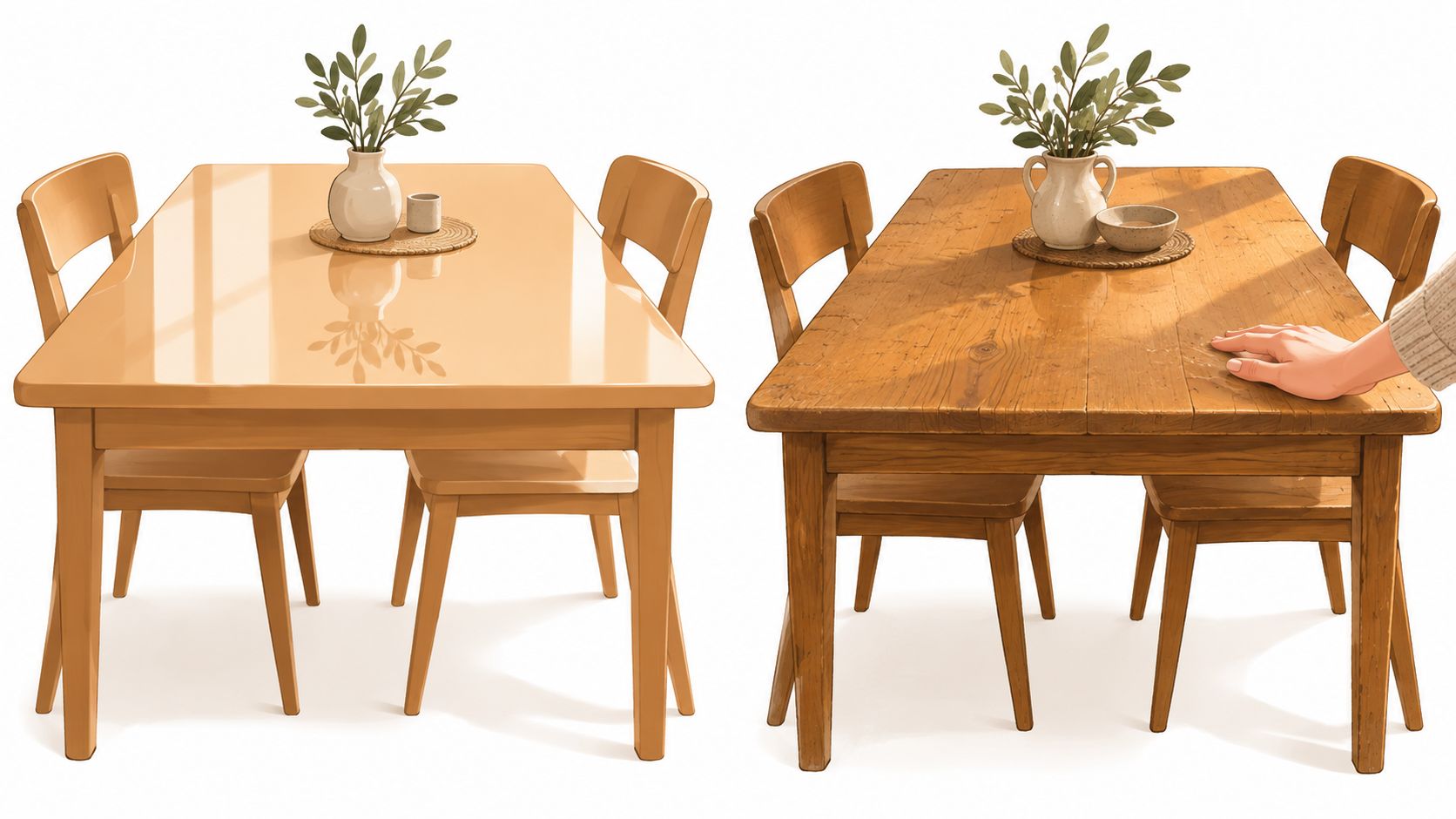
A Columbus homeowner comparing dining tables at Easton Town Center may find two solid-hardwood pieces equally handsome under showroom lights. One has a darker, smooth factory stain; the other has a quieter, more tactile surface that lets the grain show. The meaningful difference may emerge later, as meals, sunlight, spills, and everyday care shape each finish.
For an investment buyer, the question isn't whether a finish is natural. It's whether the finish suits the wood and the room, and whether it can be maintained or repaired without stripping the piece. A finish earns its place over time by helping furniture stay useful and desirable, not by carrying a particular label.
Why Heritage Natural Finishes Matter for Heirloom Furniture
A dining table's finish affects how its surface looks, feels, and responds to daily use. A softer, low-sheen finish can keep the grain visually present, while a more sealed surface may offer a different balance of protection and upkeep. Neither choice guarantees a longer life on its own. Construction, care, and the household's habits matter too.
That's why a finish deserves the same attention as the hardwood and joinery. Vinson Fine Furniture's standard is solid hardwood furniture, built around materials that can remain serviceable and be repaired. Research on furniture lifetimes identifies low-quality materials and poor design as barriers to durability, repair, and reuse, supporting the case for well-made solid wood pieces that can continue serving their owners (review of furniture lifetimes in a circular economy).
Ask the heirloom question
For a Columbus household, the practical test is whether a table can keep working through years of dinners, changing room light, and ordinary marks. Can the finish be renewed locally? Can a scratch be touched up without refinishing the entire top? Will the surface feel right for the way the family uses the room?
Historic-building conservation offers a useful parallel. A National Heritage Science Strategy report notes that repair and maintenance account for more than 40% of construction work, illustrating the value of keeping existing materials in service rather than replacing them (UK National Heritage Science Strategy report). Furniture isn't a building, but the principle carries over: a repairable finish can support the longer life of the wood beneath it.
A showroom visit makes these differences easier to judge. At Easton Town Center, shoppers can compare sheen and texture in person instead of relying only on screen images. For readers weighing a painted refresh against keeping visible wood grain, furniture painting tips from Tony Painting offer another perspective on changing an existing piece.
Defining Heritage Natural Finishes and Their Origins
Heritage natural finishes are finishing approaches rooted in long-standing material traditions. The term describes more than a list of plant- or mineral-derived ingredients. It points to a way of working with surfaces that values local materials, visible texture, breathable layers, and the possibility of maintenance or repair.
Traditional methods included drying oils such as linseed and tung, beeswax and paste wax, casein plaster, earth plaster, and mineral or plant-based pigments. Their uses varied by material and place. In one contemporary interpretation of older practices, earthen plaster boards were finished with earth-and-casein plaster, while a rammed-earth floor was protected with wax. These examples demonstrate how natural finishing methods can work as part of a wider material system, rather than as a decorative label alone (research on earthen building traditions and natural finishes).
What makes a finish “heritage”
Three ideas help separate a heritage approach from vague marketing:
- Material honesty: The finish allows the character of the underlying surface to remain legible. On furniture, that may mean visible grain on solid cherry, oak, maple, or walnut.
- Layer compatibility: A finish should suit the wood and the existing surface, rather than being treated as a universal coating that can go over anything.
- Maintenance over replacement: A sound finishing approach considers what future cleaning, renewal, and repair will involve.
These principles don't mean every traditional substance belongs on every table. Oils and waxes behave differently from one another, and a finish suitable for a rarely used bedroom piece may not suit a heavily used dining surface.
Heritage natural finishes also have a long history beyond furniture. Earthen construction has been used across inhabited continents for thousands of years, and historic building traditions included limewash, earth plaster, and mineral pigments. For homeowners exploring a plant-derived coating, Vinson's information on linseed oil paint can help clarify the relationship between natural ingredients and the surface they're intended to finish.
When talking with a design consultant, useful questions include: Is this finish oil-based, wax-based, or a sealed topcoat? Does it leave the grain open to touch? What does normal renewal involve? Clear answers matter more than the word “natural.”
Comparing Heritage Natural Finishes to Other Finish Types
The right finish depends on the balance a homeowner wants among appearance, protection, and future repair. A waxed or oil-and-wax surface can feel close to the wood, while a film-forming topcoat places a more distinct protective layer over it. Each option has trade-offs, and the same finish may behave differently with a household's cleaning habits and exposure to sunlight.
On solid cherry, oak, maple, and walnut, the finish also changes how grain and color read. A transparent finish can preserve a visible sense of the wood, while a stain shifts its color. Lacquer, conversion varnish, and polyurethane generally create a more sealed surface, but the ease of spot repair depends on the coating and the extent of the damage.
Finish Options on Solid Hardwood
| Finish Family | Look and Feel | Repair and Renewal | Best Use |
|---|---|---|---|
| Oil and wax blends | Often low-sheen, with a tactile connection to the grain | May allow local renewal, depending on the product and existing finish | Pieces where natural texture is a priority and owners accept regular care |
| Hardwax oil | Matte to satin appearance, with a surface that still reads as wood | Renewal may be manageable, but compatibility and instructions matter | Tables and other surfaces where a natural look and practical maintenance are both desired |
| Oil-based stain with a protective topcoat | Color shifts while the topcoat provides a more sealed feel | A scratch can reach through the finish, so matching repairs may take skill | Dining furniture where color selection and surface protection are both priorities |
| Lacquer | Smooth, more continuous coating with a consistent sheen | Local repair may be possible, though matching the surrounding surface can be difficult | Furniture designed for a uniform, sealed appearance |
| Conversion varnish | Hard, sealed surface with a finished, even look | Repair typically calls for finish-specific knowledge | Pieces where a durable, factory-applied coating is preferred |
| Polyurethane | Clear or tinted film that can look matte, satin, or glossy | Repair can involve careful blending or refinishing, depending on damage | Furniture where a more sealed surface suits the anticipated use |
This table is a starting point, not a product specification. The finish system, application, and care instructions determine how a particular piece performs. Readers comparing a painted surface with visible wood grain can also consult cabinet painting vs. staining pros and cons for a useful general discussion of how the two approaches differ.
For Ohio-made furniture, the important point is to compare finishes on solid hardwood, not to assume a surface appearance reveals how the piece is built. Ask what coating is used, how repairs are handled, and what the maker recommends for cleaning.
The Honest Case Against Every Finish Hype
Walk the finish aisle and the "pure" and "all-natural" labels seem to settle the question before you ask it. The word describes the ingredient list, nothing more. A natural ingredient isn't an automatic safety, durability, or maintenance advantage. Conservation guidance warns that drying oils continue to oxidize after hardening and can eventually darken, soften, and turn gummy. Mineral oil never dries and may leave dark streaks. Wax can yellow or grow difficult to remove with age, and oil left unwiped stays tacky and collects dust (National Park Service guidance on wood objects).
A finish also behaves as part of a system. Oil rubbed onto wood that already carries a coating works like lotion on a raincoat: it sits on top, attracts grime, and still has to come off, which risks damaging the finish underneath. A product marketed as gentle can demand more invasive correction than a well-chosen synthetic once it builds up or resists reversal.
Match the finish to the job
A dining table that sees nightly meals and constant wiping needs a different balance of protection and repairability than a bedroom chest used lightly. The low-sheen oil-and-wax look rewards an owner who enjoys careful upkeep and frustrates a household that wants a sealed, wipe-and-done surface. A hard high-gloss coating can work against the softer, more traditional character that drew you to the piece.
So ask the heirloom question before the purity question. How will this surface look after thirty years of use? Can it be renewed and repaired without stripping the wood, and how much visible change will you accept along the way? A finish you can refresh in place carries a very different lifetime cost than one that eventually demands a full refinish.
Before you apply oil, wax, polish, or cleaner to an existing piece, identify what's already on the wood. The surface may be shellac, lacquer, varnish, or a modern synthetic, and no single treatment suits them all. Vinson's guide to wood finishes and food safety can help frame questions for furniture used around food. Then treat the maker's care instructions as the final authority: if the label and the maker disagree, follow the maker, and test any product on a hidden area first.
Caring for Heritage Natural Finishes Over Decades
A solid cherry dining table can look better at year twenty than it did at delivery, but only if the finish is maintained in a way the wood can accept. Care starts with restraint. For routine dust and light soil, use a soft cloth barely dampened with water, then dry the surface rather than leaving moisture sitting on it. Skip silicone sprays and heavy polishes unless the maker recommends them, since an added coating can complicate the local touch-ups that make these finishes worth choosing.
Once you know what finish is on the piece, upkeep becomes a small set of habits repeated over years. A surface renewed in place never has to be stripped back to bare wood, which is the practical meaning of a thirty-year finish.
A measured renewal rhythm
The museum conservation guidance cited earlier puts rewaxing for some historic wood objects at roughly every one to four years, and that range is a starting point rather than a schedule. Clean the previous wax layer away before applying fresh wax, so grime does not get sealed beneath the new coat.
Watch the surface, not the calendar. A finish that looks dull, feels dry under the hand, or shows water spotting may be ready for attention. Those signs tell you when, not what. The maker's care directions still decide which product belongs on the piece, so keep them where you can find them.
Indoor furniture care is a different job from maintaining exterior wood. A deck staining service handles boards exposed to sun and weather, while a dining table faces spills, dust, and dry winter air. For the indoor routine, Vinson's wood furniture care guidance outlines day-to-day upkeep for finished pieces.
When a new piece arrives, use the delivery inspection to record the finish type and care instructions on day one. Every cleaning decision after that starts from the maker's guidance, and the finish has a written history if a repair is ever needed.
Pairing Heritage Natural Finishes With Rooms and Wood Species
A finish should make sense both under the hand and in the room. In a quieter dining room or bedroom, a matte or softly finished solid-cherry or walnut piece can keep the grain and natural color in view. That restrained look may be appealing where the furniture's surface is part of the room's calm, rather than a high-contrast focal point.
For a busy dining area, the household's habits deserve more weight than the finish's label. A family that regularly serves meals at the table may prefer a more protective coating or a hardwax system with clear maintenance instructions. Solid oak and maple offer different grain patterns and color character, so samples should be viewed in the actual room light where possible.
Consider the full room
- Dining room: Start with the table's expected use, how often it will be cleaned, and whether marks can be accepted as part of its character. Ask what a local repair would look like.
- Bedroom: A lower-sheen finish can suit a calmer setting, particularly when paired with solid cherry or walnut. Confirm that the surface remains easy to dust and that the maker provides clear care guidance.
- Living room: Upholstery and exposed wood should feel coherent together. Smith Brothers seating can be configured with fabric or leather and wood details, so shoppers can consider the frame and upholstery as part of one room decision.
Vinson carries partner lines with distinct origins and strengths. Mavin is Amish-made in Ohio, with solid-wood bedroom and dining options. Smith Brothers of Berne is made in Indiana, while Canadel is handcrafted in Quebec, Canada, offering North American dining craftsmanship. Buyers looking at species can compare walnut and maple wood before deciding which grain and color fit the room.
These examples are best judged in person. Vinson's Easton showroom lets shoppers sit-test upholstery and compare wood and finish samples together. For living rooms, the selection also includes top-grain and performance leathers, custom sectionals, power reclining options, swivels, rockers, and gliders. The finish question stays central, but the room's full use determines what will feel right over time.
Ordering and Evaluating Heritage Natural Finishes at Vinson
A custom order works best when the homeowner can compare the finish, wood, and room plan together. Vinson Fine Furniture's In-Store Design Studio offers complimentary design consultations for finish selection, space planning, and fabric coordination. At Easton Town Center, a sit-test and physical sample can reveal differences in sheen and texture that a screen may flatten.
The Custom Order Program covers fabrics, finishes, and 3D visualizers for partner brands including Smith Brothers, Mavin, and Canadel. A visualizer helps narrow options, but it can't fully reproduce the feel of a hand-applied surface or the way its color changes in a home's light. The final decision should account for room use, wood species, and the finish's care requirements.
From sample to delivery
- Bring the room details. Photos, measurements, and nearby floor or cabinet colors help a consultant understand the setting.
- Compare finishes on the actual species. A color on solid oak won't read exactly like the same choice on solid cherry or maple.
- Ask about repair and renewal. Find out what a scratch repair involves and whether maintenance requires adding product, removing an old layer, or professional refinishing.
- Review the order details. Confirm the selected finish, wood, and care instructions in the order documentation. Custom lead times depend on the maker and order, so ask for the current estimate rather than assuming a fixed schedule.
Vinson's custom hardwood dining tables provide a starting point for discussing wood and finish choices. The store also offers White-Glove Delivery, with furniture placed and assembled in the home and packaging cleared away. For eligible purchases, the Low Price Guarantee provides a 110% refund of the difference if a lower price is found at a local authorized dealer within the stated 30-day window, subject to the program's terms. Those details should be confirmed with the showroom before an order is finalized.
A Showroom Checklist for Heritage Natural Finish Decisions
A finish sample should be treated as evidence, not as a promise. The showroom is where a homeowner can test the grain under different light, feel the surface, and ask how a repair would be handled. The decision becomes clearer when the questions focus on ownership, not just appearance.
Take these questions to Easton
- Renewal: Can the finish be refreshed locally, or does renewal require stripping the entire surface?
- Repair: What happens if the table is scratched or marked, and how visible is a touch-up likely to be?
- Room fit: Does the finish suit the way the dining or living room is used, including routine cleaning and sunlight?
- Wood species: How does the color look on solid cherry, oak, maple, or walnut in the room's lighting?
- Care: Which cleaners and maintenance products are compatible, and what should be avoided?
- Construction: Is the piece solid hardwood, and what construction details support long-term repair and use?
Vinson is a family-owned Central Ohio business, formerly known as Kitchen Tables & More, with a focus on North American manufacturing and Amish-made craftsmanship. Its standard is solid hardwood furniture, with options from Ohio and Indiana makers as well as Canadian-crafted dining collections. Shoppers furnishing more than the dining room can explore power-motion seating, leather sectionals, and bedroom furniture alongside tables and chairs.
For value, the Low Price Guarantee and Clearance Gallery offer different routes: the guarantee provides a 110% refund of the difference under its stated terms, while clearance selections feature savings of up to 70% on available pieces. Ask the showroom to confirm current eligibility and inventory. The right finish is the one whose maintenance, repair path, and look still make sense years after delivery.
Visit Vinson Fine Furniture at Easton Town Center to compare solid-hardwood finishes in person, sit-test living-room and dining-room pieces, and book a complimentary design consultation. The team can help evaluate custom finish options, explain care expectations, and arrange White-Glove Delivery for furniture chosen to serve your home for years.