Linseed Oil Paint: The Ultimate Guide to Wood Finishes in 2026


Imagine a wood finish that doesn’t just sit on top of your solid wood furniture, but actually becomes a part of it. That’s the beauty of linseed oil. This time-tested finish sinks deep into the wood, protecting it from the inside out while highlighting its natural character—a philosophy we live by when creating heirloom-quality pieces.
Why Linseed Oil Paint Is a Timeless Choice
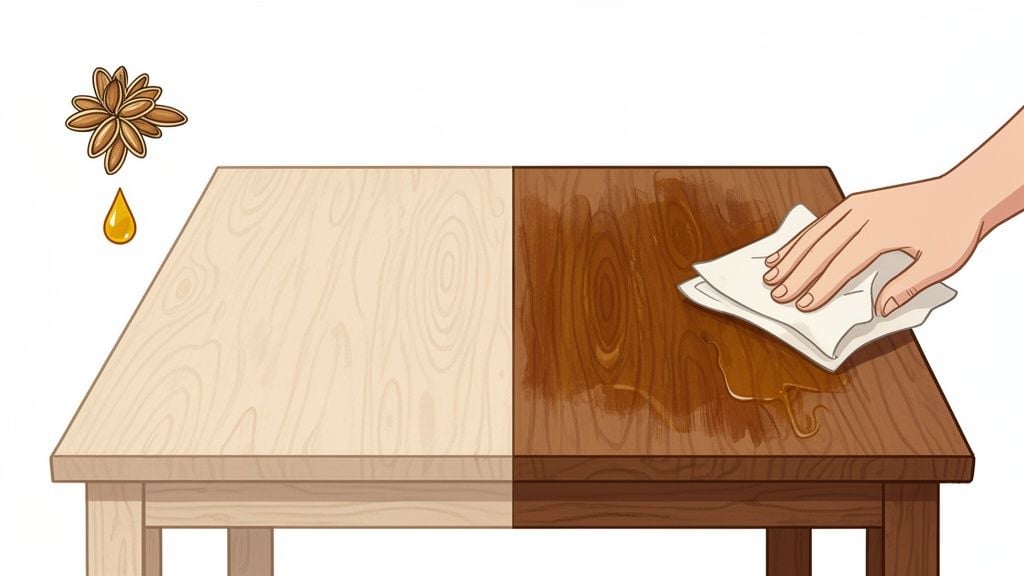
For the investment homeowner, choosing the right finish is just as important as selecting the wood itself. Unlike modern coatings that create a plastic-like film on the surface, linseed oil paint, made from flax seeds, works with the wood. It soaks right into the grain, nourishing and strengthening the fibers.
This key difference is why we’re seeing a significant return to this traditional method. It's a choice for people who care about durability, authentic beauty, and true craftsmanship—qualities that define the experience here at Vinson Fine Furniture.
A Return to Lasting Quality
In a world full of mass-produced furniture, choosing a finish like linseed oil is a deliberate act. It shows a desire for pieces that don’t just fill a room but enrich it, aging gracefully and developing a beautiful, unique patina over many years. This is how your furniture begins to tell a story for generations to come.
The advantages go well beyond aesthetics:
- Deep Penetration: The oil gets into the wood's pores, creating a durable, long-lasting barrier against moisture from within.
- Breathable Finish: It allows the wood to expand and contract with humidity changes, which prevents the cracking and peeling you often see with surface-level paints.
- Easy Maintenance: Scratches and scuffs can often be repaired by simply rubbing a small amount of oil into the spot—a significant advantage compared to finishes that have to be completely stripped and redone.
At Vinson, we believe in preservation. The right finish not only protects your investment but enhances the very soul of the wood, a principle you can explore with our design experts in a Complimentary Design Consultation.
This commitment to lasting value is why we guide our clients toward choices that promise a lifetime of enjoyment. If you're curious about different wood coatings, you can learn more about the variety of natural wood finish options available. Stopping by our Easton Town Center showroom lets you feel the difference firsthand and see how a superior finish elevates the solid wood furniture Ohio shoppers love.
The Legacy and Resilience of Linseed Oil Paint
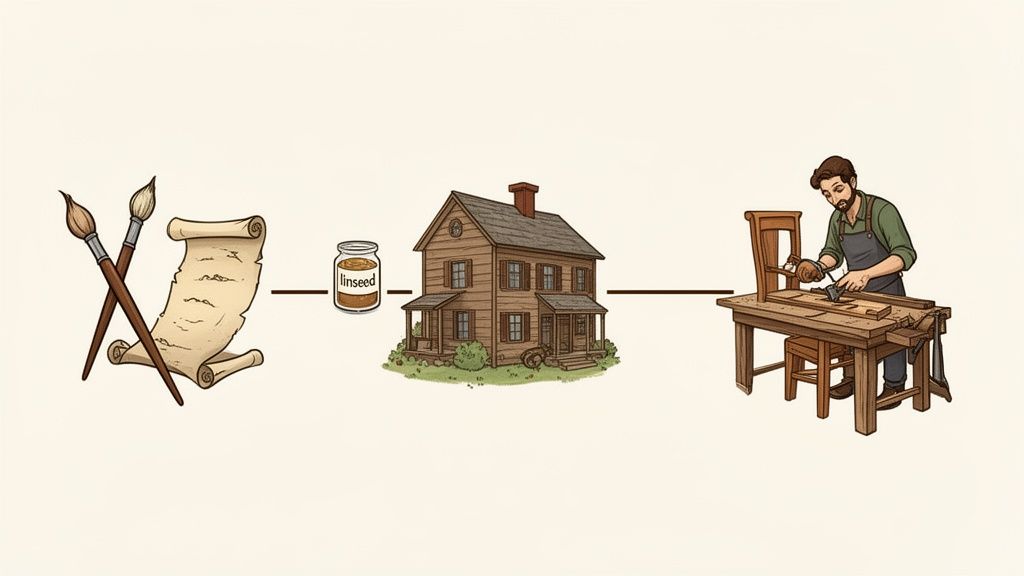
Sometimes the best innovations aren't new at all. Linseed oil paint is a perfect example—a time-tested finish that embodies the kind of enduring quality and true craftsmanship we value in the Amish-made furniture at our Columbus, Ohio showroom. It's a return to something proven, a finish that’s as invested in the long haul as you are.
This isn't a trendy new product. Linseed oil paint was the gold standard for centuries, protecting everything from artists' canvases to historic homes. From the late 1700s all the way through the 1950s, it was the primary coating used to defend wooden buildings in America against the elements. Its track record is a testament to its incredible resilience, and you can explore the evolution of this traditional paint to see just how deep its history runs.
The Ultimate Defender of Wood
So, what’s the secret? It’s simple: linseed oil paint works with the wood, not against it. Modern latex and acrylic paints create a plastic-like film that sits on the surface, but this traditional finish soaks right into the wood fibers and bonds with them directly.
This "breathability" is the key. It lets the wood expand, contract, and release any trapped moisture naturally. That single property prevents the kind of paint failures we’ve all seen before.
- No Peeling or Flaking: Since the paint moves with the wood, it doesn't crack, peel, or flake off like a synthetic shell.
- Deep-Seated Protection: By soaking deep into the grain, it hardens from the inside out. This creates an incredibly tough barrier that stops rot before it even has a chance to start.
- Graceful Aging: Instead of chipping away and looking shabby, a linseed oil finish wears down gracefully over decades, eventually developing a beautiful, soft patina that only adds to its character.
This concept of working in harmony with natural materials is the very definition of heirloom quality. It’s about creating something that doesn’t just look good on day one, but is built to last for generations.
A Return to True Value
After World War II, the market shifted. Cheaper, faster-drying petroleum paints took over, and the craft of making and using linseed oil paint was nearly forgotten. We traded real durability for convenience.
But now, a growing number of homeowners and artisans are rediscovering what was lost. They're realizing that a finish that lasts 50 years is a much better value than one you have to scrape and repaint every five. This appreciation for time-tested quality is the same reason people invest in pieces that help them understand how long your furniture should truly last. Choosing linseed oil is a choice to step away from the disposable and back to enduring worth.
Raw Linseed Oil Versus Boiled Linseed Oil
When you're aiming for that perfect, long-lasting finish on a piece of wood furniture, the first choice you'll make is often the most important: which linseed oil to use. Both "raw" and "boiled" linseed oil start their life the same way—pressed from the humble flax seed—but they couldn't be more different in practice.
Getting this right is crucial, whether you're finishing a brand-new custom dining set or bringing a treasured family heirloom back to life.
Think of raw linseed oil as the pure, unadulterated version, much like a cold-pressed olive oil. It’s 100% natural and soaks deeper into wood fibers than just about any other finish, nourishing and protecting the wood from the inside out. But that deep soak comes with a major trade-off: it can take weeks, sometimes even months, to fully cure. This makes it impractical for furniture you intend to use anytime soon.
The Practical Choice for Furniture
This is where boiled linseed oil comes in. For most furniture projects, especially the kind of solid wood furniture Ohio families have cherished for generations, this is the true workhorse.
The name is a little misleading—a holdover from another time. It isn't actually boiled. Instead, the oil is treated with special drying agents that dramatically cut down the curing process.
What this means for you is that you get all the deep, protective benefits of linseed oil without the agonizing wait. A piece finished with boiled linseed oil is usually tack-free in under 24 hours and fully cured in about a week. This makes it the go-to choice for creating a tough, beautiful, hand-finished look that’s ready for the rigors of daily life. To see how different finishes pair with specific woods, our guide on choosing the right hardwood for your furniture is a great resource.
The key takeaway is simple: Boiled linseed oil provides the perfect balance of deep-seated protection and practical drying times, making it the superior choice for finishing functional, heirloom-quality furniture.
To help you see the differences at a glance, here’s a quick comparison of the two oils.
Raw vs. Boiled Linseed Oil: A Quick Comparison
| Feature | Raw Linseed Oil | Boiled Linseed Oil |
|---|---|---|
| Drying Time | Extremely slow (weeks to months) | Fast (12-24 hours to tack-free) |
| Composition | 100% pure, natural oil | Oil with added drying agents |
| Penetration | Deepest possible penetration | Excellent, deep penetration |
| Best For | Long-term wood preservation, tool handles | Furniture, cabinetry, indoor woodwork |
| Appearance | Slightly lighter, more natural matte finish | A slightly warmer, semi-gloss sheen |
Ultimately, choosing boiled linseed oil for your furniture projects ensures you get a finish that is both beautiful and built to last, without putting your home on hold while it dries.
Why Choose Linseed Oil Paint for Your Furniture
Picking the right finish for your solid wood furniture goes beyond just looks; it's about investing in the future of the piece. Linseed oil paint isn’t just beautiful—it offers real benefits that focus on longevity over simple convenience. This is what truly sets it apart from the modern finishes you see everywhere.
Unlike polyurethane or lacquer that create a plastic-like shell on the surface, linseed oil paint soaks deep into the wood grain. This is its greatest strength. It becomes part of the wood, strengthening the fibers from the inside out and creating a barrier that's both tough and breathable.
Unmatched Durability and Protection
History really tells the story here. Old-school formulas from before the 1920s, which were little more than boiled linseed oil and pigment, were incredibly resilient. They didn't flake or peel like so many modern paints do. Because the paint allowed wood to breathe, moisture could escape instead of getting trapped, which prevented rot and made the wood last dramatically longer. You can explore the enduring qualities of traditional linseed oil paint here.
This gives your furniture some key advantages:
- No More Rot: By letting the wood breathe, it stops moisture from getting trapped—the number one cause of rot and decay.
- Ages Beautifully: It develops a rich, soft glow over time, adding character instead of cracking and failing.
- A True Investment: This finish is meant to protect for decades, not just a few years, which is exactly what you want for heirloom-quality furniture.
An Eco-Conscious and Graceful Finish
On top of being so durable, linseed oil paint is a great choice for the environment. It's made from flax seeds—a renewable resource—and natural pigments, so it’s free from the harsh chemicals and solvents in many paints from the hardware store. It’s a healthier option for your home and for the planet.
This flowchart can help you decide if linseed oil is the right fit, whether you're prioritizing deep protection or a faster project timeline.
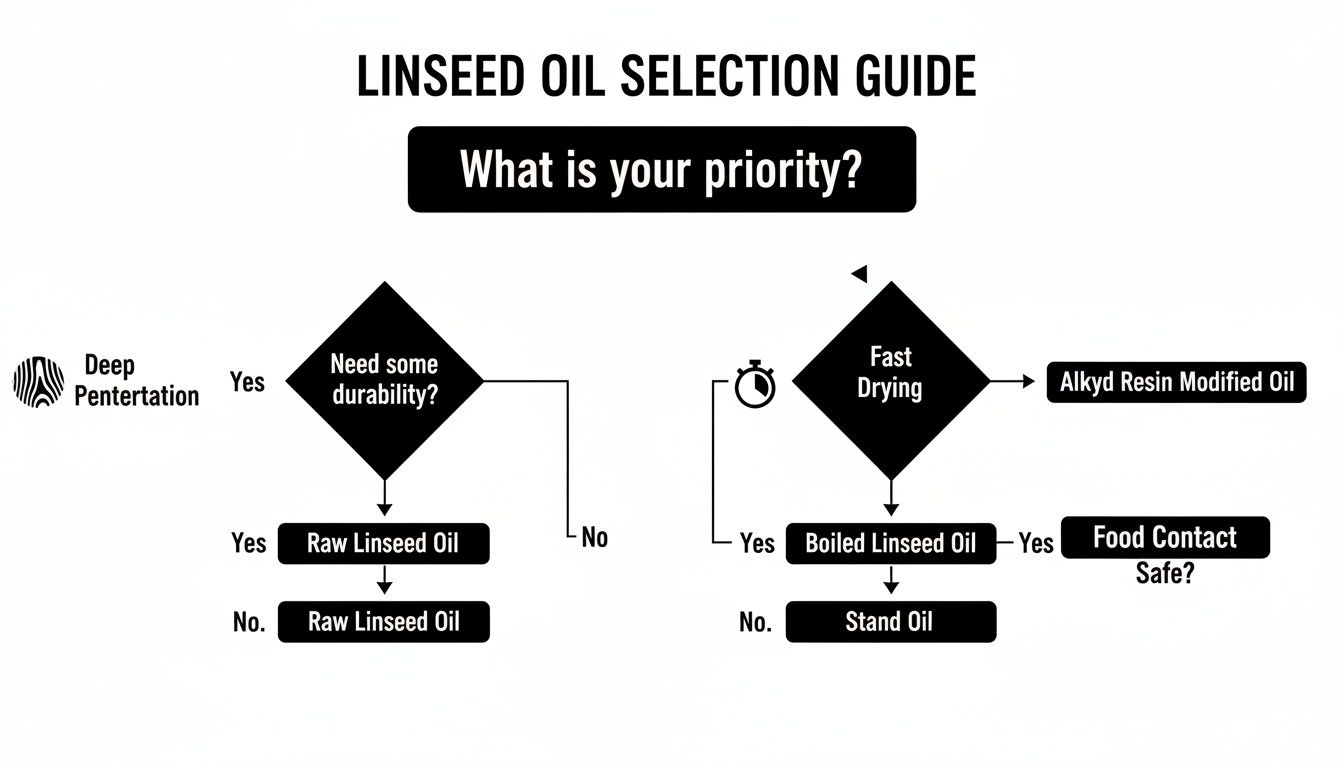
As you can see, both raw and boiled linseed oils lead to a durable finish. The main choice comes down to whether you want the deepest possible protection or if you need to get your project done a little sooner.
The way a piece of furniture ages is just as important as how it looks new. Linseed oil paint ensures your furniture's story is one of grace, character, and enduring beauty.
Here at Vinson Fine Furniture, we believe in finishes that stand the test of time. During a Complimentary Design Consultation at our Easton Town Center showroom, we can show you firsthand how a premium finish can elevate the custom dining sets and other pieces you help design. For more tips, check out our ultimate guide on protecting wood furniture from scratches and stains.
How to Apply and Maintain Your Linseed Oil Finish
Taking care of your solid-wood furniture shouldn't feel like a chore. It’s actually one of the most satisfying parts of owning a handcrafted piece. Applying a linseed oil finish is a wonderfully simple process that deepens your connection to the wood, ensuring it looks incredible for a lifetime.
Good preparation is everything. The wood needs to be clean, dry, and completely free of dust. Of course, any piece from our Amish-made furniture collection arrives ready for you to enjoy. But if you’re refinishing an older treasure, a quick pass with fine-grit sandpaper is a good idea to open up the wood grain so it can drink in the oil.
The Art of Application
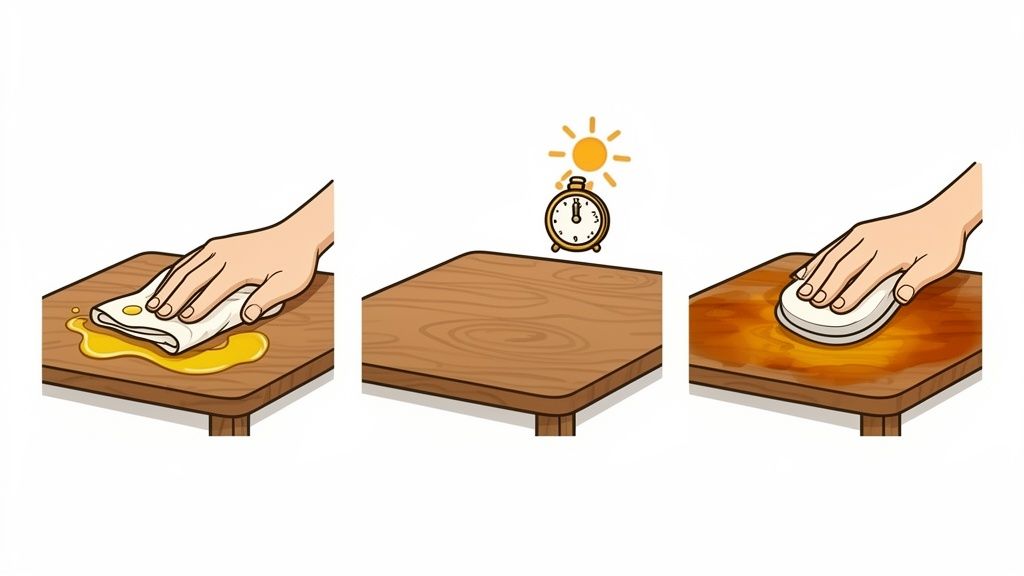
Here’s the secret to a perfect linseed oil finish: thin is in. This isn't like modern paint where you lay on a thick coat. With oil, you wipe it on and then, most importantly, wipe it right back off. This simple technique is the key to avoiding a sticky mess and getting that beautiful, hand-rubbed look.
Follow these simple steps for a flawless finish:
- Apply a Thin Coat: Put a little bit of boiled linseed oil on a clean, lint-free cloth. Rub it into the wood, always following the direction of the grain. You’re trying to work it into the fibers, not just sit on top.
- Let it Penetrate: Give the oil about 15-20 minutes to soak in. You’ll see the wood’s grain pop with rich, deep color almost immediately.
- Wipe Off All Excess: This is the make-or-break step. Grab a fresh, dry cloth and wipe off every last bit of extra oil. Seriously, be thorough. The goal is for the oil to be in the wood, not on it.
Once your final coat is fully cured—give it about a week—the surface will be tough enough for daily life. For a deeper dive, feel free to check out our complete guide on how to care for wood furniture.
Simple and Rewarding Maintenance
Perhaps the best thing about a linseed oil finish is how easy it is to live with. This isn't some delicate coating that needs special chemicals or a professional to fix a simple scuff.
A linseed oil finish empowers you to maintain your furniture’s beauty for decades. Minor scratches and scuffs often disappear with a simple reapplication of oil to the affected area, blending seamlessly without the need for stripping the entire piece.
For day-to-day cleaning, a soft, damp cloth is all you’ll ever need. Just stay away from harsh chemical cleaners, as they can strip the finish. Every few years, or whenever the wood starts looking a little thirsty, you can bring it back to life with another thin coat of oil. It’s that easy.
This kind of long-term value and ease of care is something we’re passionate about. It’s a topic our design consultants love to discuss during a Complimentary Design Consultation at our showroom in Easton.
Realize Your Vision with Vinson Fine Furniture
The time-tested quality of finishes like linseed oil paint is exactly what we’re all about here at Vinson Fine Furniture. We’re passionate about the kind of craftsmanship that lasts for generations—a principle that guided furniture makers for centuries before the world got flooded with quick-drying synthetics back in the 1950s. This return to quality over convenience is a huge part of our mission, something you can see reflected in studies of historic paint applications.
Our In-Store Design Studio at our premier Easton Town Center location is the perfect place to get started. Come sit down with us for a Complimentary Design Consultation and we’ll walk you through our Custom Order Program. It’s your chance to pick out the perfect, durable finish for your new solid wood furniture, making it truly your own.
Bringing Your Vision to Life with Exceptional Value
We believe heirloom quality should be within reach for everyone. That means offering truly exceptional pieces with an emphasis on value. We stand behind this promise in two significant ways:
- Low Price Guarantee: We promise you the best value in the region. If you happen to find the exact same item for less at another local authorized dealer, we won’t just match it—we’ll refund you 110% of the difference.
- Clearance Gallery: This is where you can find incredible savings, up to 70% off. We’re talking about premium brands and beautiful floor samples, like top-grain leather sectionals from Smith Brothers, that bring timeless style and protection into your home.
At Vinson, our goal is simple: to help you fill your home with pieces that aren’t just beautiful, but are built to become part of your family’s story. We make sure that whole process is a pleasure from start to finish.
A Smooth Journey from Our Showroom to Your Home
Bringing your ideas to life should be an exciting, stress-free adventure. We’ve taken away all the usual headaches that come with furniture shopping by building our services around you.
We offer Flexible Financing options through Synchrony HOME to help make your dream pieces a reality right away. After you’ve made your choice, our professional White-Glove In-Home Delivery team takes it from there, making sure your new furniture arrives safe, sound, and ready to enjoy.
We’d love for you to stop by our furniture store in Columbus, Ohio. Come feel the difference that real craftsmanship makes and see for yourself how a lasting finish can turn a simple piece of furniture into a future family heirloom.
Frequently Asked Questions About Linseed Oil Paint
When you're choosing a finish for a piece of furniture you love, a few questions are bound to pop up. Linseed oil paint has been trusted for centuries, and understanding it is actually pretty straightforward. Let’s clear up some of the common curiosities so you can feel confident about this classic finish.
Is Linseed Oil Paint Safe for Indoor Furniture?
Yes, absolutely. Once it’s fully cured, today’s linseed oil paints are perfectly safe for all the furniture inside your home. The most important step is simply ensuring good airflow while it’s being applied and as it dries. This allows the natural oils to cure properly.
Because it’s made without harsh synthetic solvents, it's a fantastic choice for anyone looking to create a healthier home.
How Long Does Linseed Oil Paint Take to Dry?
This really comes down to which kind you’re working with. Raw linseed oil is the patient craftsman's choice, taking several weeks to cure completely. On the other hand, "boiled" linseed oil, which has natural drying agents added, is usually tack-free within 12 to 24 hours. It will then fully harden over the next several days to a week.
No matter which type you use, the secret to a good, timely cure is always applying it in very thin coats.
Can I Use Linseed Oil Paint on Any Type of Wood?
Linseed oil paint works beautifully on most solid woods, especially more porous ones like pine and oak. It sinks deep into the wood grain to protect it from the inside out, which is why it’s a wonderful option for everything from brand-new custom dining sets to treasured family antiques.
For really dense or naturally oily exotic woods, it’s always smart to test the finish on a small, hidden spot first. This just confirms the wood will absorb the oil evenly and give you that beautiful hand-rubbed look you’re after.
How Do I Care for a Linseed Oil Finish?
Easy maintenance is one of its best features. For everyday cleaning, all you need is a soft, damp cloth. If you get a small scuff or scratch, you can often make it disappear by simply rubbing a tiny bit of oil into the spot—a seamless repair that’s impossible with many modern finishes.
At our furniture store in Columbus, Ohio, we believe a finish should be as durable as it is beautiful. During a Complimentary Design Consultation, we can walk you through the options to make sure your furniture is ready for a lifetime of memories.
Explore a world of lasting quality and custom design at Vinson Fine Furniture. Visit our Easton Town Center showroom to start creating your family’s next heirloom.