Home Office Furniture Luxury: A Columbus Design Guide


A lot of homeowners are still working in a room that was never meant to carry that role. It might be a spare bedroom with a temporary desk, a dining chair that looked acceptable for a few months, and piles of paper tucked into a closet because there was never a real storage plan. That arrangement can work for a season. It rarely feels right for a long-term professional life.
A luxury home office starts when the room begins to support the person using it. The desk holds real equipment without strain. The chair supports long hours without making the body pay for it later. Storage keeps the surface clear. The finishes feel calm, substantial, and personal. That's the difference between decorating a workspace and building one.
That shift also reflects a larger change in how homeowners value their interiors. The global luxury furniture market was estimated at USD 31.06 billion in 2024 and is projected to reach nearly USD 40 billion by 2030, according to Grand View Research's luxury furniture market analysis. Premium home environments are no longer a narrow niche. They're part of how many households now think about lasting quality.
For anyone beginning that process, home office furniture ideas from Vinson Fine Furniture offer a useful starting point, especially for homeowners who want a room that feels polished without becoming overdone. The strongest spaces don't chase excess. They use scale, craftsmanship, and planning to make daily work feel easier and more dignified.
Table of Contents
- The New Executive Suite Your Home Office
- Planning Your Luxury Workspace with Intention
- Choosing the Centerpiece Your Executive Desk
- Elevating Comfort with Ergonomic Seating and Lighting
- Integrating Storage, Style, and Smart Budgeting
- Bringing Your Vision Home with White-Glove Service
The New Executive Suite Your Home Office
The home office has changed status inside the house. It isn't a backup location anymore. For many professionals, it's where presentations happen, contracts are reviewed, meetings are led, and focused work gets done without interruption. That change has pushed homeowners to expect more from the room.
A luxury office doesn't need to feel formal or oversized. In many Columbus homes, the smartest version of luxury is quieter than that. It shows up in a solid-wood desk with enough depth for serious work, a chair that still feels comfortable late in the day, and a room layout that leaves breathing space around every piece.
Why luxury now means performance
The phrase home office furniture luxury can sound like it only refers to appearance. In practice, it means something more useful. It means furniture that performs well, ages well, and feels appropriate to the home around it.
Luxury in a home office isn't about making the room look expensive. It's about making the room work beautifully every day.
That's why heirloom-quality thinking matters here. A desk used daily will show its character quickly. So will a chair, a file cabinet, or a bookcase. Materials, joinery, finish quality, and scale all become more visible over time.
A better room changes the workday
When the office is planned with care, small daily irritations start to disappear. There's less visual clutter. Equipment has a proper place. The chair fits the desk. The room feels composed on a video call and comfortable when no one else sees it.
That combination of function and refinement is what turns a spare room into an executive space within the home. It should reflect professional standards, but still feel personal.
Planning Your Luxury Workspace with Intention
You close the spare-room door for your first serious workday at home, sit down, and realize the room looks good but works poorly. The desk is too large for the wall. The chair backs into the walkway. The printer has no real home. That is usually not a furniture problem. It is a planning problem.
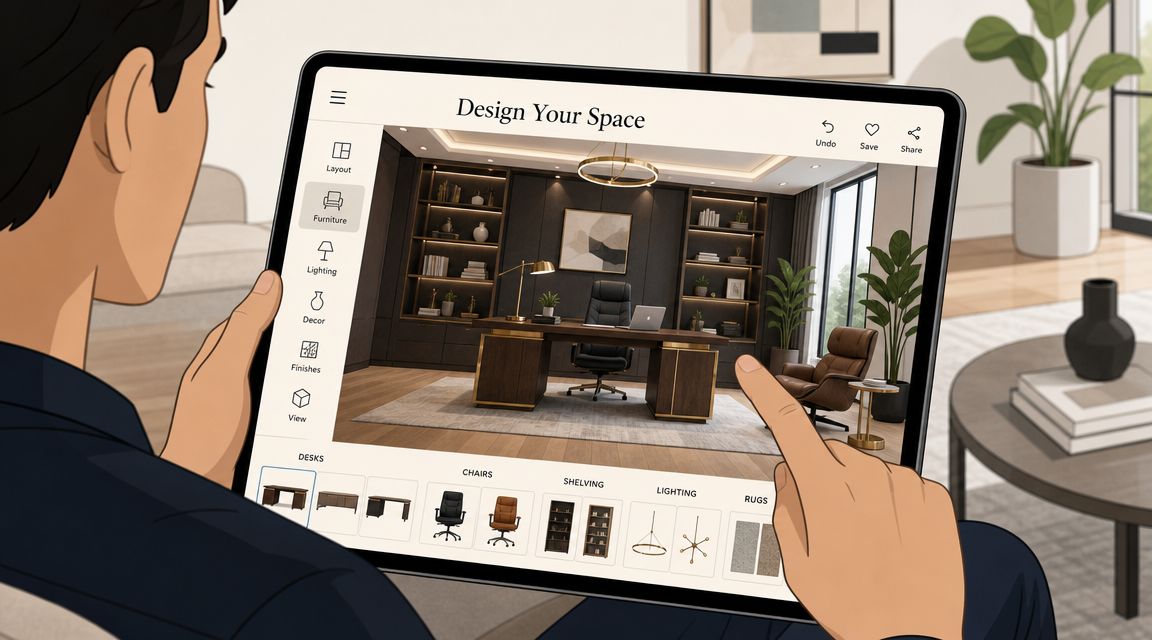
Luxury starts with fit. In a home office, that means fitting the room, your work habits, and the way you want to feel in the space. A true executive office can live comfortably in a spare bedroom, a loft edge, or even a quiet corner, provided the layout is deliberate and the furniture is selected with discipline.
Start with the room, not the furniture
Clients often fall in love with a desk before they know whether the room can support it. I understand the temptation. A beautiful desk has presence. But planning a luxury office works like laying out a well-cut suit. The measurements come first, or the finished result never feels quite right.
Begin with the fixed features of the room:
- Wall length and ceiling shape: These determine how much visual mass the room can handle.
- Windows and natural light: Light should support your work without causing screen glare.
- Door swing and traffic paths: You need comfortable movement in and out of the room, especially behind the chair.
- Outlets and technology placement: Cords, monitors, and lamps need a logical home before furniture arrives.
- Background views: For video calls, the room should look composed from the angles other people will see.
One practical test helps here. Pull the chair back, stand up, walk to storage, and return to the desk. If that path feels tight on paper, it will feel tighter in daily use.
A smaller room usually benefits from cleaner silhouettes, shallower case pieces, and better spacing between fewer items. That creates the quiet confidence people associate with luxury. Oversized furniture often does the opposite.
Define the work before you specify the pieces
A room becomes easier to plan once you describe what happens there each day. Writing emails for two hours is different from managing dual monitors, paper files, and frequent video meetings. The square footage may be the same, but the room's job is not.
Try listing the work in plain terms:
- Focused computer work: You need enough desk depth, proper monitor placement, and task lighting that does not strain the eyes.
- Paper review and filing: Closed storage matters more than decorative shelving.
- Frequent calls or meetings: Sightlines, acoustics, and the view behind the desk deserve attention.
- Shared use: Storage must be easier to access, and the layout should feel intuitive for more than one person.
This approach prevents a common mistake. Homeowners buy furniture by category instead of by function, then wonder why the room still feels unresolved. A luxury office should feel considered because every piece has earned its place.
Use customization to make ordinary rooms feel exceptional
Many home offices become refined or remain merely expensive based on furniture choices. A standard-size piece can work beautifully in some rooms, but many homes benefit from adjustment in width, depth, finish, or storage configuration.
That is why custom-made office furniture for your room dimensions and workflow can make such a difference. A desk that is a few inches shallower, a bookcase that fits beneath a sloped ceiling, or a file cabinet designed for one exact wall can preserve openness while still giving you everything you need.
Good customization is rarely about adding more. It is about removing compromise.
Use professional planning before ordering
Photos flatten a room. They hide drawer clearance, awkward proportions, and the simple question of whether a chair can move naturally around the desk. In person, those issues become obvious.
For homeowners shopping in Columbus, Vinson Fine Furniture offers complimentary design consultations, space planning support, and finish coordination through its in-store design studio. That process helps clients study scale, review materials, and make choices with confidence instead of guessing from a screen.
It is also useful for homeowners weighing the office alongside other rooms in the house. Real homes are rarely furnished one room at a time, and a well-planned office should feel connected to the rest of the home, not dropped into it as an afterthought.
Choosing the Centerpiece Your Executive Desk
The desk carries the room. It sets the tone visually, but it carries the practical burden of daily work. In a luxury office, the desk should feel substantial without becoming bulky, and refined without looking fragile.
Why the desk deserves the most attention
Within the home office furniture market, desks led product demand with a 30.4% share in 2024, and wood held 38.5% of material share because of its durability and appeal, according to this home office furniture market summary. That aligns with what design professionals see every day. Homeowners may add a cabinet later or restyle the accessories over time, but the desk remains the anchor.
Wood is especially important in luxury settings because it gives the room warmth and permanence. Veneer and laminate can serve a purpose, but a solid-wood desk ages with more grace. Minor wear often becomes part of its story rather than damage that spoils the piece.
Solid Wood Comparison for Your Luxury Desk
| Wood Type | Grain & Color | Key Characteristics | Best For |
|---|---|---|---|
| Oak | Pronounced grain, warm medium tones | Strong visual texture, grounded feel, durable everyday character | Traditional offices, rustic-tailored rooms, homeowners who want visible grain |
| Cherry | Fine grain, rich color that deepens with age | Refined appearance, elegant formality, beautiful aging pattern | Executive offices, classic interiors, heirloom-focused buyers |
| Maple | Smooth grain, lighter and cleaner appearance | Crisp look, versatile finish acceptance, excellent for transitional spaces | Smaller offices, brighter rooms, homeowners who want a tailored but lighter presence |
That comparison isn't about ranking one species above another. It's about matching the wood to the room and the homeowner's taste. In a compact office, maple may keep the room lighter. In a traditional study, cherry can bring richness without ornament. Oak often adds a grounded, architectural feeling.
The technical side of luxury
A fine desk should also meet basic performance standards. A useful baseline is a desk height of 28 to 30 inches (71 to 76 cm), with a load rating around 120 kg (265 lb) for heavier monitor or mixed-device setups, as outlined in this guide to what defines a luxury executive desk. The same guidance notes the importance of checking certifications such as ANSI/BIFMA and UL 962.
That sounds technical, but it solves common problems. A desk may look premium and still be wrong for the job if it flexes under weight, lacks documented testing, or can't safely handle monitor arms, printers, and docking stations.
Key checkpoints include:
- Surface height: The desk should support a relaxed seated posture rather than forcing shoulders upward.
- Load capacity: Equipment adds up quickly in a modern office.
- Stability: Large tops and long spans need rigid construction.
- Certification: Third-party safety and durability standards matter, especially for long-term use.
A luxury desk should be judged from underneath as much as from the front. Construction details tell the truth.
When customization matters most
Customization becomes especially valuable when the room is small or unusually shaped. A standard desk depth may project too far into a spare bedroom. A cabinet stack may block a window trim. A return may need to switch sides to preserve circulation.
That's where custom-made office furniture options become useful. A custom order program can allow adjustments to dimensions, wood species, finish tone, and storage configuration so the desk fits the architecture instead of fighting it. Digital visualizers also help buyers compare stain and layout choices before production begins.
This approach is often the difference between buying a handsome desk and commissioning one that belongs in the room.
Elevating Comfort with Ergonomic Seating and Lighting
A luxury office can't ask the body to tolerate discomfort in exchange for beauty. If the chair strains the back or the lighting tires the eyes, the room hasn't been finished properly no matter how elegant it looks.
A chair should support the body and the room
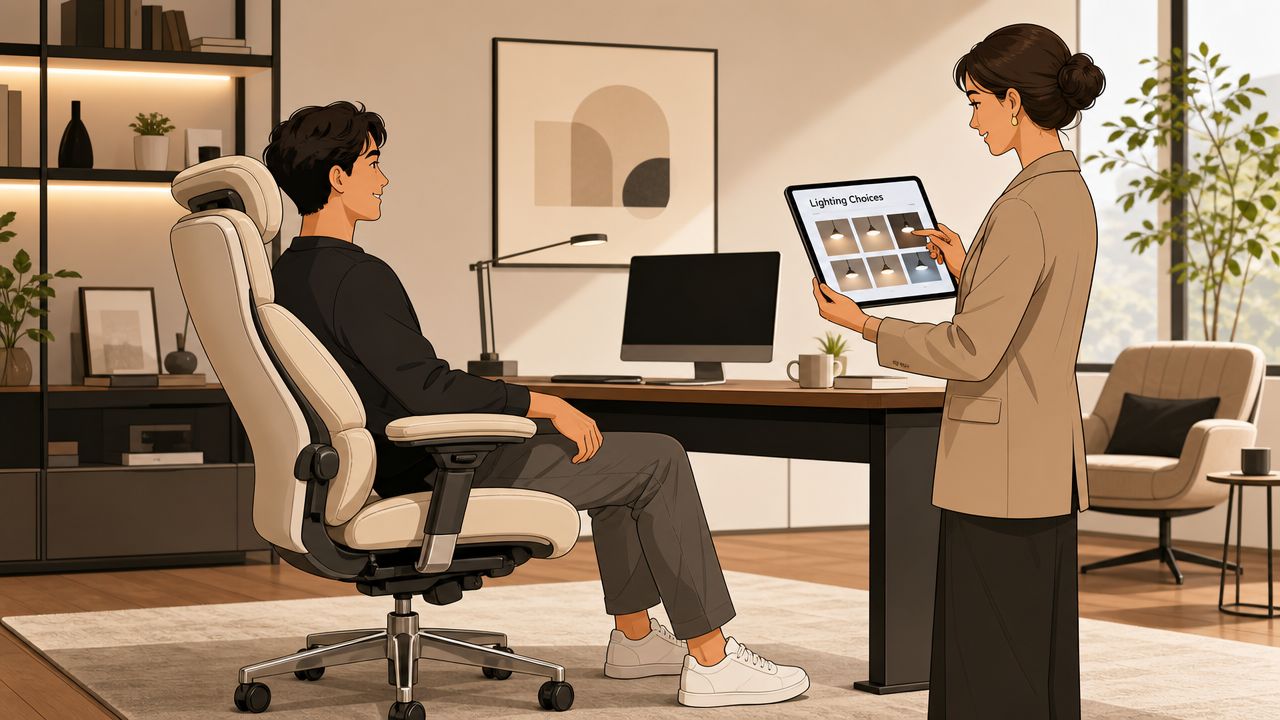
High-end home offices are increasingly built around wellness, including ergonomic seating with adjustable supports to reduce posture fatigue and lighting that follows natural daylight patterns, as described in this wellness-focused home office design analysis. That shift is important because the chair is no longer a separate technical object tucked behind a beautiful desk. It's part of the room's design language.
A well-chosen office chair should offer:
- Adjustable lumbar support: This helps the chair meet the user rather than forcing the user to adapt.
- Arm support that fits the desk: Arms that are too high or too wide can make typing awkward.
- Breathable or premium upholstery: Material choice affects both comfort and visual tone.
- A silhouette that suits the space: In a refined office, the chair should look intentional from every angle.
For shoppers who want to compare styles and seating formats, writing desks and office chairs give a sense of how seating can coordinate with the desk instead of reading as an afterthought.
The right chair disappears during the workday. That's one of the clearest signs it was chosen well.
A luxury office chair doesn't have to look clinical. It should, however, support long sessions without wobble, poor posture, or awkward arm positioning. That's where upholstery quality and adjustment features need to work together.
Lighting shapes focus more than most people expect
Lighting should be layered. One overhead fixture rarely does enough, and a single desk lamp often creates strong contrast that tires the eyes.
A better approach usually includes three layers:
- Ambient light to give the room a comfortable general glow.
- Task light placed where reading, writing, and screen work happen.
- Accent light to soften shadows and highlight shelving, art, or architectural details.
Circadian lighting matters because the body responds to light rhythm throughout the day. In practical terms, that means the office should feel brighter and clearer for morning focus, while still allowing a softer tone later in the afternoon.
Glare control matters too. A beautiful window becomes a problem if the desk faces it directly and every call happens in silhouette. Placement, shade selection, and lamp position all deserve attention. In a polished office, lighting should support concentration discreetly rather than draw attention to itself.
Integrating Storage, Style, and Smart Budgeting
Once the desk and chair are resolved, the room still needs discipline. That usually comes from storage, then from restraint in styling, then from a realistic spending plan.
Storage should quiet the room
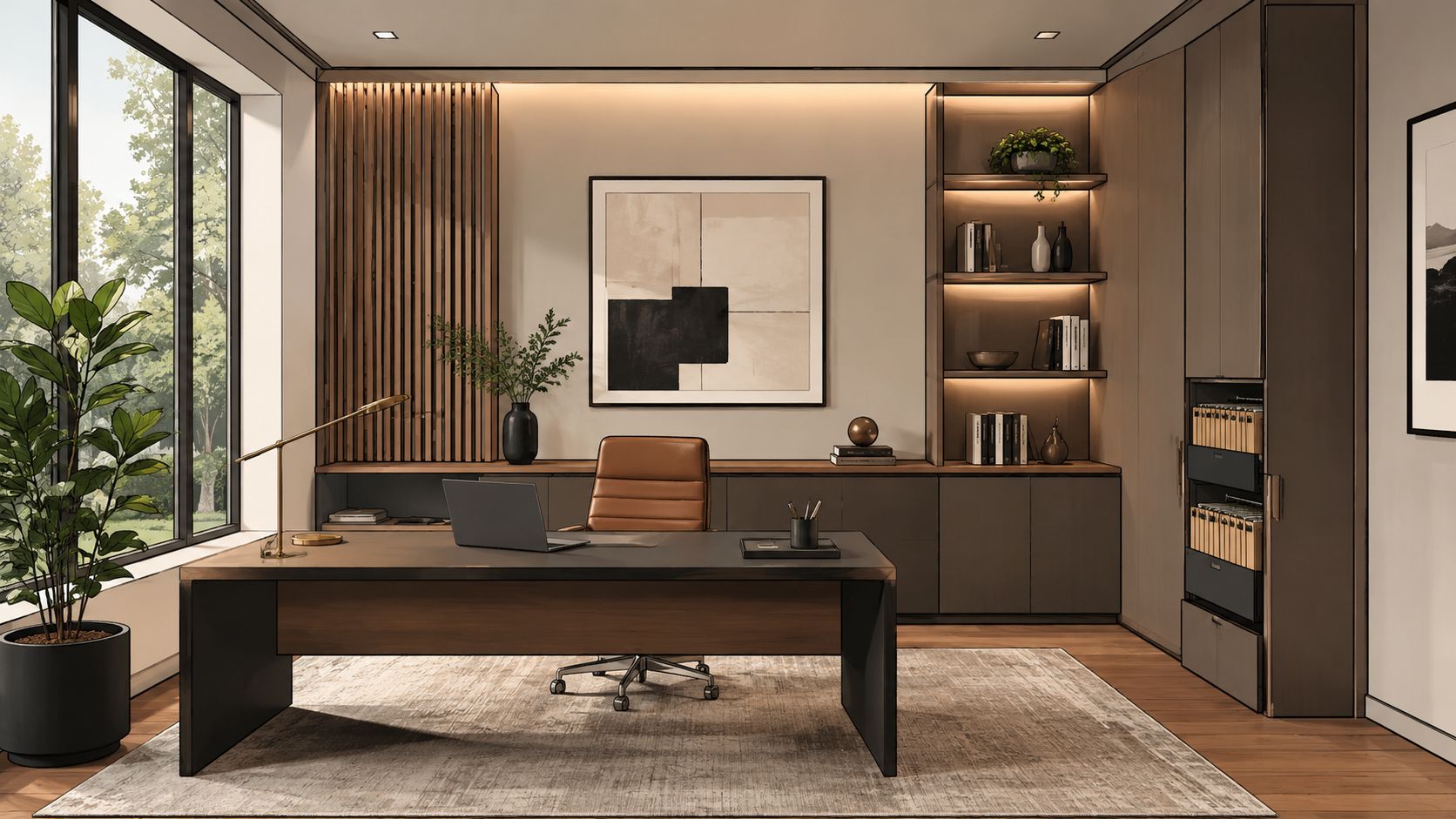
Good office storage reduces decision fatigue. Pens, chargers, files, envelopes, printers, and paper all need a place. In a luxury space, that place shouldn't look accidental.
Useful storage categories often include:
- Closed credenzas: Better for concealing office supplies and keeping the room visually calm.
- File cabinets or pedestals: Better for homeowners handling active documents.
- Bookcases with a mix of open and closed sections: Better when the office also needs display space.
- Wall-scale cabinetry: Better for households using one room for multiple administrative tasks.
The smartest storage plan usually repeats cues from the desk. Similar wood tone, matching hardware direction, and aligned proportions help the office feel composed. In custom work, hidden compartments, integrated cable paths, and balanced shelf spacing can make the room more efficient without making it look technical.
Style belongs in the details
After the major pieces are in place, styling should support the room rather than crowd it. Luxury offices often look stronger when fewer objects are chosen with more care.
A restrained styling approach might include:
- A rug with enough softness to temper sound
- Framed art that adds depth without visual clutter
- A small number of personal objects with meaning
- One plant or natural element to soften the architecture
- Desk accessories in materials that echo the furniture
The goal isn't to fill every surface. It's to make the room feel finished and inhabited.
A well-styled office leaves some space empty on purpose. That quietness is part of the luxury.
A luxury office also needs a clear spending plan
A thoughtful budget keeps the project comfortable from the beginning. Some homeowners put the largest share into the desk and chair, then phase storage or styling later. Others prioritize a complete but simpler composition and upgrade individual pieces over time.
For buyers looking at ways to stretch investment without lowering standards, budget decorating ideas for high-quality interiors can help frame the process. Vinson Fine Furniture also offers a Custom Order Program with finish and configuration choices, an In-Store Design Studio for complimentary consultations, a Low Price Guarantee with a 110% refund of the difference if a lower local authorized-dealer price is found within the stated period, a Clearance Gallery with savings of up to 70%, flexible financing through Synchrony HOME, and White-Glove In-Home Delivery. Those details matter because luxury buying is often easier when craftsmanship, customization, and delivery support are considered together instead of piece by piece.
For many households, this room is part of a broader furnishing plan. The office may sit alongside a dining room update, a bedroom refresh, or a whole-home move. That's why a budget should reflect the office's role in the larger home, not just its square footage.
Bringing Your Vision Home with White-Glove Service
The final stage should feel orderly, not stressful. After weeks of measuring, selecting finishes, and refining the layout, the room deserves a smooth installation.
White-glove delivery changes the experience because the furniture arrives as part of a managed process rather than a drop-off. The pieces are brought inside, positioned where they belong, assembled as needed, and cleared of packaging. That matters even more in a home office, where a heavy desk, a fitted bookcase, or a fully upholstered chair can be difficult to place without damaging walls, floors, or the furniture itself.
A homeowner can make delivery day easier by preparing a simple path into the room, removing old furniture in advance, and confirming where each piece should land before the truck arrives. It also helps to have the room cleaned and any rugs already placed if the desk or storage will sit on top of them.
For anyone unfamiliar with the process, white-glove delivery service explained gives a clear sense of what professional in-home setup includes and why it suits investment pieces. It's the last step in turning a plan on paper into a room that works from the first day.
A finished office should feel settled immediately. The desk should face the right direction. The chair should move cleanly. Storage should open easily. Nothing should feel provisional. That sense of completion is one of the pleasures of building a luxury office well.
For homeowners ready to create a refined workspace that fits a real spare room, corner office, or full study, Vinson Fine Furniture offers a practical next step at Easton Town Center. A showroom visit lets clients test desk scale, sit in chairs, review solid-wood finishes, explore custom configurations through the Design Studio, and plan delivery with confidence.