Best Dining Room Tables for Small Spaces: A 2026 Guide

A small dining area usually fails in the same way. The table technically fits, but chairs scrape the wall, knees hit the legs, and the whole corner feels like a compromise. Breakfast becomes a shuffle. Dinner with friends becomes a puzzle.
That's why the best dining room tables for small spaces aren't the smallest tables on the floor. They're the tables that respect movement, proportion, and daily use. A compact dining nook can feel calm, intentional, and beautifully finished when the layout is measured correctly and the materials are chosen for a lifetime, not a season.
A smart small-space table should do three things at once. It should fit the room, support the way the household lives, and feel substantial every time a hand lands on the top. That last part matters more than most homeowners expect. A bench-made solid maple or walnut table brings visual quiet and physical confidence to a room in a way lighter, disposable furniture never does.
Rethinking Your Small Dining Space
A cramped dining corner often pushes homeowners toward short-term decisions. They buy the narrowest top they can find, tuck in mismatched chairs, and hope the room feels bigger later. It rarely does.
The better approach starts with a different question. Instead of asking, “What table can squeeze in here,” the smarter question is, “What table will let this room work well every day?” That shift changes everything. A small breakfast nook, condo dining area, or apartment corner doesn't need a placeholder. It needs a piece with the right footprint, the right base, and the right material.
Many compact homes already have enough square footage for a good dining setup. What they lack is a plan. The table is too deep for the walkway. The chair backs are too bulky. The shape fights the room. Once those issues are corrected, the room starts to feel composed rather than crowded.
Small spaces reward discipline. Every piece needs purpose, and the dining table carries more daily weight than almost any other item in the room.
That's where long-term thinking pays off. A solid cherry pedestal table can soften a tight corner and still look right years later. A narrow oak rectangle with a trestle base can serve family dinners now and holiday overflow later. The room doesn't need more furniture. It needs better decisions.
For homeowners weighing layouts, finishes, and scale, small-space furniture ideas from Vinson help frame the bigger picture. The most successful rooms aren't built around compromise. They're built around proportion, craftsmanship, and a clear understanding of how people move through the home.
The First Rule of Small Spaces Measure Everything
A small dining room usually fails by a few inches, not a few feet. The table looks right in the showroom or on a product page, then chairs hit the wall, the walkway pinches, and the room feels cramped every day after that.

Start With Clearance, Not the Table
Measure the space around the table first. That open perimeter decides whether the room works.
Design guidance for small dining areas commonly calls for about 36 inches between the table edge and walls or nearby furniture, with more room preferred in spaces that carry regular traffic, as outlined in Povison's small dining area guide. If your dining area also serves as a path between the kitchen and living room, build in extra breathing room from the start.
A fast rule helps. Take the room's length and width, then reserve enough perimeter space for chairs to pull out and people to pass comfortably. The remaining footprint is your real table size. That approach prevents the classic mistake of buying for seat count first and daily function second.
In a well-planned small room, every inch has a job.
A Better Measuring Routine
Wall-to-wall dimensions are only the beginning. A dining area has moving parts, and the usable footprint changes once people sit down.
- Mark the true dining zone: Include trim, radiators, vents, doors, and storage pieces that cut into floor space.
- Measure chairs in use: Chair depth changes dramatically when someone pulls out a seat.
- Tape the footprint on the floor: Painter's tape shows bad proportions quickly and costs nothing.
- Walk the traffic path: Cross through the room the way you do every day, carrying a bag, a laundry basket, or dinner plates.
Practical rule: If the room only functions when every chair stays tucked in, the table is too large.
Homeowners who want a quick visual layout often sketch the room with floor plan tools for real estate before they shop. Even a rough plan can expose a pinch point near a doorway or show that a smaller top with a better base will serve the room longer.
For a more exact process, use Vinson's furniture measuring guide for dining rooms and tight spaces. Good measurements lead to better furniture decisions, and that matters more with solid hardwood. An Amish-made table is built to stay in the home for years, often decades. Measure with that level of permanence in mind, and you end up with a piece that feels settled, substantial, and right from the day it arrives.
Choosing the Right Shape for Your Room
Shape decides how a small dining area feels before anyone sits down. The top can have the right square footage and still feel wrong if the geometry fights the room.
Round Tables for Tight Corners and Square Rooms
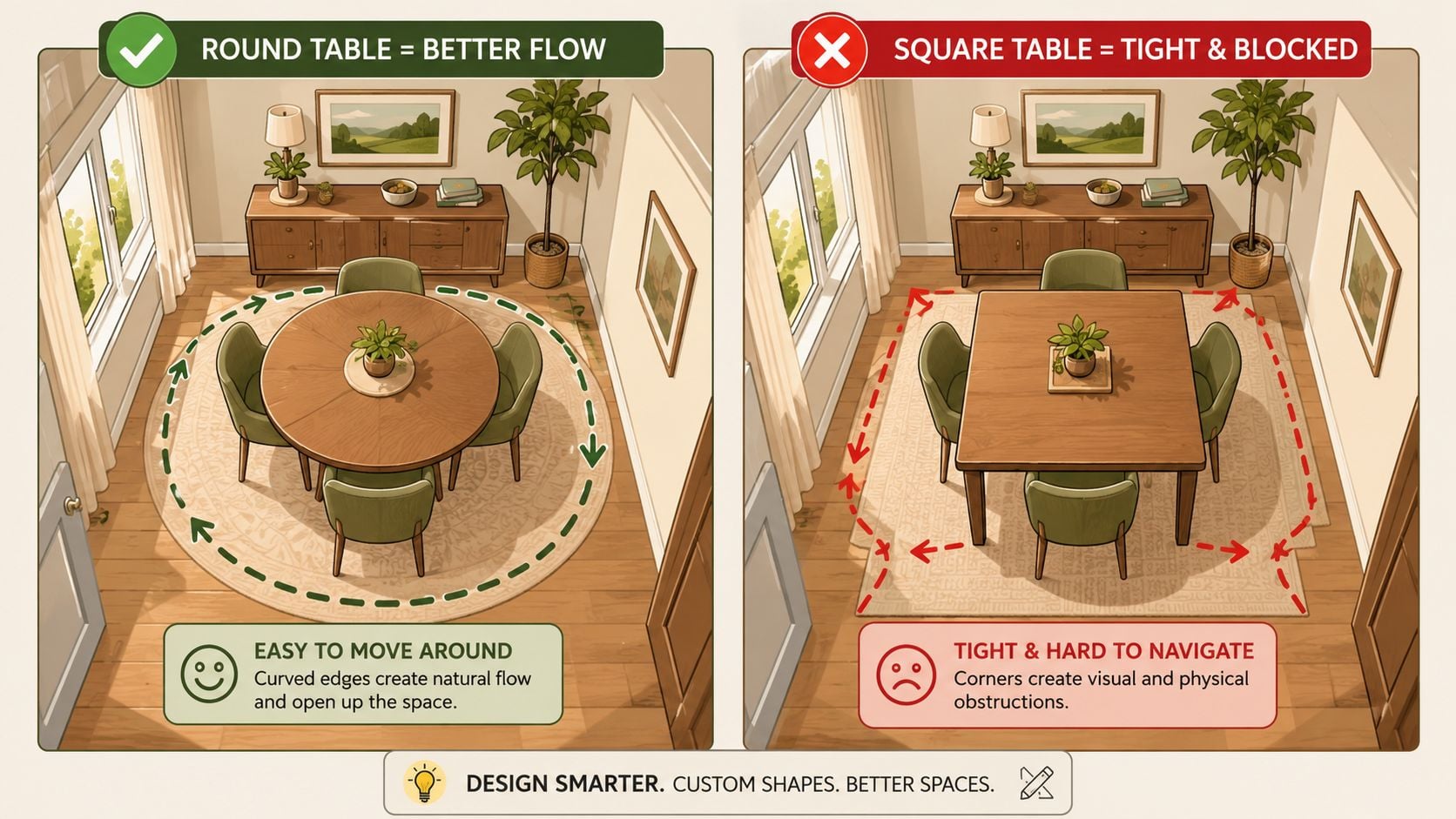
Round tables are often the strongest choice in compact spaces because they remove hard corners from the traffic path. They also soften the visual weight of the room, which matters when the dining area sits in full view of the kitchen or living room.
Interior design standards globally recommend that dining tables for small spaces measure between 24 to 36 inches wide and 30 to 48 inches long to accommodate chairs without overcrowding the room. The same guidance notes that a round table with a diameter of 36 to 44 inches or a rectangular top measuring 36 x 48 inches can comfortably seat 4 people in constrained areas, according to Giorgi Bros' size guide for small dining tables.
That makes the round table especially useful in breakfast nooks, eat-in kitchens, and small square dining rooms.
Rectangles for Long, Narrow Rooms
A narrow rectangular table solves a different problem. It gives the room direction. In galley-style spaces or dining zones that run along a wall, a rectangle often feels cleaner and more architectural.
The right rectangle should avoid bulk. Slim depth matters. So does the base, which becomes even more important in narrow rooms where every inch of knee and walkway space counts.
Here's the simplest way to think about shape selection:
| Room condition | Table shape that usually works best | Why it works |
|---|---|---|
| Square room | Round | Easier circulation and softer edges |
| Tight corner | Round | No sharp corners to crowd the path |
| Long narrow area | Rectangular | Uses wall-aligned space efficiently |
| Multipurpose eating zone | Narrow rectangular or round | Depends on whether the room needs flow or alignment |
A square table can work, but usually only when the room itself is very balanced or the table stays anchored in a specific corner. In most small homes, square tops create awkward corners without giving enough of the grace a round or narrow rectangular shape can offer.
For homeowners comparing layouts and seating arrangements, this guide to dining table shapes and seating gives useful visual direction. The best dining room tables for small spaces don't just match a style. They match the room's geometry.
The Hardwood Standard Why Material Is a Non-Negotiable
A small dining room doesn't need flimsy furniture. It needs disciplined furniture. That means strong joinery, honest materials, and a top that feels grounded the moment a hand rests on it.

Why Solid Hardwood Changes the Whole Room
Solid cherry, oak, maple, and walnut bring something compact rooms desperately need. Presence without clutter. The grain has movement. The weight feels reassuring. The surface develops character rather than peeling, bubbling, or breaking down at the edges.
Vinson Fine Furniture strictly sells only solid hardwood furniture and explicitly excludes engineered wood, MDF, or particle board from its product line, ensuring every dining table meets a hardwood standard for heirloom durability, as stated in Vinson's Columbus furniture overview.
That standard matters even more in a small space because the table gets used harder. It isn't just for dinner. It becomes homework space, laptop space, conversation space, and daily landing zone. A weak top won't age gracefully under that kind of use.
The Case for Amish-Made Construction
Amish-made dining sets remain one of the clearest expressions of long-term value in the home. The appeal isn't nostalgia. It's discipline. The craftsmanship tends to show up in the details that homeowners feel every day, from the steadiness of the base to the depth of the finish and the integrity of the wood movement over time.
A well-built solid maple pedestal table doesn't rattle when moved. A walnut trestle table doesn't feel hollow. A bench-made oak top shows variation in grain that gives the room warmth without visual noise.
For homeowners trying to understand why hardwood behaves differently over time, Buff & Coat's guide to hardwood offers helpful background on the nature of wood as a lasting material.
Here's a straightforward material lens for dining furniture:
| Material focus | What it brings to a small dining room |
|---|---|
| Solid maple | Clean grain, durable feel, bright visual character |
| Solid oak | Strong texture, traditional depth, dependable weight |
| Solid cherry | Rich tone, refined aging, warm presence |
| Solid walnut | Darker elegance, distinctive grain, tailored look |
For a deeper look at species and longevity, this hardwood furniture guide is worth reviewing. In a compact room, material isn't a finishing touch. It's the foundation of whether the space feels settled and enduring.
Maximize Your Space With Smart Functionality
A small dining room works best when the table earns its footprint every day. In a compact home, that means choosing a piece that stays disciplined during ordinary meals and expands cleanly when family drops by for dinner.
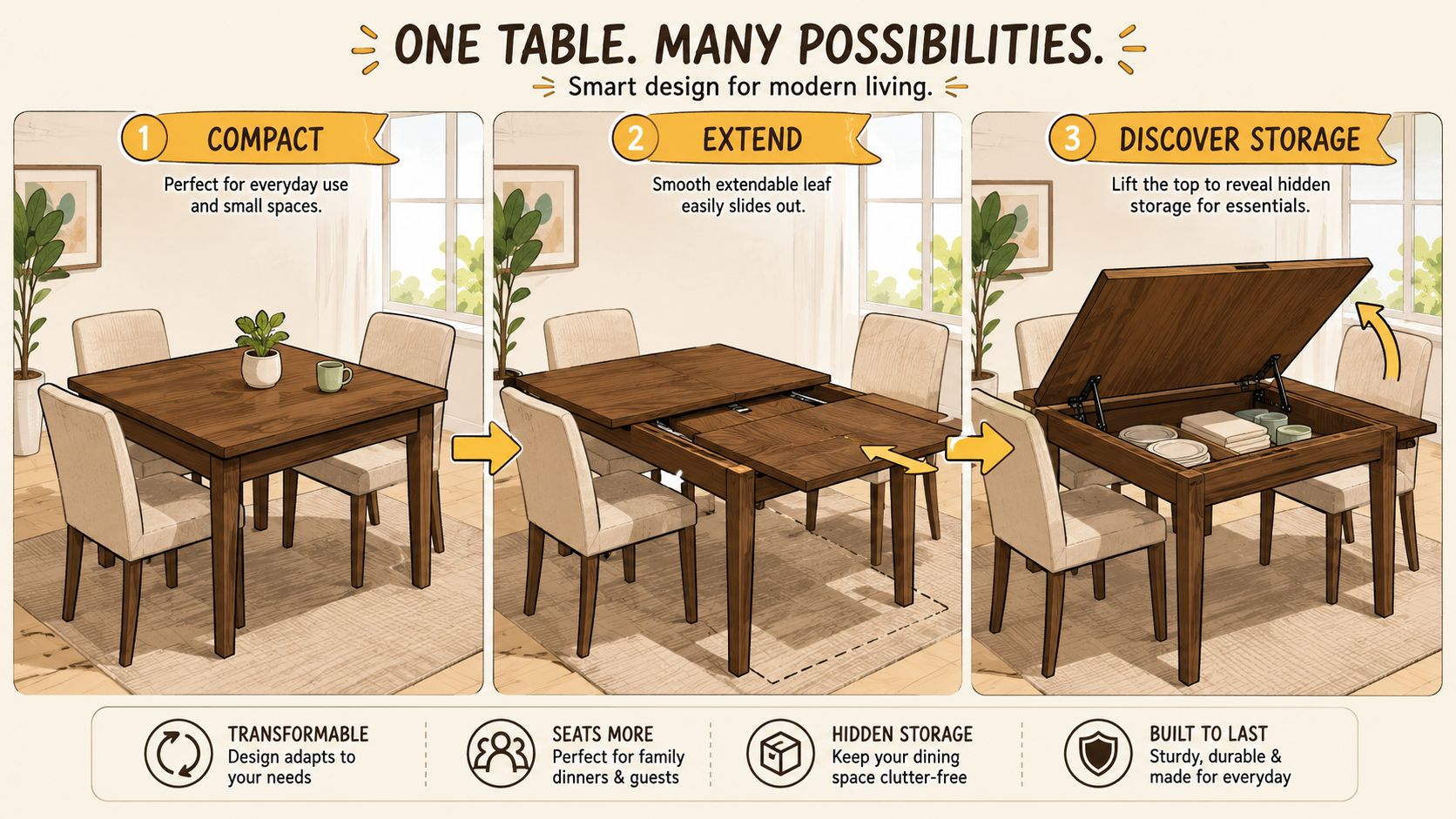
Function starts underneath the top. Base design decides whether a table feels generous or frustrating.
The Base Matters More Than People Think
Four legs at the corners often waste the best seating positions in a small room. They interrupt chair placement, catch knees, and make it harder to slide in and out without shuffling the whole setup.
A trestle base usually handles narrow rooms better because it opens the long sides and keeps the footprint visually quieter. A pedestal base does the same job for round tables. Both options let chairs tuck in tighter and give the room a cleaner line of sight, which matters in apartments, breakfast nooks, and dining areas that share space with the kitchen or living room.
Good functionality should also protect the room around the table. Solid hardwood has weight, and that weight is part of what makes an Amish-made table feel grounded and steady. Add felt pads and follow the Flacks Flooring guide so the table moves without scuffing the floor beneath it.
Features Worth Paying For
Skip novelty. Choose features that solve an actual layout problem and hold up over years of use.
- Extendable tops: The right choice for households that need a compact table most days but proper seating for holidays and guests.
- Self-storing butterfly leaves: A smart answer when closet space is already tight and a separate leaf becomes one more thing to store.
- Pedestal bases: Strong for round tables because seating stays flexible and no one is fighting a corner leg.
- Narrow-depth tops: Useful in wall-side dining zones, galley layouts, and open-plan homes where walkway space disappears fast.
The best version of functionality is custom functionality. One home needs a 42-inch round maple pedestal that keeps traffic moving. Another needs a slim walnut trestle table with a leaf that opens for six without dominating the room the other twenty-nine days of the month.
That is where custom Amish craftsmanship proves its value. At Vinson Fine Furniture, homeowners can work through size, wood species, finish, base style, and extension options with design guidance that fits the room instead of forcing the room to fit a stock table. In a small space, that precision is not a luxury. It is how a dining table stops feeling like a compromise and starts feeling permanent.
Perfect Pairings Chairs Styling and Professional Guidance
A dining table can be perfectly chosen and still fail if the seating is too bulky. Small rooms need chairs that tuck fully, move easily, and keep the sightline open.
Seating That Respects the Footprint
Armless dining chairs usually outperform oversized host chairs in compact layouts. Their profiles stay lean, and they don't force extra breathing room at the ends. Benches can also work well when one side of the table sits near a wall because they slide in cleanly and reduce visual interruption.
A few practical pairings tend to work especially well:
- Armless side chairs: Best when every inch around the table counts.
- Low-profile benches: Helpful for wall-side seating and casual family use.
- Fully tuckable stools: Useful in multifunctional spaces that need to clear quickly.
- Performance upholstery or leather: Easier to live with in everyday dining zones.
For adjacent seating in open-concept rooms, coordinated motion and occasional seating can make the entire area feel intentional. That includes top-grain leather, swivel chairs, recliners, rockers, and gliders that share finish and scale language with the dining area, especially when homeowners are also considering Smith Brothers furniture Easton shoppers often seek for connected living spaces.
Styling That Opens the Room
Styling should sharpen the architecture, not crowd the top.
- Use a restrained centerpiece: One vessel or low arrangement keeps the table useful.
- Choose a lighter rug presence: A soft, room-defining foundation can frame the area without boxing it in.
- Repeat wood tones carefully: The dining table should anchor the room, not compete with every other surface.
- Protect the floor properly: Chair movement is constant, so Flacks Flooring's guide to protecting hardwood floors from furniture is a practical read for preserving the surface beneath the dining set.
Professional planning helps most when the room has to do double duty. Complimentary design consultations and an in-store design studio are useful for coordinating chair scale, finish selection, and fabric choices, especially when custom programs and digital visualizers are part of the process.
Find Your Lifetime Table at Vinson Fine Furniture
Saturday evening hits, two extra guests arrive, and your dining table still has to let people move through the room without turning every chair into an obstacle. Small-space dining works only when the table is built to serve real life for years, not just fit the floor plan on paper.
That is the standard at Vinson. The goal is not to squeeze in the smallest possible piece. The goal is to choose a table with the right scale, honest materials, and enough flexibility to stay useful through daily meals, holidays, moves, and room updates.
Shopping in person changes the decision. You see how a pedestal opens knee space. You run your hand across solid cherry, oak, maple, or walnut and feel the difference between surface beauty and true substance. You pull a chair back, walk the perimeter, and judge the proportions with your own eyes. In a small dining room, those details decide whether a table feels calm and grounded or crowded and frustrating.
Vinson stands out for the reasons that matter to serious buyers:
- Solid hardwood construction: Real wood has weight, grain variation, and repairability that veneered shortcuts do not match.
- Customized options: Size, shape, finish, and base details can be selected for the room you live in.
- Design help in the showroom: Room planning, finish coordination, and side-by-side comparisons prevent expensive mistakes.
- White-glove delivery: A well-built hardwood table deserves careful handling from the showroom to your home.
- Whole-room thinking: Dining choices can be coordinated with nearby seating and wood tones so the space feels settled, not pieced together.
This is the difference between buying furniture and furnishing a home. Amish-made dining pieces carry a kind of quiet confidence. You feel it in a hand-smoothed edge, a thick top, a base that does not wobble, and joinery built for use, not for disposal. That is why a small dining table should be treated as a long-term investment. The right one gives your home more than a place to eat. It gives the room permanence.
If you want a strong place to start, explore custom solid wood dining table options and then sit with the materials in person. A lifetime table should look better as it ages, adapt as your home changes, and make a small dining space feel finished from the first day.