Solid Wood Bed with Storage That Lasts for Decades


The scene is familiar in many Columbus bedrooms. Extra linens are folded on a chair, offseason clothing is stuffed into a closet corner, and a pair of under-bed bins keeps catching on the rug every time the room gets cleaned. The problem isn't only lack of storage. It's that the storage doesn't belong to the room.
A solid wood bed with storage solves that problem differently. Instead of treating storage as an afterthought, it builds order into the bed itself. Drawers, lift platforms, or integrated cubbies turn the largest piece in the room into working furniture, while keeping the visual weight calmer than a patchwork of bins and baskets.
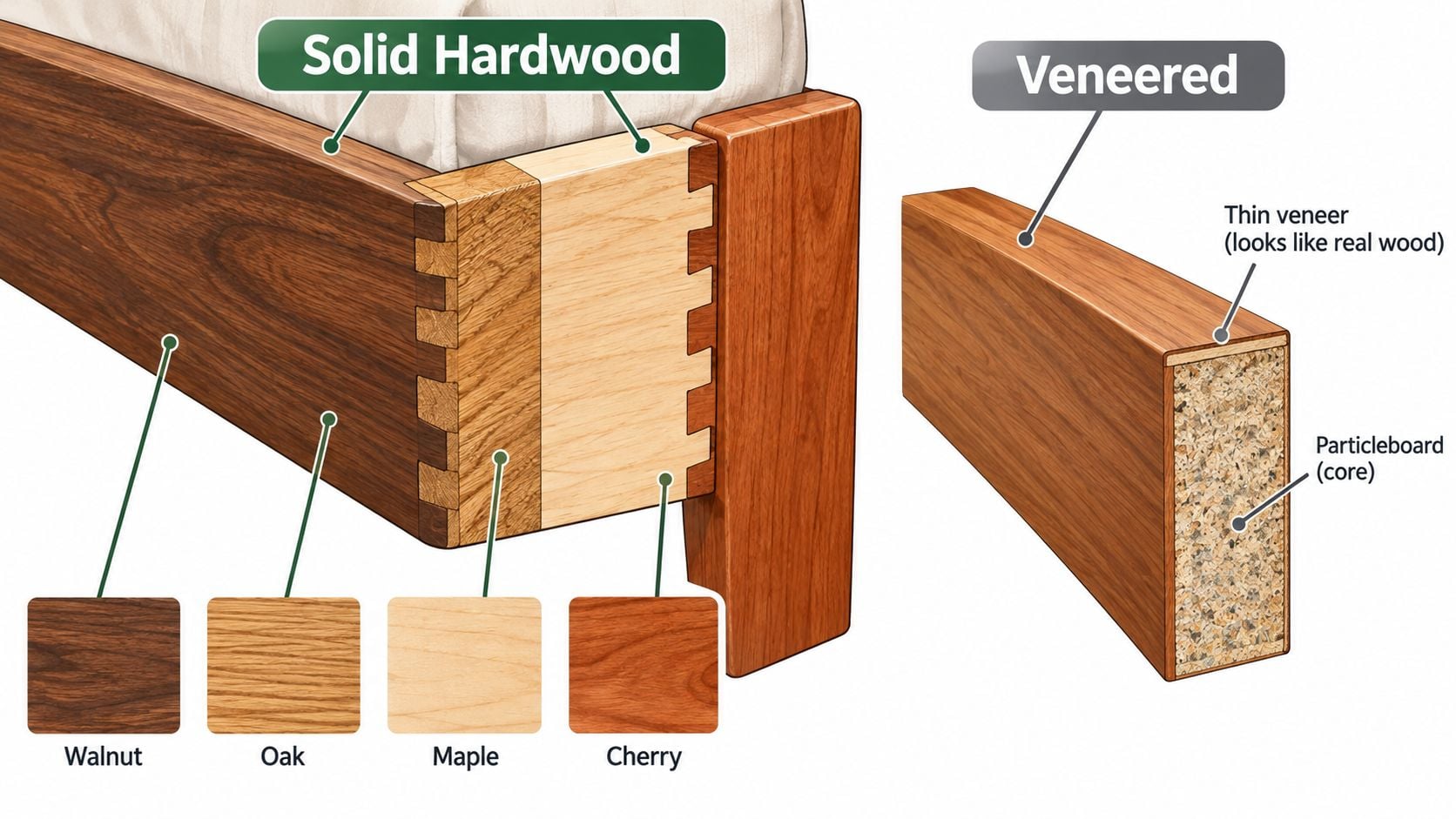
For the Investment Homeowner, the question isn't whether storage sounds useful. It's whether the piece is built for decades of daily life. That's where standards matter. In Vinson terms, wood means solid cherry, oak, maple, or walnut. It doesn't mean laminate skins, hollow panels, or lookalike surfaces trying to pass for hardwood. A storage bed has to do more than hold a mattress. It also has to tolerate repeated opening, closing, shifting weight, and seasonal changes in the room.
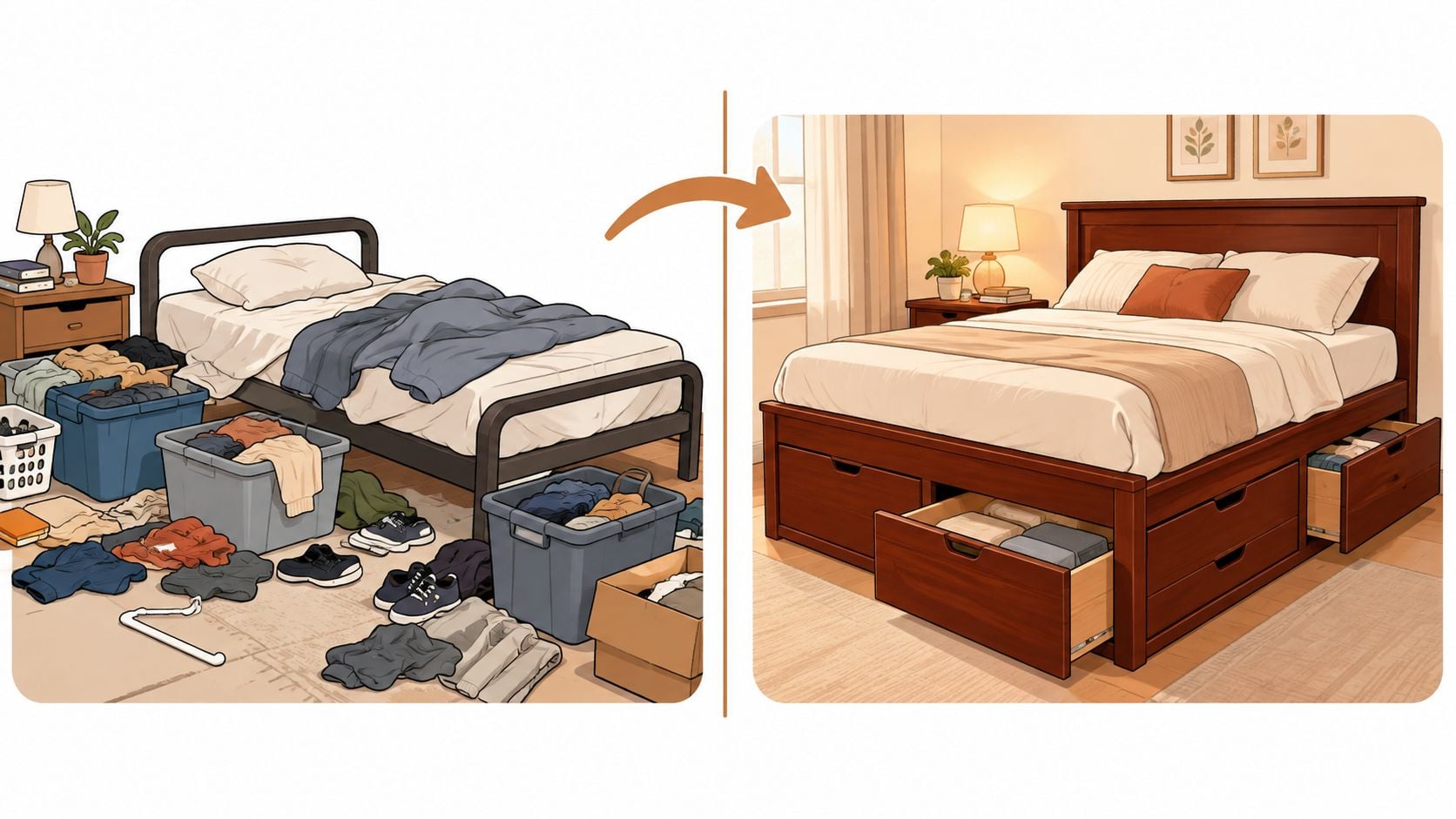
At the Easton Town Center showroom, that distinction matters because a bed can feel sturdy in a quick glance and still disappoint in real use. Drawers may look generous until they meet a tight wall. A handsome frame may seem substantial until Ohio's seasonal air shifts and the construction wasn't designed to move with the wood. A bed bought as a shortcut can become a headache.
A good storage bed should reduce clutter without adding strain to the room, the floor plan, or the homeowner's patience.
Introduction What a Solid Wood Bed With Storage Really Is
A true storage bed is part bed frame, part casework. The storage isn't tacked on. It's integrated into the architecture of the piece. That integration is what makes the category so appealing for primary bedrooms, guest rooms, and smaller homes where every square foot needs to work harder.
What belongs in this category
A solid wood bed with storage usually falls into one of a few forms:
- Under-bed drawers that hold folded clothing, blankets, or spare sheets
- Lift-top storage under the mattress platform for bulky bedding
- Bookcase or cubby-style components that keep reading materials and essentials close at hand
What separates a serious version from a disposable one is the material standard. Solid cherry, oak, maple, and walnut each bring a different look and feel, but they share one critical trait. They're furniture woods chosen for permanence.
Why homeowners get confused
Many shoppers assume “wood bed” automatically means solid hardwood throughout. It often doesn't. The confusion starts because finish color gets more attention than structure. A bed may photograph beautifully and still hide weak construction where stress is highest.
That's why this topic deserves a slower look. Material, joinery, storage style, room clearance, and finish behavior all matter. By the end, a homeowner can judge whether a storage bed will improve the bedroom, fit the layout, and hold its composure for years.
Why Solid Hardwood Construction Matters for Storage Beds
A storage bed works harder than a standard frame. It supports the sleeping surface every night, then asks the base to perform like cabinetry every morning. That combination is exactly why hardwood construction matters.
The broader market reflects sustained demand for this category. The global storage bed market was valued at $4.8 billion in 2025 and is projected to reach $6.4 billion by 2034, a projected 5.2% CAGR. Within that market, wood-based storage beds held 41.3% of 2025 revenue, equal to about $1.98 billion, according to Market Intelo's storage bed market report. That same source notes that solid wood options such as oak and walnut are favored for durability and traditional aesthetics.
The Hardwood Standard in daily use
Solid hardwood feels different because it behaves differently. Oak brings visible grain and a grounded presence. Maple reads cleaner and more refined. Cherry develops warmth over time. Walnut carries depth and richness that suits a quieter, more architectural bedroom.
For a homeowner comparing premium wood furniture options, Vinson's guide to solid wood vs engineered wood helps clarify how construction choices affect lifespan, repairability, and long-term value.
Joinery decides whether the bed stays tight
Storage adds motion. Motion tests joints. A bed that only holds a mattress can get away with less. A bed that also carries drawers cannot.
Solid hardwood furniture built with mortise-and-tenon joinery is widely described as highly durable because the joint creates broad wood-to-wood contact and resists twisting and wobble under daily use, as explained in this overview of long-lasting furniture joinery. In plain terms, that means the frame is less likely to loosen when the room is used normally, not gently.
Construction insight: A storage bed should feel like one unified structure, not a frame with boxes attached underneath.
Longevity changes the value equation
A solid wood bed frame also earns its keep over time. Industry guidance commonly reports that solid wood furniture lasts 20 to 50+ years with basic care, while solid hardwood pieces can exceed 100 years in many cases. A solid wood bed frame is often estimated at 25 to 60 years, according to Oak and Loom's durability guidance on solid wood furniture lifespan. That's long enough to outlast multiple mattresses and several room updates.
That durability is why many Central Ohio homeowners stop thinking of a storage bed as a convenience item. They start seeing it as bedroom architecture.
Storage Types Compared and How They Fit Your Lifestyle
Not every storage bed solves the same problem. Some are ideal for folded clothing used every week. Others are better for guest bedding that only comes out seasonally. The right fit depends less on marketing language and more on how the room is used.
Storage Bed Types at a Glance
| Storage Type | Best For | Access Style | Space Consideration |
|---|---|---|---|
| Side-drawer bed | Everyday clothing, extra sheets, children's rooms | Pull-out drawers from one or both sides | Needs open clearance beside the bed |
| Lift-top platform bed | Bulkier bedding, keepsakes, lower-visibility storage | Mattress platform lifts upward | Needs vertical effort, but less side clearance |
| Bookcase or cubby storage bed | Readers, guest rooms, limited nightstand space | Open shelves or built-in compartments | Adds visual presence, often needs careful wall placement |
Matching the type to real habits
A side-drawer bed is often the most intuitive. Everything stays visible, organized, and easy to reach. That works well for homeowners who want storage to behave like a dresser extension.
Lift storage suits people who don't need daily access. It hides larger items cleanly, but it's less convenient for frequent retrieval. A homeowner storing extra quilts or guest pillows may love it. Someone looking for everyday sock-and-sweater access probably won't.
Bookcase or cubby styles shift storage upward or outward. They can reduce the need for separate nightstands, especially in tighter rooms, but they also create a stronger visual statement around the bed.
For readers comparing bedroom storage features in more detail, this Vinson bedroom furniture storage guide outlines practical considerations that help narrow the field.
Three quick decision cues
- Choose drawers when the goal is daily convenience and folded-item storage.
- Choose lift storage when the room has limited side clearance.
- Choose cubbies or bookcase forms when the bed needs to absorb the role of other case pieces.
Some homeowners need more capacity. Others need easier access. Those are not the same decision.
A well-chosen storage type feels invisible in use. A poor one asks the homeowner to work around the furniture.
Sizing and Space Planning for Your Bedroom
Many otherwise beautiful purchases go wrong. A storage bed may fit the room on paper and still fail in practice once drawers need to open and people need to move around the bed comfortably.
Drawer clearance comes first
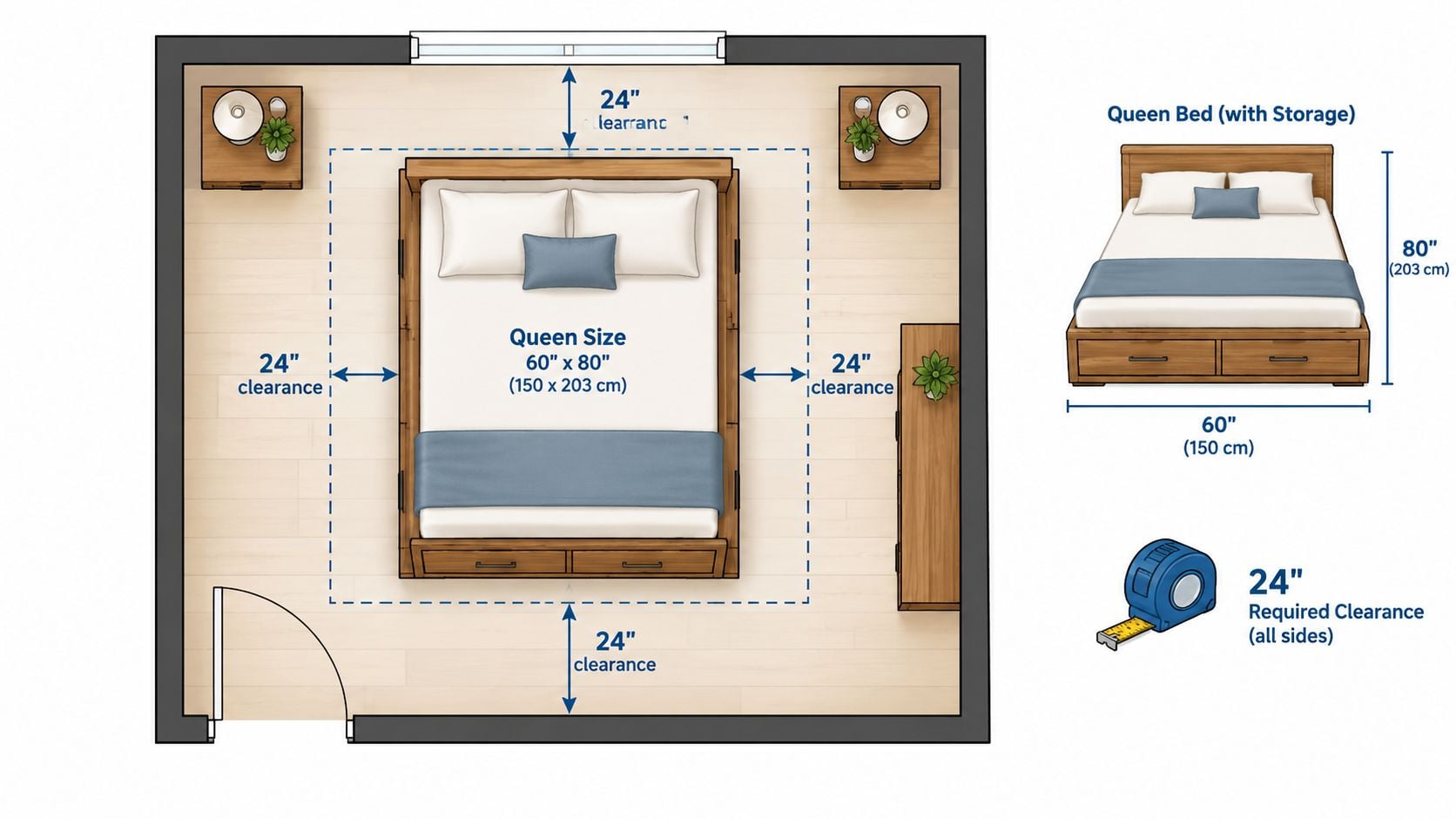
Multiple guides note that side-drawer storage typically needs about 18 to 24 inches of open space on the drawer side, and some products suggest 20 to 24 inches on either side to fully extend drawers, as summarized in Coleman Furniture's storage bed buying guide. That's the hidden dimension many buyers miss.
A standard bed footprint only tells part of the story. The true footprint includes the movement zone around the storage. If a nightstand pinches the drawer path, or a wall sits too close to the frame, the storage exists but isn't usable.
A simple planning method
Before ordering, homeowners should map the room in sequence:
- Measure the mattress size first. Then add the actual case dimensions of the bed, not just the mattress dimensions.
- Mark drawer travel or lift clearance. Painter's tape on the floor works well for this.
- Walk the circulation path. The route from doorway to bed, closet, and bath should feel natural, not forced.
- Check fixed obstacles. Registers, vents, radiators, windows, and trim all affect placement.
- Test the wall choice. The best-looking wall isn't always the most functional wall.
Why showroom planning still matters
A floor plan can look comfortable and still feel cramped once scale enters the room. The Easton Design Studio helps close that gap because the bed can be judged as furniture, not just as dimensions. Height, rail thickness, drawer depth, and surrounding case pieces all change how the room reads.
Practical rule: If the storage can't open fully without rearranging the room, it isn't adding convenience.
That's also why many homeowners benefit from a sit-test and design consultation before committing. Bedrooms need usable calm. A storage bed should create it, not crowd it.
Durability Finishes and Wood Movement You Should Understand
A bed can be beautifully built and still disappoint if the homeowner expects wood to behave like plastic. Solid hardwood has one great strength and one constant requirement. It lasts because it's natural material, and natural material moves.
Humidity affects how drawers behave
For indoor furniture, wood is typically most dimensionally stable around 6 to 10% moisture content, while conditioned interiors are commonly managed around 35 to 55% relative humidity, according to this guide on humidity and wood furniture. Outside that band, wood expands and contracts across the grain. In a storage bed, that can show up as sticking drawers, loosened joinery, or panel cupping.
Ohio homes feel this. Winter heat dries interiors. Summer moisture raises humidity. A storage bed designed without respect for that cycle can become fussy fast.
Good finish work does more than add color
Finish isn't only aesthetic. It also helps slow uneven moisture exchange. When all faces are finished evenly, boards are less likely to take on moisture unevenly, which reduces the chance of cupping or distortion.
Homeowners exploring stain and surface character can also review Vinson's natural wood finish page to better understand how finish selection affects both appearance and maintenance expectations.
Wood should feel alive, not unstable. Proper construction respects that difference.
The practical care rules that matter
A few habits make a measurable difference over time:
- Let the bed acclimate: New furniture should sit in the room for 48 to 72 hours before drawers are fully loaded or the bed is pushed tight against a wall, based on the humidity guidance linked above.
- Keep it away from extremes: Vents, radiators, and exterior walls often create the sharpest swings.
- Watch drawer loading: Heavy items concentrated in one drawer can exaggerate alignment issues on uneven floors.
Engineering matters under the surface
Storage integration also adds localized load and movement risk. Purdue Extension states that furniture design should allow for about 2% movement of the wood in service, as noted in Purdue's wood movement guidance. In practical terms, the best designs separate fixed structural members from moving panels, so seasonal swelling doesn't turn into split parts, stressed fasteners, or binding drawers.
That's the difference between furniture that merely looks substantial and furniture that stays composed for decades.
Customization Design Services and Vinson Value at Easton
Once the construction and layout questions are settled, the next step is coordination. A storage bed rarely lives alone. It has to work with nightstands, dressers, wall color, flooring, and often an adjoining sitting area or nearby guest room furniture.

Customization is what turns a good piece into a right piece
For homeowners furnishing beyond the bedroom, the strongest rooms are usually edited across categories, not bought one isolated piece at a time. That's where the Custom Order Program becomes useful. Mavin offers Amish-made bedroom furniture in Ohio, which makes it a natural fit for buyers focused on Mavin bedroom furniture and local craftsmanship. Smith Brothers of Berne, made in Indiana, USA, is often part of the conversation when a bedroom project also includes Custom leather sectionals Columbus, reclining seating, swivel chairs, or rockers and gliders in top-grain and performance leathers. Canadel, handcrafted in Quebec, Canada, rounds out dining plans under a North American crafted story.
Independent configurator platforms describe live 3D customization, pricing, and ordering for complex furniture products, and one states that customers can customize furniture and order without mistakes through the system, according to this 3D furniture configurator overview. That matters when finish, scale, and silhouette need to be judged before production.
The showroom role is still physical
Digital visualization helps. Furniture still needs to be felt. The Easton location's complimentary interior design consultation gives homeowners a place to sort through finish samples, proportions, and room plans with an in-store design team.
One factual option in that process is Vinson Fine Furniture, a family-owned Columbus destination at Easton Town Center that focuses on solid hardwood furniture and coordinated room planning. For homeowners searching phrases like Solid wood furniture Ohio, Amish-made dining sets, or Smith Brothers furniture Easton, that local design-studio setting matters because decisions can be tested in person.
Value programs matter when the purchase is long-term
This category also benefits from practical safeguards:
- Low Price Guarantee: a 110% refund of the difference if a lower price is found at a local authorized dealer within the stated window
- Clearance Gallery: savings up to 70% on select floor samples and overstocks
- Synchrony HOME financing: a path some homeowners use to stage larger-room projects over time
White-glove delivery also matters more than many buyers expect. Industry guidance defines white-glove service as premium last-mile delivery that typically includes inside delivery, room-of-choice placement, unpacking, assembly or light installation, inspection, and packaging removal, with some services also documenting visible damage and confirming condition before completion, as described in this white-glove delivery overview.
A substantial bed shouldn't arrive as a curbside problem. It should arrive ready to live with.
How to Choose the Right Solid Wood Bed With Storage for Your Home
The best choice usually becomes clear when the homeowner stops asking, “How much storage does this bed have?” and starts asking, “How will this bed live in the room every day?” That small shift leads to better decisions.
A concise decision checklist
- Start with the storage task. Everyday folded clothing calls for a different layout than spare bedding or keepsakes.
- Measure the room for movement, not just footprint. Storage only helps when drawers or platforms can open comfortably.
- Choose the hardwood for the mood of the room. Oak feels grounded, maple clean, cherry warm, walnut deep and architectural.
- Look at the joinery and overall structure. Beds with storage need calm, rigid construction because they're handling both rest and repeated use.
- Consider the room as a whole. A bedroom rarely stops at the bed. Nightstands, dressers, and even nearby living or dining pieces may need to coordinate.
Homeowners who want a practical starting point can use this guide to choosing bedroom furniture to refine priorities before visiting a showroom.
The strongest choice is usually the calmest one
The right solid wood bed with storage doesn't call attention to itself through gimmicks. It earns trust. The drawers open without drama. The proportions suit the room. The wood species looks better as the years pass, not more dated.
That's the investment mindset at work. A bed should hold more than blankets and clothing. It should hold up under real life, support better organization, and still feel worthy of the room long after trend cycles have moved on.
For homeowners refining a bedroom that needs both order and permanence, Vinson Fine Furniture offers solid hardwood bedroom furniture, complimentary design consultations, custom-order support, and white-glove delivery from its Easton Town Center showroom. A well-chosen storage bed can be measured, tested, and coordinated with the rest of the home, so the final piece fits the room as well as it fits the lifestyle.