How to Choose Bedroom Furniture: Solid Wood & Lasting Style


A bedroom often reaches a decision point. The mattress has been upgraded, a dresser has been inherited, one nightstand no longer matches the other, and the room still doesn't feel settled. For many Columbus homeowners, that's when choosing bedroom furniture stops feeling like simple shopping and starts feeling weightier. The room needs to support sleep, storage, movement, and calm every single day.
That's why how to choose bedroom furniture is less about assembling a set and more about making disciplined, long-range decisions. The right pieces should fit the architecture of the room, respect daily routines, and carry the visual and structural integrity to age well. A bedroom furnished with intention feels quieter. It works harder. It asks less of the homeowner over time.
Table of Contents
- An Investment in Rest Your Foundation for a Timeless Bedroom
- Measure Twice Buy Once Planning Your Layout with Confidence
- Defining Your Needs and Curating Your Style
- The Anchor of the Room Choosing Your Solid Wood Bed
- Balancing Scale Storage and Lasting Quality
- The Vinson Experience Customization Value and Service
An Investment in Rest Your Foundation for a Timeless Bedroom
A well-furnished bedroom rarely begins with a spontaneous purchase. It usually begins with a room that feels unresolved. The bed may be too slight for the scale of the space, the storage may crowd the walls, or the furniture may have been acquired in stages with no shared language of material, proportion, or purpose. The result is common. The room functions, but it doesn't restore.
That's the moment when furniture becomes an investment rather than an errand. A bedroom is the most personal room in the house, and the standard for it should be higher than temporary convenience. Pieces should feel substantial in the hand, visually settled in the room, and durable enough to remain relevant through changing paint, linens, and seasons of life.
Rest starts with more than appearance
Many homeowners begin with finish color or headboard shape. Those matter, but they don't reach the deeper question. A restful bedroom supports the actual habits that happen there. Sleep quality, easy movement, useful storage, and visual quiet all work together. For readers also thinking about mattress routines and environmental factors, understanding healthy sleep habits is a useful companion to furniture planning because the room itself shapes how restorative it feels at night.
A bedroom shouldn't feel full just because every traditional piece has been added. It should feel resolved because each piece has a reason to be there.
The strongest rooms usually have restraint. A solid hardwood bed in cherry, oak, maple, or walnut carries enough presence that the rest of the room can be chosen with more care and less clutter. Amish-made craftsmanship often excels here because the emphasis stays on joinery, proportion, and material honesty rather than novelty.
Durability changes the buying standard
Disposable furniture trains homeowners to think in short cycles. Good bedroom furniture asks for a different standard. The piece should still make sense years from now, both structurally and aesthetically. That means looking past surface styling and asking harder questions about wood species, drawer construction, finish depth, and whether the room will still function once the furniture is in place.
A thoughtful way to frame that decision is to consider how long furniture should last before buying at all. Once the expectation shifts toward longevity, many easy mistakes become easier to avoid. Oversized pieces, weak materials, and trend-driven sets lose their appeal quickly when the goal is a bedroom that matures gracefully.
Measure Twice Buy Once Planning Your Layout with Confidence
The most expensive bedroom mistake usually isn't aesthetic. It's spatial. Homeowners often choose a handsome bed or broad dresser in isolation, then discover the room has lost its breathing room. Good layout planning prevents that. It also protects the investment by ensuring each piece can be used comfortably, not merely squeezed into place.
Start with the room, not the furniture
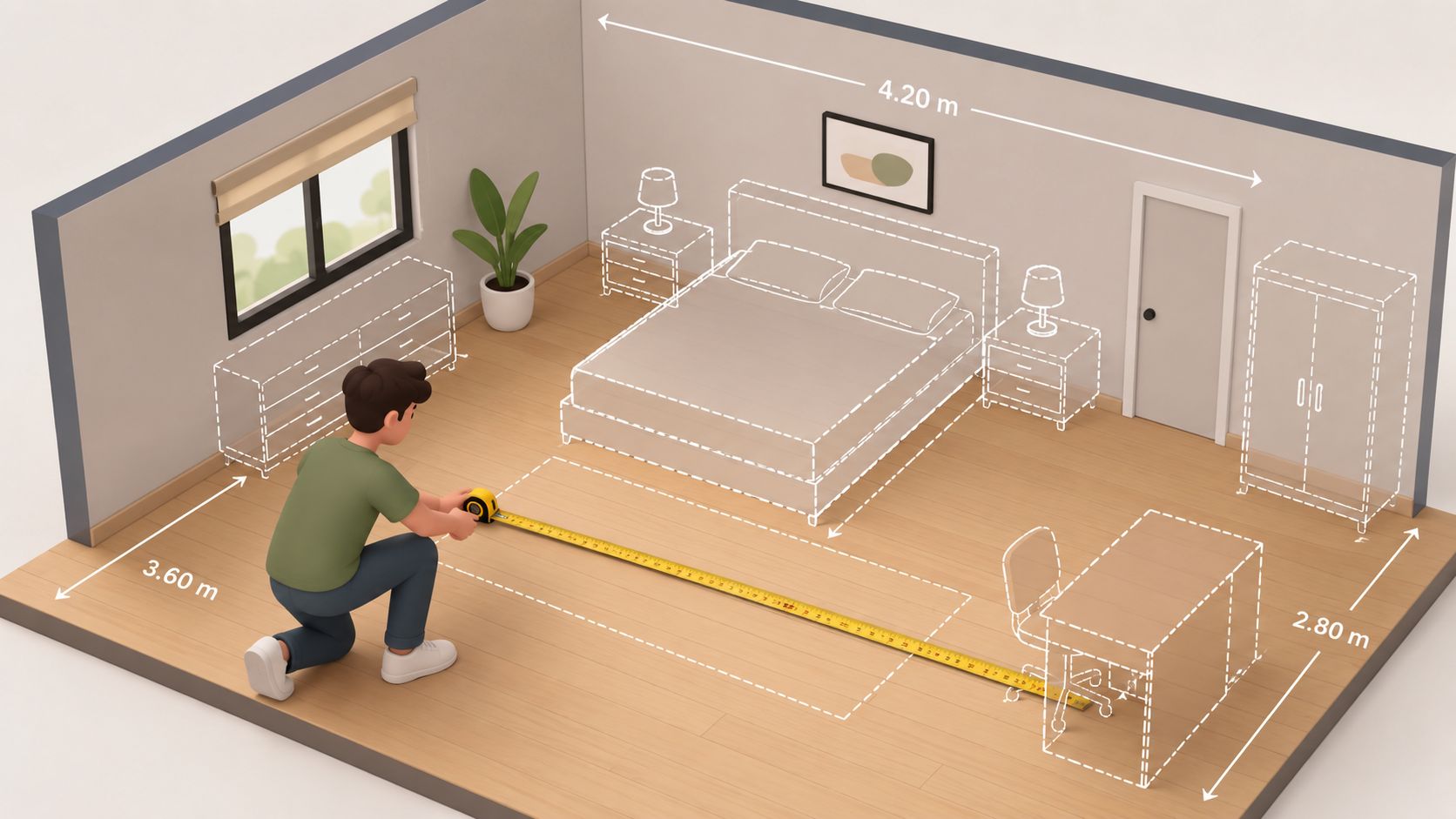
Before any finish, silhouette, or brand enters the conversation, the room needs a basic working plan. A tape measure and a quick sketch are enough to begin. Mark the walls, windows, closet openings, door swings, vents, and outlets. Then measure the usable floor area, not just the overall dimensions.
A foundational spacing rule is especially useful here. One widely used guideline recommends 30 to 36 inches for main walkways, 24 inches between the bed and wall, 36 inches between the bed and dresser, and 18 to 24 inches in front of drawers so they can open fully, according to bedroom planning guidance from Miller Waldrop. Those numbers matter because bedrooms are circulation problems before they're decorating projects.
A practical checklist helps:
- Map swing space: Note every door and closet door that needs clear movement.
- Mark obstruction points: Windows, radiators, floor vents, and low sills change where furniture can live.
- Measure function zones: Leave room not only to walk, but to dress, make the bed, and open drawers without awkward angles.
- Check access routes: Furniture must also make it into the room through hallways, stair turns, and door openings.
Build the layout in the right order
The sequence matters. Designers often solve bedroom layouts more cleanly when they place the bed first, then the largest storage piece, then smaller companions. That order prevents a room from being shaped by minor pieces while the dominant forms are forced into compromise.
Practical rule: If a room can't preserve comfortable circulation after the bed is placed, the answer usually isn't to cram in more storage. It's to reduce scale or remove a piece.
For homeowners who want a more exact planning method before visiting a showroom, measuring furniture correctly before purchase helps translate room dimensions into real buying decisions. It's an unglamorous step, but it's often the difference between a bedroom that feels composed and one that feels perpetually overfurnished.
A bedroom should allow movement without sidestepping around corners. It should let drawers open fully. It should leave enough visual margin around major pieces that the room feels calm. Precision at this stage protects every later choice.
Defining Your Needs and Curating Your Style
Some bedrooms fail because they're overcrowded. Others fail because they're filled with the wrong things. A homeowner may have ample square footage and still live with furniture that doesn't support the way the room is used. Choosing well begins with a sharper question than "What usually goes in a bedroom?" The better question is "What needs to happen here every day?"
A bedroom should reflect use, not obligation
Recent design commentary offers a useful corrective. A bedroom doesn't automatically need every traditional piece. In many rooms, the better choice is a simpler layout that prioritizes access paths, drawer clearance, and routines of sleeping, reading, or getting dressed, as noted in small bedroom layout guidance from Emily Henderson. That same perspective also supports more flexible, mixed-material, non-matching compositions over bundled sets.
Discernment is essential. A homeowner who folds most clothing elsewhere may benefit more from a strong chest or wardrobe than a wide dresser. Someone who reads nightly may need a properly scaled bedside surface and a comfortable chair more than a bench at the foot of the bed. The furniture list should come from life, not tradition.
A useful way to sort priorities is to separate needs into categories:
- Sleep first: Bed comfort, clear pathways, and visual quiet should take precedence over extra pieces.
- Storage: Choose storage based on actual wardrobe habits, not what a showroom vignette suggests.
- Bedside function: Consider lamp placement, book storage, charging access, and table height.
- Retreat value: If the bedroom is also used for reading or dressing, allow room for that instead of treating it as an afterthought.
Style becomes stronger when it is edited
Matching sets can feel easy, but they often flatten a room. Bedrooms usually feel more personal when the pieces relate rather than repeat. A solid maple bed can sit comfortably with lighter nightstands, a more architectural dresser, or an upholstered accent if the scale and tone are resolved.
That kind of curation benefits from clarity about aesthetic direction. For homeowners refining their preferences before narrowing selections, bedroom styles for different personalities can help define whether the room should lean structured, organic, traditional, or spare. The point isn't to force a label. It's to edit with confidence.
The most convincing bedrooms aren't the ones with the most furniture. They're the ones where every piece answers a real need and contributes to the atmosphere of the room.
The Anchor of the Room Choosing Your Solid Wood Bed
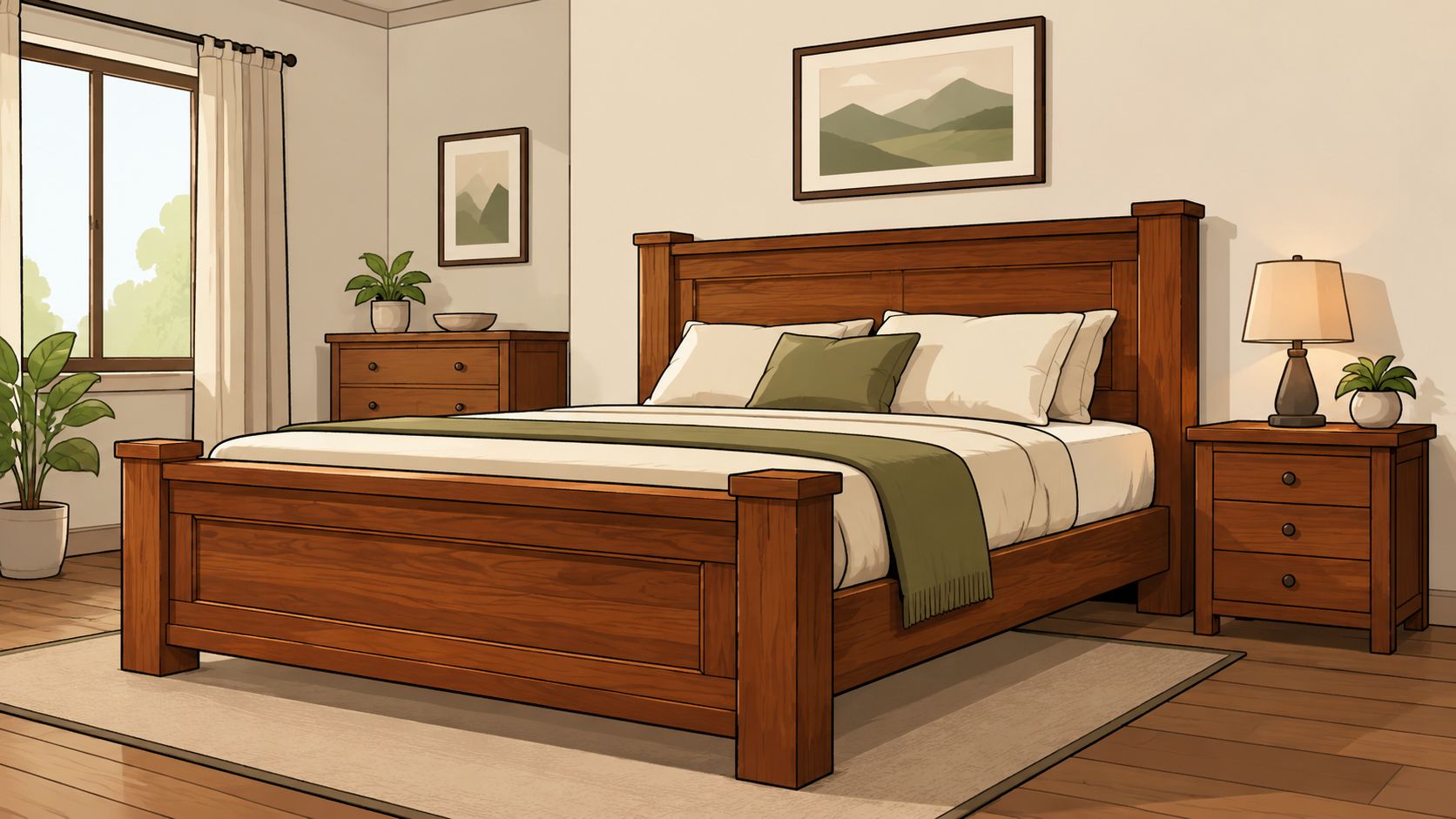
The bed carries the room. It establishes the visual center, determines the strongest sightline, and influences nearly every secondary choice around it. That hierarchy isn't merely stylistic. The growth of the U.S. bedroom furniture market reinforces a longstanding buying pattern in which the bed is the anchor piece, with nightstands and a dresser or chest forming the core supporting cast, according to Statista's U.S. bedroom furniture market outlook.
Why the bed deserves the largest share of attention
A bed isn't just the largest object in the bedroom. It's the piece that most clearly communicates the room's permanence. A low-profile frame can lighten a compact room and keep sightlines open. A taller headboard introduces architecture and gives the room a stronger center. Either can work. The question is whether the choice fits the room's volume and the homeowner's habits.
This is also where material discipline matters most. Solid hardwood brings a density and visual depth that veneers and composite constructions can't reproduce. The grain in cherry softens beautifully over time. Oak offers texture and a grounded presence. Maple reads clean and refined. Walnut lends depth and richness without feeling heavy when used in the right silhouette.
What solid hardwood changes
A well-made solid wood bed behaves differently over time. It tends to retain integrity at joints, carries weight with confidence, and develops character rather than merely showing wear. In a primary bedroom, that distinction matters because the bed is used daily and seen constantly. It can't rely on surface appearance alone.
For families planning beyond a standard primary suite, it's also worth reviewing options such as custom solid wood bunk beds when a guest room or shared bedroom calls for the same emphasis on enduring wood construction. The principle is the same. Strong material decisions produce calmer, more reliable rooms.
A concise comparison helps clarify what to evaluate:
| Bed consideration | What works | What usually disappoints |
|---|---|---|
| Material | Solid cherry, oak, maple, or walnut | Lightweight construction that depends on surface appearance |
| Scale | Headboard and frame proportionate to ceiling height and floor area | A dramatic bed that overwhelms circulation |
| Longevity | Timeless form with bench-made character | Trend-driven details that date the room quickly |
| Supporting role | Bed chosen first, companions selected around it | Bed chosen last after secondary pieces dictate the room |
For homeowners studying long-term material choices, solid wood bedroom furniture buying considerations offer a more detailed framework for evaluating species, construction, and finish choices.
Balancing Scale Storage and Lasting Quality
Once the bed is established, the rest of the room should support it without competing for attention. This stage is where many bedrooms either become elegant or become crowded. Nightstands, dressers, and chests need to do practical work, but they also need to maintain visual rhythm. Good secondary pieces don't just fit. They cooperate.

Supporting pieces should solve problems
The first question isn't whether every traditional item can fit. It's which ones earn their place. A storage bed may eliminate the need for a large dresser. A tall chest may preserve floor area better than a lower, broader case piece. A wardrobe can be more useful than forcing multiple smaller items into a room that already feels full.
The rug under these pieces also matters more than most homeowners expect. Designers commonly recommend a rug that covers at least the front two-thirds of the bed plus both nightstands, and for a queen bed an 8×10 rug typically leaves about 18 to 24 inches of soft landing area at the sides, according to bedroom rug guidance from Amish Craftsman Furniture. That proportion helps the room feel grounded rather than fragmented.
For homeowners clearing a room before a remodel or phased delivery, temporary off-site storage can help protect good pieces from damage and keep the project orderly. In that situation, find storage units in Medford MA offers an example of the kind of storage support people often use while rooms are in transition.
Quality reveals itself in use
Secondary furniture is touched constantly. Drawers open every morning. Nightstands hold weight, light, and clutter. Hardware is tested in small repetitions that reveal whether a piece was built carefully or merely styled convincingly.
Open the drawer. Close it again. Good bedroom furniture answers with alignment, quiet movement, and a sense of weight where it matters.
Workmanship becomes tangible here:
- Drawer movement: Smooth, consistent action matters more than decorative fronts.
- Joinery: Precise dovetail construction signals intention and durability.
- Top surfaces: Solid wood tops age with grace and can be refinished when life leaves evidence.
- Proportion: A substantial bed often benefits from supporting pieces that are simpler in profile, not equally heavy.
Homeowners comparing practical storage configurations can use bedroom furniture storage features to look for as a working checklist. The goal isn't to maximize the number of pieces. It's to create a room where storage feels integrated, movement feels easy, and every object has enough air around it.
The Vinson Experience Customization Value and Service
A Columbus homeowner often reaches the same point. The room measurements are in hand, the old furniture is wearing thin, and the preferences are clear enough to say out loud. Solid wood. Better storage. A quieter, more settled room. The hard part is turning those preferences into exact proportions, finish choices, and a group of pieces that live well together for years.

From measurements to materials
Good customization starts before anyone discusses stain color. Bring the room dimensions, a few photos, notes on traffic flow, and an honest list of what the space needs to do. In a primary bedroom, that may mean stronger bedside storage, a taller bed for easier entry, or a dresser scaled to a wall that also has windows and door swing to contend with. Those details shape the specification of the furniture, not just its appearance.
The custom process works best when choices are narrowed in the right order. Size comes first. Then wood species, finish, storage function, and any upholstery or accent details. Homeowners who want to see how that process works can review custom bedroom furniture order options and design planning. Bedrooms rarely benefit from a packaged set chosen in isolation. They come together well when the furniture answers the room and the household's habits at the same time.
At Vinson, that design work happens with real material samples, in-person scale comparison, and consultants who understand where compromise is acceptable and where it shows later. A slightly simpler nightstand may give a substantial bed more room to breathe. A warmer stain can soften a large case piece. A custom dimension can solve the common problem of wanting more storage without making the room feel crowded.
Value is more than the ticket price
Well-made bedroom furniture earns its value slowly. It earns it in drawers that stay aligned, bed rails that remain solid, tops that can age gracefully, and proportions that still feel right after trends have passed.
Service matters just as much because poor decisions are expensive, even when the furniture itself is well built. Design guidance helps prevent scale mistakes. Finish review in person reduces the risk of ordering a tone that fights the flooring or trim. White-glove delivery, placement, and assembly protect the piece at the moment damage is most likely.
Vinson also gives homeowners a few practical ways to buy more intelligently:
- Customization: Adjust dimensions, finishes, and material selections to fit the room instead of forcing the room to accept a standard piece.
- Design consultation: Work through layout, proportion, and pairing decisions with an in-store specialist.
- Price protection: A low price guarantee with a 110% refund on the difference offers reassurance when eligible local pricing conditions apply.
- Clearance access: A clearance gallery with savings of up to 70% can open the door to better construction at a lower cost.
- Delivery and setup: Inspection, placement, and assembly reduce risk at the final stage.
That combination is what gives a luxury retailer real usefulness. The value is not only in owning a handsome bed or dresser. It is in getting a room that feels composed, functions properly, and reflects the standards of the home it sits in, whether that home is in Bexley, New Albany, Dublin, Upper Arlington, or Easton.