Modern Wood Furniture: A Complete Buying Guide

Shopping for modern wood furniture often leads to the wrong approach. Starting with the silhouette, the finish, or whatever looks current on a screen, then wondering later why the piece wobbles, dents early, or can't be repaired, is common. A smarter approach is harsher and more useful: judge the construction first, then decide whether the style deserves a place in the home.
That matters because modern furniture is really a design movement built around practicality and restraint, not just a visual mood. Historic framing matters too, wood has been the dominant furniture material for a very long time, but the market today is a global, serious category, not a niche taste. One estimate puts the wooden furniture market at USD 417.5 billion in 2025, projected to reach USD 668.5 billion by 2035 at a 4.9% CAGR (global market estimate). Another projects growth from USD 401.38 billion in 2025 to USD 433.76 billion by 2031 at a 4.48% CAGR (alternate market estimate).
Why Modern Wood Furniture Is More Than a Design Trend
Modern wood furniture earns its keep when the piece looks clean but behaves like a serious tool. The best examples don't just read as contemporary, they resist daily wear, allow for maintenance, and age without turning brittle or dated. That's the test, because a handsome table that can't be refinished is decoration, not investment-grade furniture.
Function should outrank ornament
Modern furniture, by definition, is shaped by modernist ideas and postwar habits that cut excess and favor practical materials (modern furniture overview). That is why the strongest pieces often have plain geometry, honest surfaces, and a lack of visual clutter. Those choices are not minimalism for its own sake, they usually support cleaner construction and easier long-term use.
The home buyer should think in terms of service life, not just style season. A solid cherry sideboard, a maple dining table, or a walnut credenza can be refreshed, repaired, and handed down if the bones are right. The finish may change, the room may change, but the frame stays useful.
Practical rule: if the design looks modern but the structure can't be serviced, it's a trend piece in a suit.
A useful way to filter options is to ask whether the piece still makes sense when the room evolves. A restrained form with durable joinery holds up in a move, a remodel, or a style shift. That's the kind of quiet flexibility that separates a real purchase from a temporary fix.
For a visual reference on how modern interiors and furniture language come together, this modern-home design overview is useful context.
Key Styles That Define Modern Wood Furniture
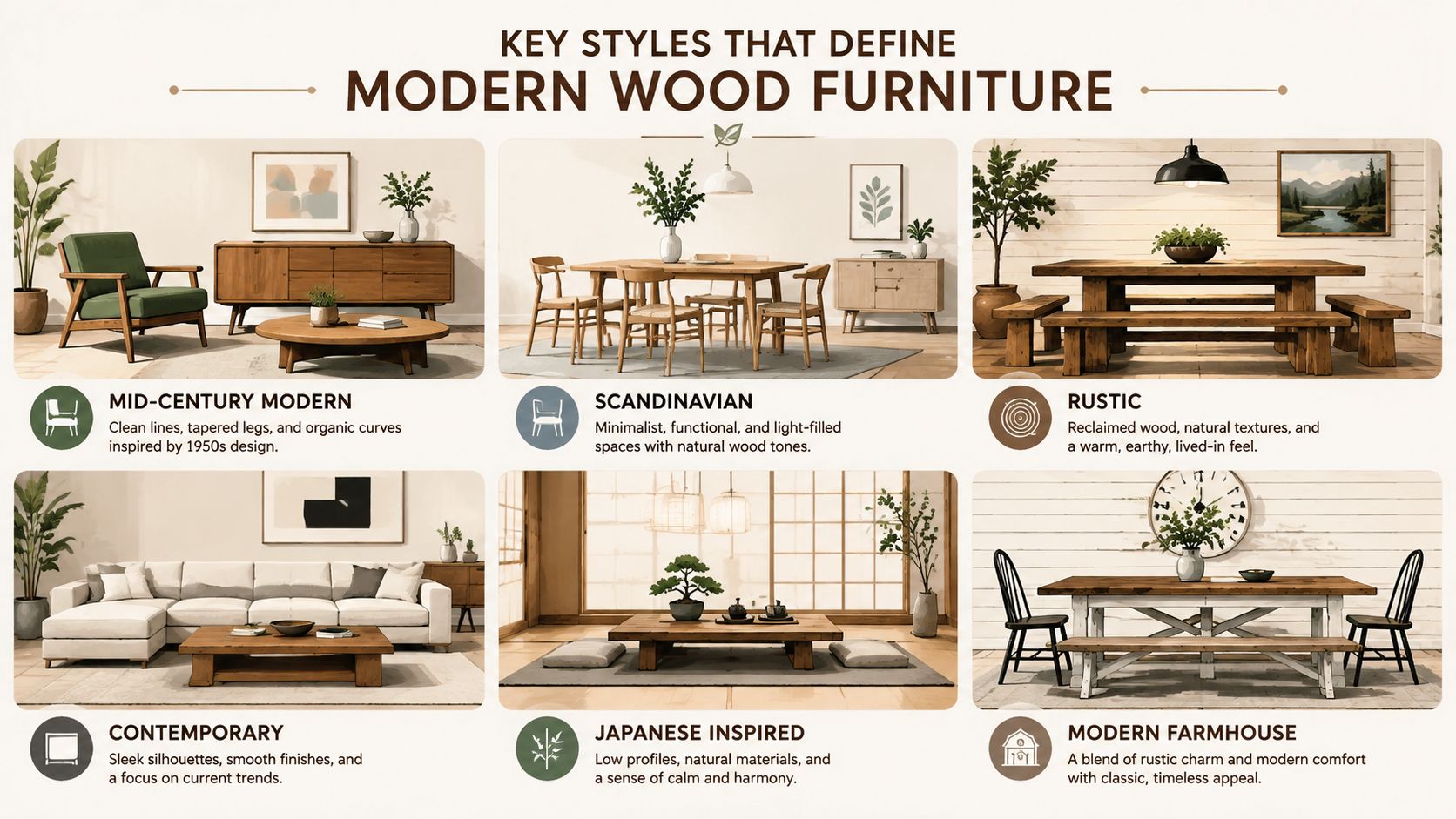
Modern wood furniture tends to cluster into three practical style families, mid-century modern, Scandinavian, and contemporary. They overlap, but each carries a different visual weight, a different relationship to grain, and a different kind of room presence. The mistake is choosing the label instead of the feeling.
Mid-century modern feels lean and grounded
Mid-century modern wood furniture usually leans on tapered legs, low profiles, and warm, exposed grain. A solid-walnut credenza in that style feels calm because the wood carries the room without shouting. The proportions are compact, which helps in apartments, open plans, and homes that need one strong anchor piece instead of a lot of visual noise.
Scandinavian style favors lightness
Scandinavian design favors air and clarity. A solid-maple dining table in that language often looks lighter on the floor, even when the build is substantial, because the lines stay clean and the surfaces resist heaviness. It works well in bright rooms, smaller dining spaces, and homes that already have a lot of texture elsewhere.
Contemporary style is the boldest read
Contemporary wood furniture can be sharper, more sculptural, and more architectural. A solid-cherry console with crisp edges or a dramatic base brings presence, but it has to be executed carefully or it looks overworked. The best contemporary pieces from solid-wood makers and Amish shops usually keep the profile fresh while preserving the hand-finished feel.
For readers who want a practical cross-check between furniture language and kitchen language, this kitchen style guide for remodelers helps clarify where clean-lined modern design ends and transitional comfort begins.
A quick style filter
- Choose mid-century modern when the room needs warmth, low visual height, and classic proportions.
- Choose Scandinavian when the goal is brightness, restraint, and an uncluttered dining or bedroom arrangement.
- Choose contemporary when the room can handle sharper geometry and a more statement-driven silhouette.
If a shopper wants a more specific mid-century reference point, this Danish modern furniture page shows how the style translates into real rooms and real pieces.
Solid Hardwood Versus Engineered Wood Construction
Smart buying starts here. The surface might look identical from ten feet away, but the inside determines whether the piece will age gracefully or fail. Modern manufacturing often relies on man-made materials because they reduce wood movement, and the U.S. Forest Service notes that hardwood lumber, veneer, and plywood have been replaced in part over the last two decades by particleboard, hardboard, and MDF (US Forest Service on material substitution). Britannica also notes that modern furniture manufacturing relies heavily on materials like plywood, laminated board, chipboard, and hardboard because they avoid wood's movement problem (Britannica on modern furniture manufacturing).
What to inspect before you buy
A serious specification should name the species and cut, the construction system, the joinery at stress points, the moisture content, and the air-quality requirement such as NAF or ULEF core, or a GREENGUARD finish for the right use case (technical furniture specification guidance). For indoor furniture, standardized guidance commonly targets 8% to 15% moisture content, with some procurement specs allowing 8% to 16% indoors and 12% to 18% outdoors. Staying in range helps reduce warp, split, bow, and twist as humidity changes (wood moisture guidance).
What matters most: good joinery and proper moisture control are not decorative details, they're the reason a table still feels square after years of seasonal cycling.
Solid hardwood vs engineered wood comparison
| Feature | Solid Hardwood | Engineered Wood / MDF |
|---|---|---|
| Material behavior | Moves naturally with humidity, but can be built to withstand it when dried and joined correctly | More dimensionally uniform, but usually relies on a surface layer rather than true mass |
| Repairability | Can often be sanded, refinished, and restored | Limited repair options, damage often exposes the substrate |
| Long-term value | Better fit for heirloom use and repeated servicing | Better suited to short-cycle, lower-commitment use |
| Joinery clues | Mortise-and-tenon, dovetail, and other robust connections are common signals | Fast assembly and concealed fastening are more common |
| Visual aging | Develops character if cared for properly | Edges and corners often reveal wear sooner |
The clear conclusion is simple. If the buyer wants longevity, repairability, and resale potential, solid cherry, oak, maple, or walnut is the right lane. If the buyer wants something to look good briefly and stay hidden in a low-commitment room, a composite build may do the job, but it is not the same category of ownership.
That distinction is why the Vinson Hardwood Standard matters, because every piece in the showroom is solid hardwood, not a veneer-over-core shortcut. A reader comparing durable kitchen cabinet options will notice the same rule applies in cabinetry, the material under the finish dictates the lifespan.
Solid wood versus engineered wood becomes a straightforward question once the buyer knows what to look for. Ask what the frame is, what the joints are, and whether the surface can be renewed later. If the answers are vague, walk away.
How to Choose the Right Modern Wood Pieces for Your Home
The right piece fits the room first, then earns its place through use. Scale, finish, and function should be decided together, not one at a time, because a beautiful object that crowds circulation or fights the lighting never feels finished. Measure the room, then measure again with the door swings, rug edges, and chair pull space in mind.
Start with proportion
A dining table needs breathing room. A bedroom set needs clear paths around it. A console needs to balance the wall behind it instead of overwhelming it, especially in an open-plan home where one oversized piece can throw off the whole composition.
Choose finishes with the room's traffic in mind. A natural oil finish brings out grain character and gives walnut, cherry, maple, or oak a softer, more tactile read. A more protective topcoat makes sense on high-use dining surfaces where spills and repeated cleaning are part of normal life.
Choose for use, not fantasy
A grow-in-place family should prioritize an extendable solid-wood dining table over a fixed size that only works on weekends. A bedroom buyer who values drawer action should look for dovetail construction, smooth slides, and solid maple or cherry parts that can survive daily opening and closing. Motion seating belongs in the same conversation, especially when a room needs quiet reclining, swivel comfort, or a rock-and-glide feel without visual bulk.
For buyers who want custom fabric and finish options, the Custom Order Program matters. It allows fabric and finish selection for brands like Smith Brothers of Berne, Canadel, and Mavin, and the 3D visualizers make it easier to judge a piece before it's built. That's useful when the goal is not just style, but a specific fit for a real room.
A practical showroom checklist
- Check the scale: make sure the piece respects walkways and sightlines.
- Check the finish: decide whether you want visible grain, added protection, or a mix of both.
- Check the function: storage, extension, reclining, swivel, or simple static presence.
- Check the customization path: confirm fabric, finish, and wood choices before committing.
That's also where a showroom visit beats endless scrolling. A piece can look right online and feel wrong in person, while another may surprise on the floor because the proportions are better than the photo suggests.
The In-Store Design Studio and Custom Order Experience
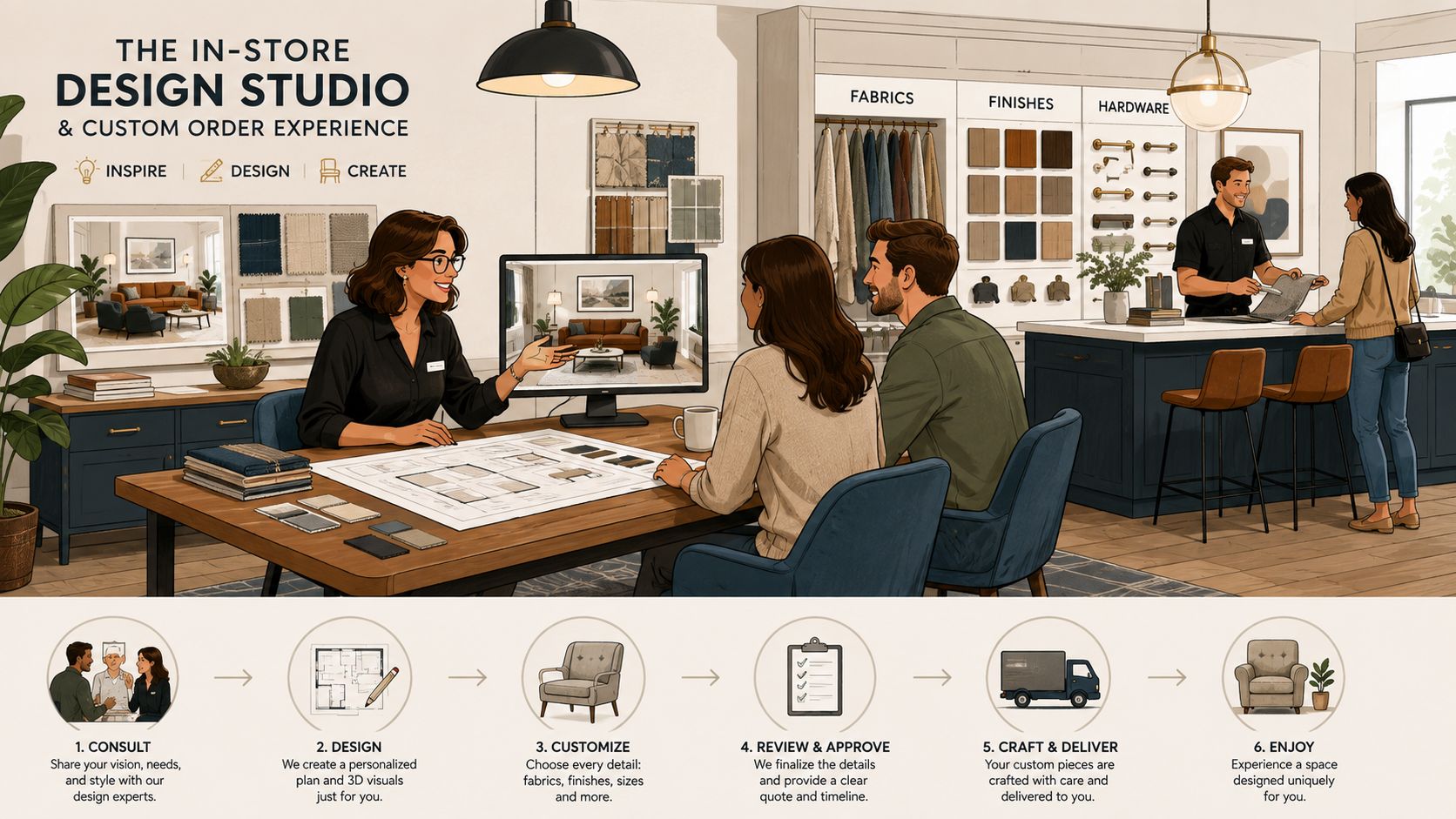
The strongest custom furniture decisions happen when someone can see the room as a whole, not just a single chair or table. At the Easton Town Center showroom, the design process is built around a complimentary consultation, space planning, and finish coordination, which is the right order of operations for homeowners who care about cohesion. The room comes first, then the furniture choices support it.
What a real design session feels like
A good consultant asks about traffic flow, existing wood tones, finish preferences, and how the family lives. That may sound basic, but it prevents expensive mistakes. A homeowner might need a deeper dining chair seat, a lighter stain on maple, or a more compact sectional profile to preserve circulation around a room.
The custom path also benefits from digital tools. People who want to compare layouts or visualize finishes can use the top AI tools for furniture design for general inspiration, but the in-person advantage is tactile and decisive. Wood weight, cushion hand, leather grain, and finish depth are hard to judge on a phone screen.
The brands matter because the build choices matter
The Custom Order Program for Smith Brothers of Berne, Canadel, and Mavin allows buyers to tailor wood species, stain, leather grade, fabric, and cushion density. That kind of flexibility is valuable when the buyer is solving for both looks and longevity. A top-grain leather sectional with the right motion mechanism feels very different from a decorative seating piece that only photographs well.
For readers who want to start the custom process from home, getting started with custom order is the logical next step before a showroom visit.
Caring for Solid Hardwood Furniture Over a Lifetime
Solid hardwood rewards consistency. Dust regularly with a soft, dry cloth so grit doesn't abrade the finish, and avoid aggressive cleaners that strip protection faster than normal wear does. In Ohio's climate, humidity swings matter, so the wood should stay in the stable moisture range already discussed, because keeping movement under control is what prevents seasonal checking and distortion.
Keep the surface clean without being rough
Use gentle products, not all-purpose shortcuts that leave residue. Spills should be wiped promptly, coasters should be normal, and hot dishes should never sit directly on a wood surface without protection. Sunlight deserves respect too, because repeated exposure can fade finish tone and make one side of a piece age faster than the other.
Minor scratches usually look worse than they are. On solid hardwood, many light marks can be blended, reduced, or refinished later if the surface has enough material to work with. That repairability is one of the main reasons solid wood remains the smarter long-term buy.
Build a simple seasonal habit
- Dust weekly: keep fine grit from turning into micro-scratches.
- Check humidity seasonally: especially during winter heating and summer moisture swings.
- Inspect finish wear: edges, arm fronts, and table centers usually show use first.
- Refresh when needed: oil or wax should be reapplied according to the finish type and wear pattern.
Solid hardwood is forgiving when cared for, but it is not maintenance-free. The buyer who treats it like a tool, not a disposable surface, gets the best return.
For a more detailed care routine, how to care for wood furniture gives a practical maintenance path without turning upkeep into a chore. The point is simple, care preserves beauty, but it also preserves value.
Budget Planning and Finding Exceptional Value
Price deserves to be measured against years of use, not the excitement of the purchase day. A solid wood dining table or bedroom set costs more upfront than a short-lived substitute, but the better piece usually wins on total cost because it can be repaired, refreshed, and kept in service instead of thrown out. That matters in a category with steady long-term demand, where wood furniture remains a durable part of the market.
The smartest value strategy is to buy with discipline, then use the store's policies to protect the purchase. Vinson's Low Price Guarantee refunds 110% of the difference if a lower price is found at a local authorized dealer within 30 days, which keeps premium wood furniture priced competitively. The Clearance Gallery adds another path to value, with savings up to 70% on floor samples, overstocks, and seasonal closeouts. Those are strong buying lanes for households that want quality without paying for waste.
Delivery and setup matter just as much as the sticker price. White-glove service reduces the risk of damage, poor assembly, and awkward placement, all of which can erase savings fast if a piece arrives mishandled. Financing also has a real place here, because it lets a household move from compromise furniture to durable pieces without waiting years to do it.
The showroom reference point is simple. Vinson Fine Furniture handles solid hardwood furniture, custom orders, design consultations, and white-glove delivery from Easton Town Center. For homeowners who want to buy once and buy well, that combination gives the purchase a better chance of holding its value over time.
Your Next Steps to Furnishing With Modern Wood
Modern wood furniture deserves a harder test than most shoppers give it. The right piece should be solid in the hand, clean in the line, repairable over time, and scaled to the room instead of forcing the room to adapt around it. If the buyer keeps those four standards in view, the showroom visit becomes much easier.
Before visiting, measure the room, decide whether the piece should feel warm, airy, or architectural, and note any finish or fabric preferences. Bring those notes to the floor and compare solid cherry, oak, maple, and walnut in person. The difference between a trend and an heirloom is often obvious once the piece is seen, touched, and opened in real light.
Visit Vinson Fine Furniture at Easton Town Center to compare solid hardwood dining, bedroom, seating, and custom order options in person. The showroom team can help with design consultations, finish choices, and white-glove delivery, so the next piece fits the home for years instead of months.