Solid Wood vs Engineered Wood: Vinson’s 2026 Guide

A Columbus homeowner walks into a showroom or opens a dozen browser tabs looking for a dining table, a bedroom set, or a statement piece for the family room. Within minutes, the language gets slippery. Solid wood. Engineered wood. Veneer. Hardwood. Composite core. Every product sounds respectable, and every price tag tells a different story.
That confusion matters because this isn't a throwaway purchase. It's the table that will host holidays, the bed that anchors the room for years, and the cabinet that should still look right when the house evolves around it. Material choice shapes how that furniture feels on day one and how it performs years later.
The solid wood vs engineered wood debate gets framed as if both are equal paths to the same destination. They aren't. They're different materials built for different priorities. For an investment-minded homeowner in Central Ohio, that distinction should be clear before a single finish or fabric gets chosen.
Table of Contents
- The Enduring Choice for Your Home
- Understanding Your Materials Solid Wood and Engineered Wood
- A Detailed Comparison for the Discerning Buyer
- Why Solid Hardwood Excels in Your Home
- A Framework for Investing in Lifelong Furniture
- Experience The Vinson Difference at Easton Town Center
- Frequently Asked Questions About Solid Wood Furniture
The Enduring Choice for Your Home
A well-furnished home doesn't come together by accident. It comes together because the homeowner stops shopping for placeholders and starts choosing pieces with staying power.
That shift usually happens at a specific moment. A family replaces the dining set that never felt sturdy enough. A couple moves into a long-term home in Central Ohio and realizes they'd rather buy one excellent bedroom set than cycle through two or three acceptable ones. A homeowner renovating near Easton wants the house to feel rooted, not temporary.
The material under the finish tells the truth long before the styling does.
That's why solid wood vs engineered wood deserves a direct answer. Solid wood carries the weight, repairability, and natural character that make furniture worth keeping. Engineered wood was developed to solve a different problem. It prioritizes dimensional stability and moisture resistance through layered construction. That can make sense in certain building-material applications, especially flooring, but it doesn't make it the right standard for heirloom furniture.
For dining, bedroom, and statement storage pieces, the better question isn't which option sounds modern. It's which one still deserves a place in the home years from now.
A home with memory needs honest materials
Furniture becomes part of family history faster than people expect. Chair seats wear in. Tabletops collect marks from celebrations, school projects, and ordinary weeknights. A solid cherry, oak, maple, or walnut piece doesn't fight that story. It carries it well.
High-end, family-owned showrooms that center their philosophy on solid hardwood don't make that choice by accident. They make it because the homeowners they serve aren't just buying a look. They're buying permanence.
Understanding Your Materials Solid Wood and Engineered Wood
Start with the build. Marketing labels blur the difference. Construction does not.
What solid wood actually is
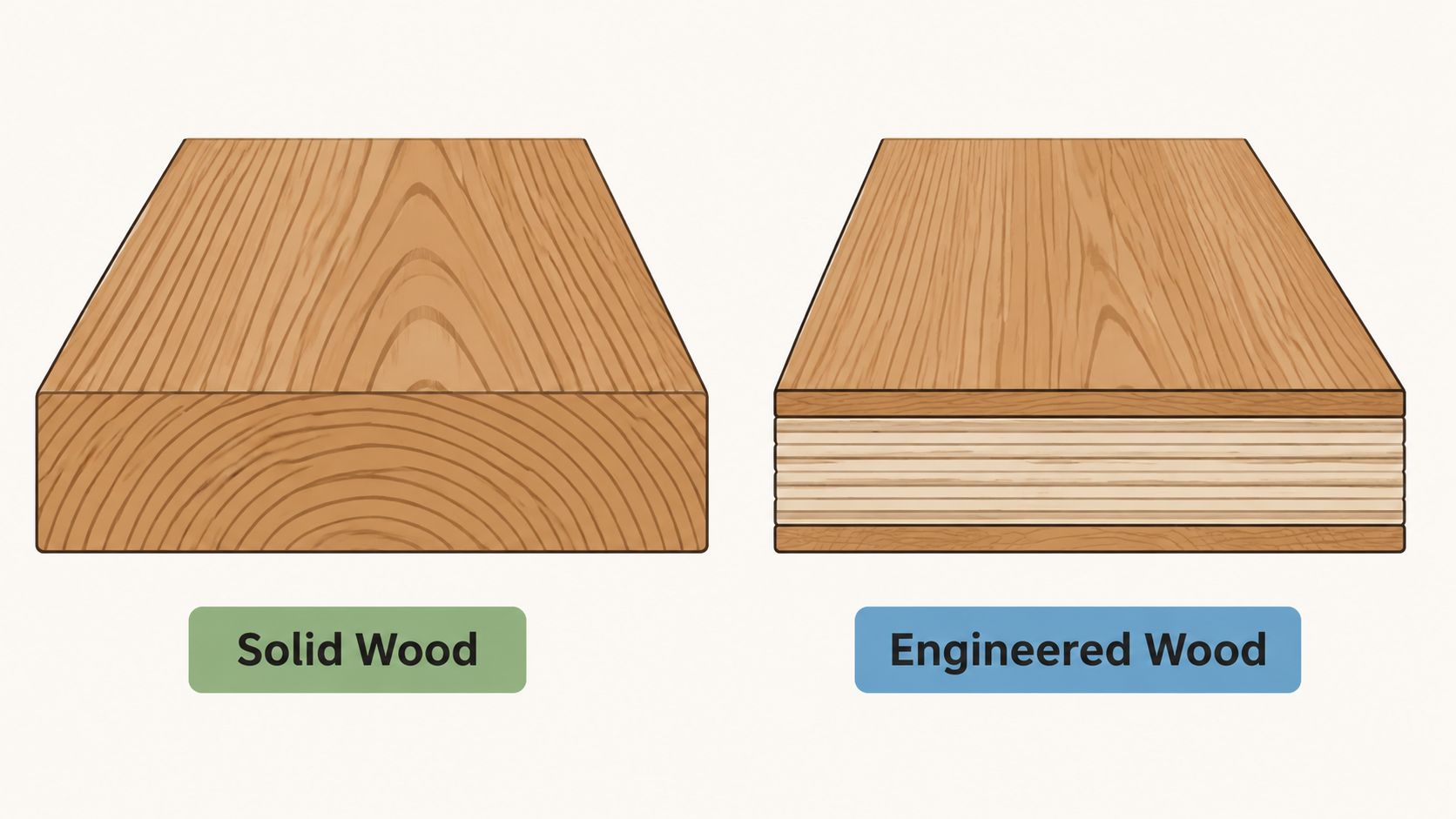
Solid wood is made from lumber that remains wood through the full thickness of the part. If you look at the edge, sand a scratch, soften a dent, or refinish the surface years later, you are still working with the same material.
That matters in furniture more than many buyers realize. A solid oak bed rail, solid maple top, or solid walnut drawer front has one identity all the way through. The grain is not a surface treatment over a separate core. The visible face and the structure beneath it are the same thing.
In a high-end showroom, that distinction is not academic. It affects how a piece feels when you open a drawer, how confidently it can be repaired, and whether it still has value after years of use.
What engineered wood is designed to do
Engineered wood is built in layers. In furniture, that usually means a real wood veneer or thin hardwood surface applied over a manufactured core such as plywood, MDF, or another composite panel.
That construction exists to solve a specific problem. It helps control movement and can make production faster and more uniform. Those are practical manufacturing advantages. They are not the same as the long-term advantages of solid hardwood in a dining table, bedroom collection, or statement case piece.
The tradeoff is straightforward. Once the beauty of the piece depends on a surface layer over a different interior, repairs, refinishing, edge wear, and lifetime durability all become more limited.
For homeowners who want a clearer sense of which species hold up best over time, this guide to choosing the right hardwood for longevity and style gives useful context before you judge any furniture tag.
Surface prep also affects how wood looks and wears over time. If you enjoy learning how finishes bond and why surface prep matters, Neasden Hardware's DIY wood tips offer a practical primer.
Why this distinction matters in a furnished home
Furniture lives a harder life than a showroom floor suggests.
Corners get bumped. Tops get marked. Finish gets worn where hands touch the piece every day. In that reality, solid wood gives you better options. It can be repaired with more confidence because the material under the finish is still wood, not a thin face over a different core.
This is the point many balanced buying guides miss. A retailer that specializes in long-term, investment-grade furniture does not choose solid hardwood out of nostalgia. It chooses solid hardwood because the material supports the kind of ownership serious homeowners want. Keep it. Restore it. Live with it for decades. Pass it on.
A Detailed Comparison for the Discerning Buyer
A smart furniture purchase looks different after five, ten, or twenty years. The right question is not which material sounds good on a spec sheet. The right question is which one still looks worthy of your home after holidays, house moves, daily use, and a few inevitable mistakes.
That standard explains the Vinson approach. We choose solid hardwood because it gives Ohio homeowners a better ownership experience over time.
Solid Hardwood vs. Engineered Wood At a Glance
| Attribute | Solid Hardwood (The Vinson Standard) | Engineered Wood |
|---|---|---|
| Core construction | One solid piece of hardwood | A hardwood surface bonded to a layered core |
| Material integrity | The face, edge, and interior are the same material | The visible wood sits over a different substrate |
| Repair and refinishing | Can usually be sanded and refinished more than once | Refinishing is limited by the thickness of the top layer |
| Long-term lifespan | Built for decades of use and restoration | Often chosen for shorter service life or specific site conditions |
| Price logic | Higher upfront cost, stronger long-term value | Lower entry cost, more limited recovery options |
| Main strength | Authenticity, serviceability, and staying power | Dimensional stability in changing conditions |
| Best fit for an investment homeowner | Furniture meant to be kept, repaired, and handed down | Projects where substrate behavior matters more than future restoration |
Industry flooring guides noted earlier inform the broad differences in refinishing limits, lifespan, and pricing. For furniture, the practical takeaway is simple. Solid hardwood gives you more material to preserve and restore.
What matters once the piece is in your home
Furniture is a touchable investment. You run your hand across the table edge. You see the corners at eye level. You notice whether the top has depth or whether the beauty stops at the surface.
Solid hardwood wins that test.
A solid wood piece has visual honesty. End grain matches the face. Edges look natural because they are natural. Small dents, finish wear, and surface scratches are problems you can address without discovering a thin decorative layer has set the limit.
Engineered wood asks you to accept a ceiling on repair from day one. That trade can make sense in some building applications. It is a weak bargain in furniture you expect to anchor a dining room, bedroom, or office for decades.
A homeowner sorting through broader material tradeoffs can compare engineered wood vs particle board for durability and value to see how core construction changes what ownership feels like over time.
Where engineered wood makes sense, and where it falls short
Engineered wood earned its reputation for a reason. Layered construction helps control movement in settings where moisture swings and installation conditions drive the decision. That is a real advantage.
It is not the priority that should lead a furniture purchase.
In a well-kept Ohio home, the better question is whether the piece deserves future care. Can it be restored after years of use? Will the edges still look convincing? Will the top gain character, or will it wear out? High-end furniture should answer those questions well before anyone praises its technical stability.
That same structure-versus-surface issue shows up in cabinetry too. Buyers comparing durable kitchen cabinet options often end up at the same conclusion. A material with more substance gives you more years, more repair options, and a better return on the original spend.
Stability matters. For furniture that is meant to stay in the family, substance matters more.
That is the dividing line. Solid hardwood supports the kind of ownership serious homeowners want. Keep it. Maintain it. Refinish it. Enjoy it longer.
Why Solid Hardwood Excels in Your Home
Furniture earns its keep differently than flooring. It doesn't need to solve the same installation challenges. It needs to stand firm, feel substantial, and age with dignity.
Dining rooms deserve substance
A dining table is one of the clearest examples of why solid hardwood remains the standard for serious furniture. The table gets leaned on, extended, wiped down, dressed up, and used hard. It needs heft. It needs confidence in the base. It needs a top that looks better as the years add character instead of looking tired once the surface loses its freshness.
That's where Amish-made dining sets stand apart. Solid cherry, oak, maple, and walnut bring visual richness, but the deeper advantage is structural honesty. The material has enough substance for a bench-made table to feel planted in the room instead of merely assembled.
Bedrooms need calm strength
A bedroom should feel settled. Not delicate. Not temporary.
Solid hardwood bedframes and case goods have the presence to create that effect. A Mavin bedroom furniture collection in solid wood doesn't just mimic permanence. It delivers it through mass, joinery, and the natural variation that gives every board a little depth and identity. The room feels quieter because the furniture feels resolved.
For homeowners browsing family-focused buying advice beyond the usual trend cycle, this Ocodile family furniture resource offers a useful perspective on choosing wooden furniture intended to last.
Craftsmanship shows in the details
The finest solid wood furniture reveals itself in places most buyers notice instinctively, even if they don't name them right away.
- At the edge: A tabletop edge in solid walnut has visual depth because the face and body are the same material.
- At the joint: Good construction depends on joinery that respects wood movement and structural load.
- At the touch point: Drawer fronts, bed rails, and chair backs feel denser and more grounded.
Homeowners curious about the structural side of long-lasting furniture can explore common wood joints used in quality furniture and see why joinery matters as much as species.
A piece becomes heirloom-quality when its material, joinery, and use all support one another.
This philosophy also explains why high-end showrooms that value long-term ownership emphasize more than just wood case goods. The same standard shows up in premium motion and seating. Smith Brothers furniture Easton shoppers often look for top-grain and performance leathers, motorized reclining sectionals, swivel chairs, rockers, and gliders because those categories also reward superior construction. A custom leather sectional Columbus buyer asks the same core question as a dining-table buyer. Will this still feel right in the room years from now?
That's also where customization earns its place. Canadel and Mavin let homeowners choose finishes and configurations that match the home instead of forcing the home to accommodate a generic piece. The result feels customized, not improvised.
A Framework for Investing in Lifelong Furniture
A couple furnishes their first serious home. They buy the dining table they can afford today, then replace it a few years later when the top chips, the base loosens, or the finish never looks clean again. Then they buy the table they wanted in the first place.
That is the expensive path.
A better decision starts with one standard. Buy furniture by how it will live in your home over time, not by how little it costs on delivery day. That philosophy is exactly why a high-end showroom like Vinson commits to solid wood. Ohio homeowners who plan to stay, host, raise families, and build rooms with staying power get more value from a material that can age well, be repaired, and still belong in the house twenty years from now.
Ask the questions that actually matter
Before you buy, get specific:
- Is this a temporary piece or a permanent one? Dining tables, bedframes, dressers, and bookcases should be bought as long-term furniture.
- Can it be repaired, refinished, or restored? If the answer is no, the lower price has an expiration date built into it.
- Will I still respect this piece after years of daily use? Surface appeal fades fast when the material underneath feels hollow or disposable.
- Does the room deserve a real anchor? The furniture that sets the tone of the room should have substance, not just the look of substance.
- Am I customizing something worth keeping? A custom size, finish, or configuration only makes sense if the core build justifies the investment.
Material choice should be judged by service life, repairability, and how gracefully it ages. For furniture meant to stay in a home, solid hardwood wins that test.
Cost and value are different things
Lower upfront pricing often disguises a shorter ownership cycle. That may work for a stopgap purchase. It is the wrong strategy for the pieces you depend on every day.
Solid wood costs more because there is more real material in the piece, more skilled construction behind it, and more options if the furniture ever needs attention later. Scratches can be addressed. Finishes can be renewed. A well-made solid wood table does not become irrelevant because life happened on its surface. For homeowners weighing the long view, this guide on how long quality furniture should last gives a useful benchmark.
Buy permanent furniture permanently.
That is the standard.
A practical buying framework for Central Ohio homes looks like this:
- Start with the pieces that carry the home. Put the budget into the dining table, bed, primary case goods, and other daily-use furniture first.
- Choose material before options. Finish choices and sizing matter, but they come after the decision about what the piece is made of.
- Treat customization as a multiplier. Custom work adds real value when the foundation is solid hardwood and strong construction.
- Use promotional pricing with discipline. A sale helps. It does not turn a short-life product into a long-life investment.
- Protect the purchase with proper delivery and planning. Good furniture should arrive correctly, fit the room correctly, and start its life in the home without preventable damage or poor placement.
This is the difference between buying furniture and building a home. Vinson's point of view is clear. If a piece is meant to matter for years, solid wood is the right place to put your money.
Experience The Vinson Difference at Easton Town Center
You can read about wood species for an hour and still feel unsure. Then you open a solid maple drawer, run your hand across a walnut top, and the decision gets clearer fast.
What a screen can't communicate
A product page cannot show weight, balance, grain depth, or the way a finish responds to light. It cannot tell you how a chair feels when it is pulled out twice a day for years, or how a dining top reads from six feet away in real room light. Those are buying decisions, not browsing decisions.
That is one reason Vinson puts so much emphasis on the showroom experience. We sell solid wood because it earns confidence in person. You can see the board character, inspect the joinery, compare species side by side, and feel the difference between furniture made to serve a home for decades and furniture made to hit a price point.
Material behavior matters here too. Wood still moves with seasonal humidity changes, and quality construction accounts for that through design, joinery, and fit. For a homeowner in Ohio, that is not a technical footnote. It is part of why solid hardwood must be built correctly from the start.
Customization changes the purchase
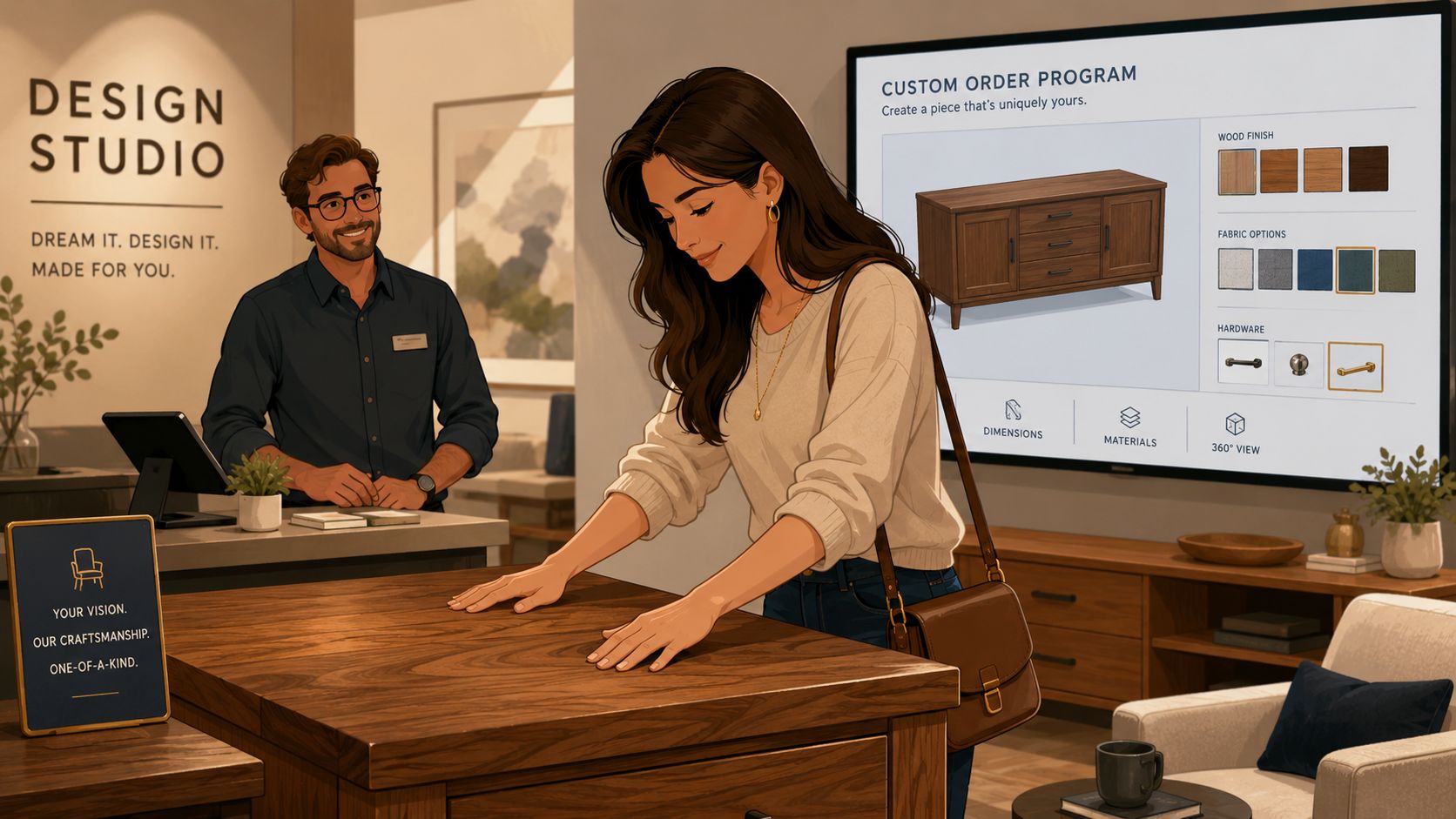
At Easton Town Center, the decision becomes practical. You can test seat depth on a sectional, compare oak against cherry, study finish samples under real lighting, and decide what suits the room. That process usually saves buyers from the expensive mistake of ordering from a screen and hoping the details work out.
The design studio and complimentary consultations help narrow the field with discipline. A dining set, bedroom collection, or leather motion chair makes more sense when proportions, finish, fabric, and function are evaluated together. That is also where Vinson's point of view stands out. We are not trying to make every material category look equally appealing. We are showing you why solid wood remains the right investment for the pieces that matter most.
If you want to compare your local options before visiting, start with this guide on where to buy solid wood furniture in Central Ohio.
Frequently Asked Questions About Solid Wood Furniture
Won't solid wood crack or warp in Ohio weather
Well-made solid wood furniture is built with seasonal movement in mind. Quality construction, careful drying, and proper joinery all matter. In a normal, climate-controlled home, solid hardwood performs beautifully for the long haul.
Is solid wood furniture harder to maintain
Not really. It needs sensible care, not complicated care. Keep surfaces clean, avoid neglect, and treat the piece like a long-term part of the home rather than a disposable item.
Is engineered wood ever the better choice
It can be chosen when dimensional stability and moisture resistance are the main priority. That's a real use case. It still doesn't make it the ideal standard for heirloom dining and bedroom furniture.
What wood species feel most timeless
Solid oak, maple, cherry, and walnut remain the classics because they balance beauty, character, and longevity. They also suit a wide range of interiors, from refined traditional rooms to cleaner transitional spaces.
Is custom furniture worth the wait
Usually, yes. A custom piece that fits the room, the finish palette, and the way the household lives tends to stay relevant much longer than an off-the-floor compromise.
For homeowners ready to invest in furniture with staying power, Vinson Fine Furniture offers a practical next step at Easton Town Center. The showroom gives Central Ohio buyers the chance to compare solid hardwood in person, explore the Design Studio, review custom options from Canadel, Mavin, and Smith Brothers, and shop the Clearance Gallery for immediate value while keeping the focus on lasting quality.