Double vs Full Bed: Find Your Perfect Size & Frame


Most shoppers ask the wrong question about a double vs full bed. They ask whether one is larger. The better question is whether this 54-inch by 75-inch bed size belongs in the room, the routine, and the level of furniture quality being planned.
The simple answer is easy. In North American sizing, a double and a full are the same bed. What matters after that is far more practical. Will the bed be used by one sleeper or two. Will the room feel balanced once a dresser, nightstands, and a chair are in place. Will the frame still feel substantial and appropriate years from now, not just on move-in day.
That wider design view saves people from two common mistakes. One is buying a bed that sounds large enough but feels cramped in daily use. The other is buying a frame before thinking through bedding, mattress depth, room layout, and long-term durability. Even specialty bedding projects can hinge on getting the label right, especially when coordinating with resources like Double size quilt batting for a custom coverlet or layered guest-room quilt. For mattress sizing basics, this bed and mattress size guide is also a useful starting point.
Table of Contents
- Your Guide to Choosing the Right Bed Size
- The Double vs Full Bed Myth Debunked
- Sizing Up Comfort Who a Full Bed Truly Fits
- Designing Your Space Around a Full Bed
- Investing in a Lifetime Bed Frame
- Completing Your Sleep System With Mattress and Bedding
- Final Recommendations and Your Vinson Design Journey
Your Guide to Choosing the Right Bed Size
A double vs full bed decision sounds like a sizing question, but it's usually a planning question. People often discover that after they've already started shopping for a mattress, a bed frame, or bedding.
The first step is to separate terminology from function. If two labels point to the same size, the purchase decision shouldn't stop there. The next step is to judge how that size behaves in an actual bedroom, with actual furniture, and with the way the room will be used every day.
Three filters make the decision clearer:
- Who sleeps there: A guest room, teen room, and primary bedroom rarely need the same width, even if the room dimensions allow it.
- How the room needs to function: A bed doesn't live alone. Dressers, chests, nightstands, lamps, and a reading chair all compete for floor area.
- What kind of frame belongs in the space: A simple metal frame and a substantial solid-wood bed don't create the same visual weight.
A bed size should be judged with the frame, mattress height, bedding, and walking space in mind. Looking only at mattress dimensions leads to expensive second guesses.
That's why the best bed-size conversations tend to happen before any finish is chosen. Once the room's use is defined, the right size becomes much easier to spot.
The Double vs Full Bed Myth Debunked
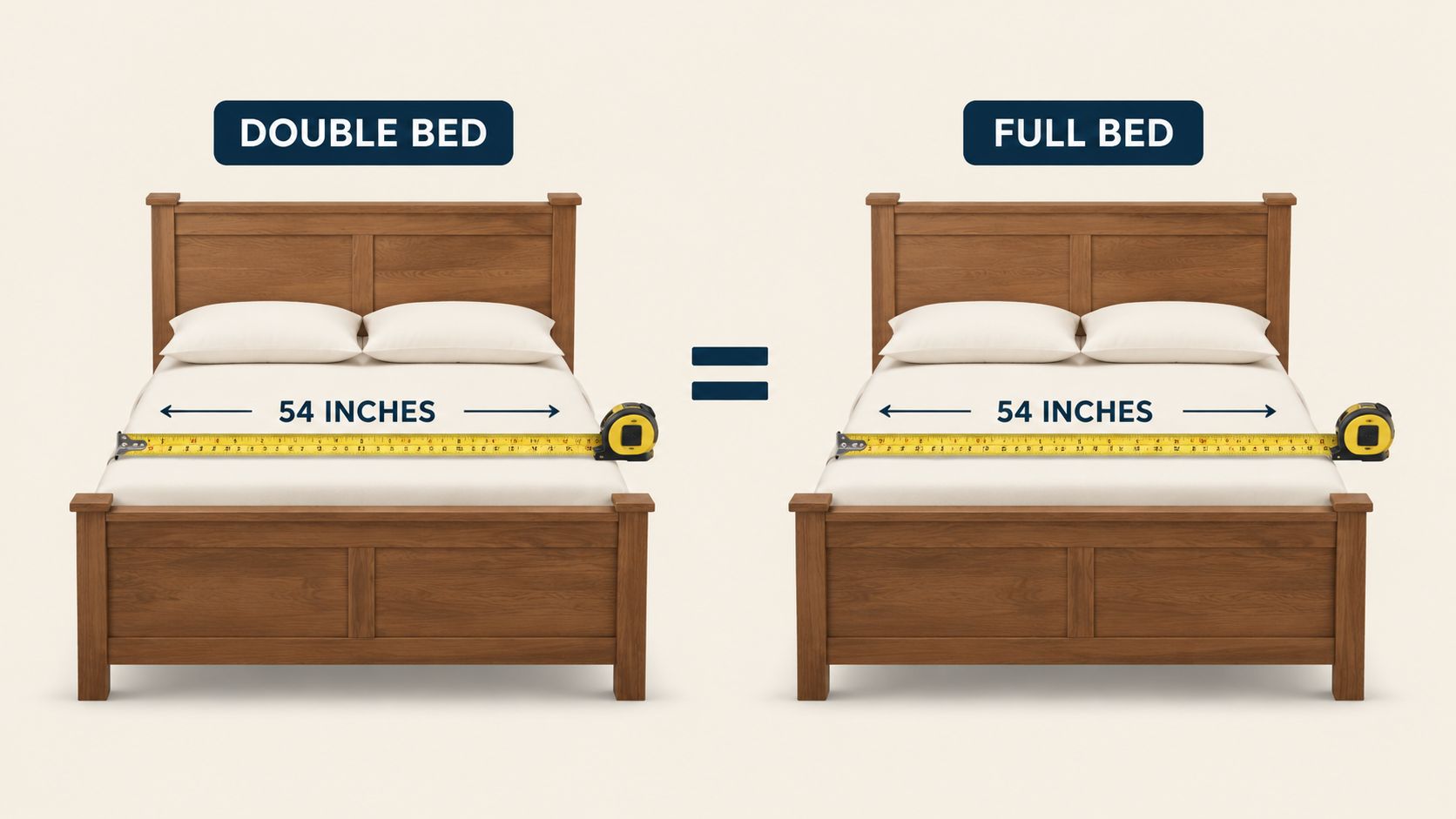
The confusion is common because the names sound like they should describe different products. In the North American market, they don't. Double bed and full-size bed are interchangeable labels for the same mattress size: 54 inches wide by 75 inches long. That sizing is reflected in industry guidance, which notes that a full mattress measures about 53 to 54 inches by 75 inches, so the practical difference is labeling rather than sleeping surface in most cases, as outlined in this full-size mattress dimensions guide.
Why two names still exist
Historically, double was the older industry term. It came from an earlier era when the bed was viewed as a practical step up from a twin and wide enough for two sleepers. Over time, manufacturers and retailers shifted toward full as the more common retail label in the United States, while the dimensions stayed the same, as summarized in this history of double vs full bed terminology reference.
That naming shift explains why shoppers still see all of these in stores and product descriptions:
- Double
- Full
- Full/double
- Double/full
They all point to the same standard size when the product is being sold for the North American market.
What that means when shopping
The myth surrounding 'full' and 'double' beds matters. If the mattress is standard North American sizing, then bedding and frames labeled full or double are generally meant to work together. The useful check isn't the marketing name. It's the dimensions in the spec sheet.
For shoppers comparing smaller-bed options, this twin vs full size bed guide is helpful because it shows where the full sits in the broader size ladder.
Don't shop the word. Shop the measurements.
That single habit clears up most of the confusion around a double vs full bed before it turns into a delivery-day problem.
Sizing Up Comfort Who a Full Bed Truly Fits
A full bed answers one question well and one question poorly. It works well when the room needs a bed larger than a twin without stepping up to a queen. It works poorly when two adults expect it to feel roomy over time.
Where the size works well
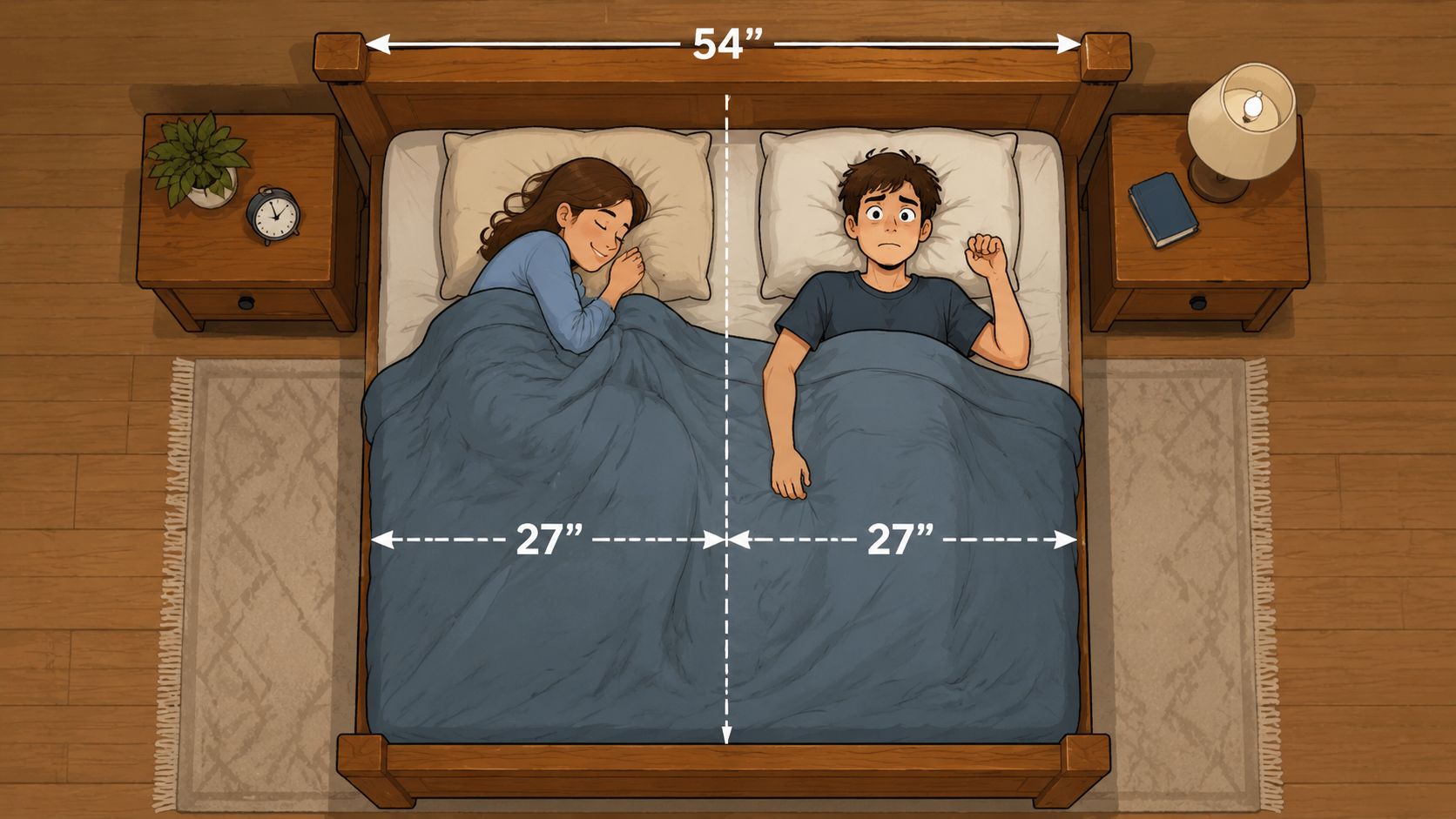
A standard full is 54 inches wide. Shared by two people, that leaves about 27 inches per person, which is less than the width of a standard crib at 30 inches. Guidance summarized in this per person space on full vs queen bed reference notes that this width is often too tight for long-term couple use and that 92% of couples prefer a queen or king for more personal space.
That's why this size usually makes the most sense for:
- Single adults who want more room than a twin provides
- Teenagers moving into a longer-term bedroom setup
- Guest rooms that need flexibility without dominating the floor plan
- Studios or smaller homes where footprint efficiency matters
For couples, the issue isn't whether two people can fit. They can. The issue is whether the arrangement stays comfortable night after night.
Mattress Size Comparison
| Size | Dimensions (in.) | Ideal For |
|---|---|---|
| Twin | 38 x 75 | Children, compact rooms |
| Full or Double | 54 x 75 | Single adults, teens, guest rooms |
| Queen | 60 x 80 | Many couples, primary bedrooms |
| King | 76 x 80 | Couples wanting maximum width |
A full also gives up size to a queen in ways that matter in real life. Mattress guidance notes that a full is 7 inches narrower and 5 inches shorter than a queen, which is one reason it's often better suited to solo sleepers than shared primary bedrooms, as explained in this mattress size comparison guide.
Practical rule: If the bed will host two adults regularly, comfort usually depends less on whether they can fit and more on whether each sleeper has enough room to turn, settle, and stay asleep.
For shoppers trying to match mattress feel to body type and sleep posture, this guide to choosing the right mattress for your body type is a smart companion to bed-size planning.
Designing Your Space Around a Full Bed
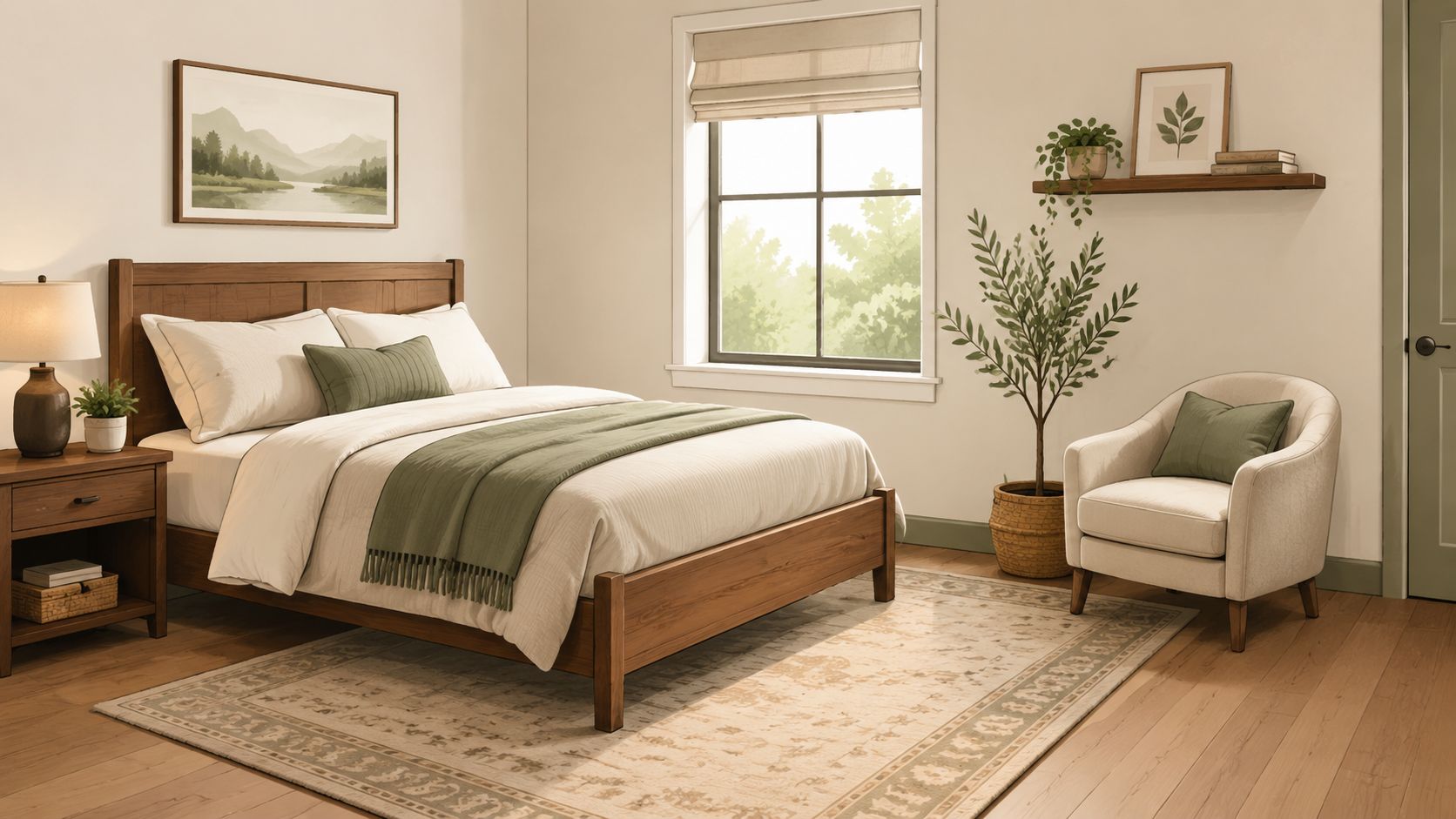
A full bed earns its place when space planning matters as much as sleep surface. In smaller bedrooms, guest rooms, apartments, and multipurpose spaces, a full can create a room that feels composed instead of crowded.
Why a smaller bed can improve a room
Recent guidance on full vs double beds emphasizes that the core issue isn't the label. It's whether the room can support the mattress, the surrounding clearance, and the intended use. That same guidance notes that full beds still make sense for solo adults, teens, studios, and rooms where maneuverability matters, as discussed in this full vs double beds room-planning article.
That design point gets overlooked. A queen may sound like the safer upgrade, but there are rooms where it consumes too much visual and physical space. A full can restore proportion and improve how the room lives.
A well-planned room may use the reclaimed floor area for:
- A broader dresser footprint that brings better storage without feeling jammed against the bed
- A reading chair or glider near a window, which gives the bedroom another function beyond sleep
- Cleaner traffic flow around the bed, closet, and doorway
- Better balance with case goods so the room doesn't feel bed-heavy
What to plan around the bed
The bed frame matters here. A slim upholstered platform and a substantial solid hardwood bed don't occupy the eye the same way, even if the mattress size is identical. Heavier wood species and thicker rails create presence. That's often a strength, but only if the room has enough breathing room.
When planning around a full bed, it helps to test four decisions together:
- Headboard height against the wall and window placement
- Nightstand scale so the bedside pieces don't overpower the bed
- Dresser depth if circulation is already tight
- Chair placement if the room needs a secondary seating function
A room arranged with intention almost always feels more luxurious than a room that contains larger pieces. For layout help, this bedroom furniture arrangement guide is a practical planning resource.
A smaller bed can be the more sophisticated choice when it gives the room enough space to function gracefully.
Investing in a Lifetime Bed Frame
Once the mattress size is settled, the frame becomes the purchase that will likely outlast everything around it. Mattresses wear out and get replaced. A well-built bed frame should still feel steady, quiet, and right for the room through several mattress cycles.

Why the frame matters as much as the mattress
A full bed often serves more than one chapter of a home. It may start in a teen bedroom, move to a guest room, then become the bed you rely on for visiting family. That kind of flexibility makes the frame a furniture decision, not just a sleep accessory.
The strongest investment-grade frames tend to share the same fundamentals:
- Solid hardwood construction with real weight and long-term stability
- Joinery that stays firm under regular use and repeated moves
- Finish depth that lets cherry, oak, maple, or walnut show natural character
- A silhouette with longevity so the piece still looks considered years from now
Amish-made and bench-crafted bedroom pieces stand apart in those details. You feel it in the side rails, the way the headboard carries visual substance, and the absence of looseness that develops in lighter, mass-produced frames.
That matters even more with a full bed because this size is often chosen for practical reasons. The frame has to earn its place for the long haul.
What makes a bed feel heirloom quality
An heirloom-quality bed does more than support a mattress. It gives the room a center of gravity. In solid maple, oak, cherry, or walnut, the grain and finish color influence how formal, relaxed, light, or grounded the whole bedroom feels.
I usually advise clients to look past the size label and judge the bed as part of a complete furniture plan. Wood species, rail thickness, headboard scale, finish tone, and the relationship to dressers and nightstands all shape whether the room will still feel coherent ten years from now. A full bed can look modest in one frame and very substantial in another.
Custom ordering helps because bed size is only one decision. The better question is whether the bed will still suit the room after repainting, after a mattress change, or after the bedroom shifts from daily use to guest use. That long view is what separates disposable furniture from pieces meant to stay. For a broader perspective, this guide on how long furniture should last gives useful benchmarks for evaluating value over time.
The right bed frame should feel better after years of use because the finish gains character and the construction keeps doing its job.
That is the standard worth buying for.
Completing Your Sleep System With Mattress and Bedding
A full bed is easy to buy for, but the best results come from matching the mattress and bedding to the frame you plan to live with for years.
Bedding fit matters more than the label
By the time you reach the bedding stage, the full versus double naming issue should no longer drive the decision. In real purchasing, sheet sets and protectors are commonly labeled to cover both names. The practical detail to check is pocket depth, not branding.
I advise clients to look closely at mattress height, topper use, and protector construction before buying linens in bulk. A solid hardwood bed frame has a visual weight and proportion of its own, so an overly tall mattress with undersized sheets can make the whole bed look strained and feel fussy to maintain. For more practical guidance on layers and fit, see this guide to bedding, mattress protectors, and comforters.
Small fit problems become daily annoyances.
The mattress has to suit the room as well as the sleeper
A mattress choice affects more than sleep feel. It changes bed height, how easily someone gets in and out, how much headboard remains visible, and whether the bed still looks balanced beside nightstands and case pieces. That is especially important with a full bed, because this size often sits in guest rooms, smaller primary bedrooms, or multipurpose spaces where every proportion shows.
Material and construction also matter over time. Edge support, surface resilience, and how the mattress settles after months of use will shape whether the bed still feels appropriate for the room you designed around it.
For shoppers doing early research on premium models, this article can help you compare Sealy and Stearns & Foster mattresses. The final decision should still happen in person. Lie down, change positions, sit on the edge, and check the finished bed height against the frame.
The strongest sleep systems are built as one package. Frame, mattress, protector, sheets, and comfort layers should work together so the bed looks settled, feels supportive, and stays easy to live with.
Final Recommendations and Your Vinson Design Journey
A double vs full bed question usually has a short answer and a longer consequence. The short answer is that the names are interchangeable. The longer consequence is whether that size will serve the room and the sleeper well over time.
A practical decision guide looks like this:
- Choose a full bed if the room is for one adult, a teenager, or guests, and the layout benefits from a smaller footprint.
- Choose a full bed if the goal is to preserve space for other meaningful pieces such as a dresser, chest, or reading chair.
- Consider a queen if two adults will use the bed regularly and want more personal space at night.
- Consider a queen if the bedroom can comfortably support a larger mattress and larger surrounding furniture.
Independent mattress guidance also points out the core trade-off clearly. A full and a double are effectively the same, but a 54-inch by 75-inch mattress gives each of two adults about 27 inches of width, so it's often uncomfortable for long-term couple use, as described in this double bed and full bed comfort guide.
The best results usually come from treating bed size as part of a complete room plan, not as an isolated purchase. That approach leads to better scale, better comfort, and fewer compromises later.
For homeowners ready to turn bed sizing into a complete bedroom plan, Vinson Fine Furniture offers a thoughtful next step at Easton Town Center. The showroom's complimentary design consultations, in-store Design Studio, and Custom Order Program help clients coordinate solid hardwood bedroom furniture, finishes, and premium sleep systems with confidence. For added peace of mind, the Low Price Guarantee includes a 110% refund of the difference if a lower price is found at a local authorized dealer within 30 days, and the Clearance Gallery offers savings of up to 70% on select pieces.