Furniture Assembly and Installation: A Homeowner’s Guide


A homeowner has spent weeks choosing the right piece. The finish is right, the scale is right, and the wood has the weight and grain that only solid hardwood can deliver. Then delivery day arrives, and the final question appears at the doorway. Who should put it together, place it, level it, and stand behind the result if something goes wrong?
That moment matters more than most buying guides admit. Furniture assembly and installation isn't just the last errand after a purchase. For premium dining sets, bedroom pieces, and motion seating, it's the last stage of craftsmanship. A table can be bench-made beautifully and still perform poorly if it's assembled out of square. A drawer chest can be built from excellent material and still bind if the hardware isn't aligned correctly. For an investment homeowner, the right assembly process protects both the piece and the paper trail that supports future service.
Table of Contents
- Your Investment Has Arrived Now What
- The Anatomy of True Professional Installation
- DIY vs White Glove Service A Head to Head Comparison
- Understanding the Costs and Value of Assembly
- Your Pre Delivery Homeowner Checklist
- The Vinson Advantage From Showroom to Your Room
- Common Questions About Furniture Installation
Your Investment Has Arrived Now What
The delivery team has set down several large cartons in the foyer. Inside them sits the dining table chosen for family holidays, or the custom sectional designed to fit a renovated great room. The excitement is real, but so is the hesitation. A premium piece doesn't feel like something that should be rushed with a utility knife, a hex key, and guesswork.
That hesitation is sensible. Furniture assembly has become a distinct professional service category, not just an informal favor after delivery. One industry projection places the global furniture assembly services market at $14.2 billion by 2032, growing at a 5.8% CAGR, while U.S. ready-to-assemble furniture was estimated at $13.8 billion in 2020 according to industry market reporting on furniture assembly services. That shift tells homeowners something important. More buyers now treat assembly as part of the purchase, not an afterthought.
For the high-value buyer, the issue isn't only whether the piece can be assembled. It's whether the final result will be stable, level, properly documented, and support later service if needed. Delivery records matter here, especially when a homeowner wants a clear timeline of condition at arrival. Practical resources on mobile proof of delivery solutions can help explain why documentation at handoff has become such a useful layer of protection.
A premium purchase isn't fully finished when it reaches the curb. It's finished when it's inspected, placed, assembled correctly, and confirmed to be in proper condition.
That is why many homeowners review a retailer's delivery and setup process before the truck arrives. The boxes may mark the beginning of possession, but careful installation is what turns a purchase into a functioning part of the home.
The Anatomy of True Professional Installation
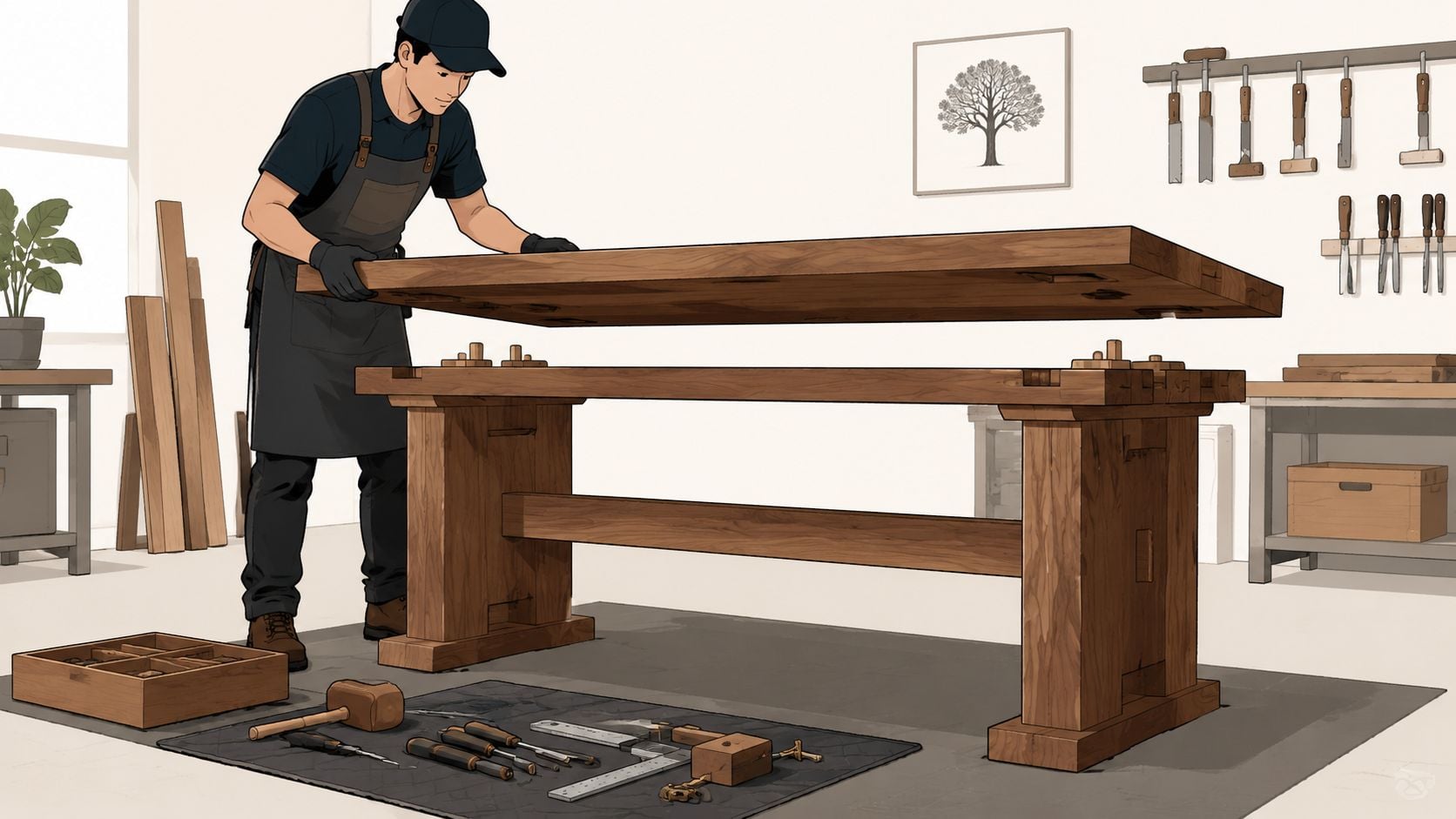
Professional installation has a sequence. It isn't one person arriving with a screwdriver and moving quickly. Good teams work methodically because each step affects the next one.
What happens before the first screw turns
The best assembly starts before the furniture enters the room. Packaging is opened carefully. Surfaces are checked. Hardware is confirmed. The route through the home is managed so corners, floors, stair rails, and door casings don't take unnecessary contact.
Once the piece is in place, installation becomes more technical:
- Placement first: Large pieces are positioned close to their final location before full assembly so they don't need to be dragged afterward.
- Hardware check: Fasteners, support brackets, feet, and specialty components are matched to the piece before work begins.
- Leveling and stance: A cabinet, bed, or table has to sit correctly on the floor before final tightening.
- Clean finish work: Protective wrap, foam, and cartons are removed without scraping wood, leather, or motion components.
Why precision matters on solid wood furniture
Drawer hardware offers a useful example because it shows how small errors turn into daily annoyance. For high-quality drawer-slide installation, the slide end needs to be perfectly flush with the furniture frame, and the holes need to align precisely before screws are fastened. If they don't, the drawer can bind and wear early because the load travels through the metal rail geometry rather than the wood alone, as shown in this drawer-slide installation guidance.
That same principle applies across the piece. A solid maple chest with one slide slightly proud of the frame may still open on day one. Months later, the homeowner notices uneven travel, a drawer face that doesn't sit quite right, or a soft scraping sound. The problem didn't begin with the drawer. It began with installation tolerance.
Practical rule: Furniture doesn't fail only because of material quality. It also fails because alignment, load paths, and final adjustment were handled carelessly.
This is especially relevant for heirloom categories. Amish-made dining sets rely on proper final stance so tops don't rock. Bedroom pieces need square assembly so doors and drawers stay true. Power reclining seating has moving parts that must be positioned correctly from the start for quiet, smooth operation. In premium furniture, precision isn't fussiness. It's part of how the piece earns its lifespan.
DIY vs White Glove Service A Head to Head Comparison
Some homeowners enjoy assembly work. They have patience, floor space, and a respect for instructions. Others want the room finished without spending a weekend on cartons and hardware. Both approaches can be reasonable, but the comparison changes when the furniture is expensive, heavy, or customized.
The real comparison isn't just labor cost
DIY often looks less expensive at first glance. But the true comparison includes tools, time, cleanup, risk of surface damage, and the question many cost guides skip entirely. Who carries responsibility if assembly causes a problem?
Care also matters during the process itself. Expert guidance recommends using a torpedo level, a rubber mallet, and a drill or cordless screwdriver with the correct bit, while also starting all screws before fully tightening them. That sequence helps prevent gaps and keeps panels from being pulled out of square, according to this assembly toolkit guidance. On a premium case piece, tightening too soon on one side can twist the whole carcass just enough to affect doors, shelves, or drawers.
For homeowners coordinating a larger move, delivery quality also shapes the decision. Practical planning resources such as this guide for independent moving companies help show why transport, handling, room access, and final placement shouldn't be separated from installation when valuable furniture is involved.
DIY Assembly vs. Professional White-Glove Installation
| Factor | DIY (Do-It-Yourself) | Professional White-Glove Service |
|---|---|---|
| Time | Often spread across an evening or weekend, especially for multi-piece rooms | Typically handled in one coordinated visit |
| Tools required | Homeowner needs proper bits, leveling tools, soft-impact tools, and workspace | Team arrives prepared for assembly, placement, and adjustment |
| Risk to surfaces | Higher risk during unpacking, lifting, flipping, and tightening | Lower risk when trained crews handle protective materials and movement |
| Final alignment | Depends on patience, sequence, and floor conditions | Usually includes leveling, positioning, and fit checks |
| Cleanup | Cartons, inserts, wrap, and debris remain for the homeowner | Packaging is usually removed as part of service |
| Liability chain | Can become unclear if damage or misassembly appears later | Clearer accountability when the same provider delivers and installs |
| Warranty confidence | Homeowner may need to prove the issue wasn't installation-related | Cleaner service history when installation is documented |
A homeowner considering full-service setup can review what white glove delivery service includes before deciding. That often clarifies the difference between simple drop-off and true furniture assembly and installation.
A fair conclusion isn't that DIY is always wrong. It isn't. Small, simple pieces may be well within a careful homeowner's comfort zone. But once the purchase includes solid cherry, walnut, maple, top-grain leather, or motorized seating, the stakes shift from convenience to stewardship.
Understanding the Costs and Value of Assembly
Online price guides usually answer one question well. What does assembly cost in the market? They don't always answer the more important one. What is being protected by that cost?
What the market says about price
U.S. consumer pricing has become fairly standardized. Thumbtack reports a national average furniture assembly cost of about $148, with a typical range of $102 to $221, and hourly labor averaging $65 per hour. The same pricing data also includes an average U.S. hourly rate of $34 per hour in one service dataset, with examples such as $48 for a table, $64 for a bed, $80 for a wardrobe, and broader assembly ranges of $50 to $150 per job according to this furniture assembly cost overview. Those numbers are useful because they show furniture assembly is now a priced, visible service rather than an invisible household chore.
For homeowners researching larger purchases, adjacent logistics can also shape the budget conversation. A practical resource like this 2026 mattress shipping guide helps illustrate how transport and setup costs can become part of the ownership picture for bulky household goods.
Why value is different from the lowest rate
An hourly rate doesn't capture liability. A flat item fee doesn't promise correct leveling. A low quote doesn't automatically include accountability if a finish is marked, a rail is installed poorly, or a motion component isn't seated correctly.
The least expensive line on the invoice can become the most expensive part of ownership if no one stands behind the result.
That is why many homeowners look beyond labor cost and into post-purchase protection. A retailer's furniture protection plans and service options can help frame assembly as part of preservation, not just convenience.
For premium furniture, value comes from four things working together: correct setup, reduced damage risk, documented condition, and a clear path for service later. Those benefits don't always show up in a per-hour quote, but they often matter more than the quote itself.
Your Pre Delivery Homeowner Checklist
A smooth installation day starts with a prepared room. The homeowner doesn't need to do the technical work, but a few smart decisions ahead of time prevent awkward pivots once the piece is in the house.

Five preparations that prevent delivery day problems
- Clear the route: Remove hallway tables, rugs that curl at the edge, floor lamps, and anything that narrows the path from entry to room.
- Measure critical openings: Check doorways, stair turns, elevator clearances, and tight corners. A piece can fit the room and still fail to fit the route.
- Protect the destination area: Clear breakables, move pet bowls and toys, and make space for installers to rotate and position large furniture safely.
- Mark placement in advance: Painter's tape on the floor helps show where a sectional, bed, or dining table should land, especially in open-concept spaces.
- Know the room dimensions: A quick review of how to measure furniture for delivery and fit helps prevent the most common access and placement mistakes.
A prepared room also makes final adjustments better. Installers can level with confidence, check drawer travel, and confirm traffic flow without navigating clutter.
A few minutes of planning before delivery often prevents the kind of last-minute improvisation that puts furniture, walls, and floors at risk.
For solid wood and premium leather pieces, that calm setup matters. Heavy furniture rewards a deliberate path and a settled destination.
The Vinson Advantage From Showroom to Your Room
A strong furniture experience shouldn't break into separate, disconnected stages. The design conversation, the customization choices, the delivery path, and the final installation all need to support one another.
Design decisions carry through delivery
That continuity matters most with customized furniture. A homeowner who selects fabrics, finishes, dimensions, and motion options in a design studio isn't buying an offhand commodity. The purchase may involve a Canadel dining set configured to suit a room, a Mavin bedroom collection in solid cherry or walnut, or a Smith Brothers seating piece upholstered in top-grain or performance leather with power motion.
The same buyer often benefits from an integrated process. An in-store design studio can help with room planning and material choices. A custom order program can refine details through 3D visualizers. Then the final handoff should respect the same level of care. This is one reason many Columbus-area homeowners value the Vinson advantage and full-service approach when purchasing long-term furniture for the home.
The broader value proposition also matters. A family-owned showroom presence at Easton Town Center gives buyers the ability to sit-test sectionals, compare the smooth glide of swivel and motion chairs, and feel the weight of solid maple, oak, cherry, or walnut in person. That tactile step is difficult to separate from successful delivery because what is chosen in the showroom has to perform correctly in the room.
Why accountability matters after the truck leaves
One underserved issue in consumer advice is the connection between assembly and warranty. Independent consumer guidance often focuses on keeping records and understanding warranty terms, while price guides discuss labor. But homeowners buying high-value pieces usually care about the question behind both. If a problem appears later, who is responsible?
The answer becomes clearer when the retailer controls delivery and setup. A major gap in consumer advice is the link between assembly and warranty. Improper installation of high-value furniture can affect alignment and stability, potentially voiding manufacturer coverage, while professional white-glove service from the retailer provides a clearer chain of accountability for damage liability and service claims, as noted in this discussion of furniture assembly cost and accountability.
That point lands especially well for the investment homeowner. Solid hardwood furniture is built to last. So are premium reclining and swivel pieces when their mechanisms are handled correctly. If the assembly process is sloppy, the furniture may still stand in the room, but the confidence behind it doesn't stand the same way.
A well-run showroom also supports value in other ways. Complimentary design consultations help prevent scale mistakes before ordering. The Custom Order Program supports brands such as Smith Brothers, Canadel, and Mavin. A Low Price Guarantee with a 110% refund of the difference and a Clearance Gallery with savings of up to 70% give buyers both customization and value without lowering standards. In that setting, white-glove delivery isn't an add-on flourish. It's the final layer that protects the whole purchase.
Common Questions About Furniture Installation
Homeowners usually have a few practical questions once delivery is scheduled. The answers often determine whether the day feels orderly or stressful.
Does professional assembly really matter for solid wood furniture
Yes. Solid wood furniture is durable, but it is also substantial. It carries weight differently, moves differently, and deserves careful tightening, leveling, and placement. A solid walnut dining table or maple bedroom chest can last for decades, but only if the final setup respects how the piece is built.
This matters just as much for upholstered seating. Custom leather sectionals, power recliners, swivel chairs, rockers, and gliders all contain hardware, join points, or motion systems that benefit from correct final assembly.
What should a homeowner ask before delivery day
A good short list includes:
- Who handles inspection at arrival: The homeowner should know whether the team checks visible condition before final placement.
- What is included in setup: Ask whether assembly, leveling, placement, and packaging removal are part of the service.
- How should the room be prepared: Route clearance and placement planning should be discussed before the appointment.
- Who documents issues if they appear: Documentation of issues makes accountability practical rather than theoretical.
A thoughtful buyer may also ask whether the retailer's design team can assist before ordering. For custom furniture, design support often prevents the fit and layout mistakes that no installer can fully solve on delivery day.
Is white glove service worth it for custom seating and bedroom furniture
For many investment homeowners, yes. The more customized, weighty, or mechanically complex the purchase, the more value there is in having one accountable team carry the process through.
That is especially true for pieces shoppers often seek out in Central Ohio showrooms, including solid wood furniture Ohio, Amish-made dining sets, custom leather sectionals Columbus, Smith Brothers furniture Easton, and Mavin bedroom furniture. These aren't casual buys. They are long-term home decisions.
The best outcome is simple. The furniture enters the room, fits the space, operates smoothly, sits level, and carries a clear service trail if help is needed later. That peace of mind is often the difference between having furniture delivered and having the room finished.
Vinson Fine Furniture at Easton Town Center gives Columbus-area homeowners a complete path from selection to installation. Shoppers can work with the In-Store Design Studio through complimentary design consultations, explore the Custom Order Program for brands such as Smith Brothers, Canadel, and Mavin with digital visualizers, and choose heirloom-quality pieces in solid cherry, oak, maple, and walnut. The showroom also offers premium motion and leather seating, including sectionals, recliners, swivel chairs, rockers, and gliders, along with a Low Price Guarantee that includes a 110% refund of the difference and a Clearance Gallery with savings of up to 70%. For homeowners who want the assurance of expert setup and a polished finish, the white-glove experience connects the showroom visit to a room that feels complete on day one.