Dining Table and Chairs Dark Wood for Your Columbus Home


The search usually starts the same way. A Columbus homeowner stands in a dining room that still feels unfinished, even after the walls are painted and the lighting is in place. The missing piece isn't just a table. It's the piece that will hold weeknight dinners, Thanksgiving platters, school projects, birthday candles, and the quiet conversations that happen after guests have gone home.
That's why dark wood keeps coming up.
A well-made dining table and chairs in dark wood bring weight, warmth, and permanence to a room. They feel settled. They ask less of trends and offer more to the life of the home. The challenge is choosing a set that feels timeless rather than heavy, substantial rather than dated, and beautifully made rather than merely dark.
Table of Contents
- An Investment in Your Home's Story
- The Foundation of Quality Choosing Your Solid Hardwood
- Finding the Perfect Fit Table Shape and Size
- The Art of the Chair Style and Upholstery
- Making It Yours The Vinson Custom Order Program
- Styling and Caring For Your Generational Piece
- Your Heirloom Awaits at Easton Town Center
An Investment in Your Home's Story
A dark dining set often enters the conversation when a family has stopped buying for the moment and started buying for the next chapter. The question changes from “What fits the room?” to “What will still look right when this house has ten more years of life in it?”
That shift matters.
A dining set is one of the few furnishings that's asked to be ceremonial and practical at the same time. It has to look composed under pendant light on a holiday evening, then take daily wear from coffee mugs, homework folders, and hurried breakfasts. Dark wood meets that brief well because it carries visual authority without feeling cold.
The category itself remains central to how people furnish their homes. A 2026 projection places the global dining table market at $9.19 billion, with growth to $16.01 billion by 2034 and the Asia Pacific region estimated at $4.27 billion in 2026, according to Fortune Business Insights' dining table market forecast. That scale helps explain why homeowners can still find serious variety in hardwood species, finish depth, table profiles, and chair pairings.
Dark wood works best when it's treated as architecture for the room, not background furniture.
For many Columbus homes, especially those mixing newer construction with more grounded finishes, dark wood supplies what painted drywall and open layouts often lack. It adds a center of gravity. Done well, it doesn't feel old-fashioned. It feels resolved.
That's the standard worth aiming for. Not a matching set chosen in haste, but a bench-made piece with enough substance to earn its place year after year.
The Foundation of Quality Choosing Your Solid Hardwood
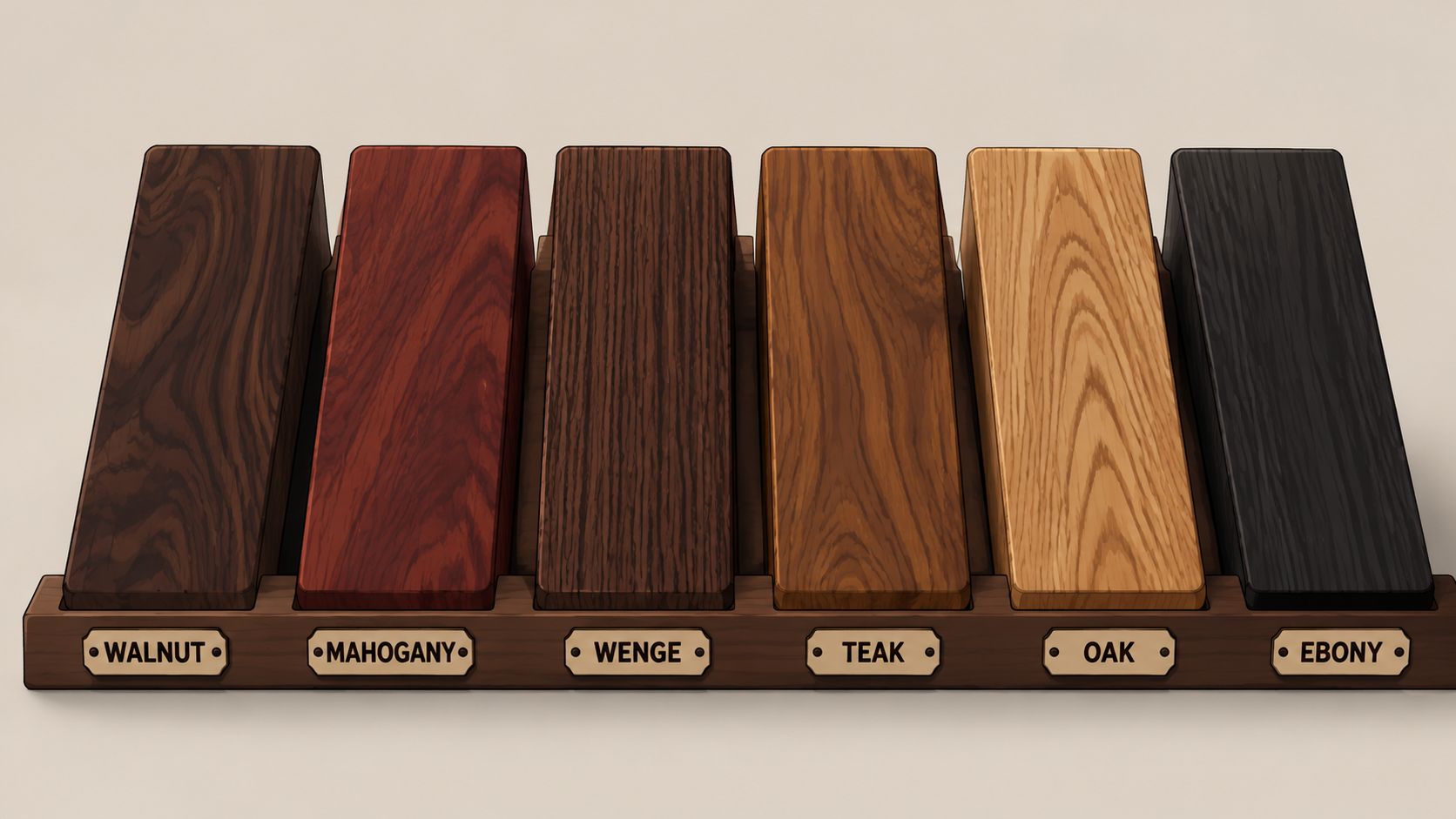
The phrase dining table and chairs dark wood sounds simple. In practice, it covers very different results.
A dark finish on walnut doesn't behave the same way as a dark finish on maple. Cherry deepens differently than oak. Grain either comes forward or softens back. Small scratches either blend into character or interrupt the surface visually. The wood species decides much of that before the stain is even chosen.
Why species matters more than stain alone
The final appearance of a dark-wood dining table depends on whether the color comes from the wood's natural tone or from a darker stain applied over a lighter species. That distinction affects grain visibility, color consistency, and how the surface ages under use, as explained in this discussion of dark wood dining table ideas and wood-tone differences.
That's why solid hardwood selection should come first.
- Walnut tends to suit homeowners who want depth without excessive visual busyness. Its natural tone already carries richness, so the finished look often feels layered rather than coated.
- Cherry offers warmth under the darkness. It's especially appealing in homes that want a formal note without losing a sense of welcome.
- Oak brings visible grain and more rustic texture. In a dark finish, it can look stately, but it won't look slick or uniform.
- Maple reads cleaner and tighter. It's often chosen when a dark stain is desired with a more controlled, refined grain pattern.
For homeowners comparing woods beyond furniture alone, this guide on selecting wood for cabinet refinishing is useful because it clarifies how species affect finish behavior and long-term appearance. The same logic applies at the dining table.
A broader hardwood overview is also worth reviewing in Vinson's guide to choosing the right hardwood for longevity and style.
Solid Hardwood Comparison for Your Dining Set
| Wood Species | Grain Pattern & Texture | How It Takes a Dark Finish | Best For |
|---|---|---|---|
| Walnut | Generally rich and flowing, with a naturally luxurious surface character | Often achieves depth with less reliance on heavy stain because the base tone is already dark | Homeowners who want a refined, heirloom look with visible natural richness |
| Cherry | Smooth, warm, and subtly expressive rather than heavily grained | Develops a dark finish with warmth underneath, which keeps it from feeling flat | Traditional rooms, transitional homes, and buyers who want elegance without stiffness |
| Oak | More pronounced grain with strong texture and visual movement | Takes dark finish with clear grain expression, which creates character and structure | Formal farmhouse, classic dining rooms, and spaces that benefit from texture |
| Maple | Fine, tight grain with a cleaner visual read | Accepts dark stain in a more even-looking way, often with less dramatic grain show-through | Modern or tailored interiors that want dark wood without heavy rusticity |
Practical rule: Choose the wood first for the way it will age, then choose the finish for the mood it creates.
What doesn't work is selecting only by color swatch. Two tables can share a similar dark tone under showroom lighting and feel completely different in a home once daylight, texture, and everyday wear begin to reveal the wood beneath.
Finding the Perfect Fit Table Shape and Size
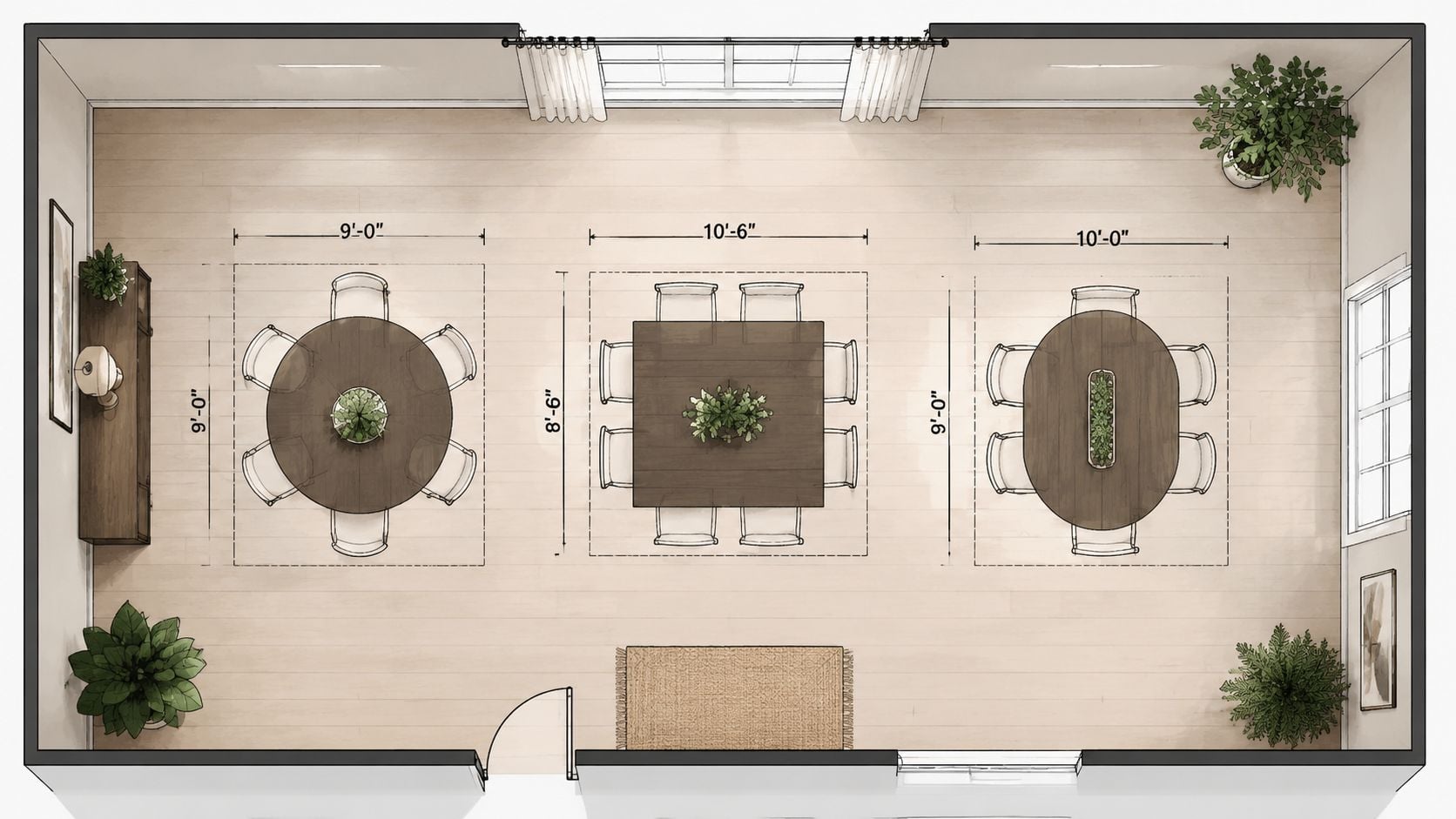
A beautiful table that crowds the room never feels luxurious. It feels apologetic. Guests shuffle sideways, chairs catch the wall, and the whole set looks larger than it should because the space around it has disappeared.
Measure for movement, not just the tabletop
The first measurement should always be the full dining area, not the table size under consideration. Homeowners often measure where the tabletop will sit and forget that chairs need to pull back, people need to pass behind them, and leaves may change the footprint for hosting.
Modern dining tables are typically about 30 inches high, a proportion that developed over time as dining shifted toward a more comfortable seated posture. Historical notes on period table height and width show that many tables were around 34 inches high before dropping to about 30 inches during the Stuart period, close to the height used today.
That standard matters because chair seat height, arm clearance, and visual proportion all build from it.
A practical measuring routine helps:
- Mark the room first. Use painter's tape on the floor to outline the table at its closed size and, if applicable, its extended size.
- Account for every chair. Include the space chairs need when occupied, not just pushed in neatly for a photo.
- Test the traffic path. Walk the room as if dinner were underway. The route to a kitchen doorway or patio door matters as much as seating count.
For a deeper planning reference, Vinson's article on maximizing dining space with table shapes and seating arrangements helps homeowners think through proportion before they commit.
How shape changes the way a room works
A rectangular table remains the natural choice when the room is long, the household hosts often, or the goal is a grounded, formal composition. Dark wood especially suits this shape because the long top shows grain, edge profile, and base design clearly.
Round tables do something different. They soften a room and improve face-to-face conversation. In darker finishes, they also reduce visual mass because there are no corners projecting into the space.
Oval tables sit in the middle. They keep the length and hosting flexibility of a rectangle while easing movement visually and physically.
- Rectangular tables support larger gatherings and feel architecturally strong.
- Round tables create intimacy and often look lighter in compact dining spaces.
- Oval tables blend grace with function, especially where traffic routes need a gentler silhouette.
- Extension tables serve households that don't want to dedicate permanent square footage to occasional seating needs.
What usually fails is forcing a formal rectangular dark set into a room that needs softness. The better move is to match the room's circulation first, then choose the shape that supports it.
The Art of the Chair Style and Upholstery

The chair determines whether a dark wood dining set feels balanced or too heavy. Many homeowners focus almost entirely on the table, then choose chairs that repeat its visual weight. That's where the room starts to feel dense.
The chair does the balancing work
One under-discussed challenge with dark wood is visual heaviness, especially in smaller or less-lit rooms. A practical solution is to use lighter seat fabrics, chairs with tapered legs, or mixed-material chairs so the set regains contrast and balance, as noted in this discussion of dark wood and room balance.
That guidance solves a very real problem in Columbus homes where dining areas often connect directly to kitchens and great rooms. A solid dark table may be exactly right, but six or eight equally heavy chairs can turn a composed room into a dark block of furniture.
The right chair breaks that mass.
- Windsor-inspired forms bring rhythm through spindles and open space.
- Ladder-back styles add tradition and texture, but they need a restrained finish and profile to avoid too much visual density.
- Parsons chairs upholstered in a lighter fabric soften the set immediately.
- End chairs in darker wood with lighter side chairs create hierarchy without stiffness.
A useful companion read is Vinson's overview of upholstery materials for everyday living, especially for households balancing design with regular use.
Upholstery and silhouette choices that lighten the room
The easiest way to modernize dining table and chairs in dark wood is to stop insisting that every piece look identical.
A dark table often benefits from chairs that introduce one of these counterweights:
| Chair Feature | What It Does in the Room | Where It Works Best |
|---|---|---|
| Light upholstered seat | Breaks up the dark mass and reflects more light | Smaller dining rooms, open-concept homes |
| Tapered legs | Makes the chair feel lifted rather than blocky | Transitional and mid-century leaning spaces |
| Open back design | Preserves sightlines and reduces visual density | Rooms with limited natural light |
| Mixed finish pairing | Adds intention and keeps the set from feeling overmatched | Homes mixing traditional wood with updated decor |
A dark table doesn't need matching visual weight around it. It needs contrast with discipline.
What rarely works is a fully dark, fully bulky chair set under equally dark lighting and surrounded by medium-dark flooring. The room loses separation. The wood starts to read as a single mass instead of a crafted surface.
This is also where leather can be effective. Top-grain leather in a warm neutral or deeper earth tone can lend richness without the visual thickness of another all-wood frame. And for homes that use nearby seating areas heavily, premium motion pieces such as swivel chairs, rockers, gliders, reclining seating, and refined sectionals can carry that same principle of comfort-forward design into adjoining rooms.
Making It Yours The Vinson Custom Order Program
Customization sounds complicated until it's broken into decisions that matter. Most homeowners don't need endless options. They need the right options in the right order.
What customization actually changes
A dark wood dining set becomes personal when the builder or showroom can adjust the elements that shape daily use and long-term appearance:
- Wood species changes texture, grain character, and how the darkness reads.
- Finish tone determines whether the set feels formal, warm, contemporary, or more traditional.
- Table shape and base affect legroom, hosting style, and visual mass.
- Chair fabric or leather decides how the set balances in the room.
- Edge profile and details shift the piece from plain to refined.
Custom programs from brands such as Canadel, Mavin, and Smith Brothers of Berne become useful. The point isn't novelty. The point is alignment between the furniture and the way the home is lived in.
Homeowners who are new to made-to-order furnishings can start with Vinson's article on getting started with custom order furniture.
How the showroom process becomes practical
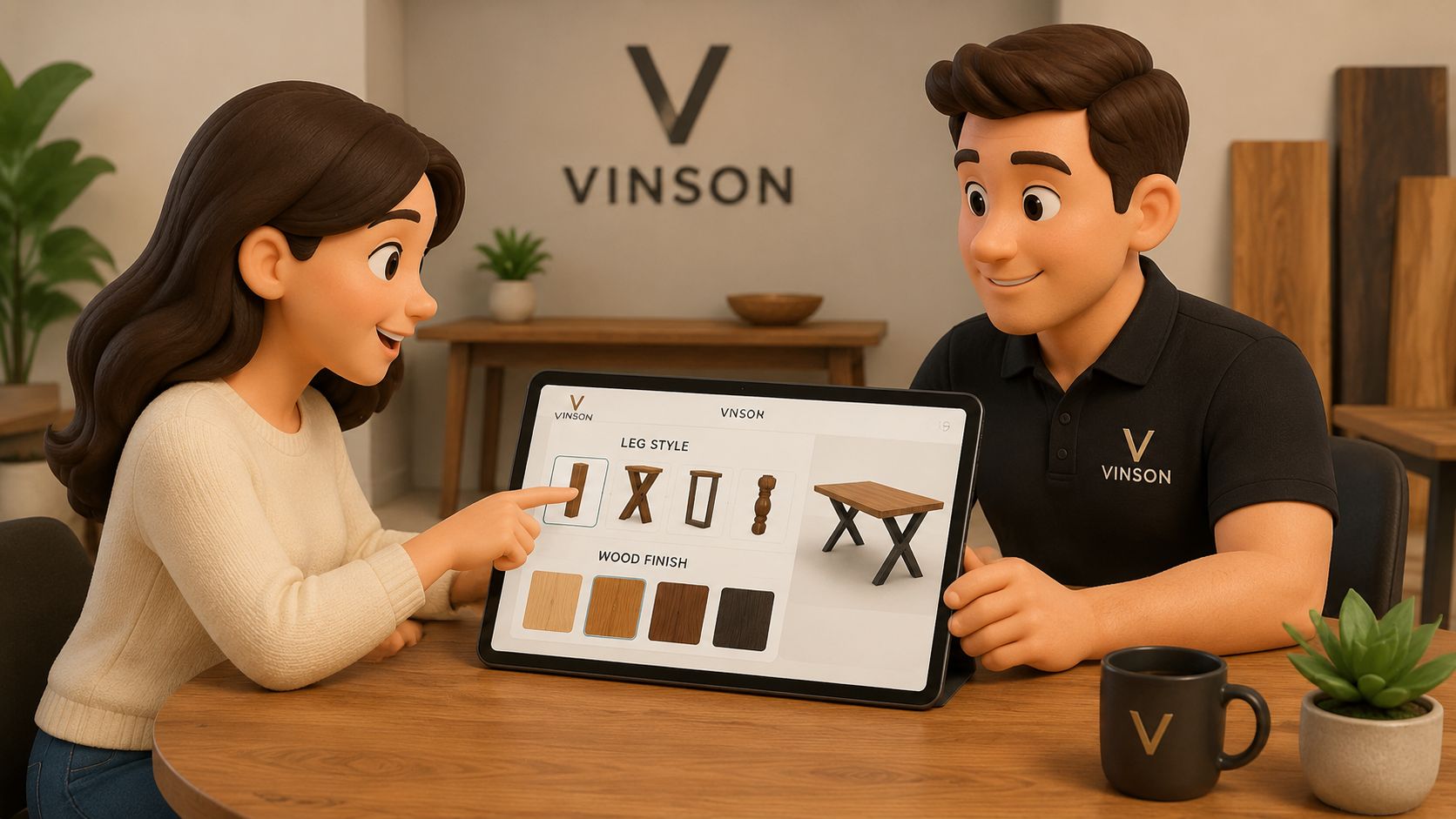
The strongest custom experience happens when selection is anchored by touch, proportion, and side-by-side comparison. In a design studio setting, homeowners can place finish samples against upholstery, compare chair silhouettes, and test whether a dark stain needs a lighter fabric to keep the room open.
Vinson Fine Furniture offers that process through an in-store design studio and custom order program that includes finish and fabric selection, brand-specific customization, and digital visualizers. That matters because some decisions are hard to judge from isolated swatches. They become obvious when the table top, base style, and chair seat are considered together.
The right custom order doesn't make the room look more decorated. It makes the final piece look inevitable.
There's also a practical value layer here. A homeowner choosing for the long term should know where savings can come from if timing or budget shifts. A low price guarantee with a 110% refund of the difference and a clearance gallery with savings up to 70%, as described in the publisher brief, give some flexibility without moving away from solid hardwood standards. White-glove delivery matters too, because a substantial dining set should arrive inspected, placed, and assembled correctly.
Styling and Caring For Your Generational Piece
Dark wood needs breathing room to look elegant. Many styling mistakes happen because homeowners either leave the table completely bare in a room that needs softness, or pile on runners, bowls, and seasonal décor until the wood disappears.
How to style dark wood without hiding it
In interior design, dark wood tables and chairs are often used to create a sense of depth and elegance, and that effect gets stronger when the room includes contrast, such as lighter upholstered side chairs around a darker table, according to this guidance on whether dining chairs should match the table.
That same principle should guide tabletop styling.
- Use a runner sparingly. Linen, woven neutrals, or soft textured fabrics add relief without covering the top completely.
- Keep centerpieces low and breathable. A ceramic bowl, a shallow vessel, or a compact arrangement allows the wood surface to remain part of the composition.
- Bring in organic contrast. For homeowners adding greenery nearby, Little Green Leaf's plant decorating guide offers practical ideas on using houseplants to soften wood-heavy interiors.
- Choose light through reflection. Candles, warm metal, glass, and pale ceramics all help a dark table read as rich rather than heavy.
One strong arrangement usually beats several small ones. Dark wood already has presence. It doesn't need visual clutter to feel finished.
Care habits that protect solid hardwood
Solid hardwood rewards simple, steady care. It doesn't need fuss, but it does need consistency.
A good care routine looks like this:
- Dust with a soft dry cloth. Fine grit acts like sandpaper over time if it's rubbed into the finish.
- Wipe spills promptly. Moisture left under glasses, serving pieces, or folded linens is what creates avoidable trouble.
- Use pads and trivets. Heat and moisture barriers are part of owning a serious dining table.
- Rotate decorative objects occasionally. Leaving the same centerpiece in the same place for long periods can create uneven aging in how the surface is exposed.
- Follow the maker's finish guidance. Not every topcoat wants the same cleaning routine.
Homeowners who want more finish-specific guidance can use Vinson's resource on how to care for wood furniture.
Good care should preserve the feel of the wood, not smother it under heavy product buildup.
What works over decades is restraint. Clean surfaces, sensible protection, and styling that honors the grain will keep a dark dining set looking settled, not tired.
Your Heirloom Awaits at Easton Town Center
The right dark wood dining set earns its place through substance. Solid cherry, oak, maple, or walnut provide the foundation. The table shape determines how the room moves. The chairs decide whether the set feels grounded and open, or heavy. Customization refines all of it into a piece that suits the home rather than fighting it.
That's why this category deserves patience.
At Easton Town Center, shoppers can compare solid hardwoods in person, feel the difference between a lighter upholstered seat and a full wood chair, and work through finish and scale decisions with a complimentary design consultation. Amish-made dining sets, custom leather seating, motion options such as recliners and swivel pieces for adjoining spaces, and curated selections from Canadel, Mavin, and Smith Brothers all support a more complete furnishing plan. Add local value through a low price guarantee, clearance savings, and white-glove delivery, and the process becomes far more grounded.
For homeowners ready to choose a dining table and chairs dark wood set that feels timeless, balanced, and built for decades, Vinson Fine Furniture offers a practical next step. Visit the Easton showroom, test finishes and chair comfort in person, explore the custom order process, and see how a future heirloom should feel.