Upholstery Stain Removal: A Guide for Fine Furniture

A spill on a well-made sofa changes the room in an instant. One moment the upholstery reads as composed, trim, and finished. The next, a glass of red wine, a drip of coffee, or a streak of salad dressing turns a beautiful seat into a source of stress.
That reaction is reasonable, especially when the piece is custom upholstered, leather-clad, or built to stay in the home for decades. Upholstery stain removal works best when it shifts from panic to process. The safest response is usually quiet, controlled, and material-specific. That matters even more for investment furniture, where the goal isn't merely to make the mark less visible. The goal is to protect the hand of the fabric, the structure beneath it, and the long-term value of the piece.
For households that want more day-to-day prevention, practical add-ons such as removable covers can help in casual settings, and this overview of the pros and cons of vinyl covers gives a useful outside perspective on where barrier protection helps and where it can compromise feel and appearance. For upholstered seating that's meant to look refined, material choice and proper care usually matter more than a one-size-fits-all shield. Protective planning starts before the first spill, which is why many homeowners also review options for furniture fabric protection when selecting upholstery.
Table of Contents
- Protecting Your Investment from Unexpected Spills
- The First Five Minutes A Universal Response Plan
- Decoding Your Fabric and Choosing Your Cleaner
- Special Care for Premium Upholstery Leather Velvet and Performance Fabrics
- When to Call for Professional Upholstery Cleaning
- A Lifetime of Beauty and Comfort
Protecting Your Investment from Unexpected Spills
A stain on fine upholstery feels personal because furniture of this caliber isn't disposable. It carries color decisions, fabric selections, room planning, and often months of waiting. When something lands on it, the instinct is to fix it fast. That instinct causes much of the damage.
Good upholstery stain removal begins with one assumption. Not every textile should be treated the same way. The old habit of reaching for soap, hot water, and vigorous scrubbing belongs to a time when furniture care was less precise. Today's upholstery includes delicate natural fibers, synthetic blends, performance weaves, velvet piles, and premium leathers. Each surface responds differently to moisture, friction, and residue.
Fine furniture usually survives the spill itself better than the rushed cleanup that follows.
That's why investment homeowners do better with a decision framework than a bag of internet tricks. A quick response still matters, but a controlled one matters more. Blotting, identifying the upholstery code, and choosing the least aggressive treatment preserve more than appearance. They protect texture, color consistency, seam integrity, and cushion construction.
Three priorities guide every safe response:
- Stabilize the mess: Stop spreading, absorb what's loose, and remove solids gently.
- Protect the material: Avoid heat, unknown sprays, and excessive water until the code is known.
- Preserve the piece: If the furniture is high-value, custom, or delicate, treat every cleaning step as part of long-term stewardship.
That mindset changes the result. Upholstery stain removal stops being a desperate rescue attempt and becomes careful maintenance, which is exactly how heirloom-quality furnishings should be handled.
The First Five Minutes A Universal Response Plan
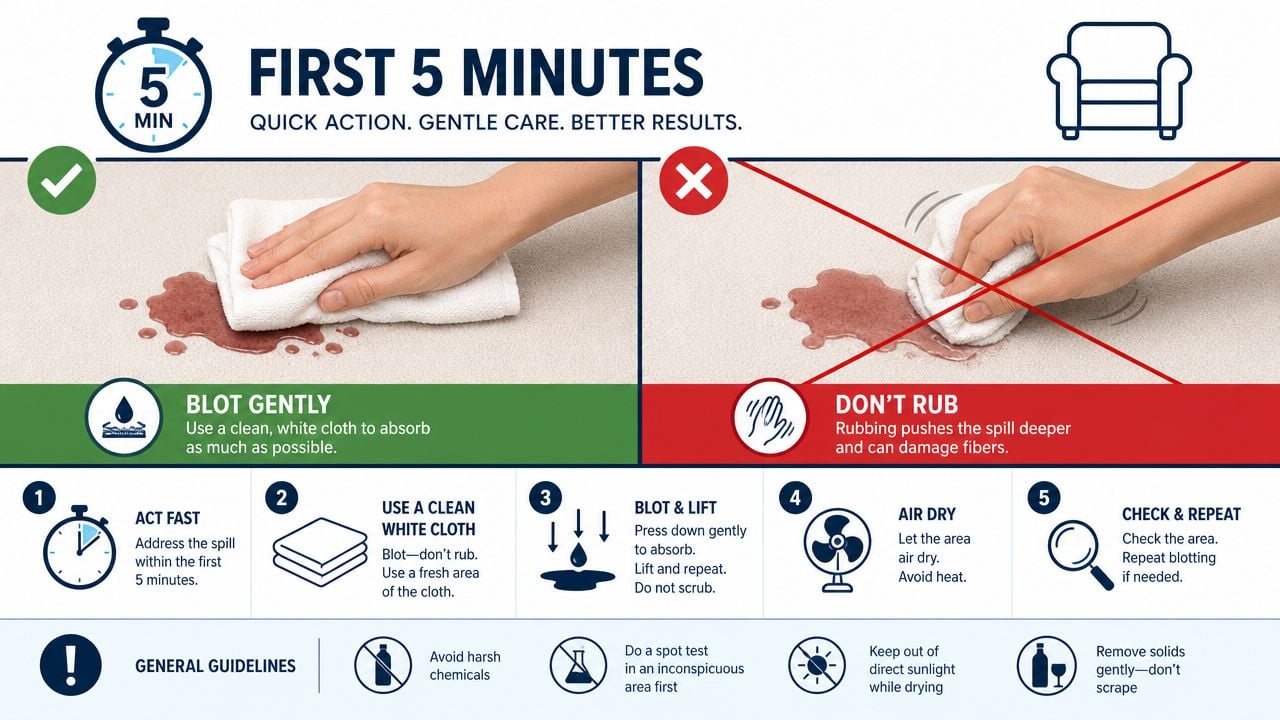
The first five minutes decide whether a spill stays near the surface or gets driven deeper into the upholstery. Fast action helps, but force doesn't. Controlled handling protects weave definition, keeps dye from spreading, and reduces the odds of a hard water ring forming as the area dries.
Start with control, not chemistry
Before any cleaner touches the fabric, remove what can be removed without grinding it in. Lift solids with the edge of a spoon or a dull scraper. If the spill includes crumbs, grit, or dried particles, get them off the surface before blotting moisture around them.
A practical workflow for routine upholstery stain removal is to vacuum first, identify the fabric's cleaning code, spot-test in a hidden area, apply the least aggressive agent possible, blot from the outside inward, rinse lightly, and dry thoroughly. Guides also stress that rubbing or oversaturating can drive the stain deeper or damage fibers, and one guide reports that homemade solutions can work in about 80% of cases when used correctly, as noted in this expert upholstery stain removal workflow.
For care steps specific to seats, cushions, and upholstered frames, a separate guide on chair care is also worth keeping on hand.
The safest first-response sequence
Use a clean, dry, white cloth. Press, lift, and rotate to a clean area of the cloth as moisture transfers. Don't scrub in circles. Don't bear down. Don't chase the stain outward.
A universal response plan looks like this:
- Remove solids carefully: Lift, don't smear.
- Blot liquid immediately: Work from the outside edge inward.
- Pause before adding product: Unknown cleaners create residue and can set dye.
- Avoid heat: Hair dryers, steam, and hot water can lock certain stains in place.
- Limit moisture: Wet padding is much harder to dry than surface fabric.
Practical rule: If the cushion feels wetter than the cloth in hand, too much liquid has already been used.
Panic usually shows up as over-cleaning. Homeowners soak the spot, switch products midstream, and keep rubbing because the mark is still visible while damp. That sequence often enlarges the affected area. On textured upholstery, it can also flatten the surface and leave one panel looking different from the next.
What works best is discipline. Blot first. Reduce the volume of the spill. Then identify the material before choosing any treatment stronger than plain absorption. That simple pause protects more furniture than any miracle spray.
Decoding Your Fabric and Choosing Your Cleaner
Most stain problems become manageable once two questions are answered. What fabric is this, and what kind of stain is sitting on it? Upholstery stain removal gets safer and more effective when those questions come first.
Read the cleaning code first
Modern upholstery care has been shaped by cleaning-code labeling. That labeling helps homeowners match the method to the material instead of assuming every chair, sectional, or accent seat can handle the same treatment. Guidance for spot cleaning also points to a widely used DIY formula of 1/4 teaspoon dishwashing liquid to 1 cup of warm water for certain stains, as described in this upholstery spot-cleaning guide.
A hidden tag usually sits under a seat cushion, beneath the deck, or under the frame. The code is short, but it carries real consequences. If the code says solvent only, adding water can leave a ring, distort texture, or fix the stain more firmly into the fiber.
For a broader overview of fibers, blends, and what performs best in real homes, this guide to upholstery materials is useful before any cleaning starts.
Common Upholstery Cleaning Codes
| Code | Meaning | Safe Cleaning Method |
|---|---|---|
| W | Water-based cleaner is generally appropriate | Use a minimal-moisture water-based solution after spot testing |
| S | Solvent-based cleaner only | Use a suitable solvent product made for upholstery, after testing |
| W/S | Either water-based or solvent-based cleaner may be suitable | Start with the mildest option and the least moisture |
| X | Vacuum or brush only | Avoid DIY wet cleaning and move to professional care |
Match the stain to the method
Once the code is known, stain chemistry matters more than internet popularity. One all-purpose recipe rarely handles every problem well.
Food and drink stains often respond to patience and mild cleaning. Start by blotting out as much liquid as possible. If the code permits water-based cleaning, use only a small amount of a mild solution and continue blotting rather than scrubbing.
Oil-based stains such as grease, lotion, or dressing need a different approach. Water alone tends to push oily residue around. These stains usually respond better when absorbency is used first and liquid is introduced carefully, if at all.
Dye and pigment stains like ink can behave unpredictably. Aggressive wiping often spreads them into a larger halo. These usually belong in the high-caution category, especially on pale upholstery or tightly woven custom fabrics.
The best cleaner is the one that solves the problem without changing the feel of the fabric.
For aged or yellowed textile issues on removable fabric items, some homeowners also look at restoration-oriented products such as restoring fabric with Retro Clean. That kind of product belongs in a narrow lane. It's not a substitute for code-based upholstery care on installed furniture.
Keep DIY solutions simple
When the cleaning code allows and the stain type fits, simple mixtures tend to outperform complicated homemade cocktails.
A safe DIY toolkit includes:
- Mild dish soap solution: Use the measured dishwashing liquid and warm water formula noted above, then apply sparingly with a cloth rather than pouring it onto the upholstery.
- White vinegar and cool water: Often used in equal parts for some synthetic upholstery, with the same low-moisture, blotting-first discipline.
- Carbonated water: Sometimes useful as a first response on fresh spills because it adds moisture gently without heavy soap residue.
Homemade cleaning fails most often for predictable reasons:
- Too much product: The stain lightens, but residue remains and attracts soil later.
- Too much water: Surface fabric dries while inner padding stays damp.
- Too much friction: The stain changes shape, and the texture changes with it.
For investment furniture, the right standard is simple. If the method doesn't respect the code, the stain type, and the finish of the upholstery, it isn't the right method.
Special Care for Premium Upholstery Leather Velvet and Performance Fabrics
Premium upholstery rewards restraint. These materials often look durable because they're substantial, well-made, and beautifully finished. That visual confidence can be misleading. The better the material, the more obvious a poor cleaning decision becomes.

Leather needs restraint
Top-grain leather behaves differently from woven upholstery because the surface finish, color treatment, and natural grain all react to moisture and friction in visible ways. A hard scrub can burnish one section and leave another dull. Too much liquid can creep into seams or alter the uniformity of the finish.
For leather-specific maintenance habits, this guide on how to protect leather furniture offers a sound baseline.
On premium leather, the safest response is usually to blot immediately and avoid household detergents unless the manufacturer specifically allows them. Leather generally benefits from pH-appropriate cleaners and conditioners because the objective isn't only stain reduction. It's also preserving suppleness, color depth, and that smooth, buttery hand that made the piece desirable in the first place.
Velvet punishes rough handling
Velvet adds another layer of complexity because the nap shows direction. Rub the wrong way and the fabric can look marked even after the stain is gone. Over-wet the area and the pile can dry unevenly.
Velvet care asks for precision:
- Work with the nap: Blot gently and avoid cross-grain rubbing.
- Keep moisture controlled: Saturation can flatten the pile and leave a visible patch.
- Respect solvent requirements: Some velvets tolerate almost no casual DIY treatment.
A fabric can be technically clean and still look damaged if its texture dries in the wrong direction.
That's what makes velvet so unforgiving on statement chairs and formal seating. The stain is only half the issue. Surface appearance is the other half.
Performance fabrics still need discipline
Performance fabrics can handle daily life better than many traditional textiles, but they aren't invincible. Their resilience sometimes encourages overconfidence, especially with food spills and pet accidents. The fabric may resist immediate absorption, yet aggressive cleaning can still drive residue into seams, backing, or cushion fill.
For fresh grease and protein stains, technique matters more than force. Experts recommend dry absorbents such as cornstarch on grease for 15 to 20 minutes before vacuuming, and blood should be treated only with cold water because heat can coagulate proteins and lock the stain in. Insufficient drying is also a common pitfall that can lead to mold, according to this upholstery stain guide for grease and protein stains.
That advice matters across premium categories. A reclining sectional with power motion, an elegant swivel chair, or a refined glider may hide complex mechanisms and layered cushioning beneath the upholstery. Excess moisture doesn't just threaten the visible fabric. It can migrate into areas that are slow to dry and difficult to inspect.
When to Call for Professional Upholstery Cleaning
The smartest upholstery stain removal decision is often the one that stops short of one more DIY attempt. Investment furniture shouldn't become a testing ground for stronger mixtures, extra brushing, or repeated wetting just because the mark is stubborn.
Clear red flags
Professional help makes sense when any of these conditions are present:
- The tag shows X: Vacuuming may be the only safe home response.
- The stain is large or set-in: Surface blotting won't address what has moved into the cushion or backing.
- The material is delicate: Velvet, specialty fabrics, and premium leather carry higher cosmetic risk.
- The stain is chemically tricky: Oil, protein, and dye-based marks often need targeted handling.
- A prior DIY attempt left a ring or residue: Additional home treatment often makes correction harder.
A practical way to evaluate the handoff point is to ask a simple question. Is the next step likely to reduce risk, or just increase effort? Guidance on stain chemistry makes the same point clearly. Protein stains need cold water, grease responds to absorbents, and pushing past those distinctions with all-purpose hacks can leave set stains or residue buildup, as explained in this guide on when DIY stops being worth it.
For homeowners comparing what a specialized service looks like, this overview of professional upholstery cleaning through Renue Systems Four Points upholstery is a useful example of the category.
Why restraint protects value
Calling a professional isn't admitting defeat. It's a value decision. High-end upholstery often costs far more to replace than to clean correctly, and custom pieces have another complication. Even if a replacement cover is possible, matching dye lots, leather grain, wear pattern, or fabric run can be difficult.
On expensive seating, the costliest mistake is often the second or third home treatment, not the original spill.
That logic applies especially well to custom leather sectionals, custom-made accent chairs, and heirloom-quality seating that anchors a room. When the safer path is service, acting early preserves options. For pieces that need inspection, evaluation, or repair coordination, a formal service request is often the most sensible next step.
A Lifetime of Beauty and Comfort
Well-kept upholstery rarely depends on heroic cleaning. It depends on calm habits. Blot quickly, identify the fabric, choose the least aggressive method, test before treating, and stop when the risk starts to outweigh the likely gain.
That approach aligns with how investment homeowners already think about their interiors. A bench-made sofa, a top-grain leather recliner, a finely upholstered swivel chair, or a carefully selected performance sectional isn't there for one season. It's meant to hold up through gatherings, routines, and the ordinary accidents of a lived-in home.
The same long-view thinking applies across the room. Solid cherry, oak, maple, and walnut furniture ask for stewardship, not replacement culture. Amish-made dining sets, Mavin bedroom furniture, and custom seating selected with care all benefit when homeowners treat maintenance as part of ownership rather than an afterthought.
Three habits preserve beauty over time:
- Choose wisely at the start: Material selection often determines how forgiving a piece will be in real life.
- Respond early and gently: Immediate blotting beats delayed scrubbing.
- Escalate intelligently: Professional cleaning protects high-value upholstery when DIY reaches its limit.
A room filled with quality furniture feels different. The weight of solid hardwood, the smooth travel of a well-made motion chair, and the refined hand of premium upholstery all communicate permanence. Proper stain care supports that permanence. It helps furniture age with dignity instead of accumulating the visible penalties of rushed maintenance.
For homeowners furnishing for the long term, Vinson Fine Furniture offers a thoughtful next step. At Easton Town Center, the showroom brings together solid wood furniture Ohio shoppers seek, including Amish-made dining sets, Mavin bedroom furniture, and Smith Brothers furniture Easton clients can sit-test in person, along with custom leather sectionals Columbus homeowners can tailor through the Custom Order Program. The in-store Design Studio provides complimentary design consultations, fabric and finish guidance, and digital visualizers for brands like Smith Brothers, Canadel, and Mavin. Value stays central through the Low Price Guarantee with a 110% refund on qualifying local price differences and a Clearance Gallery with savings up to 70%, while premium motion options such as sectionals, recliners, swivel chairs, rockers, and gliders round out the selection. For a more personalized starting point, take the Design Quiz at Vinson Fine Furniture.