How to Clean Wood Furniture: Tips for a Timeless Shine


Before you reach for that all-purpose cleaner and a rag, let's talk about your solid-wood furniture. Using the wrong product on the wrong finish is one of the fastest ways to turn a beautiful, hand-finished piece into a dull, damaged disappointment. The secret to proper cleaning isn't in elbow grease—it's in knowing what your furniture is made of before you start.
Understanding Your Wood Finish Before You Clean
That handcrafted, solid-wood dining table from our Amish-made furniture collection has a completely different personality than a modern, lacquered bookcase. Each finish requires a specific type of care, and what works for one could strip the warmth from an oil finish or leave a hazy film on a sealed one.
Taking a moment to identify the finish is the single most important thing you can do to protect your furniture. For heirloom-quality pieces, like something you might have personalized through our Custom Order Program, this small step is an act of stewardship that preserves your investment for years to come.
The Simple Water Test
So, how do you tell what you've got? It's easier than you think. Find a discreet spot on your furniture—the back of a leg or the underside of a table are perfect. Place a single drop of water on the wood and simply watch what it does for a few moments.
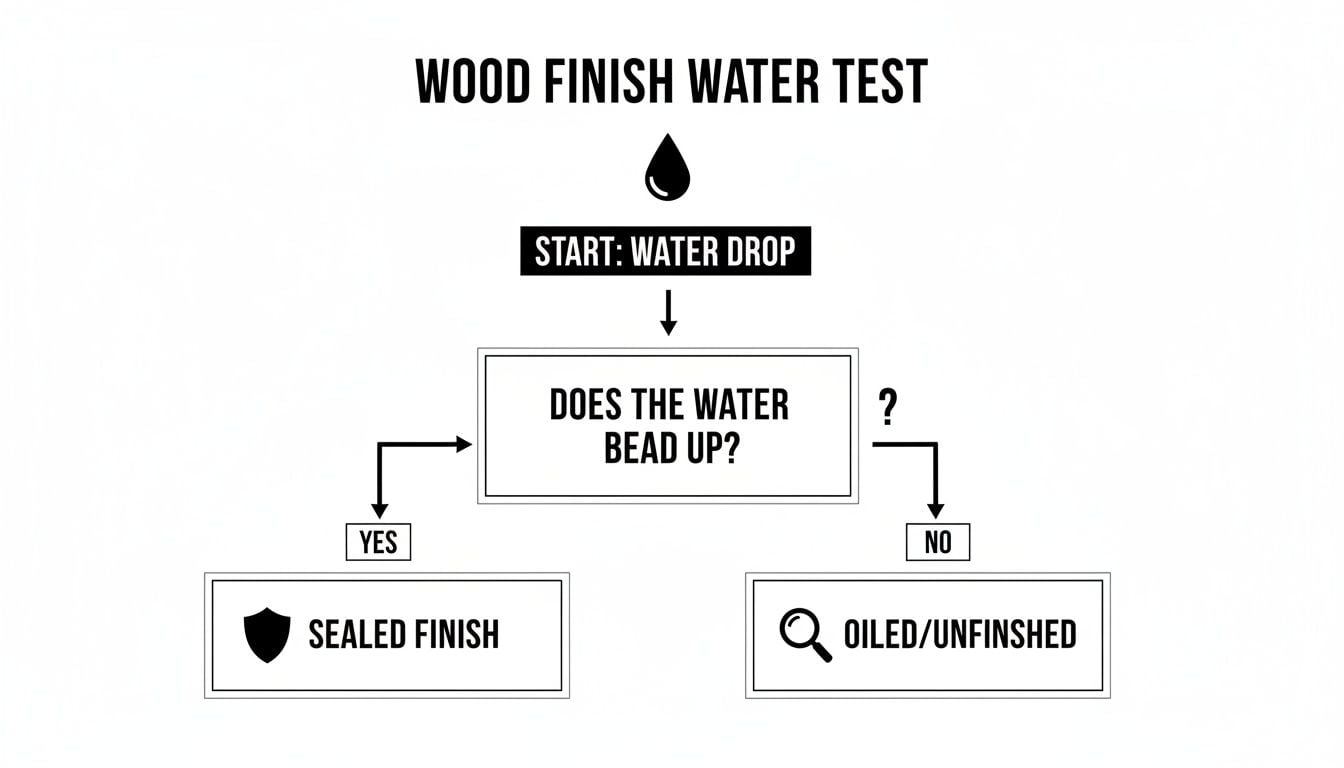
That simple reaction tells you everything you need to know about which cleaning path to take, so you can avoid any accidental damage to the piece you so carefully selected.
Quick Guide to Identifying Your Wood Finish
Use this simple test to determine your furniture's finish and select the right cleaning path.
| Finish Type | Water Test Result | Common Examples | Recommended Cleaning Approach |
|---|---|---|---|
| Sealed | Water beads up and sits on the surface. | Varnish, lacquer, polyurethane | Gentle, damp-cloth methods are safe. Resists most spills. |
| Oiled/Waxed | Water soaks in slowly, may leave a dark spot. | Tung oil, linseed oil, wax polishes | Requires oil-based cleaners. Avoid water-based methods. |
| Unfinished | Water absorbs almost instantly. | Raw or "natural" wood | Extremely sensitive to moisture. Spot clean with a dry cloth. |
This small piece of detective work ensures you're helping, not hurting, your treasured investment.
What Your Finish Type Means for Cleaning
Now that you know the finish, you can choose your tools and techniques with confidence.
Sealed Finishes (Varnish, Lacquer, Polyurethane): If that water drop beaded right up, you’re in luck. Your furniture has a durable, sealed finish that acts like a protective shell. This makes it more resistant to moisture and stains, and generally easy to clean. Most modern furniture has this type of tough coating.
Oil and Wax Finishes: Did the water soak in or leave a dark mark? This means you have a more delicate "penetrating" finish. These are designed to nourish the wood itself, not just sit on top. They need special care with oil-based cleaners and periodic re-oiling to keep the wood from drying out.
Unfinished or Raw Wood: If the water vanished instantly, your wood is completely raw. This type is a sponge for moisture, oils, and stains, so it needs the most careful approach—think dry dusting and immediate blotting of any spills.
Understanding the specific characteristics of your wood is fundamental to its care. You can learn more about different materials in our guide explaining how to choose the right hardwood for longevity and style.
Knowing this distinction is truly the secret to keeping your furniture looking as beautiful as the day it left our Easton Town Center showroom. It turns a simple cleaning day into a rewarding ritual, ensuring the pieces that make your house a home will last a lifetime.
Assembling Your Gentle Wood Cleaning Toolkit
The real secret to keeping your solid wood furniture Ohio investment looking its best isn’t some harsh, all-purpose spray. In fact, those aggressive chemicals and abrasive cloths are the quickest way to create tiny scratches that permanently dull a beautiful, hand-finished surface. The true art is in having the right gentle tools ready to go.
Building a simple, professional-grade cleaning kit is the first step toward caring for your furniture for a lifetime.
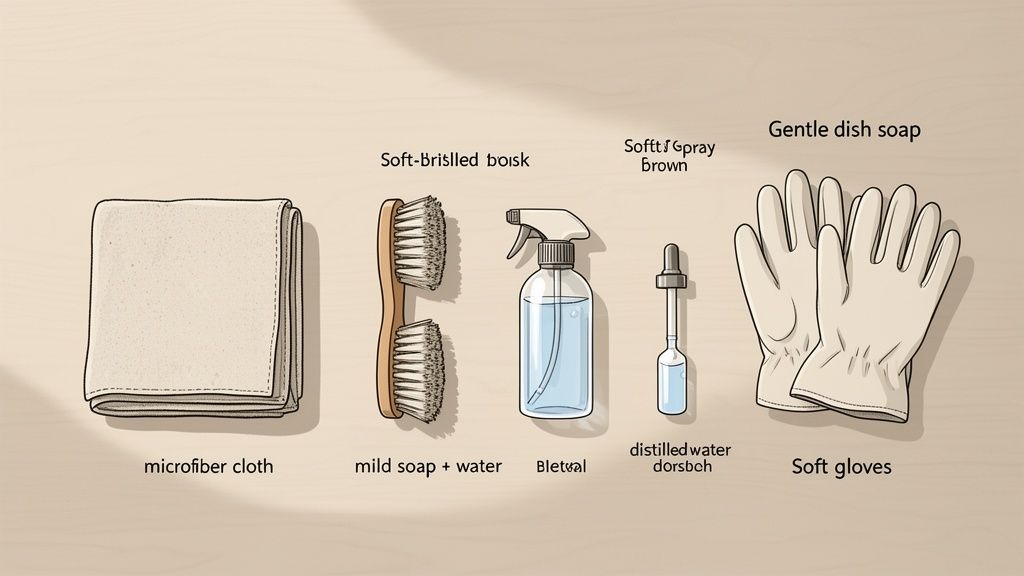
Think of it like caring for a fine wool coat—you wouldn't scrub it with laundry detergent and a stiff brush. The same grounded approach applies to your heirloom-quality furniture. Start by gathering just a few key items that will become the foundation of your entire cleaning routine.
The Essential Supplies
Your toolkit doesn’t need to be complicated. With just a handful of high-quality items, you can handle everything from daily dusting to more involved cleanups.
Microfiber Cloths: These are non-negotiable. Unlike feather dusters that just push dust around, the tiny fibers in microfiber cloths actually trap and lift particles off the wood. We recommend having at least three on hand: one for dry dusting, one for damp cleaning, and a third for buffing dry.
A Soft-Bristled Brush: For all those beautiful, intricate details on a custom dining set or the joints of an Amish-made furniture piece, a small, soft-bristled brush is a lifesaver. A new, clean paintbrush or even a soft toothbrush works perfectly to get grime out of crevices without scratching the wood.
Mild, pH-Neutral Dish Soap: The best cleaning solution is often one you mix yourself. A simple dish soap without harsh degreasers, dyes, or fragrances is exactly what you need to create a gentle, but effective, cleaner.
Distilled Water: Why distilled? Tap water contains minerals that can build up over time and leave a faint, cloudy film on your furniture's finish. Using distilled water guarantees a pure, spot-free clean every time.
Your goal is always to clean the finish, not the wood itself. A gentle approach protects the protective layer that gives your furniture its depth and shine, preserving the craftsmanship you invested in.
The DIY Cleaning Solution
For most furniture with a sealed finish, this simple, expert-approved recipe is all you'll ever need for routine cleaning. It's what we recommend to our own clients.
Mix a small spray bottle of warm distilled water with just 2-3 drops of your mild, pH-neutral dish soap. Any more, and you risk leaving a soapy residue behind.
Gently swirl the bottle to mix. Avoid shaking it, which just creates too many suds.
This solution is perfect for wiping away fingerprints, smudges, and everyday grime without damaging the finish. Just be sure to always spray it onto your microfiber cloth first, never directly onto the wood. This gives you complete control over the amount of moisture.
While this homemade solution is often your best bet, our comprehensive guide offers even more insights on how to care for wood furniture in different situations.
With this simple toolkit, you're ready to care for your furniture with the same attention to detail our team provides, from a Complimentary Design Consultation in our showroom to our meticulous White-Glove In-Home Delivery.
Setting Up Your Daily and Weekly Care Routines
The enduring beauty of solid-wood furniture isn't the result of some intense, once-a-year scrubbing session. It’s the small, consistent habits you build. Think of it less as a chore and more as a simple ritual that protects your investment and keeps it looking as stunning as the day it arrived in your home.
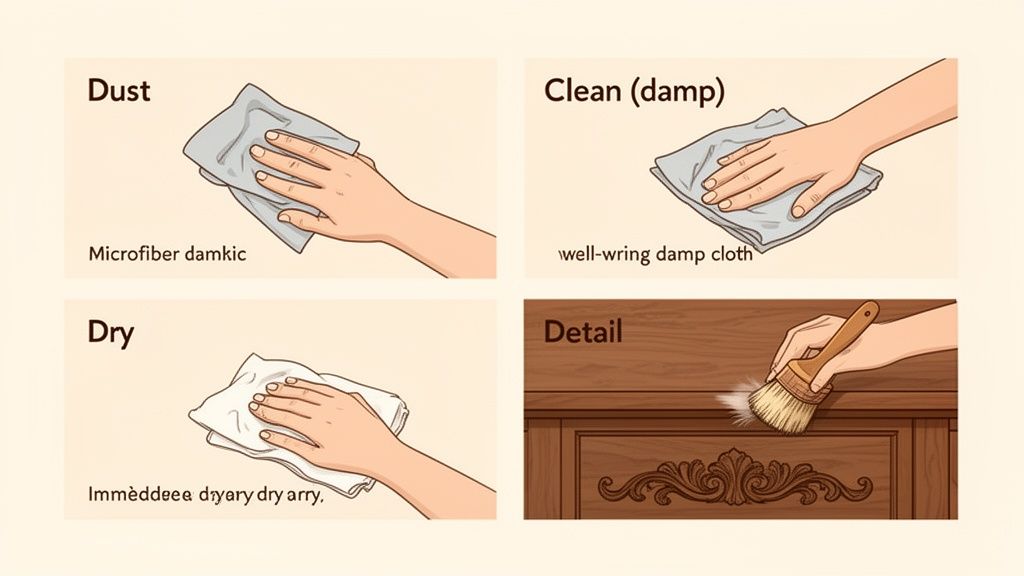
This is about preventative care. A few minutes here and there make all the difference, stopping small issues before they become big problems. It’s the secret to making sure the furniture that makes your house a home lasts a lifetime.
The Gentle Art of Dusting
Dust might seem harmless, but it's a collection of tiny, abrasive particles. When you wipe it away incorrectly, you're creating microscopic scratches that, over time, will dull your furniture's beautiful finish. Proper dusting is your first and best line of defense.
How often? For high-use pieces like dining tables and end tables, a quick dusting every couple of days is ideal. For everything else—bookcases, dressers, and the like—once a week is plenty.
The right technique: Grab a dry, clean microfiber cloth. Unlike old-school feather dusters that send dust flying, microfiber actually traps and lifts particles away. Always wipe gently in the direction of the wood grain. This detail prevents you from pushing dust deeper into the wood's texture.
This simple step stops the gritty buildup that eventually becomes grimy and tough to remove, keeping your furniture's finish looking clear and rich.
Tackling Spills and Water Rings—Immediately
Life happens. Drinks get spilled. But how you react in that first minute is what separates a minor cleanup from a permanent mark. The key is to be quick and deliberate.
When liquid spills, your instinct should be to blot, not wipe. Wiping smears the liquid across a wider area. Instead, press a clean, dry cloth or an absorbent paper towel firmly onto the spill to soak it up. Keep lifting and using a dry section of the cloth until the moisture is gone.
We all dread the infamous white water ring. It’s just moisture trapped in the top layer of the finish, and speed is your best friend. If you catch it right away, simply drying the area thoroughly is often enough to make the ring vanish as the moisture evaporates.
Your Weekly Wipe-Down
About once a week—or more often for pieces that see a lot of action—a gentle wipe-down will take care of the fingerprints, smudges, and oils that dusting can't. This is where your simple, homemade cleaning solution comes in handy.
Lightly dampen a clean microfiber cloth with your mild soap and distilled water mix. The cloth should feel damp, never sopping wet. Wipe down the surfaces, again moving with the grain of the wood. Immediately after, take a second, completely dry microfiber cloth and buff the surface until it's totally dry. This two-cloth method is the trick; it ensures no damaging moisture is left behind.
This weekly routine is a cornerstone of good furniture care. For more seasonal guidance, you can check out our complete fall furniture maintenance checklist.
It’s clear that homeowners everywhere are recognizing the importance of this upkeep. The global market for furniture polish and care products was valued at around USD 13.10 billion in 2025 and is expected to keep growing. It shows a shared understanding: when you invest in a quality piece, you also invest in its care.
By working these small habits into your routine, you’re not just cleaning. You're actively preserving the hand-finished beauty and integrity of your furniture for decades to come.
How to Deep Clean Wood Furniture Safely
Your daily dusting and weekly wipe-downs are fantastic for maintenance, but every so often, your wood furniture calls for something a little deeper. A proper deep clean can bring back the incredible depth and shine that gets lost under the subtle grime of daily life, making the wood grain pop just like it did when you first saw it in our Easton Town Center showroom.
But "deep clean" doesn't mean breaking out harsh chemicals or abrasive scrubbing pads. The approach is always gentle, focusing on lifting away dirt without ever compromising the delicate finish. Think of it as a careful process of renewal that truly honors the beautiful piece you've invested in.
This is especially important for furniture with sealed finishes, which is what you'll find on most modern pieces. A thoughtful deep clean can cut through stubborn films that regular cleaning might miss—from cooking oils that settle on a kitchen hutch to the fingerprints on a living room coffee table.
The First Step is Always Dusting
Before a single drop of water touches the wood, start with a thorough dusting. Grab a clean, dry microfiber cloth and get rid of all loose surface dust. This is a critical step. If you don't, any leftover dust particles mix with your cleaning solution and turn into an abrasive paste that can scratch the finish.
For detailed pieces, like the ornate carvings on Amish-made furniture or the complex joinery of a custom dining set, a soft-bristled brush is your best friend. Gently work it into all the nooks and crannies to dislodge trapped dust before wiping it away.
Preparing and Applying Your Cleaning Solution
For this deep clean, we're sticking with a simple, trusted solution: a few drops of mild, pH-neutral dish soap in a bowl of warm, distilled water. The secret, though, isn't the mixture—it's how you apply it.
The golden rule for cleaning wood furniture is to always apply the cleaning solution to your cloth, never directly onto the wood. This gives you total control over moisture and stops the wood from getting oversaturated, which can be a disaster for any finish.
Dip a clean microfiber cloth into the soapy water and then wring it out until it’s just barely damp. You want it moist enough to lift the dirt, but not so wet that it leaves streaks or droplets behind.
The Cleaning and Drying Process
Work in small, manageable sections. Gently wipe the surface, always moving with the direction of the wood grain. This simple motion helps lift dirt out of the wood's natural texture instead of pushing it deeper. Remember to use light, even pressure.
You'll probably be surprised by how much grime the cloth picks up. Rinse and wring out your cloth often so you’re not just spreading dirt from one spot to another. If you're cleaning a large piece like a dining table, you might even need to swap out for fresh water halfway through.
Now for the most important part: immediate drying. As soon as you finish wiping a section, follow right behind with a separate, completely dry microfiber cloth. Buff the area until it’s perfectly smooth and dry to the touch. This two-cloth method is what makes this a safe clean, not a risky one, and it’s the same careful attention our White-Glove In-Home Delivery team brings into your home.
A deep clean is also the perfect time to inspect your furniture. If you spot any dark spots or notice a musty smell, especially inside drawers, it’s best to act fast. You can learn more about how to address mold on wood furniture in our detailed guide.
New Innovations in Furniture Care
The world of furniture care is always improving, which is great news for owners of fine furniture. We're seeing new water-based formulas with fewer VOCs and even products that use nanotechnology for deeper, longer-lasting protection. With the global wood cleaners market expected to grow significantly by 2032, these advanced, eco-friendly options are perfect for protecting heirloom-quality furniture. You can see how the market is trending in this furniture polish market growth report on GlobeNewswire.
This is exactly why a visit to our In-Store Design Studio is so worthwhile. Our design consultants can not only help you create a unique piece through our Custom Order Program—visualizing it with 3D technology—but also give you tailored advice on the best modern care products for your specific finish. A deep clean, when done right, truly revitalizes your furniture, keeping it a source of pride and beauty in your home for years to come.
Solving Common Problems Like Scratches and Stains
Even with careful attention, life happens. A coaster gets forgotten, keys are dragged across a tabletop, or a sticky spill goes unnoticed. These small accidents are part of living with and loving your furniture, not a reason to panic.
Knowing how to handle these common issues is the best way to protect your long-term investment. The key is to assess the damage correctly and always start with a gentle touch. Aggressive scrubbing or using the wrong product can quickly turn a small, fixable spot into a larger problem.
Addressing Minor Scratches
A light surface scratch often only affects the top layer of the finish, not the wood underneath. These are usually the easiest to care for at home.
The Walnut Trick: It might sound strange, but for minor scuffs on a sealed finish, a raw walnut can work wonders. Crack one open and gently rub the meat of the nut along the scratch. The natural oils help darken and mask the mark, making it much less noticeable.
Wax Filler Sticks: For scratches that are a bit deeper but haven't broken through the wood's stain, wax filler sticks are a fantastic solution. They come in countless shades to match your furniture's finish. Simply rub the stick over the scratch to fill it, then buff away any excess with a soft, clean cloth.
Removing White Water Rings
The dreaded white ring from a cold glass is one of the most common issues we see. It’s just moisture trapped in the top layer of the finish. The good news is, if the ring is white (and not black, which means water has reached the wood itself), it’s often completely reversible.
The secret to removing a white water ring is gentle heat. This encourages the trapped moisture to evaporate right out of the finish. You have to be extremely careful, though, to avoid overheating and causing more damage.
A popular and effective method uses a dry iron and a clean cotton cloth.
First, make sure all water is emptied from your iron and set it to the lowest, no-steam setting.
Next, lay a clean, dry, lint-free cotton cloth (an old t-shirt works well) over the white ring.
Briefly press the warm iron onto the cloth for just a few seconds at a time. Lift it up to check your progress frequently. The ring should gradually fade and disappear as the moisture is released.
This careful approach is much safer than trying harsh chemicals. For more in-depth solutions, our complete ultimate guide to protecting wood furniture from scratches and stains offers even more expert tips.
Tackling Sticky or Gummy Residue
Every now and then, you’ll find a sticky spot left behind by adhesive tape or a sugary spill. The goal here is to dissolve the residue without harming the finish. A mild, oil-based approach usually does the trick.
Start by dabbing a small amount of mineral oil or a quality wood furniture polish onto a soft cloth. Let it sit on the sticky area for a few minutes to soften it. Then, gently rub in the direction of the wood grain until the spot is gone. Finally, wipe the area clean with a fresh, dry cloth to get rid of any excess oil.
This focus on proper care is something we see reflected in broader trends. By 2026, North America is projected to hold about 40% of the furniture polish market, with Europe at 31%. That's over 70% of global demand, which you can read about in this furniture polish market report on marketresearch.biz. For us here in the Columbus market, it just reinforces what we see every day: customers who truly value and want to protect their beautiful furniture.
When to Call a Professional
While DIY fixes are perfect for minor issues, it’s crucial to know when a problem is beyond a simple home remedy. If you run into any of the following, it’s best to consult a professional furniture refinisher:
- Deep Gouges: Scratches that cut clean through the stain and expose the bare wood.
- Black Rings: Dark stains that signal water has penetrated the finish and damaged the wood itself.
- Extensive Finish Damage: Large areas where the finish is peeling, cracking, or has turned cloudy.
Trying to fix major damage without the right experience can seriously devalue your piece. A professional has the tools and expertise to restore your furniture correctly, protecting the investment and peace of mind that comes with your Vinson Fine Furniture, which is always supported by our Low Price Guarantee.
Your Partner in Lifelong Furniture Beauty
That solid wood furniture Ohio table where your family gathers for holidays, or the Amish-made bed you sink into every night—these aren't just pieces of furniture. They are the backdrop for your life's best memories, and we believe caring for them is about preserving those stories for a lifetime.
Our relationship with you doesn't end when our White-Glove In-Home Delivery team leaves your home. In fact, that's just the beginning. We are your long-term partners in creating and maintaining a home you love, full of pieces that will one day become family heirlooms.
Guidance Beyond the Sale
Whether you need advice on the right way to clean wood furniture or you're ready to find a new centerpiece for your living room, our team is always here to help. We're passionate about this work, and we love sharing that expertise in our premier Easton Town Center showroom.
- Design Expertise: If you’re looking to complete a room, our Complimentary Design Consultations are a fantastic resource. Visit our In-Store Design Studio where we'll help you sort through finishes, fabrics, and space planning with professional, no-pressure guidance.
- Endless Possibilities: Our Custom Order Program is where your unique vision comes to life. With countless finishes and hundreds of premium fabrics—all explorable via 3D visualizers—we can help you design a piece that is truly and completely yours.
- Exceptional Value: For those who love immediate luxury and remarkable savings, our Clearance Gallery is a must-see. It features premium floor samples and overstocks with savings up to 70% off, all backed by our Low Price Guarantee which offers a 110% refund on the difference.
We believe the experience of choosing and owning fine furniture should be as seamless and rewarding as the craftsmanship of the pieces themselves. From exploring Flexible Financing options to the moment our delivery team carefully assembles your furniture, we handle every detail with the care your investment deserves.
We invite you to our furniture store in Columbus Ohio to see the quality firsthand and, more importantly, to feel the Vinson difference.
Common Questions on Caring for Your Wood Furniture
Over the years in our furniture store in Columbus Ohio, we've heard just about every question there is about how to clean wood furniture. People want to know how to protect their investment and ensure it lasts. Here are a few of the most common questions we get, along with our expert advice.
How Often Should I Be Polishing My Wood Furniture?
When it comes to polish, the golden rule is that less is almost always more. It's one of the most common mistakes we see—over-polishing, which leads to a cloudy, dull film on the surface. You really only need to polish once or twice a year.
Remember, the goal of a good polish is to restore shine and add a thin layer of protection. It isn't for cleaning. Stick to regular, gentle dusting and the occasional wipe-down with a damp cloth. That's how you'll preserve that beautiful, hand-finished quality you fell in love with in our showroom.
Is It Safe to Clean My Solid Wood Dining Table with Vinegar?
Please don't! We strongly advise against using vinegar on your wood furniture. While it's a popular DIY cleaning hack, vinegar is an acid. Over time, it can slowly eat away at the protective finish, leaving it dull and vulnerable to damage. This is a huge risk, especially for high-quality pieces like those personalized through our Custom Order Program.
The safest bet is always a pH-neutral solution. All you really need is a few drops of a mild dish soap mixed into distilled water. It's a simple, effective, and non-damaging way to clean your furniture and protect the wood's integrity.
What’s the Best Way to Protect Brand-New Amish-Made Furniture?
Protecting your investment in beautiful Amish-made furniture comes down to building a few simple, preventative habits. It's the small, everyday actions that make the biggest difference in keeping your pieces looking pristine for decades to come.
- Create a Barrier: This is non-negotiable. Always use coasters for drinks, placemats for meals, and trivets for any hot dishes. These create a physical shield against moisture rings and heat damage.
- Mind the Sun: Try to avoid placing your furniture in a spot where it will get blasted by direct sunlight for hours every day. Over time, sunlight can cause the finish to fade and the wood to dry out.
- Act Fast on Spills: Spills happen. The key is to address them immediately. Don't wipe—blot the spill gently with a dry, absorbent cloth.
These simple steps are truly the most effective way to care for your solid wood furniture Ohio pieces. By preventing damage before it has a chance to happen, you ensure your furniture will remain a beautiful part of your home's story for years and years.
At Vinson Fine Furniture, we believe in helping you preserve the beauty of your investment for a lifetime. Visit our Easton Town Center showroom to explore our collections and receive personalized care advice from our experts.