Walnut Sofa Table Buying Guide for Lasting Style

The sofa is in place, the rug is settled, and the room still feels unfinished. A walnut sofa table solves that problem fast, but only if it fits the room, carries the right weight, and looks like it belongs there for the long haul. The wrong one turns into a narrow catchall. The right one becomes the anchor that holds lamps, books, and daily life without looking tired.
A buyer who treats this as a styling purchase usually ends up replacing it sooner than expected. A buyer who treats it as a sizing and construction decision usually gets years of use from the same piece. Walnut earns that second approach because its furniture pedigree runs deep, and the wood itself has the strength and character to justify a premium spot in the home.
Why a Walnut Sofa Table Is Worth the Investment
A living room usually tells the truth about a house. The sofa sits there, the lamps are either floating awkwardly or crowding the corners, and the wall behind it needs an object that pulls the room into line. That is where a walnut sofa table earns its keep, because it gives the sofa a visual anchor and a working surface without demanding much floor depth.
Walnut is not a trend wood. British furniture historians place walnut at the center of the “age of walnut” from roughly 1660 to 1720, and note that it replaced oak as the fashionable cabinet wood around 1690. It also sat at the heart of the William & Mary and Queen Anne periods, which is why walnut still reads as heirloom material rather than disposable decor. Those period markers explain why the wood feels serious the moment it enters a room.
A practical walnut sofa table also gives the homeowner a clean answer to everyday clutter. Keys, books, chargers, lamps, and trays all need a home, and the piece should handle that traffic without looking strained. For related storage thinking, a useful guide on couch table storage tips can help narrow down what should live on the surface versus what belongs hidden below.
Practical rule: if the table only looks good when it's empty, it's the wrong table.
A walnut sofa table works best when it can take real use and still look composed. That is the standard worth paying for.
What a Sofa Table Actually Is and Why Walnut
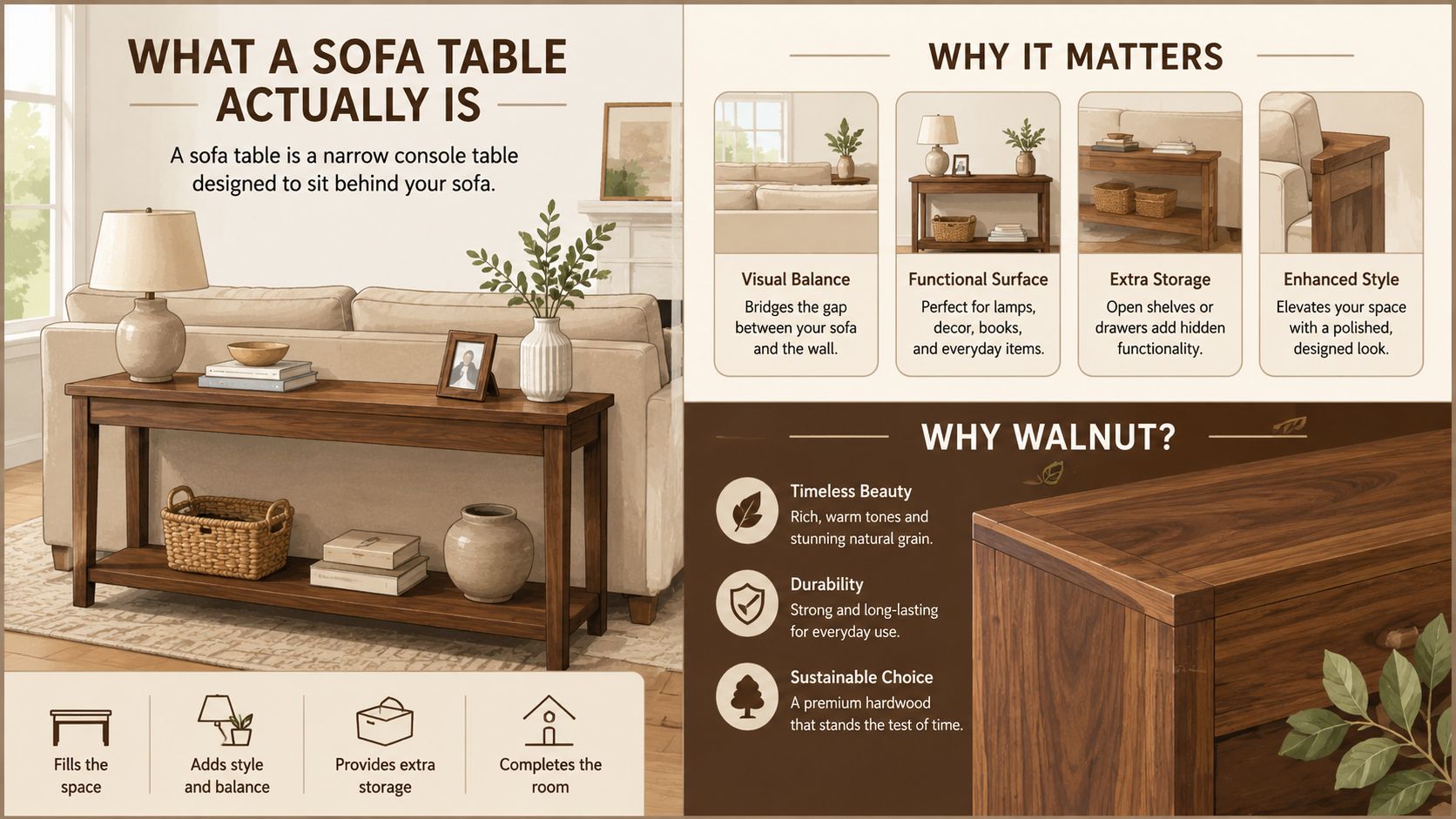
A sofa table is a narrow table that typically sits behind a sofa and works at sofa height. It's not a coffee table, which lives low and front-and-center, and it's not just any console, because the proportions need to relate to the sofa back and the traffic lane behind it. That distinction matters when a homeowner is standing on the showroom floor trying to describe the piece that will fit the room.
Start with the shape. A good sofa table is long, slim, and visually quiet enough to support lamps or art without stealing the whole wall. If it's too deep, the room tightens up. If it's too low, the arrangement looks accidental.
Walnut, botanically a deciduous hardwood, gives the form real substance. Furniture guidance consistently values walnut for its strength, durability, and warm brown range, and one cited Janka hardness figure is 1010 from DutchCrafters' walnut wood guide. That doesn't make walnut indestructible, but it does put it in a serious category for an object that gets touched, dusted, leaned on, and used daily.
A walnut sofa table also solves a design problem that lighter woods sometimes can't. The grain tends to read richer and more grounded, so the table looks finished even before it's styled. That is why walnut continues to suit both traditional rooms and cleaner transitional spaces.
A helpful internal reference for shoppers is what is a sofa table, especially for anyone deciding whether the piece belongs behind a sofa, in an entry hall, or along a blank wall.
Sizing and Placement Rules That Actually Work
The easiest way to ruin a sofa table purchase is to guess. The right proportions usually feel obvious once the tape measure comes out, and the room starts telling the truth about how much space it can give up. Width, depth, and height each do a different job, and all three have to work together.
Measure the width against the sofa
A sofa table usually looks right when its width runs about two-thirds to the full length of the sofa back. That keeps it substantial without making the sofa disappear. If the table is much shorter, it can look like it wandered in from another room. If it is much longer, it starts to dominate the seating area.
Keep the depth narrow enough to preserve circulation
Depth is where many buyers get trapped. A practical walnut sofa table often lands around 16 inches deep, which is narrow enough to preserve the walking lane behind a sofa or along an entry wall. A reference table from Living Spaces shows a 48" x 16" x 29.75" profile, and that shape is exactly why narrow consoles work so well in tighter living rooms.
Match the height to the sofa back
Height should sit at or just below the sofa back, so lamps and decor line up naturally when the room is viewed from a seated position. In practical terms, that keeps the table from looking stubby or towering. It also makes the surface easier to use when a lamp, framed photo, or serving tray needs to sit there without feeling off balance.
The most useful sofa table is the one that leaves the room feeling open, not the one that fills every inch.
An entry hall or long passage can benefit from the same logic. A narrow walnut sofa table gives the space function without blocking circulation, which is exactly why proportion matters more than ornament here. For measuring help, a straightforward guide is how to measure furniture.
Solid Walnut vs Walnut Veneer vs Engineered Wood
Material choice decides whether a walnut sofa table feels like a lasting buy or just a dressed-up surface. Buyers in the Easton showroom should start here, because the word walnut gets used loosely and the build underneath changes the whole story. If you want value that holds up in a real home, separate the visible grain from the material doing the work.
What each material means
Solid walnut means the walnut is the structure as well as the surface, through the thickness of the piece. Walnut veneer means a layer of walnut sits over another substrate, and that can still be sound construction if the core is stable and the piece is built with care. Engineered wood and MDF sit outside the Vinson hardwood standard, and they are the wrong choice for a buyer who wants a table to age gracefully.
The difference shows up in how the piece can be lived with over time. Solid walnut gives you the best repair path because it can be refinished more naturally, and small wear marks do not end the life of the table. Veneer can look excellent when it is done well, but the surface is still a thin layer, so the grain may repeat or mirror in a way that gives away the construction to a trained eye.
For buyers who want a simple reference point, solid wood versus engineered wood explains why the hidden structure matters as much as the face you see. That distinction matters on a walnut sofa table because the finish can sell the first impression while the core determines whether the piece stays honest after years of use.
| Walnut Sofa Table Materials Compared | Durability | Repairability | Typical Price Band |
|---|---|---|---|
| Solid Walnut | Highest, when built well | Strong, because the material can be refinished | Premium |
| Walnut Veneer | Good, if the frame is stable | Limited on the surface layer | Mid to premium |
| Engineered Wood | Lower for long-term use | Limited | Value-oriented |
A walnut sofa table should be judged as furniture, not packaging. If the structure cannot support the finish and the daily use that comes with a real home, it does not deserve premium money.
Construction Quality Cues Worth Inspecting
A walnut sofa table can look expensive and still be built lightly. The buyer who wants real longevity needs to inspect the top, the joinery, the finish, and the weight, because those details tell the truth faster than sales language does. In a showroom, that inspection should take less than a minute.
What to touch and what to ask about
The top thickness is the first clue. 1.5 to 1.75 inches is the heirloom range cited in artisan builds, and it gives the surface more stiffness and dent resistance than a thin decorative top. One solid walnut build uses 1⅝" thick walnut, while another live-edge model finishes at about 1.75" thick with a commercial-grade conversion varnish for scratch resistance. That matters on a surface that will hold lamps, trays, and whatever lands there after a long day. Amish Collective's walnut sofa table listing shows how those specifications get presented in a serious build.
Joinery should be just as honest. Traditional mortise-and-tenon construction carries load better than hidden fasteners, and a buyer should treat that as a good sign in a solid hardwood piece. The same goes for a finish that's meant to work, not just glow. UV and catalyzed conversion varnish are used to improve scratch resistance and wear performance on high-contact surfaces.
Inspect the underside, not just the top. The underside usually reveals more about build quality than the sales tag does.
Weight is another useful clue. A well-made solid hardwood table should feel substantial in the hands, though not so heavy that moving it becomes a chore. That balance matters in real homes where the table may get shifted for cleaning or rearranged during a room refresh. For a deeper look at joinery types, various wood joints is worth reading before a showroom visit.
In Columbus, the smartest buyers treat these checks as essential. A walnut sofa table should pass the sit-test, the touch-test, and the underside test.
Console C-Shape or Live Edge Choosing by Use Case
Not every walnut sofa table should behave like a fixed console. The room's size, the way people use it, and how often the layout changes should all drive the decision. Style matters, but use case wins.
Fixed console
A fixed walnut console works best in a traditional living room where the sofa stays put and the table acts as a visual anchor. It is the cleanest choice for lamps, stacked books, framed art, and symmetrical decor. This is the option for buyers who want the room to look composed every day without rethinking the layout.
C-shape or rotating design
A C-shaped or rotating walnut table is the smarter move in smaller homes or flexible living rooms. It can slide over a sofa arm and serve as a lap desk, snack surface, or side table without needing a full wall run. That's a real advantage when the room has to work harder than the square footage suggests.
Live-edge walnut
A live-edge walnut table fits buyers who want the wood to read as the star. The natural edge softens a rigid room and works well in modern rustic interiors, but it needs enough visual space to breathe. A crowded room makes live-edge work look busy. A calmer room lets it look intentional.
A helpful way to consider it:
- Choose fixed console form when the sofa stays centered and the room needs structure.
- Choose C-shaped or rotating form when flexibility matters more than symmetry.
- Choose live-edge form when the walnut itself should carry the visual weight.
Custom order options are most useful when the buyer already knows the use case and wants the piece tuned to it. That's where brands such as Smith Brothers of Berne, Mavin, and Canadel become relevant in a broader custom-furnishing conversation, especially when the room plan needs exact proportions or coordinated finishes. A walnut sofa table should fit the life around it, not just the wall behind it.
Care Maintenance and Long-Term Aging
Walnut is forgiving, but not careless. A homeowner who treats the table like a working surface and not a museum piece will usually get far better aging out of it. The routine is simple, and it doesn't require fussy maintenance.
Start with dusting along the grain so grit doesn't get dragged across the finish. Use coasters under lamps and drinks, even on a table that feels too beautiful to need them. Keep the piece out of direct sun and away from HVAC vents, because dry air and harsh light are rough on wood over time.
A wood-care guide such as how to care for wood furniture is useful for the basic rhythm, but walnut deserves one extra note. The color usually deepens over time, and that shift is part of the appeal. Most owners see it as a feature because the surface gains warmth instead of losing it.
When to maintain and when to refinish
- Light upkeep: dusting, coasters, and quick cleaning.
- Periodic refresh: paste wax or a quality hardwax oil every year or two, depending on use.
- Refinish: only when the finish has worn through, the surface is badly marked, or water damage has gone beyond a touch-up.
A walnut sofa table that starts with solid construction can recover from normal wear more gracefully than a lighter piece. That is the payoff of paying attention to joinery and finish up front. The buyer is not just purchasing a surface. The buyer is purchasing the ability to keep the piece in the room for years without apology.
Styling Ideas Pricing and the Vinson Design Studio
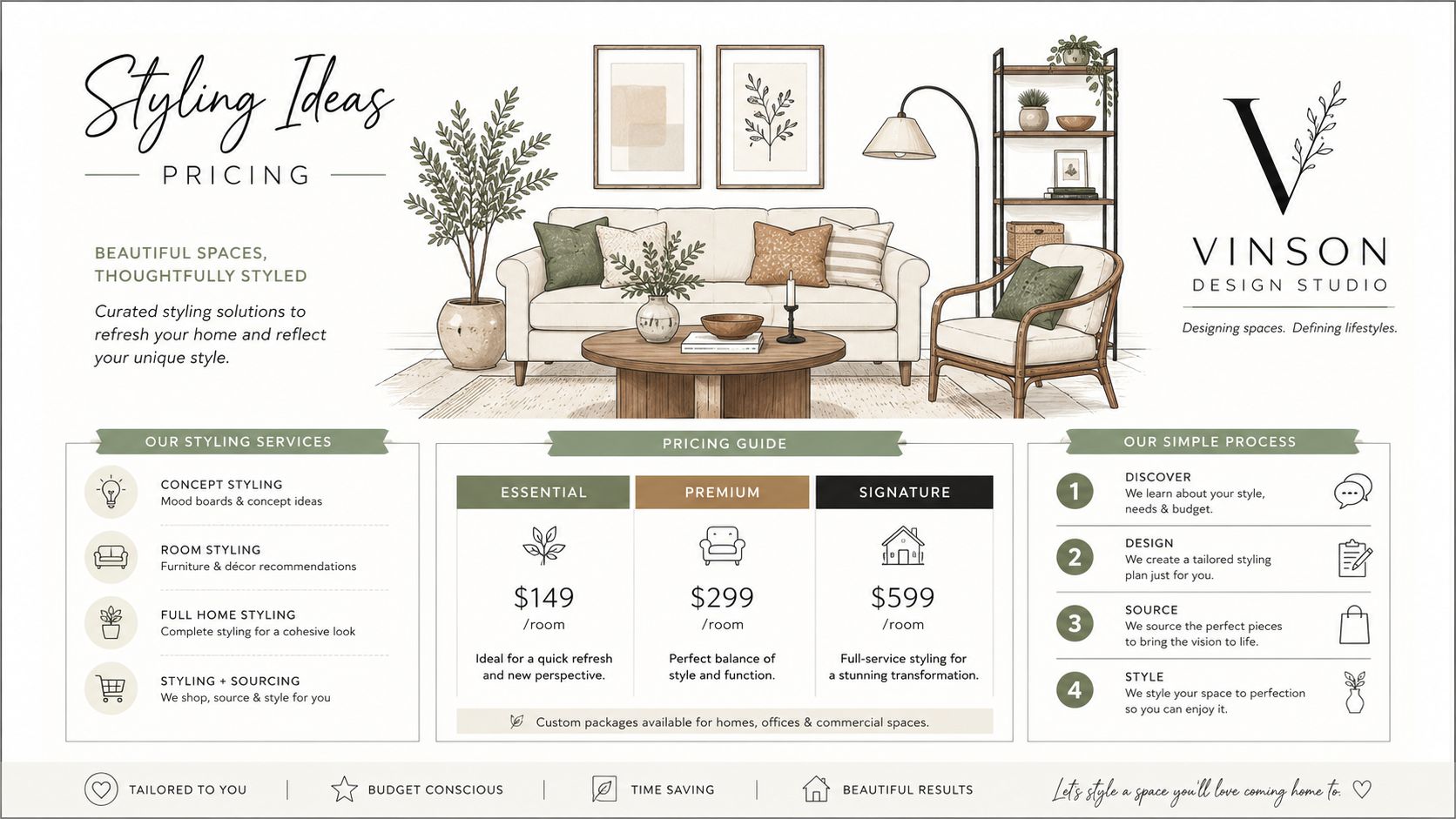
A walnut sofa table styles itself best when the room has one clear point of view. A layered traditional look uses lamps, stacked books, and a tray with weight. A minimal modern look leaves breathing room, then adds one sculptural object and stops. A warm transitional look mixes metals, texture, and a runner so the piece feels finished without becoming fussy.
Pricing should be judged against actual construction, not wishful thinking. A real walnut piece from Brickmill Furniture is listed at a regular price of $2,170 and a sale price of $1,736, a $434 difference that shows how premium walnut can still move into reachable territory when the right opportunity appears. The listing is a clean example of how value can be concrete, not vague.
For buyers comparing surface-oriented layouts, ottoman as coffee table ideas can help clarify whether the room should use a table, a softer landing zone, or a mix of both. That decision matters before any styling is chosen.
The practical next step is a measured one. Visit the Easton showroom for the sit-test, use the In-Store Design Studio and complimentary design consultation to settle proportions and finish tone, and check the Clearance Gallery for floor samples and closeouts when savings matter. Vinson Fine Furniture is one option for solid hardwood furniture with custom order paths, and its low price guarantee structure is designed for buyers who want value without giving up quality.
Visit Vinson Fine Furniture at Easton Town Center to compare walnut sofa table proportions in person and see how solid hardwood feels when it's built for everyday use. Bring a room sketch, take the measurements, and use the design team to narrow the right finish, size, and style before making the commitment.