Antique Cheval Mirror: A Guide to History and Style

On a quiet evening, a homeowner may stand in a bedroom or dressing area and feel that one last element is missing. The room functions, the furniture is in place, but the space still needs a piece with presence, something useful enough for daily life and graceful enough to feel permanent. That is exactly where an antique cheval mirror earns its reputation. A full-length, freestanding mirror that tilts in its frame, it acts like both a practical dressing tool and a piece of furniture with real visual weight.
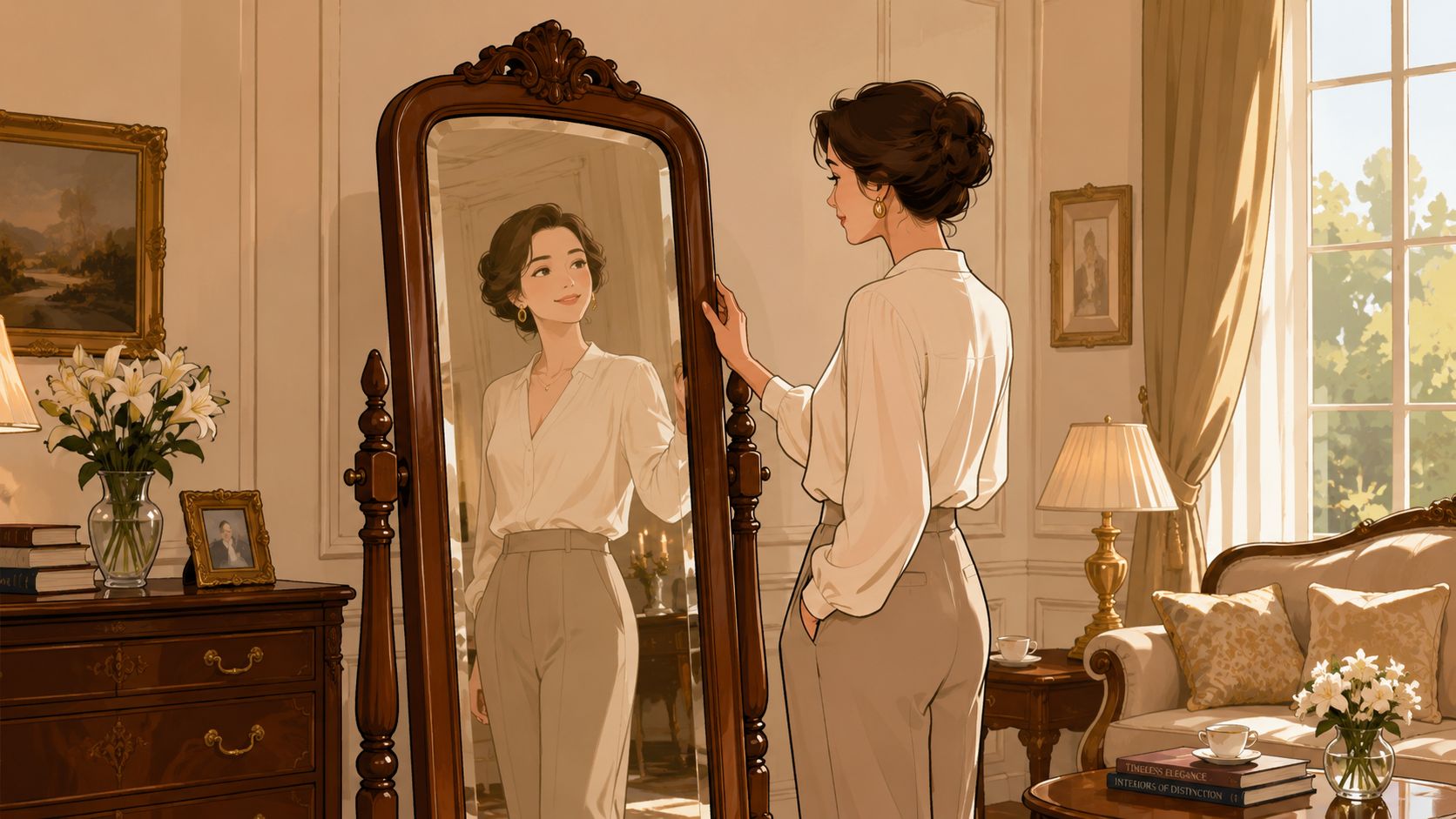
What gives the form its lasting appeal is the balance between function and craft. A well-made cheval mirror does not sit in a room like a thin accessory. It has structure, proportion, and often the quiet character of age, which makes it feel more like an heirloom than a simple reflective surface. That is why collectors, decorators, and investment-minded homeowners keep returning to it.
The Enduring Allure of the Cheval Mirror
A dressing area often needs one object that changes the whole mood of the room. The antique cheval mirror does that because it is useful first, but also elegant enough to hold a wall or corner without demanding extra ornament. It gives a person a full-length reflection, yet its freestanding frame and tilting mechanism make it feel like furniture with a purpose, not just a mirror hung for convenience.
The form's appeal starts with scale. A tall mirror naturally brings light, height, and a stronger sense of order to a room, especially when the frame is made in wood with a finish that shows age and depth. In an older home, that can make the space feel intentional. In a newer home, it can add the kind of texture that prevents a room from feeling flat.
A useful way to think about it is this, a cheval mirror behaves like a quiet anchor. It supports the rest of the room the way a good dining table or armoire does, by giving the eye somewhere substantial to land.
Practical rule: if a piece is both functional and handsome enough to stay on display, it's more likely to earn long-term value in the home.
The rest of this guide follows that idea in a careful sequence. It looks at the mirror's history, shows how authentic examples reveal themselves through construction, explains what to check before buying, and closes by showing how the same principles of solid craftsmanship still matter in today's homes.
A Legacy in Design The History of the Cheval Mirror
The cheval mirror began in the late 18th century and stayed fashionable for roughly 150 years, until mirrored wardrobe doors largely replaced it in the first half of the 20th century according to the documented history of the form (Wikipedia). That long run is part of why surviving examples usually feel like antiques rather than ordinary older furnishings. They come from a piece type that had real staying power across changing tastes.
How style changed without changing the core form
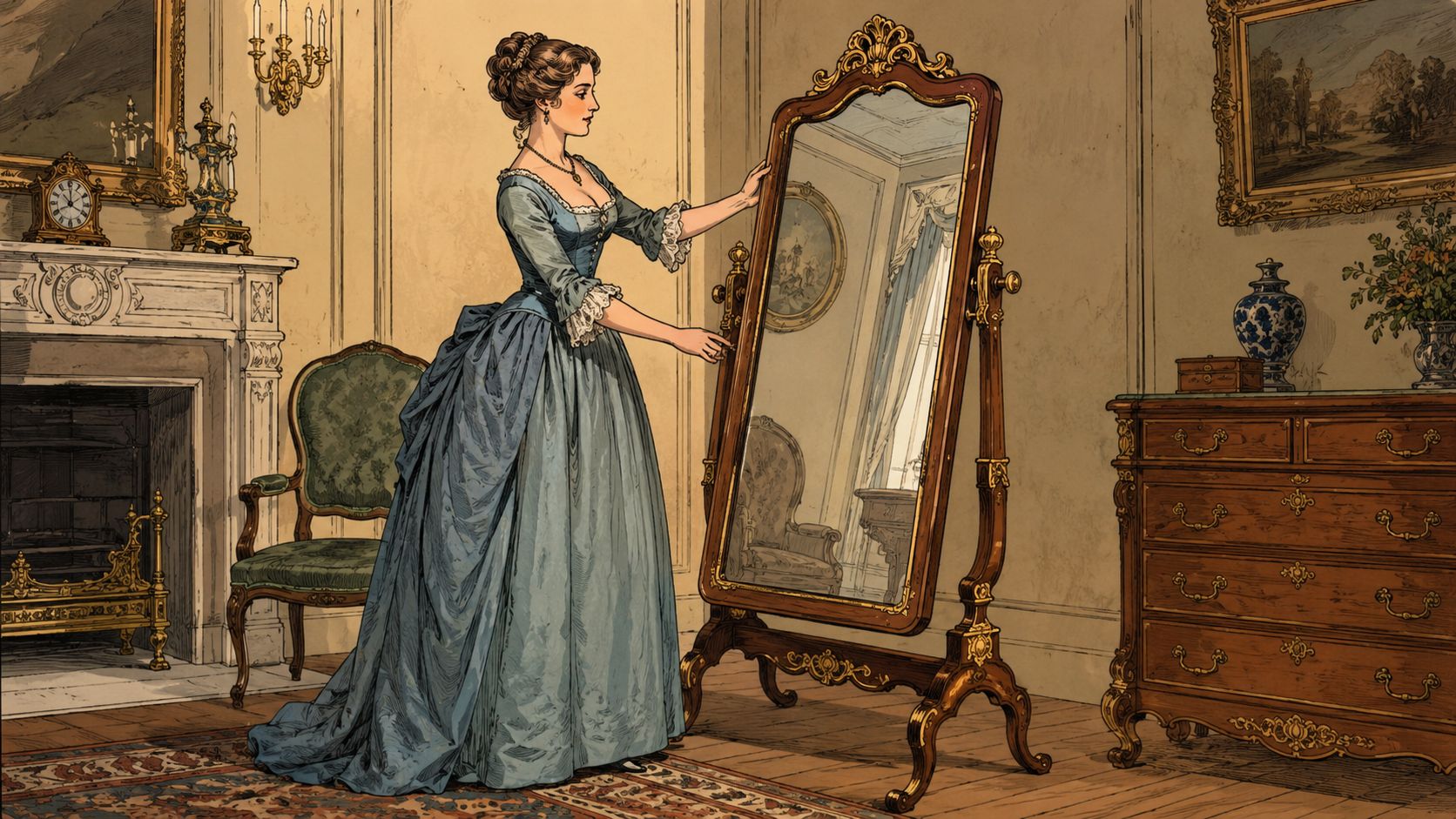
The outline stayed familiar, but the decoration changed with taste. In refined households, the mirror could be relatively restrained, with balanced lines and a practical tilt. In later Victorian settings, surviving examples could become more ornate and luxurious, including giltwood finishes and richer ornamentation, as seen in a National Trust Collections example dated circa 1840 and described as a giltwood cheval mirror, possibly by Gillow & Co. (National Trust Collections).
That 1840 example matters because it shows the design had already matured. The construction details described in Britain's reference material, tall frame, tilting mirror, pillars, feet, swivel screws, and counterweights, show a fully developed furniture form rather than a novelty. By the mid-19th century, the cheval mirror had become a dependable answer to a very practical need, full-length viewing with enough stability to work in everyday use.
The form's long life also explains why it appears in many interior styles. Some examples read as disciplined and architectural. Others lean decorative, with carved or gilded surfaces. A few feel almost understated by comparison, which can make them surprisingly versatile in modern rooms.
For anyone trying to place a mirror in time, that range is useful. The style tells part of the story, but the broader history explains why the object still feels relevant. It was designed to solve a real daily problem, and the best examples still do.
How to Identify an Authentic Antique Cheval Mirror
A true antique cheval mirror gives away more than its shape. Identifying characteristics include the back, the edges, the finish, and the small mismatches that handmade work leaves behind. Antique guidance stresses inspecting the back, labels, wooden backing, wear patterns, and maker marks, and it also notes that slight imperfections can support authenticity because older mirrors were handmade (Westland London).
Read the object like a craftsman would
The first question is whether the piece feels structurally honest. A hand-built mirror often shows age in a natural way, with wear where hands have touched it, tone changes in hidden areas, and a back that does not look factory-perfect. That is not a flaw by itself. It is often evidence that the object has lived a real life.
A second question is whether the construction makes sense for the period. Handmade furniture rarely looks mechanically uniform from one side to the other. Small irregularities, careful joinery, and wear that matches the visible use of the frame can all be encouraging signs. For readers who want a broader lesson in reading wood furniture, the guide on how to tell if furniture is real wood offers a useful companion method.
Antique surfaces often look a little uneven because people made them by hand. Uniform perfection can be the thing that deserves more suspicion.
Use a simple inspection checklist
A careful buyer can move through the following points without needing specialist tools:
- Inspect the back first: Look for labels, old repairs, wooden backing, and any maker's marks.
- Check the wear patterns: Honest age often shows up where the mirror was handled, tilted, or moved.
- Study the frame edges: Rounded edges and softened details can suggest long use rather than recent fabrication.
- Look at the hardware and fittings: Period parts often have a different feel from modern replacements.
- Read the overall balance: The best examples feel proportional, stable, and made for real use, not just display.
If the object has a story, its construction should support that story. The point is not to find flawlessness. It is to find coherence between age, materials, and use. That's where authenticity usually becomes visible.
A Buyer's Guide for Acquiring a Timeless Piece
Buying an antique cheval mirror works best when the search starts with conditions, not decoration. A buyer may fall for the frame at first glance, but its true value sits in whether the piece is structurally sound, historically plausible, and suited to the room it will live in. That means slowing down and checking the object the way a serious homeowner would check any long-term purchase.
Where to look and what each venue offers
Antique dealers often provide the cleanest path because the piece is usually already described, handled, and evaluated. Auction houses can uncover unusual examples, but the buyer has to inspect carefully and assume less hand-holding. Estate sales may offer strong opportunities if the roomful of furniture has not been heavily curated. Online marketplaces expand the search, but they also shift more responsibility onto the buyer to verify condition and authenticity.
A smart purchase doesn't start with the image alone. It starts with a list.
What to inspect before committing
- Structural stability: Stand the mirror, test the tilt, and look for wobble in the base or pillars.
- Wood condition: Watch for warping, deep splits, soft spots, or signs of active damage.
- Surface wear: Honest age is fine, but rough over-restoration can flatten character.
- Glass condition: Check for clouding, cracks, and replacements that may affect the mirror's original look.
- Back and interior surfaces: Hidden areas often reveal whether the piece has been altered well or poorly.
A practical buyer also thinks about fit. A large mirror can overpower a narrow room, while a more modest example can disappear if the surrounding furniture is too heavy. The best purchase is not just the most attractive one. It is the one that suits the architecture, the circulation path, and the other major pieces already in the room.
For a broader framework on making furniture purchases with more confidence, the guide on how to shop for furniture smartly is a helpful next read. The same discipline applies here, ask direct questions, inspect carefully, and favor pieces whose condition matches their story.
Caring For and Preserving Your Heirloom Mirror
Once an antique cheval mirror is in the home, care becomes part of the value. A good frame can last for generations if it is cleaned gently and protected from unnecessary stress. The goal is not restoration for its own sake. It is preservation, so the mirror keeps its surface character and structural integrity.
Keep the frame and glass under control
Dust the wooden frame with a soft, dry cloth rather than saturating it with cleaners. Antique finishes can be sensitive, and aggressive products can dull or strip the surface. For the glass, use a light touch and avoid overspray on the wood so moisture doesn't creep into older joints.
If the frame has age-related wear, resist the urge to make it look brand new. Some patina is part of what gives the object its authority. That is why many owners choose conservation over heavy refinishing, especially when the piece still reads clearly and functions well.
For readers considering deeper treatment, traditional antique wood refinishing is a useful reference point for understanding the difference between respectful repair and overworking an aged surface.
Glass replacement and value
One of the most common concerns is whether replacement glass ruins the value. Guidance from antique specialists says original glass is more desirable, but replacing damaged glass in an antique cheval mirror does not typically have a huge negative effect on its overall value (Nimbus Antiques). That distinction matters because it keeps owners from treating every repair as a disaster.
If replacement is needed, the key is to keep the rest of the object's integrity intact. The frame, proportions, and historical character still do most of the work. The glass matters, but it isn't the whole story.
A good heirloom survives because it is cared for sensibly, not because it is frozen in place. That mindset keeps the mirror useful while respecting its age.
Styling the Cheval Mirror in a Modern Home
A well-chosen antique cheval mirror can work in a contemporary home without turning the room into a period set. The trick is balance. Let the mirror provide character while the rest of the space stays clean, calm, and edited. That approach keeps the room from feeling themed.
Give the mirror a job
In a bedroom, the mirror works best where it can reflect light without competing with the bed or dresser. In a walk-in closet or dressing area, it becomes a natural anchor for daily routines. In an entryway, it adds a sense of height and helps the space feel more open when used thoughtfully.
The safest styling rule is simple. Put the mirror near pieces that have visual quiet, not next to too many busy patterns or strong finishes. A traditional frame reads beautifully against pared-back walls, neutral textiles, and orderly storage.
For homeowners blending older and newer pieces, the guide on how to mix furniture styles offers a useful principle, keep one or two pieces distinctive, then let the rest of the room support them rather than compete.
The strongest rooms usually don't copy one era exactly. They let one good object lead, then build around it with restraint.
Use it to shape the room, not just decorate it
A cheval mirror can do more than fill a corner. It can redirect light, add a vertical line to a low room, and give a dressing space a sense of ceremony. That's why it still belongs in modern interiors. The piece is old, but the needs it solves are still current.
When the surrounding furniture feels understated and well made, the mirror looks intentional rather than nostalgic. That's the standard most thoughtful homeowners want, a room that feels lived in, not staged.
The Modern Heirloom Custom Solid Wood Furniture
The appeal of an antique cheval mirror often comes down to the same qualities that define the best modern furniture, solid materials, thoughtful construction, and a design language that doesn't age quickly. For homeowners who love that feeling but want something suited to their own home, the modern heirloom answer is solid hardwood furniture built with the same respect for durability and proportion.

Why construction still matters
Vinson Fine Furniture states that it sells only solid hardwood furniture and contrasts the 1–5 year lifespan of mass-produced pieces with the 15+ year longevity of a high-quality solid-wood piece, framing it as a long-term investment (Vinson Fine Furniture). That idea belongs in the same conversation as antique furniture because both depend on the same truth, the structure has to be worthy of long use.
For homeowners who value the feel of real wood, the difference shows up in daily life. Solid cherry, oak, maple, and walnut carry weight, age gracefully, and suit rooms that are meant to evolve rather than be replaced. Amish-made craftsmanship also fits naturally here, especially in dining and bedroom settings where bench-made quality and careful joinery matter most.
A few details separate serious heirloom furniture from disposable pieces:
- Real material integrity: Solid hardwood gives the piece substance and repairability.
- Thoughtful proportions: Good design stays elegant even when trends shift.
- Customization: Finishes and details can be chosen to fit the home rather than forcing the home to adapt.
- Everyday durability: Pieces built for long use feel different from day one.
The custom solid wood dining table page at Vinson Fine Furniture reflects that same heirloom mindset in a modern setting.
Bringing the antique lesson home
The best antiques and the best custom pieces share a standard, they're made to be lived with. A homeowner who admires a cheval mirror's quiet authority may be looking for that same permanence in a dining set, bedroom suite, or seating piece. That is where a showroom experience matters, because finish, scale, and feel are easier to judge in person than in photographs.
At the Easton Town Center showroom, complimentary design consultations and the custom order program can help shape a room around solid wood, refined motion seating, and furniture that belongs for the long haul. For anyone building a home around pieces meant to last, that is the modern version of heirloom thinking.
A CTA for Vinson Fine Furniture. Visit the Easton Town Center showroom, use the complimentary design consultation to compare solid hardwood options in person, and explore custom pieces that bring the same lasting character you admire in an antique cheval mirror into your own home.