Create Your Ideal Custom Solid Wood Dining Table


You’re probably here because your current table no longer fits your life.
Maybe it wobbles when someone leans on it. Maybe the finish has chipped at the edges, or the top shows every scratch from school projects, takeout nights, and holiday serving dishes. Or maybe the room itself has changed. You’ve renovated, moved, or grown into a home that deserves something better than a temporary solution.
A custom solid wood dining table answers a deeper need than “we need a table.” It solves for daily use, fit, comfort, style, and longevity all at once. When it’s built well, it becomes the place where ordinary Tuesday dinners sit right alongside birthdays, late-night talks, and the kind of gatherings people remember years later.
The Heart of Your Home An Investment in Togetherness
A dining table works harder than almost any other piece in the house. It hosts meals, yes, but it also becomes a desk, a homework station, a wrapping table, a puzzle board, and the landing place for everyday life. That’s why the right table should feel steady, generous, and perfectly suited to your home.
Mass-produced furniture often asks you to accept compromise. You pick from fixed sizes, fixed finishes, and fixed proportions, then try to make the piece work around your room and routines. A custom table flips that logic. It starts with your space, your seating needs, and your taste.
That shift matters.
When you choose a custom solid wood dining table, you’re not buying something disposable. You’re commissioning a piece with a longer horizon. The goal isn’t to get through the next few years. It’s to create a table that still looks right when the paint colors change, the kids grow up, and your hosting style evolves.
For many homeowners, that’s the moment the purchase starts to make sense as an investment rather than an indulgence. The table isn’t just furniture. It’s architecture for family life, much like the role described in this look at dining tables as places where memories are made.
A good dining table should serve your room. A great one should serve your life.
A seasoned craftsperson will tell you the same thing. The best custom work begins long before the first board is cut. It begins with questions. How do you gather? How many people sit there on a normal weeknight? Do you want formal polish, or a surface that welcomes hard use and ages gracefully?
Those answers shape an heirloom.
Why Solid Wood Is the Smartest Long-Term Choice
A dining table gets tested in ordinary ways long before anything dramatic happens. A hot serving dish lands a little too quickly. Someone drags a stoneware bowl instead of lifting it. Winter dries the air. Summer brings humidity back. Year after year, the table either keeps its integrity or starts showing where corners were cut.
That is why solid wood keeps earning respect from cabinetmakers and long-term homeowners alike. It is honest material. What you see on the surface continues through the thickness of the top, so wear does not reveal a different layer underneath.
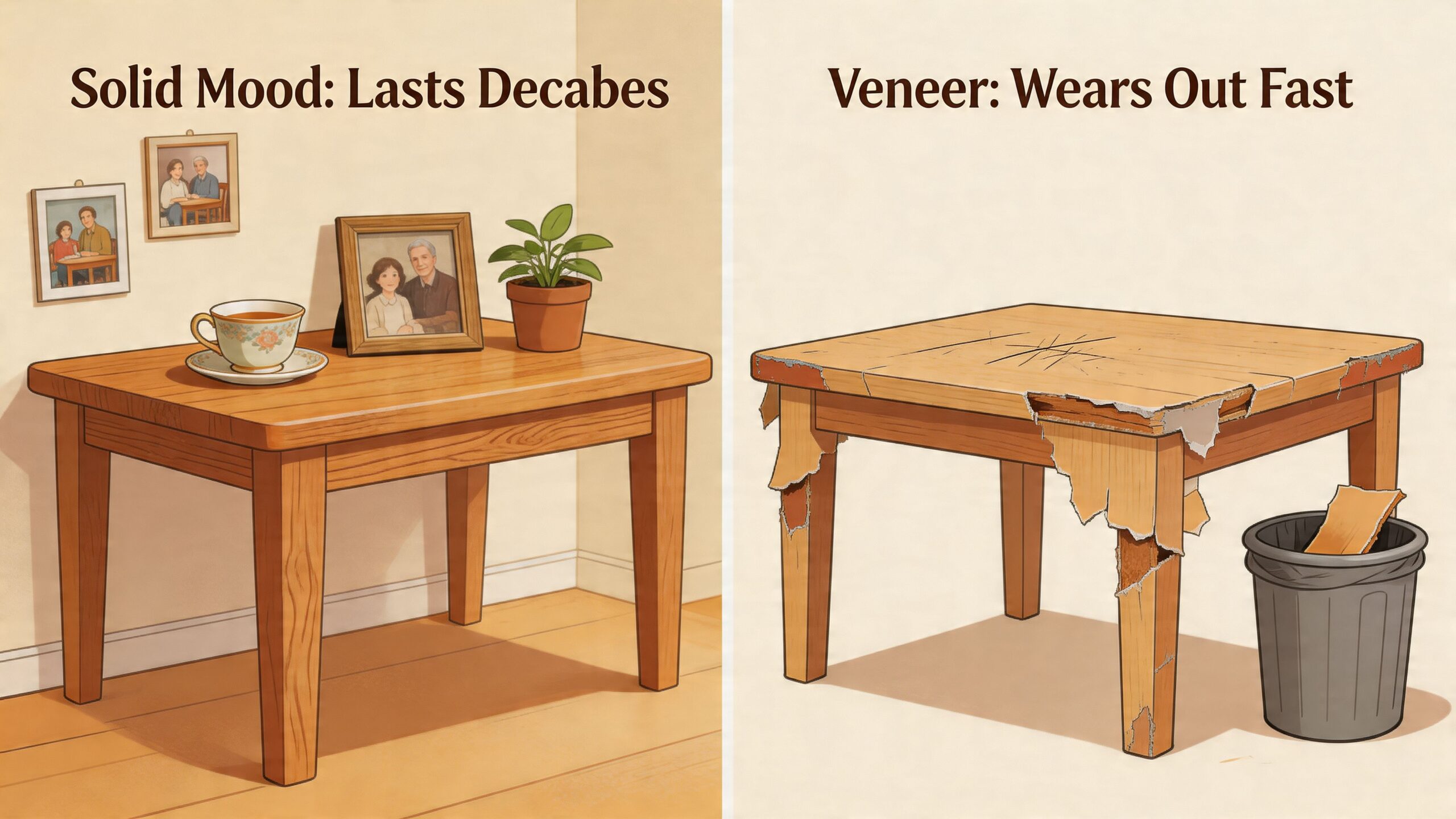
What solid wood does better over time
The biggest advantage is serviceability.
A veneer or composite table can look polished at first, but its good looks depend on a thin finished layer staying intact. Once that layer chips, peels, or swells from moisture, repair options narrow quickly. Solid wood gives a craftsperson room to work. Light damage can often be sanded out. Finish wear can often be renewed. Even deeper marks may be softened or repaired instead of forcing a full replacement.
That changes how ownership feels. You stop treating the table like a fragile product and start treating it like a lasting part of the house.
Solid wood also ages with more grace. Small signs of use usually read as patina rather than failure. There is a difference between a surface that records family life and a surface that breaks down.
Why the material itself matters in 2026
In 2026, buying well means asking two questions, not one. Is the table beautiful and durable? Is the wood responsibly sourced, properly dried, and traceable enough that you know what you are bringing into your home?
That second question matters more now because supply chains are under closer scrutiny. Imported wood can pass through several hands before it reaches a workshop. Labels can sound reassuring without telling you much about forest practices, chain of custody, or where the milling happened. A good custom maker should be able to explain the origin of the lumber, what certifications apply, and whether local or regional sourcing is a realistic option for your project.
If that feels technical, use a simple standard. Ask for plain answers. Where was this wood harvested? Who milled it? Is it kiln-dried for furniture use? Can you show me the certification or supplier documentation? Clear answers usually signal a disciplined shop.
Three long-term benefits clients notice first
- Repairability. Scratches and finish wear are usually maintenance issues, not the end of the table.
- Structural longevity. A properly built solid wood top and base can stay in use for decades with normal care.
- Ethical confidence. Verified sourcing gives you a piece you can live with comfortably, not just admire visually.
That last point is often overlooked. A custom table should feel good in conscience as well as in the room.
A practical way to judge value
Upfront price only tells part of the story. The better comparison is cost over years of use.
A solid wood dining table usually costs more because the shop is buying thicker lumber, drying it correctly, allowing for seasonal movement, and building joinery that can be maintained instead of discarded. Those steps are not decorative extras. They are what let the table stay useful through moves, refinishing, changing finishes, and the ordinary wear of family life.
If you are weighing this purchase against less expensive categories, this guide on how long furniture should last gives a helpful framework for judging lifespan instead of sticker price alone.
A well-made solid wood table is not merely furniture that survives. It is furniture you can keep choosing, year after year, because it still deserves its place in your home.
Decoding the Wood Menu A Guide to Species and Grains
You sit down with a maker, open the sample box, and four boards land in front of you. One is calm and pale. One is dark and fluid. One has bold lines that catch your eye from across the room. One glows with warmth. At first, it can feel like a color decision. In practice, you are choosing how the table will read in your room, how it will wear under daily use, and how confidently you can trace the wood back to responsible forestry.
That last part matters more in 2026 than many buyers expect. Local supply can shift by species, certified lumber can have longer lead times, and broad claims like “sustainably sourced” are not enough on their own. A careful custom commission should cover appearance, performance, and where the wood came from.
Grain sets the mood before anyone touches the table
Grain is the visible record of how a tree grew. It shapes the table’s personality in the room.
A table in white oak usually shows more movement and structure. It brings definition to an open dining space and pairs well with interiors that need a little visual backbone. Walnut reads differently. Its grain often feels more fluid and refined, which suits rooms that want warmth without looking busy. Cherry tends to feel settled and familiar, while maple stays quieter and cleaner to the eye.
Clients often notice this effect without having words for it. Two tables can share the same dimensions, the same base style, and even a similar stain family, yet one feels calm while the other feels active. Grain is often the reason.
Hardness affects the kind of wear you will live with
Janka hardness is a practical reference point. It measures resistance to denting, which helps you compare how species may handle chair bumps, dropped utensils, school bags, and the usual traffic of a real dining room.
White oak is generally harder than walnut, and both resist daily wear better than softwoods such as pine. That does not mean a softer species is wrong. It means you should choose with your household in mind. If your table will host homework, game night, holiday serving pieces, and young kids with belt buckles, a harder wood can buy you more forgiveness. If you prefer a surface that develops character faster and you enjoy that lived-in look, a slightly softer species may still suit you well.
A simple way to compare common species
| Wood Type | Relative Hardness | Grain Pattern | Common Styles | Everyday Impression |
|---|---|---|---|---|
| Walnut | Moderately hard | Flowing, refined | Modern, transitional, tailored traditional | Warm, rich, polished |
| White Oak | Hard | Pronounced, structured | Traditional, rustic, contemporary | Grounded, durable, architectural |
| Cherry | Moderately hard | Smooth to moderately expressive | Traditional, classic, collected interiors | Warm, gentle, ages beautifully |
| Maple | Hard | Fine, subtle | Minimal, Shaker, modern farmhouse | Clean, light, restrained |
If you want a clearer primer on how hardwoods differ in durability and appearance, this guide to choosing the right hardwood for longevity and style is a useful companion before you approve samples.
Source matters now, not just species
A custom solid wood dining table should come with more than a wood name on an invoice. Ask where the lumber was milled, whether it was harvested domestically or imported, and what documentation the shop can provide for certified or responsibly managed forests. FSC certification is one useful marker, but it helps to ask follow-up questions. Was the board stock itself certified, or only available on request? Is the species usually sourced locally in your region, or brought through a longer supply chain with more variability?
White oak and maple can often be sourced closer to home in many parts of the United States, which may make verification easier and reduce freight miles. Walnut and cherry are also domestic staples, though figure, width, and color consistency can affect availability. The point is not to chase a perfect label. It is to understand what you are buying well enough to feel good about it years from now.
Read the board, not just the species card
Species tells you part of the story. Cut and grain orientation tell you the rest.
Plain-sawn boards usually show more cathedral pattern and stronger movement. Rift- and quarter-sawn cuts look straighter and more controlled. If a client tells me they want a table that feels quiet and orderly, I do not stop at “maple” or “oak.” I also look at how the boards were cut and how the top will be laid out across the full width. That is similar to tailoring a jacket. Fabric matters, but cut decides how it wears.
One more point is easy to miss. Ethical sourcing and visual consistency sometimes pull in different directions. A very specific request, such as extra-wide boards in a rare color match, can narrow the available supply. A good maker should explain those tradeoffs plainly so you can decide what matters most in your home.
Grain shapes what you feel from across the room. Species and sourcing shape how well you live with the table once it is yours.
Craftsmanship That Lasts Generations
Saturday dinner is running long. Someone shifts their chair, a grandchild plants both hands on the edge, and two people rest their elbows near one corner while talking. In a well-built table, nothing wobbles, nothing creaks, and nothing feels delicate. That kind of confidence starts long before the top is stained or the base is assembled.
A custom solid wood dining table earns its keep through choices you may never see after delivery. Board preparation, joinery, attachment methods, and finish schedule all shape how the table behaves in real family life.
Dry lumber is stable lumber
Wood keeps adjusting to the humidity around it. A board that was not properly dried and acclimated can cup, split, or pull against its joinery once it settles into your home.
That matters even more in regions with sharp seasonal swings. Winter heat dries the air. Summer moisture returns. A good maker prepares lumber for that cycle and builds the table so the top can move in small, natural ways without stressing the base. If you are commissioning a table in 2026, ask where the lumber was sourced, how long it was acclimated in the shop, and whether the maker can explain that process plainly. Clear answers usually signal a disciplined shop and a traceable supply chain.
Joinery shows the maker’s judgment
Joinery is woodworking at its most honest. Fancy grain can distract the eye for a moment. Joinery tells you whether the piece will stay square and quiet after years of meals, homework, holidays, and daily use.
A strong table is built to hold firm while still respecting wood movement. That often means time-tested joints, well-fitted parts, and base connections designed for repair if needed decades from now. If you want a practical reference, this guide to common wood joints and what they do gives you the vocabulary to ask better questions.
Here is the simple way I explain it to clients.
- Lumber preparation affects how calmly the top lives through the seasons.
- Joinery affects whether the base stays solid and quiet.
- Attachment methods affect whether the table can move naturally without damage.
- Finish affects how the surface wears, cleans, and ages in your home.
That last point is easy to underestimate. A dining table is not a museum object. It will meet plates, water glasses, sunlight, sleeves, school projects, and the occasional rushed cleanup. A good finish should protect the wood while still letting it feel like wood.
Craftsmanship now includes sourcing discipline
In 2026, lasting craftsmanship also means knowing the material story. A beautiful table built from poorly documented lumber carries a question mark that many buyers never intended to accept.
Ask whether the wood is domestic or imported, whether certifications can be verified, and whether substitutions were made because a certain width, figure, or species was hard to source responsibly. Those details affect lead time, consistency, and peace of mind. A careful shop should be able to explain the chain of custody in plain language, especially if sustainability and local sourcing matter to your household.
Test the build with everyday questions
You do not need to be a craftsperson to judge quality. You just need the right questions.
Ask how the top is attached to the base. Ask what allows for seasonal movement. Ask what would happen if the table needed refinishing in twenty years. Ask whether a damaged apron, stretcher, or leg could be repaired instead of forcing a full replacement.
That is how heirloom value is built. Not through marketing language, but through decisions that let a table age with dignity and stay useful for the next family chapter.
Designing Your Perfect Table for Your Space
Saturday dinner is ten minutes away. One person is carrying a roasting pan, another is trying to pass behind a chair, and a child cuts through the gap between the island and the table. If that path feels tight every time, the problem usually is not your room. It is the table’s size, shape, or base working against the way your home moves.
A good custom table begins with traffic flow, reach, and daily habits. The catalog comes later.
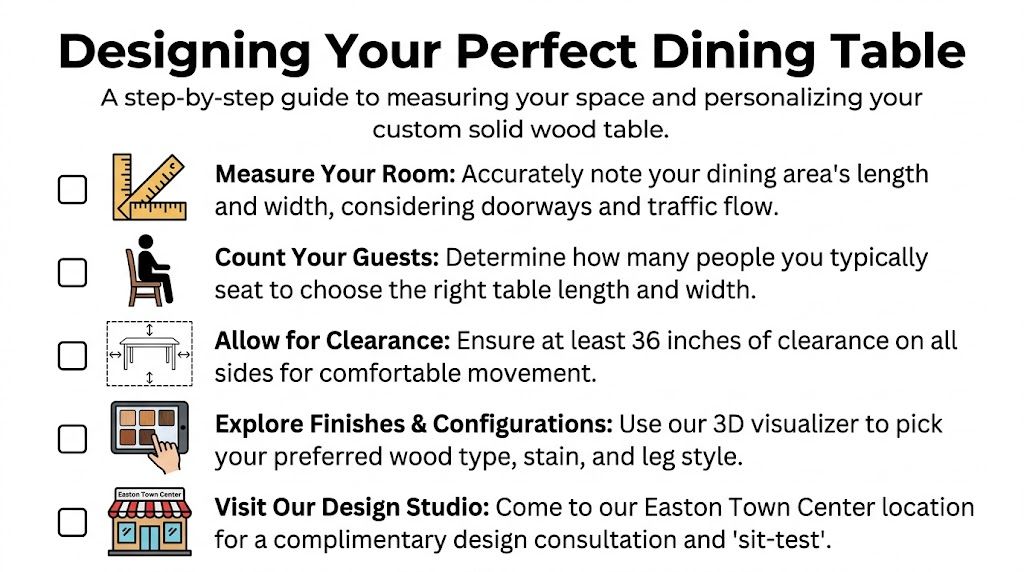
Start with the room in use, not the room empty
Measure the room, then measure it again with real life in mind. Open the doors. Pull the chairs out. Walk the path from the kitchen to the table and from the table to the patio or hallway. A floor plan can look generous until seated bodies and moving chairs enter the picture.
Three measurements usually settle the big questions:
- Table length and width determine how much visual weight the piece carries.
- Chair space per person affects comfort at ordinary meals, not just holidays.
- Clearance around the table decides whether the room feels calm or cramped.
If you are pairing the table with existing seating, measure the chairs too. Arms, back flare, and leg spread often take more room than buyers expect.
Shape changes how a room behaves
Table shape works like the hull of a boat. It changes how the piece moves through space, even if the seating count looks similar on paper.
A rectangle suits long rooms and households that need dependable capacity. A round table often fits square rooms more naturally and keeps conversation close. An oval softens corners while still giving you useful length. For many homes, that softer edge makes everyday circulation easier because no one is catching a hip on a sharp corner during a busy meal.
If you want help comparing layouts, this guide to dining table shapes and seating arrangements gives a practical way to match room proportions to table geometry.
The base matters as much as the top
Clients often focus on the tabletop first because that is what they see. Knees and chair legs care just as much about the base.
Corner legs give a familiar, grounded look, but they also claim some seating positions. A pedestal base can free up legroom and make it easier to add an extra guest. Trestle designs often strike a useful middle ground, especially for longer tables, because they provide support without putting a leg at each corner.
This is one of those decisions that feels small in a showroom and large in daily use.
Then choose the details that fit your home
Once the proportions are right, the finishing choices become clearer.
- Wood species shapes the table’s personality. Walnut reads deeper and more formal. White oak shows active grain and a steadier, more relaxed character.
- Finish color should relate to the room’s light, flooring, and surrounding woods, not just to a stain sample under showroom lighting.
- Surface sheen affects how the table lives. Lower sheen tends to hide fingerprints and minor wear more gracefully, while higher sheen reflects more light and feels dressier.
In 2026, design also includes asking where the lumber came from and whether that species is being sourced responsibly. If you love a certain look but the supply chain behind it is inconsistent or poorly documented, a similar domestic species may give you the same warmth with better traceability and fewer surprises in lead time. That is not a compromise. It is good commissioning.
Digital visualizers can help at this stage because they let you compare species, finish direction, and base styles before the piece goes into production. In a showroom setting, Vinson Fine Furniture can also walk buyers through a Custom Order Program, design consultation, and delivery process in a way that makes each decision easier to understand.
The best custom table is the one that fits your room so naturally that guests never notice the planning behind it. They just feel comfortable sitting down and staying awhile.
The Vinson Custom Order Experience Step by Step
Custom furniture can sound complicated until you break the process into its actual parts. In practice, it’s a sequence of clear decisions, each one building on the last.
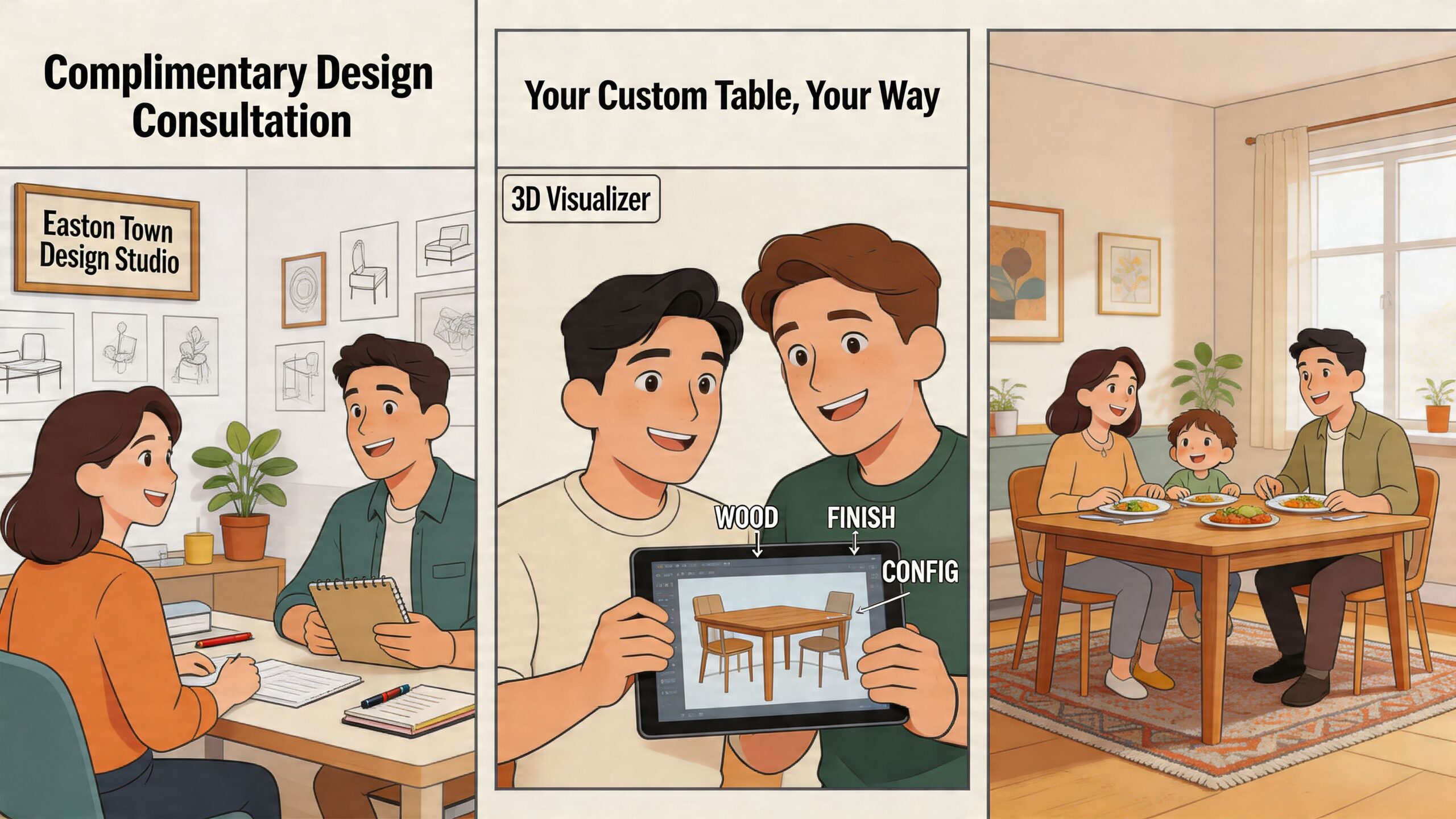
Step one begins in the Design Studio
You bring room dimensions, inspiration photos, and a rough sense of how you use the space. A design consultation helps translate those instincts into decisions about shape, wood species, finish, and base style.
Many first-time buyers relax at this stage. They realize they don’t need to show up with every answer. They need enough information to start a smart conversation.
Then the visualizer does the heavy lifting
A good 3D visualizer removes much of the guesswork. Instead of imagining what a different stain or silhouette might do, you compare options on screen and narrow the field.
The Custom Order Program is especially helpful here because it lets you personalize more than just the table itself. You can coordinate surrounding seating, explore finish relationships, and think in terms of a complete room rather than a single object.
Sourcing is now part of the design decision
In 2026, the conversation around a custom solid wood dining table includes sourcing, lead time, and sustainability in a way it didn’t for many buyers years ago.
Verified sourcing matters if you care where the wood came from, how it was handled, and whether your piece reflects your values as well as your taste. Ask direct questions about certification, traceability, and whether the maker prioritizes domestic or regional supply where possible.
That’s not just a moral question. It’s practical. Recent global supply issues and sustainability pressures have shifted custom order lead times to an average of 12-16 weeks, and prioritizing local Ohio sourcing can reduce carbon footprint by up to 50% compared to imported options, according to Wood Ensure’s custom solid wood sourcing overview.
Ask two questions before you place the order: where was this wood sourced, and how will that affect timing?
Delivery is the final part of the craft
By the time a custom table reaches your home, most of the hard decisions are behind you. What matters then is careful handling, in-home placement, and proper setup.
White-glove in-home delivery matters more with solid wood than many buyers expect. These pieces are substantial, and they deserve careful placement. A thoughtful delivery team protects the furniture, the floors, the doorways, and the finish.
This is also where the economics of buying well come into focus. Some homeowners choose to commission a new heirloom piece. Others blend that investment with smart value strategies, such as financing for convenience or selecting companion pieces through clearance opportunities when timing and budget call for it. The point isn’t to force every room into one purchasing model. It’s to build a home with intention.
Budgeting for an Heirloom and Finding Exceptional Value
A budget conversation often decides whether a custom project feels steady or stressful.
For a custom solid wood dining table, price usually reflects three things. The material itself. The labor required to build it well. The amount of customization needed to make it fit your room and your daily use. As noted earlier, heirloom-quality tables often sit in a wide premium range, and that range only makes sense once you can see what is being purchased.
What you are paying for
A custom table is not priced like a commodity. It is priced more like a well-built kitchen. Two tables can look similar in a photo and differ sharply in cost because the hidden decisions are different.
Here are the cost drivers that matter most:
- Wood species changes both price and performance. Domestic walnut, white oak, cherry, and maple each bring different material costs, grain character, and hardness.
- Board selection affects yield. Wide, clean boards with consistent color are harder to source than shorter or more varied stock.
- Size and proportion change more than square footage. Longer spans may require more careful joinery and engineering to prevent movement issues over time.
- Base style affects labor. A simple trestle or four-leg design usually requires less handwork than a sculptural pedestal or complex curved base.
- Finish system influences both appearance and upkeep. Some finishes are faster to apply. Others take more time but offer a look or repairability that suits family life better.
- Sourcing standards matter more in 2026 than many buyers realize. Verified domestic supply, FSC-certified material, and documented chain of custody can narrow the pool of available lumber, but they give you a clearer picture of what you are bringing into your home.
That last point is easy to miss. Ethical sourcing is not just an abstract virtue. It can affect lead times, material availability, and final cost. If a maker can explain where the wood came from, what certification applies, and whether the lumber was sourced regionally, you are hearing the language of a shop that takes both craft and accountability seriously.
Value is not the same as the lowest number
A lower price can be the right choice. It is not always the best value.
Value comes from fit, longevity, and how well the piece serves your household over time. A table that matches your room dimensions, seats people comfortably, and can be refinished years from now often costs less in the long run than replacing a cheaper table that never quite worked.
This is especially true in homes with tricky layouts, active families, or renovation plans that unfold in phases. In those cases, custom work solves problems that ready-made furniture often leaves behind. Tight walkways, unusual room widths, specific seating needs, and finish coordination all have real value when the table will be used every day.
Where smart savings actually happen
Saving wisely usually means simplifying the right features, not cutting the core build.
A restrained design often ages better than an ornate one. Choosing a domestic species with excellent durability instead of a rarer imported wood can protect both the budget and the sourcing story. Standardizing edge details or base geometry can also reduce labor without changing the character of the piece in any meaningful way.
Some households also mix purchase paths. They commission the dining table because it is the anchor piece, then save on chairs, storage, or accent pieces through in-stock or clearance options. Financing can also help spread out a larger furnishing plan so the table does not force rushed decisions elsewhere.
A practical way to set your budget
Start with the piece that is hardest to replace well.
In most dining rooms, that is the table. Chairs can change. Lighting can change. Rugs wear out. The table usually stays, which means it deserves the clearest thinking.
Set your budget in layers:
- Core investment: the table size, wood species, and construction quality.
- Use conditions: children, entertaining, homework, daily meals, and maintenance expectations.
- Sourcing standards: local or regional lumber, certification preferences, and traceability.
- Supporting purchases: chairs, rug, delivery, and any phased additions later.
That structure keeps the decision grounded. You are not just buying a beautiful object. You are choosing how the table will live in your home, how responsibly it was sourced, and how confidently you can own it for decades.
Spend first on the part of the room that carries the most use, the most touch, and the longest lifespan. In a dining room, that is usually the table.
Begin Your Legacy at Vinson Fine Furniture
The right custom solid wood dining table does more than fill a room. It gives the room gravity. It becomes the place where people gather easily, sit longer, and feel at home.
When you choose solid wood, careful construction, and dimensions that fit your space, you’re making a decision that shows up every day. In comfort. In durability. In the confidence that the piece under your hands was built to stay.
If you’re in Columbus, Ohio, visiting the Easton Town Center showroom is the best next step. You can see grain in natural light, compare finishes in person, test seating comfort, and have a real design conversation with someone who understands scale, materials, and long-term use. And while you’re there, you can also explore the broader showroom, from dining furnishings to the best mattresses Easton Town Center shoppers look for when they’re furnishing the whole home.
If you’re ready to design a table that fits your room and your routines, schedule a complimentary consultation with Vinson Fine Furniture. Bring your measurements, inspiration photos, and questions. Then do the sit-test, compare wood species in person, and build a dining space that will still feel right years from now.