Maple Hardwood Hardness: A Vinson Furniture Guide


A family walks through a showroom looking for a dining table. One person taps the top with a knuckle. Another runs a hand across the grain. Someone usually asks the essential question out loud. “Is this going to hold up?”
That question sits underneath almost every furniture decision, especially when you’re buying solid wood instead of something disposable. You’re not just choosing a color or a leg style. You’re choosing how a table will handle homework, takeout nights, holiday platters, and the slow wear of ordinary life.
That’s where maple hardwood hardness matters. Not as trivia. As a way to judge whether a piece is built for daily use, whether it will resist dents, and whether the wood fits the way your household lives.
The Enduring Promise of Solid Wood Furniture
Walk up to a solid maple dining table and you notice the surface first. It feels smooth, substantial, and calm. There’s a kind of quiet confidence in real wood that veneers and composites rarely match.

For many homeowners, that first impression leads to a practical concern. A beautiful table is easy to admire in a showroom. It’s harder to picture what it looks like after years of elbows, dropped forks, backpacks, and serving dishes. That’s why understanding the wood itself matters just as much as the style of the piece.
Why durability feels different in solid wood
Solid wood furniture earns its reputation over time. It can be maintained, refinished, and lived with in a way that mass-market furniture often can’t. A piece made from a durable species starts with a better foundation, and that foundation affects everything from how the top wears to how well the joinery holds through years of use.
If you want a broader view of how species choice shapes longevity and appearance, this guide on choosing the right hardwood for longevity and style is a useful companion.
Good furniture doesn’t just survive use. It ages in a way that still feels honest and handsome.
The question behind the question
When people ask whether maple is “hard,” they usually mean several things at once:
- Will it dent easily? They’re thinking about daily impact.
- Will it still look good later? They’re thinking about wear, not just strength.
- Is it worth the investment? They’re weighing upfront cost against long-term service.
Those are smart questions. Hardwood hardness gives you one clear way to answer part of them. It won’t tell you everything about a finished table, but it tells you a lot about the character of the wood underneath the finish.
Understanding the Janka Hardness Scale
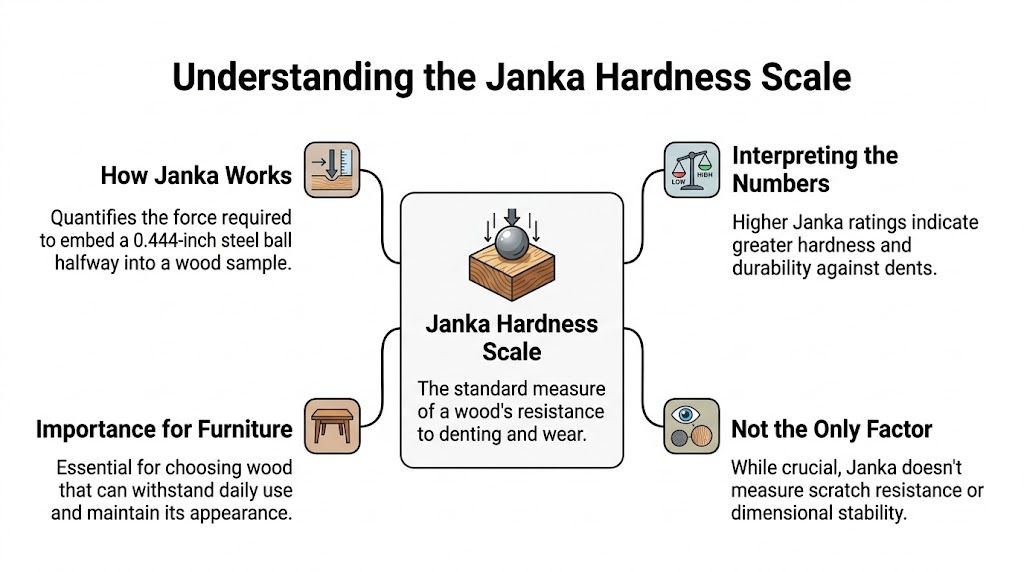
The standard measure for wood hardness is the Janka hardness scale. It sounds technical, but the idea is simple. It measures how much force it takes to press a steel ball into the wood.
What the test is actually measuring
For hard maple, the number is 1,450 lbf (6,450 N), based on the force required to embed a 0.444-inch steel ball halfway into the wood, as described by Gutchess Lumber’s hard maple overview.
That sounds abstract until you connect it to home life. Think of concentrated pressure. A chair leg dragged at an angle. A heavy ceramic serving piece set down too hard. A child climbing onto a bench with one knee landing first. The Janka test doesn’t recreate all those moments exactly, but it does give you a common language for how well wood resists denting under pressure.
Why homeowners should care
A higher Janka number means the wood generally resists indentation better. For furniture, that matters most on surfaces that take repeated contact:
- Dining tables that see dishes, elbows, and accidental bumps
- Cabinet tops that carry lamps, baskets, or decor
- Desks where equipment and accessories stay in one place for years
- Benches and chairs that get hard daily use
Hardness is also tied to the wood’s overall character. Hard maple’s density contributes to its stiffness and strength, which helps explain why it has such a strong reputation in heirloom-quality furniture.
What the number does not tell you
Readers frequently stumble on this detail. A Janka rating is useful, but it isn’t a complete report card. It tells you about dent resistance. It does not fully describe how the wood will respond to surface scratches, seasonal humidity, stain absorption, or finishing technique.
That distinction matters because many people hear “hard maple” and assume “nearly impossible to damage.” Real furniture doesn’t work that way. Wood is durable, not invincible.
Practical rule: Use Janka as a starting point for durability, not the final word on how a tabletop will look in an active home.
If you’re comparing hardwood species and want another point of reference, this article on poplar wood hardness helps show how different species fit different uses.
Hard Maple Versus Soft Maple A Critical Distinction
One of the most common points of confusion is the word “maple” itself. In everyday conversation, people say maple as if it were one thing. In furniture, that shortcut can hide an important difference.
They’re both hardwoods, but not equal in use
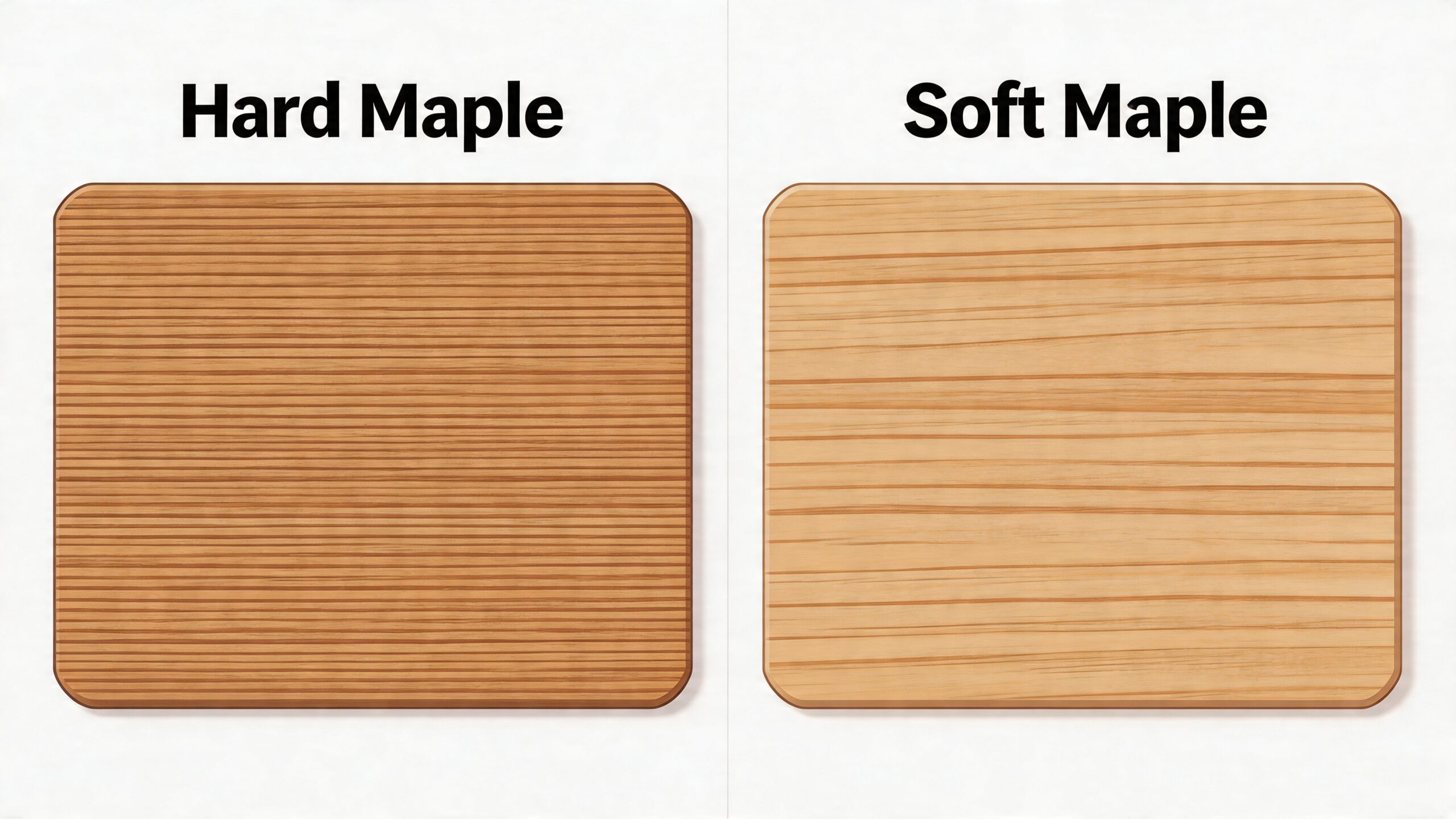
Both hard maple and soft maple are classified as hardwoods. That can mislead buyers into thinking the two are interchangeable. They aren’t, especially for high-contact furniture.
According to The Wood Database’s hard maple profile, hard maple has a Janka hardness of 1,450 lbf, while soft maple typically ranges from 700 to 950 lbf. The same source notes that hard maple is about 44 lb per cubic foot, compared with soft maple at 32 to 38 lb per cubic foot.
That gap shows up in daily life. Hard maple feels more resistant under pressure, and its greater density supports better shock resistance for furniture that gets used hard and often.
What that means for a dining table
If you’re choosing wood for a formal accent piece that won’t see much abuse, the difference may not be your first concern. If you’re choosing wood for a table where people live, it should be.
Here’s the practical distinction:
- Hard maple suits tabletops, cabinets, and other surfaces that need stronger dent resistance.
- Soft maple can still work well, but it won’t bring the same level of toughness to heavy-use areas.
- Dense wood often feels steadier in the long run, especially when a piece is expected to serve as a daily anchor in the room.
Soft maple isn’t bad wood. Hard maple is simply a better fit when the piece has to earn its keep every day.
For another example of how wood categories can confuse shoppers, this piece on whether sycamore is a hardwood is worth reading.
How Maple Compares to Other Popular Furniture Woods
Maple makes more sense when you place it beside other familiar furniture woods. A number by itself is useful. A number in context is better.
Janka hardness comparison of common furniture woods
| Wood Species | Janka Hardness Rating (lbf) |
|---|---|
| Hard maple | 1,450 |
| Soft maple | 700-950 |
| Red oak | 1,290 |
| White oak | 1,350 |
| Cherry | 950 |
This comparison uses values provided in the verified material. It gives you a clearer picture of where maple sits in the lineup. Hard maple is tougher than cherry and red oak on this scale, and slightly above white oak in the verified data provided for this article.
How to read the table like a furniture buyer
If your first reaction is “so maple is one of the harder domestic options,” that’s the right takeaway. It occupies a strong position for families who want a wood that can take regular contact without looking beaten up too quickly.
But numbers alone don’t choose the piece for you. A wood species has to match the job.
- Choose hard maple when surface dent resistance is a priority.
- Choose oak thoughtfully when you like visible grain and want a different visual character.
- Choose cherry when warmth and patina matter more than maximum hardness.
The smart decision isn’t “pick the hardest wood every time.” It’s “pick the wood whose strengths match the room and the routine.”
Strength with supply stability
Hard maple also stands out as an American hardwood with strong availability. According to the American Hardwood Export Council’s hard maple page, U.S. hard maple growing stock totals over 953 million m³, represents 6.6% of all U.S. hardwood inventory, and annual growth outpaces harvest by over 10 million m³.
For a homeowner, that matters in a practical way. A wood species with healthy supply is easier to specify for American-sourced furniture and easier to feel good about when you want durability without treating the material as scarce or fragile.
Beyond the Numbers Dent Resistance Versus Scratch Resistance
Here’s where many furniture conversations go off course. People hear that maple is hard, then assume it must also be scratch-proof. That leap sounds logical, but it isn’t accurate.
Denting and scratching are different problems
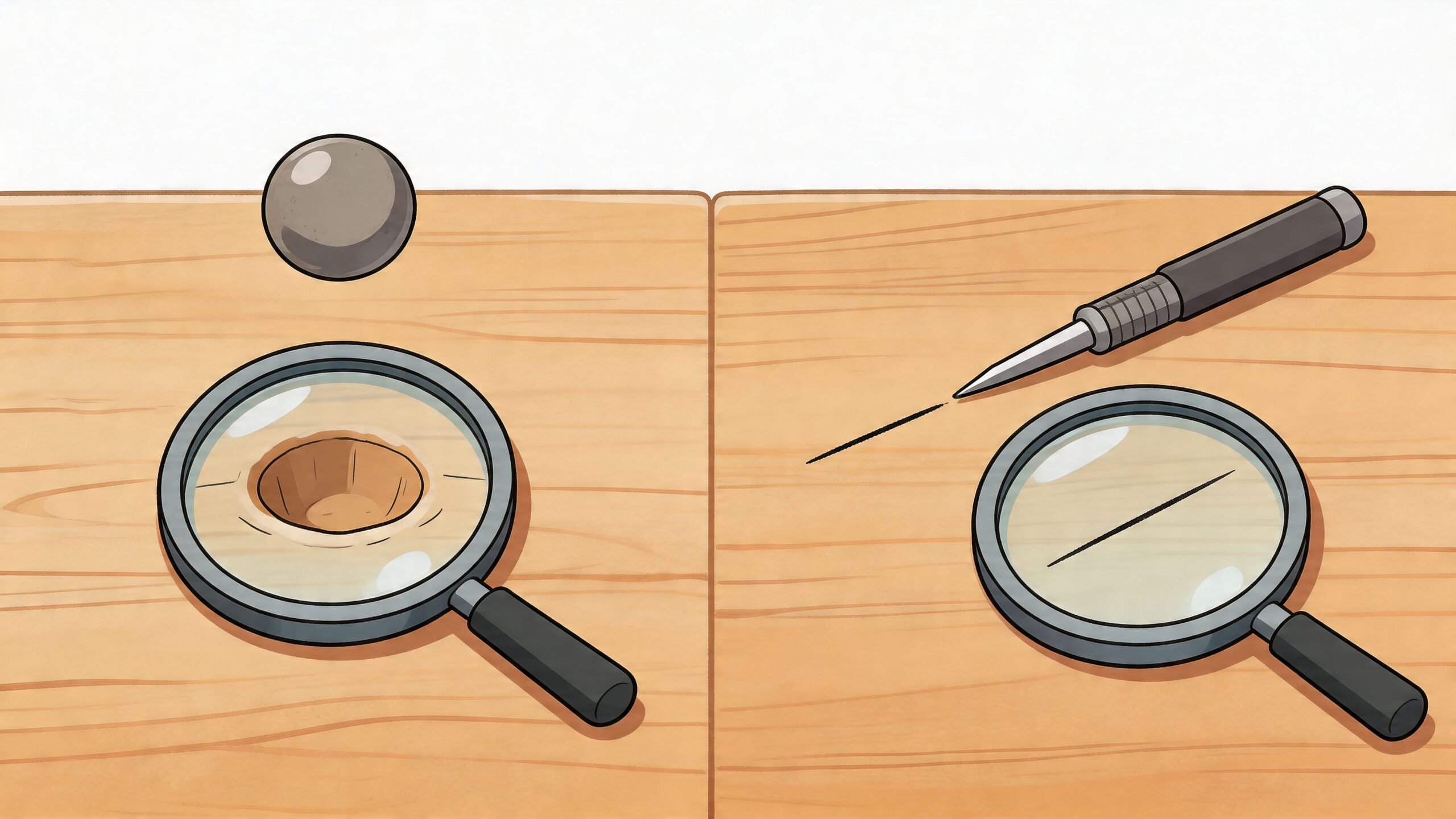
A dent comes from force pressing into the wood. A scratch comes from something dragging across the surface. The Janka test is built around indentation, not the look of fine abrasion.
That matters because a maple tabletop can do very well against a dropped object and still show the faint marks of daily friction. According to Amish Furniture Factory’s discussion of maple hardness, hard maple’s 1,450 lbf rating is excellent for preventing dents, but its tight grain can make fine surface scratches from utensils or pet claws more apparent than on open-grained woods like oak. The same source also notes that the Janka test measures indentation, not abrasion, so a durable, high-build finish is critical in active homes.
Why this confuses families
The confusion comes from a perfectly reasonable assumption. Harder sounds tougher. Tougher sounds safer. But surface appearance depends on more than hardness.
A few examples make the difference clearer:
- A dropped spoon may leave less of a mark on hard maple than on a softer species.
- A dog’s nails may create fine visible lines in the finish, even if the wood below remains sound.
- A rough ceramic plate can leave wear patterns that have more to do with finish and friction than raw wood hardness.
A hard wood can still show scratches. A softer-looking wood can sometimes hide them better because of grain pattern and finish behavior.
The finish matters as much as the species
For a busy household, the finish is not decoration. It’s protection. Maple’s fine, even look is part of its appeal, but that smoother visual field can also make small surface marks easier to spot.
If scratches are your main worry, read this guide on protecting wood furniture from scratches and stains. It helps translate wood science into day-to-day habits that keep a good table looking better longer.
Maintaining Your Maple Furniture for a Lifetime in Ohio
Maple is strong, but wood still responds to its environment. That’s especially true in Ohio, where homes move through heating season, humid summer stretches, and everything in between.
Humidity is the part many owners miss
A hard tabletop can still shift if the indoor environment swings too far. According to Columber’s discussion of maple wood hardness, hard maple’s density makes it durable, but it is sensitive to humidity fluctuations common in Ohio. The same source recommends maintaining 35-55% relative humidity to help prevent the wood from expanding or contracting in ways that stress joints over time.
That advice matters more than many people realize. When homeowners think about durability, they often focus only on impact. Seasonal movement is quieter, but it can affect long-term stability just as much.
What good care looks like in real homes
You don’t need to baby maple furniture. You do need to respect that it’s a natural material.
Good long-term care usually comes down to a few habits:
- Keep indoor humidity steady. A stable environment is easier on joints, tops, and panels than dramatic seasonal swings.
- Use the table as intended. Everyday use is fine. Repeated abuse isn’t a badge of honor for any wood.
- Clean gently. A soft cloth and sensible care beat harsh products and overly wet wiping.
- Protect high-friction zones. Placemats, felt, and sensible habits reduce wear where the finish sees the most contact.
Why maple can still be a lifetime wood
One reason people stay loyal to solid wood is that wear doesn’t always mean failure. A quality maple piece can often be maintained and, when needed, refinished. That’s part of what makes it feel different from furniture made to be replaced.
The best approach is simple:
- Buy a species suited to the job.
- Keep the indoor environment moderate.
- Treat the finish like the first line of defense.
- Expect the piece to live with you, not remain frozen in showroom condition.
Wood wants a stable home. Give it that, and it usually rewards you with long service.
If you want a straightforward care routine, this guide on how to care for wood furniture is a practical place to start.
Choose Your Forever Furniture at Vinson
A family comes into the showroom with a familiar question. They have kids, a dog, and a dining table that will see homework, holiday meals, and daily wear. What they usually want to know is simple: which wood will still look good years from now?
Hard maple is often part of that answer. It has the density and strength people look for in a hard-working piece, especially for tables, case goods, and other furniture that gets regular use. But the better answer goes beyond one hardness number.
Janka hardness helps you judge how well a wood resists dents from impact. Scratch resistance is a different issue. A chair buckle, pet nails, gritty dust, or something dragged across the surface can mark a finish even on a wood species with strong dent resistance. For a busy household, that difference matters because it helps you choose with clear expectations instead of assuming “hard” means every kind of damage is off the table.
That is why seeing furniture in person still matters. In a showroom, you can run your hand across the finish, compare grain patterns side by side, and notice how maple’s cleaner, finer look feels different from the bolder texture of oak or the warmer character of cherry. Those details are hard to judge from a screen, especially if you are trying to match the piece to the pace of your home.
Our Easton Town Center showroom is set up for that kind of decision. Shoppers come in looking for custom dining sets, Amish-made furniture, and mattresses they can test before buying. Through the Custom Order Program, you can personalize fabrics, finishes, and configurations with digital visualizers. The In-Store Design Studio offers Complimentary Design Consultations for space planning and finish coordination. If value is part of the equation, you can explore the Clearance Gallery with savings up to 70%. The Low Price Guarantee also offers a 110% refund of the difference if you find a lower local price at an authorized dealer within the stated window. Flexible financing through Synchrony HOME and White-Glove In-Home Delivery make the buying process easier.
If you want a useful starting point before you visit, the design quiz can help narrow your style and priorities.
Visit Vinson Fine Furniture at Easton Town Center if you’d like to compare maple, oak, and other solid woods in person, explore custom options, and get grounded advice on choosing furniture that fits the way your family lives.