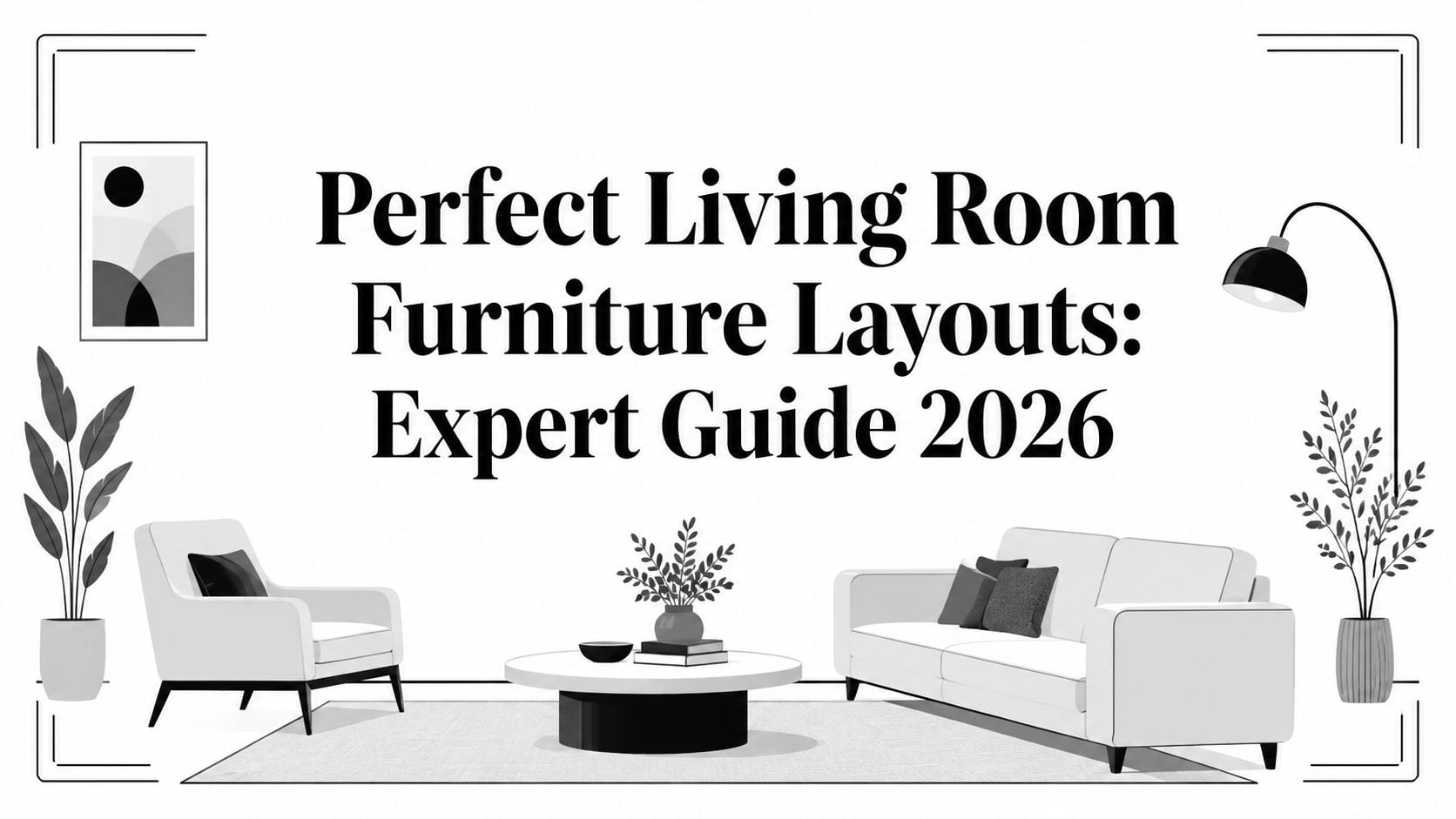
Perfect Living Room Furniture Layouts: Expert Guide 2026

A living room can look polished in a showroom photo and still feel wrong at home. The sofa blocks the natural path to the kitchen. The chairs are too far apart for easy conversation. The coffee table is either crowding knees or drifting so far away that nobody uses it. Most homeowners in Columbus recognize that frustration immediately. The room has good pieces, but the layout never settles.
A strong living room furniture layout fixes that tension by creating order without stiffness. The room needs to welcome quiet evenings, weekend guests, movie nights, and the ordinary movement of daily life. It also needs to age well. A forever layout isn't trend-driven. It's built on proportion, circulation, durable materials, and furniture that can adapt as a household changes.
That long view matters. From 2014 to 2019, the global furniture industry grew at a steady 2.2% annually, reflecting sustained demand for functional and attractive home environments, including better living room planning, according to IBISWorld data summarized here. Homeowners continue to invest in rooms that work harder and last longer.
For readers gathering ideas before moving a single chair, these furniture layout tips to attract buyers offer a useful outside perspective on how arrangement affects the way a room is perceived. The most successful rooms, however, aren't staged for a weekend. They're planned for years of real use, with seating, surfaces, and circulation working together as one composed whole.
Table of Contents
- Crafting Your Home's Heart An Introduction to Layout
- The Foundation of a Flawless Layout Measure and Map Your Space
- Define Flow and Focus The Art of Anchoring Your Room
- Select Your Anchor Pieces Sofas Sectionals and Chairs
- The Supporting Cast Coffee Tables Rugs and Occasional Seating
- Layering Light and Style for a Polished Finish
- Begin Your Design Journey at Vinson Fine Furniture
Crafting Your Home's Heart An Introduction to Layout
The living room carries more responsibility than any other room in the house. It greets guests, absorbs family routines, and often has to balance relaxation with entertainment. That's why layout problems feel so persistent. A room can be attractive and still ask too much of the people using it.
A thoughtful living room furniture layout creates three things at once. It gives the eye a place to settle, it gives the body room to move, and it gives people a reason to stay. Those outcomes don't come from filling every corner. They come from editing, spacing, and choosing pieces with enough substance to anchor the room for the long haul.
A good layout doesn't just fit furniture. It protects the experience of the room.
That's also where material quality matters. A bench-made sofa with a solid hardwood frame, top-grain leather that gains character over time, or a solid cherry coffee table with real weight under the hand changes the room in a way temporary pieces never do. The layout begins to feel settled because the furniture itself has permanence.
Timeless rooms rarely rely on novelty. They rely on discipline. The right proportions, durable construction, and a plan built around real living will outlast trend cycles every time.
The Foundation of a Flawless Layout Measure and Map Your Space
Start with the shell, not the furniture
Every successful living room furniture layout starts the same way. Measure the room before shopping, before pinning inspiration, and before deciding whether the answer is a sofa, sectional, or a pair of chairs.
The room needs a complete record of its fixed conditions. That means wall lengths, ceiling height, doorway widths, window placement, fireplace dimensions, vents, switches, outlets, and any built-ins that affect placement. A foundational layout method begins with precise spatial mapping and a to-scale floor plan, which helps avoid choosing furniture that can reduce perceived room size by up to 15% if it's scaled incorrectly, as noted in this room measuring guidance.
A simple measuring checklist keeps mistakes from compounding:
- Record every wall: Note full lengths, but also mark breaks created by cased openings or trim.
- Measure obstacles: Fireplaces, floor vents, radiators, and return vents often decide where large pieces can and can't sit.
- Check entry points: A beautiful sofa isn't useful if it can't turn through the front door or stair hall.
- Mark power locations: Lamps, reclining furniture, and media placement all depend on usable outlets.
For homeowners who want a practical walkthrough before sketching, this guide on how to measure furniture is a helpful reference.
Build a simple plan you can trust
A scale drawing doesn't need to be elaborate. Graph paper works. A digital floor-planning app works. What matters is accuracy and consistency.
Practical rule: The floor plan should show the room as it exists, not as it's hoped to be.
Once the shell is drawn, add furniture cutouts or digital blocks. Move them around before lifting anything heavy. Doing so allows problems to appear early. A sofa that seemed modest on paper may dominate a wall. A favorite chair may interrupt a doorway swing. A coffee table may leave too little room to pass.
Some homeowners also benefit from outside design help at this stage. An in-store design studio or complimentary consultation can review measurements, test arrangements, and prevent expensive ordering errors before a custom piece goes into production.
Define Flow and Focus The Art of Anchoring Your Room
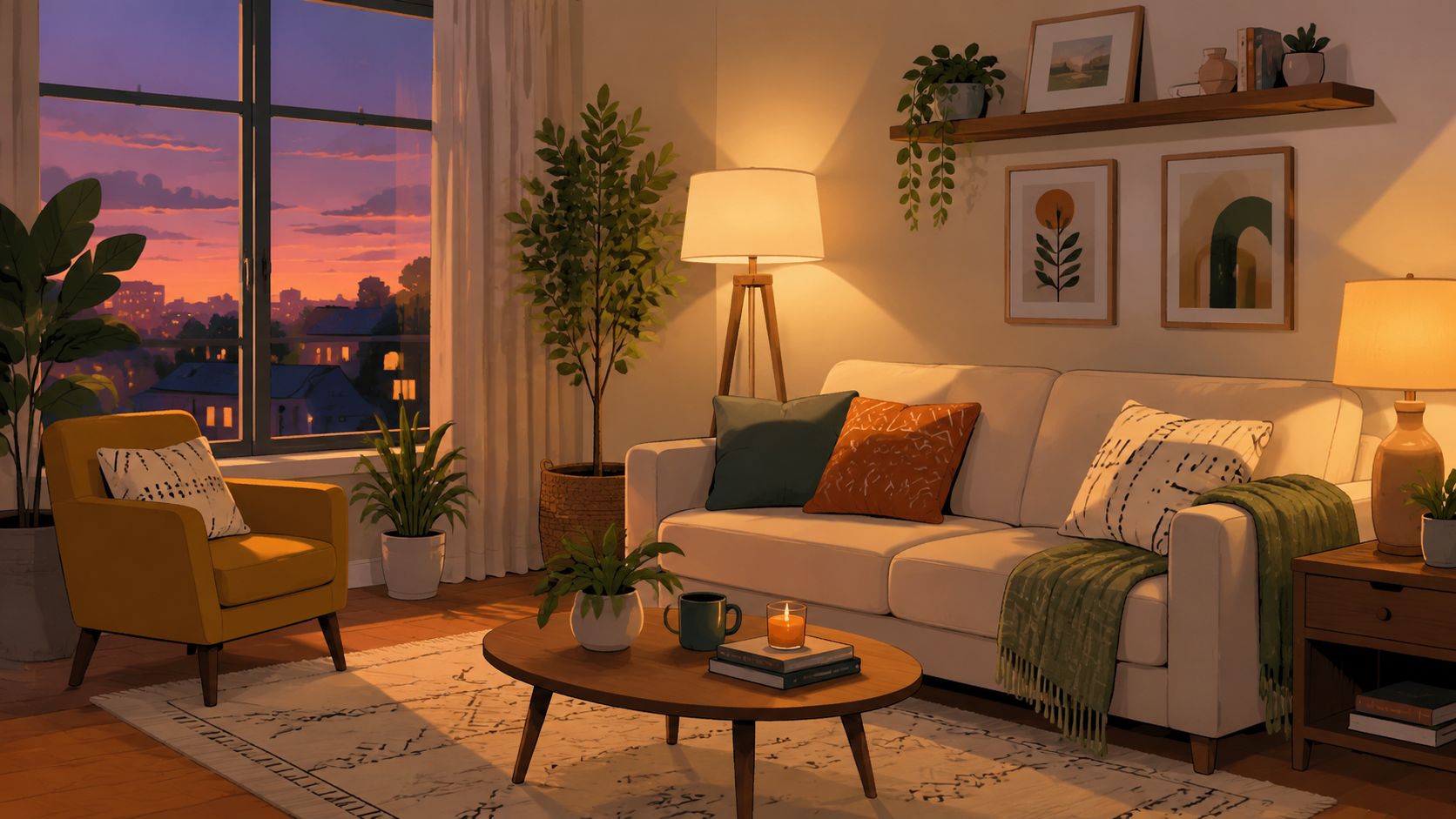
A room feels calm when two decisions are clear. First, what deserves attention. Second, how people move through the space without weaving around furniture. When either one is unresolved, the room reads as unsettled.
Choose the room's visual leader
Most living rooms already have a focal point. It may be a fireplace, a wall of windows, or a media wall. The layout works best when the main seating acknowledges that feature instead of arguing with it.
That doesn't mean every seat must face one direction in rigid formation. It means the arrangement should have a visual reason for existing. A sofa can frame the central zone, chairs can soften the edges, and a console or occasional table can complete the composition without pulling attention off course.
Rooms with televisions often need extra discipline. Screen placement affects glare, neck comfort, and conversation. For households planning a media-centered room, this guide to home theater installation can help clarify the technical side while the furnishing plan stays focused on comfort and proportion. For furniture placement around media, this calculator for the best placement for your sofa and television is a practical tool.
Protect the paths people actually use
The room's pathways matter as much as its view. Major walkways should remain at least 36 inches wide for unobstructed circulation, and layouts that follow that benchmark show a 90% increase in user satisfaction regarding functionality and aesthetic balance, as cited in the earlier source reference.
That standard changes behavior in a room immediately. People stop sidestepping corners. Guests don't brush lamp tables on the way to a seat. The room starts to feel intuitive.
A few principles tend to hold up well:
- Keep the main route obvious: The path from the doorway to the primary seating zone shouldn't cut through the center of the conversation area.
- Float key furniture when possible: Pulling pieces slightly off the walls often improves depth and makes the arrangement feel intentional.
- Avoid diagonal clutter: Angled placement can work in difficult rooms, but random angles usually weaken flow.
- Respect the hearth or media wall: Leave enough open area so the focal point feels framed, not crowded.
When a room has both focus and flow, it stops feeling like a storage area for furniture and starts functioning like a destination.
Select Your Anchor Pieces Sofas Sectionals and Chairs
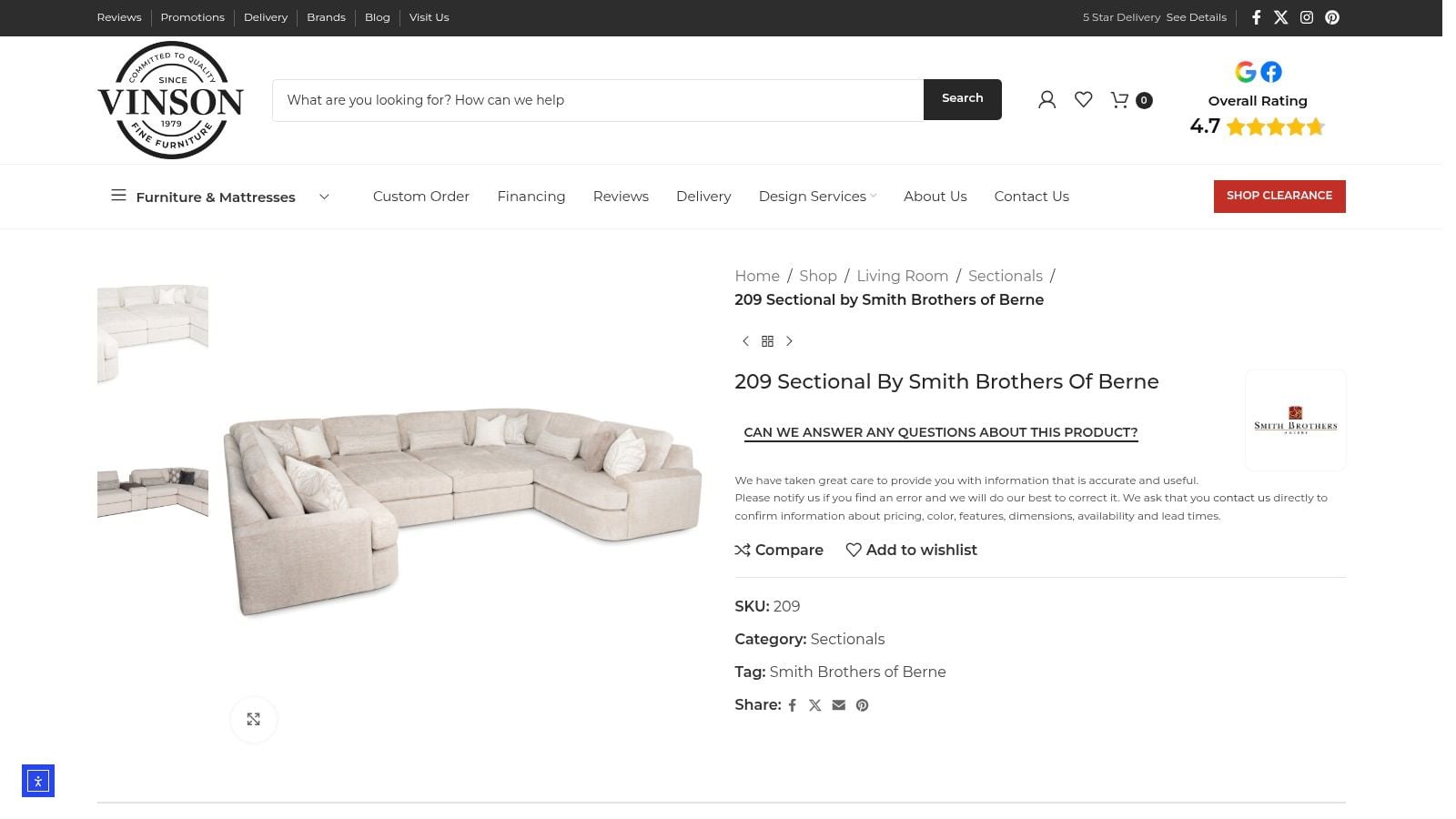
The anchor pieces decide whether a living room feels composed or compromised. If the sofa is oversized, everything around it becomes defensive. If it's undersized, the room feels temporary and underfurnished. Consequently, investment thinking matters most.
Scale the sofa before choosing the silhouette
A reliable rule is to keep the sofa at about two-thirds, or 66%, of the wall length it occupies, which keeps the room in proportion according to the earlier source guidance. That ratio prevents the common mistake of buying a piece that visually swallows the wall or leaves it looking oddly adrift.
Scale comes before style. A clean-lined track-arm sofa, a rolled-arm bench-seat design, or a power reclining sectional can all work if the footprint suits the room. The wrong size in the right style still fails.
For readers comparing frame depth, seat height, and overall dimensions, this ultimate sofa buying guide for your living room offers a practical starting point.
Pick seating that supports conversation and longevity
Conversation depends on spacing, not just seat count. Seating pieces should sit between 3.5 and 10 feet apart, with closer than 3.5 feet feeling intrusive and farther than 10 feet making conversation strain, based on the earlier source guidance. That range gives the room social ease without forcing it.
The right construction also protects the layout over time. A sofa built with a solid hardwood frame holds its shape better and keeps its stance, which matters in a room planned for years rather than seasons. That's especially important when the piece includes motion engineering. Power recline mechanisms, swivel functions, rockers, and gliders need stable, durable construction underneath them.
For many Columbus homeowners, three categories do the heaviest lifting:
- Custom leather sofas: Top-grain and performance leathers bring depth, resilience, and a broken-in softness that improves with age.
- Sectionals with power motion: These suit media-centered rooms and larger households, especially when chaise placement is chosen carefully.
- Swivel and accent chairs: They add flexible seating without the visual mass of a second sofa.
Demand for dual-purpose living room furniture has grown significantly in global markets, according to Statista's living room and dining room furniture market analysis. That trend aligns with layouts that need flexibility without sacrificing a polished look.
A quick comparison of anchor seating choices
| Seating type | Best use in layout | Trade-off to watch |
|---|---|---|
| Standard sofa | Balanced rooms with a clear focal wall | May need extra chairs to complete the conversation area |
| Sectional | Family rooms and media spaces needing more lounge seating | Can limit future rearrangement if the configuration is too specific |
| Pair of chairs with sofa | Rooms that need a lighter, more conversational feel | Requires careful spacing so the grouping doesn't feel scattered |
| Motion seating | Households prioritizing comfort and everyday use | Needs thoughtful clearance around recline paths |
A forever layout also benefits from customization. Through a custom order program with brands such as Smith Brothers of Berne, Canadel, and Mavin, homeowners can adjust fabrics, finishes, and proportions, often using 3D visualizers to confirm the fit before ordering. That flexibility matters when the goal is a room that will still work beautifully after the next move, renovation, or family transition.
The Supporting Cast Coffee Tables Rugs and Occasional Seating
Anchor seating sets the stage, but the room doesn't work until the secondary pieces do their job. Coffee tables, rugs, end tables, and occasional chairs are where comfort becomes usable.
Place the coffee table for reach and ease
The coffee table shouldn't be guessed at. The ideal distance between the sofa and coffee table is 16 to 18 inches, which keeps drinks, books, and remotes within reach while preserving enough clearance to move comfortably, according to this living room layout guide.
That distance solves two common problems at once. Too close, and the room feels cramped. Too far, and the table becomes decorative instead of functional.
A few placement rules help immediately:
- Match the table to the seating group: The coffee table should feel related in scale to the sofa, not like an afterthought.
- Watch height carefully: A table that's close to seat height tends to feel easier and more natural to use.
- Choose materials with presence: Solid cherry, oak, maple, or walnut gives the center of the room visual gravity and lasting durability.
For a closer look at this specific measurement, this guide on the distance between couch and coffee table is worth keeping on hand.
Use rugs and secondary seating to unite the plan
An area rug should connect the main seating, not drift beneath the coffee table like an island. A reliable approach is choosing a rug large enough to catch at least the front legs of the main seating pieces. That one decision makes the entire grouping feel settled.
Occasional seating should add flexibility without interrupting flow. Swivel chairs are especially useful in rooms that need to pivot between conversation and television. Rockers and gliders soften a corner and bring motion without demanding the footprint of a recliner. Accent chairs can also introduce tactile contrast, especially beside leather upholstery or a substantial solid-wood table.
Secondary pieces shouldn't compete for attention. They should make the anchor pieces easier to live with.
Living Room Layout Spacing Rules at a Glance
| Element | Recommended Distance | Reason |
|---|---|---|
| Sofa to coffee table | 16 to 18 inches | Keeps the table reachable while preserving legroom and passage |
| Seat to seat for conversation | 3.5 to 10 feet | Supports easy conversation without crowding or shouting |
| Major walkway | 36 inches minimum | Maintains comfortable circulation through the room |
Layering Light and Style for a Polished Finish
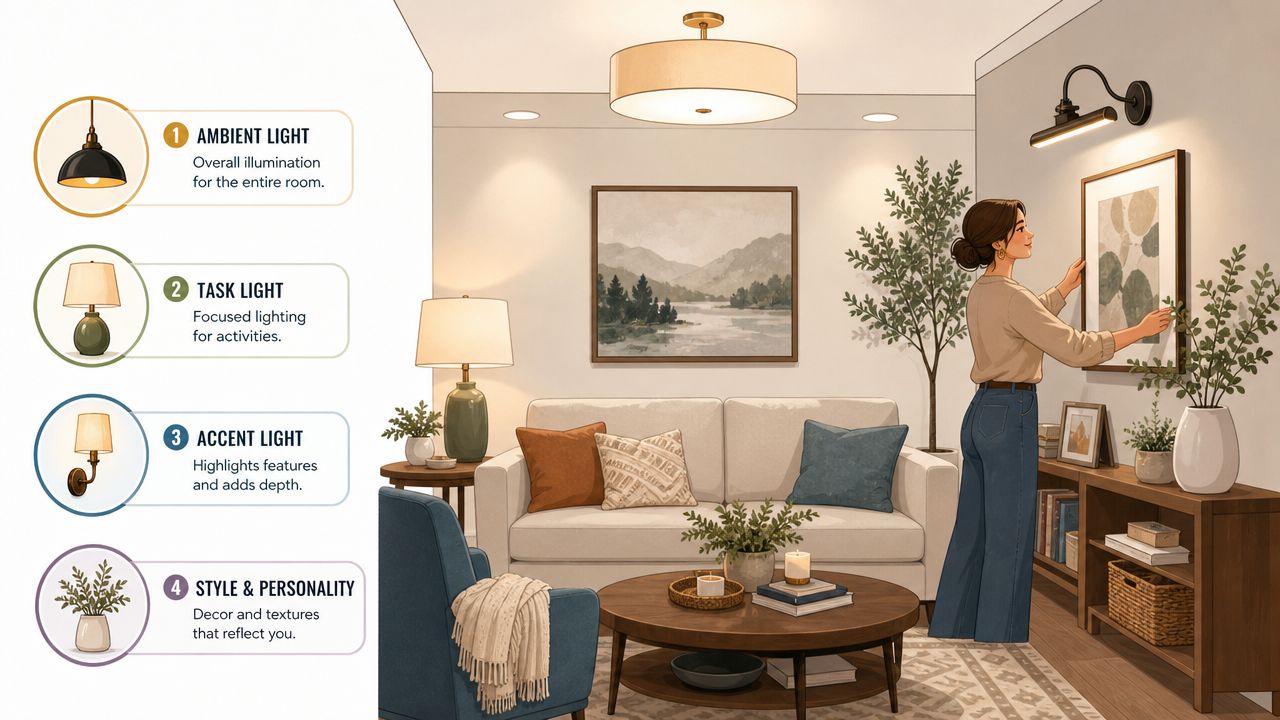
Furniture can be arranged perfectly and still feel incomplete if the lighting is flat. The final polish comes from how the room glows in the evening, where the eye lands, and how the materials read under light.
Light the room in layers
A polished room uses more than one source of light. Ambient light handles overall illumination. Task lighting supports reading and close work. Accent lighting highlights art, architecture, or the texture of a solid walnut table or a top-grain leather arm.
That layered approach gives the room dimension and rhythm. It also helps separate functions within one open space. A floor lamp can define a reading chair. A table lamp can soften the edge of a sectional. A picture light or directional accent can add depth to a fireplace wall.
Readers interested in how lighting choices shape the way interiors are perceived may appreciate these pro techniques for stunning interiors. The same sensitivity that makes a room photograph well often makes it feel better in person.
Style with restraint and material depth
Styling works best when it supports the architecture and furniture rather than burying it. A room with heirloom-quality pieces doesn't need to be crowded with accessories. It needs a few thoughtful layers.
Consider this mix:
- Textural contrast: Leather, woven textiles, and solid hardwood create richness without visual noise.
- Personal objects: Books, ceramics, and framed pieces should feel edited, not scattered.
- Natural rhythm: Repeating wood tones or metal finishes helps the room feel composed.
Designer's note: The most timeless living rooms feel collected because each object earns its place.
The goal isn't a decorated room. It's a room with atmosphere, where bench-made furniture, good light, and quiet restraint work together.
Begin Your Design Journey at Vinson Fine Furniture
A strong plan on paper becomes much more useful once the furniture can be tested in person. Seat depth feels different when someone sits in it. Leather quality becomes obvious by touch. The glide of a motion chair and the heft of a solid maple or walnut table tell more than a product description ever can.
That's why many Columbus homeowners benefit from bringing their measurements, photos, and questions into a showroom setting. At Vinson Fine Furniture, located at Easton Town Center, shoppers can use the In-Store Design Studio for complimentary design consultations focused on room layout, scale, finishes, and material selection. The store's Custom Order Program includes options from Smith Brothers, Canadel, and Mavin, with fabrics, finishes, and 3D visualizers that help tailor pieces to the room rather than forcing the room to adapt to standard sizing.
The material standards also matter. Wood furniture centers on solid cherry, oak, maple, and walnut. Upholstery options include top-grain and performance leathers, along with premium seating choices such as sectionals, reclining furniture, swivel chairs, rockers, and gliders. For shoppers focused on long-term value, the store also offers a Low Price Guarantee with a 110% refund of the difference and a Clearance Gallery with savings up to 70%, based on the publisher information provided above.
For those considering an appointment, this guide to a free interior design consultation outlines what to bring and how the process works.
A forever living room rarely comes from impulse purchases. It comes from measured planning, durable materials, and a layout shaped around real habits. The reward is a room that feels settled now and remains useful later, whether the household grows, routines shift, or priorities change over time.
For homeowners ready to turn measurements and ideas into a finished room, Vinson Fine Furniture offers a practical next step at Easton Town Center. Bring a floor plan, sit in the seating, compare solid hardwood by hand, and work through layout choices with a design consultant who can help shape a living room that feels grounded, flexible, and built to last.