Quarter Sawn vs Plain Sawn Wood: Choose Your Best


When a homeowner in Easton starts planning a custom dining table, the usual question is whether the wood should look beautiful today. The better question is whether the cut will still feel right after years of Ohio heating cycles, family dinners, and everyday use. That's where quarter sawn vs plain sawn stops being a technical debate and becomes a practical design decision for a solid hardwood investment.
| Criterion | Quarter Sawn | Plain Sawn |
|---|---|---|
| Production method | Log is divided into quarters, then sawn at a steeper angle to the growth rings | Cuts run parallel to the tangent of the log |
| Yield and waste | Fewer usable boards, more waste, more labor | Highest board-foot output per log, less waste |
| Cost tendency | Premium option because production is slower and less efficient | More economical because mills get more yield |
| Grain character | Straighter grain, more visible medullary rays, reduced movement | Wider boards, flowing cathedral grain, more common look |
| Best fit | Pieces where stability and visual consistency matter | Projects where value, width, and availability matter |
For Central Ohio homeowners choosing solid wood furniture, that difference matters most in the pieces that get touched, leaned on, and lived with every day. A dining table that anchors a room, a bedroom set that should age gracefully, or a motion piece that needs consistency in its frame all benefit from understanding how the board was cut. For a broader hardwood primer, see Vinson's guide to choosing the right hardwood for longevity and style.
Introduction to Quarter Sawn vs Plain Sawn
A homeowner in Columbus walks into the showroom with a simple goal, a table that looks substantial, feels right in the hand, and doesn't become a constant maintenance project. The surprise usually comes later, when the conversation shifts from species to cut. Quarter sawn vs plain sawn can change how a piece moves, how it reflects light, and how much it costs to produce.
The practical distinction starts at the log. Quarter sawn wood is made by dividing the log into quarters and then sawing those sections at a steeper angle to the growth rings, while plain sawn lumber is cut in a way that follows the log's tangent and yields wider, more economical boards. That means quarter sawn uses more labor and produces fewer usable boards, while plain sawn remains the standard choice for value and volume quarter-sawn versus plain-sawn lumber.
Why the cut matters before the species does
Species still matters, of course, but the cut controls the board's behavior. Plain sawn boards are generally wider and more prone to warping and cupping, while quarter sawn boards show straighter grain and less movement, which is why they've stayed a premium choice for furniture that needs to stay visually calm over time wood grain and growth-ring orientation.
Practical rule: the more a piece depends on visual consistency and dimensional stability, the more the cut starts to matter.
That's especially relevant for buyers comparing custom dining tables, bedroom suites, and storage pieces in a home that sees real seasonal changes. A helpful buying mindset is to ask not just, “What wood is it?”, but “How wide is the board, how much movement can the piece tolerate, and how much long-term stability is worth paying for?” For a deeper look at board behavior, this hardwood longevity guide gives a useful foundation.
Understanding Cutting Methods of Solid Hardwood
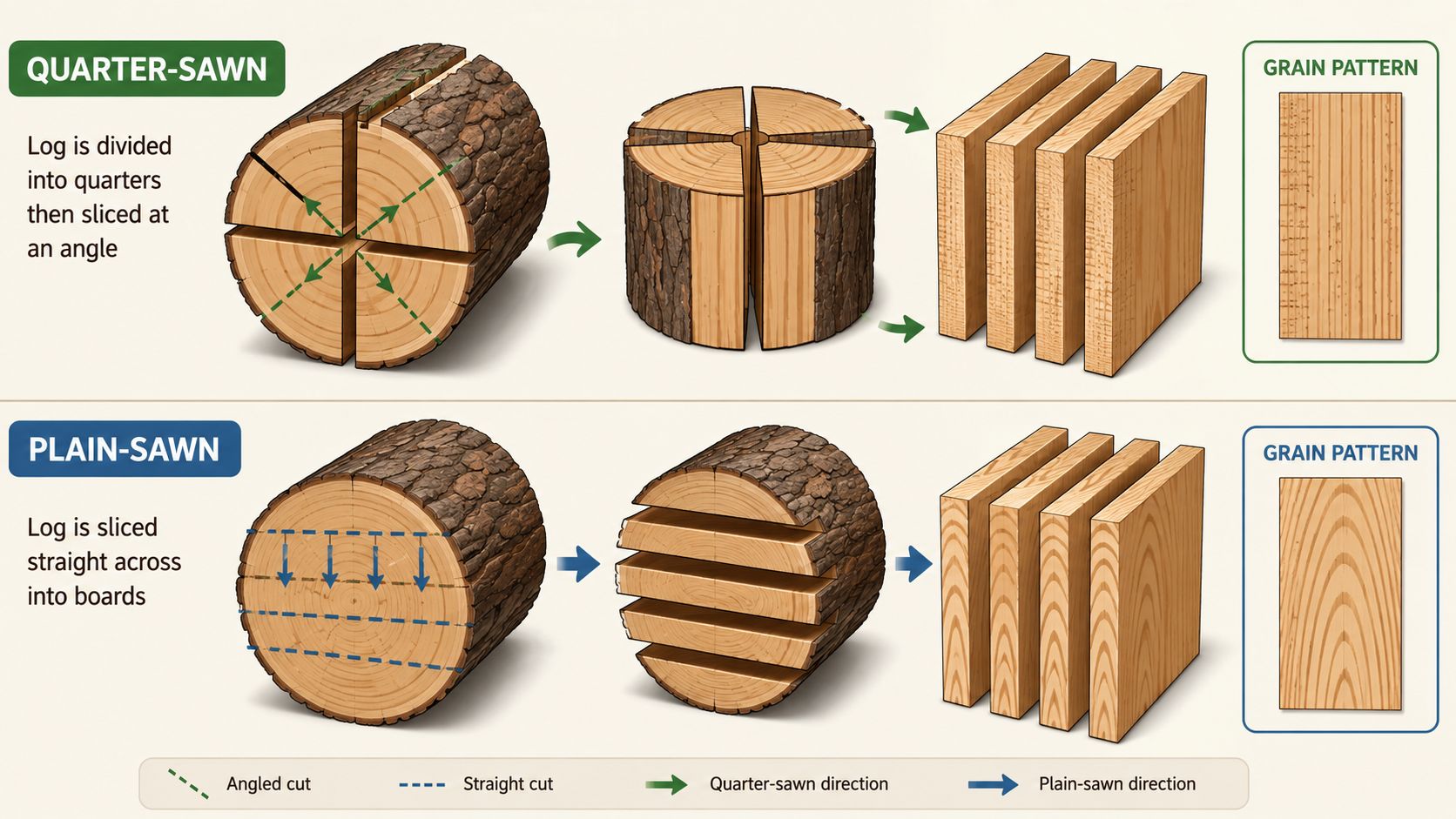
Quarter sawn lumber starts with extra handling. The log is first divided into four quarters, then each quarter is sawn so the board face intersects the growth rings at a steeper angle, typically around 60° to 90° plain-sawn, quarter-sawn, and rift-sawn lumber. That extra handling is why quarter sawn boards cost more to produce, not because of branding, but because the mill gives up yield and adds labor.
Plain sawn, also called flat sawn, is the opposite in production logic. The log is sliced more directly through the center, and the cuts run parallel to the log's tangent. That approach produces more board-foot output per log, which is why plain sawn is the most common and economical cut in the market plain sawn lumber efficiency and cost.
How the board face tells the story
The face of the board reveals the geometry. Plain-sawn boards usually show growth-ring angles around 0° to 30°, while quarter-sawn boards tend to land around 60° to 90° wood grain and growth-ring orientation. That angle changes how the board reacts to seasonal humidity, which is why the cut matters so much in a climate with warm summers and dry indoor heating.
For hardwood buyers who want a quick way to think about it, the decision is simple:
- Quarter sawn: better when the board must stay visually straight, resist cupping, and feel more controlled in use.
- Plain sawn: better when the project benefits from wider boards, easier sourcing, and lower cost.
- Mixed-cut builds: useful when a piece needs a balance of appearance, width, and value.
Quarter sawn doesn't make wood invincible. It just gives the finished piece a more disciplined grain structure and less tendency to twist under changing conditions.
That's why custom buyers should pay attention not only to the species, but also to the actual cut used in the board selection. For joinery context, this guide to wood joints helps explain how board stability and construction methods work together in solid hardwood furniture. For maple-specific density and hardness context, the maple hardwood guide is a useful companion.
Structural and Motion Performance Differences
The structural difference shows up most clearly when a board has to stay flat under load. Quarter sawn boards are generally more dimensionally stable and resist cupping better than plain sawn boards because the growth rings strike the face at a steeper angle plain-sawn, quarter-sawn, and rift-sawn lumber. That matters in tabletops, drawer fronts, bed rails, and any furniture surface that sees repeated seasonal stress.
Plain sawn remains perfectly workable for many pieces, especially when the board is narrower and the design doesn't depend on long, wide spans. The trade-off is that plain sawn lumber is more prone to warping and cupping, so the finished piece may ask more of the joinery and finishing system over time grain pattern and movement differences. In practical terms, the cut affects how much the wood wants to move, not just how it looks on day one.
Where stability matters most
For wider surfaces, the cut becomes easier to justify. Wide dining tops, fireplace mantels, and long horizontal faces benefit from the reduced movement associated with quarter sawn lumber. In motion furniture, the relationship is more subtle, but still important. A frame that stays more consistent helps keep moving parts aligned, which is one reason solid hardwood motion pieces with careful construction can feel smoother and more settled in daily use.
A few buying priorities help separate real need from unnecessary upcharge:
- Wide tabletops: prioritize stability if the span is large and the room has seasonal humidity swings.
- Narrower case pieces: plain sawn often works well when the design doesn't demand high movement resistance.
- Motion furniture frames: consistency in solid hardwood components supports smoother operation and fewer seasonal adjustments.
- Drawer fronts and visible panels: grain straightness can improve both appearance and perceived precision.
Practical insight: when movement matters, the board's orientation is part of the engineering, not just the finish schedule.
That's also why joint quality still matters. Strong joinery can help absorb stress, but it can't fully undo the behavior of a poorly chosen board. For that reason, solid hardwood pieces built with disciplined construction usually pair best with the cut that suits the furniture's dimensions and purpose.
Aesthetic Comparison and Grain Patterns
Quarter sawn and plain sawn don't just behave differently, they read differently across a room. Quarter sawn wood tends to produce a calmer, straighter visual field with more visible medullary rays, while plain sawn boards often show broader cathedral-shaped arches and a more traditional, flowing face grain and figure comparison. That's why two tables in the same species can feel completely different once they're finished.
For design-minded homeowners, that visual distinction matters as much as stability. Quarter sawn oak, for example, often looks crisp and architectural, especially when the finish emphasizes linear grain. Plain sawn cherry or walnut can feel warmer and more expressive, with figure that moves across the panel in broader arcs. For a closer look at walnut tone and character, this walnut color guide is a useful reference.
| Criterion | Quarter Sawn | Plain Sawn |
|---|---|---|
| Grain appearance | Straighter, calmer, more linear | Sweeping cathedral patterns, more variation |
| Medullary rays | More visible in species that show ray fleck | Less pronounced |
| Visual mood | Refined, orderly, precise | Warm, classic, organic |
| Stain response | Often reads more uniform because of the linear face | Can highlight contrast across cathedral grain |
| Best design use | Formal tables, clean-lined bedroom pieces | Rustic or traditional statement pieces |
Reading finish and texture in the room
Finish sheen also changes the way the grain comes forward. A smoother, straighter face tends to reflect light in a more controlled way, while cathedral grain can create more visual motion across the top. For designers and homeowners planning renderings before a custom order, a strong material workflow matters, and PBR techniques for architectural visualization is a good technical resource for understanding why grain direction changes the look of a finished surface.
The tactile difference shows up too. Quarter sawn boards often feel more composed under the hand, partly because the grain reads as tighter and more linear. Plain sawn surfaces can feel livelier, which is not a flaw, just a different aesthetic goal.
For solid oak, maple, cherry, or walnut, the right cut depends on the room's design language. A contemporary dining space often benefits from the disciplined look of quarter sawn boards. A more relaxed family room or traditional dining nook may suit the broader movement of plain sawn grain better.
Comparing Stability Wear and Cost
The cost gap is built into the sawmill, not the showroom. Plain-sawn lumber is the most common and economical cut, and it yields the highest board-foot output per log, which is why it's frequently 20–30% cheaper than quarter sawn in many species plain sawn lumber cost difference. Quarter sawn costs more because the mill gives up more material and spends more time processing the log.
That premium can still make sense. A board that moves less may require fewer finish touch-ups and fewer seasonal corrections, especially on large horizontal surfaces that get a lot of visual scrutiny. The value question is not whether quarter sawn is “better” in the abstract. It's whether the added stability is worth paying for on the specific piece being built.
A practical way to weigh the trade-off
The most useful buyer framework is to match the cut to the job:
- Choose quarter sawn when: the top is wide, the piece is highly visible, or the home's conditions swing enough to make movement a real concern.
- Choose plain sawn when: budget matters more than premium grain consistency, or the board widths suit the design without demanding extra stability.
- Choose selectively when: only certain parts of the piece need the premium cut, such as a tabletop or exposed panel.
A conditioned home doesn't erase wood movement, but it can reduce the need to overbuild for every situation. That's why some pieces deserve quarter sawn attention while others don't need it. The smarter spend is often selective, not blanket.
Key takeaway: pay for quarter sawn where movement would be noticeable, not everywhere a hardwood nameplate sounds premium.
For a broader construction and material context, this solid wood versus engineered wood guide helps frame why real hardwood construction remains the right starting point for heirloom furniture. Once solid hardwood is the baseline, the cut becomes the next meaningful decision.
Ideal Applications and Custom Options
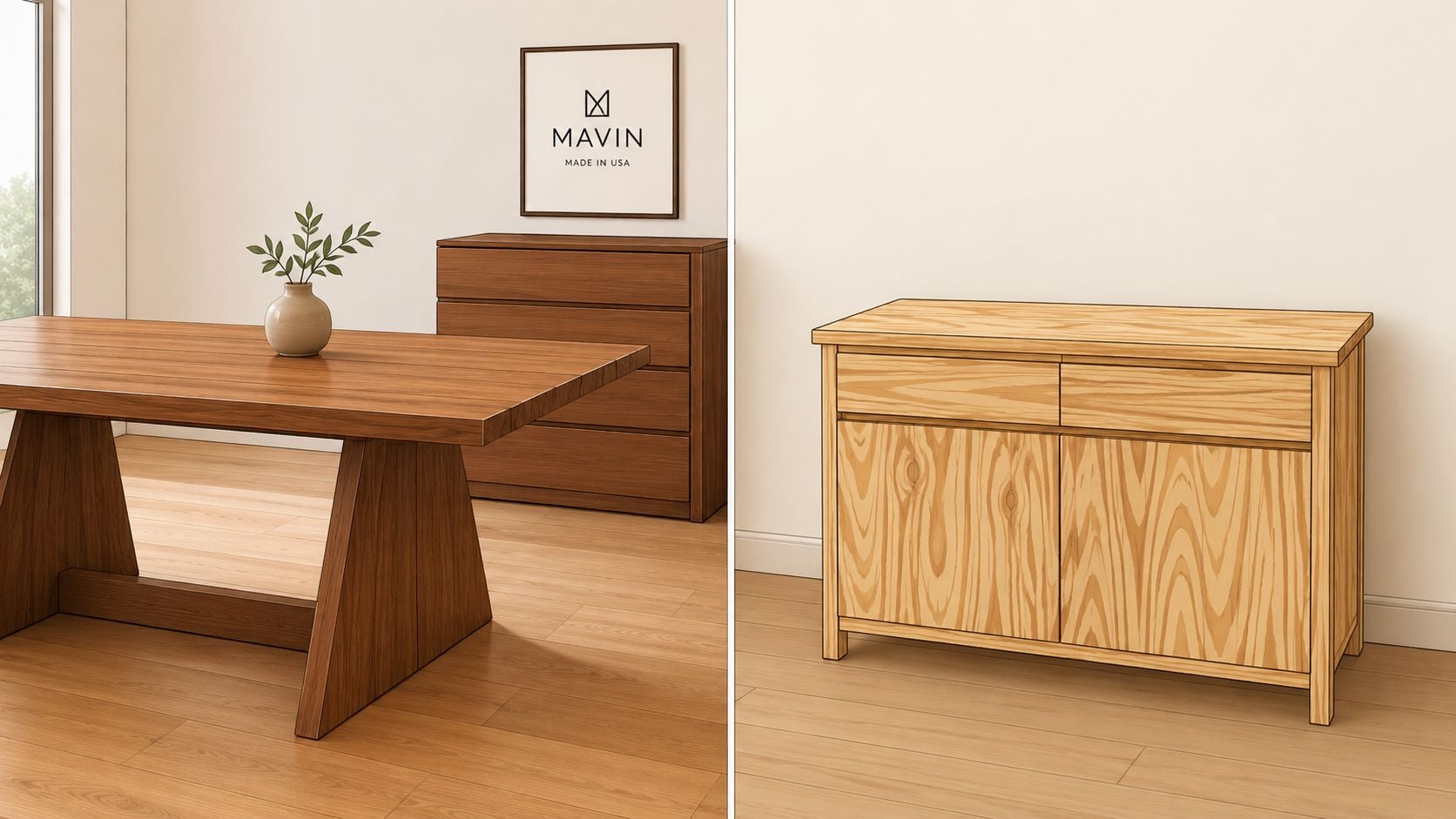
Quarter sawn earns its keep where width, visibility, and movement matter at the same time. Wide-top dining tables, drawer fronts, and long bedroom panels are obvious candidates because the boards have more opportunity to show their grain and more reason to stay flat. For tabletops wider than 40 inches, the stability argument becomes especially practical rather than merely aesthetic quarter-sawn lumber needed for specific uses.
Plain sawn fits well where the piece benefits from broader boards and a more relaxed grain pattern. Sideboards, accent tables, open shelving, and many case pieces can look excellent in plain sawn oak, cherry, walnut, or maple, especially when the design isn't trying to fight the natural cathedral shape of the grain. The right cut is the one that supports the furniture's scale and the room's visual rhythm.
Matching cut to room and use
A simple application guide works well in practice:
- Quarter sawn for: larger dining tops, visible drawer faces, and bedroom pieces that need a cleaner, more linear look.
- Plain sawn for: secondary surfaces, lighter-use tables, and designs that want warmth and broader grain movement.
- Species pairing: oak often highlights ray fleck beautifully, while maple, cherry, and walnut can each present very different personalities depending on the cut.
Customization matters because no two homes use the same furniture the same way. A formal dining room in Columbus may call for a restrained quarter sawn top, while a casual breakfast area might be better served by plain sawn boards that deliver stronger value and a more relaxed visual texture. In both cases, the point is to fit the board to the function, not to force one cut into every room.
For a custom build, the best decisions are made before the order is placed. That's where finish samples, fabric coordination for seating, and design visualization help prevent expensive guesswork in the final product. Solid hardwood still leads the way, but the cut helps the piece look intentional from every angle.
Maintenance Tips for Solid Hardwood Furniture
Solid hardwood lasts longest when the room and the finish are treated as part of the furniture system. Columbus homes see seasonal shifts, so humidity control matters. Keeping indoor conditions steady with humidification in dry months and dehumidification when the air gets damp helps reduce unnecessary wood movement and finish stress.
Daily care should stay simple. Use a soft, dry or lightly damp cloth for wood surfaces, avoid soaking the finish, and wipe spills quickly so moisture doesn't sit at the seams. On upholstered pieces with top-grain leather, a gentle dusting and careful cleaning preserve the surface without drying it out.
Small habits that protect the finish
- Control humidity: steady indoor air helps solid hardwood stay calmer through seasonal swings.
- Avoid harsh cleaners: strong chemicals can dull wood finish and dry leather surfaces.
- Respect sunlight exposure: direct heat and bright sun can accelerate fading and finish wear.
- Refresh thoughtfully: periodic oiling or re-waxing should match the finish system already on the piece, not a random household product.
Amish-made dining and bedroom sets tend to reward that kind of basic discipline. The wood, joinery, and finish all last longer when the furniture isn't fighting the environment every week. That doesn't mean the piece needs pampering, just consistent care and the right room conditions.
Clean wood gently, keep moisture swings controlled, and let the furniture age in a stable home rather than in a fluctuating one.
Choosing the Right Cut for Your Custom Piece
The best choice starts with three questions. How wide is the piece, how visible is the grain, and how much movement can the room tolerate? If the answer leans toward a wide, formal, or highly visible surface, quarter sawn deserves serious consideration. If the priority is value, broader boards, and a more relaxed grain story, plain sawn often fits better.
That decision becomes easier with in-person guidance, finish samples, and a sit-test that lets the buyer feel the piece as a whole, not just read a spec sheet. A good custom order also benefits from a design quiz, clear finish selection, and a store team that can balance cut, species, and room use without pushing the wrong upgrade. For local buyers, the Easton Town Center showroom remains the right place to compare the feel of solid hardwood, leather, and motion seating in one visit.
A few final considerations keep the choice grounded:
- Start with use: daily family dining asks more of the material than a decorative side table.
- Match the cut to the surface width: wider tops justify stability more often.
- Balance finish and grain: the final look should suit the room, not just the catalog photo.
- Protect the budget: value should include durability, not only the first price tag.
For shoppers comparing custom hardwood, motion seating, and bedroom pieces, the smartest path is to see the materials in person and judge the weight, grain, and finish under real light. White-Glove Delivery, a Low Price Guarantee with a 110% refund on qualifying local comparisons, and Clearance Gallery savings can make the final decision easier when the right piece shows up at the right value.
Visit Vinson Fine Furniture in Easton Town Center to compare solid hardwood cuts in person, explore the Design Studio, and choose the custom details that fit your home for the long run.