Best Mattress for Combination Sleepers: Our 2026 Guide

A lot of people start mattress shopping after the same kind of night. They fell asleep on one side, shifted onto their back, woke up half-twisted toward their stomach, and got out of bed with a sore shoulder, a tight lower back, or both. That pattern usually isn't a sleep habit problem. It's a support problem.
Combination sleepers need a mattress that can keep up. A surface that feels pleasant for five still minutes can fail completely when the body turns, settles, and turns again. For an investment-minded buyer, that's the real question behind the search for the best mattress for combination sleepers. Not what sounds good online, but what holds alignment, relieves pressure, and still allows easy movement deep into the night.
Table of Contents
- The Nightly Dance of the Combination Sleeper
- Decoding Your Needs as a Combination Sleeper
- The Best Mattress Types for Versatile Sleep
- Finding Your Perfect Firmness A Guide for Every Body Type
- The Showroom Test How to Choose Your Mattress at Vinson
- Why Vinson is Central Ohio's Premier Sleep Destination
- Your Combination Sleeper Questions Answered
The Nightly Dance of the Combination Sleeper
The combination sleeper's night is rarely still. A shoulder asks for relief, so the body rolls to the side. The lower back wants a flatter plane, so the sleeper moves onto the back. Then the hips shift again, often without conscious thought. By morning, the mattress has either supported that movement or fought it.
When the mattress is wrong, the signs are familiar. There's a body-shaped hollow that makes turning feel like climbing out of a rut. The shoulder sinks too far in one position, then the midsection sags in another. Sleep becomes a series of small corrections instead of a sustained stretch of rest.
A restless night often isn't caused by restlessness. It's caused by a mattress that only works in one posture.
That's why generic advice misses the mark for this group. A combination sleeper doesn't need a mattress that excels only for side sleeping or only for back sleeping. The bed has to perform across several positions without punishing the body every time it changes course.
A better sleep routine can also involve habits outside the mattress itself. For readers who want to improve the whole sleep environment, this natural sleep improvement guide offers practical ideas that pair well with a thoughtful mattress upgrade.
What usually goes wrong
A poor match tends to show up in three ways:
- Too soft: the body drifts out of line and movement becomes effortful.
- Too firm: the shoulders and hips absorb pressure without enough cushioning.
- Too slow to recover: the sleeper feels trapped in the impression left by the last position.
The right mattress changes that nightly dance from a struggle into something almost unnoticeable. The body turns, settles, and keeps sleeping. For people making a long-term bedroom investment, that difference matters every night, not just in the showroom.
Decoding Your Needs as a Combination Sleeper
A combination sleeper is someone who regularly moves among side, back, and stomach positions. That sounds simple, but it creates a more demanding fitting process. The mattress has to do several jobs at once without becoming too plush, too rigid, or too sluggish.
One helpful starting point is understanding sleep style before walking into a showroom. This guide to choosing the right mattress for your sleeping style gives shoppers a strong framework for narrowing preferences before they begin testing.

Responsiveness matters more than most shoppers expect
The first trait to look for is responsiveness. This is the mattress's ability to rebound after pressure changes so the sleeper can turn without resistance. Industry data indicates that combination sleepers perform up to 40% more weight transitions per night than static sleepers, which is why a responsive hybrid structure matters so much according to this combination sleeper guidance.
That point becomes obvious in person. A slow surface can feel plush at first touch, but once the body turns, the comfort layer may hold the old impression too long. The sleeper then has to work against the mattress instead of moving with it.
Support and pressure relief have to coexist
The second requirement is balanced support. Back and stomach positions ask the mattress to keep the torso from sinking too far, especially through the midsection. Side sleeping asks for enough give at the shoulder and hip so the joints don't bear too much force.
The third is targeted pressure relief. This doesn't mean softness everywhere. It means the surface cushions pressure points while keeping the spine from bowing out of alignment.
Practical rule: If a mattress feels comfortable only when lying perfectly still, it probably won't satisfy a true combination sleeper.
There's also a broader health conversation worth considering when replacing an aging bed. Readers thinking through cleanliness, materials, and sleep environment may find this article on understanding bedding health concerns useful as part of the buying process.
A combination sleeper's ideal mattress doesn't force a choice between motion and comfort. It blends quick recovery, structural support, and enough surface relief to make every position feel intentional rather than compromised.
The Best Mattress Types for Versatile Sleep
Material choice shapes how a mattress behaves when the sleeper moves. For a combination sleeper, that behavior matters more than marketing language. The feel of the surface under a turning shoulder or shifting hip will tell more than a long list of comfort claims.
A broader overview of construction can help before store visits. This ultimate guide for choosing a mattress is useful for learning the differences in feel, structure, and support systems.
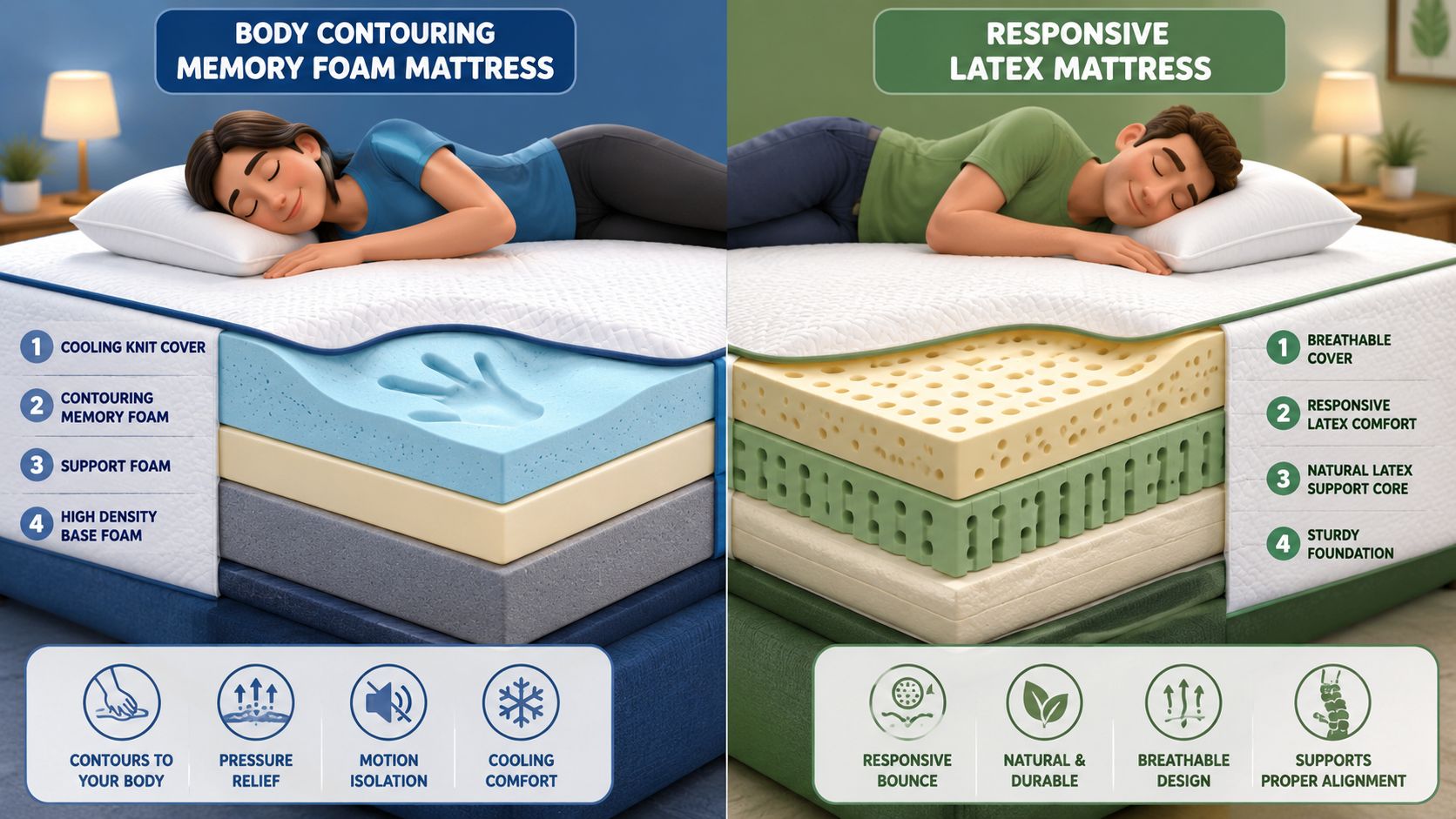
How each mattress type behaves when the body moves
Hybrid mattresses are often the strongest match for this sleep style. The most useful construction combines coil support with responsive comfort materials above it. According to this mattress type analysis for combination sleepers, the optimal mattress is a medium-firm hybrid with latex or responsive foam over coils because it balances spinal alignment and surface plushness while avoiding the “stuck” feeling associated with slower materials.
Memory foam mattresses can offer appealing contour and pressure relief, especially for side sleeping. The trade-off is response speed. Some modern foams are easier to move on than older versions, but a slower feel can still frustrate sleepers who change position repeatedly.
Latex mattresses bring a different character. They tend to feel buoyant, supportive, and faster on the rebound. That spring-back can be especially appealing to people who dislike the sensation of sinking significantly into the bed.
A practical comparison for in-store testing
| Mattress Type | What Works Well | Where Caution Helps |
|---|---|---|
| Hybrid | Easy movement, balanced support, versatile comfort | Feel can vary depending on the top layers |
| Memory foam | Strong contouring, pressure relief, motion absorption | May feel slower when rolling or repositioning |
| Latex | Fast spring-back, buoyant support, easier repositioning | Can feel more lifted than deeply cradling |
The strongest choice usually depends on how the sleeper wants the bed to react during movement.
- For frequent turning: a responsive hybrid often feels easiest.
- For a more buoyant surface: latex is worth serious consideration.
- For deep contouring: responsive foam models may suit some sleepers, but they need careful testing.
The best mattress for combination sleepers usually isn't the softest mattress in the room. It's the one that lets the body change positions without losing support.
For investment buyers, the act of showroom testing becomes indispensable. A mattress can sound ideal on paper and still feel wrong once the body begins to rotate naturally.
Finding Your Perfect Firmness A Guide for Every Body Type
Firmness is often oversimplified, but combination sleepers need a more precise read. The most useful range usually sits in medium-firm, because it has to cushion side sleeping while still supporting back and stomach positions.
For shoppers comparing construction and feel, this explanation of what a hybrid mattress is can help connect firmness with the support core underneath.
What medium-firm really means
On the common firmness scale, combination sleepers usually do best around 6 to 7 out of 10. Market analysis from 2026 found that 62% of combination sleepers prefer hybrid mattresses, and the top-rated options frequently land around 6.5 to 7 out of 10 for versatility across comfort categories according to this market analysis.
That range works because it stays balanced. It doesn't allow excessive sag through the torso, but it also doesn't become punishing at the shoulders and hips. The exact sweet spot still depends on body weight and on which sleeping position shows up most often during the night.
Mattress Firmness Guide for Combination Sleepers
| Body Weight | Recommended Firmness | Reasoning |
|---|---|---|
| Under 130 lbs | Medium to medium-firm, leaning gentler | Lighter bodies often need more surface give to experience pressure relief at the shoulder and hip |
| 130 to 230 lbs | Medium-firm, typically 6 to 7 | This range usually balances support and cushioning across side, back, and occasional stomach sleeping |
| Over 230 lbs | Medium-firm, especially 6.5 to 7 | Heavier bodies generally need firmer support to help maintain alignment and keep the midsection from dipping too deeply |
Shoppers over 230 pounds should pay especially close attention to how the mattress supports the torso during stomach or partial-stomach sleep. At the other end of the spectrum, lighter sleepers often need enough comfort material on top to avoid pressure build-up during side sleeping.
A useful showroom question isn't just “How firm is it?” It's “Does this firmness still feel balanced when the body changes position?” That's the question that tends to separate a mattress that feels pleasant for a minute from one that works for years.
The Showroom Test How to Choose Your Mattress at Vinson
A mattress is one of the few major home purchases that should be tested with the whole body, not just the eyes. Fabric, quilting, and brand language can all look impressive. None of them matter if the sleeper can't turn smoothly or stay aligned.
This guide to telling if a mattress is good quality is worth reading before a showroom visit because it sharpens what to inspect beyond simple comfort.

What to do during a real mattress test
Shoppers often lie down for a minute and make a decision too quickly. A combination sleeper needs a more disciplined test.
- Stay long enough to settle: Spend at least several minutes on each mattress so the surface feel becomes clearer.
- Try every real position: Side, back, and any stomach variation should all be tested.
- Roll naturally: The key question is whether the body glides into the next posture or has to push through resistance.
- Use the edge: Sit and lie near the perimeter to judge support and usable sleep surface.
- Test with a partner if possible: Movement matters more when two people share the bed.
For people with limited mobility, this test becomes even more important. Hybrids with zoned support can be especially useful because they're engineered to reduce the energy needed to change positions, as discussed in this guidance on hybrids and mobility.
What the body should notice immediately
A good mattress for this sleeper type usually reveals itself through feel rather than spectacle.
Look for these signs:
- The shoulder settles without collapse.
- The lower back feels supported rather than suspended.
- Turning feels fluid, not sticky.
- The surface recovers quickly after movement.
If a sleeper has to brace with an elbow or twist the hips to roll over, the mattress is asking for effort it shouldn't require.
In-person testing still outperforms a box delivered to the porch. Texture can be felt. Edge support can be checked. Motion can be judged accurately. For a long-term sleep investment, that tactile clarity matters.
Why Vinson is Central Ohio's Premier Sleep Destination
The mattress decision rarely stands alone. Buyers upgrading their sleep often refine the whole bedroom at the same time, which is why the showroom experience matters so much more than a product page. A premium sleep surface should fit the room, the scale of the bed, the foundation, and the way the home is used.
That's where Vinson Fine Furniture becomes relevant as a practical stop for Central Ohio homeowners who want to test premium mattresses in person while also considering the larger room. Its Easton Town Center location supports that hands-on approach with an in-store Design Studio, complimentary design consultations, and a broader view of bedroom planning that can include Mavin bedroom furniture, Smith Brothers furniture Easton, and other long-term furnishing decisions.

A premium mattress deserves a well-designed room
An investment homeowner often wants coherence, not just comfort. A mattress may anchor a room that also includes a solid maple or walnut bed, custom-made upholstery, and a layout that feels calm rather than crowded.
That broader design perspective fits naturally with Vinson's core strengths:
- Custom Order Program: Buyers can personalize details through fabrics, finishes, and 3D visualizers for collections such as Smith Brothers, Canadel, and Mavin.
- Design Services: The In-Store Design Studio offers complimentary consultations for room planning and finish coordination.
- Value and savings: The Low Price Guarantee offers a 110% refund of the difference if a lower local authorized price is found within the stated period, and the Clearance Gallery includes savings up to 70%.
- Quality and motion: Across the showroom, the emphasis stays on solid hardwood construction and premium motion seating, including sectionals, reclining pieces, swivel chairs, rockers, and gliders.
The Easton showroom advantage
This matters beyond mattresses. Buyers shopping for solid wood furniture Ohio, Amish-made dining sets, or Custom leather sectionals Columbus usually care about tactile quality. They want to feel the weight of solid cherry, oak, maple, or walnut. They want to sit in top-grain leather and feel smooth power motion rather than guess from photos.
For mattress shoppers, that same instinct is valuable. Premium latex deserves special attention here. For shoppers seeking a more responsive luxury feel, latex offers a faster spring-back than responsive memory foams, which helps prevent the sensation of fighting the bed during position changes, as noted in this discussion of latex response for combination sleepers.
A showroom at Easton Town Center gives buyers room to compare feel, ask better questions, and make one coordinated decision instead of several disconnected ones. That's particularly useful when the bedroom is part of a larger furnishing plan that may also involve Amish-made bedroom pieces, solid wood dining, or a custom seating update elsewhere in the home.
Your Combination Sleeper Questions Answered
Good mattress shopping usually ends with a few practical questions. These are the ones that tend to matter once the comfort testing is done.
A cooling concern often overlaps with combination sleep, especially for people who wake warm after turning. This guide to the best cooling mattress for hot sleepers is a helpful next read for anyone balancing movement with temperature control.
How long does it take to adjust to a new mattress
A short adjustment period is often necessary. The body has to adapt to a new support pattern, especially if the previous mattress had softened unevenly over time. What matters is the direction of the experience. Early unfamiliarity is normal. Ongoing pressure or alignment issues usually signal a poor fit.
Do combination sleepers need a specific pillow
Usually, yes. A versatile sleeper often benefits from a mid-loft pillow that doesn't push the head too far upward on the back or collapse too much on the side. The pillow should support quick position changes just as the mattress does.
Can an old foundation be used with a new mattress
Only if it still provides the right support. A worn or incompatible base can undermine even an excellent mattress by allowing sagging, noise, or uneven support. That's especially important with premium models that rely on stable, even foundations.
Sleep quality also extends beyond the mattress and pillow. For readers building a calm bedtime routine, these aromatherapy sleep tips can be a useful complement to a well-chosen sleep setup.
A combination sleeper doesn't need a miracle product. The sleeper needs a mattress with the right feel, the right responsiveness, and the right support for a body that doesn't stay in one place all night.
For homeowners ready to make a confident sleep investment, a visit to Vinson Fine Furniture offers a practical next step. At Easton Town Center, shoppers can test premium mattresses in person, explore complimentary design consultations, review custom possibilities for the broader bedroom, and compare long-term value with the Low Price Guarantee, White-Glove Delivery, and curated clearance savings.