How to Tell if a Mattress Is Good Quality: A Buyer’s Guide

You’re probably doing what most mattress shoppers do. You sit on the corner of three beds, press a hand into one foam top, hear words like “cooling,” “hybrid,” and “pressure relief,” and leave less certain than when you walked in.
That confusion is understandable. Mattresses are dressed up to look simple, but the difference between a good one and a disappointing one is usually buried under the cover. If you want to know how to tell if a mattress is good quality, stop looking for the loudest marketing claim and start looking for proof of construction, performance, and feel.
A mattress is not a throwaway purchase. It affects your back, your sleep quality, your energy, and the way your bedroom functions as a real retreat. It’s a foundational piece of furniture, just like a solid-wood dining table or a well-built upholstered bed. If you want a smart starting point on the health side of the equation, read why investing in a high-quality mattress is essential for your long-term health.
Investing in Rest a Foundation for Your Home and Health
A lot of people start mattress shopping after a slow buildup of irritation. They wake up stiff. They roll toward the middle. They sleep well in a hotel, then come home and realize their own bed is the problem. That’s usually the moment when “someday” becomes “this weekend.”
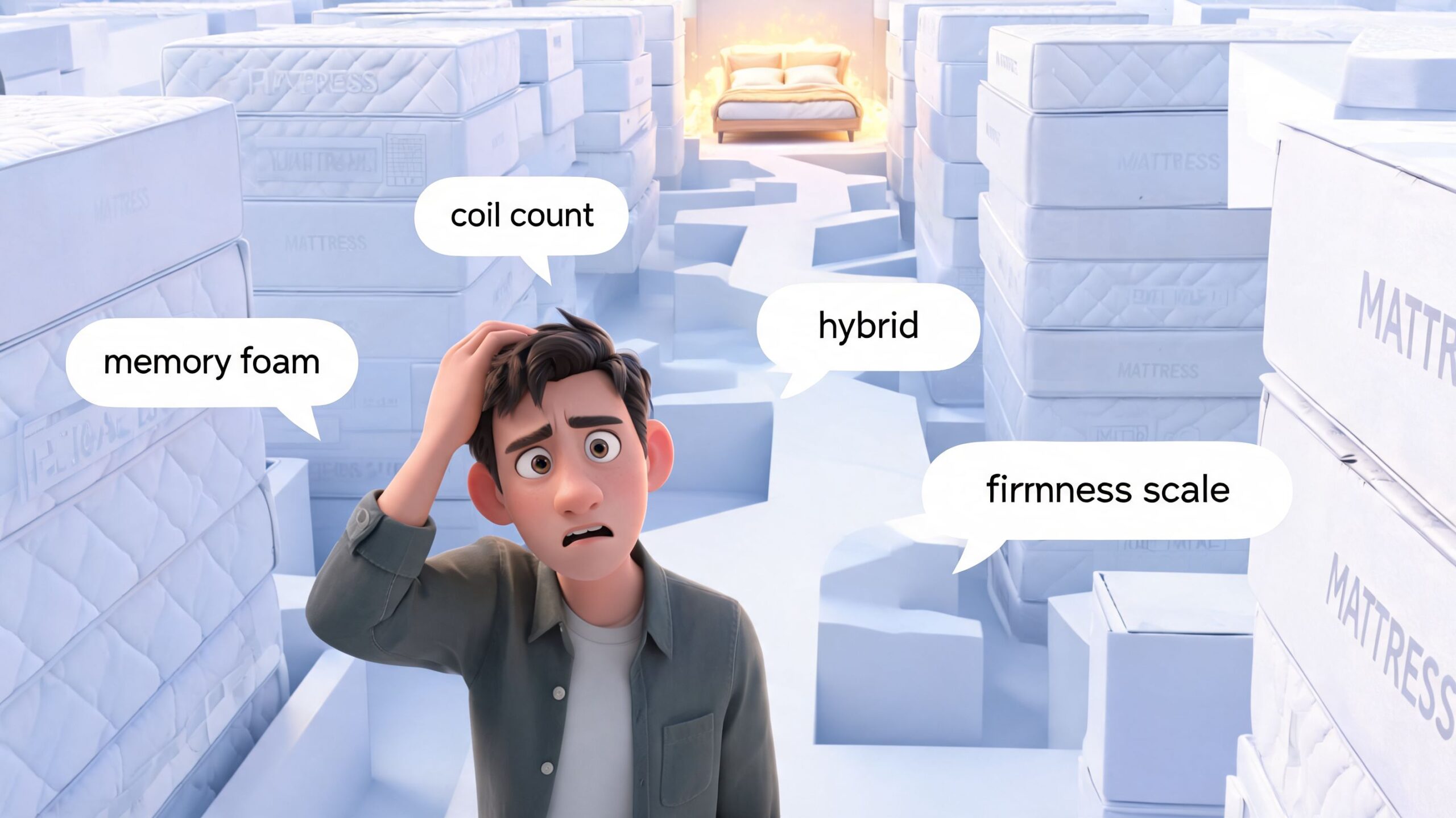
The problem is that the category is full of vague language. “Luxury firm” means almost nothing if you don’t know what’s inside the mattress. “Premium comfort” tells you even less. A good mattress should be judged the same way you’d judge any long-term home investment. Look at the build. Test the performance. Ignore fluff.
Why quality matters more than novelty
A boxed mattress that arrives quickly can be convenient. Convenience is not quality.
What matters is whether the mattress keeps its shape, supports your body correctly, regulates heat, limits motion transfer, and still feels right after years of use. That’s the standard. If a mattress can’t clear that bar, it doesn’t matter how polished the brand story is.
Good mattress shopping is less about finding a trend and more about finding a product that still feels supportive after the honeymoon period ends.
What a smart buyer should focus on
The strongest buyers walk into a showroom with a filter. They’re not asking, “What’s popular?” They’re asking better questions:
- What is the support system made of
- How dense are the foams
- Does the edge hold up
- How does it feel in my actual sleep position
- Will this construction stay consistent over time
That mindset matters. It’s how you separate a mattress that feels pleasant for five minutes from one that serves your body well for years.
Decoding Mattress Construction What Lies Beneath
You press a mattress in the center and it feels plush. Then you sit on the edge and it collapses under you. That is the kind of flaw a spec sheet won’t save you from.
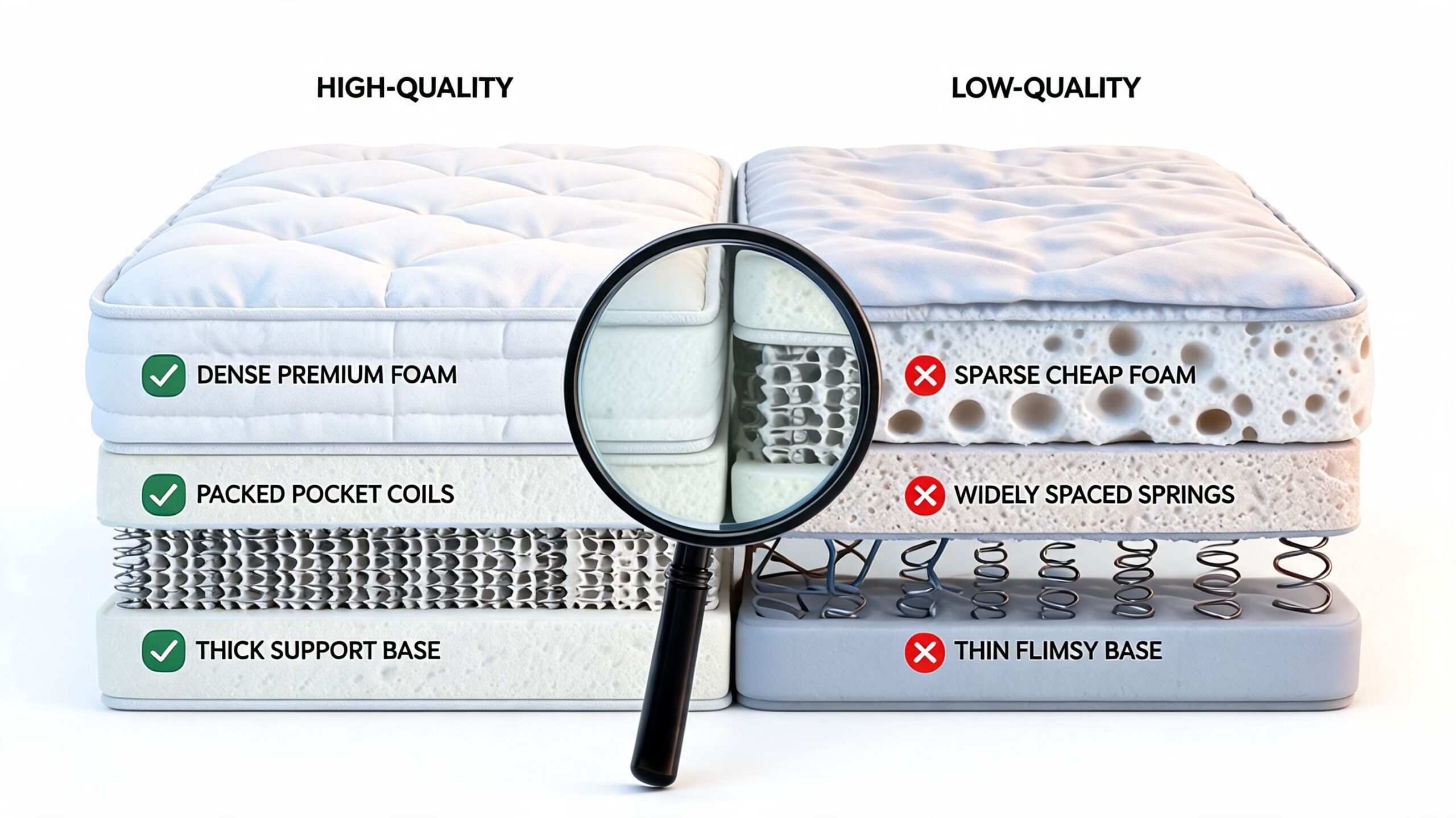
A mattress can wear an attractive cover and still be built to fail early. Quality shows up in the parts you cannot see at first glance, and in how the bed behaves when you put real weight on it. That is why showroom shopping still matters. You can inspect the materials, sit on the perimeter, press the surface with your hands, and feel whether the build has substance or just marketing.
If you’re comparing major constructions, this guide to memory foam vs hybrid mattress differences is a useful companion. The inspection standard stays the same either way.
Start with the support core
The support core is the engine of the mattress. In a hybrid or innerspring model, that means the coil unit. In an all-foam model, it means the base foam and how well it holds the comfort layers above it.
Ignore flashy coil counts on their own. Ask how the coils are made, how they are arranged, and whether the edge uses a stronger perimeter. Analysts at Consumer Reports’ mattress buying guide note that innerspring mattresses often hold their shape for about 5.5 to 6.5 years on average, that taller and thicker coils tend to last better than shorter, thinner ones, and that denser foams earn stronger durability marks. Those are the details that deserve your attention.
Foam quality shows up fast in person
Retail copy loves phrases like “cooling comfort foam” and “premium pressure relief.” Those labels are weak. Density, resilience, and recovery matter more.
Press down with both hands. Then release. Better foam compresses evenly, cushions pressure points, and recovers without a sluggish, gummy feel. Low-grade foam often feels pleasant for a moment, then reveals its weakness in a showroom. It bottoms out too easily, traps your hand, or feels uneven from one section to another.
This is also where mattress-in-a-box models often disappoint. A compressed bed can sound convenient, but many boxed models rely on lighter foams and simpler builds to survive shipping and hit a price point. In a furniture store, you can feel the difference immediately.
Finish work reveals whether the maker cut corners
Good construction leaves clues around the outside of the mattress, not just inside it.
- Tufting helps hold layers in place so the top does not drift or bunch over time.
- Side stitching and panel fit should look straight, tight, and clean, with no loose fabric or weak-looking seams.
- Edge construction should feel stable when you sit down to put on shoes or get out of bed.
- Quilting and cover materials should feel substantial, not thin or overly slick.
The sit-test matters here. Sit on the side in three spots. Front corner, middle edge, back corner. A quality mattress should compress with control and hold you up, not buckle or throw you sideways. If the edge already feels tired in the showroom, it will not improve in your bedroom.
Practical rule: if the mattress feels soft on top but weak at the edge, skip it.
Serious brands test recovery, not just first-touch comfort
Comfort sells in ten seconds. Quality proves itself in repeat use.
A manufacturer testing overview in this YouTube video on mattress testing methods shows that premium brands often run extensive finished-product tests for durability, motion response, temperature behavior, and foam recovery. One example uses a 12-pound medicine ball and high-speed cameras to measure how quickly memory foam rebounds. That matters because slow, cheap foam creates the stuck feeling many shoppers mistake for contouring.
Here’s the short version:
| Mattress component | What to look for | Why it matters |
|---|---|---|
| Coil unit or base core | Strong structure, consistent support, stable edge | Helps the mattress keep its shape |
| Foam layers | Denser, more responsive foam | Resists early body impressions |
| Cover and quilting | Tailored fit, breathable materials, substantial hand feel | Improves comfort and finish quality |
| Tufting and stitching | Even, secure craftsmanship | Helps keep layers from shifting |
| Surface response | Cushions pressure, then recovers cleanly | Makes movement easier and the feel more consistent |
Buyers who rely on a photo and a shipping box miss too much. The better move is simple. Go to the showroom, sit on the edge, use your hands, and judge the build for yourself.
The Performance Checklist Support Comfort and Durability
A good mattress proves itself under your body weight, at the edge, and after repeated use. That is why performance matters more than showroom charm.

If you want to know how to tell if a mattress is good quality, stop judging the pillow top first. Judge what happens underneath it. Start with your build and sleep position, then compare models against a practical guide to which mattress is right for your body type. After that, use the checklist below to sort real quality from clever merchandising.
Support is not the same as firmness
Firmness is surface feel. Support is alignment.
A plush mattress can hold your spine well if the comfort layers and support core are doing their jobs. A hard mattress can still be wrong for you if it forces your shoulders up, leaves your waist unsupported, or tips your hips out of level. Shoppers confuse these two terms all the time, then wonder why a “firm” bed still feels bad after a week.
The practical target is simple. Your spine should stay neutral in your usual sleep position, and the mattress should let heavier parts of your body settle without collapsing.
The six checks that matter most
Use these six tests every time.
Support
Lie in your normal position and pay attention to alignment. Your hips should not sag. Your lower back should not feel stranded without contact. Your shoulders should settle in without strain.Comfort
Comfort means pressure relief with control. The surface should cushion your joints without swallowing you.Motion isolation
Couples need a mattress that absorbs movement instead of sending it across the bed. If one person turns and the whole surface reacts, the build is mediocre.Temperature regulation
Materials affect heat. Dense synthetic covers and slower foams often feel warmer. Breathable covers, better airflow through the build, and more responsive materials usually sleep cooler.Edge support
The perimeter should feel stable enough for sitting, dressing, and sleeping near the side. Weak edges waste usable surface and usually point to a weaker overall build.Durability
Durability is what happens after the honeymoon period. Better mattresses keep their shape, recover more cleanly, and stay consistent instead of forming early body impressions.
If the edge folds under a simple sit-test, do not talk yourself into the mattress. Weak edges rarely hide a strong interior.
A simple comparison of what you’ll typically feel
| Performance trait | Lower-quality feel | Better-quality feel |
|---|---|---|
| Support | Hips drop, shoulders pinch, back feels unsupported | Spine stays level and relaxed |
| Comfort | Puffy at first, then pressure builds | Cushioned, controlled, easy to settle into |
| Motion isolation | Movement spreads across the mattress | Movement stays mostly contained |
| Temperature | Surface holds heat | Surface releases heat more easily |
| Edge support | Perimeter buckles or slants | Perimeter stays composed |
| Durability | Feel changes quickly, impressions form early | Feel stays more consistent over time |
What matters most by sleeper type
Side sleepers need pressure relief at the shoulders and hips, but they still need enough support to keep the waist from dipping. Back sleepers need steady support through the lumbar area and enough give to avoid pressure buildup. Stomach sleepers need more caution than marketing usually admits. Too much softness can pull the midsection down fast and strain the lower back.
Couples should put motion control and edge stability near the top of the list. Those two traits affect every night, not just the first five minutes in the store.
Judge the mattress after the first impression
The first touch is the easiest part to manufacture. Lasting comfort is harder.
Cheap mattresses often win the hand-feel test with a soft top layer, then lose badly once weight settles into the bed. Better models feel composed. You sit, lie down, turn, and stand up without the mattress lagging behind you. That responsive, controlled feel is a quality signal many mattress-in-a-box shoppers never get to evaluate because they buy from a photo and a promise.
A mattress is part upholstery, part engineering. Treat it that way. Press the surface with your hand, sit with your full weight on the side, and pay attention to how quickly the materials recover. Those basic checks reveal more about support, comfort, and long-term durability than any box label ever will.
The Showroom Inspection Your Hands-On Quality Test
You walk into a showroom, drop onto the edge of a mattress for ten seconds, and it feels soft. That is how people end up with beds they regret. A quality mattress has to hold up under your full body, your usual sleep position, and the repeated pressure of getting in and out of bed. You can only judge that in person.
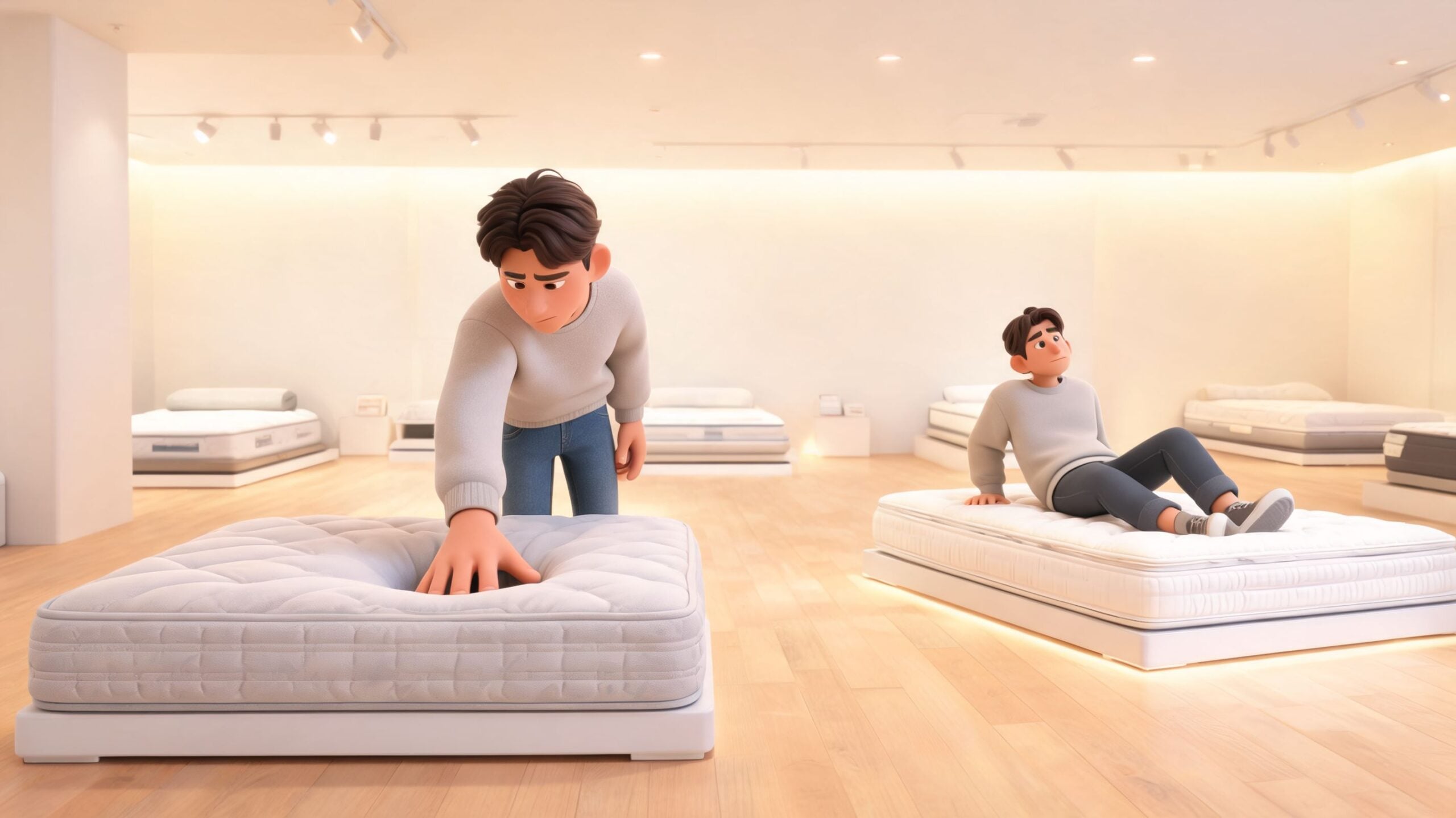
Buying a mattress from a box on your porch skips the most revealing part of the process. The showroom lets you feel support, edge control, recovery, and motion with your own body. If you want a better plan before you shop, these tips for buying a new mattress are a smart place to start.
Start with the sit-test
The sit-test is the fastest quality filter in the store. Sit on the side where you would normally get dressed or put on your shoes. Put your full weight down, then stand up without using your hands if you can.
A good mattress stays composed. The edge compresses, but it does not fold, slide, or make you feel like you are dropping off a curb. When you stand, the materials should recover quickly and evenly. If the side caves in, stays flattened, or feels hollow under you, walk away.
Then lie down near that same edge. You should feel supported, not nervous. Strong edge construction matters every day, especially for couples, older sleepers, and anyone who uses the full width of the bed.
Use a real showroom routine
Do the same sequence on every serious option so your comparison is fair.
Lie in your main sleep position first
Stay there long enough for your body to settle. Pay attention to your shoulders, hips, lower back, and whether your midsection feels held up or left hanging.Roll and reposition naturally
Turn the way you would at home. Better mattresses respond with control. They do not trap you, bounce you, or lag behind your movement.Repeat the sit-test on both sides
One weak side is still a weak mattress. Consistency matters.Test the perimeter while lying down
Scoot close to the edge and stay there for a moment. The support should remain steady.Check partner disturbance
Have the other person sit, lie down, turn, and get up. You are looking for contained movement, not a wave traveling across the bed.
One blunt rule helps here. If you are trying to convince yourself after a few minutes, the mattress is wrong for you.
Inspect it like fine furniture
Good mattresses show their quality in the details. Look at the tailoring, not just the top fabric. The cover should sit smoothly. The quilting should look even. The side panels should feel structured, not limp. Handles, if present, should feel anchored well, not lightly stitched on for appearance.
Run your hand across the surface, then press down and release. Quality materials contour with some resistance and return cleanly. Cheap builds often feel puffy on top and vague underneath, as if the comfort layer and the support system are not working together.
Here’s a simple inspection guide to use on the sales floor:
| What you inspect | What a good sign looks like | What should concern you |
|---|---|---|
| Sit-test | Edge compresses modestly and feels stable | Side collapses, folds, or feels hollow |
| Surface response | Cushions pressure, then recovers evenly | Stays compressed or feels sloppy |
| Perimeter support | Feels secure near the edge | Feels unstable or tilts outward |
| Motion control | Partner movement stays contained | Movement spreads across the mattress |
| Finish details | Tight stitching, smooth cover, structured border | Loose seams, puckering, weak side panels |
| Overall build | Substantial, controlled, well-tailored | Flimsy, overstuffed, inconsistent |
Ask questions that expose the build
A good showroom should be able to explain what you are feeling. Ask what reinforces the edge. Ask what the support core is made of. Ask what keeps the comfort layers from shifting or breaking down unevenly.
Clear answers are a good sign. Vague phrases like “premium sleep technology” or “luxury comfort system” mean nothing if nobody can explain the actual construction.
You cannot perform long-term wear testing in a showroom. You can still spot warning signs fast. A mattress that feels stable during the sit-test, settled under your body, and well-finished at the seams usually comes from a manufacturer that paid attention to the build. That hands-on read is the advantage a physical furniture store still has, and it is the one shoppers should use.
Reading Between the Lines Certifications and Warranties
A mattress can feel impressive for ten minutes and still come with weak paperwork. Serious manufacturers do not hide behind vague labels or slippery warranty terms. They put the standards in writing.
That matters because certifications and warranties tell you what the showroom cannot. The sit-test shows build quality in real time. The paperwork shows whether the maker is willing to stand behind that build for years.
Certifications should be specific, not decorative
Start with the label, then ask what it verifies.
For foam beds, CertiPUR-US® is a useful baseline because it speaks to foam content and emissions standards. For products built around organic textiles or latex, labels such as GOTS or GOLS may apply, depending on the materials used.
The standard should be clear and traceable. Terms like “green,” “clean,” “natural feel,” or “eco-conscious” do not tell you enough. If a brand cannot point to a real certification or explain it plainly, treat the claim as marketing.
Read the warranty like a buyer protecting an investment
The warranty headline means very little on its own. “10-year” or “lifetime” sounds strong until you read the exclusions.
Check these points before you sign:
Prorated or non-prorated coverage
Non-prorated coverage is stronger because it does not shift more of the replacement cost onto you as the mattress ages.Defect definition
A good warranty spells out what qualifies for coverage instead of relying on broad, flexible language.Sagging threshold
Some warranties only apply if body impressions reach a depth that many frustrated owners never hit, even when the bed clearly feels worn out.Support requirements
Many warranties require the right base or foundation under the mattress. Ignore that, and your claim can be denied. Learn more about mattress and furniture protection plans before you buy.
Short, plain warranty language is a good sign. Dense wording packed with carve-outs is not.
Return policies should function as backup, not blind trust
A return window matters because comfort is personal. Even a mattress with excellent materials may not suit your shoulders, hips, or sleep position after a week at home.
Use the policy as a safety net. Do not use it as an excuse to skip careful testing in the store. Shoppers who buy a boxed mattress from a product page often end up relying on return terms because they never had the chance to inspect edge support, surface control, or overall tailoring in person.
What to confirm before you commit
Ask for the warranty and return terms in writing. Then read them with the same scrutiny you used on the showroom floor.
| Document area | What you want to see |
|---|---|
| Certification info | Recognizable standards with a clear purpose |
| Warranty terms | Plain defect definitions, clear sagging rules, no fuzzy exclusions |
| Return policy | Straightforward timing, simple process, realistic comfort protection |
Good mattresses usually come with good paperwork. If the bed feels solid in the showroom and the fine print is clear, you are looking at a product built to last.
The Vinson Experience Quality You Can Trust
Once you know how to inspect construction, judge performance, and read the fine print, the buying process gets much cleaner. You stop chasing slogans and start making decisions like an investment homeowner.
That’s also where a physical showroom still has a major advantage over the mattress-in-a-box trend. You can feel materials. You can compare support styles. You can test motion transfer with your partner. You can lie still long enough to notice whether your shoulders relax or your lower back resists the bed.
Why the in-person process still matters
Many guides stay focused on coil count because it’s easy to discuss. That’s not the deepest way to judge longevity. As noted in Good Housekeeping’s mattress buying guidance, true durability sits in deeper measures like foam compression set ratings and material lifespan, and a knowledgeable consultant can help compare those specifications across premium brands such as Tempur-Pedic and Stearns & Foster.
That kind of side-by-side interpretation is where a showroom earns its keep.
One option for shoppers looking for the best mattresses Easton Town Center area has to offer is Vinson Fine Furniture, where customers can compare premium sleep systems in person rather than buying from a product page and hoping for the best.
Four practical advantages that matter
The buying experience should be as considered as the product itself. For Columbus homeowners shopping for long-term value, four details matter:
Customization
Through the Custom Order Program, shoppers can personalize pieces throughout the home with choices in fabrics, finishes, and configurations using digital visualizers. That same custom mindset is useful when you’re building a sleep setup around mattress feel, bed frame style, and adjustable-base preferences.Design services
The In-Store Design Studio offers complimentary consultations. For homeowners furnishing an entire bedroom, that matters. A mattress doesn’t live in isolation. It needs to work with scale, style, storage, and the overall room plan.Value and savings
The Low Price Guarantee includes a 110% refund of the difference if a lower local authorized price is found within the stated window, and the Clearance Gallery offers savings of up to 70%, according to the publisher information provided for this piece.Ease of purchase
Flexible financing through Synchrony HOME and White-Glove In-Home Delivery remove the worst parts of mattress replacement. Delivery, setup, and cleanup should feel organized, not chaotic.
A better standard for mattress shopping in Columbus
If you’re shopping a furniture store Columbus Ohio homeowners trust for long-term purchases, or you’re visiting Easton for premium sleep products along with solid wood furniture Ohio, custom dining sets, or Amish-made furniture, keep your standard high. Test the mattress in person. Ask what’s inside. Read the warranty. Trust construction over slogans.
A quality mattress should feel right under your body, look disciplined in its finish, and show evidence that the maker cared about how it will perform years from now. That’s the difference between buying a bed and making a good decision.
If you’re ready to compare premium mattresses in person, explore Vinson Fine Furniture, browse the Clearance Gallery for current value opportunities, or schedule time with the In-Store Design Studio to pair your mattress selection with the rest of your bedroom. For homeowners furnishing beyond sleep, the showroom also supports custom projects through its visualizer-driven design process, making Easton Town Center a practical stop for whole-home planning.