Hutch vs China Cabinet: Choosing Your Heirloom Piece

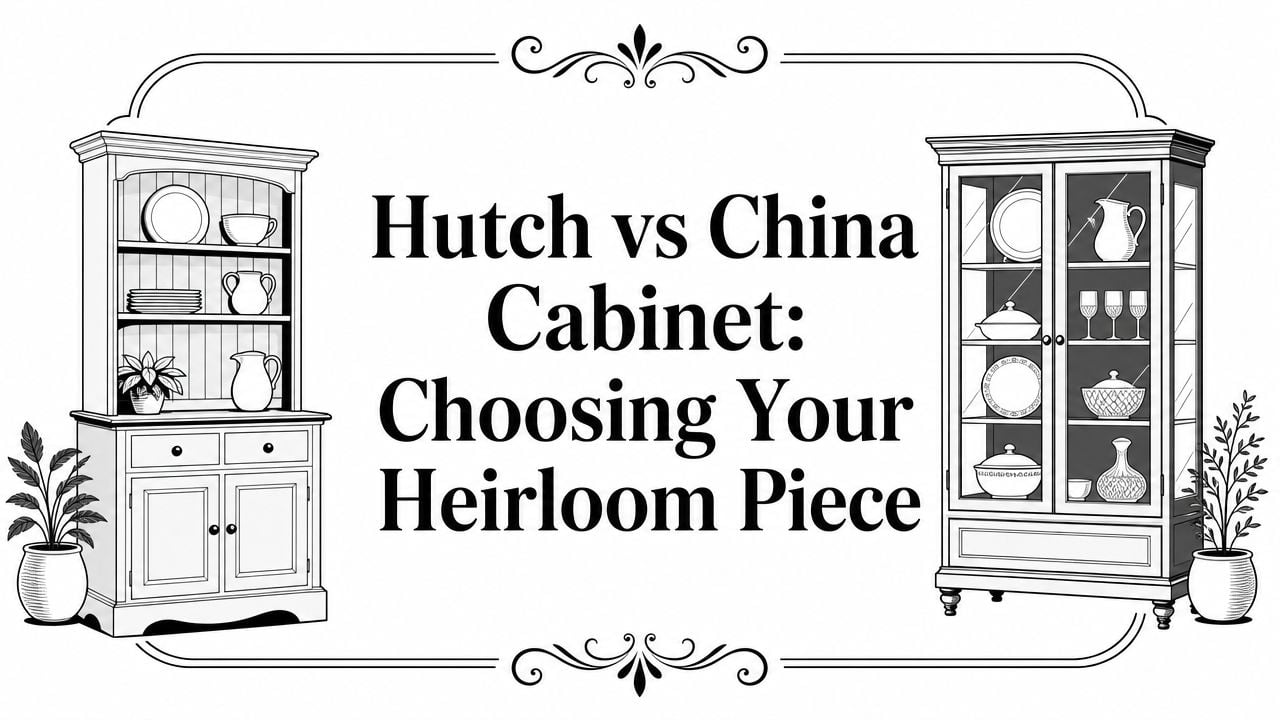
A homeowner often reaches this decision at the same moment the dining room starts to feel almost finished. The table is in place. The chairs feel right. The rug has grounded the room. Yet one wall still asks for a piece with presence, storage, and enough character to make the room feel complete.
That's where the hutch vs China cabinet question becomes more important than it first appears. This isn't only about where plates go. It's about whether the room needs a flexible working piece or a formal display piece, and whether that choice will still feel right after a move, a renovation, or a shift in how the home is used.
For the investment-minded homeowner, that distinction matters. A substantial dining storage piece in solid cherry, oak, maple, or walnut should feel deliberate under the hand, visually settled in the room, and worthy of staying in the home for years rather than seasons.
Choosing Your Dining Room's Centerpiece
A dining room storage piece does more than fill a wall. It shapes how the room functions on ordinary weekdays and on holidays when every serving bowl, linen, and glass needs a place. The strongest choices begin with a simple question. Should the piece adapt around daily life, or should it establish a more permanent and formal mood?
Some households need concealed storage for practical living. They want room for table runners, chargers, serving trays, candles, and the less glamorous pieces that make entertaining work. Other households want a cabinet that turns heirloom china and crystal into part of the room's architecture.
Start with the room's job
A practical way to evaluate a hutch vs China cabinet is to look at what the dining room is asked to do most often.
- Daily-use room: The space hosts homework, casual meals, family gatherings, and overflow from the kitchen.
- Occasional entertaining room: The space is quieter, more curated, and centered on hosting.
- Hybrid room: The room needs to feel polished, but it still has to work hard.
A homeowner furnishing around a broad farmhouse table in solid oak may lean toward a piece that mixes display and concealment. A homeowner building a more curated room around upholstered seating, statement lighting, and a formal tablescape may prefer the cleaner silhouette of a display-forward cabinet.
Practical rule: The more a dining room handles everyday life, the more valuable flexible storage becomes.
Think like a long-term buyer
The strongest furniture decisions come from thinking past the immediate layout. A dining storage piece should suit the room today, but it should also stand up to future changes in circulation, remodeling, and family routines. That's why so many homeowners benefit from reviewing broader dining layout principles before shopping. A helpful starting point is this guide on how to choose a dining room table, because the scale and function of the table often determine what kind of companion storage piece makes sense.
That long-view mindset changes the purchase. The question stops being “Which one looks prettier online?” and becomes “Which one earns its place in the home over time?”
The Fundamental Forms Hutches and China Cabinets
The clearest way to understand the hutch vs China cabinet decision is to study the bones of each piece. Their structure determines how they store, how they sit in a room, and how they're likely to be used over time.
Early in the shopping process, many homeowners confuse the two because both rise vertically and both can store dishes or glassware. The difference becomes obvious once the cabinet is considered as a piece of architecture rather than as a category label.
What a hutch is
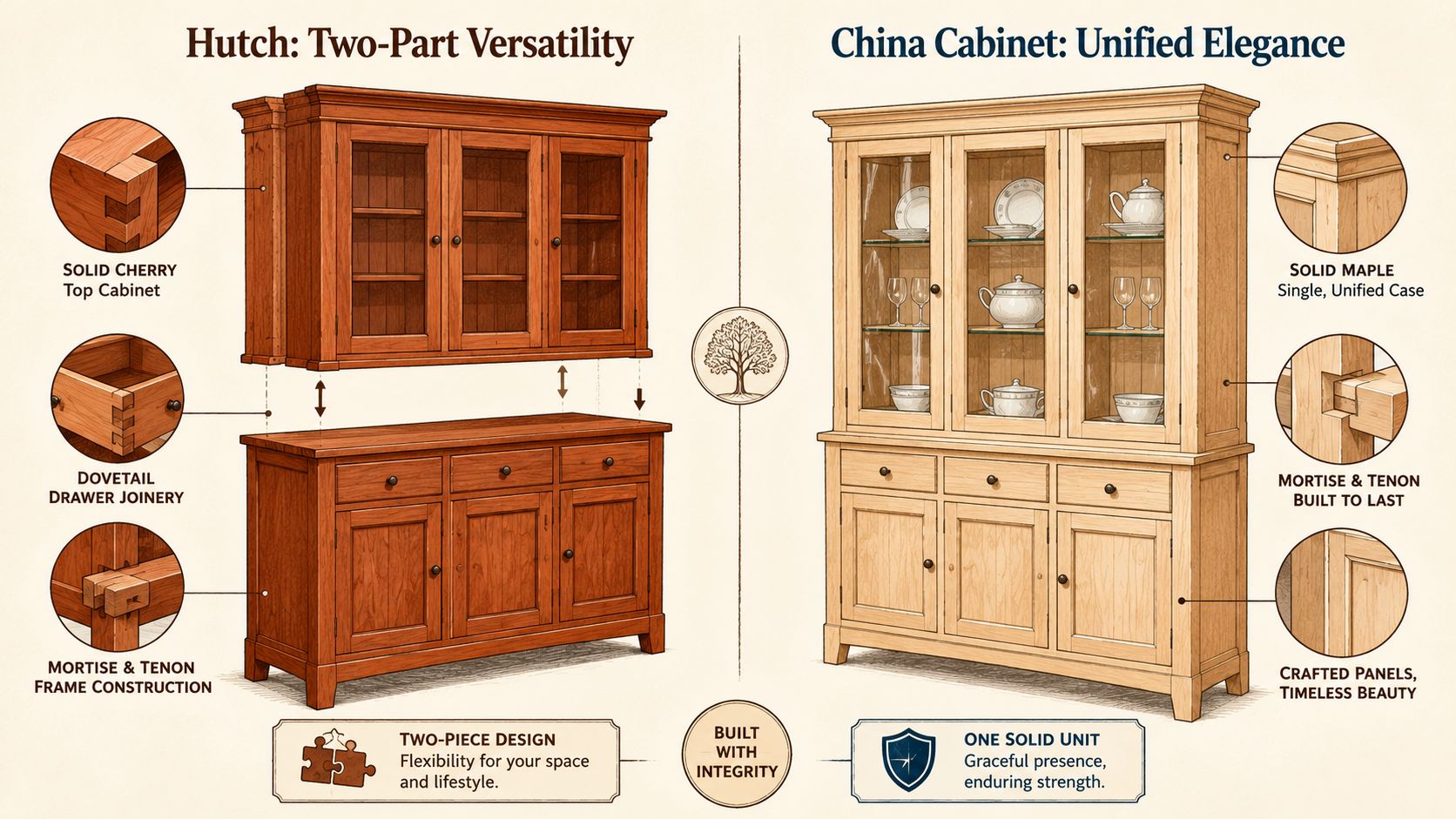
A hutch is typically a two-part furniture system. It includes an upper shelving or display section placed on a lower base, often a buffet or sideboard with concealed storage and a serving surface, as described in this overview of hutch and china cabinet differences.
That lower section does a great deal of practical work. In a solid maple or cherry version, it often feels substantial and grounded, with drawers and cabinet doors that hold linens, platters, or items that shouldn't stay on view. The upper section adds height and visual rhythm, whether through open shelves, glass-front doors, or a mix of both.
What a China cabinet is
A China cabinet is normally a single, inseparable, freestanding tall unit with full glass-front doors and interior shelves designed primarily for protected display of fine china, glassware, and heirlooms. In visual terms, it reads as one cohesive statement rather than two cooperating parts.
That distinction affects how the piece feels in the room. A China cabinet often appears more formal and more resolved from the outset. It tends to emphasize symmetry, visibility, and protection. Instead of mixing hidden storage and working surface in equal measure, it places the display function front and center.
A China cabinet usually asks the room to slow down and admire what's inside it.
Why structure changes function
The two-part form of a hutch gives it a layered personality. The base can behave almost like a server, while the top adds decorative storage. The one-piece form of a China cabinet creates a more unified vertical line, which can be ideal when a dining room needs a stronger focal point.
This structural difference also mirrors the way cabinetry is often discussed in renovation planning. Homeowners comparing casework details sometimes find it useful to read about comparing frameless and framed cabinets because it sharpens the eye for how construction changes appearance, access, and overall feel.
For anyone considering a buffet-and-top configuration, this closer look at a hutch for a buffet helps clarify why the lower base is so important to the hutch's identity.
Adaptability vs Permanence A Lifestyle Decision
The most useful way to evaluate a hutch vs China cabinet isn't style alone. It's to ask how much change the household expects the furniture to absorb over time.
Many guides stop at a basic list of pros and cons. They rarely address how the structural difference between the two pieces affects renovation plans, room reconfiguration, or moves within the home. That's a missed opportunity, because current comparisons often overlook the rise of lifecycle furniture, meaning pieces that can be reconfigured rather than replaced as needs change.
The case for modular adaptability
A hutch tends to serve the homeowner who values options. Because it's a two-part system, the top and bottom can support different arrangements if the room evolves. The upper display can become more decorative over time, while the base may continue serving practical storage needs.
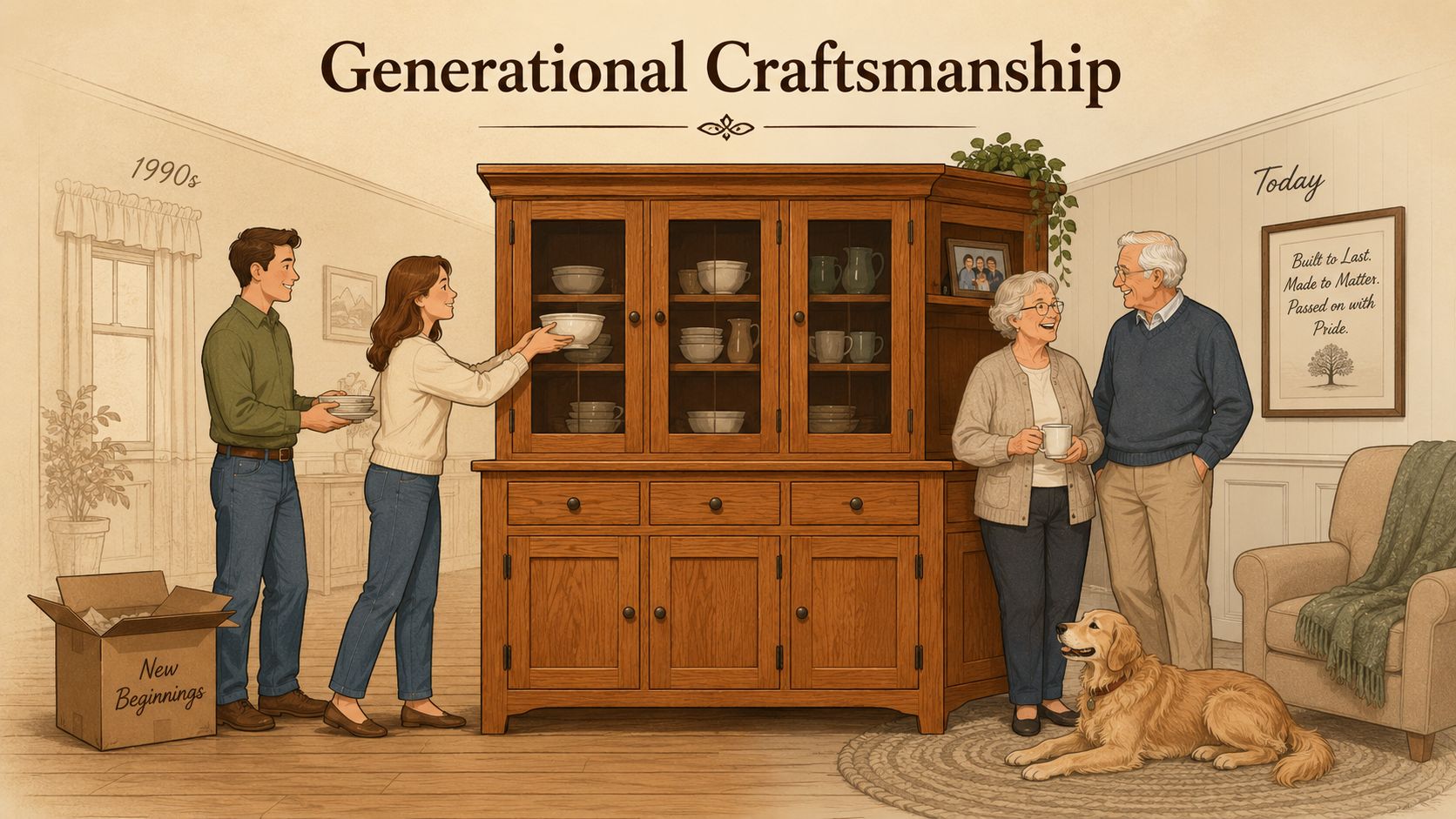
That flexibility matters in real homes. A family may begin by using the full hutch in the dining room, then later separate the pieces during a remodel or after downsizing. The base can stand alone as a server. The upper section may fit in a breakfast area or another part of the house, depending on the design.
A homeowner weighing multi-use pieces may find this guide to choosing multi-functional furniture for modern homes especially relevant when thinking beyond a single room layout.
The case for formal permanence
A China cabinet appeals to a different instinct. It serves the homeowner who wants one tall, cohesive piece to anchor the room with confidence and consistency. Rather than adapting in parts, it establishes a finished composition from the beginning.
That permanence can be a strength. In a formal dining room, a well-scaled cabinet in walnut or cherry often creates a sense of intention that a more modular piece may not match. It can make the room feel settled, as though the architecture and furnishings were chosen at the same time.
Design insight: A hutch is often easier to live around. A China cabinet is often easier to design around.
Which lifestyle does the piece support
The choice becomes clearer when daily habits are considered.
- Frequent rearrangers: They often appreciate a hutch's ability to evolve with floor plans and storage needs.
- Traditional hosts: They may prefer the composed elegance of a single display cabinet.
- Growing households: They usually benefit from furniture that can shift function without losing dignity.
- Collectors and preservers: They're often drawn to an enclosed presentation that protects and highlights treasured pieces.
Neither choice is more refined by default. The better piece is the one that supports the way the household lives, not the way the room looks in a catalog.
Comparing Hutches and China Cabinets by Attribute
A side-by-side comparison helps separate instinct from practical fit. The table below focuses on the attributes that usually matter most in the showroom and later in day-to-day use.
Hutch vs. China Cabinet At a Glance
| Attribute | Hutch | China Cabinet |
|---|---|---|
| Structure | Two-part system with upper display and lower base | Single tall unit with integrated display enclosure |
| Storage style | Mix of open or glass display and concealed storage | Primarily enclosed display behind glass-front doors |
| Everyday function | Strong for serving, storing linens, and daily dining support | Strong for curated presentation of fine china and heirlooms |
| Flexibility | More adaptable to layout changes because of its separate components | More fixed in purpose and placement |
| Visual effect | Layered, versatile, often more relaxed | Unified, formal, often more architectural |
| Serving surface | Lower base often doubles as a practical surface | Less focused on buffet-style utility |
| Best room mood | Warm, lived-in, functional | Polished, traditional, display-centered |
| Material presence | Excellent in solid oak, maple, cherry, or walnut where the base adds weight and utility | Excellent in solid hardwood where vertical form highlights grain, finish, and glass detailing |
Storage and visibility
The storage question usually decides the purchase faster than style does. A hutch gives the homeowner a place to hide useful but visually busy items. Napkin rings, seasonal runners, extra candlesticks, and serving pieces can disappear into the lower cabinet.
A China cabinet handles visibility differently. It rewards a disciplined display. The homeowner sees more of what's stored, which means the contents become part of the room's composition rather than background support.
Footprint and room fit
Not every tall dining piece behaves the same way in a floor plan. The hutch's lower buffet-like base often creates a broader visual anchor, while the upper unit adds height without making the piece feel as singularly monolithic. That can suit transitional spaces or dining rooms that share visual territory with kitchens and family areas.
A China cabinet usually claims more vertical authority. In rooms with a full wall available, that can be a strength. In tighter spaces, it can feel more formal and more demanding of careful styling.
For a broader shopping checklist, this resource on selecting a dining storage piece gives a useful framework for balancing size, storage type, and room circulation.
Material integrity matters more than style labels
A hutch or China cabinet can both look attractive in a photograph. The difference appears when the drawer opens, when the door closes, and when a hand rests on the top. Solid hardwood carries visual depth and physical substance that lighter substitutes don't replicate.
For dining storage, the most enduring choices tend to center on:
- Solid cherry: Rich, refined, and graceful as the finish develops character.
- Solid oak: Textural, grounded, and especially strong in farmhouse or heritage settings.
- Solid maple: Smooth-grained, versatile, and excellent for cleaner silhouettes.
- Solid walnut: Darker, elegant, and naturally dramatic.
The best dining storage piece shouldn't only match the room. It should feel substantial every time someone touches it.
Style range and emotional tone
A hutch often moves comfortably between casual elegance and rustic warmth. It can support an Amish-made dining set with ease, especially when the room values utility as much as appearance.
A China cabinet usually leans more ceremonial. It brings a sense of presentation. For some homeowners, that's exactly what the room needs. For others, it may feel too fixed for a home that changes often.
Personalizing Your Choice at Vinson Fine Furniture
Once the structural difference is clear, the next challenge is narrowing the field to a piece that fits the room, the household, and the desired finish. Customization matters here because dining storage has to live with a lot of variables. Wall width, ceiling line, surrounding wood tones, and existing upholstery all influence whether the final piece feels integrated.
A useful approach is to decide in layers rather than all at once.
A practical decision checklist
A homeowner choosing between a hutch and a China cabinet can sort the decision with a few grounded questions:
- Storage first or display first: If hidden storage solves the room's main problem, a hutch often makes more sense.
- Daily access or protected presentation: If the contents should stay visible and sheltered, a China cabinet usually earns the wall.
- Wood tone and grain character: Solid cherry feels different from solid maple, and walnut creates a very different mood than oak.
- Room formality: The piece should support the room's social rhythm, not fight it.
- Future flexibility: If the household may remodel or relocate the piece within the home, modularity matters.
This is also where wood selection becomes more than a finish choice. A homeowner comparing species may appreciate this overview of furniture wood types explained, especially when trying to distinguish visual grain from long-term stylistic fit.
Customization creates a better fit

Some homeowners walk into a showroom assuming they must choose between a few preset versions. That's often where frustration begins. Better results come from tailoring the piece to the home. Vinson Fine Furniture's Custom Order Program allows customers to select from solid wood species, custom finishes, fabrics, and styles, enabling full customization to match personal aesthetics and space requirements, as outlined on the page about best furniture stores in Columbus, Ohio.
That flexibility becomes especially valuable with brands known for customization and lasting construction. Homeowners looking at Canadel, Mavin, and Smith Brothers of Berne often want the same thing. They want the confidence of bench-made quality with enough finish and material control to make the final piece feel native to the home.
The wider room still matters
Dining storage rarely lives in isolation. The cabinet has to converse with nearby seating, wood tones, and even motion furniture in adjacent spaces. In many homes, that means considering how a dining area flows toward a family room outfitted with top-grain and performance leathers, motorized reclining sectionals, swivel chairs, accent chairs, or rockers and gliders. The most elegant interiors feel coordinated without becoming overly matched.
That's why custom planning can be so helpful. A homeowner beginning that process can review getting started with custom order to understand how selections like wood species, finish depth, and overall profile influence the final result.
A personalized dining piece usually looks calmer in the room because it answers the architecture instead of competing with it.
Securing Your Heirloom An Investment in Quality
The final decision isn't only about whether the piece is a hutch or a China cabinet. It's about whether the purchase is sound enough to justify its footprint, its craftsmanship, and its place in the home for years to come.
That's where value should be measured correctly. A strong furniture investment combines material integrity, service, customization, and purchasing confidence. One without the others can leave a homeowner with a beautiful object that was costly to correct later.
What protects the investment
A dining storage piece earns the word heirloom when several things align at once. The wood must be solid and honest in its construction. The finish should suit the home rather than chase a passing look. Delivery and installation need to respect the piece, because even exceptional furniture can be diminished by careless handling.

That same philosophy appears in broader conversations about crafting lasting heirlooms, where the underlying principle is simple. Quality lasts when careful making and careful stewardship work together.
Value without compromise
For many homeowners, confidence at purchase matters nearly as much as confidence in the furniture itself. Vinson's Low Price Guarantee refunds 110% of the price difference if a customer finds a lower price at a local authorized dealer within 30 days. For immediate savings, the Clearance Gallery offers discounts up to 70% off.
Those terms matter because large dining pieces are meaningful purchases. When the wood is solid, the joinery is dependable, and the style is likely to age well, savings become more useful because they're attached to quality rather than compromise.
Living with the piece well
Once the cabinet is in the home, care becomes part of ownership. Solid hardwood responds best to steady maintenance, thoughtful placement, and an understanding of finish behavior over time. Homeowners who want that piece to keep its depth and presence can benefit from practical guidance on how to care for wood furniture.
The best outcome is a room that feels resolved. The cabinet belongs to the architecture. The storage works. The wood carries its weight visually and physically. And the homeowner doesn't feel the need to replace it the next time the house changes around it.
For homeowners in Columbus and Central Ohio who want to compare the feel of a hutch and a China cabinet in person, Vinson Fine Furniture offers a thoughtful next step. At Easton Town Center, the showroom brings together solid wood furniture Ohio shoppers seek for long-term value, including Amish-made dining sets, Smith Brothers furniture Easton, Mavin bedroom furniture, and Custom leather sectionals Columbus clients can sit-test. From the In-Store Design Studio and complimentary design consultations to the Custom Order Program, White-Glove Delivery, the 110% Low Price Guarantee, and Clearance Gallery savings up to 70%, the experience is built for homeowners who want heirloom quality designed for real life.