Elevate Your Dining: The Perfect Hutch for Buffet


You’ve set the table, chosen the rug, and found a buffet that does the practical work of a dining room. But the room still feels like it stops halfway up the wall. That’s usually the moment a homeowner starts thinking about a hutch for buffet storage, not because they need “more furniture,” but because they need the room to feel finished.
A well-chosen hutch changes the whole reading of the space. It adds height, creates a place for everyday dishes or collected pieces, and gives your buffet a stronger presence than a low cabinet can manage on its own. For many homes, that’s the difference between a room that works and a room that feels settled.
In Central Ohio, buyers are thinking this way more often. Recent Houzz reports indicate that 42% of Central Ohio home buyers prioritize reclaimed or custom woods for their potential to increase a home's resale value, with a 15% year-over-year increase according to this Central Ohio furniture trend reference. That tells you something important. People aren’t only shopping for utility. They’re choosing pieces that carry visual weight and lasting value.
Completing Your Dining Room's Story
A dining room often looks most complete when it has both horizontal and vertical balance. The buffet handles the horizontal line. The hutch brings the eye upward and gives the room a sense of architecture.
Think of a homeowner in Columbus who has renovated an older home. The dining room may have charming trim, tall ceilings, or a wall that deserves more than a single low cabinet. A buffet alone can look undersized, even when it’s beautifully made. Add the right upper piece, and suddenly the room feels intentional. Platters have a home. Glassware can be displayed instead of hidden. The wall no longer feels empty.
That’s why a hutch should be viewed as more than an accessory. It’s the part that turns storage into composition.
A good example is when a family uses a buffet for serving during holidays, then relies on the upper hutch the rest of the year for display and organization. The lower cabinet keeps linens, serving pieces, and less decorative essentials tucked away. The upper section creates a quieter kind of storytelling. You might place stoneware from your wedding registry, hand-thrown pottery collected on trips, or a simple row of everyday white plates that become part of the room’s design.
A dining room feels finished when the furniture supports both daily life and the mood of the room.
If you’re comparing options, it helps to start with the buffet itself. Looking at buffets and servers can clarify what base proportions, door styles, and storage formats you want before adding the upper section.
What Makes a Hutch More Than Just a Topper
A hutch isn’t just something you stack on top of a buffet. It’s a paired upper structure that should feel related in scale, finish, and purpose. When it’s chosen well, it behaves like the second half of a complete design idea.
Think of it like tailored layering
The easiest way to understand a hutch for buffet design is to compare it to a carefully crafted garment. The buffet is the foundation. It carries the weight, provides concealed storage, and anchors the room. The hutch adds shape, height, and detail.
If the proportions are wrong, the whole look feels off. If they’re right, the pairing reads as one thoughtful piece.
People often confuse this with a china cabinet. The difference is subtle but useful. A buffet-and-hutch pairing has a more layered appearance because the base and upper section remain visually distinct. A single-piece china cabinet tends to read as one tall case piece from floor to top. Neither is wrong. They create different moods.
Why this format works so well
The appeal comes from the blend of display and concealment.
- Upper display space lets you show pieces that deserve to be seen, such as stemware, ceramics, framed family silver, or artful serving bowls.
- Lower closed storage hides the practical items that support hosting, including napkins, chargers, candles, and extra flatware.
- The middle serving surface gives you a hard-working zone for drinks, dessert, or seasonal styling.
That middle surface matters more than people expect. It keeps the composition from feeling crowded because there’s a visual pause between the base and the upper section.
Where shoppers usually get stuck
Most confusion happens around function. Buyers ask whether they should choose open shelves, glass doors, or a more enclosed look. The answer depends on what you want the piece to do every day.
Use this quick comparison:
| Upper design choice | Best for | Design effect |
|---|---|---|
| Open shelving | Frequently used pieces and relaxed styling | Casual, airy |
| Glass-front hutch | Collections, glassware, formal dishes | Refined, lighter-looking |
| More enclosed upper storage | Busy households that prefer less visual exposure | Clean, quiet |
Practical rule: If you don’t want to dust or style the shelves regularly, choose a more protected upper section.
That small decision often matters more than the exact style name on a tag.
How to Perfectly Match a Hutch to Your Buffet
The most successful pairings don’t happen by guesswork. They come from proportion, measurement, and a realistic understanding of how the piece will live in the room.
Start with the base proportions
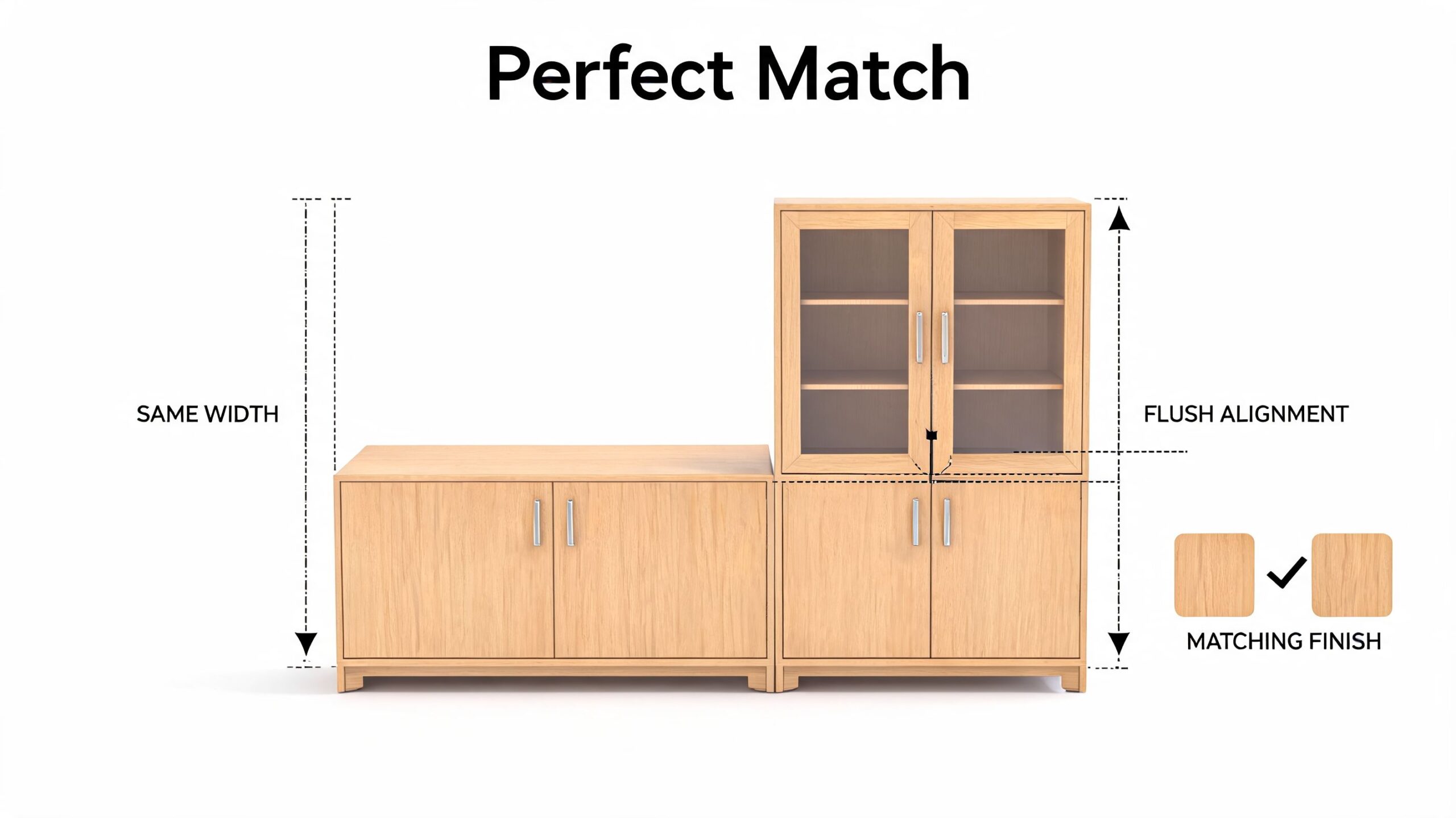
Designers rely on established dimensional relationships because they help a tall piece feel stable instead of top-heavy. A typical hutch-buffet combination measures 60 to 66 inches wide, with the buffet base at 18 to 19 inches deep and the hutch at a shallower 12 to 19 inches according to this dimensional planning reference for hutch and buffet proportions.
That depth difference is easy to overlook, but it matters. A shallower upper section keeps the piece from feeling bulky and helps preserve serving space on the buffet surface below.
Measure in this order
When clients bring measurements into a design appointment, I like them to check four things:
Width of the wall
Leave breathing room so the piece doesn’t look wedged in. You also want enough side clearance for nearby trim, windows, or traffic flow.Depth in real use
Don’t only measure the cabinet footprint. Measure how much room you need when doors are open and when someone is standing there serving or unloading dishes.Height against the room
Ceiling height matters, but so does visual height. A tall hutch can look wonderful in a room with generous trim and long drapery panels. In a lower-ceilinged room, a lighter upper section often works better.What the buffet top must still do
If you entertain often, preserve usable serving space between decorative objects and the lower edge of the hutch.
Match the details, not just the size
A close fit in dimensions won’t save a pairing that clashes stylistically. Check these points:
- Wood tone and undertone need to agree. Warm brown and cool gray-brown finishes often fight each other.
- Door shape should feel related. Arched glass above a very sharp, modern base can work, but only if the contrast looks intentional.
- Hardware language matters. Simple pulls, cup pulls, and ornate knobs each send a different message.
- Legs or plinth base should support the overall style. A delicate raised base creates a different feel than a grounded, case-like silhouette.
Bring photos of your room, flooring, and dining table when you compare pieces. The buffet and hutch have to relate to the whole room, not only to each other.
If you’re starting with a buffet first, a piece like the Champlain customizable buffet shows why base design matters. The right foundation makes it much easier to build upward with confidence.
Choosing Your Materials and Style
Material is where a dining storage piece stops being temporary and starts becoming lasting. You can see style from across the room, but you understand quality when you touch the door, open a drawer, and notice how the finish responds to light.
Solid wood and engineered construction
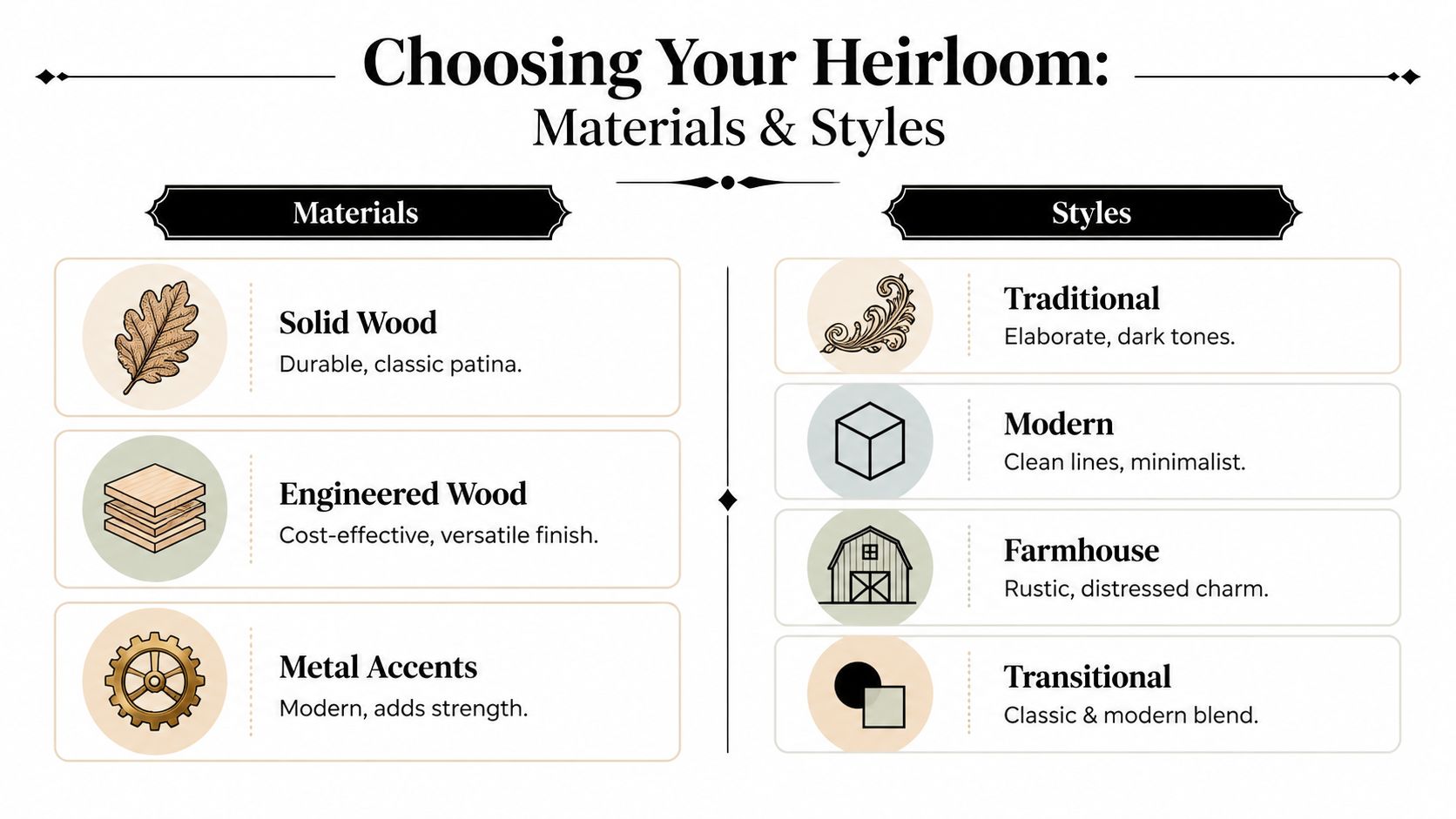
For an investment-minded buyer, solid wood remains the reference point because it carries visual depth, can age beautifully, and generally feels more substantial in daily use. Many solid wood furniture Ohio shoppers also appreciate the repair potential of wood over time. Scratches, finish wear, and minor dings often become part of the piece’s character rather than the end of its usefulness.
That said, not every non-solid component is a compromise. In better furniture, engineered elements may be used very intentionally. Premium hutches often use rubberwood solids with white oak veneers, an engineered approach with 40% lower moisture movement than some untreated hardwoods, which helps resist warping and supports structural integrity over time, according to this material durability overview for buffet hutches.
That’s a good reminder that quality depends on how materials are used, not just on the label.
How wood species shape the room
Different woods change the mood of a hutch for buffet styling even before finish is applied.
| Wood choice | Visual character | Often suits |
|---|---|---|
| Oak | Pronounced grain, grounded presence | Farmhouse, transitional, classic |
| Cherry | Richer, refined warmth | Traditional, formal, collected interiors |
| Maple | Smoother grain, cleaner appearance | Contemporary, Scandinavian-leaning, transitional |
These aren’t rigid rules. A hand-finished oak piece can feel sleek in the right silhouette, and maple can feel warm and traditional with the right stain. The point is to choose a wood that supports the tone of your room, not competes with it.
For a more detailed breakdown of how species affect longevity and appearance, this guide on choosing the right hardwood for longevity and style is a useful next step.
Style should follow the architecture of your home
A hutch often succeeds when it respects the home’s broader language.
- Traditional rooms tend to welcome framed doors, richer finishes, and more decorative molding.
- Modern spaces usually benefit from slimmer profiles, flatter panels, and restrained hardware.
- Farmhouse interiors often lean into visible grain, softer painted finishes, and inviting texture.
- Transitional homes do best with balance. A classic shape with simpler lines usually has the longest life.
Small quality markers worth noticing
You don’t need to be a furniture maker to spot better construction. Look for signs that a piece was designed for years of use.
- Shelf adjustability gives you flexibility as your storage needs change.
- Drawer interiors should feel smooth and well-fitted.
- Hardware weight often reveals whether the piece has substance or merely appearance.
- Finish clarity matters. You want a finish that reveals the grain instead of masking it.
If the doors feel light, the finish looks flat, and the hardware feels generic in your hand, the piece may not satisfy you for long, even if the shape is attractive.
That’s especially true with dining furniture, because it’s asked to serve both practical and decorative roles every week.
Beyond the Showroom Floor Custom Dining Sets
Standard sizing works well until it doesn’t. That’s the problem many homeowners run into when they live in an older Columbus house, a renovated condo, or an open-plan home where one wall needs to do several jobs at once.
Why custom sizing solves the real problem
Retail assortments tend to cluster around familiar dimensions. But many rooms aren’t standard. While most retailers focus on standard 50 to 70 inch wide hutches, 35% of home renovations in Midwest markets involve compact dining areas, creating clear demand for custom-sized solutions, according to this Midwest compact dining market reference.
That’s where shoppers often make an expensive mistake. They buy a buffet and hutch that “almost” fits, then spend years noticing the awkward clearance, the blocked light switch, or the proportions that never looked quite right.
What customization changes
A custom approach lets you solve for the room first, then choose the finish and style that belong in it. Useful areas to customize include:
- Overall width for short walls or narrow dining zones
- Upper-to-lower proportion when you need more display or more concealed storage
- Wood species and finish so the piece relates to flooring, trim, or an existing dining table
- Hardware selection to tilt the look more traditional, farmhouse, or refined transitional
- Interior configuration for platters, stemware, linens, or mixed-use storage
A family with a compact dining area might need a narrower buffet base with a lighter-looking upper section. Someone in a larger suburban home may want the opposite: more visual presence, enclosed lower storage, and a glass-front top for entertaining pieces.
Seeing the fit before you order
A structured custom process matters. The Custom Order Program allows buyers to work through dimensions, finishes, and configurations with visual tools rather than relying on imagination alone. That’s especially useful for custom dining sets and storage pieces that have to coordinate across the room.
A 3D visualizer changes the conversation. Instead of asking, “Will this stain be too dark?” or “Will that upper section feel heavy?” you can compare combinations before the piece is built. For homeowners trying to tie together Amish-made furniture, existing trim color, and a table they plan to keep for years, that kind of preview reduces uncertainty.
Custom isn’t only about decoration. It’s often the most practical route when the room has an architectural quirk that standard furniture doesn’t respect.
That’s why custom-fit storage deserves more attention than it gets. In many homes, it’s the difference between filling a wall and finishing it.
The Vinson Experience From Showroom to Your Home
The buying decision doesn’t end when you choose the piece. For a large hutch for buffet setup, the ownership experience matters just as much as the selection process.

Delivery should protect the piece and the home
Tall dining storage has real weight, multiple components, and often delicate glass or finished surfaces that need careful handling. That’s why many homeowners prefer a White-Glove In-Home Delivery service rather than a threshold drop-off.
Good delivery service usually includes careful placement, assembly, packaging removal, and a final check to make sure the piece is positioned correctly in the room. With a hutch, that matters because placement affects both appearance and function. A few inches can change traffic flow, serving comfort, and how the piece relates to lighting and wall art.
Financing and long-term care
An investment piece doesn’t have to mean rushing the budget. Flexible financing can make a thoughtful purchase easier to time around a renovation, move, or larger room update. That’s especially helpful when you’re furnishing more than one area of the home and also comparing needs like custom dining sets, solid wood furniture Ohio makers, or even a visit for the best mattresses Easton Town Center shoppers often compare on the same trip.
Once the hutch is in place, a few care habits go a long way:
- Dust with a soft dry cloth so the finish stays clear rather than hazy.
- Use the buffet surface thoughtfully with trays or protective layers under heavy serving pieces.
- Keep direct heat and moisture in check because wood performs best in a stable indoor environment.
- Re-style gradually instead of overloading shelves all at once. A hutch looks better and functions better when objects have room around them.
Ownership should feel calm
The right piece becomes part of your household rhythm. Holiday serving gets easier. Everyday storage becomes more organized. The dining room starts doing more work without looking more crowded.
That's the payoff. A good hutch doesn’t ask for constant attention. It helps the room function and look composed.
Find Your Heirloom Piece at Easton Town Center
A hutch works best when it’s chosen with the whole room in mind. The wall size matters. The buffet proportion matters. Material, finish, and delivery all matter. But the larger question is simpler. You’re deciding whether the piece will still feel right years from now, after seasons of dinners, celebrations, and ordinary weekday use.
That’s why this category deserves patience. The right hutch for buffet pairing can add storage, height, and presence in a way that feels permanent rather than trendy. It can also solve one of the most common design problems in Columbus homes: a dining room that needs a custom-fit answer instead of another standard-size compromise.
For shoppers visiting Easton Town Center, seeing scale and finish in person makes a real difference. Wood tone is easier to judge under natural showroom lighting. Door proportions make more sense when you can stand in front of them. Hardware, shelf spacing, and visual weight are all easier to evaluate with your own eyes and hands.
If value is part of the equation, keep an eye on the Clearance Gallery for premium pieces with meaningful savings, and remember the Low Price Guarantee with a 110% refund of the difference if a lower price is found at a local authorized dealer within the stated terms. That kind of policy adds reassurance when you’re making a long-term purchase for your home.
For homeowners searching for a Furniture store Columbus Ohio destination that supports thoughtful planning, the in-person experience still matters. So does having access to design guidance, customization options, flexible financing through Synchrony HOME, and delivery that respects both the piece and your space.
If you’re ready to compare styles, test proportions, or plan a custom-fit solution for an unusual dining room wall, visit Vinson Fine Furniture at Easton Town Center. A complimentary design consultation can help you sort through finishes, configurations, and room measurements with more confidence, whether you’re shopping for a buffet, a hutch, Amish-made furniture, or a full dining room update.