In House Furniture Financing: A Columbus Shopper’s Guide

A Columbus homeowner walks through Easton Town Center, sits down at a bench-made leather sectional, runs a hand across a solid-maple dining top, and realizes the search is over. The piece is right. The scale works. The finish feels grounded and warm. The construction feels substantial, not hollow. Then the practical question lands. Pay cash, use a bank loan, open store financing, or accept an in-house plan and move on.
That question matters more with investment-grade furniture than it does with disposable pieces. A well-made dining table, bedroom set, or motion sectional isn't just another household purchase. It's part of the house's daily function and long-term character. In Columbus, where many homeowners are furnishing renovated spaces, new builds, and forever homes, the financing decision needs to match the quality of the product.
The market itself shows how normal this has become. The U.S. furniture stores industry reached $170.9 billion in 2026 and includes over 56,620 businesses, many of which offer financing or store credit options to support purchases that buyers don't want to pay in full upfront (U.S. furniture store industry data). For homeowners also planning whole-room upgrades, practical resources like these wardrobe planning and installation tips can help align storage decisions with major furniture investments. Buyers furnishing a larger space can also review how to furnish a new home before locking in payment plans.
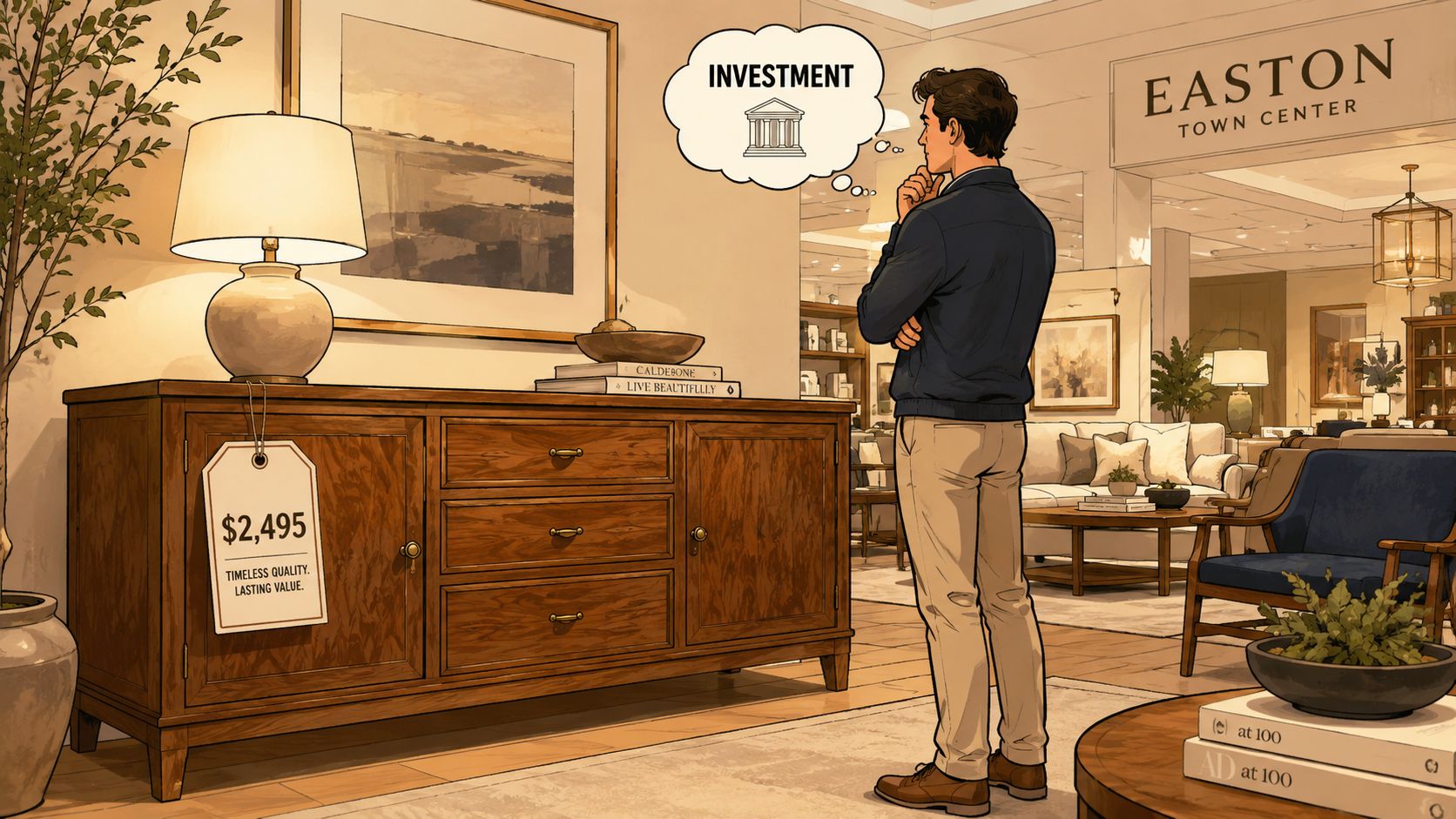
Table of Contents
- Investing in Your Home with the Right Furniture Financing
- What Exactly Is In-House Furniture Financing
- The Advantages and Disadvantages of In-House Options
- How In-House Financing Compares to Other Methods
- Critical Red Flags and Questions for Columbus Shoppers
- Financing True Heirloom Quality at Vinson Fine Furniture
Investing in Your Home with the Right Furniture Financing
A financing decision should support the home, not strain it. That sounds obvious, but furniture retailers often train buyers to focus on the monthly payment first and the long-term cost second. That approach works against the homeowner who cares about durable materials, customized scale, and lasting construction.
The purchase isn't just emotional
A dining table in solid cherry or walnut anchors daily life for years. A top-grain leather sectional with power motion becomes the most used seating in the home. An Amish-made dining set or Mavin bedroom furniture set isn't bought for a season. It's bought because replacement shouldn't be necessary anytime soon.
Practical rule: The better the furniture, the more disciplined the financing decision should be.
That principle matters in Columbus because many buyers aren't shopping for filler pieces. They're shopping for solid wood furniture Ohio homeowners expect to live with for a long time. They want the weight of a solid-oak case piece, the smooth glide of a well-engineered recliner, and the confidence that the room won't need to be redone in a few years.
The financing should fit the asset
Good financing can preserve liquidity while allowing a homeowner to secure the right piece now. Bad financing does the opposite. It makes a premium purchase feel manageable in the showroom, then expensive and restrictive at home.
Three priorities should guide the decision:
- Match term to durability: A longer-term commitment makes more sense on heirloom-quality furniture than on temporary furnishings.
- Protect cash reserves: Homeowners still need room for delivery, renovation work, and routine home expenses.
- Read the payoff terms: Promotional language can hide expensive mechanics.
A disciplined buyer also looks beyond the furniture itself. A room plan, a renovation schedule, and storage decisions should work together. That is why financing should be treated as part of the overall home investment strategy, not as a checkout add-on.
What Exactly Is In-House Furniture Financing
In-house furniture financing is a retail-managed payment arrangement. The store handles the approval process directly and often asks for minimal documentation such as an ID and proof of income, which makes it more accessible for buyers with subprime 300–579 credit or no credit history at all (in-house financing overview). Buyers comparing different approval styles can also review options to get flexible furniture financing before deciding which structure fits their situation. Store-specific plan details are easiest to review through a dedicated furniture financing page.
How the arrangement works
The simplest way to think about it is this. Instead of borrowing from a bank first and then paying the store, the buyer enters a payment relationship tied to the retailer's financing program.
That changes the shopping experience in a few important ways:
- Approval tends to be faster: The retailer's process is designed to keep the sale moving.
- Documentation is lighter: Buyers usually aren't dealing with the same level of underwriting found in a traditional bank loan.
- The financing is tied to the purchase: The plan exists to fund furniture, not general household spending.
This is why in-house financing often appeals to buyers who need a straightforward path to ownership, especially after a move, renovation, or major room refresh.
Why shoppers choose it
Accessibility is the main reason. Not every homeowner wants to go through a traditional lender to buy a dining set, a custom seating group, or a bedroom collection. Some want one decision in one place. They want to choose the furniture, review the terms, and finish the transaction without opening three browser tabs and comparing unrelated loan products.
That convenience has value. It also creates risk if the buyer confuses speed with affordability.
A fast approval can still be the wrong financial choice if the terms punish delay, partial payoff, or missed deadlines.
The right use case for in-house financing is narrow but legitimate. It works well when the buyer understands the payoff schedule, knows the true cost if the promotion expires, and is buying furniture worth financing in the first place. For a handcrafted solid-maple dining table or a custom leather seating piece, that can make sense. For lower-quality furniture, it usually doesn't.
The Advantages and Disadvantages of In-House Options
In-house options are neither automatically smart nor automatically dangerous. They are tools. Used carefully, they can help a homeowner secure better furniture without draining savings. Used casually, they create expensive regret.

For buyers considering promotional plans, it's worth reviewing how no-interest furniture financing is typically structured before making assumptions based on the headline offer alone.
Where in-house financing helps
The strongest advantage is simplicity. The buyer chooses the piece, applies in the store, and gets an answer without arranging outside funding. For someone buying a custom dining set, a reclining sectional, or Custom leather sectionals Columbus shoppers want to secure before lead times shift, that speed can matter.
Other real benefits include:
- Broader access: Buyers with less established credit may still qualify.
- Single-point coordination: The purchase and payment plan are handled together.
- Cash preservation: The homeowner can keep reserves available for other home priorities.
In some cases, this structure also helps a buyer step up in quality. Instead of settling for a lesser piece, the buyer can purchase the solid cherry, oak, maple, or walnut construction that will last.
Where it goes wrong
The biggest problem is that many buyers stop evaluating once the monthly payment feels acceptable. That is a mistake. Financing should be judged by total cost, restrictions, and consequences for missing the exact terms.
Here are the common weaknesses:
- Promotional complexity: Some plans look simpler than they are.
- Store limitation: The credit arrangement is tied to one retail ecosystem.
- Higher cost after the offer ends: If the promotion isn't managed correctly, the economics can turn sharply against the buyer.
A low monthly payment doesn't prove affordability. It often proves that the term is long, the risk is hidden, or both.
The investment homeowner should also care about fit. If the room requires precise dimensions, finish matching, or motion comfort testing, the financing is only one part of the decision. Construction, leather grade, seat depth, and joinery matter more than promotional wording. Financing should support those choices, not distract from them.
How In-House Financing Compares to Other Methods
A smart comparison starts with one question. Which option leaves the homeowner with the best piece, the clearest terms, and the lowest realistic total cost? Convenience matters, but it isn't the lead criterion.
The most overlooked fact in this category is straightforward. Store financing APRs for bad credit can range from 25-30%, while personal loans for similar profiles average 15-18%, which creates a 10%+ savings gap that many retailers don't emphasize.
Furniture Financing Options at a Glance
| Financing Type | Best For | Typical Interest Rate (APR) | Credit Impact | Key Consideration |
|---|---|---|---|---|
| In-house financing | Buyers who want fast, store-managed approval | Varies by program | Application and payment behavior can affect credit depending on the structure | Easy access, but terms must be read carefully |
| Store credit card | Qualified buyers using a promotional offer | Can include promotional terms, but bad-credit store financing can reach 25-30% in some cases | Credit use and repayment behavior matter | Deferred-interest risk can be severe |
| Personal loan | Buyers prioritizing predictable total cost | 15-18% for similar bad-credit profiles in recent analysis | Standard lending review applies | Often more flexible outside one retailer |
| Buy now, pay later | Small, short-term purchases | Varies by provider and terms | Varies by provider | Better for smaller purchases than investment-grade furnishings |
The total cost question matters most
For solid-wood dining, bedroom, and seating purchases, the cheapest-looking option often isn't the cheapest option. A buyer who focuses only on the advertised promotion can end up paying more than the homeowner who chose a cleaner loan structure from the start.
That is why the evaluation should follow this sequence:
Assess the furniture first
If the piece isn't built to last, financing it is hard to defend. For wood furniture, buyers should prioritize solid cherry, oak, maple, or walnut and pay attention to construction details over surface cosmetics.Compare payoff certainty
A fixed term with clear repayment usually beats a promotion that depends on perfect timing.Check flexibility
Personal loans often give buyers more freedom because they aren't locked into one store's credit framework.Calculate what happens if life gets messy
Homeowners miss dates, deal with moving expenses, and absorb surprise repairs. The safer financing option is the one that remains understandable under stress.
A bank-style loan can be the better choice for disciplined buyers who want clarity. In-house financing can still work, especially when access and speed matter, but it should earn that choice by being transparent.
The best furniture financing option isn't the one with the smoothest checkout. It's the one that still looks reasonable after the contract is read line by line.
For higher-end furniture, this matters even more. A custom order for Smith Brothers furniture Easton shoppers may consider, or a dining program built around finish, fabric, and room scale, deserves a financing structure that matches the seriousness of the purchase.
Critical Red Flags and Questions for Columbus Shoppers
Columbus buyers should treat furniture financing agreements the same way they treat roofing bids, remodeling contracts, and mortgage disclosures. If a term changes the actual cost, that term deserves close reading. The most dangerous language is often buried in the friendliest promotion.
For practical buying discipline before visiting a showroom, these furniture shopping do's and don'ts help sharpen the right questions.
Deferred interest is the trap most buyers miss
A deferred-interest promotion is not the same as harmless free financing. If the buyer misses a payment or fails to clear the balance by the end of the promotional window, the accumulated interest can be added back from day one. That can double the total cost of a purchase (deferred-interest risk explained).
That single detail changes the entire decision.
A homeowner may think the offer provides breathing room. In reality, the contract may demand perfect execution. One missed date, one underestimated balance, or one assumption that minimum payments will finish the job can turn a sound purchase into a bad debt.
Questions worth asking before signing
The right questions are plain, not technical. If a retailer can't answer them clearly, the buyer should pause.
- Is this true no-interest financing or deferred interest? The distinction changes the risk completely.
- What exact event causes interest to be charged? A missed payment, late payment, or unpaid balance at the end can each trigger very different outcomes.
- What payment amount clears the balance within the promotion? Minimum payments and payoff payments aren't always the same thing.
- What happens if the buyer wants to pay early? The agreement should make that process simple.
- Is the financing tied only to this store? Limited flexibility matters if the buyer is comparing room-wide purchases.
- What documentation and credit review are involved? The buyer should know whether the process is light, standard, or somewhere in between.
A household that wants to strengthen approval odds before applying can also work to improve family financial health by tightening bill payment habits and reducing avoidable application friction.
If the sales conversation centers on the monthly payment and avoids the payoff math, the buyer should slow the process down.
Columbus homeowners shopping for Amish-made dining sets and custom motion seating should be especially careful here. These purchases are substantial by design. That means the financing details matter more, not less. Strong furniture can justify financing. Weak contract terms can't.
Financing True Heirloom Quality at Vinson Fine Furniture
The right financing decision becomes easier when the furniture itself is worth financing. That is where the distinction between heirloom-grade construction and disposable furniture matters most.
A high-quality solid wood dining table uses mortise-and-tenon joints, where the tenon fits into the mortise. That joint is recognized as one of the strongest methods for connecting table legs to the apron (solid wood dining table construction details). A buyer financing a table built that way is making a different decision than a buyer financing a short-life substitute.
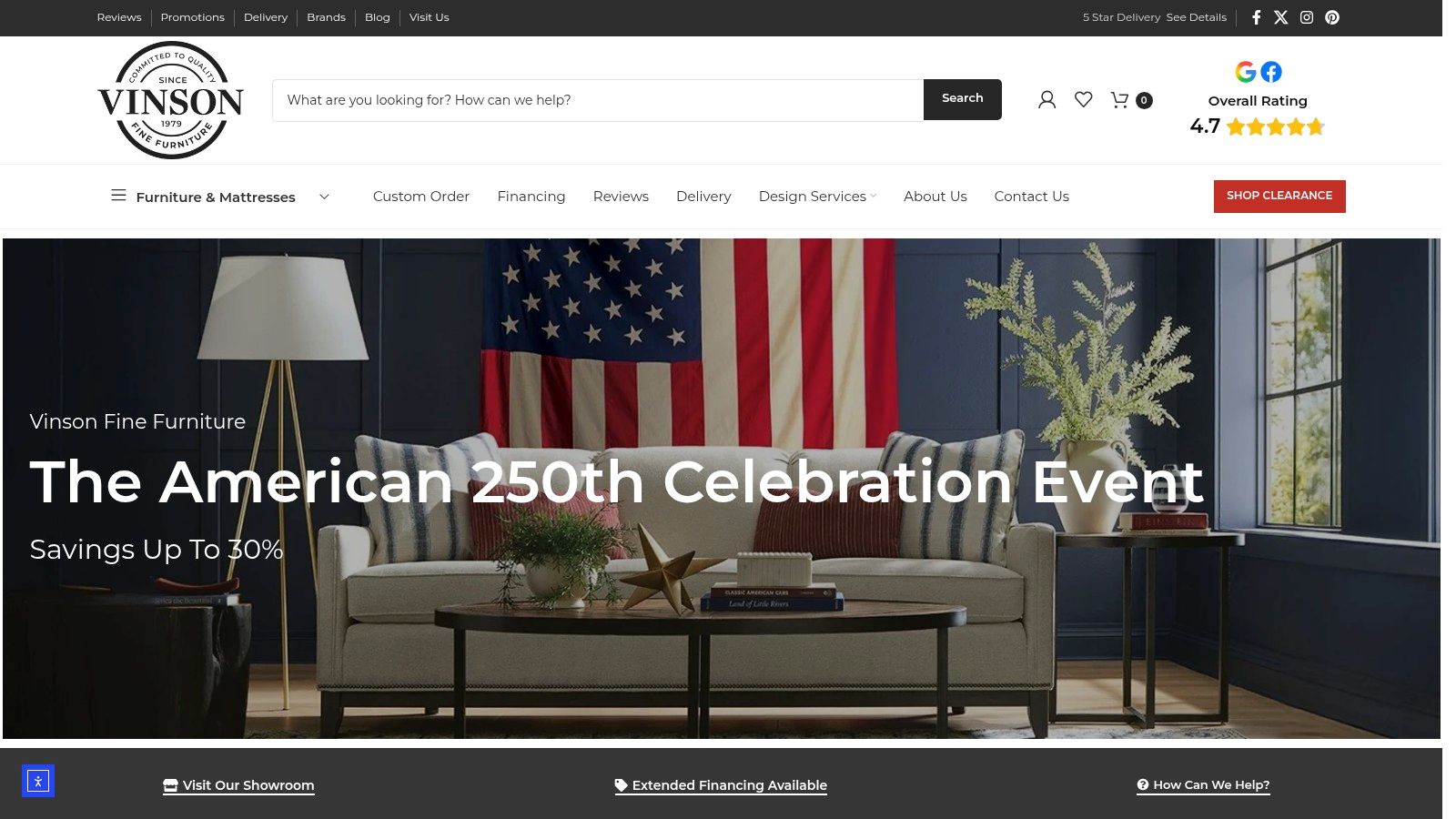
The broader standards matter too. A retailer centered on solid hardwood, not engineered substitutes, gives the buyer a better foundation for long-term value. For buyers who want to understand that full difference in service, construction, and buying confidence, the Vinson advantage lays out the model clearly.
What quality looks like before financing begins
Investment homeowners should look for four things first:
- Solid hardwood only: Solid cherry, oak, maple, or walnut should be the starting point for wood furniture.
- Joinery before finish: Construction matters more than stain color.
- Customization that serves the room: Fabric, finish, dimensions, and motion options should solve design problems, not create them.
- Comfort that has to be tested in person: Seat depth, lumbar support, swivel action, glide, and recline should be felt, not guessed.
That is where the showroom matters. A serious furniture purchase deserves the sit-test, the close inspection of grain and edge profile, and the side-by-side comparison of leather hand, wood tone, and motion performance.
Why the showroom experience matters
At Easton Town Center, the strongest buying experience combines design guidance with product integrity. A family-owned showroom with roots in Central Ohio can do what mass retail often can't. It can help a homeowner evaluate room dimensions, traffic flow, and customization before talking financing.
That matters for brands and categories that reward careful selection:
- Smith Brothers of Berne: Customized seating with premium leather and motion options.
- Canadel: Extensive dining customization through finishes, dimensions, and silhouettes.
- Mavin: Solid-wood bedroom and dining pieces built for long-term use.
- Amish-made collections: Durable, bench-made furniture with heritage craftsmanship.
The value side matters too. Complimentary design consultations, an in-store design studio, and a custom order program with fabrics, finishes, and digital visualizers help buyers make fewer expensive mistakes. A low price guarantee with a 110% refund of the difference and a clearance gallery with savings of up to 70% add another layer of discipline to the purchase decision, especially when the goal is to buy once and buy well. White-glove delivery also matters more than many buyers think. Proper placement, assembly, and inspection protect the investment from the start.
For Columbus homeowners furnishing with solid wood furniture Ohio buyers can pass down, or choosing Mavin bedroom furniture and Custom leather sectionals Columbus families will live with every day, financing should be a servant to quality, not a substitute for it.
Vinson Fine Furniture brings that standard to Easton Town Center with solid hardwood construction, Amish-made craftsmanship, premium motion and leather seating, and a custom order program built around Smith Brothers, Canadel, and Mavin. Homeowners who want heirloom-quality furniture, complimentary design guidance, white-glove delivery, and financing that supports a long-term home investment can explore the showroom and plan their next room at Vinson Fine Furniture.