Your Guide to Authentic 1950’s Home Decor


You may be standing in a house with good bones and a problem many homeowners recognize immediately. The rooms feel sound. The layout works. But the interiors still read as generic, and every attempt to add 1950's home decor risks tipping into novelty.
That’s where most projects stall. A 2024 Houzz survey of 5,000 US homeowners found that 62% of people interested in 1950s revivals abandon the effort because of sourcing issues. The same research notes that authentic teak or elm sideboards average $2,500+ unrestored, while replicas average $800, which explains why so many rooms end up looking like a compromise instead of a considered design.
The best 1950's home decor isn’t about assembling a themed set. It’s about optimism, utility, and material clarity. The decade embraced surfaces that were easier to clean, furniture that sat lighter in a room, and layouts that made modest square footage feel more open and social.
A good result comes from restraint. Choose a few true signals of the period, then let craftsmanship carry the room. If you want a broader sense of how period style can feel current instead of nostalgic, this guide to style trends for your home is a useful companion.
The Timeless Allure of 1950s Home Decor
The reason 1950's home decor still resonates is simple. It was designed for daily life. Even the most expressive rooms of the period usually balanced cheerful color with practical surfaces, modest scale, and furniture that didn’t visually crowd the floor.
That balance matters in today’s homes. Open plans, renovated ranch houses, and older Columbus properties all benefit from furniture that feels intentional but not heavy. The 1950s handled that especially well. Low case goods, raised legs, and crisp silhouettes gave rooms breathing room without making them feel sparse.
Why the style still works
The decade had a forward-looking confidence to it. Materials looked modern. Lines looked clean. Homes felt equipped for a new way of living, with dining spaces becoming more casual and living rooms serving several purposes at once.
That doesn’t mean every room should become an exact recreation. In practice, the strongest interiors borrow the discipline of the era:
- Keep the footprint honest: choose pieces that fit the room instead of overscaling everything.
- Let materials speak: wood grain, laminate sheen, chrome, and textured fabric do more work than excessive decoration.
- Use contrast carefully: one lively pattern or one playful accent is usually enough.
A room feels authentically 1950s when it looks efficient, bright, and lived in. Not when every object announces the decade.
The real challenge is sourcing
Most homeowners can identify the look. Fewer know how to build it with quality. Vintage pieces may need repair, refinishing, or structural work. New replicas can capture the silhouette while missing the heft, joinery, and finish depth that make furniture satisfying to live with.
That’s the practical side many guides skip. The issue usually isn’t taste. It’s execution. A room can carry period color and shape, then still feel off because the woods are flat, the proportions are wrong, or the upholstery feels disposable.
Good 1950's home decor asks for selectivity. One well-made sideboard is better than a room full of lookalikes. One proper dining set will carry the kitchen and breakfast area better than several trend-driven pieces that won’t age well.
Defining the Decade Colors Palettes Patterns and Materials
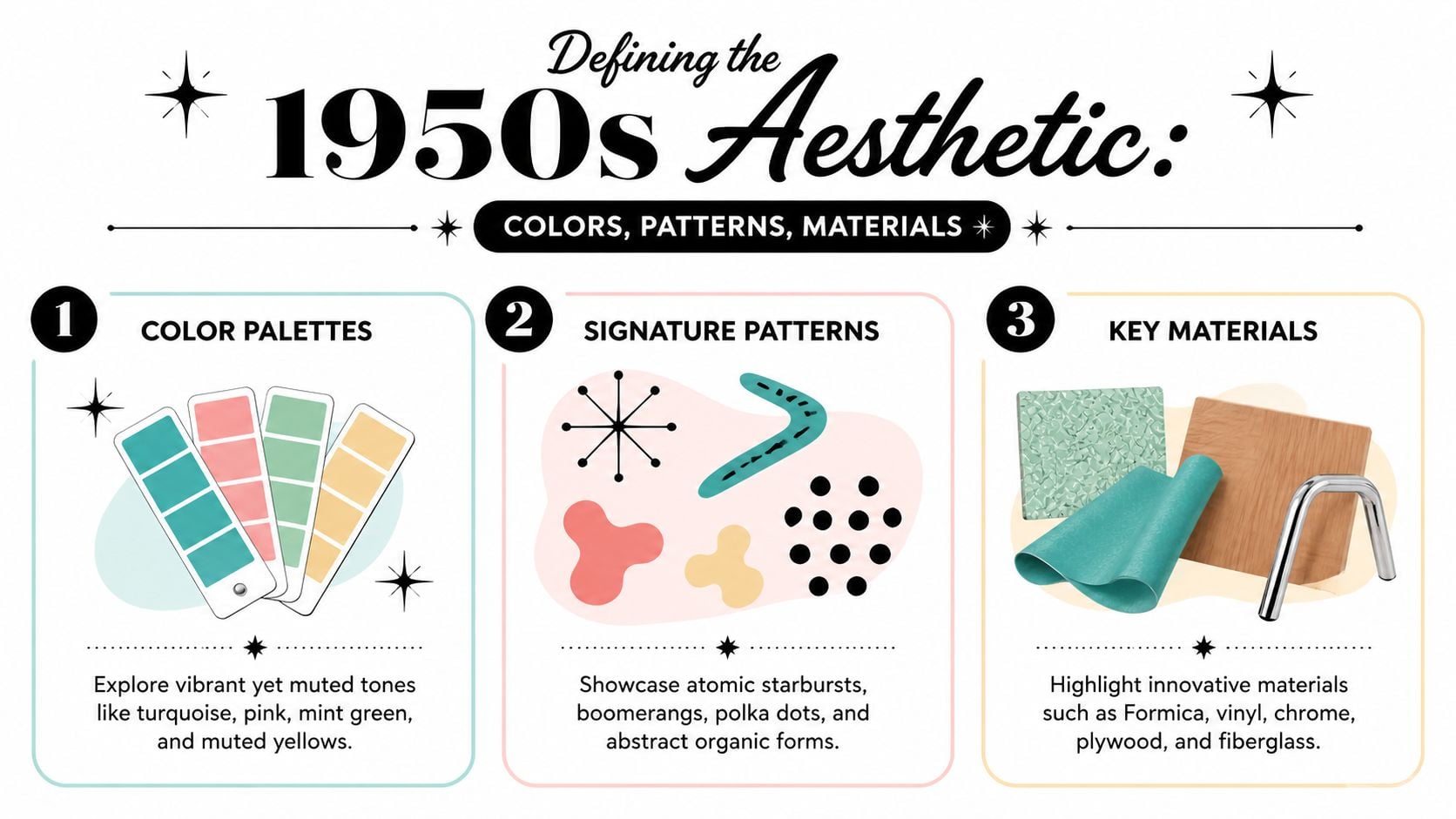
The fastest way to make a room feel convincingly 1950s is to understand its visual vocabulary. In this period, color, pattern, and material weren’t separate decisions. They worked together. A pale cabinet color looked sharper next to chrome. A boomerang print made more sense when paired with smooth laminate or a nubby textile.
Color came in two moods
One branch of 1950's home decor leaned soft and domestic. Think pink, mint, butter yellow, and gentle aqua. These tones worked especially well in kitchens, baths, and bedrooms, where the goal was freshness.
The other branch was more energetic. Turquoise, black, red, and chartreuse often appeared in accents, upholstery, or graphic accessories. That version reads more Atomic Age and usually benefits from a steadier hand.
Here’s a simple way to think about period-appropriate combinations.
| Palette Name | Primary Colors | Accent Colors | Typical Use Case |
|---|---|---|---|
| Soft Pastel | Pink, mint, pale yellow | Chrome, white, soft gray | Kitchens, bedrooms, breakfast nooks |
| Atomic Bright | Turquoise, black, red | White, warm wood | Living rooms, dining accents, statement corners |
| Earth and Blonde Wood | Honey wood, beige, olive-adjacent neutrals | Rust, muted blue | Family rooms, bedrooms, mixed-era homes |
| Graphic Contrast | White, black, charcoal | Aqua, coral, citron-like pops | Upholstery, rugs, wall decor, diner-inspired spaces |
For homeowners drawn to softer period tones, these pastel furniture ideas help translate the palette into pieces that still feel refined.
Pattern should punctuate, not overwhelm
The era loved movement. Starbursts, boomerangs, abstract geometrics, and playful dotted motifs all belong in the conversation. But in a successful room, pattern usually appears in controlled doses.
Use it in places where the eye expects some energy:
- Area rugs: geometric forms ground a seating group.
- Accent pillows: enough to reference the decade without dominating.
- Drapery or chair seats: best when the rest of the room stays quieter.
Practical rule: If the room already has chrome, laminate, and a strong furniture silhouette, scale the pattern back. The materials are already doing expressive work.
Materials did the heavy lifting
Many modern interpretations fall short. The original rooms often felt compelling because the materials were distinct to the touch. Smooth laminate against wood grain. Cool chrome beside a wooly textile. Gloss near matte.
The decade’s key materials included:
- Blond and medium-toned woods: especially in case goods and dining furniture.
- Chrome: on edging, chair legs, hardware, and occasional accents.
- Formica and other laminates: practical, clean-lined, and unmistakably mid-century.
- Vinyl and textured woven fabrics: especially where durability mattered.
- Plywood and molded forms: often used to achieve lighter, more fluid shapes.
A room starts to feel convincing when those surfaces are layered thoughtfully. Not every piece needs to be iconic. But each piece should contribute either warmth, sheen, texture, or graphic clarity.
Crafting the Perfect Mid-Century Living Room
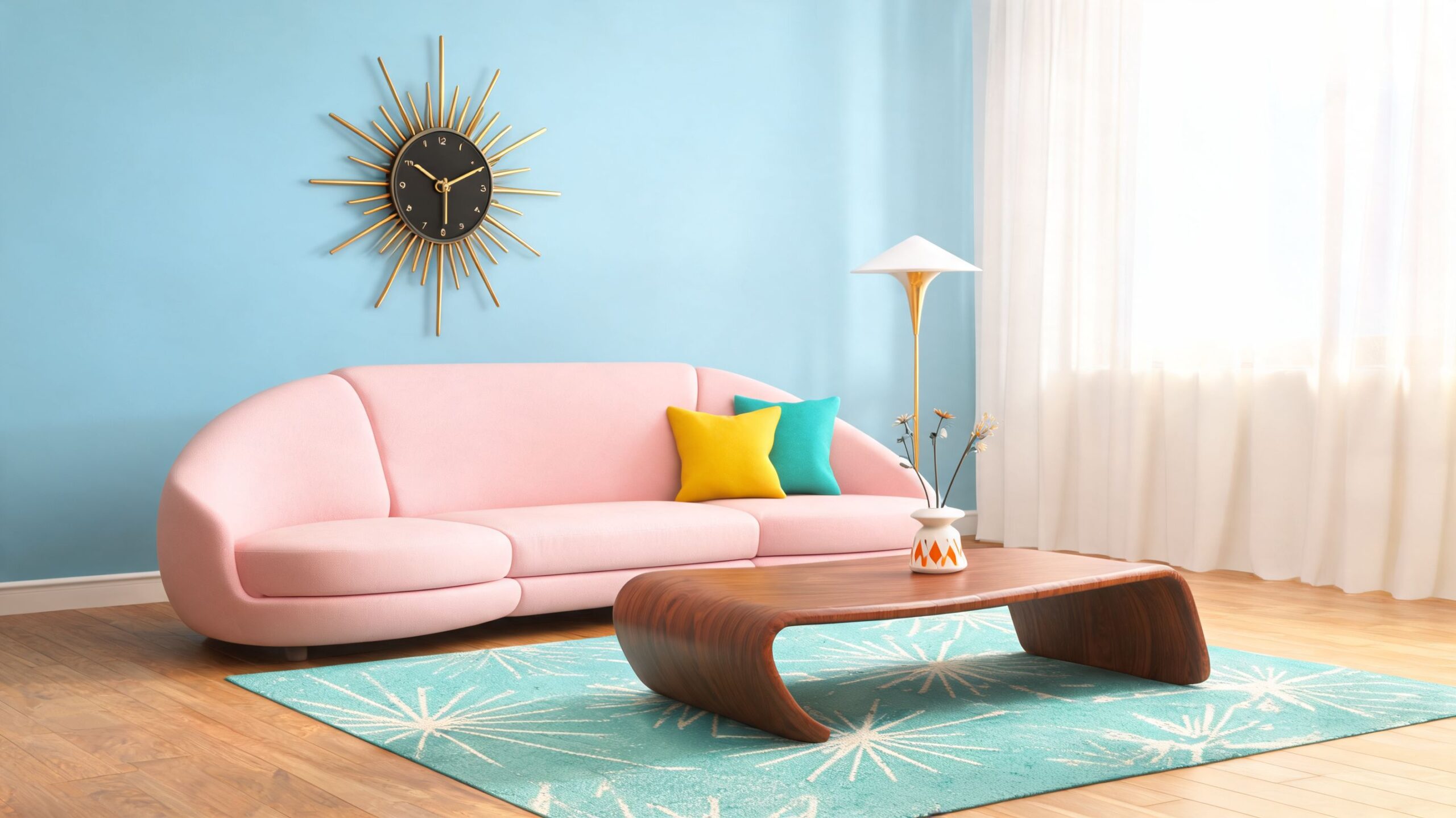
A good 1950s living room never feels overfurnished. It feels edited. The sofa sits lower. The case goods stand on legs instead of plinths. Light moves underneath the furniture, and the room gains a sense of ease.
Start with the wood furniture
The strongest living rooms from the era were anchored by case pieces with disciplined proportions. Sideboards, media cabinets, and shelving worked because they looked light even when they offered real storage.
Construction matters here. Authentic 1950s mid-century modern furniture used hardwoods such as teak, kiln-dried to 12% moisture content, with joints often secured by mortise-tenon construction and resorcinol glue, delivering structural integrity that has lasted over 50 years in 90% of original pieces, as noted in this guide to 1950s interior design trends and mid-century modern style.
That explains why original pieces still feel solid when so many current reproductions don’t. The look was never just about tapered legs. It was about proper joinery, stable lumber, and a finish that let the wood remain visible.
Keep seating low and readable
In a period-correct living room, seating should support conversation and sightlines. Look for:
- Low-backed sofas: they preserve openness.
- Chairs with exposed wood or slim arms: they add presence without visual bulk.
- Coffee tables with rounded or softened corners: they keep circulation comfortable.
- Tables on legs: they preserve the room’s airy quality.
A common mistake is to pair one excellent mid-century case piece with overstuffed contemporary seating that sits too high and too deep. The result fights itself. If the architecture of the room is light, the upholstery should respect that.
If you’re trying to solve layout as much as style, these ideas on how to arrange a living room can help you preserve that open mid-century rhythm.
Raised-leg furniture does more than look right. It lets the floor read as a continuous surface, which is one of the reasons these rooms often feel larger than they are.
What works and what doesn’t
A living room in this style succeeds when it has a focal wood piece, restrained upholstery, and a rug or lamp that introduces character. It fails when every item is trying to be collectible.
A more reliable formula is to mix levels of intensity:
| Element | Best approach | What to avoid |
|---|---|---|
| Sofa | Neutral or softly colored, clean silhouette | Bulky reclining forms |
| Storage piece | Solid wood, tapered legs, visible grain | Flat-pack imitations with printed grain |
| Accent chair | One sculptural chair or a balanced pair | Multiple competing statement chairs |
| Decor | Clock, lamp, ceramic, one graphic textile | Every shelf filled with novelty pieces |
The room should feel social, not staged.
Creating a Retro Kitchen and Dining Space
No room captures the spirit of 1950's home decor more directly than the kitchen. This was the decade of bright surfaces, practical finishes, and casual dining that felt optimistic rather than formal.

Formica changed the room
By the mid-1950s, Formica laminate countertops were used in 1 in 3 new U.S. homes, valued for heat resistance up to 350°F and durability, often finished with chrome edging, according to this review of mid-century home decor trends of the 1950s. That widespread adoption tells you something important. The material wasn’t a novelty. It was a practical modern solution.
Its layered construction and crisp finished edge gave kitchens a cleaner, more engineered feel than older work surfaces. That’s part of why a true 1950s kitchen reads so differently from a farmhouse kitchen dressed in pastel accessories.
Installation is where authenticity can fail
Many homeowners love the look of laminate but underestimate how exact the installation needs to be. Proper period-style work depends on a flat substrate, controlled adhesive application, careful rolling, trimmed edges, and sealed seams. When installers rush those steps, delamination and edge problems show up quickly.
That’s why this is one of those areas where the spirit of the material can matter more than insisting on a literal vintage process. If you want the look, choose surfaces and edge details that honor the original visual language while performing well for daily cooking.
The kitchen should feel cheerful and efficient. If a material choice creates constant worry, it isn’t serving the room the way a 1950s kitchen was meant to.
Build the dining area around one reliable piece
The dining side of the room is where many homeowners can capture the period most comfortably. A round or rectangular table with a simple wood top, supportive chairs, and a modest chrome or refined accent often gets you closer to the decade than a full diner reproduction.
A good retro kitchen and dining space usually includes:
- A table with a clear silhouette: no excessive carving, no heavy apron.
- Chairs that are easy to wipe and easy to sit in: practicality is part of the period.
- A compact breakfast zone: especially effective in ranch layouts.
- One strong floor or wall note: checkerboard, a geometric rug, or a crisp backsplash.
For inspiration on shapes that keep the room rooted in the period without becoming theatrical, this collection of mid-century modern dining furniture is worth studying.
There’s also a value question here. Kitchen-adjacent furniture gets hard use. If you love the 1950s look, it makes sense to invest in a dining set with durable construction and a finish you can maintain, rather than chase fragile nostalgia.
Designing a Serene 1950s Inspired Bedroom
The 1950s bedroom has a quieter voice than the living room or kitchen. It still values line and proportion, but the mood is gentler. Less chrome, more wood. Less spectacle, more softness.
Calm comes from order
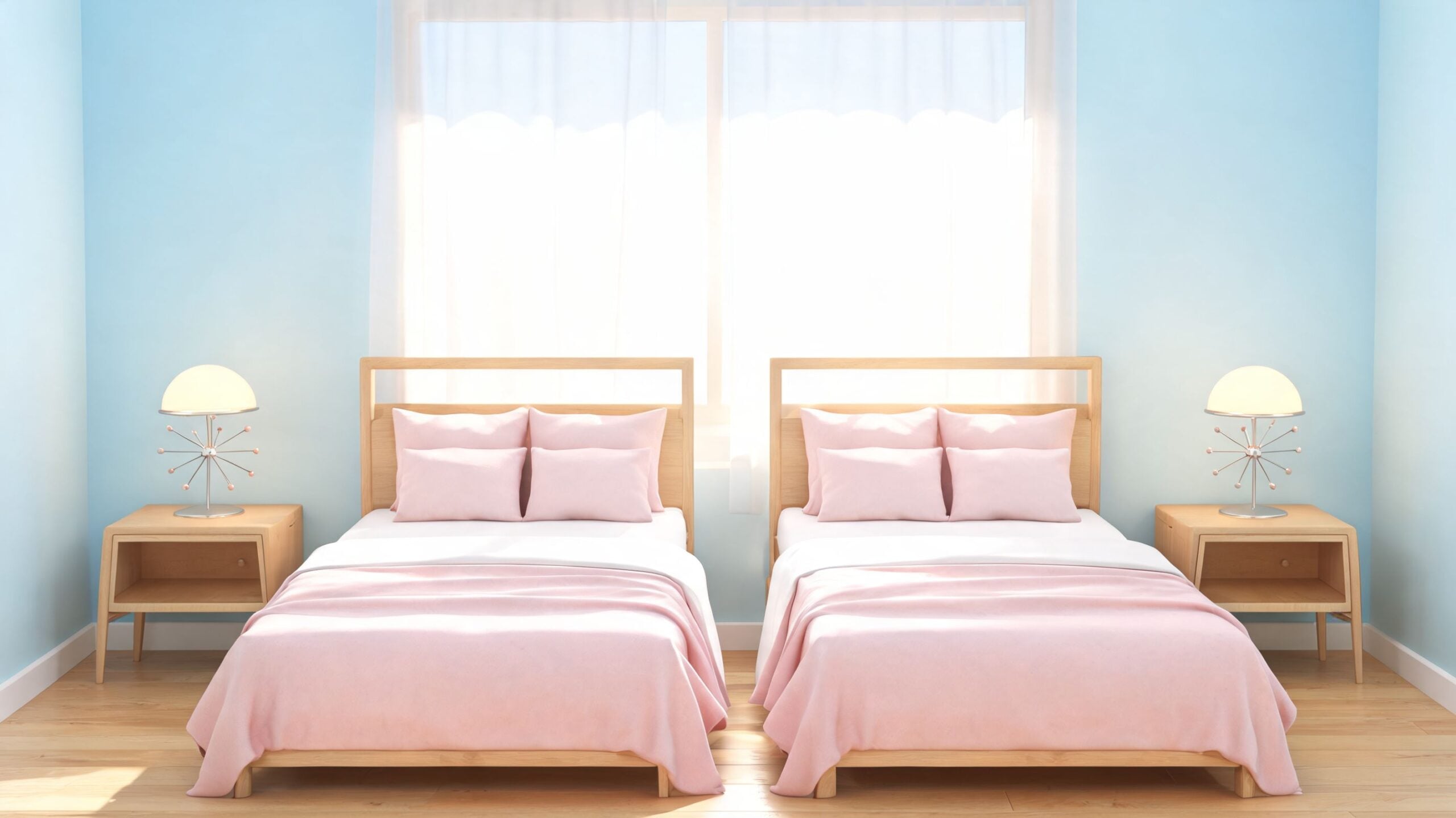
A successful bedroom in this style is usually anchored by a clean-lined bed, a practical dresser, and nightstands that don’t dominate the floor plan. The shapes are straightforward. The materials do the work.
This is one room where clutter breaks the mood immediately. Too many decorative items can make a period-inspired bedroom feel small and busy. The era’s strength was that even modest bedrooms often felt composed.
Look for these qualities:
- Solid-wood storage: dressers and chests with clean drawer fronts.
- Headboards with a clean profile: nothing overly ornate.
- Matching or coordinated bedside lighting: symmetry suits the period.
- A limited textile palette: chenille, woven coverlets, and simple drapery textures work well.
Texture matters more than ornament
Bedrooms from this era often relied on tactile contrast. Smooth wood next to a nubby bedspread. Crisp painted surfaces beside curtains with body. The room feels restful when the materials are pleasant to touch and easy to live with.
That principle still holds. If the furniture is visually simple, the bedding can carry warmth. If the bedspread has texture, the drapery can stay quieter. The goal is not to recreate a showroom scene from the decade. It’s to make sleep and storage feel settled.
A serene bedroom usually comes from fewer decisions, not more. Good wood, soft texture, and disciplined color will outlast decorative trend pieces every time.
A modern bedroom can still honor the decade
This is also the easiest place to blend 1950's home decor with present-day comfort. A solid-wood bed and dresser can set the tone, while the mattress, lighting, and textiles can be thoroughly modern.
That’s especially relevant for homeowners shopping for the best mattresses Easton Town Center while also wanting a room with character. A period-inspired bedroom shouldn’t ask you to give up support or comfort. In fact, the room works best when the visual calm is matched by furniture and sleep products built for long-term use.
Amish-made furniture often fits naturally here because the craftsmanship aligns with what people value in mid-century pieces: honest wood, visible build quality, and longevity.
Blending Vintage Finds with Modern Custom Furniture
Homes often end up either refined or confused. A vintage piece can bring soul into a room. Too many unrelated vintage pieces can make the room feel accidental.
The best approach is to decide what deserves authenticity and what should merely support it. In many homes, that means one or two true period finds paired with new furniture made to a high standard.
What to buy vintage
Vintage is especially effective when the piece offers visual character that would be expensive or hard to replicate well. Think sideboards, occasional tables, lamps, mirrors, or a dining chair set with a memorable silhouette.
Buy vintage when you can evaluate the essentials:
- Case goods: check drawer movement, veneer condition, and leg stability.
- Dining chairs: inspect joints and seat construction.
- Lighting and decor: prioritize shape and finish quality.
- Small accents: ceramics, clocks, and art can add period tone without forcing the whole room.
What’s usually better made new
Large upholstered seating, primary beds, heavily used dining tables, and room-scale storage often benefit from modern construction and customization. This is especially true when you need dimensions that fit a current floor plan or upholstery that can stand up to children, pets, and regular entertaining.
New custom furniture solves several common problems at once:
- Scale: modern rooms often need different depths or widths than vintage pieces provide.
- Finish matching: you can bring a new table or bed closer to the tone of an older sideboard.
- Material performance: current fabrics and leathers are easier to live with.
- Configuration: custom dining sets and bedroom pieces can fit alcoves, open plans, and renovated layouts more precisely.
How to make old and new belong together
Don’t try to match every wood perfectly. Match the attitude instead. Clean lines, visible grain, and disciplined proportions create harmony faster than exact duplication.
A balanced room often follows this logic:
| If your vintage piece is… | Pair it with… |
|---|---|
| Warm teak or elm | New wood in a compatible medium tone, not an orange imitation |
| Visually delicate | Upholstery with simple massing and slim legs |
| Strongly graphic | Quieter textiles and fewer accessories |
| Slightly worn | One crisp, well-finished new anchor piece to steady the room |
If budget is part of the conversation, flexibility matters. A custom order can often solve the “close, but not quite right” problem better than settling for a replica, while clearance pieces can offer strong value when the silhouette and material quality are already there. Financing can also make a long-term furniture decision more manageable when you’re furnishing more than one room at once.
The room should feel curated. Not collected by accident, and not purchased all at once from a trend catalog.
Start Your 1950s Design Journey at Vinson
You walk into a room and know within seconds whether it captures the 1950s with conviction or only borrows the clichés. The difference usually comes down to proportion, finish, and restraint. A true period mood needs more than a starburst clock and a bright accent chair. It needs surfaces that feel right in the hand, casegoods with disciplined lines, and upholstery that suits the way people live now.
That is where a showroom visit pays off. At Easton Town Center, you can compare walnut against lighter wood tones, check how a dining chair sits, and see which finishes read authentic rather than overly glossy or artificially distressed. Those choices matter if you want a room that nods to the decade without turning your home into a set piece.
For Columbus homeowners, the practical question is usually how to balance vintage character with daily function and budget. An original piece may bring the right profile and patina, but a new bench-made table or bed often solves the harder problems, including size, durability, and storage. Vinson is especially useful for clients who want a Furniture store Columbus Ohio destination with experience in solid wood furniture Ohio, custom dining sets, Amish-made furniture, and premium sleep, all in one place.
If you want help working through layout, finish coordination, and the mix of old and new, book one of the Complimentary Design Services consultations. It is a practical way to avoid expensive near-misses and build a 1950s-inspired home that feels collected, useful, and worth keeping.
Visit Vinson Fine Furniture at Easton Town Center to begin your 1950's home decor project with confidence. The showroom lets you compare hand-finished wood species, test comfort in person, and refine layouts, fabrics, finishes, and configurations through the In-Store Design Studio, Custom Order Program, and 3D visualizers. If value matters as much as style, Vinson also offers a Low Price Guarantee with a 110% refund of the difference, a Clearance Gallery with savings up to 70%, Flexible Financing through Synchrony HOME, and White-Glove In-Home Delivery.