Choosing Home Office Furniture Stores: A Columbus Guide

You bought the house. You painted the walls. You upgraded the lighting. Then work followed you home and claimed a corner of the guest room, the loft, or worse, the kitchen counter.
Initially, that setup felt temporary. A dining chair served as a task chair. A slim table from another room became a desk. Cables multiplied, papers drifted, and by the end of a full workday your back, shoulders, and patience were all worn down. That's the moment individuals start searching home office furniture stores, but they often ask the wrong question. They ask where to shop before they ask how to choose.
That order matters. A good home office isn't a pile of office furniture. It's a working environment. If you're furnishing a home in Columbus, especially one you plan to stay in, your office deserves the same level of thought you'd give a dining room, primary bedroom, or family room. Comfort affects focus. Scale affects flow. Build quality affects whether you're replacing the piece in a few years or keeping it for decades.
From Makeshift to Masterpiece Your Home Office Evolution
A lot of home offices begin with compromise.
A Columbus homeowner moves into a new place and tells herself she'll “figure out the office later.” She works from a breakfast nook for a few months. Then a few more. Soon she's taking calls with a laptop balanced between a lamp and a stack of mail, and the room never feels settled because it wasn't designed to work that way in the first place.
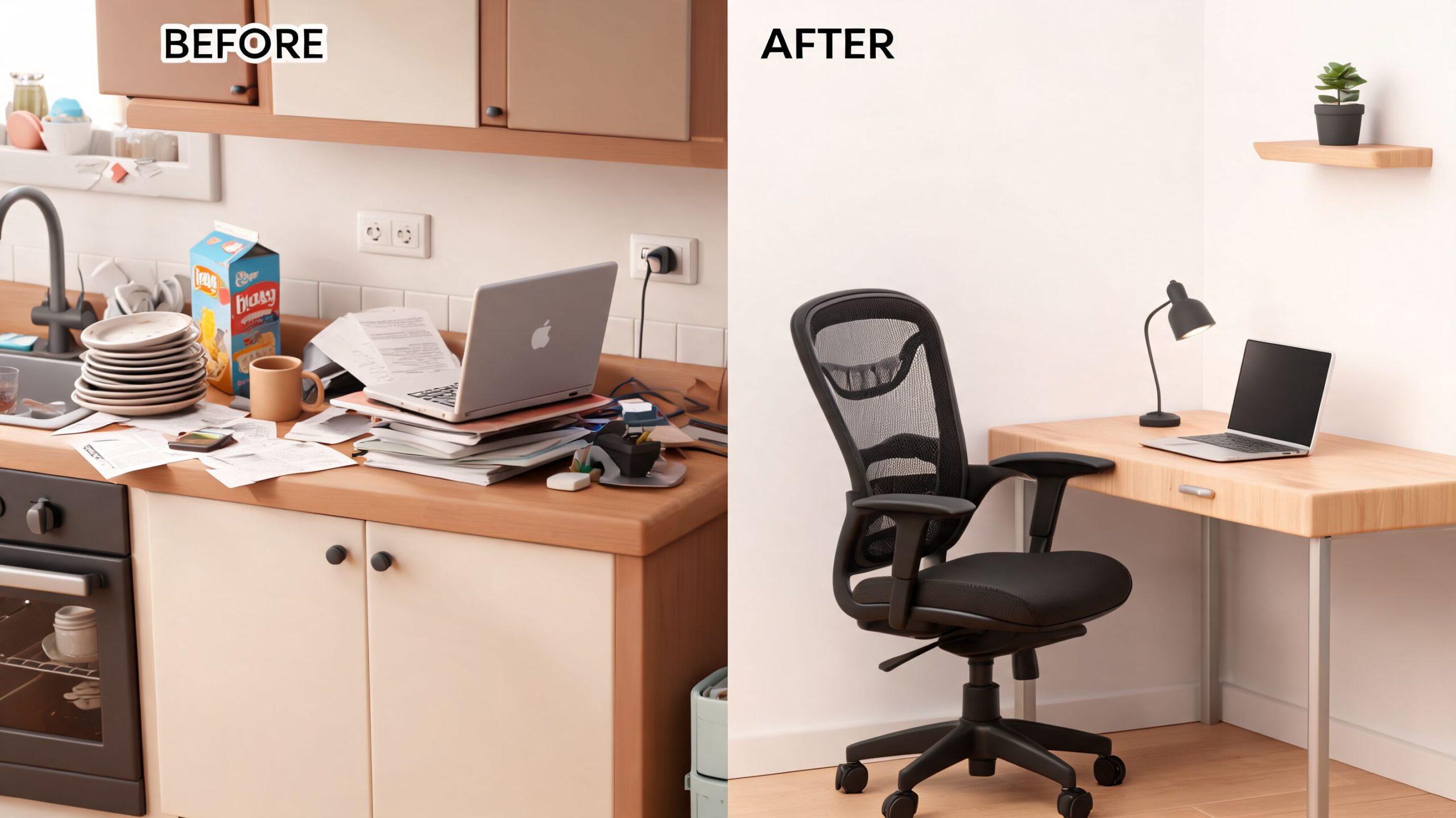
That evolution from temporary to permanent is not unusual. The category itself reflects a long-term shift, not a passing workaround. One industry summary notes that online office furniture sales in the U.S. are projected to reach $16.8 billion in 2025, which signals how firmly home-office buying is now embedded in everyday life, not just emergency pandemic behavior (office furniture market statistics and projections).
Temporary furniture creates permanent frustration
The biggest mistake I see is treating a home office like an accessory space. It isn't. If you spend hours there every week, it's a performance room. Your chair affects endurance. Your desk depth affects posture. Your storage affects whether the room feels composed or chaotic.
A makeshift setup usually fails in four ways:
- Poor seating support keeps your body tense through the day.
- Incorrect scale makes the room feel crowded or oddly empty.
- Weak materials start to wobble, scratch, or sag under daily use.
- No visual cohesion leaves the office feeling borrowed from the rest of the house.
A good home office should lower friction. You should sit down and get to work, not spend the first ten minutes adjusting around the furniture.
Upgrade your standard, not just your desk
If you're moving from “good enough” to intentional, start by thinking in layers. You need a work surface, yes. You also need circulation space, lighting placement, storage, cable control, and a chair you can live with.
That's why browsing inspiration first can help sharpen your eye before you visit home office furniture stores. A page like home office furniture ideas for layout and style direction is useful because it helps you identify the kind of room you're building, not just the next item you're buying.
The point is simple. Stop furnishing your office like a backup plan. Furnish it like part of the house.
The Four Pillars of a Quality Furniture Store
Most stores make it easy to buy. Far fewer make it easy to buy well.
If you want a home office that holds up, evaluate home office furniture stores through four filters: build quality, ergonomics, customization, and after-care. If a store falls short on any one of those, you'll feel it later.
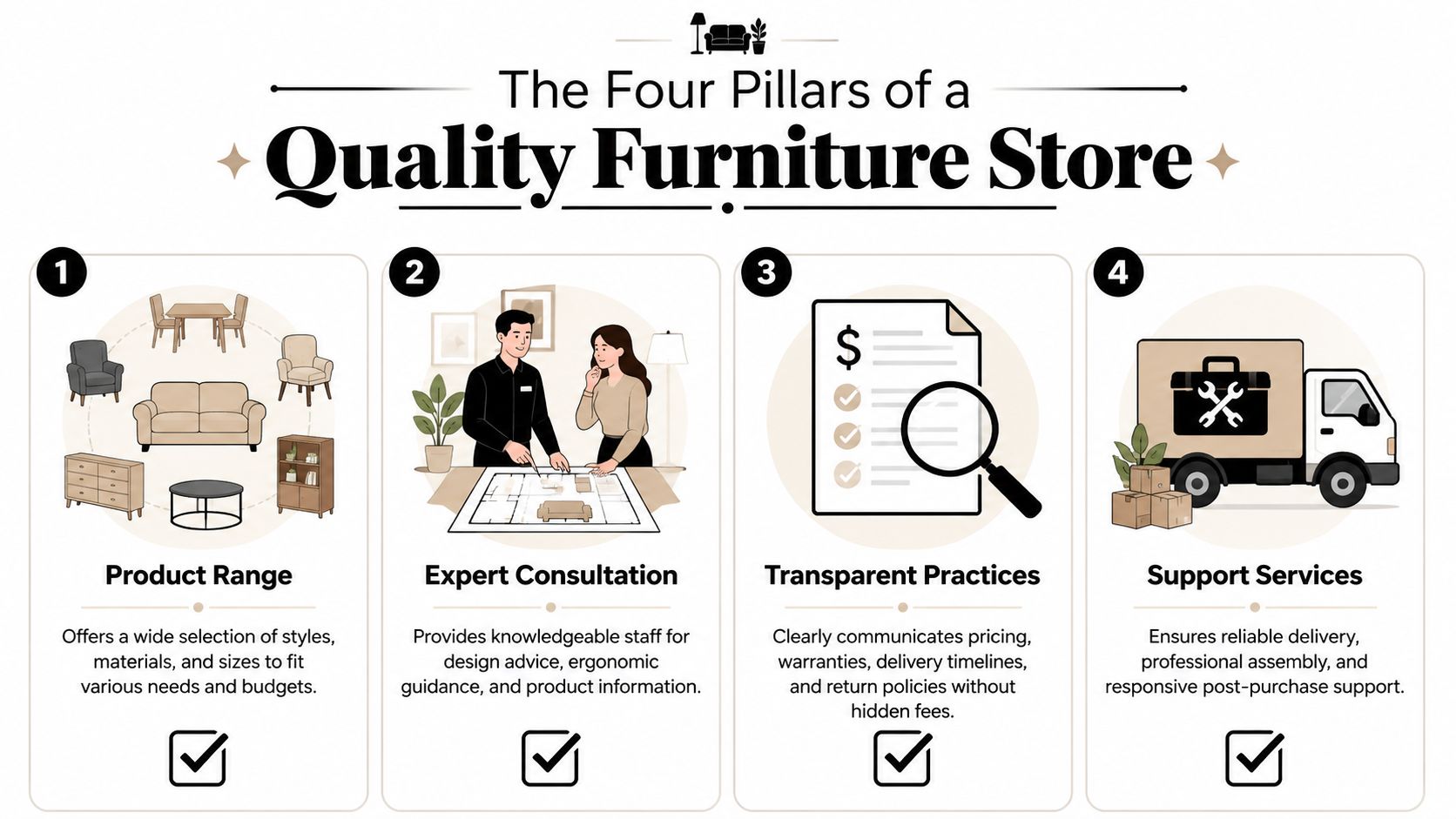
Build quality tells you what the piece becomes over time
A desk can look polished on day one and disappoint by year three. That's why materials and construction matter more than showroom styling.
Look for these signs:
- Solid wood or well-made wood construction that feels substantial, not hollow.
- Stable joinery at legs, drawer boxes, and case connections.
- Durable finish work that won't show every touch, scratch, or heat mark.
- Smooth drawer action with consistent alignment.
Here's a quick way to consider it:
| Element | What to look for | Why it matters |
|---|---|---|
| Desk top | Thick, stable surface | Resists warping and daily wear |
| Drawers | Clean fit, smooth glide | Signals better craftsmanship |
| Chair frame | Tight build, no wobble | Supports long-term daily use |
| Bookcase or storage | Weight, balance, secure shelves | Prevents sagging and instability |
Cheap-looking details rarely improve with age. Better-made furniture often does.
Ergonomics is not optional
Many home office furniture stores fail in this regard. They use the word “ergonomic” as decoration.
That's not enough. With remote work averaging 21.6% of paid workdays in the U.S. in 2024, ergonomics has become a practical buying standard, and stores that explain details like seat-depth range and lumbar adjustability are answering a real buyer need (work-from-home ergonomics and remote work context).
You should be able to ask specific questions and get specific answers.
- Chair seat depth should support your legs without pressing behind the knees.
- Lumbar adjustment should meet your spine, not sit too high or too low.
- Arm height and width should let your shoulders relax.
- Desk height should work with your seated posture and monitor setup.
Practical rule: If a salesperson can't explain how a chair fits your body, they're selling appearance, not performance.
Customization separates a fitted office from a generic one
Your home office has real constraints. Window height, wall length, flooring tone, nearby millwork, even sightlines from the hall. Standard pieces solve some rooms. They don't solve all rooms.
That's why customization matters. The ability to choose finishes, fabrics, dimensions, and configurations can turn a decent room into a resolved one. If you're shopping seriously, use resources that help you ask sharper questions, such as a practical guide to shopping for furniture smartly.
A worthwhile store should be able to help you answer:
- Will this desk fit the room without blocking movement?
- Can I choose a finish that relates to the rest of the house?
- Can storage be adapted to what I use?
- Will the chair material hold up to daily contact?
After-care is where value becomes real
Warranties, service policies, delivery standards, and problem resolution are not boring footnotes. They are part of the product.
A quality store should clearly explain lead times, delivery conditions, assembly, touch-up expectations, and what happens if something arrives wrong. If that process sounds vague before purchase, it won't become clearer after purchase.
The strongest stores don't just display furniture. They support ownership.
Evaluating the Service Experience From Showroom to Home
You choose a desk that looks perfect under showroom lighting. Two weeks later, it arrives in a finish that fights your flooring, the return path around it is too tight, and the file storage opens into the window trim. The furniture may be well made. The buying process failed.
That process matters as much as the product. Columbus homeowners investing in a real home office should judge a store by how well it prevents expensive mistakes before the order is placed, and how cleanly it executes once the furniture is in motion.
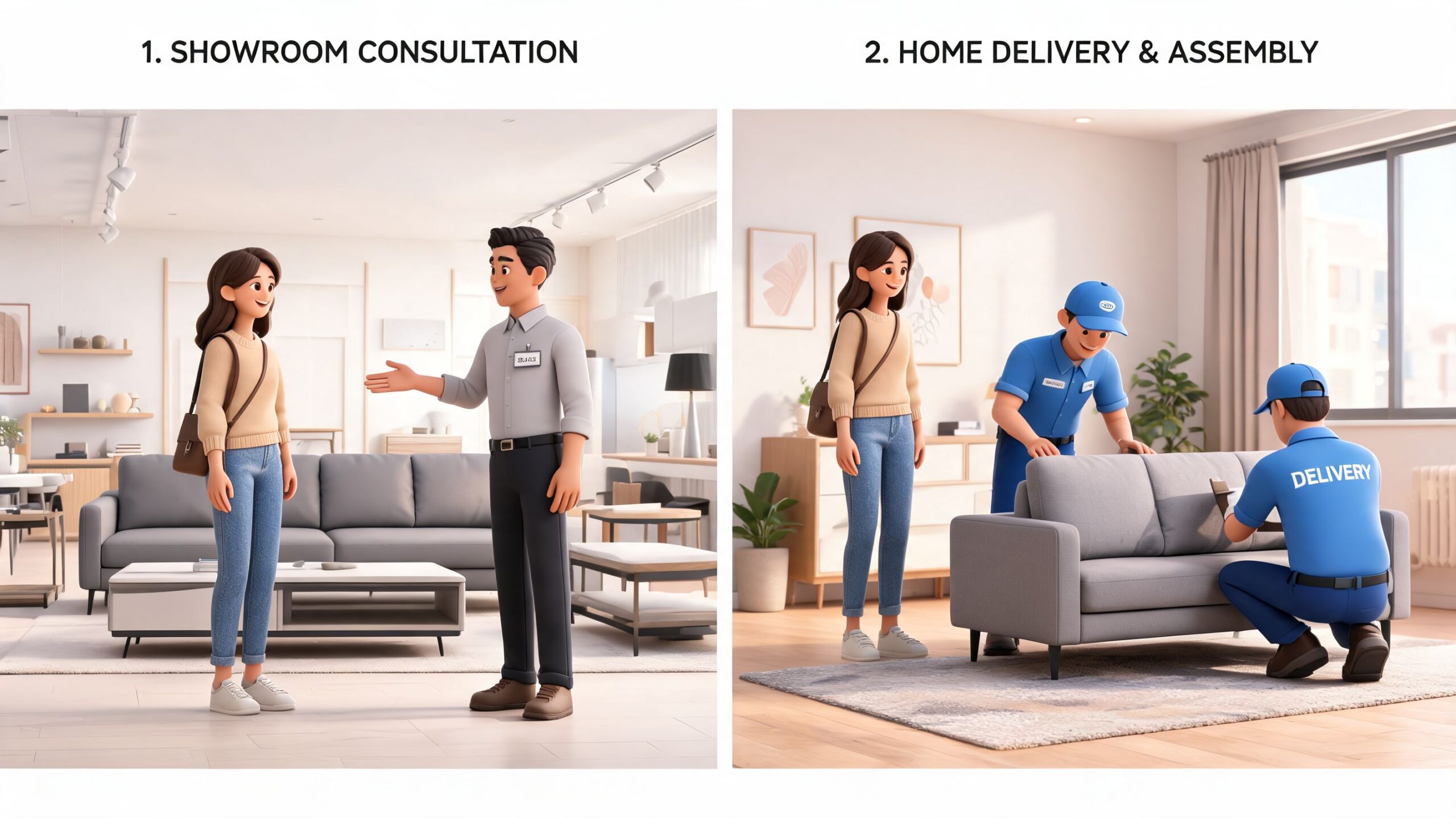
Analysts at Mordor Intelligence found that the online channel held 41.88% of home office furniture market share in 2025, but stores with a physical showroom still offer a clear advantage for premium office pieces because buyers can test scale, finish, comfort, and function before committing (home office furniture market distribution and store-channel insight).
What a strong showroom experience should include
A good showroom does more than display inventory. It helps you make fewer bad decisions.
You should be able to sit in the chair long enough to notice pressure points, compare finishes in person, discuss room measurements with someone who understands proportion, and ask practical questions about wear, cable management, storage access, and lighting. If the sales process stays at the level of color and style, keep shopping.
Design consultation proves its value here. A capable consultant asks how many hours you work, what equipment stays on the desk, whether video calls shape the backdrop, and how the room needs to function at other times of day. Those details determine what belongs in the room and what will annoy you six months from now.
Why customization tools matter
Customization only pays off when the order process is precise.
The right tools help you compare dimensions, finishes, and configurations before production starts. That matters most when you are ordering a desk with a specific footprint, a storage wall that needs to relate to existing millwork, or a chair in a material chosen for daily use rather than occasional appearance.
Vinson Fine Furniture is one local example of a store that offers an in-store design studio, complimentary consultations, custom-order options, and digital visualizers. That combination is useful because it gives buyers a clearer way to confirm fit and finish before they sign off.
If the room has specific proportions, the order process should be exact.
Delivery is part of the design result
A furniture purchase is not complete when the invoice is paid. It is complete when the pieces are placed correctly, assembled properly, and ready to support work on day one.
That is why white-glove service matters. Large desks, bookcases, and adjustable seating can be damaged by rushed handling or assembled incorrectly in ways that shorten their life. If you want a practical standard for what good service should include, read what white-glove delivery service covers in a furniture purchase.
A store worth using should provide:
| Service step | What you want |
|---|---|
| Pre-delivery communication | Clear timing, access notes, and room preparation details |
| In-home placement | Furniture positioned where it will actually be used |
| Assembly | Professional setup of desks, chairs, and storage pieces |
| Packaging removal | No boxes, wrap, or debris left behind |
| Final check | Confirmation that drawers, doors, lifts, and mechanisms work properly |
Financing deserves a practical review too. Used carelessly, it encourages impulse buying. Used well, it lets you complete the room with the right pieces the first time instead of layering in temporary furniture that will need replacement.
Strategies for Three Common Shopping Scenarios
Not every shopper needs a full office. Not every shopper should start with a desk. The smartest purchase depends on the problem you're solving.

One of the most overlooked realities in this category is that buyers are often solving a space problem, not just a furniture problem. Content that addresses compact layouts, modular solutions, and the true cost of delivery and assembly serves people better than a simple product grid (home office planning for small and multi-use spaces).
The ergonomic upgrade
If your body hurts after a long day of work, start with the chair.
That single change can alter your work experience more than a decorative desk ever will. Test seat depth, lumbar support, arm adjustability, and the ease of changing positions through the day. Don't buy a chair because it looks sleek from across the room. Sit in it long enough to notice what your shoulders and hips are doing.
Ask these questions:
- Can I adjust the chair to fit my proportions?
- Do the arms support me without pushing my shoulders up?
- Does the back support hit the right part of my spine?
The full office build-out
This shopper is furnishing from scratch. Desk, chair, storage, lighting placement, maybe a bookcase or cabinet wall. In this case, order matters.
Start with the anchor pieces first:
- Desk size and orientation
- Primary seating
- Storage footprint
- Secondary pieces like shelves or accent seating
This is also the point where room planning becomes essential. If you're working with a bedroom corner, loft, or shared flex room, compare dimensions before you compare styling. A compact office that functions well will always outperform an oversized office that looks impressive and feels awkward.
If that's your challenge, home office furniture ideas for small spaces can help you think through scale, modular storage, and multipurpose layouts before you walk into a showroom.
The value-driven investment
This shopper isn't looking for the lowest price. This shopper is looking for the best use of money.
That usually means one of two approaches. Either buy fewer, better pieces now, or look for high-quality floor samples and clearance opportunities instead of buying weak entry-level furniture that won't last.
Use this quick comparison:
| Approach | What you gain | What to watch |
|---|---|---|
| Buy one excellent chair now | Immediate comfort and longevity | Pair it with a temporary desk if needed |
| Buy a full budget set | Fast completion | Higher replacement risk |
| Shop clearance for premium pieces | Better materials at stronger value | Confirm condition, dimensions, and final-sale terms |
A low price is not the same thing as value. If a desk chips easily, drawers rack, and the chair never feels right, you didn't save money. You delayed better spending.
A Buyer's Checklist for Furniture Stores in Columbus Ohio
If you're shopping locally, use the city to your advantage. Columbus has enough choice that you don't need to settle for vague answers, thin service, or furniture you can't test.
The broader category supports that level of seriousness. Technavio projects that the U.S. office furniture market will increase by USD 7.82 billion from 2024 to 2029, which reinforces that quality home office furniture sits inside a durable buying category, not a short-lived spike (U.S. office furniture market forecast).
What to check before you visit
Use this checklist before you step into any Furniture store Columbus Ohio search result.
- Showroom access Ask whether you can sit in task chairs, open drawers, compare woods, and test desk scale in person.
- Local convenience Prioritize stores in accessible retail areas such as Easton Town Center so visits, follow-up questions, and repeat appointments are easy.
- Craft origin Ask whether the store carries Ohio-made, Amish-made furniture, or other North American construction if provenance and durability matter to you.
- Customization options Confirm whether you can choose finishes, fabrics, sizes, or configurations instead of settling for stock-only choices.
- Design help Find out whether there's a local design team that can review room dimensions and help with planning.
What to ask on the showroom floor
Some questions immediately separate informed stores from order-takers.
Bring room measurements, outlet locations, and photos. The better your information, the better the recommendation.
Ask these:
| Question | Why it matters |
|---|---|
| Can I see this piece in a different finish? | Helps you evaluate visual flexibility |
| What chair adjustments does this model offer? | Reveals whether ergonomics are real or superficial |
| How will this desk fit with my room clearance? | Prevents scale mistakes |
| What does delivery include? | Avoids surprise labor or setup issues |
| What happens if a custom order arrives with an issue? | Tests service accountability |
What should influence your final decision
The right local store should feel competent, not pushy. Staff should answer details clearly. Timelines should be understandable. Delivery should sound organized. Design help should be available if your room needs it.
If you're comparing options in Central Ohio, this guide to furniture stores in Columbus Ohio is a useful starting point for thinking about showroom access, service, and what local shopping can offer beyond an online cart.
A few brand-specific points are worth checking wherever you shop:
- Custom Order Program Ask whether the store offers configurable pieces and tools such as 3D visualizers.
- In-Store Design Studio Look for complimentary design consultations, not just sales assistance.
- Value policies Check for a low price guarantee and whether there's a clearance gallery with premium floor samples or overstocks.
- Purchase support Ask about flexible financing such as Synchrony HOME and whether white-glove in-home delivery is available in your neighborhood.
If a store can't support the entire decision from planning to installation, keep looking.
Conclusion Designing an Office That Works for You
A home office should never feel like leftover space filled with leftover furniture.
It should support the way you think, work, and move through the day. It should fit the architecture of your home. It should hold up physically and visually. And it should make you more comfortable at hour six than you were at hour one.
That's why choosing among home office furniture stores is not really about finding the nearest retailer or the fastest deal. It's about identifying who can help you make smart decisions. Build quality matters because daily use exposes weakness quickly. Ergonomics matters because discomfort steals focus. Customization matters because real homes have real constraints. Service matters because even beautiful furniture fails if it arrives wrong, fits poorly, or never gets properly placed.
Columbus homeowners should be selective. Go to stores where you can sit in the chair, study the finish, ask pointed questions, and get a serious answer. Favor stores that treat the office as part of the home, not as a side category. If you're investing in a room you'll use constantly, demand more than trend-driven styling and broad promises.
Buy for the life you actually live, not for the catalog image that disappears once the workday starts.
If you're ready to make the office feel finished, go in person. Test the chair. Touch the wood. Open the drawers. Bring your measurements. Use the consultation. A well-designed office doesn't just look better. It works better, and you feel that every day.
If you're ready to furnish your workspace with more intention, visit Vinson Fine Furniture at Easton Town Center. You can explore solid-wood desks, ergonomic seating, storage, and customization options in person, work with the In-Store Design Studio through a complimentary consultation, compare finishes with 3D visualizers, ask about the Low Price Guarantee and Clearance Gallery savings, and arrange flexible financing plus White-Glove In-Home Delivery for a smoother start-to-finish experience.