Home Office Furniture White: Elegant & Functional

You know the room. It might be a spare bedroom that still carries traces of its old life, a quiet corner off the kitchen, or a landing that suddenly has to function like a real office. The workday starts there now, and the furniture has to do more than fill space. It has to make the room feel settled, capable, and intentional.
That's why so many homeowners gravitate toward home office furniture white. White pieces feel architectural rather than bulky. They bounce light, calm down visual noise, and help a workspace look composed even when the square footage is modest. For the investment-minded homeowner, though, the main question isn't whether white is attractive. It's whether white will still look right, work hard, and age gracefully years from now.
The Timeless Appeal of a White Home Office
A white home office usually begins with a practical problem, not a decorating impulse. A homeowner wants a workspace that feels professional during the day and still belongs in the home at night. Dark, heavy furniture can make that balance harder. White tends to solve it quickly.
During the pandemic-era shift in work habits, the share of people working from home rose from 20% before the pandemic to 71% by December 2020, according to a statistic cited in this ergonomics report on home office trends. That shift helped make white desks and white office furniture more popular because they brighten rooms, create a cleaner backdrop for video calls, and fit spaces that had to become offices quickly.
In practice, that popularity has lasted because the color works. White doesn't ask much from the room around it. It softens visual weight, pairs easily with wood floors and trim, and gives papers, screens, and lighting a calmer setting.
White furniture often succeeds where a darker desk fails. It lets a home office feel furnished without feeling overfilled.
For homeowners in Columbus, that matters in older homes, new builds, and everything in between. Some offices have generous windows. Some don't. Some need to double as guest rooms or reading rooms. White furniture adapts across all of those conditions with very little strain.
If you're refining a workspace and want more ideas on layout and atmosphere, Vinson's guide to creating an inspiring home office is a useful starting point.
Beyond the Color – Selecting the Right White Finish
The biggest mistake shoppers make with white furniture is assuming white is a material choice. It isn't. It's a finish choice layered over a construction choice, and the construction is what determines whether the piece feels disposable or enduring.
A white desk can be solid wood with a painted finish. It can also be MDF or another engineered wood with laminate or paint. Both can look good at first glance. They do not age the same way.
What matters underneath the finish
For heirloom quality, material choice matters. Many white desks use engineered wood, while more premium pieces often use solid wood construction and details such as full-extension ball-bearing drawer slides, which support durability and daily function, as noted in this white executive desk construction example.
That distinction shows up in the everyday experience of ownership:
- Drawer action: Full-extension slides let you reach the back of a drawer without wrestling it.
- Edge wear: Better construction usually means cleaner edges, stronger joinery, and less vulnerability where hands and chairs make constant contact.
- Finish character: Painted solid wood often has more depth and warmth than a flat, mass-market white laminate.
- Repair potential: A quality painted wood piece is often easier to touch up or refinish than a chipped low-cost panel product.
Comparing White Furniture Materials
| Feature | Solid Wood (e.g., Painted Maple) | Engineered Wood (e.g., Laminate/MDF) |
|---|---|---|
| Overall feel | More substantial, with a richer hand-finished character | Smoother and more uniform, often more manufactured in feel |
| Aging over time | Can develop patina and may be more repairable | Can hold a clean look, but chips and edge damage are often harder to disguise |
| Weight and stability | Typically heavier and more grounded | Often lighter, depending on build |
| Finish variation | Usually shows more nuance in sheen and paint depth | Usually more consistent and flat in appearance |
| Best fit | Long-term investment pieces | Budget-conscious or shorter-term setups |
White isn't one white
Custom ordering becomes valuable. White can lean warm, cool, creamy, crisp, matte, satin, or slightly luminous under lamplight. A bright white that looks sharp in a catalog can feel sterile in a home with warm flooring and soft wall color. An off-white can feel far more settled.
At the Easton showroom, the useful conversation isn't just "Do you want white?" It's which white finish belongs with your trim, flooring, natural light, and other casegoods. The Custom Order Program gives homeowners room to tailor finishes, configurations, and related details through 3D visualizers, which is particularly helpful when you're trying to avoid the one-note look that often comes from buying an entire office suite off a product grid.
Designer's note: In a long-term office, the finish should support the architecture of the room. It shouldn't fight it.
That same thinking is one reason buyers who care about solid wood furniture Ohio craftsmanship or Amish-made furniture often end up with a painted wood desk rather than a quick-ship panel piece. The color may be white. The ownership experience is something else entirely.
Perfect Proportions for Your Columbus Home Office
A beautiful desk that's too shallow will annoy you every day. That's usually the point where style stops mattering.
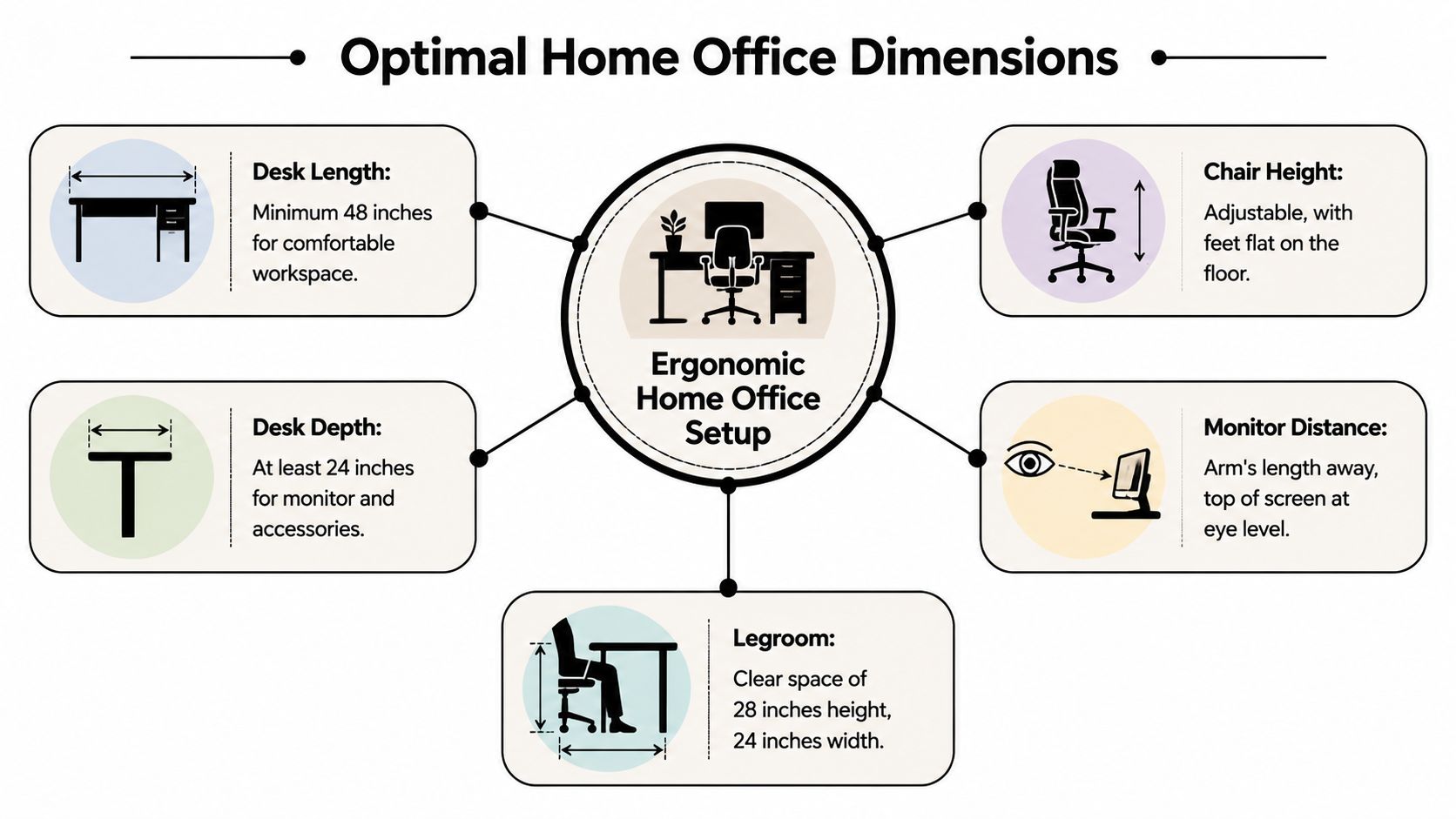
Desk depth is the first measurement I look at because it controls comfort. According to this standard office desk dimensions guide, 24 to 30 inches is standard for computer work, while 30 to 36 inches is better for dual monitors or paperwork-heavy use. The same guide notes that a 60-inch-wide desk with a 30 to 36-inch depth is a stronger benchmark for long-term use because it gives monitors, keyboard, mouse, and forearm support room to coexist without crowding.
Start with depth, then solve for width
A desk can be narrow in width and still work if your setup is minimal. It cannot be too shallow and remain comfortable for long. Once the monitor sits too close and the keyboard pushes you to the edge, posture suffers and the whole desk feels undersized.
Use this rule of thumb:
- Laptop-focused setup: A compact desk can work if the room is tight and storage lives elsewhere.
- Monitor and task-light setup: Standard depth is usually the minimum comfortable zone.
- Two monitors or active paper use: Deeper surfaces are worth prioritizing, even if that means simplifying other pieces in the room.
Let the furniture help the room feel larger
White surfaces reflect more light and tend to make an office feel larger, brighter, and less cluttered, as noted in this office color psychology discussion of white. In a compact office, that effect matters as much as the footprint.
A heavier desk in a dark finish can dominate a small room. A white desk with the right depth and cleaner lines usually reads as lighter, even when it's generously sized.
Fit the room before you buy the piece
Design help saves people from expensive near-misses. A desk may fit by tape measure and still feel wrong once the chair pulls out, the file cabinet opens, or the window casing starts competing for space.
For that reason, many homeowners use the showroom's Complimentary Design Consultations and In-Store Design Studio to sort through layout questions before placing an order. That's especially useful if the office shares space with a guest bed, bookcase, or media storage.
Styling and Pairing Colors with White Furniture
White furniture is a foundation, not a finished room. The desk sets the tone, but the surrounding materials decide whether the office feels crisp, warm, polished, or flat.
Pair white with warmth
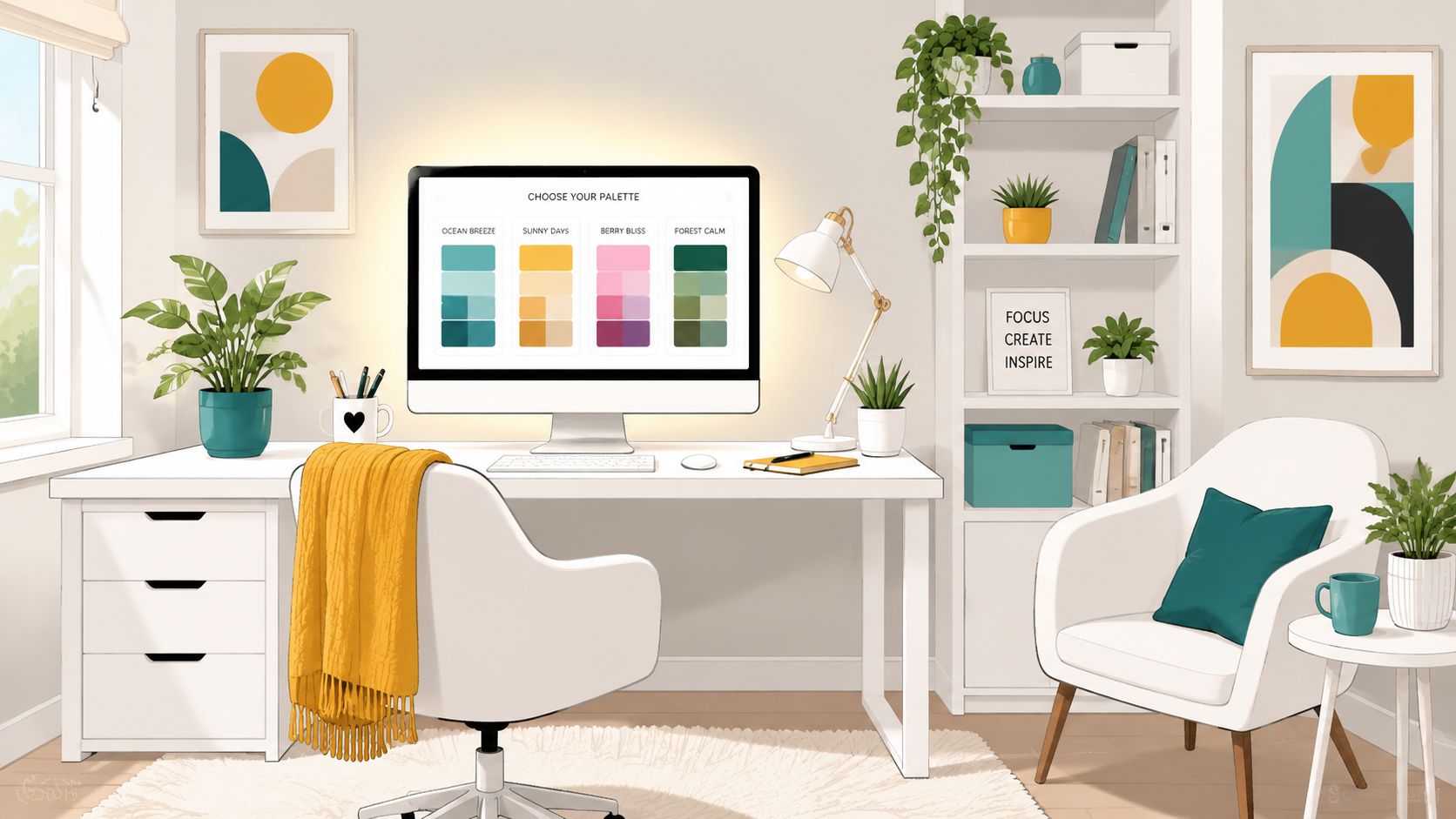
One of the easiest ways to keep a white office from feeling cold is to bring in wood. A white desk with walnut shelving, oak flooring, or a stained wood chair base creates balance immediately. The room feels cleaner, but not clinical.
Textiles matter just as much. A well-designed upholstered chair in woven ivory, camel leather, or muted olive gives the room softness and weight where white alone can feel too stark.
Use contrast with intention
White furniture looks especially polished against deeper wall color. Navy, forest green, charcoal-adjacent neutrals, and earthy greiges all give a white desk definition. The contrast helps the furniture read as deliberate rather than generic.
If you prefer a quieter office, stay within a tonal palette. Layer white furniture with stone, flax, sand, and soft taupe. The effect is calm and collected, especially in rooms that need to support long hours of focused work.
A successful white office isn't monochrome by default. It usually needs texture, metal, wood, or contrast to feel complete.
Choose accents that earn their place
A few pairings work especially well with home office furniture white:
- Brass hardware or lighting: Adds warmth and a bit of jewelry without crowding the room.
- Black details: A lamp, frame, or chair base can sharpen the lines of the office.
- Greenery: Plants soften white surfaces and keep the room from feeling too controlled.
- Performance upholstery: Useful when you want a refined desk chair that can handle daily use.
If you're trying to bring more personality into a neutral workspace, this guide on how to add color to your home without painting offers practical ideas that work particularly well in offices.
The advantage of a custom approach is that you can tune the supporting pieces as carefully as the desk. Through custom ordering, homeowners can often coordinate seating fabrics, wood tones, and finish details so the room feels composed rather than assembled.
Keeping Your White Furniture Looking Flawless
A lot of shoppers assume white furniture is hard to live with. That's only partly true. Low-quality white furniture can become frustrating quickly because every chip, scuff, and stain stands out. Well-made white furniture is different. It still needs care, but it doesn't ask for constant apology.
One gap in most online shopping pages is durability guidance. Retailers tend to show style and assortment, but they rarely explain how white finishes hold up to daily use, scuffs, or cleaning. That gap is noted in this retail category analysis around white home office furniture, and it's exactly the question serious buyers should ask before ordering.
What white shows more quickly
White furniture tends to reveal certain things faster than darker finishes:
- Dust: Especially on broad horizontal surfaces.
- Scuffs: Common around drawer fronts, legs, and lower edges.
- Yellowing risk: More noticeable if the piece sits in hard direct sun.
- Edge wear: Most obvious on lower-grade materials with vulnerable corners or thin surface layers.
That doesn't make white a bad choice. It means finish quality matters more.
Practical care that actually works
Daily care is simple if the finish is sound.
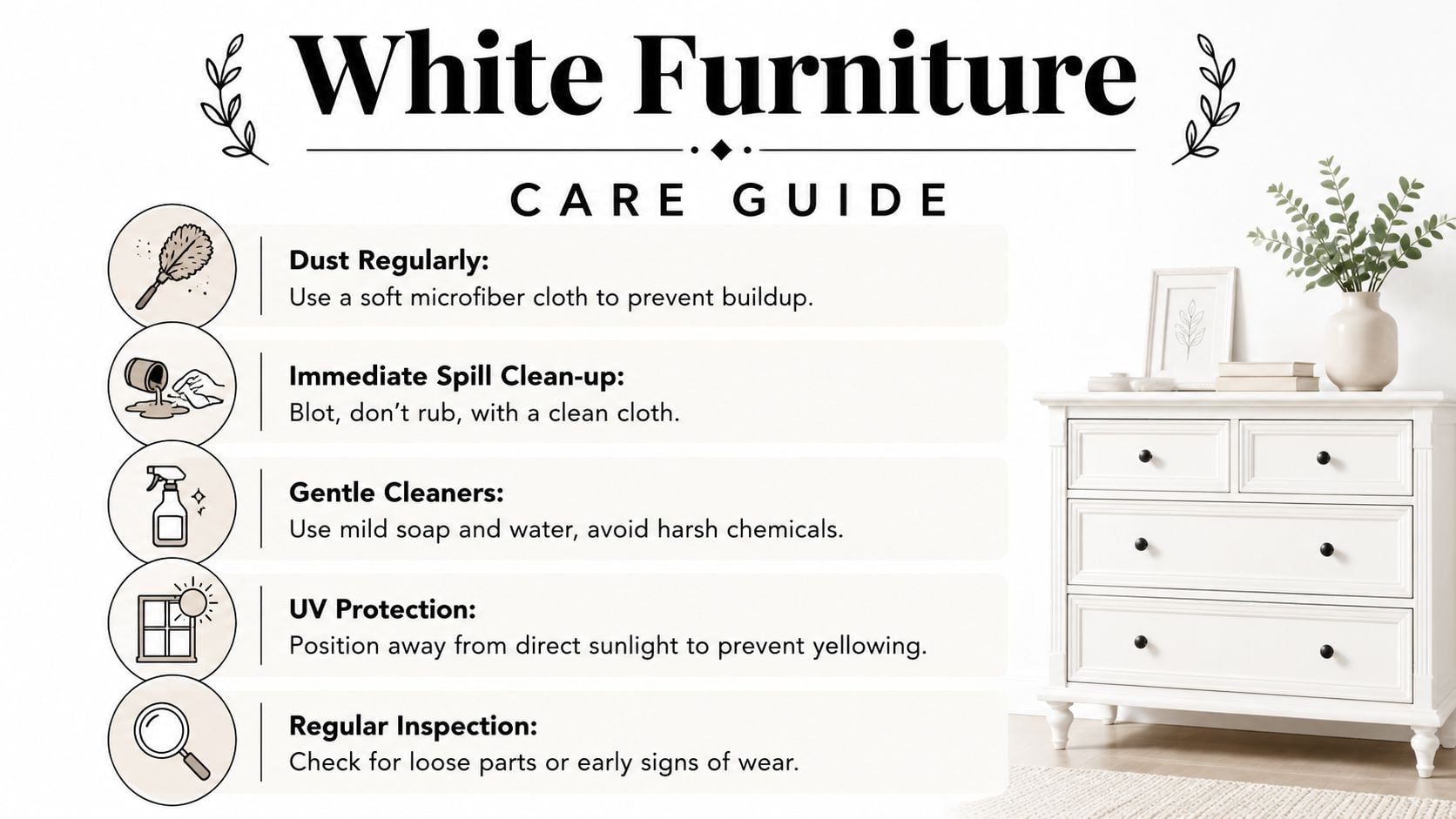
- Dust with a soft microfiber cloth: Frequent light cleaning is better than waiting for buildup.
- Wipe spills promptly: Especially coffee, cosmetics, ink, or anything with color transfer.
- Use gentle cleaners: Harsh chemicals can dull or damage the finish.
- Protect from direct sun when possible: Window treatments and placement help preserve color consistency.
- Inspect hardware and moving parts: A desk that stays tight and aligned will wear better.
Care priority: The goal isn't to keep white furniture untouched. It's to prevent small marks from becoming permanent visual damage.
If you want finish-specific advice, Vinson's guide on how to care for wood furniture is worth bookmarking.
What lasts better over time
Construction returns to the foreground. Better white furniture typically uses more resilient finishes, stronger edge detailing, and hardware that doesn't loosen under routine use. That's the difference between a desk that merely looks bright on arrival and one that still looks composed after years of opening drawers, moving task lights, and sliding in and out of the chair.
A white desk should never be chosen on color alone. In long-term ownership, the finish system is part of the structure.
Why Columbus Chooses Vinson for Custom Furniture
A serious home office purchase usually starts when a homeowner gets tired of compromise. The desk is too shallow. The finish looked different at home. The file storage doesn't fit. The chair is comfortable enough for an hour, not a day. At that point, the value of working with a real showroom becomes obvious.
For many shoppers looking for a furniture store Columbus Ohio homeowners can visit in person, the advantage isn't just selection. It's the ability to sit down with a consultant, compare materials in proper light, and make decisions with the whole room in mind.

The process matters as much as the piece
At Easton Town Center, homeowners can begin with the In-Store Design Studio and a Complimentary Design Consultation. That conversation usually gets more precise than online filtering ever can. You can sort out finish tone, desk scale, storage needs, chair pairing, and how the office should relate to the rest of the home.
If the room needs something customized, custom-made office furniture offers a path to dimensions, finishes, and configurations that fit the space rather than forcing the space to fit the furniture.
Four details investment buyers tend to care about
- Customization: The Custom Order Program allows buyers to select finishes, fabrics, and configurations with 3D visualizers.
- Value protection: The Low Price Guarantee includes a 110% refund of the difference if a lower price is found at a local authorized dealer within the stated period.
- Immediate savings: The Clearance Gallery offers savings of up to 70% on selected floor samples, overstocks, and closeouts.
- Ease after purchase: Flexible Financing through Synchrony HOME and White-Glove In-Home Delivery make larger purchases more manageable and far less disruptive.
For homeowners comparing Amish-made furniture, office collections, and other long-term purchases, that process is often more useful than browsing page after page of similar-looking white desks. It lets you compare not just color, but substance.
This is also why buyers who came in for one room often end up returning for custom dining sets, bedroom pieces, or even sleep products. Once you've seen how much difference material, construction, and fit make in person, it's difficult to go back to buying solely from a screen. That applies whether you're shopping office furniture, solid wood furniture Ohio builders produce, or even researching the best mattresses Easton Town Center shoppers can test in person.
Your White Furniture Questions Answered
Is a bright white desk hard on the eyes
It can be, especially in a room with strong daylight and glossy finishes. The fix is usually simple. Choose a softer white, a lower-sheen finish, or add warmer surrounding materials so the desk doesn't feel glaring against the room.
What kind of chair looks best with a white desk
The best pairing depends on the mood you want. For a refined office, an upholstered chair in camel, olive, navy, or textured neutral adds warmth. For a cleaner contemporary look, a chair with a slim wood or metal frame keeps the room light. Comfort still comes first. A beautiful chair that doesn't support long work sessions is a poor choice.
Can you get Amish-made furniture in custom white finishes
Yes, in many cases. Painted finishes are common in made-to-order furniture programs, and they can be a strong option for homeowners who want the durability and substance associated with Amish-made furniture while still keeping the room light and refined. If you're comparing styles and layouts, this guide to the best furniture for home office is a practical next read.
If you're ready to move beyond product grids and make confident decisions about white office furniture that will still look right years from now, visit Vinson Fine Furniture at Easton Town Center. Bring your room measurements, photos, and wish list. The showroom team can help you compare finishes, evaluate proportions, explore custom options, and create a workspace that feels as permanent and polished as the rest of your home.