Home Office Furniture L Shaped: A Buyer’s Guide

A lot of home offices start the same way. A spare bedroom gets a desk pushed against a wall. Cords collect underfoot. Paperwork creeps into the dining room. The workday ends, but the room still feels unsettled.
That's usually the point when homeowners start searching for home office furniture l shaped. They're not just looking for more desk. They're looking for a better system. A place where computer work, video calls, reading, planning, and storage can live together without the room feeling overfilled.
An L-shaped desk works best when you treat it as the anchor of the whole office, not as an isolated purchase. The right piece can reclaim a neglected corner, create cleaner workflow, and bring visual order to a room that has been doing too many jobs at once. A rushed choice can do the opposite. It can crowd walkways, force awkward posture, and leave you with a desk that never quite feels natural to use.
Creating Your Ideal Work-from-Home Command Center
Many professionals don't need more furniture. They need a workspace with structure.
An L-shaped desk solves a common home-office problem because it lets one piece do several jobs well. One side can hold your daily digital setup. The other can stay open for reviewing plans, signing documents, sketching, or laying out materials without piling everything into one rectangle. The room feels calmer because every task has a place.
Start with the way you actually work
Before you think about style, ask a few plain questions:
- What stays out every day. Monitor, laptop, keyboard, printer, notebooks, task lighting, reference files.
- What needs quick reach. Charging cords, pens, headset, planner, reading glasses.
- What should disappear. Bills, extra paper, backup devices, office supplies, and visual clutter.
That list tells you whether you need a clean floating profile, a more substantial executive configuration, or a desk with integrated storage. It also tells you whether the second wing of the desk should be open work surface or support space.
Practical rule: If you use the same desk for focused computer work and hands-on tasks, keep those functions physically separated. The L-shape does that better than a straight desk.
Think beyond the desktop
A good office doesn't stop at the desk edge. Chair comfort, cable routing, storage access, lighting, and room balance matter just as much. That's why homeowners often get better results when they plan the office as a coordinated environment instead of ordering a desk online and improvising the rest later.
For ideas on shaping a workspace that supports both productivity and comfort, Vinson's guide to creating an inspiring home office is a helpful starting point.
Planning Your Layout and Maximizing Your Space
An L-shaped desk either makes a room feel efficient or makes it feel blocked. The difference is planning.
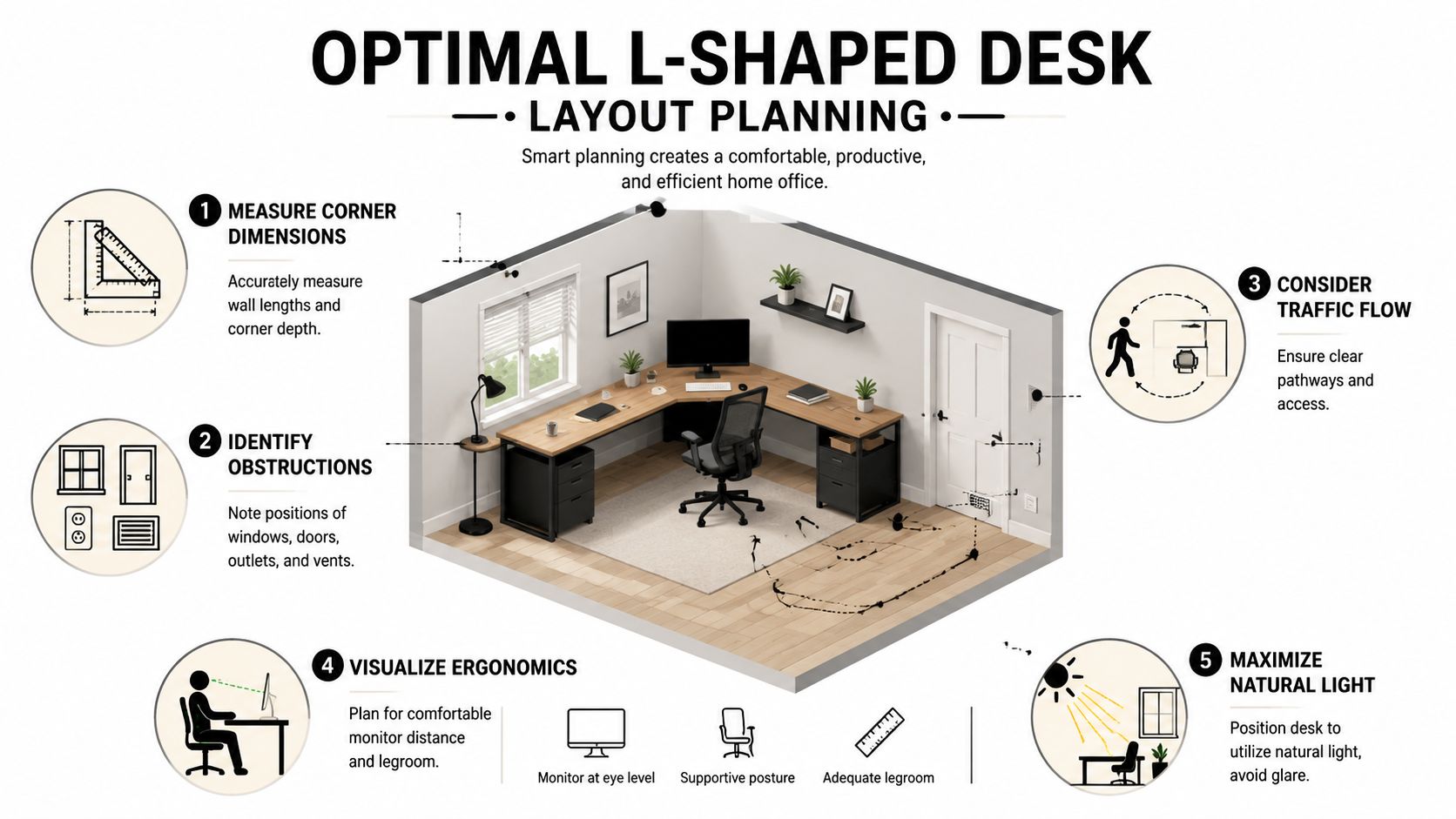
The first measurement isn't the desk. It's the corner. You need the wall lengths, the usable depth, and the swing space for doors, drawers, and your chair. Windows, vents, outlets, and trim details matter because they affect where the desk can sit, not just where it looks good on paper.
Why the corner matters so much
The main advantage of this form is spatial efficiency. L-shaped desks provide approximately 30 to 40 percent more usable surface area than equivalent rectangular desks within the same room footprint, and compact home offices can start with a corner footprint of 48" x 40" according to Eureka Ergonomic's guide to L-shaped desk sizes. That's the practical reason so many homeowners revisit the corners of a room when a straight desk stops working.
Instead of leaving that corner underused, the desk turns it into active workspace. In a smaller office, that can mean the difference between having one crowded surface and having a setup with distinct zones.
What to measure before you shop
A quick measuring routine prevents most of the mistakes people regret later.
- Wall length first. Measure both walls from the corner outward, not just the open floor.
- Obstructions second. Note baseboards, radiators, floor vents, outlets, and window trim.
- Chair travel. Make sure you can pull back and pivot without hitting a bed, cabinet, or bookcase.
- Sightlines. Check what you'll see from the desk and what the rest of the room sees back.
- Light direction. Natural light is useful, but monitor glare gets old fast.
A scaled sketch helps. Painter's tape on the floor helps even more.
Common fit mistakes
The biggest error isn't always buying too small. It's buying too large for the room's circulation. An oversized return can consume the only open pathway and make the office feel tighter every time you enter it.
The opposite mistake is choosing a desk that technically fits but doesn't support the tools you use every day. A surface can look generous online and still fall short once a monitor, task lamp, laptop, and paperwork land on it.
A room plan often reveals that the right answer is a more specific configuration, not a larger one. If you want a second set of eyes on scale, traffic flow, and furniture placement, Vinson offers interior design and space planning support for homeowners who'd rather solve the layout on paper before they move anything heavy.
The best L-shaped desks don't just fit the corner. They leave the room usable.
Exploring Styles and Configurations
Not every L-shaped desk creates the same feeling in a room. Some disappear visually and keep the office light. Others establish real presence and make the workspace feel architectural.
The right choice depends on the room, the work, and the tone you want the office to set.
Functional configurations
A practical way to narrow the field is to think in types.
| Configuration | Best fit | What it does well |
|---|---|---|
| Standard corner desk | Dedicated home office or guest room | Keeps the profile clean and uses the corner efficiently |
| Executive L-desk | Larger office or study | Adds presence, broader work surface, and a more formal feel |
| L-desk with storage | Paper-heavy work or mixed-use office | Keeps files and supplies close without extra case pieces |
| Open-frame modern desk | Airy rooms and minimal interiors | Preserves visual lightness and clean sightlines |
A standard configuration suits many homeowners because it leaves flexibility for bookshelves, lounge seating, or art. An executive profile makes more sense when the office also hosts client meetings, frequent video calls, or substantial daily spread.
Style language that helps you choose
Some clients know the desk they want as soon as they see it. Others know only what they don't want. Style vocabulary helps.
- Modern often means slimmer lines, quieter hardware, and a restrained silhouette.
- Traditional leans into warmth, molding, richer stain, and more visual substance.
- Rustic or casual brings texture and a lived-in look that works well in family homes.
- Amish-made furniture often appeals to buyers who care as much about joinery and material honesty as they do about appearance.
If your office sits near a main living space, the desk should relate to the surrounding home, not feel imported from a corporate suite. That's where custom planning becomes useful. The same L-shaped footprint can read crisp and contemporary in one finish or grounded and classic in another.
For homeowners exploring shape, finish, and configuration in more depth, Vinson's overview of custom furniture made simple shows how a concept can move from broad preference to a more exact specification.
Investing in Solid Wood and Heirloom Quality
Materials decide how a desk ages.
A mass-market desk often looks acceptable on day one because the silhouette carries the design. Then daily use begins. Corners chip. Fasteners loosen. Surfaces show wear in places your hands touch every day. In a home office, those details matter because this isn't occasional furniture. It's a working surface.
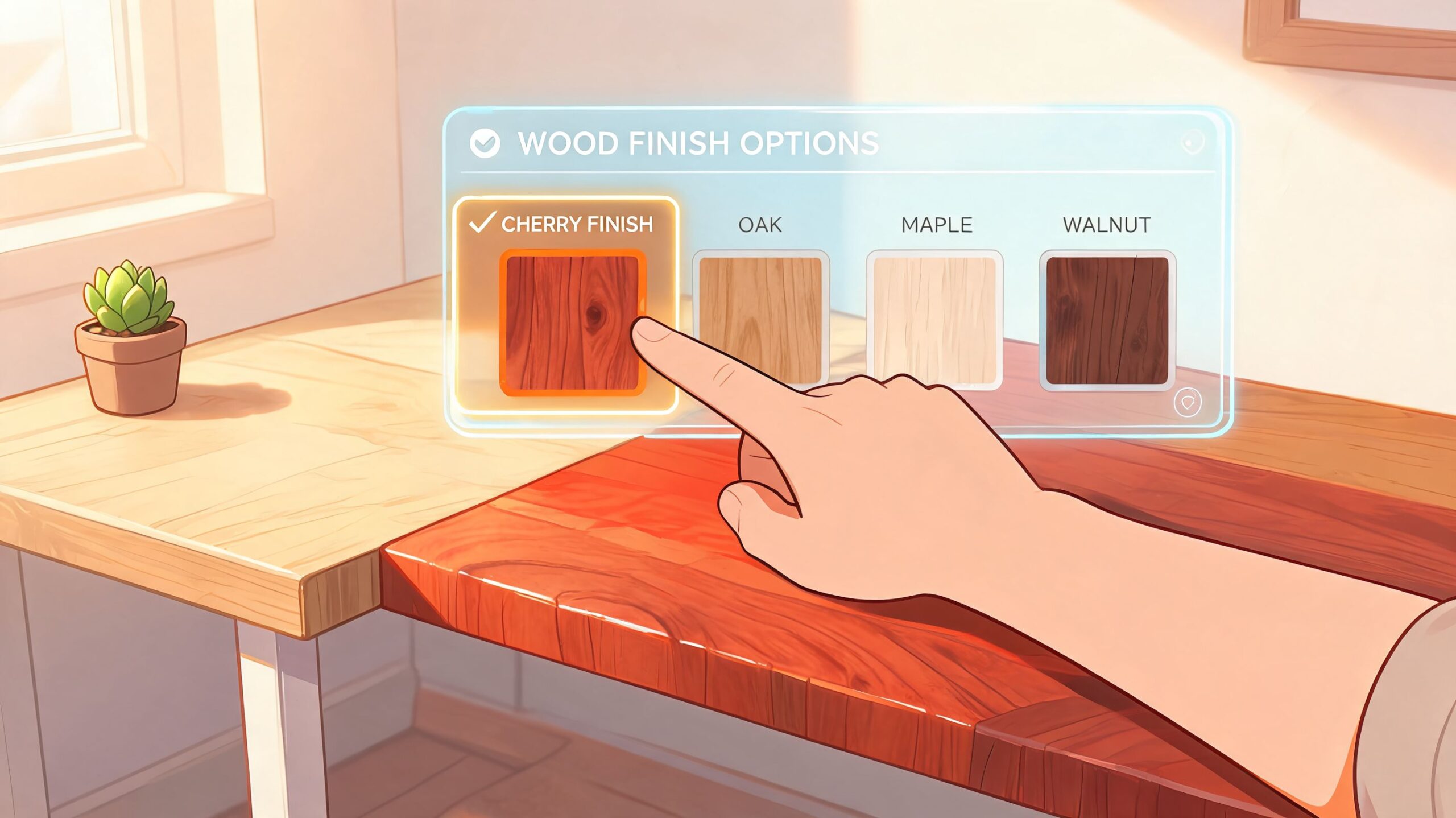
Why solid wood changes the experience
Solid wood has a different presence. The edge profile feels more substantial under the forearm. The finish has depth. Minor wear usually reads as character rather than failure. That matters to homeowners who expect a desk to stay in service through job changes, home moves, and room reconfigurations.
It also changes how the piece lives with the rest of the house. In a refined office, hand-finished wood sits more comfortably beside built-ins, better seating, framed art, and quality lighting than a thin laminate top usually does.
What current demand suggests
Interest in specialized, longer-lasting desks has grown. Google Trends data for 2026 shows "custom L-shaped desk solid wood" queries are up 52% in Ohio, and the International Furniture Association notes that 62% of investment homeowners regret non-custom buys within two years due to poor durability, as cited in this Fezibo article on L-shaped workspace design. Even allowing for broad market language, the takeaway is clear. Buyers are paying closer attention to build quality and fit.
That lines up with what serious homeowners usually want from office furniture. They don't want to replace a desk because the finish failed or the proportions were wrong from the start.
What to examine in the showroom
When you're evaluating a desk in person, don't stop at the stain sample.
- Top thickness. A thicker top usually gives the desk visual authority and a more durable feel.
- Grain consistency. Natural variation is good. Poorly matched veneer patterns are not the same thing.
- Drawer action. Storage should open cleanly and close without a rattle.
- Touch points. Rest your arms on the edge. Quality shows up where your body meets the furniture.
Buy the desk you want to touch every day, not the one that only photographs well.
For homeowners comparing short-term value against long-term ownership, Vinson's article on how long furniture should last gives useful context for thinking past the initial purchase.
Designing Your Ergonomic Workflow
The best L-shaped desk isn't just larger. It's organized.
A bigger surface can become a larger mess if everything lands wherever there's room. That's why ergonomic zoning matters. Research summarized by Madison Liquidators says L-shaped desks can provide approximately 50% more workspace when they're organized into functional zones, using a three-tier system with a primary zone for active tasks, a secondary zone for frequent-use items, and a tertiary zone for storage in their guide to choosing an L-shaped desk.
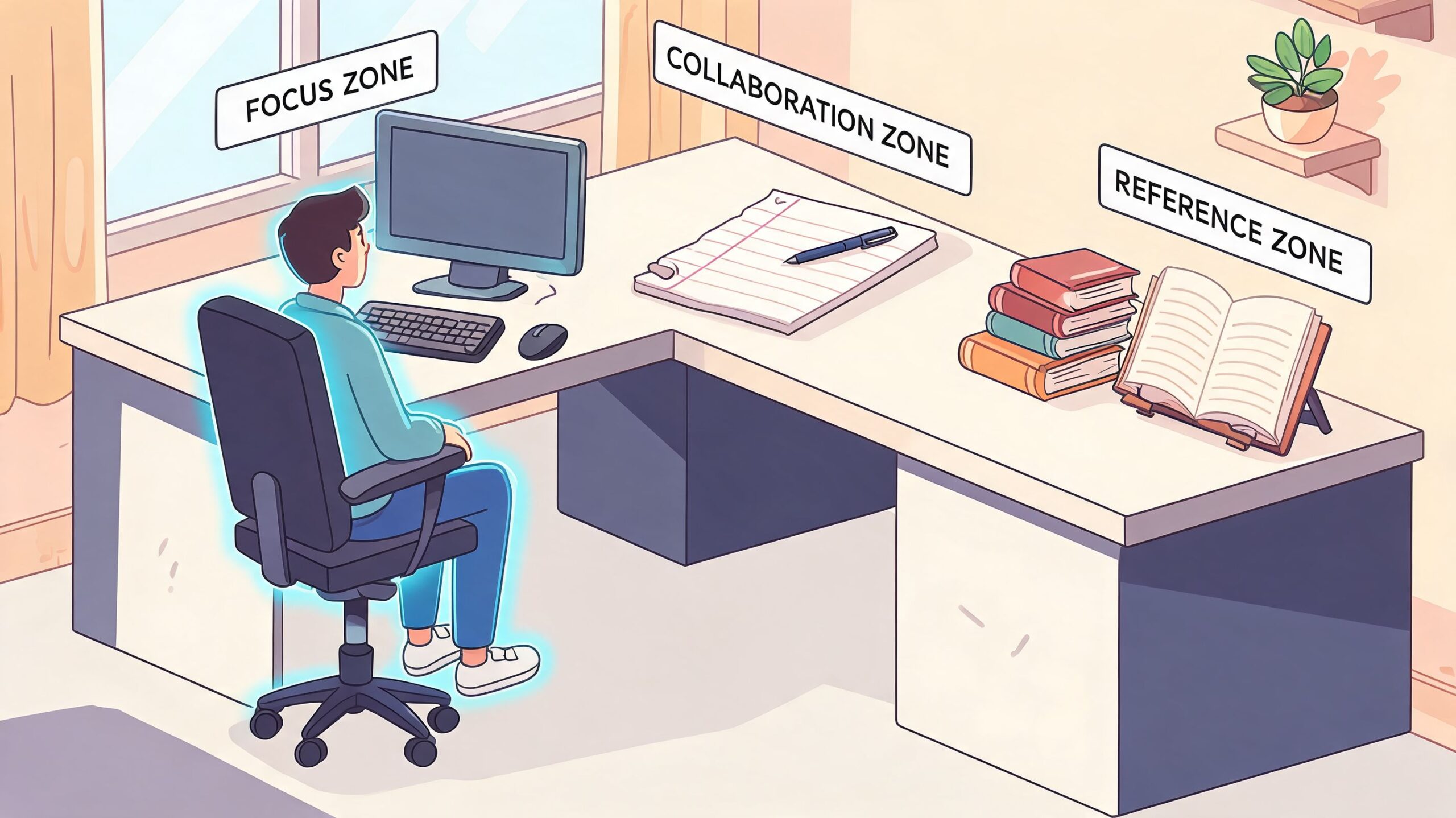
Build three working zones
This system is practical because it mirrors how people move through a workday.
Primary zone Active work happens in this space. Keyboard, mouse, main monitor, and anything you touch constantly belong here.
Secondary zone
Put your task lamp, notebook, charging dock, speakers, or reference tablet here. These items should be easy to reach without crowding the core work area.Tertiary zone
Reserve this area for file trays, decorative objects, backup tech, and supplies that don't need constant access.
The corner itself often works best as secondary support space unless your monitor arrangement allows comfortable alignment. Treating that corner as a dumping ground is one of the fastest ways to make an L-shaped desk feel awkward.
Match the desk to your work pattern
A dual-monitor user often works differently than someone who writes by hand, reviews contracts, or sketches layouts. The L shape gives you room to support both, but only if you assign a purpose to each wing.
Consider a few examples:
- Analyst or remote professional. Main screen setup on one run. Notebook, planner, and reference materials on the return.
- Creative worker. Digital tools on one side. Open tabletop for drawing, samples, or markup work on the other.
- Household manager. Laptop and bill-pay station on one wing. Filing, calendar, and incoming paperwork on the second.
Ergonomics are easier when the chair fits the plan
A desk can only do part of the job. Chair height, arm support, and movement matter just as much, especially if you pivot between both sides of the L through the day. That's why it helps to evaluate seating and desk layout together rather than as separate purchases. Vinson's page for writing desks and chairs shows how those pieces can be coordinated as one work system.
Keep your highest-focus task on the strongest visual line of the desk. Let everything else support it.
Customizing Storage and Personalizing Your Piece
A good L-shaped desk should fit your work the way built-in cabinetry fits a room. The shape is only the starting point. What matters next is how storage, wire management, finish, and daily-use details come together into one organized system.
A standard configuration often gets close, then misses in the places that affect you every day. A file drawer may land on the wrong side for your writing hand. The return may need more length to support a printer, reference materials, or a second work zone. A warmer finish may sit better with the flooring and trim already in the room. Hardware can shift the desk toward a cleaner transitional look or a more traditional one. Those are not cosmetic tweaks. They are practical decisions that determine whether the office feels settled or constantly compromised.
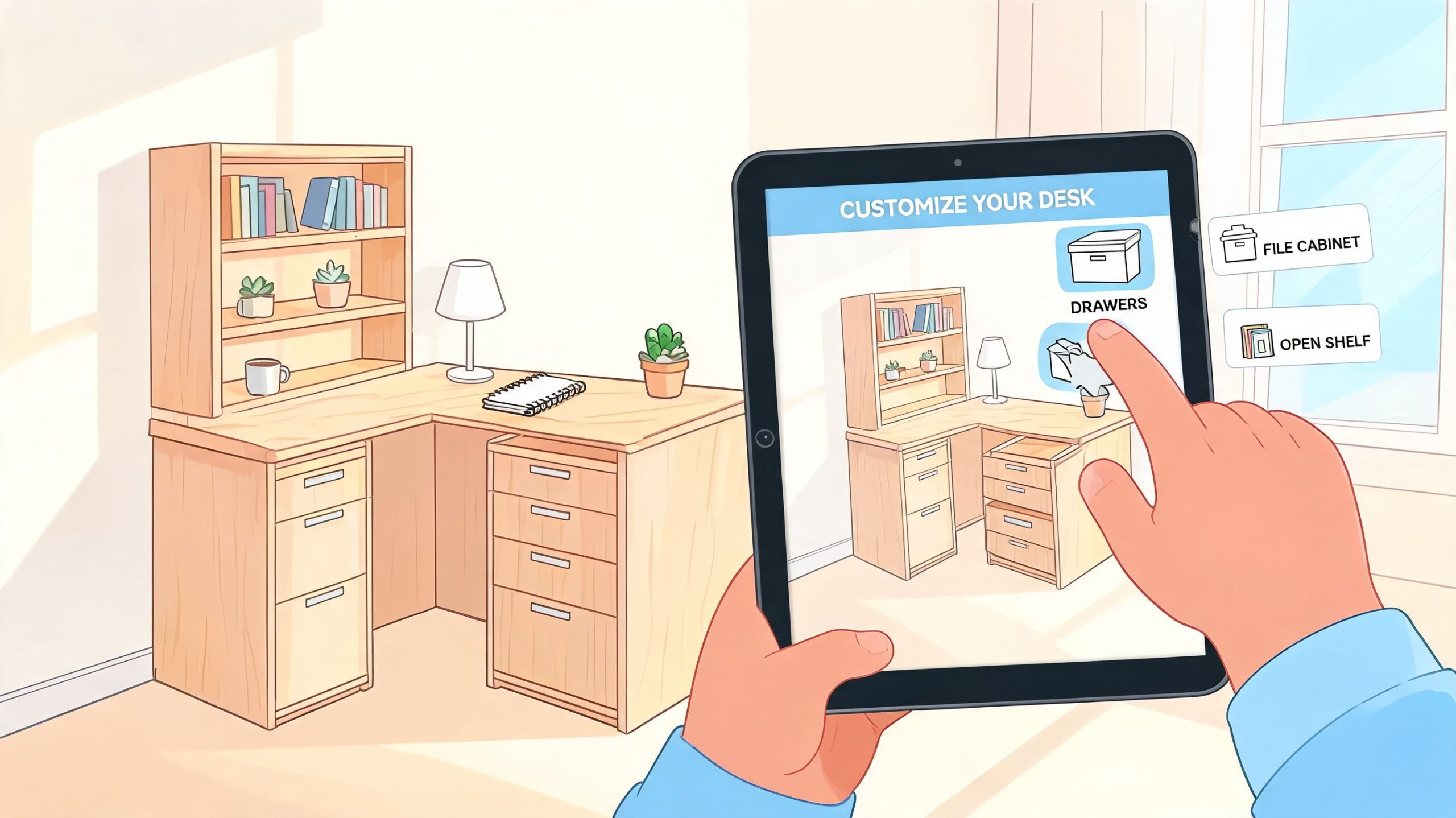
What thoughtful customization can include
The best adjustments are the ones you notice through easier workdays, not louder styling.
- Storage placement. File drawers on the side where paperwork naturally lands, shallow drawers near the keyboard zone, and open storage where you need quick visual access.
- Cable control. Grommets, concealed channels, and power access placed where monitors, chargers, and task lighting are.
- Finish selection. Wood tone and sheen chosen to relate to nearby flooring, bookcases, and trim so the office feels connected to the rest of the home.
- Hardware and edge details. Pull style, top profile, and panel design selected to match the architecture of the room rather than competing with it.
In the showroom, this is often where homeowners realize they are not buying a desk alone. They are configuring a command center. I usually advise clients to focus first on what needs to stay within arm's reach, what should be hidden, and what deserves dedicated surface area. Those three decisions do more for long-term satisfaction than chasing a trend finish or adding storage that looks useful but interrupts movement.
Why personalization pays off
Personalization protects the investment because it reduces the workarounds. A desk planned around your actual routine stays useful longer, looks more intentional in the room, and is less likely to be replaced when your needs shift.
It also helps prevent expensive mistakes. Drawer banks can limit chair movement. A return can look balanced on paper and still crowd the room once a lateral file, monitor arm, or guest chair is added. Those are the details mass-market advice rarely addresses, and they are exactly where in-person review and customization choices make the piece feel considered from day one.
The Vinson Experience From Showroom to Home Office
A strong office comes together when layout, materials, ergonomics, and customization are handled as one decision. That's what many homeowners want, especially when the office needs to feel polished enough for daily use and cohesive enough to belong to the rest of the home.
In practical terms, that means starting in the showroom, not at checkout. Sit at the desk. Test the reach. Compare wood tones under real light. Open drawers. Look at proportions beside seating and storage. The desk that reads well online can feel very different in person.
Four parts of a smoother buying process
The experience works best when each step removes a different kind of friction.
- Design help. The In-Store Design Studio supports complimentary consultations for room planning, finish coordination, and configuration decisions.
- Customization tools. The Custom Order Program lets homeowners adjust finishes, layouts, and other specifications through 3D visualizers instead of settling for close enough.
- Value protection. The Low Price Guarantee includes a 110% refund of the difference, and the Clearance Gallery offers savings up to 70%, according to the publisher information provided for this article.
- Delivery and financing. Flexible financing through Synchrony HOME and White-Glove In-Home Delivery simplify the path from selection to installation.
Why this matters for an office purchase
Home offices ask more of furniture than many other rooms do. The desk needs to perform daily, support concentration, and still look right at home. That combination is harder to judge from dimensions alone.
For shoppers visiting Easton Town Center, the showroom experience becomes useful. You can compare a cleaner modern profile against a warmer solid-wood build, look at storage in person, and decide whether your office needs quiet utility or a more executive presence. In a market crowded with generic desks, that kind of side-by-side evaluation helps homeowners make a calmer, more durable decision.
If you're ready to build a home office that works as beautifully as it looks, start with a visit to Vinson Fine Furniture. At Easton Town Center, you can explore solid-wood options, review custom configurations, use 3D visualizers, and work through your layout with a complimentary design consultation, then finish the process with flexible financing, value-focused clearance options, and White-Glove delivery into your home.