Home Office Furniture Collections: Columbus, OH Guide


For many homeowners, the home office began as a temporary compromise. A laptop at the kitchen table. A dining chair that worked for an hour, then didn't. A printer tucked onto a bench or stacked on the floor because nobody expected this arrangement to last.
Then the weeks turned into years.
That's usually the moment a room starts asking for more intention. Not just a desk, but a setting that supports concentration, posture, storage, video calls, and the way the rest of the home feels. In Columbus, where many clients want their workspace to function beautifully without looking like a corporate leftover, that shift matters. A permanent office should work hard and still belong to the house around it.
From Temporary Workspace to Permanent Sanctuary
I often meet homeowners who tell the same story in slightly different ways. They started with whatever they had. A spare chair. A hand-me-down table. A corner in the guest room. At first, the setup felt practical. Later, it felt like daily friction.
A temporary workspace usually fails in quiet ways. Papers migrate. Cords collect dust. Your shoulders rise by midafternoon because the screen sits too low or the chair offers no support. The room never feels finished, so your workday never feels fully contained either.
That's where home office furniture collections change the conversation. A collection isn't just a group of pieces in the same finish. It's a coordinated plan for how you work and how you want the room to live after work is done. The desk, chair, storage, shelving, lighting, and material choices all work together.
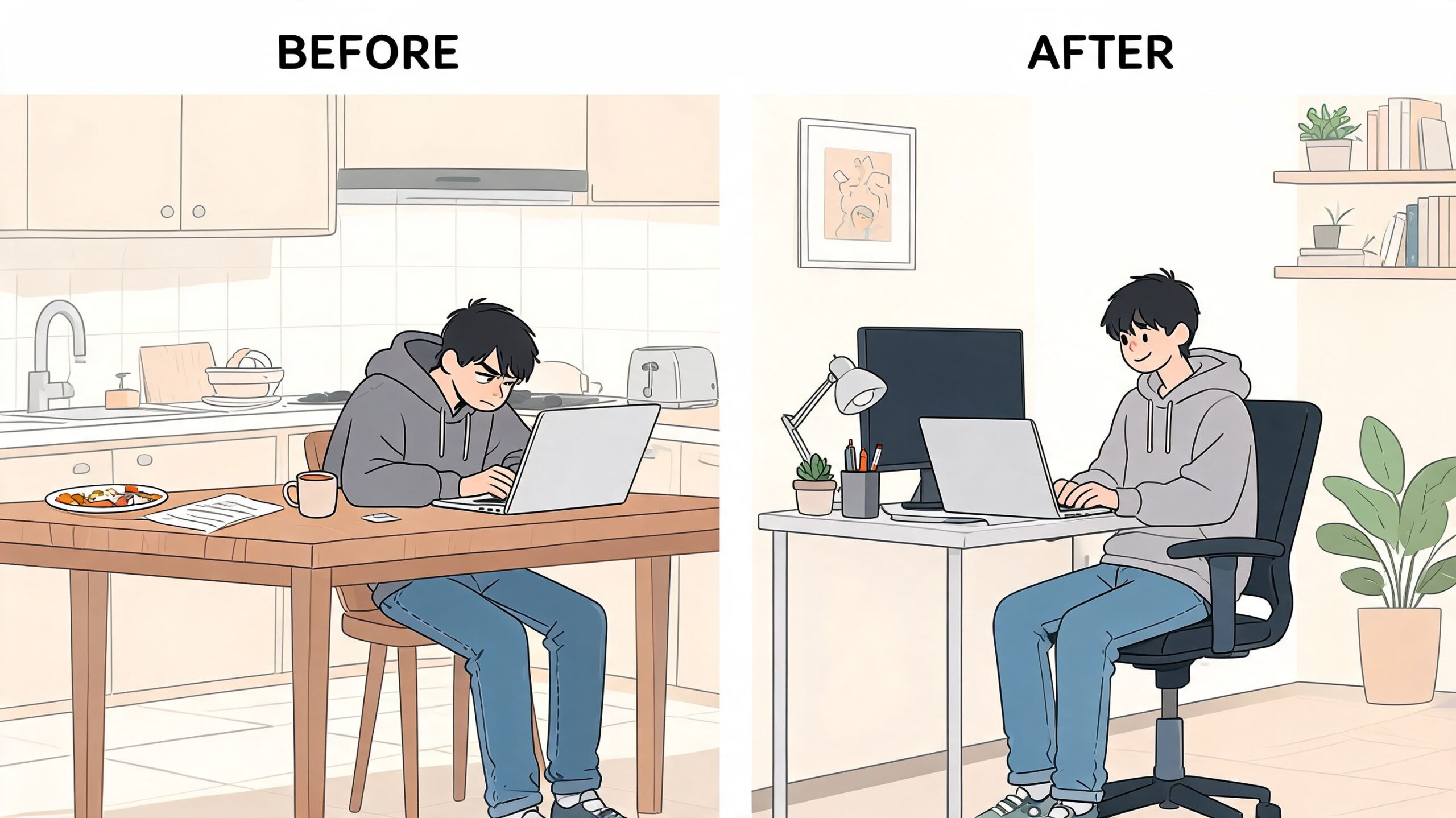
A well-planned office also changes how the rest of the home feels. When the workspace has a proper scale, closed storage, and a finish that relates to nearby rooms, the office stops looking improvised. It starts reading as part of the home's architecture and personality.
A permanent home office should lower daily effort. You shouldn't have to reset the room every morning just to begin working.
If you're starting from a makeshift setup, it helps to think less about replacing one desk and more about building a complete environment. That's the difference between shopping piece by piece and selecting a cohesive collection. For more inspiration on that shift, Vinson's guide to creating an inspiring home office is a useful starting point.
What Defines a Home Office Furniture Collection
A true collection has structure. It solves several problems at once, rather than giving you a desk and leaving the rest of the room to chance. That matters more now because remote and hybrid work aren't a short-term experiment. The home office furniture market was valued at USD 31.0 billion in 2025 and is projected to reach USD 50.3 billion by 2034, growing at a CAGR of 5.52%, according to IMARC Group's home office furniture market report.
That growth tells us something simple. More households are treating the home office as a lasting part of daily life, which makes a thoughtful purchase more important than a quick one.
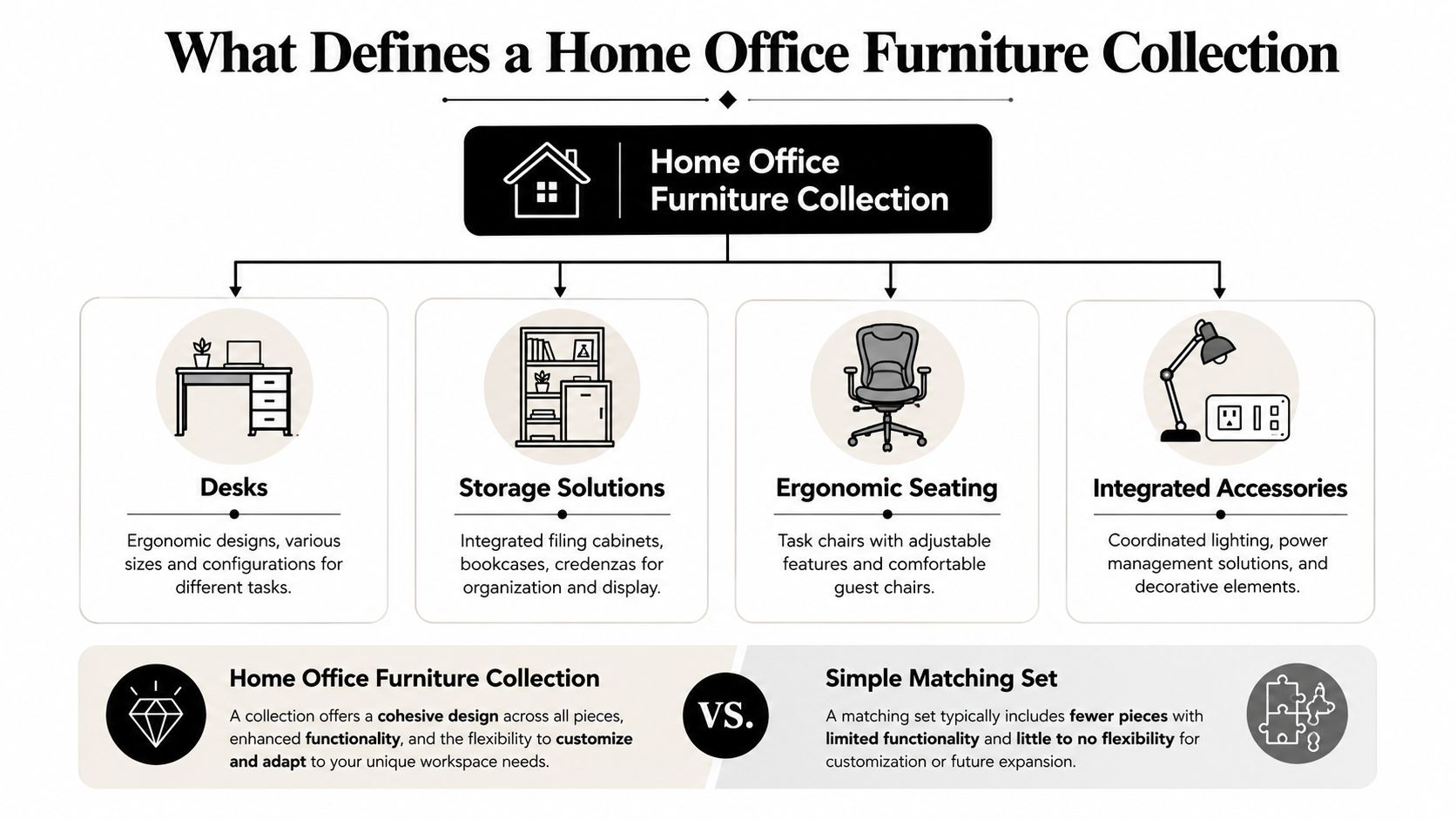
The anchor piece is the desk
The desk sets the room's visual weight and practical rhythm. It determines how you sit, where technology lands, and whether the office feels intentional or cramped. In a collection, the desk isn't chosen in isolation. Its scale, finish, and leg style usually relate to the surrounding storage and shelving.
A good desk decision starts with questions like these:
- What kind of work happens here: Laptop-only work needs a different surface than paperwork, dual monitors, or sketching.
- How visible is the room: A desk in a dedicated study can be more substantial. A desk in a living area often benefits from a cleaner silhouette.
- Will you grow into the space: Many homeowners begin with a small work footprint, then add files, equipment, or reference materials later.
Storage is part of the collection, not an afterthought
Most disappointing offices suffer from poor storage planning. The room looks attractive for a week, then clutter starts occupying every horizontal surface. Collections solve that by building in purpose.
Common storage pieces include:
- Credenzas: Useful for printers, supplies, and items you want close but not visible.
- File cabinets: Better when they align with the desk in height or finish so they feel integrated.
- Bookcases or étagères: Ideal for reference materials, objects, and visual balance.
- Cabinet towers or hutches: Helpful when you need vertical organization without spreading outward.
Practical rule: If papers, chargers, and office tools don't have a designated home on day one, they'll end up claiming your desktop by day ten.
Seating and accessories complete the system
A collection also includes the pieces people forget to budget for. The task chair matters, of course, but so do guest seating, task lighting, floor protection, and power access. If you use a monitor arm, a keyboard tray, or a document stand, those choices should coordinate with the desk's construction and proportions.
Here's the distinction that often clears up confusion:
| Feature | Simple matching set | Home office furniture collection |
|---|---|---|
| Design relationship | Pieces share a finish | Pieces share a finish, scale, and purpose |
| Function | Basic furniture grouping | Full work system with storage and support |
| Flexibility | Limited | Often easier to adapt to your workflow |
| Visual result | Coordinated | Cohesive and intentional |
The difference is subtle in a catalog and obvious in a real room. A set helps you furnish a space. A collection helps you use it well for years.
Finding Your Style From Modern Minimalist to Classic Solid Wood
Once the functional pieces are clear, style becomes much easier to read. Most homeowners aren't undecided. They usually react consistently to line, texture, and material. What they need is vocabulary.
The quickest way to choose among home office furniture collections is to ask what you want the room to feel like at 8:30 on a Monday morning. Crisp and quiet. Warm and grounded. Collected and residential. Formal and architectural. Style should support that emotional tone, not fight it.
Four style directions that work well in real homes
| Home Office Style Comparison | Key Materials | Feeling & Aesthetic |
|---|---|---|
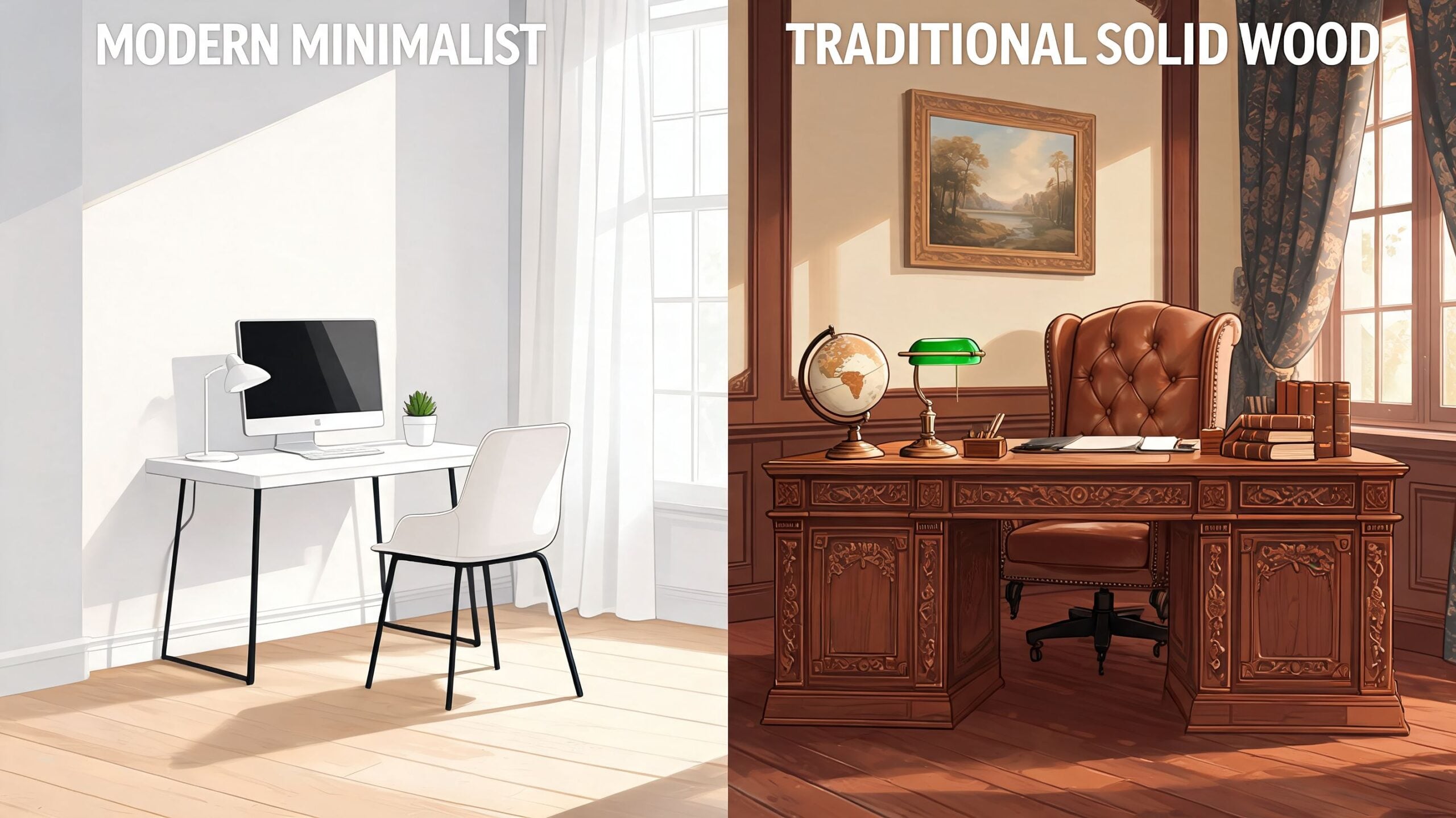
| Modern minimalist | Smooth wood veneers, metal, matte finishes, glass accents | Clean, open, disciplined. Good for lighter spaces and visually quiet rooms. |
| Traditional | Rich wood tones, paneled fronts, classic hardware, shaped legs | Established, formal, warm. Feels at home in studies, libraries, and older homes. |
| Transitional | Mixed woods, soft profiles, tailored upholstery, restrained detailing | Balanced and versatile. Bridges classic architecture and current living styles. |
| Rustic or heritage-inspired | Solid wood, visible grain, hand-finished surfaces, artisan construction | Grounded, tactile, and residential. Often ideal for those seeking Amish-made furniture or solid wood furniture Ohio shoppers appreciate for longevity. |
Modern minimalist
This look appeals to homeowners who want fewer visual interruptions. Desks tend to have cleaner tops, simpler bases, and less ornament. Storage often disappears into flat-front cabinetry, which helps the room feel calm.
The risk with modern minimalist offices is sterility. If every surface is hard and every line is sharp, the room can feel more like a waiting area than a personal workspace. I usually soften this style with texture. An upholstered chair, a wool rug, or a wood tone with visible character keeps the room human.
Traditional and classic wood interiors
Traditional offices have weight, in the best sense. A substantial desk, a deep finish, and paneled casegoods can make the room feel settled immediately. This style works beautifully in homes with millwork, formal dining rooms, or older architectural details.
It also suits clients who want their office to read like a library or private study rather than a tech hub. The room feels composed, especially when paired with framed art, proper lighting, and closed storage.
If you want your office to age gracefully, look closely at wood character, joinery, and finish depth. Those details matter more over time than a trend-driven silhouette.
Transitional for the broadest flexibility
Transitional style is often the safest choice, but not because it is bland. It succeeds because it combines the warmth of traditional furniture with the clarity of contemporary design. You might see a solid wood desk with a simplified profile, paired with a cleaner bookcase and a custom-fitted chair.
For many Columbus homeowners, transitional collections fit the house they already have. They don't force the office into a separate design language. They let the room feel polished without becoming stiff.
Rustic and heirloom-minded solid wood
Craftsmanship defines the atmosphere here. Rustic does not have to mean rough or oversized. In a refined home office, it often means honest material. Visible grain. Slight variation in tone. A hand-finished quality that makes the room feel lived in rather than manufactured.
Clients searching for solid wood furniture Ohio options often gravitate here, especially when they care about repairability and long-term use. The same is true for those interested in Amish-made furniture, where construction and material integrity are part of the appeal.
A simple test helps if you're deciding among these styles:
- Choose modern minimalist if visual quiet helps you focus.
- Choose traditional if you want the office to feel established and substantial.
- Choose transitional if the office needs to connect gracefully with multiple rooms.
- Choose rustic or heritage-inspired if material authenticity matters as much as appearance.
It is common for personal styles to overlap. Most refined rooms blend various influences rather than following a single rule. This approach is particularly effective when you are integrating vintage items with modern professional needs. If you find yourself in that position, Vinson's article on how to mix furniture styles provides a useful starting point.
The Vinson Advantage Customizing Your Perfect Workspace
The most common mistake in home office design is choosing for appearance first and body mechanics second. It's understandable. The desk is easy to admire. The chair usually gets selected later, often under time pressure, and then everything has to adapt around it.
That order creates problems. Research shows 68% of home office users report back pain, according to this ergonomic home office discussion. The more useful insight is why. Most rooms aren't built as ergonomic systems. They're assembled as separate purchases.

Build around how you work
A proper office collection should account for more than legroom. It should support:
- Lumbar comfort: The chair has to support upright sitting without forcing tension.
- Monitor placement: Screen height affects neck position all day.
- Keyboard and mouse reach: Arm support and desk depth matter.
- Sit-stand routines: If you alternate positions, the room has to accommodate that pattern cleanly.
Those needs are personal. That's why customization is so valuable in this category. Finish, scale, hardware, storage orientation, chair upholstery, and even how open or enclosed the room feels all influence whether the office performs well.
Why design guidance matters
When clients walk into a showroom, they often bring a photo of a desk they like. That's helpful, but it's rarely enough. A room also needs circulation, storage capacity, visual balance, and practical answers for lighting and technology.
A design consultation provides significant value for these projects. You can test proportions, compare finishes in person, and avoid costly mismatches between chair height, desk scale, and storage placement. Through the custom-made office furniture options at Vinson Fine Furniture, homeowners can also explore custom order possibilities, including choices in finishes, fabrics, and configurations through digital visualizers.
A beautiful office that leaves your shoulders tight by lunchtime isn't finished. Comfort is part of the design, not a separate purchase.
Customization changes the final result
The difference between “close enough” and “exactly right” often comes down to small choices:
- A warmer stain so the office connects with nearby flooring.
- A file cabinet placed on the correct side for your dominant hand.
- A desk return sized for your room rather than a standard footprint.
- An upholstered chair that feels residential enough for a visible room.
That's how home office furniture collections become personal. Not louder. Not more decorated. Just better aligned with the way you live and work.
Smart Space Planning for Your Columbus Home
A home office doesn't have to be large, but it does need order. Good space planning starts before you look at finishes. It begins with the room's shape, the path through it, and what must stay accessible when the office is in use.
Many homeowners in Columbus are fitting workspaces into bonus rooms, bedrooms, lofts, and open living areas. Each one asks for a different kind of restraint. A dedicated study can support a larger desk and taller storage. A shared room usually benefits from pieces that look residential first and office-ready second.
Start with measurements that actually matter
Measure the room, but also measure the working clearances. Homeowners often focus on wall length and forget drawer swing, chair pullback, or walking space behind the desk.
I suggest noting these before shopping:
- Door paths: Make sure the office won't block entry or closet access.
- Window placement: Natural light is excellent, but screen glare needs management.
- Outlet locations: Technology works best when power is convenient rather than improvised.
- Sightlines from nearby rooms: In open spaces, the back of the desk and storage pieces matter as much as the front.
A room can hold a desk and still feel wrong if movement through the space becomes awkward.
The rise of the hidden office
Some of the most successful offices don't announce themselves all day. Industry data shows 42% of home office users desire convertible furniture that can be hidden away after work hours, according to this discussion of hidden office design. That preference makes sense in multipurpose homes.
A hidden office might include:
- Pocket-door cabinetry: Close it when work is finished and visual clutter disappears.
- Roll-top or enclosed desks: Useful in living spaces where work equipment shouldn't dominate.
- Credenzas with printer storage: Practical for noise control and visual calm.
- Bookcase-based office walls: A way to blend work tools with books and decorative objects.
In a shared room, the office should earn its footprint twice. It needs to work during the day and restore the room at night.
Layout choices that make a room feel better
The ideal layout depends on whether you want privacy, daylight, or visual connection. There isn't one correct answer, but there are reliable principles.
A desk facing into the room feels more commanding and often works well in a dedicated office. A desk set perpendicular to a window usually gives you light without harsh glare. In open-concept spaces, placing storage behind or beside the desk can create a sense of enclosure without adding walls.
If planning feels abstract on paper, it helps to work from zones instead of furniture names:
- Work zone for desk, chair, and screen placement.
- Support zone for files, printer, and supplies.
- Display zone for books, art, and objects that make the room feel residential.
That structure keeps the office from becoming one long line of furniture against a wall. For homeowners who want help visualizing these relationships, Vinson's page on interior design space planning offers a practical next step.
Investing Wisely Value Financing and White Glove Delivery
A permanent office should feel satisfying to buy, not stressful to manage. That usually means evaluating value in a broader way than sticker price alone. Construction, ergonomics, finish quality, customization, delivery, and long-term use all belong in the decision.
Professional office design standards are useful here. The Air Force Facilities Classification Standard notes in its office furniture guide that workspaces should provide accessible power and data, that desks are typically optimized for a 28 to 30 inch height, and that high-pressure laminate surfaces can withstand over 50,000 abrasion cycles, as outlined in the AFCFS Office Workplace Furniture Guide. Those details explain why some collections hold up better in daily use.
What value looks like in practice
Value often comes from avoiding replacement. A desk that fits your equipment, supports proper posture, and wears well over time is easier to justify than a cheaper piece that quickly shows scratches or never quite works.
It also helps to know the purchase options available:
- Low Price Guarantee: Vinson offers a 110% refund of the difference if you find a lower price at a local authorized dealer within the stated window.
- Clearance Gallery: Floor samples, overstocks, and closeouts can offer meaningful savings on premium furniture.
- Flexible financing: Synchrony HOME can make a full-room project easier to phase into your budget.
Delivery is part of the investment
Large office pieces can be deceptively difficult to manage once they reach the house. Desks, bookcases, and credenzas aren't only heavy. They also need careful placement, inspection, and assembly so the room functions the way it was planned.
That's why white-glove service matters. It reduces the risk of damage, saves time, and keeps a carefully designed room from being undone in the final step. If you haven't used that service before, this explanation of what white-glove delivery service includes is worth reading before you buy.
A thoughtful office isn't just furniture. It's a daily tool, a visual anchor in the home, and a long-term support for the way you work.
If you're ready to create a home office that feels permanent, polished, and comfortable to use every day, Vinson Fine Furniture offers a place to start. Visit the Easton Town Center showroom to explore heirloom-quality collections, schedule a complimentary design consultation, compare customization options in person, and browse the Clearance Gallery if you're looking for immediate value while furnishing your space.