Barrel Coffee Tables: Your Complete Buying Guide


A lot of living rooms reach the same point. The sofa is comfortable. The rug is right. The lamps work. The art feels personal. But the room still doesn’t feel settled.
Usually, the missing piece sits in the middle.
A coffee table does more than hold a drink or a stack of books. It sets the tone for the whole seating area. When that table has shape, texture, and a real sense of age, the room stops looking assembled and starts feeling grounded. That’s why barrel coffee tables keep drawing people in. They carry weight, history, and presence in a way flat-pack furniture rarely can.
For homeowners who want a room to feel finished, not just decorated, barrel coffee tables offer something rare. They bring rustic warmth without forcing a cabin look. They add character without reading as novelty. They can feel equally at home beside fine upholstery, solid wood furniture, and even more transitional interiors. If you’re refining a living room and want the center of it to feel intentional, this guide to styling the perfect coffee table is a helpful companion.
The Enduring Allure of the Barrel Coffee Table
A well-designed living room often needs one object that gives everything else a reason to belong. In many homes, that object is the coffee table. Not because it’s the largest piece, but because it’s the one everyone reaches for, walks around, and notices first.
A barrel coffee table changes the mood of a room in an immediate way. The curved silhouette softens the straight lines of a sofa. The visible wood grain adds depth. The metal bands bring contrast. Even before you place a tray or a book on top, the piece already has personality.
Why this shape feels different
Rectangular coffee tables are dependable. Round tables are easy to place. Barrel coffee tables do something a little richer. They combine the visual softness of a rounded form with the substance of a piece that feels anchored.
That matters when a room feels almost right but still slightly adrift.
A strong coffee table doesn’t just fill floor space. It gives the seating area a center of gravity.
Many readers get stuck on one question. Will a barrel table make the room feel too rustic? In a low-quality version, it can. In a well-made version, it won’t. The difference comes down to proportion, finish, and craftsmanship. A hand-finished oak barrel table with a clean top and balanced base reads as substantial and refined. It doesn’t need a themed room around it.
An investment in character
The appeal isn’t only visual. Barrel coffee tables tend to attract homeowners who want furniture with staying power. They’re drawn to solid materials, visible construction, and pieces that still feel relevant years later.
That’s part of the enduring appeal. A barrel coffee table doesn’t chase a short-lived look. It adds a lived-in quality that many newer designs try to imitate but rarely match. In the right room, it becomes the piece guests ask about first and the one you’re least likely to replace.
A Piece of History in Your Living Room
You’re settling into the sofa at the end of a long day. The room is finished, but it still needs one piece that feels grounded, personal, and worth keeping for decades. A barrel coffee table answers that need because it brings more than shape. It brings lineage.
Its history is best understood through material culture rather than a single tidy origin story. Barrels have long been part of everyday storage, transport, and craft life in Europe and early America, so turning worn, well-built casks into household furniture grew naturally from a habit of practical reuse. What began as thrift and resourcefulness now survives as something far more refined. In the right hands, a barrel form becomes fine furniture with a past.
Why the past still reads clearly in the piece
Good furniture often tells you how it was made just by sitting in the room. Barrel tables do that well.
The curved body comes from staves shaped to work together under pressure. The metal hoops began as structural parts, not decoration. The oak, often marked by age and use, carries the kind of depth that factory-perfect surfaces rarely achieve. Those details matter because they give the table credibility. The design is rooted in construction first, appearance second.
That order still matters today. A barrel coffee table with careful joinery, a balanced top, and a disciplined finish feels refined rather than themed. It works much like a well-cut wool coat made from an old, proven cloth. The history gives it character. The craftsmanship gives it polish.
Why that heritage matters in a modern home
Many homeowners worry that a barrel table will pull a room too far toward farmhouse or lodge style. That usually happens only when the piece is handled without restraint. A better-made version uses the barrel’s history as a starting point, then refines the silhouette, finish, and proportions for the way people live now.
That is where long-term value begins.
A piece with real material history often ages with more grace because small shifts in color, texture, and patina feel natural over time. It also gives you more room to customize. You can preserve visible hoop lines and weathered grain for a stronger connection to the original barrel, or ask for a cleaner top, a richer finish, and details that suit a more transitional room. Vinson Fine Furniture specializes in that middle ground, where heritage and customization meet in a piece meant to stay in the family.
From practical reuse to heirloom furniture
In American homes, barrel-based furniture fit easily into a broader tradition of making useful things last. That instinct still appeals to buyers who would rather invest once than replace every few years. The difference now is precision. Today’s best barrel coffee tables are not repurposed objects cut down for novelty. They are carefully built pieces that respect the source material while improving function, fit, and finish.
If that kind of storied craftsmanship appeals to you, these tables made from Ohio barns offer a similar connection to reclaimed material and long-view furniture making.
A barrel coffee table earns its place when it does two jobs at once. It carries the quiet authority of an object shaped by work, and it serves the home with the poise of custom furniture. That combination is hard to fake, which is why the best ones never feel disposable.
Exploring Barrel Table Styles and Materials
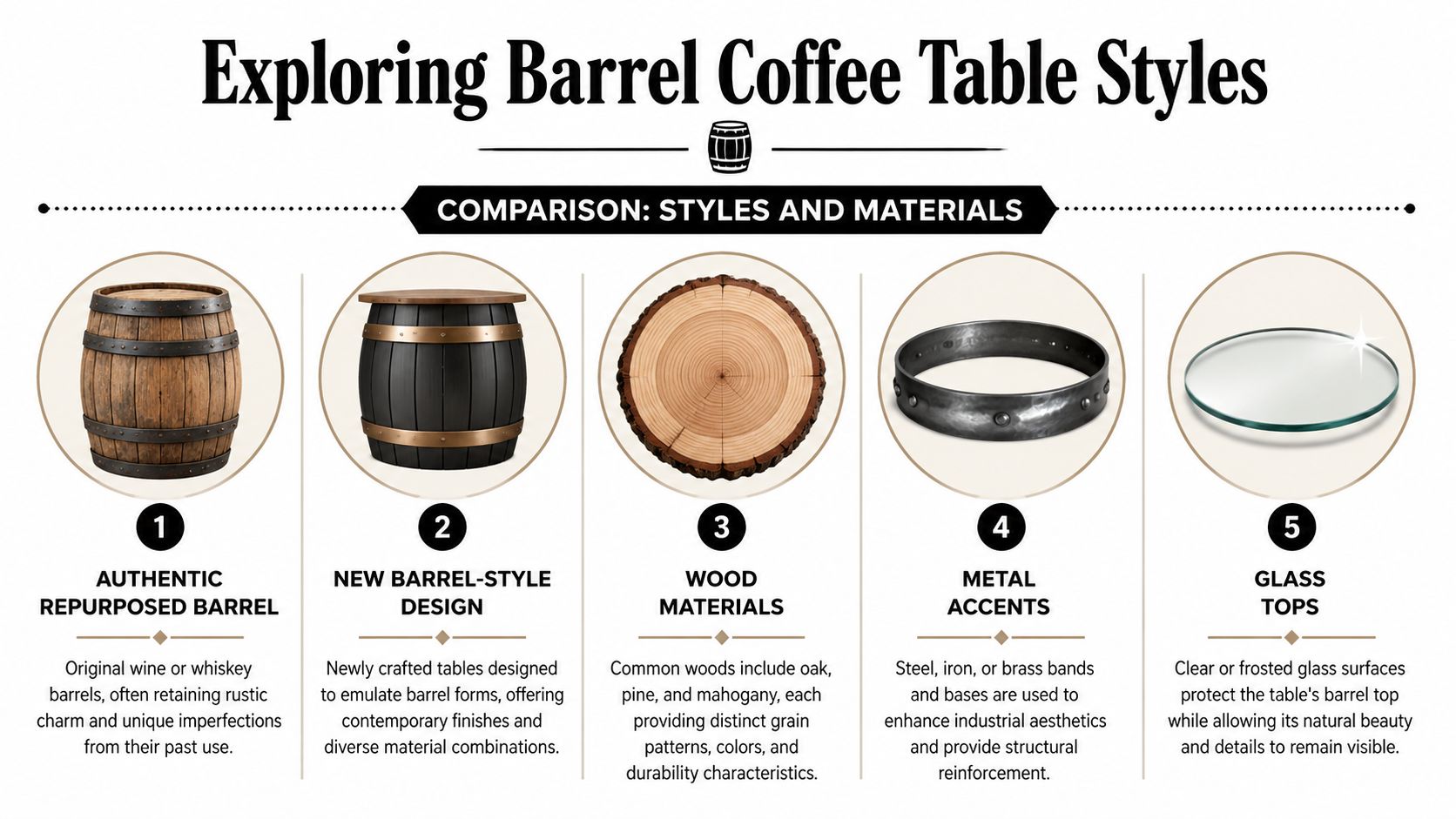
Today’s barrel coffee tables fall into two broad camps. Some begin with authentic repurposed barrels. Others are newly built pieces that borrow the barrel form but use fresh materials and more controlled construction. Neither approach is automatically better. The right choice depends on whether you want maximum character, cleaner tailoring, or a balance of both.
Authentic repurposed or newly built
An authentic repurposed barrel gives you the strongest sense of history. The shape, wood variation, and old hoop lines are part of the original object. That usually means more individuality and more visible imperfections.
A new barrel-style design offers greater consistency. Makers can refine the silhouette, clean up the finish, and pair the curved form with details that feel more transitional or even contemporary. For many homeowners, that’s the sweet spot. You keep the warmth of the barrel idea without committing to a heavily rustic look.
A few style differences tend to matter most:
- Repurposed barrel tables often show more texture, color variation, and signs of prior use
- Barrel-inspired tables usually have more predictable dimensions and a more polished finish
- Hybrid designs can combine reclaimed oak character with new tops, bases, or storage features
The material choices that shape the look
Wood is the heart of the piece. Oak remains the classic choice because it feels sturdy, takes finish well, and suits the visual weight of the form. Other woods can create a similar silhouette, but they won’t always deliver the same depth or long-term feel.
The top matters almost as much as the barrel body. Some homeowners prefer a full wood top for continuity and warmth. Others choose glass to let the barrel beneath stay visible. Metal accents can lean industrial, while a smoother hand-finished top can pull the piece into a more elegant room.
If you’re comparing hardwood options for a custom piece, this guide to choosing the right hardwood for longevity and style is worth reviewing.
Solid Wood Comparison for Your Custom Table
| Wood Type | Hardness & Durability | Grain Pattern | Best For |
|---|---|---|---|
| Oak | Strong and dependable for everyday use | Pronounced grain with visible texture | Homes that want character, durability, and a classic barrel look |
| Pine | Softer and more casual in feel | Simpler grain, often lighter in tone | Lighter rustic spaces where a relaxed look matters more than visual weight |
| Mahogany | Solid and refined in presentation | Smoother, richer grain appearance | Formal or tailored rooms that want warmth with a dressier finish |
Common style combinations
Some combinations work especially well because they solve common design tensions.
| Style direction | Typical material mix | Works well in |
|---|---|---|
| Rustic heritage | Repurposed oak barrel with wood top | Farmhouse, lodge-inspired, collected interiors |
| Refined rustic | Barrel body with smoother hand-finished top | Transitional living rooms and upscale family spaces |
| Industrial | Oak with steel or iron base details | Loft-like spaces and rooms with metal lighting or hardware |
| Lightened look | Barrel form with glass top | Smaller rooms or spaces that need visual openness |
The most successful barrel coffee tables don’t fight the room. They echo other materials already present, such as wood flooring, leather seating, iron hardware, or warm neutral textiles.
One point often confuses buyers. “Rustic” doesn’t mean rough. In fine furniture, rustic indicates the piece respects natural material character. It can still be precise, balanced, and beautifully finished. That’s where customization becomes valuable. You’re not limited to a single stain, one metal tone, or a fixed top treatment. A well-planned barrel table can feel suited to the rest of the home instead of standing apart from it.
Choosing the Right Scale for Your Space
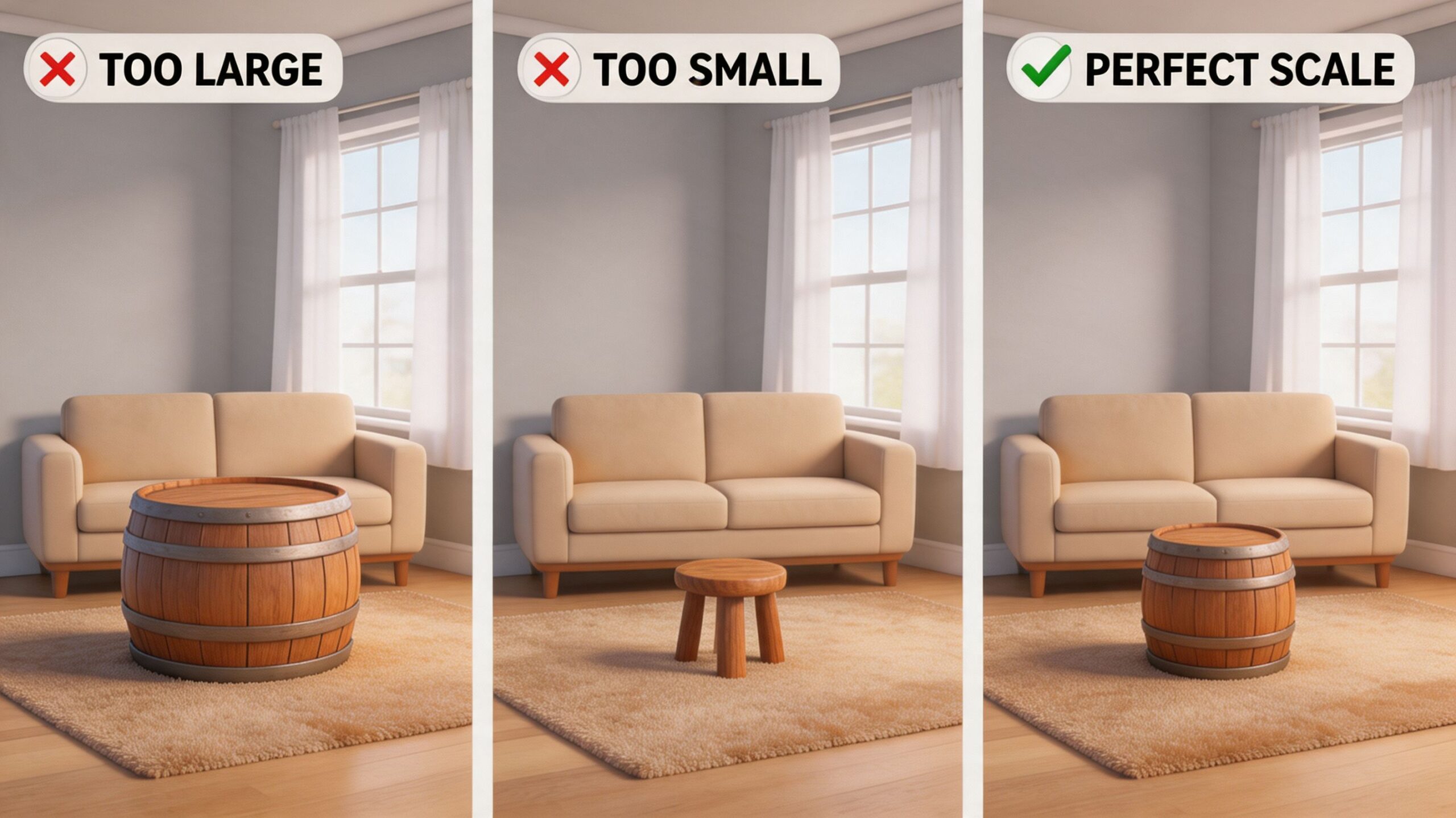
You set down a coffee cup, someone walks past the sofa, and the room suddenly tells the truth. A coffee table that looked perfect in a photo can feel oversized in daily life, or so slight that the seating area never feels anchored. Scale decides whether a room feels settled.
A barrel coffee table asks for especially careful sizing because its form has real visual presence. The curved body reads as more substantial than a thin, open-frame table of the same width. That is part of its appeal. In a well-planned room, it feels less like a temporary accent and more like a permanent piece of furniture, the kind you choose once and enjoy for years.
Start with the sofa, because that is the piece your table serves.
Three rules that make sizing easier
These guidelines give you a dependable starting point:
Keep the height close to the sofa seat. A coffee table usually feels most comfortable when it sits about 1 to 2 inches lower than the sofa cushion height. That keeps drinks, books, and trays within easy reach.
Aim for about two-thirds of the sofa length. This usually gives the table enough presence to anchor the seating area without taking over the room.
Leave about 18 inches between the table and seating. That space allows knees, feet, and traffic flow to work together instead of fighting each other.
Good sizing works like tailoring. Making the piece fit is not the sole objective. The goal is to make it look as though it was made for that room.
How barrel shape changes the feel
Rounder forms soften a space. In family rooms, open-concept homes, and walkways that cut through the seating area, a barrel table can make movement feel easier because there are no sharp corners interrupting the path.
That softer shape also helps balance rooms filled with straight lines. If you have a squared-off sofa, rectangular rug, and boxy case pieces, a barrel table introduces contrast without looking trendy or forced. Done well, it feels collected and mature.
Size still matters. A barrel coffee table should earn every inch it occupies. In a smaller room, that may mean choosing a trimmer silhouette, a cleaner top, or a design with lighter visual weight. In a larger room, it may mean selecting a broader form that can stand up to a long sofa or sectional without looking lost.
A simple measuring method
Before you shop, take four measurements:
- Sofa length from arm to arm
- Seat height from floor to top of cushion
- Open floor area where the table will sit
- Walkway width around the seating zone
Then look at how the room is used. A formal sitting room may need a stronger visual center. A busy family room may need softer circulation and a top with enough surface area for daily use. If you prefer the convenience of a rising surface for reading or casual meals, a lift-top coffee table with a tailored profile shows how function can be built into a well-proportioned design without making the room feel crowded.
Practical rule: If the room already feels tight, choose a barrel table with a simpler top profile and a finish that does not add extra visual heaviness.
Best fits for common room types
| Room type | Best barrel table approach | Why it works |
|---|---|---|
| Standard sofa living room | Medium-scale barrel table | Anchors the seating area without crowding it |
| Sectional seating area | Wider or lower-profile barrel form | Holds its own against the sectional’s larger mass |
| Apartment or smaller home | Compact barrel table with disciplined proportions | Gives you character without wasting floor space |
| High-traffic family room | Rounded barrel design | Makes circulation easier and softens the center of the room |
The right scale is one reason a barrel coffee table can move beyond trend and into heirloom territory. When the proportions are right, the piece feels intentional, substantial, and worth keeping. That is the difference between filling space and furnishing a home well.
Customization From Hidden Storage to Lift-Tops
Saturday evening is when a coffee table proves its worth. Someone needs a place to set a plate. Someone else wants to pull out a game. The remotes have disappeared again. A well-made barrel coffee table can handle all of that without losing the character that made you choose it in the first place.
Customization is what turns a barrel form from a conversation piece into fine furniture shaped around your home. That matters if you want more than a trend. It matters even more if you are buying with the hope that the piece will still serve your family well years from now.
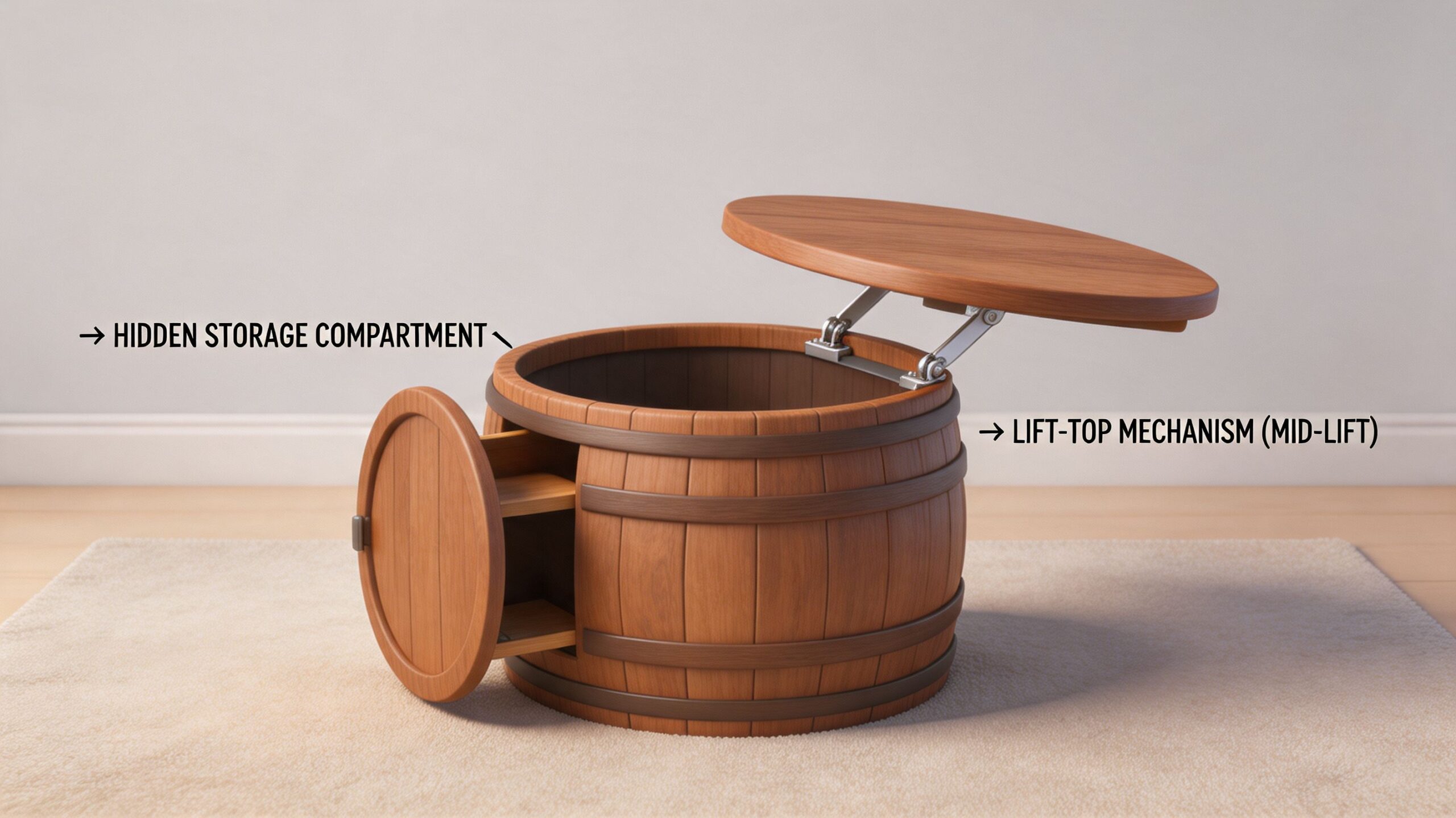
A barrel table starts with one natural advantage. Its curved body creates usable interior volume. The essential question is how that space is accessed and how the moving parts are built. In custom work, those choices separate a novelty piece from an investment-grade table.
Features that add real function
Premium barrel coffee tables often include lift-top mechanisms, hidden compartments, and drawers built for repeated use. Each feature solves a different household problem.
A lift-top is useful when the living room has to do more than one job. It brings the surface closer for casual meals, laptop use, writing, or sorting mail. If you want to see how that function can be handled with a more refined approach, this lift-top coffee table with a refined profile offers a good point of reference.
Drawers deserve the same level of attention. Quality drawer boxes are often joined with dovetails because that interlocking shape resists being pulled apart through years of opening and closing. The point is simple. Good joinery helps the table stay tight and dependable under real daily use.
Why the hidden construction matters
The barrel exterior gets the attention first. The mechanics underneath deserve equal scrutiny.
A custom table should open smoothly, feel balanced in motion, and close without strain. Full-extension slides help you reach what is stored in the back. A controlled lift mechanism keeps the top from feeling abrupt or flimsy. Solid drawer construction reduces racking and loosening over time.
Those details sound technical until you live with the piece. Then they become practical. A table that opens cleanly is a pleasure to use. A table that sticks, wobbles, or feels light in the wrong places starts to feel old far too soon.
Custom options worth considering
Customization does not have to mean ornate. Often it means making calm, intelligent decisions that fit your household and protect the value of the piece.
| Custom feature | What it adds | Best for |
|---|---|---|
| Hinged top | Easy access to interior storage | Families, smaller homes, blanket storage |
| Lift-top mechanism | Raised work or dining surface | Multipurpose living rooms |
| Side door access | Quicker reach to stored items | Everyday use with less lifting |
| Drawer integration | Organized hidden storage | Remotes, chargers, coasters, games |
| Finish selection | Better coordination with the room | Homes with existing solid wood furniture |
Homeowners sometimes worry that custom features will make a piece feel overbuilt or too specific. In practice, the opposite is often true. The best custom barrel coffee tables feel settled and natural because the features are chosen with restraint, much like good tailoring that improves the fit without calling attention to itself.
That is the lasting appeal of custom barrel furniture. You keep the history and warmth of the form, then shape it to suit a modern room and a long horizon of use. Done well, a barrel coffee table becomes more than rustic décor. It becomes a personal, heirloom-minded piece of fine furniture.
Protecting Your Investment With Proper Care
A well-made barrel coffee table should age like a good hardwood floor. It should gather character, not damage. That depends on two things working together from the start. Sound construction in the shop, and steady care in the home.
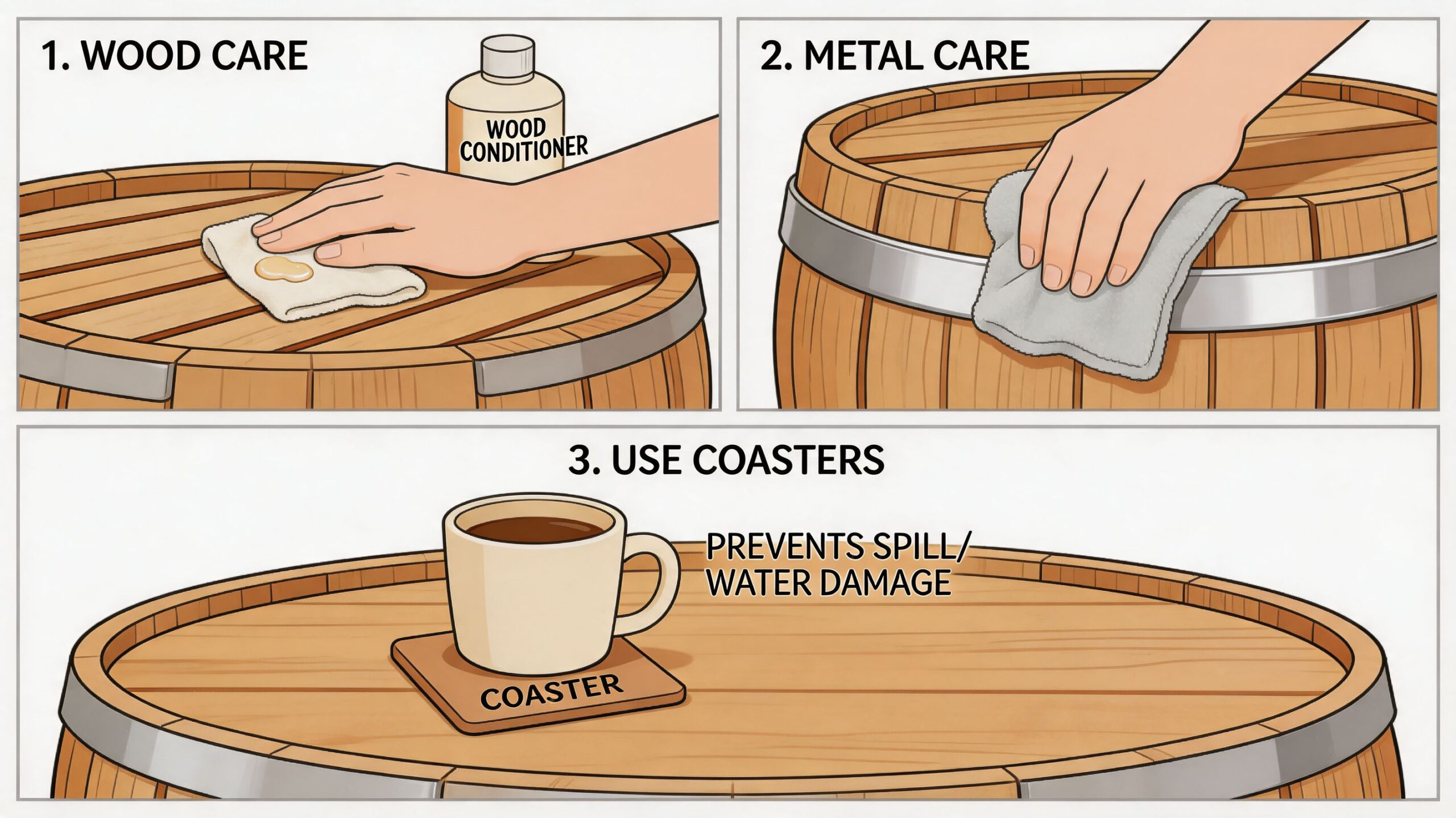
Barrel tables ask you to respect the materials. Solid wood expands and contracts as indoor humidity changes. Metal hoops need a protective finish so moisture does not sit on the surface over time. Neither point should discourage you. It means an investment-grade piece deserves the kind of ownership you would give any fine furniture meant to last for decades.
The two issues owners ask about most
The two concerns we hear most often are wood movement and corrosion on the hoops. Both are reasonable questions.
The U.S. Forest Service's Forest Products Laboratory has long documented that wood is a hygroscopic material, which means it takes on and releases moisture until it balances with the surrounding air. In plain terms, a barrel coffee table lives best in a stable indoor environment, much like any other piece of fine solid wood furniture. Oak is a trusted choice because it is durable and dependable, but species alone does not guarantee long-term performance. Milling, joinery, sealing, and finish quality all matter just as much.
That is where buyers sometimes get confused. They assume a barrel table is protected because it feels heavy and substantial. Weight helps with stability. It does not replace proper finishing.
Simple care habits that make a difference
Daily care is refreshingly straightforward:
- Dust with a soft, dry cloth so fine grit does not act like sandpaper on the finish
- Use coasters and trays to block heat rings, condensation, and small scratches
- Wipe spills promptly before moisture works into seams, end grain, or around hardware
- Skip harsh cleaners that can dull wax, soften protective topcoats, or discolor metal
- Keep indoor humidity reasonably steady through seasonal swings, especially in very dry winters or damp summers
Consistency matters more than intensity.
For a broader foundation, this guide on how to care for wood furniture explains the everyday habits that help custom wood pieces hold their finish and structure over time.
What good sealing should accomplish
A properly finished barrel coffee table should protect the areas owners cannot always see at first glance, not just the visible top. That is one of the quiet differences between novelty furniture and heirloom-minded furniture.
| Protected area | Why it matters | What to look for |
|---|---|---|
| Wood exterior | Slows moisture exchange and surface wear | Even sheen with no dry or thirsty-looking spots |
| Interior surfaces | Helps guard against spills, odor absorption, and rough handling | Smooth, finished feel inside storage areas |
| Metal hoops | Reduces the chance of corrosion and finish breakdown | Intact coating with no flaking, roughness, or exposed bare metal |
Care should feel like stewardship, not worry. A barrel coffee table built with good oak, careful sealing, and durable hardware can serve as everyday furniture while still holding the poise of a refined, investment-quality piece. That balance is part of its long-term appeal. It carries history in its shape, but with proper care, it lives beautifully in a modern home for years to come.
Begin Your Design Journey at Our Easton Showroom
A room can be nearly finished and still feel unsettled. The upholstery is in place. The rug works. The lighting is right. Yet the center of the seating area still lacks the piece that gives the room gravity and order.
A barrel coffee table often fills that role unusually well.
Its rounded form softens the hard lines that sofas and chairs tend to create, much like a well-cut area rug can calm a room full of straight edges. But shape alone is not the full story. The stronger reason homeowners return to this form is that a barrel table can carry history, craftsmanship, and daily usefulness in one piece. That gives it a longer life than many trend-driven tables that look interesting for a season and tired soon after.
Seeing one in person helps separate novelty from fine furniture. A photograph can suggest the silhouette, but it cannot tell you whether the oak has depth, whether the finish feels refined rather than heavy, or whether the top thickness gives the table the visual weight a room needs. Those details are what make a table feel temporary or lasting.
Good showroom conversations usually begin with the home, not the product. Room measurements, photos, nearby wood tones, and the way the household lives all matter. A family that wants hidden storage for blankets and games needs a different solution than a homeowner who wants a sculptural centerpiece with a cleaner, more sleek profile. The barrel shape is flexible enough to serve both, but only if the details are chosen carefully.
That is part of what makes this category so interesting. Many barrel coffee tables share the same broad outline, yet they can live very differently in a room. One may feel heavy because the proportions are too squat. Another may have storage, but the lid may be awkward in daily use. Another may capture the old cooperage character beautifully, yet need a more refined finish or adjusted scale to suit an elegant living room.
Customization turns the barrel coffee table from a familiar form into a personal piece of fine furniture. The right finish can bring it into harmony with existing floors or case goods. A slight change in diameter can improve circulation around a seating group. Hidden storage can keep the room calmer. A lift-top can make the table more useful without sacrificing its character. Small decisions matter here in the same way small tailoring changes matter in a well-made jacket. The overall shape may stay the same, but the fit becomes far more convincing.
For homeowners who care about heirloom value, that distinction matters. An investment-grade barrel coffee table should not feel like a themed accent pulled from a catalog. It should feel chosen, proportioned, and finished for your home, with enough character to honor its roots and enough restraint to stay relevant for decades.
Careful buying also protects against expensive compromise later. The coffee table sits at the visual center of the room and absorbs daily use. If the scale is off, the finish clashes, or the storage details frustrate you, the mistake is hard to ignore. If the construction is sound and the design is thoughtful, the table earns its place year after year.
The best purchases in furniture usually feel settled before they feel exciting.
That calm confidence is often the sign that the piece has substance behind it. A barrel coffee table made with good materials, shaped with intention, and customized for the way you live can become more than a rustic reference. It can become one of those rare pieces that links old-world craft to a modern home so naturally that it still feels right many years from now.