Coffee Lift Top Table: The Complete Buyer’s Guide


Your living room probably asks too much of one space. By morning, it holds a laptop and a mug. By evening, it hosts takeout containers, a board game, and the remote that somehow keeps disappearing. On weekends, it becomes the room where everyone gathers, and the furniture has to work harder than it once did.
That’s why the coffee lift top table has earned real staying power. It solves a very current problem with a very old-fashioned idea: one well-made piece should do more than one job, and it should do each job gracefully. In a showroom, the difference is easy to feel. A strong lift mechanism moves with control. A solid-wood top feels grounded under your hand. Storage disappears into the design instead of making the room look busy.
For homeowners furnishing with the long view in mind, that distinction matters. A lift-top table can be either a passing convenience or a lasting investment. The answer usually comes down to construction, material integrity, and whether the table was built to be used every day, not just admired from across the room.
Beyond the Coffee Table The Rise of Functional Living
A few years ago, the coffee table was largely considered a finishing touch. It anchored the seating area, held a lamp or a stack of books, and gave the room a sense of completeness. Today, it often needs to do far more.
A client might come into our Easton Town Center showroom describing the same pattern many homeowners live with now. They answer emails from the sofa because it’s where the light is best. They eat a casual dinner in front of the fireplace on a Tuesday. They want the living room to feel collected and calm, but they also need hidden storage for chargers, remotes, and small daily clutter.
That’s where a lift-top design starts to make sense. The top rises toward you instead of forcing you to bend toward it. The interior can hold the pieces of life you use often but don’t want on display. The room stays polished, yet it works harder.
The broader furniture market reflects that shift. The global lift-top coffee table market was valued at $2.3 billion in 2024 and is projected to reach $4.1 billion by 2033, driven by demand for multifunctional, space-saving furniture in modern living spaces, according to Market Intelo’s lift-top coffee table market report.
Why this category keeps growing
The appeal isn’t hard to understand when you look at daily habits:
- Work happens everywhere: Many homeowners no longer use one formal desk for every task.
- Rooms carry multiple roles: A living room may also serve as a casual dining area, homework station, or media room.
- Storage matters more: People want surfaces that look clean without giving up convenience.
- Scale matters in modern homes: Furniture that performs two functions can reduce visual clutter.
Practical rule: The more jobs one room has to handle, the more valuable adaptable furniture becomes.
If you're thinking through the larger picture of a flexible home, this guide on how to choose multi-functional furniture for modern homes is a useful companion. It helps frame the lift-top table as part of a smarter room plan, not an isolated purchase.
A good coffee lift top table doesn’t announce itself as a gadget. It makes the room easier to live in.
What is a Lift Top Coffee Table and Why Invest in One
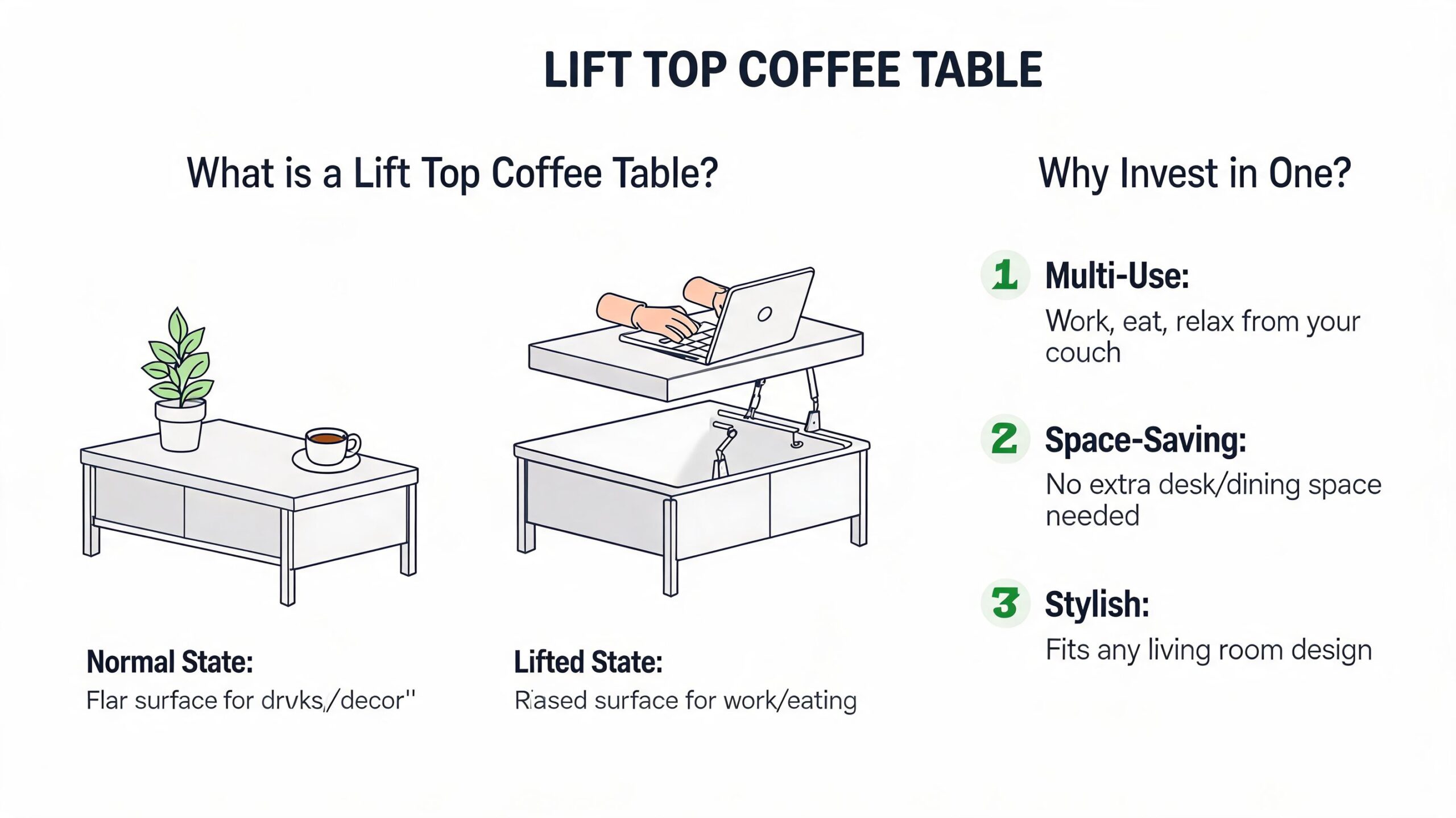
A lift-top coffee table is exactly what it sounds like. The top surface rises upward and forward, creating a more usable height for working, eating, writing, or reaching what’s on the table without leaning over awkwardly.
That simple motion changes how the entire room functions. Instead of treating the coffee table as a static object, you begin to use it as an active part of daily life.
The three jobs it does best
Most homeowners invest in a coffee lift top table for one of three reasons. The strongest pieces do all three well.
A more comfortable work surface
If you’ve ever balanced a laptop on your knees or hunched over a fixed coffee table, you already know the problem. A lift-top brings the surface closer to seated height, which makes casual work or reading much more comfortable.Hidden storage where you need it most
Lift-top designs often conceal a compartment below the surface. That space is ideal for remotes, coasters, chargers, notepads, or the small items that tend to gather in a living room. The room looks calmer because the clutter has a home.A better place for casual dining
For sofa dinners, coffee, or a weekend breakfast tray, the raised top is more practical. You’re not leaning forward every few minutes, and your shoulders don’t stay in that rounded, uncomfortable position.
Why quality matters more than the concept
Many buyers get tripped up at this stage. They understand the function, but they don’t always look closely enough at how the table is built. A poor lift-top can wobble, sit unevenly, or feel slightly off every time you open it. A good one feels deliberate.
The engineering matters because the top has to rise smoothly and remain level when raised. According to WLIVE’s design discussion on DIY lift-top coffee tables, quality lift-top design requires precision engineering so the surface stays level, and some ergonomic analyses show taller individuals can experience a height deficit of nearly two inches with standard models. That’s one reason custom sizing and thoughtful proportions matter.
A lift-top table should feel supportive when raised, not like a balancing act.
For homeowners who want to see one example in context, the Bombay Lift Top Coffee Table shows how storage and lift functionality can sit inside a more traditional living-room silhouette. That matters if you want versatility without sacrificing warmth or visual substance.
Why it’s worth treating as an investment piece
A well-chosen lift-top table earns its place because you use it repeatedly. You touch the top every day. You hear the mechanism open and close. You notice whether the finish resists wear or starts looking tired.
The investment isn’t just in convenience. It’s in:
- Daily comfort: less bending, less reaching, better seated posture
- Visual order: fewer items left on the surface
- Room efficiency: one piece solving several needs
- Long-term satisfaction: a table that still feels good to use years later
That’s the difference between buying a feature and buying furniture.
Understanding Lift Top Mechanisms and Durability
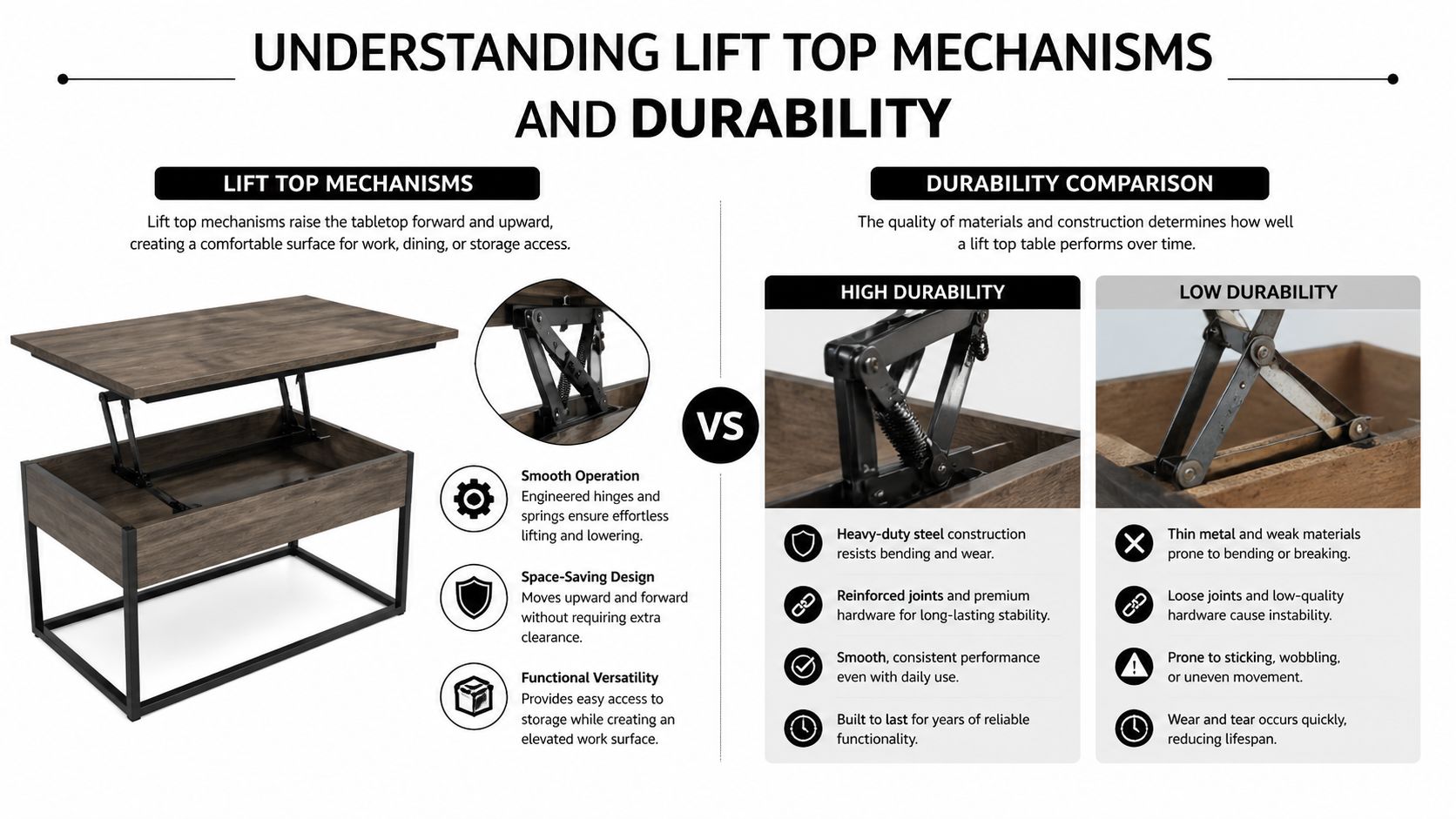
The mechanism is the heart of the table. If the mechanism is weak, the whole piece feels temporary no matter how handsome the wood or finish may be.
Homeowners often focus first on storage size or style. Those are important, but they don’t tell you how the table will behave after years of regular use. The ultimate test is tactile. Does it open with a smooth glide or an abrupt jerk? Does it lower with control or drop faster than you’d like? Does it feel quiet and steady, or slightly strained?
The two mechanism experiences buyers notice most
Most lift-top tables you'll encounter use either a simpler spring-assisted approach or a more refined hydraulic-style system. Both can work. They don't feel the same in daily life.
| Mechanism type | What it feels like | What buyers often value |
|---|---|---|
| Spring-assisted | Lighter, more direct, often with more manual input throughout the motion | Simplicity and a straightforward operation |
| Hydraulic or self-lifting soft-close | Controlled, quieter, and more assisted as the top rises and lowers | Ease of use, safety, and a more polished feel |
The practical difference is less about jargon and more about repetition. If you open the table often, a smoother system becomes more meaningful.
What premium motion looks like
Premium lift-top tables often use a soft-close or self-lifting hydraulic system. In that type of mechanism, the user begins the lift manually, and the system then helps complete the motion. According to Expand Furniture’s Cadence wood lift-top table specifications, the extended top supports around 50 lbs, and the hydraulic resistance helps prevent sudden drops.
That last point matters. A sudden drop is not just annoying. It increases wear on hardware, stresses joints, and makes the table feel less secure around children or pets.
The smoothness of a mechanism is often your first clue about how much care went into the table’s construction.
Durability questions worth asking in a showroom
Many online reviews stop at “it lifts” and “it has storage.” That’s not enough if you’re buying for long-term use. Ask better questions.
- How does the lift sound? A harsh metallic snap or abrupt close usually tells you something.
- Does the top stay level? If it shifts or tilts when raised, daily use becomes irritating fast.
- How much effort does the first lift require? Some systems ask more of the user before the assist kicks in.
- How does it close? Controlled descent is easier on both the furniture and the household.
- What does the underside look like? Clean installation and sturdy hardware placement often reveal a more thoughtful build.
The article on choosing the best table construction for family use is helpful if you want a broader lens on what sturdy table construction looks like beyond the surface finish.
Why mechanism quality affects heirloom potential
Furniture that lasts usually lasts for boring reasons. The joinery is sound. The hardware is dependable. The piece doesn’t fight you every time you use it.
That’s especially true with moving furniture. A lift-top table asks its mechanism to perform over and over again. If you think of this piece as part workspace, part storage cabinet, and part cocktail table, then the mechanism isn’t an extra feature. It’s the system everything else depends on.
Some buyers also consider Amish-made furniture or other bench-crafted styles because they want stronger materials and a less disposable feel. That instinct is wise. When a table includes motion, you want the same seriousness in the hardware that you’d expect in the woodwork.
Choosing Materials and Finishes for Lasting Beauty
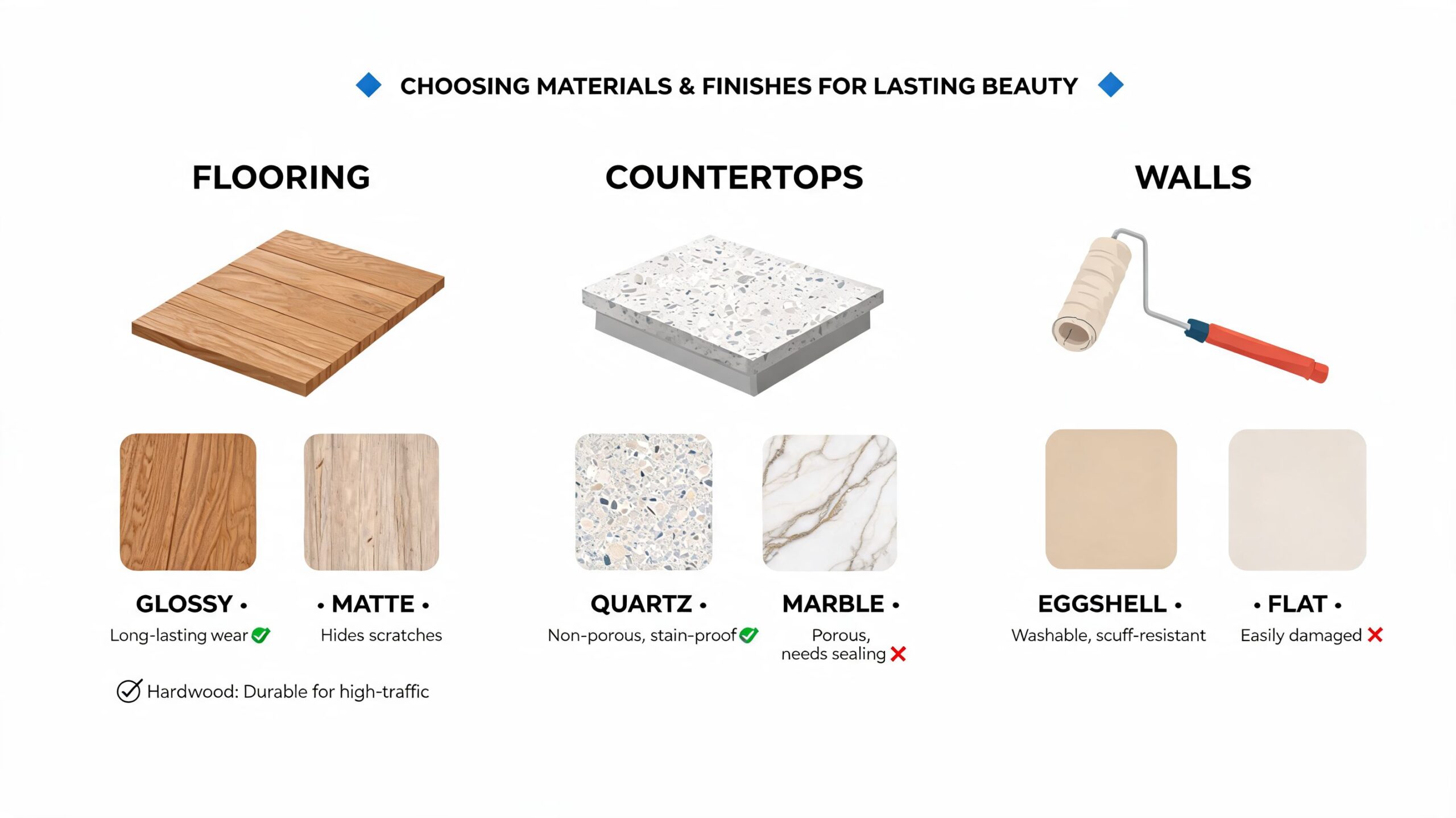
The top rises and the storage disappears neatly, but the material is what gives the table its presence. It determines how the piece feels under your fingertips, how it responds to light, and whether it grows more handsome with age or looks worn.
For many homeowners, this is the moment where a coffee lift top table stops being a utility item and starts becoming part of the home’s character.
Solid wood and why it feels different
If you’ve spent time around solid wood furniture Ohio homeowners tend to seek out, you already know the difference isn’t only visual. A solid-wood table has a steadier, more grounded feel. The grain has depth. The edges can be softened and hand-finished in a way that feels inviting rather than flat.
Three wood families often appeal to investment-minded buyers for different reasons:
- Oak: expressive grain, familiar warmth, and a look that suits both classic and updated interiors
- Maple: smoother grain and a cleaner, quieter face that works well in transitional spaces
- Cherry: richer color movement over time and a refined, furniture-gallery character
Veneer isn't automatically a problem
This is an area where homeowners often hear overly simple advice. Veneer is not automatically low quality. The better question is how the table is built overall and where each material is used.
A well-made veneered panel can help create stability in wide surfaces. The issue comes when the entire piece is designed to hit a price point rather than deliver long-term performance. In those cases, the visual layer may look good initially, but the tactile experience, edge treatment, and structural confidence often reveal the difference.
Here’s a simple comparison:
| Material approach | What to notice |
|---|---|
| Solid wood construction | Natural grain variation, substantial feel, aging character |
| Veneered surfaces on quality substrates | Smoother broad panels, often more uniform appearance |
| Value-driven mixed construction | Look closely at edges, underside, and hardware integration |
When you run your hand across a table, your hand notices honesty before your eye names it.
The finish protects the investment
Finish is not decoration alone. It’s protection. It stands between the table and coffee rings, takeout boxes, friction from laptops, and the oils from daily touch.
Look for a finish that suits how you live. A hand-applied stain can deepen the wood’s natural variation. A protective topcoat helps the surface stay attractive through normal use. The right finish also changes the room’s mood. A matte or low-sheen finish feels softer and more relaxed. A higher sheen reflects more light and reads more formal.
If you’re comparing stain direction and wood character, this guide to natural wood finish options helps clarify how different finishes interact with grain and color.
Customization changes the result
An investment homeowner achieves real control. The same silhouette can read rustic, modern organic, transitional, or subtly traditional depending on the species, stain, hardware tone, and surrounding upholstery.
Customization often matters most when:
- You’re matching existing casegoods: especially in open-concept homes
- You want a specific undertone: warm browns, cleaner naturals, or deeper heritage stains
- You need the table to age well with the room: not just coordinate on day one
That level of choice is also why people shopping for Amish-made furniture or custom dining sets often end up applying the same standards to their living room pieces. Once you’ve experienced furniture you can tailor, it’s hard to go back to one-note options.
Perfect Sizing and Placement in Your Home
A lift-top table can be beautifully made and still feel wrong if the scale is off. This is one of the most common mistakes homeowners make when shopping online. They fall in love with the finish, then discover the room feels cramped or the top can’t rise comfortably within the seating layout.
Good placement starts with the sofa, because the table exists in relationship to it.
Proportion before style
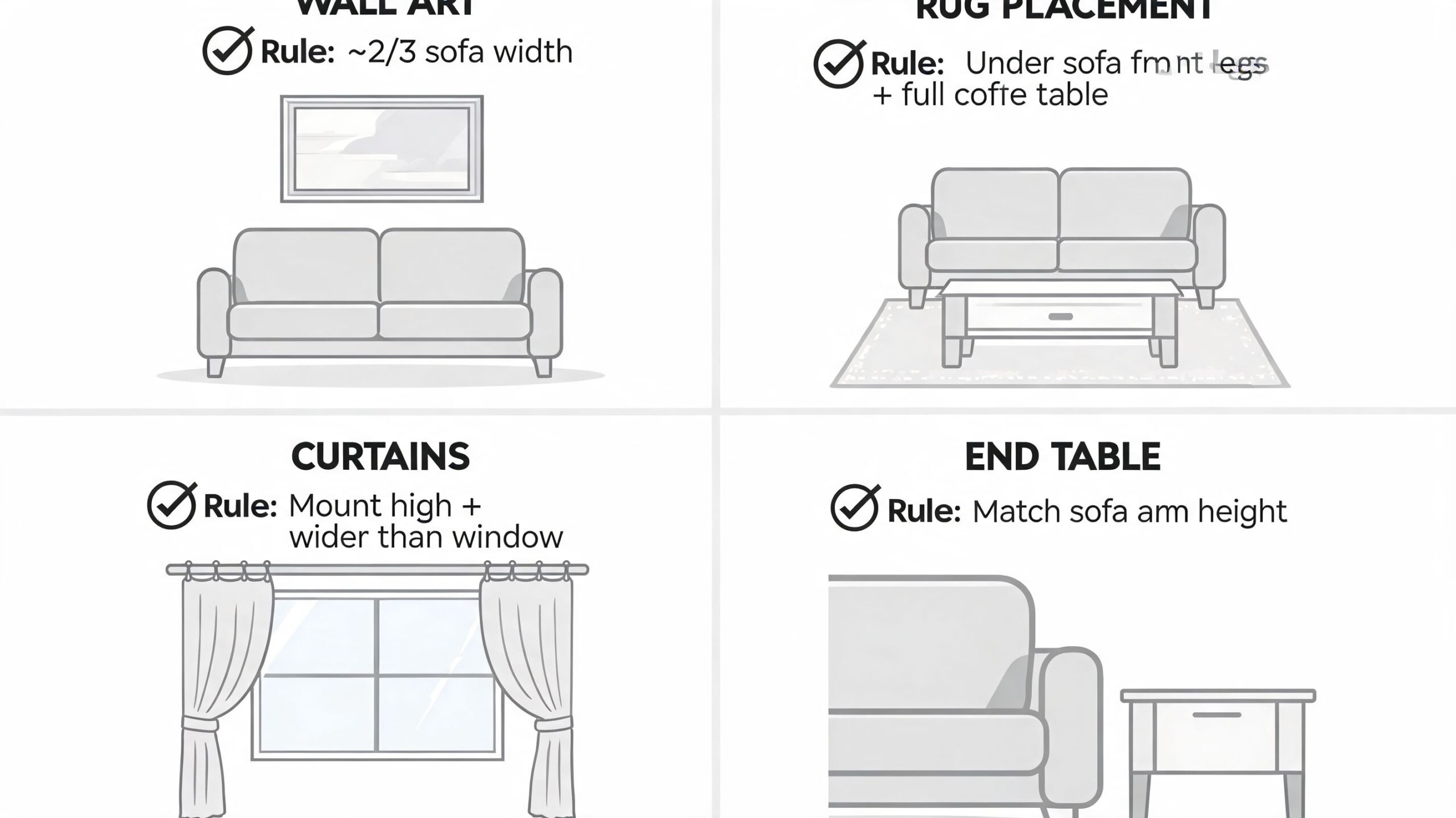
Use these design guidelines as a starting point, not a rigid formula:
- Height: Aim for a table height close to the seat height of your sofa, or slightly lower, when the top is closed.
- Length: A coffee table often feels balanced when it is about two-thirds the length of the sofa.
- Breathing room: Leave enough space between the sofa and table for comfortable movement and easy use.
- Lift clearance: Make sure the top can rise and come forward without striking nearby furniture or crowding the knees of the seated person.
That last point matters more with a lift-top than with a fixed table. The table doesn’t only occupy its footprint. It also occupies motion space.
A quick room planning checklist
Bring these notes with you when you shop:
Sofa width and seat height
Those two measurements tell you more than overall sofa height.Distance from sofa to TV console or opposite chair
This helps determine how much room you have once the top is raised.Rug size and shape
A table should feel anchored within the rug, not stranded or oversized.How you’ll use the table most often
Laptop work, casual dining, hidden storage, or primarily visual styling all influence the ideal size.
A lift-top should open into the room naturally. If the motion feels like a squeeze, the scale is wrong.
Shape matters too
Rectangles are the most common choice, especially with standard sofas. A square can work beautifully in a larger seating group. Rounded corners are often kinder in tighter family rooms because circulation feels easier and the room softens visually.
This is one place where in-person planning is especially helpful. When homeowners bring room dimensions, photos, and nearby finish samples into a design consultation, the decision gets much clearer. You can test whether a table looks substantial enough when closed and practical enough when raised, which are two different questions.
That’s one reason many Columbus shoppers still prefer working through a Furniture store Columbus Ohio clients can visit in person. A moving table is easier to judge when you can walk around it.
Styling Your Lift Top Coffee Table
A lift-top table creates a styling challenge that fixed tables don’t have. You want it to look settled and inviting, but you also need to move the surface without clearing fifteen little objects every time.
The easiest solution is what I call the tray trick. Group your decorative items on one substantial tray so the arrangement reads as intentional when the table is closed, then lift the whole grouping away in one motion when the table is in use.
The tray trick in real life
A good tray does two jobs. It organizes the look of the table, and it gives you a fast reset button.
Try a combination like this:
- A small stack of books: enough to add height and personality
- A candle or covered vessel: something with weight and presence
- A small natural element: a vase, branch, or bowl in a contrasting texture
- A coaster set: practical, but still part of the arrangement
That grouping should feel stable, not fussy. Leave some open surface visible so the table can breathe.
Keep the styling low and movable
Because the top lifts, tall arrangements often become annoying. They block sightlines, feel precarious, and require more effort to move.
A better approach is layered but contained. Use:
- Low profiles: objects that stay visually quiet
- Mixed textures: wood, ceramic, glass, woven materials
- One dominant element: not five competing accents
- A little asymmetry: enough to feel collected instead of staged
The most successful coffee table styling looks easy to move because it is easy to move.
For more visual ideas, this guide on how to decorate a coffee table like a pro is worth saving. It pairs well with lift-top living because it focuses on balance, restraint, and everyday practicality.
Let function stay visible
You don’t need to pretend the table isn’t multifunctional. In fact, part of its charm is that it transforms. A beautiful room that also accommodates work, coffee, and a casual meal feels more convincing than a room preserved like a museum display.
That’s the sweet spot. Styled when closed. Useful when opened. Still elegant either way.
Your Investment The Vinson Fine Furniture Experience
Late in the buying process, the decision usually becomes much clearer. Two tables may look similar in a photo, yet one feels quiet, balanced, and dependable the moment you touch it, while the other feels temporary. That difference matters with a lift-top table because you are not only buying a shape for the room. You are buying a moving piece of furniture that will be opened, closed, leaned on, and lived with for years.
A well-made lift-top coffee table should feel like a permanent part of the home, much the way a solid dining table does. The top should rise with control, settle without wobble, and close with the kind of precision that suggests careful engineering rather than novelty hardware. If the mechanism is the heart of the piece, the materials are its body. Both need to hold up.
That is why an in-person buying experience still carries real value.
A showroom lets you test the details that determine long-term satisfaction. You can place your hand under the top and feel whether the motion is steady. You can study finish depth in natural and overhead light. You can compare scale against upholstery, rugs, and nearby case goods instead of guessing from dimensions on a screen.
Four parts of the buying experience that shape the result
For an investment piece, a few services have an outsized effect on whether the table feels selected with intention or merely purchased.
Customization
The Custom Order Program gives shoppers a way to work through finishes, materials, and configurations with 3D visualizers. That matters more than it may seem. A lift-top table has enough visual presence that the wrong wood tone can feel disconnected from the room, while the right one can make the piece look as though it has always belonged there. In open-plan homes, that coordination becomes even more valuable because the coffee table often sits within view of dining, storage, and media pieces.
Design services
The In-Store Design Studio offers complimentary design consultations. Bring room measurements, photos, and finish samples, and a consultant can help you judge proportion, traffic flow, and how the lift function will work in the space you live in. That kind of guidance is especially helpful for homeowners furnishing several rooms at once and trying to keep the home consistent in tone and material.
Value and savings
Price matters, but value in fine furniture usually comes from construction, finish quality, and how long a piece remains useful. Vinson Fine Furniture also offers a Low Price Guarantee, a Clearance Gallery, and financing options that can make it easier to choose better materials or a more durable mechanism rather than settling for a short-term compromise.
Delivery and setup
White-Glove In-Home Delivery makes a difference with furniture that includes moving parts. Proper placement, careful setup, and removal of packaging protect both the table and the room around it. It also gives the purchase a finished feeling, which suits an heirloom-minded piece.
Why the showroom visit still matters
A coffee lift top table is a tactile purchase. Photos can show silhouette and color, but they cannot tell you whether the top rises with confidence or whether the corners, edges, and grain feel substantial in your hand.
In person, you can judge a few things quickly:
- Whether the lift motion feels controlled rather than springy
- How the finish reads in real light
- Whether the table has enough weight and presence for the room
- How the proportions relate to your seating
- Whether the storage and top height suit your daily habits
Homeowners in Central Ohio may want to visit Vinson Fine Furniture’s Easton showroom to compare those details side by side. That kind of visit is useful when the goal is not to fill an empty spot, but to choose a table that will still feel right after trends shift and routines change.
The long-view decision
The best lift-top coffee table keeps proving its worth in small, ordinary moments. It supports a laptop during a quiet morning, holds dinner during a movie, hides everyday clutter before guests arrive, and still looks composed when the top is closed. Over time, that quiet reliability becomes part of the room’s comfort.
That is the standard worth using.
If you are ready to compare finishes, test lift mechanisms, and see how a coffee lift top table fits into your room plan, visit Vinson Fine Furniture at Easton Town Center. Bring a few room photos and your dimensions. A complimentary design consultation can help narrow the field, and if you are customizing, the 3D visualizers, White-Glove Delivery, financing options, Low Price Guarantee, and Clearance Gallery can make the process easier to complete with confidence.