Finding Your Perfect Contemporary Corner Curio


You know the corner I'm talking about. It sits just beyond the sofa, beside the dining room opening, or at the end of a hallway wall where nothing quite looks right. A floor lamp feels temporary. A plant looks lost. A random accent table fills space but doesn't add meaning.
That corner doesn't need filler. It needs intention.
A contemporary corner curio works best when you treat it as part display case, part architecture. It can pull light into a dim edge of the room, give cherished objects a proper home, and turn an overlooked angle into one of the most finished-looking moments in the house. Done well, it doesn't just store things. It tells guests what matters to you, whether that's hand-thrown pottery, family crystal, travel finds, or the pieces you've inherited and want to see every day.
Transforming Your Home's Forgotten Corners
A forgotten corner usually creates a quiet kind of visual tension. The room is nearly complete, but your eye keeps landing on that one blank spot. In many homes, that's where good design stalls. People know the area needs something, but they don't want to crowd the room with a bulky piece that feels like an afterthought.
That's where a corner curio changes the conversation.
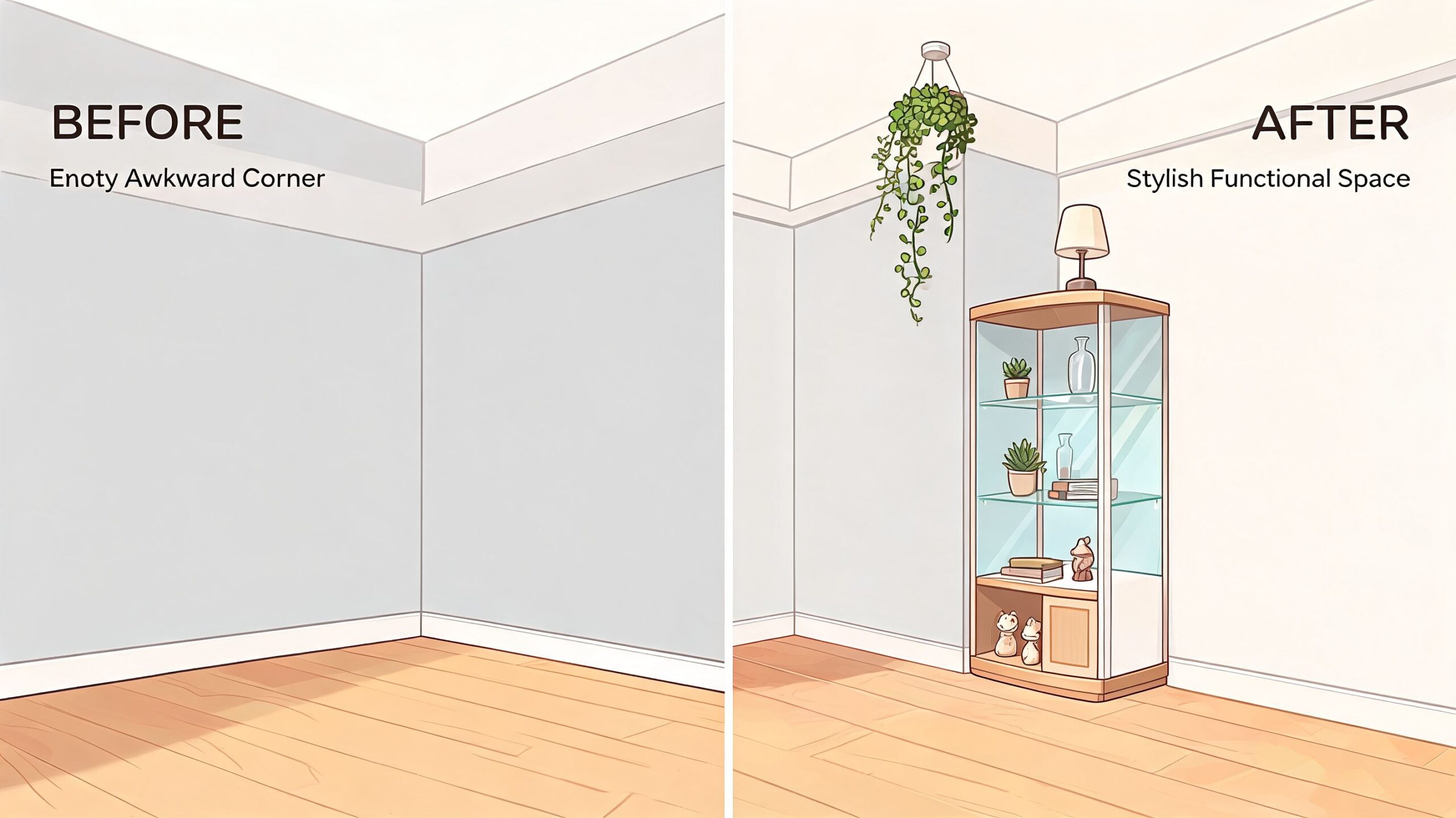
A well-scaled curio uses an awkward angle that most furniture ignores. Instead of blocking circulation, it follows the lines of the room. Instead of eating up the center of the floor, it works at the perimeter where space often goes unused. If you're trying to make a compact room feel more considered, that's the kind of move that matters.
Some homeowners hesitate because they hear "curio cabinet" and picture something dated, dark, and overly formal. A contemporary piece is different. It tends to feel lighter, cleaner, and more integrated with the rest of a modern interior.
What a corner curio adds to a room
- Display with purpose lets you highlight objects that deserve more than a drawer or storage bin.
- Visual height helps a room feel finished, especially when the surrounding furniture sits low.
- Light and depth come from glass, reflective interiors, and open sightlines.
- Smarter use of space makes it a natural fit for rooms that need storage without looking crowded.
If you're furnishing a smaller home or trying to make every inch work harder, guidance like this roundup of the best furniture for small spaces can help you think beyond standard layouts.
A corner curio works best when it feels like it belonged to the room from the beginning.
That's the shift many people are after. They don't want to just fill space. They want a piece that makes the home feel more complete.
The Modern Evolution of the Curio Cabinet
The older version of the curio cabinet had a very specific image. Heavy cherry stain. Ornate detailing. A formal look that fit one room and one room only.
Today's contemporary corner curio has moved in a different direction. According to this product overview of a modern corner curio, contemporary corner curios have evolved from traditional cherry-stained designs into sleeker styles with mirrored backs and modern finishes. That same overview notes that a typical unit uses about 23 inches of wall space, many models weigh between 40 to 136 pounds, and common features include halogen lighting and adjustable shelving.
What changed in the design
Modern curios usually put the spotlight on the collection, not on carved ornament. You'll notice:
- cleaner edges
- simpler hardware
- darker painted finishes or lighter contemporary tones
- more glass and reflection
- interiors designed to feel open rather than dense
That matters because most homes today aren't arranged like formal parlors. Rooms blend into one another. A dining area may open to a living space. A bedroom may include a reading corner or desk. Furniture has to move easily between styles and functions.
Why the corner form still works so well
A straight cabinet can dominate a wall. A corner unit usually feels more graceful because it borrows space that often sits empty. The shape lets you add vertical storage and display without interrupting the room's main pathways.
Think of a few natural placements:
- In a living room, it can hold art glass, books, and framed keepsakes.
- In a dining room, it can display serving pieces and collected ceramics.
- In a bedroom, it can create a polished home for jewelry boxes, photos, or small heirlooms.
- In a home office, it can showcase awards, bound volumes, and objects with personal meaning.
Contemporary design doesn't erase tradition. It edits it.
That's the best way to understand this category. The cabinet still honors the idea of display furniture, but it does so with a lighter hand. It suits homes that want character without heaviness.
Choosing the Right Size and Placement for Safety
A corner curio can be beautifully proportioned and still be wrong for the room if it's measured poorly or installed casually. This is one of those furniture categories where fit and safety carry equal weight.
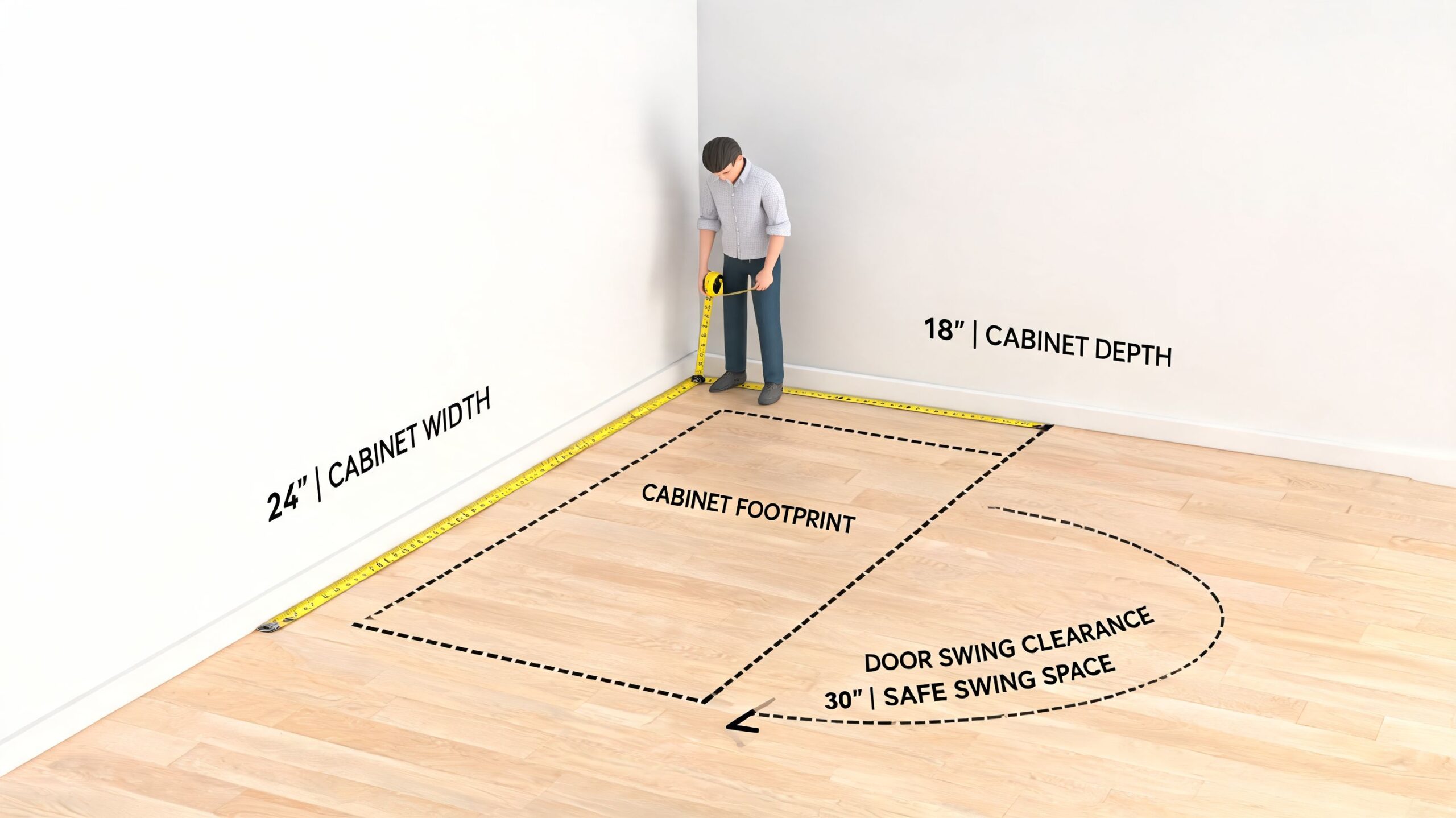
Start with the corner itself. Measure both walls from the corner outward. Then measure ceiling height, nearby trim, vents, outlets, and the distance to adjacent furniture. Don't stop at the footprint. Door swing, sightlines, and walking paths matter just as much.
A simple trick helps many homeowners avoid a bad fit. Use painter's tape on the floor and wall to outline the cabinet's depth and width. That gives you a quick read on whether the piece will feel well-suited or intrusive.
For more detail before you shop, this guide on how to measure furniture is worth reviewing.
The three measurements people often miss
Door clearance
Glass doors need enough room to open comfortably without bumping nearby furniture or trim.Visual height
A tall cabinet can look elegant, but in a room with low ceilings or heavy crown molding, the wrong height can make the corner feel cramped.Viewing distance
If the cabinet sits too close to a sofa arm, dining chair, or traffic path, the display won't read well and the room can feel pinched.
Safety isn't optional
This category also comes with a clear lesson from a real recall. In 2019, Home Meridian recalled Copeland Corner Curios sold at Havertys because the 74.75-inch tall, 40-pound cabinets posed a serious tip-over hazard if they weren't properly mounted. The recall involved at least one child injury, and the U.S. Consumer Product Safety Commission's notice makes the point plainly in its Copeland Corner Curio recall alert.
That incident changed how many people think about this furniture type. A contemporary corner curio should be treated as an anchored fixture, not as a casual freestanding accent.
Practical rule: If a corner curio is tall and narrow, plan for wall anchoring from the start, not as an optional extra.
This matters even more in homes with children, pets, or frequent foot traffic. Professional delivery and installation can make a real difference here because correct placement is only half the job. Secure anchoring is what completes it.
Understanding Quality Materials and Finishes
A contemporary corner curio looks delicate because of the glass and lightness of its profile. The better ones don't feel delicate at all when you stand in front of them. They feel steady, substantial, and well resolved.
That's where materials separate a short-term purchase from a long-term one.
Start with the case construction
When you run your hand across a quality cabinet, the first thing you notice is the surface. Solid wood has depth in the grain and a warmth that printed or heavily processed surfaces can't mimic. Veneers can also be a smart part of good furniture making when they're used over stable cores and finished well. The problem isn't veneer by itself. The problem is thin, mass-market construction that looks acceptable from a distance and tired up close.
For homeowners researching Solid wood furniture Ohio or looking for the staying power associated with Amish-made furniture, the conversation usually comes back to one thing. How will this piece age in your home? A hand-finished wood case tends to gain character. Lower-grade materials often just show wear.
Glass quality matters more than people think
Shelves carry weight, catch light, and sit at eye level. They aren't a minor detail.
According to this contemporary curio listing with tempered glass details, tempered glass shelves offer 5 times greater flexural strength than standard annealed glass. The same source notes that when tempered glass fails, it breaks into small granular pieces, reducing injury risk by 90%. That's a meaningful safety difference, especially in a family home.
Comparing Curio Cabinet Materials
| Material | Description | Best For | Lifespan & Value |
|---|---|---|---|
| Solid wood | Rich grain, substantial feel, often hand-finished | Investment homeowners who want warmth, repairability, and lasting character | Strong long-term value when well built and well maintained |
| Wood veneers over quality cores | Real wood surface over a stable base | Buyers who want a refined finish with good dimensional stability | Good value when construction is careful and finish quality is high |
| Engineered wood | Manufactured wood components, often used in more budget-conscious builds | Secondary rooms or style-first purchases where price matters most | Varies widely by build quality and finish durability |
| Tempered glass shelving | Safety-focused shelf material with higher strength than annealed glass | Homes with collectibles, families, and anyone prioritizing display clarity | Excellent functional value when paired with sturdy shelf supports |
| Mirrored back panels | Reflective interior surface that increases brightness and visual depth | Rooms that need more light bounce and a more open look | Strong design value, especially for darker corners |
A finish deserves just as much attention as the material underneath it. Good finishing should feel smooth, even, and layered, not plasticky or overly shiny. On darker contemporary pieces, poor finishing shows up fast as blotchiness or dull patches around edges and handles.
If you want a deeper grounding in wood species and how they behave over time, this guide on choosing the right hardwood for longevity and style is a useful next read.
What to look for in person
- Shelf supports should feel secure, not flimsy.
- Door alignment should be even at the top and bottom.
- Finish consistency matters around corners, seams, and edges.
- Base stability should inspire confidence before the cabinet is ever loaded.
- Interior reflection should enhance the objects inside, not distort them.
Good furniture reveals itself in the details you don't notice at first glance, then appreciate for years.
That's especially true with a curio. You aren't only buying storage. You're buying a stage for the objects that matter to you.
Illuminating Your Collection with Smart Lighting and Hardware
A contemporary corner curio comes alive when the lighting is right. Without light, even beautiful shelves can disappear into the corner. With it, glassware glows, ceramics gain depth, and metallic finishes catch the eye in a quiet, controlled way.
Many earlier curios used halogen systems. They brought brightness, but today's buyers often want more flexibility and less heat. The current shift is toward LED upgrades and smart compatibility.
According to this overview of curio cabinet lighting trends, interest in "smart curio" features is growing as of 2026, including E26 bulb retrofits for home automation systems like Alexa and Google Home. The same source notes that dimmable LEDs can last over 25,000 hours and offer up to 80% energy savings compared with older halogen systems.
How to choose your lighting approach
If your cabinet already has integrated lighting, ask whether the bulb type can be updated. If it uses a standard socket, you may have more flexibility than you think. A dimmable LED often gives you the cleanest path to a more refined display.
A few practical preferences help:
- Warm, dimmable light tends to flatter wood tones and heirloom pieces.
- Clear, bright light can work well for crystal, glass, and modern collections.
- Smart bulb compatibility makes it easier to schedule evening lighting or connect the cabinet to room scenes.
For a broader look at how lighting shapes a room, this article on putting your living room in the best light offers helpful context.
Hardware that supports a cleaner look
Lighting gets attention. Hardware does a quieter job.
In a contemporary cabinet, the best hardware often disappears. Slim pulls, low-profile hinges, and push-to-open doors help keep the lines crisp. That's especially useful in a corner, where visual clutter can make the whole piece feel fussier than it is.
If you're deciding between visible hardware and push-open doors, think about your room as a whole. In a more minimal interior, concealed or nearly invisible hardware usually feels right. In a room with mixed materials and stronger contrast, a small metal pull can give the cabinet useful definition.
The cabinet should frame the collection, not compete with it.
That's the guiding principle. Good lighting and restrained hardware make the contents look intentional without turning the cabinet into a gadget showcase.
Styling Your Curio for a Modern Interior
The easiest way to make a curio look dated is to fill every shelf edge to edge. The easiest way to make it feel modern is restraint.
A common starting point is to ask what to put inside. A better question is how they want the display to feel. Calm? Collected? Layered? Graphic? Once you answer that, the choices get simpler.
A modern display usually needs less than you think
Try building each shelf around a small group rather than a full lineup. A vase and two books. A bowl beside a framed photo. A sculptural object with breathing room around it. Negative space isn't emptiness. It's what lets the eye rest.
Here are a few combinations that work well:
- Mixed heights create movement, especially when a tall object anchors one side.
- Shared tones make unrelated items feel curated together.
- Books as risers help smaller objects sit at a better viewing level.
- Natural materials like wood, ceramic, stone, and glass keep the display grounded.
Keep collections edited
A curio isn't a storage overflow zone. If every keepsake goes in, none of them stand out. Rotate pieces seasonally or whenever the cabinet begins to feel busy.
One shelf might hold family silver one month, then travel pieces and handmade pottery the next. That flexibility is part of the appeal. The cabinet stays relevant because the display can evolve with your life and your interior.
Leave one shelf a little quieter than the others. That pause makes the whole cabinet feel more sophisticated.
Styling also works best when it connects to the room around it. If your living room has warm woods and soft textiles, let the objects inside the cabinet echo that mood. If your dining area leans more structured and architectural, cleaner lines and fewer items may look better.
A well-styled contemporary corner curio never feels like an isolated object. It feels woven into the home.
The Vinson Customization and Design Experience
Some corners accept a stock piece without much compromise. Others don't. You may need a specific depth, a finish that relates to existing woodwork, or a look that feels more personal than anything on a standard showroom floor.
That's where customization becomes less of a luxury and more of a practical design tool.
A common need in markets like Columbus is furniture sized for tighter homes and more specific layouts. According to this overview of custom-sizing demand for smaller spaces, custom units can have a 25% higher resale value, which makes the decision especially relevant for investment-minded homeowners.

Why customization matters in a corner piece
Corners are exacting. They expose poor scale immediately. A cabinet that's slightly too deep can crowd a walkway. A finish that's slightly off can fight with nearby flooring, trim, or dining furniture. Customization solves those subtle but important problems.
It also allows you to think beyond the cabinet alone. You can coordinate a curio with adjacent pieces so the room feels composed rather than assembled over time from unrelated purchases.
What the process should feel like
The best custom work isn't overwhelming. It should feel guided.
A thoughtful process usually includes:
- a conversation about the room and what the cabinet needs to hold
- finish and material review
- discussion of hardware and interior lighting preferences
- visualization before the piece is built
- delivery and installation that complete the plan properly
For homeowners who want that kind of guidance, scheduling a complimentary interior design consultation can make the decision process much clearer.
Where long-term value shows up
Customization isn't only about aesthetics. It can improve daily function and the way the room feels over time.
Consider the difference between these two outcomes:
| Approach | What happens in the room |
|---|---|
| Stock cabinet that mostly fits | The piece works, but you keep noticing small compromises in scale, finish, or layout |
| Custom-tailored cabinet | The cabinet feels integrated, supports the room's proportions, and looks intentional from day one |
This is also where services matter. A strong Custom Order Program gives you more control over finishes, materials, and configurations. 3D visualizers help you see decisions before production begins. An In-Store Design Studio offers a place to compare options with a professional eye instead of guessing at home with tiny swatches and screenshots.
For many homeowners, that experience removes the fear from buying custom. You're not making abstract decisions in the dark. You're shaping a piece around real dimensions, real materials, and the way you live.
Your Heirloom Awaits at Vinson Fine Furniture
A contemporary corner curio does its best work unobtrusively. It solves a difficult corner, gives important objects a place of honor, and adds depth to a room without demanding constant attention. The right one feels composed on day one and even better once it becomes part of your routines.
If you're in Columbus and want to see what that looks like in person, the showroom experience matters. You can study the finish up close, open the doors, assess the proportions, and get a better sense of whether a piece will improve your home's aesthetic or just occupy space. That's especially valuable when you're comparing a stock option, a custom possibility, and the long-term return of buying well the first time.
For value-conscious shoppers, details like a 110% refund Low Price Guarantee, Clearance Gallery savings up to 70%, Flexible Financing through Synchrony HOME, and White-Glove In-Home Delivery can make a high-quality purchase more comfortable and more practical.
If you're ready to turn an awkward corner into a finished focal point, visit Vinson Fine Furniture at Easton Town Center. Their team can help you compare styles, explore custom options, and find a contemporary corner curio that feels built for your home, not borrowed from a catalog.