Solid Wood Table Top: A Buyer’s Guide to Heirloom Quality

A homeowner stands in the dining room, looking at a table that once seemed fine. The finish is tired. The top feels hollow. Every holiday meal reminds the family that this piece was bought for a moment, not for a lifetime. That's usually when the search for a true solid wood table top begins.
A well-made table changes the room in a way that's hard to fake. It carries visual weight before a single place setting is added. The grain catches morning light differently than it does in the evening. A hand along the edge feels density, warmth, and workmanship, not a printed surface. For many Columbus homeowners, that shift marks the difference between buying furniture and commissioning a lasting part of the home.
At Easton Town Center, that decision often sits inside a bigger design conversation. A dining table may anchor the same open-plan space as Custom leather sectionals Columbus shoppers are considering, or coordinate with Smith Brothers furniture Easton, Mavin bedroom furniture, and other long-term pieces selected through an in-store sit-test and design consultation. Some homeowners even gather visual inspiration first through a broader guide to enchanting home decor, then narrow their focus to the table that gives the room structure and permanence.
Table of Contents
- An Investment in Your Home The Value of a Solid Wood Table
- Understanding the Hardwoods Cherry Oak Maple and Walnut
- The Amish Connection and Bench-Made Construction
- Designing Your Perfect Table With Our Custom Order Program
- Understanding Value and Cost for Your Investment
- From Our Showroom to Your Home With White-Glove Delivery
- Lifetime Care and Maintenance for Your Solid Wood Tabletop
An Investment in Your Home The Value of a Solid Wood Table
A solid wood table top asks a homeowner to think differently about furniture. Instead of asking how a table looks on delivery day, the better question is how it will live after years of dinners, projects, celebrations, and ordinary weekday use. That's where heirloom-quality furniture separates itself from disposable pieces.
Solid hardwood furniture Ohio shoppers usually notice the difference immediately. A bench-made top has heft. It doesn't sound thin when a glass is set down. It doesn't rely on surface print or imitation grain. It ages with the household, and in many homes it becomes the place where the family gathers without planning to.
Vinson's standard is simple and strict. The company sells only solid hardwood furniture for its table tops and does not promote, sell, or stock engineered wood, MDF, or particle board, as noted in this Vinson Fine Furniture profile. That approach reflects the brand's larger mission of providing heirloom-quality, durable, customizable furniture designed to last a lifetime.
Why homeowners treat a solid wood table differently
Some purchases are transactional. A true dining table rarely is. It often arrives during a renovation, a move, or a stage of life when the house starts to feel permanent.
A thoughtful buyer usually weighs several things at once:
- Emotional permanence because the table often becomes the setting for birthdays, late-night talks, and holiday traditions.
- Material honesty because solid cherry, oak, maple, and walnut reveal their grain, movement, and character instead of concealing them.
- Long-term repairability because a real wood surface can be cared for, refreshed, and maintained over time.
- Whole-room impact because the table often anchors nearby seating, lighting, and traffic flow.
A homeowner may replace accessories often. The dining table usually isn't meant to be one of them.
That's also why design-minded households rarely choose a table in isolation. They look at the grain against flooring, the sheen against light, and the silhouette beside upholstered seating. In homes that include reclining sectionals, swivel chairs, rockers, gliders, or top-grain leather seating, the table often becomes the quiet architectural element that keeps the room grounded.
Understanding the Hardwoods Cherry Oak Maple and Walnut
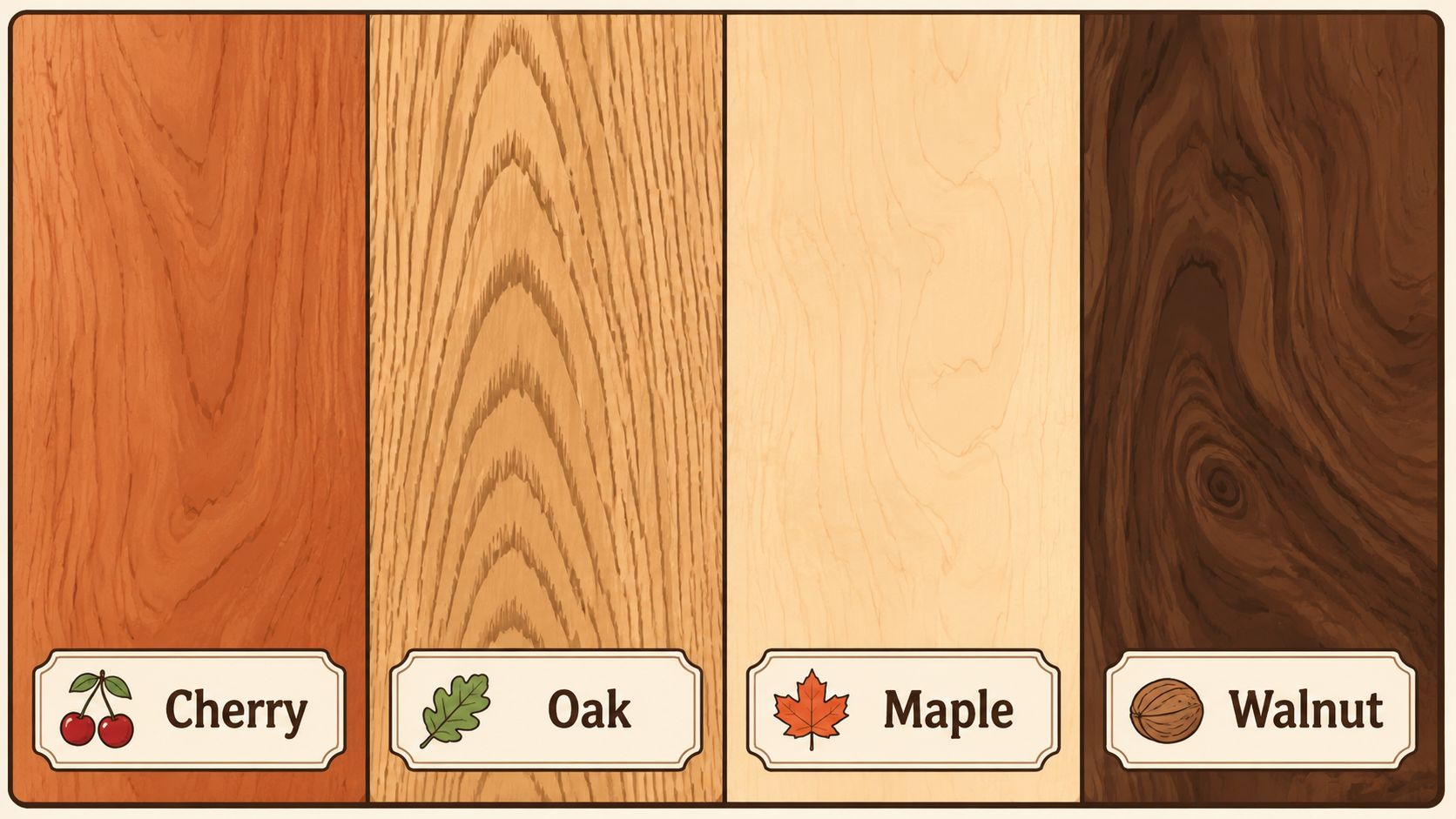
The best solid wood table top doesn't begin with color alone. It begins with how the wood behaves in the room, how the grain reads from across the space, and how the surface feels under a hand. Cherry, oak, maple, and walnut each tell a different story.
Sustainability matters in that decision too. Over 70% of global consumers prioritize sustainably sourced wood when purchasing solid wood furniture, and 65% are willing to pay a premium for eco-certified products, according to Business Research Insights on the solid wood furniture market. That preference aligns naturally with heirloom-quality pieces sourced locally and from trusted North American partners.
For homeowners comparing wood tones throughout the house, a broader wood floor durability and style guide can also help clarify how grain character and color variation read across larger surfaces. For a closer look at one species in particular, this overview of maple hardwood hardness gives useful context on why maple appeals to buyers who want a clean, dense look.
What each wood feels like in daily life
Cherry has a refined warmth that many traditional and transitional interiors love. Its grain is usually smoother and quieter than oak, which gives it an elegant, refined appearance. Over time, cherry deepens in tone and develops a patina that feels increasingly rich rather than worn.
Oak is more tactile. The grain is pronounced, visible, and full of movement. In a dining room, oak often delivers the most obvious connection to natural wood because the surface has visual texture even before anyone touches it. It works beautifully in farmhouse, heritage, and Amish-made dining sets where authenticity is part of the appeal.
Maple feels crisp and composed. Its grain is generally subtler, and its surface reads smoother and more contemporary. In brighter dining spaces, maple can look especially clean and architectural. It suits homeowners who want solid hardwood without a heavily rustic expression.
Walnut brings depth. It tends to feel more formal, more enveloping, and more luxurious because of its darker coloration and elegant grain. Walnut often anchors a room with less visual noise, making it a strong choice where the table is meant to feel sculptural.
Practical rule: The more pronounced the grain, the more visible the wood's character becomes at a distance. The subtler the grain, the more the table's shape and finish take the lead.
Solid Hardwood Characteristics at a Glance
| Hardwood | Typical Grain | Color & Aging | Best For |
|---|---|---|---|
| Cherry | Smooth, fine, understated | Warm reddish tones that deepen gracefully with age | Formal dining rooms, transitional interiors, homeowners who appreciate patina |
| Oak | Pronounced, tactile, expressive | Light to medium tones with visible character and a heritage feel | Amish-made dining sets, family tables, rooms that want texture |
| Maple | Tight, subtle, clean | Light coloration with a crisp, tailored appearance | Contemporary homes, bright spaces, minimalist styling |
| Walnut | Elegant, flowing, rich | Naturally darker tones with a sophisticated, grounded look | Statement dining rooms, moody palettes, luxury-focused interiors |
A buyer who feels torn between species usually isn't confused about wood. The buyer is often deciding what kind of atmosphere the room should have. Oak says lived-in and enduring. Maple says clean and composed. Cherry says warm and established. Walnut says deep and collected.
That's why in-store comparison matters. A sample held under showroom lighting, then considered against flooring, upholstery, and wall color, often settles the question faster than any screen ever could.
The Amish Connection and Bench-Made Construction
The difference between a table that lasts and one that loosens over time often hides in the parts a casual shopper never sees. Amish-made furniture has earned its reputation because the build process is deliberate, patient, and rooted in joinery that respects how hardwood behaves over decades.
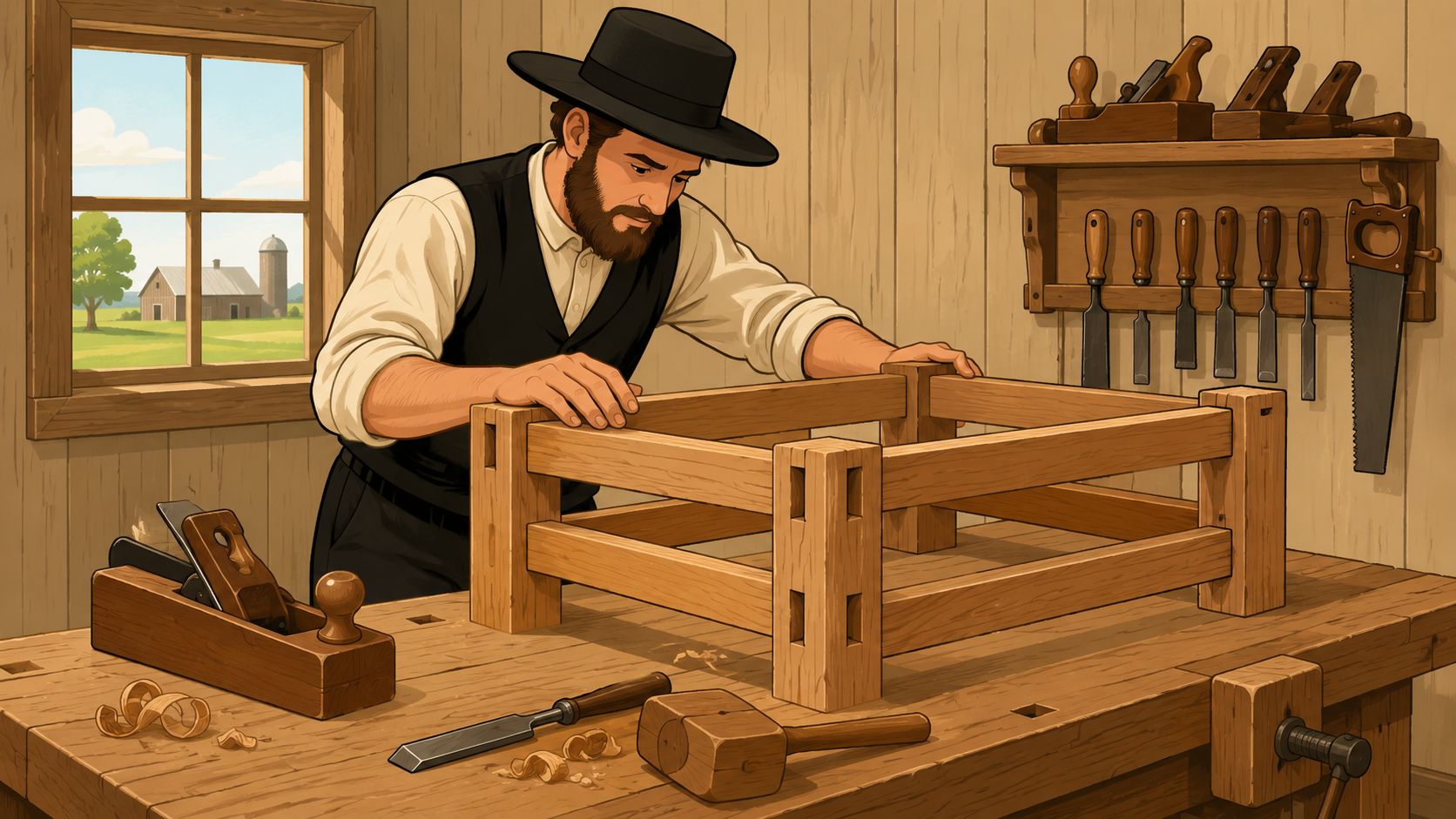
In Central Ohio, that heritage matters. Buyers looking for Amish-made dining sets usually aren't chasing trend furniture. They want a table that feels substantial at first touch and remains dependable long after the renovation dust settles. A piece like an Amish-made dining table represents that mindset well because the value lies as much in the construction as in the appearance.
Why construction matters more than a showroom glance
A solid wood table top is made from boards joined into a wider panel. If those boards are selected or arranged carelessly, wood movement can create stress that shows up later as cupping or warping. That's why skilled craftsmen pay close attention to growth rings.
To prevent warping, craftsmen orient growth rings on adjacent boards to alternate their direction, a technique that minimizes cupping and ensures the tabletop remains flat and stable through decades of seasonal changes, as demonstrated in this woodworking construction reference. It's a small detail with large consequences.
An easy way to understand it is to think of each board as having its own natural tendency to move slightly with seasonal humidity. Alternating the growth ring orientation helps those tendencies counterbalance each other instead of pulling the top in one direction.
What to look for in a bench-made top
When a homeowner evaluates craftsmanship, a few clues reveal a great deal:
- Board harmony. The individual boards should feel intentionally selected, not randomly patched together for width.
- Flat, aligned glue lines. The top should read as one composed surface, not a set of uneven strips.
- Purposeful joinery. Bench-made furniture often relies on strong techniques that hold alignment and resist racking through daily use.
- Proportional thickness. The top should look and feel structurally right for its span and intended use.
The build quality often shows up in subtle sensory ways. A hand glides across the seam and doesn't catch. The table feels settled on the floor. The edge profile looks carved rather than stamped. That's the language of furniture made by people who expect it to be used for a long time.
A broader showroom also lets buyers place that craftsmanship in context. The same household considering a solid wood dining table may also compare motion seating, including power reclining sectionals, swivel chairs, accent chairs, rockers, and gliders, or explore top-grain and performance leathers from brands such as Smith Brothers of Berne. The common thread is the same. Materials matter, but construction decides whether a piece earns its place in the home.
Designing Your Perfect Table With Our Custom Order Program
Most homeowners don't need an infinite number of choices. They need the right choices in the right order. A custom table feels manageable when the process starts with the room itself, then narrows to proportion, wood species, finish, and edge detail.
The showroom experience at Easton Town Center is built for that sequence. Complimentary design consultations in the In-Store Design Studio help homeowners sort through scale, finish coordination, and adjacent furnishings before the order is placed. For buyers interested in Smith Brothers furniture Easton, Canadel, or Mavin bedroom furniture, that matters because the table often needs to converse with leather seating, case goods, and bedroom wood tones elsewhere in the home.
Start with the room before the wood
The first step is practical. Measure the room, note door swings, and pay attention to walking space around the table. A large rectangular top may look stunning on paper and still feel crowded if chairs scrape the walkway every day.
Then shape comes into focus:
- Rectangle tends to suit longer rooms and larger gatherings.
- Round softens traffic flow and encourages conversation.
- Square can look balanced in compact, symmetrical spaces.
- Extension options help households that host regularly without committing to a larger daily footprint.
After shape, the eye usually goes straight to the edge. A softened edge feels more relaxed and family-friendly. A crisp, squared profile feels precise and architectural. A more hand-worked edge can lean rustic or heritage-driven, especially in Amish-inspired dining rooms.
A homeowner exploring bespoke interiors may also enjoy this article on one-of-a-kind furniture design, which explains why custom dimensions and finish decisions can change the feel of a room more than a style label alone.
Where customization becomes reassuring
Customization becomes easier once a homeowner can see the decisions. The Custom Order Program, featuring brands like Canadel and Mavin, uses advanced 3D visualizers to let customers design and see their exact solid wood table, from finish to dimensions, before it's built, ensuring it's a perfect fit for the home, as shown on the Custom Order Program page.
That visual step removes a lot of hesitation. Instead of trying to imagine whether a warm oak will clash with flooring or whether a darker finish will make the room feel heavy, the client can review a realistic rendering and adjust before production starts.
This process is especially helpful when more than one room is being furnished. A homeowner might be selecting a dining table while also considering:
- Top-grain leather seating with a buttery hand and defined silhouette
- Performance leather options for active family rooms
- Motorized sectionals and reclining pieces for comfort-driven living spaces
- Swivel chairs, accent chairs, rockers, and gliders that need to coordinate without matching too rigidly
How the showroom supports the full room
A custom table should never feel isolated from the rest of the home. The strongest interiors carry continuity in wood tones, texture, and proportion. That's one reason many shoppers use a focused product page such as this custom solid wood dining table resource as part of a larger showroom conversation.
Vinson Fine Furniture offers a structured way to make those decisions in person. Homeowners can review fabric and finish options, compare wood species under real lighting, and use digital visualizers to refine dimensions before anything is built. For buyers in Columbus, that in-person collaboration often provides more confidence than making isolated choices online.
The right custom table doesn't merely fit the room. It clarifies the room.
Understanding Value and Cost for Your Investment
A solid wood table top reveals its value long before anyone asks for the invoice. You feel it when your hand meets real grain instead of a printed pattern. You notice it in the weight of the top, the depth of the finish, and the way the surface gathers light rather than reflecting it flatly. For Columbus homeowners furnishing a dining room for the next twenty years, cost makes more sense when it is tied to those tangible qualities.
Price follows materials and labor. A top cut from solid cherry, maple, oak, or walnut requires more than raw lumber. Boards must be selected for color and grain, joined in a way that stays stable through seasonal humidity, sanded until the surface feels quiet under the hand, and finished so the wood still looks like wood. That work takes time, and time is part of the value.
Analysts in this solid wood table market analysis describe steady demand for solid wood tables, particularly among residential buyers who want durability and a timeless look. That preference helps explain why serious buyers continue to choose hardwood over lower-cost look-alike surfaces.
What shapes the cost
Several decisions have a direct effect on price:
- Wood species. Walnut usually carries a higher material cost than oak or maple because of its color, character, and supply.
- Size and thickness. A longer or thicker top uses more lumber and requires more careful construction to keep it flat and strong.
- Design details. Breadboard ends, extension leaves, shaped edges, and specialty finishes add shop time.
- Bench-made construction. Skilled joinery and hand-applied finishing create a different result than mass-produced assembly.
A simple comparison helps here. A solid wood table top works like a wool rug or full-grain leather chair. The first cost is higher, but the material ages with dignity rather than wearing out at the surface. If a dining table is used daily for family meals, homework, holidays, and hosting, replacement cost becomes part of the conversation too.
Value also becomes clearer during the buying process. A homeowner who can compare species in person, study finish samples under real lighting, and review dimensions before production is less likely to make an expensive mistake. Delivery matters for the same reason. Proper handling protects both the table and the home, which is why many clients ask early about white-glove delivery for heavy wood furniture.
Vinson Fine Furniture also gives shoppers more than one path to a good purchase. Some clients commission a custom top built for a specific room and set of chairs. Others find heirloom-grade construction through floor samples, overstocks, or clearance pieces. The best furniture stores in Columbus page outlines that pricing approach, including the store's Low Price Guarantee and Clearance Gallery options.
The better question is rarely, "What does it cost today?" A more useful question is, "What will it feel like to live with this table for the next decade, and will I still be glad I chose real wood?"
From Our Showroom to Your Home With White-Glove Delivery
A solid hardwood table doesn't stop being a serious purchase once the order is signed. Delivery is part of the quality story. A heavy, carefully finished piece needs careful handling from the moment it leaves the showroom or receiving area until it rests in the dining room.
That's why many homeowners ask about service before they ask about scheduling. The right white-glove delivery service does more than bring a table to the curb. It protects the finish, the joinery, and the customer's home in the process.
What delivery should feel like
A premium delivery experience is quiet, orderly, and deliberate. The team handles the table like furniture, not freight.
Homeowners typically value several parts of that experience:
- Careful inspection before the piece leaves for delivery
- Protected transport that respects the weight and finish of solid hardwood
- In-home placement and assembly so the table is positioned correctly the first time
- Packaging removal so the room is left ready to use, not cluttered with cartons and wrap
That level of handling is especially important in homes with finished flooring, narrow entries, or open-plan spaces where a single scrape or bump is hard to ignore.
Why this step matters for solid hardwood
A solid wood table top has density. That's part of its appeal, but it also means careless movement can damage walls, floors, or the furniture itself. Professional delivery reduces that risk and preserves the sense that the table arrived as a considered addition to the home, not a logistical problem to solve.
Good delivery should feel like the final stage of craftsmanship, not an afterthought.
For Easton Town Center shoppers furnishing more than one room, this service often becomes even more meaningful. A household may be receiving a dining table, a leather sectional with power motion, and accent seating all within the same project. The less friction at delivery, the more cohesive the whole experience feels.
Lifetime Care and Maintenance for Your Solid Wood Tabletop
A solid wood table top rewards steady, simple care. It doesn't need fuss. It needs respect for the material. Wood responds to moisture, heat, and daily abrasion, so the best maintenance habits are the ones that become routine enough to feel effortless.
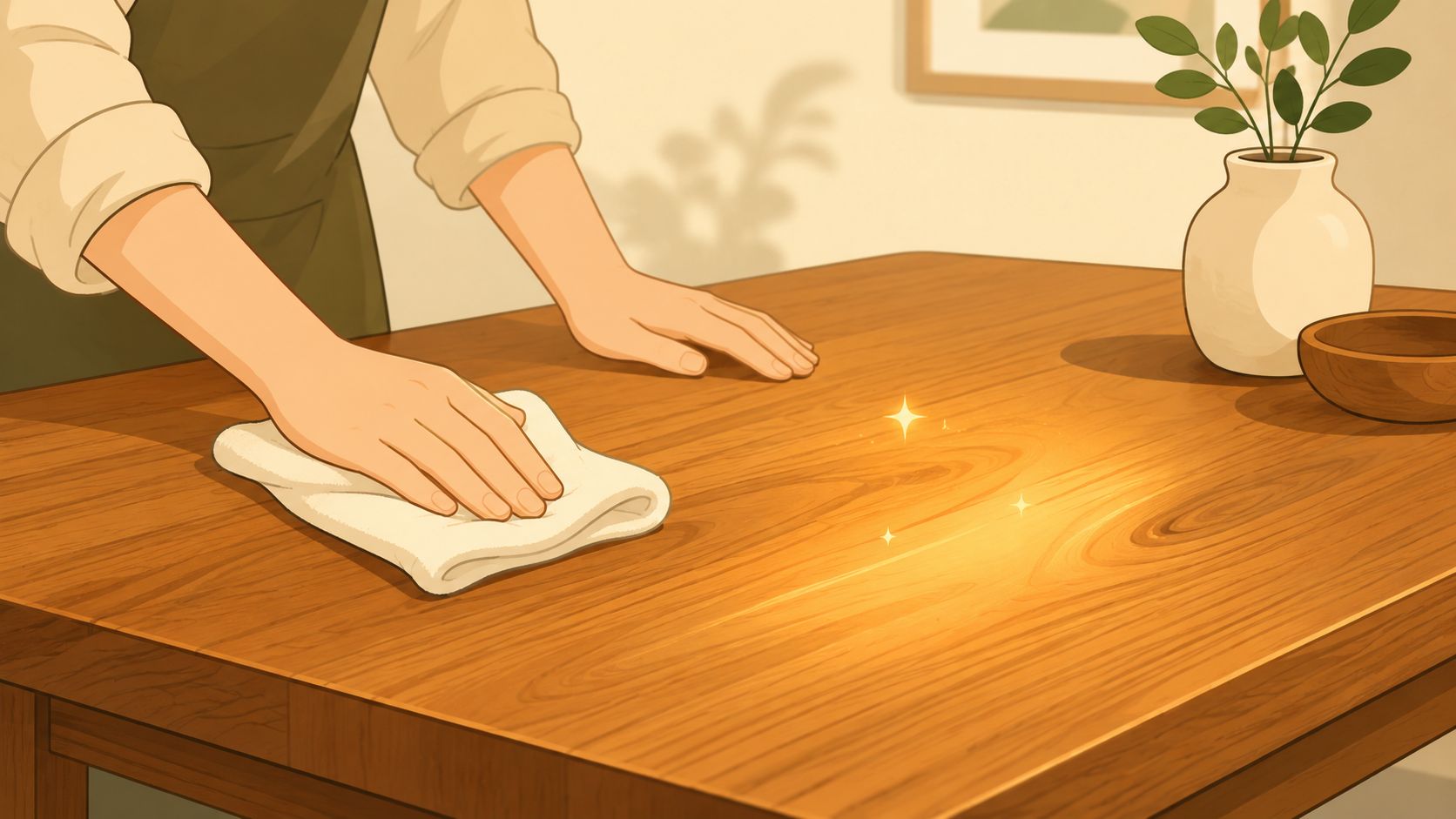
A practical care reference like this guide on how to care for wood furniture can help homeowners match everyday habits to the kind of finish their table has. Good care isn't complicated, but consistency matters.
Daily habits that protect the finish
The strongest maintenance plan starts with restraint. Harsh cleaners, soaking wet cloths, and direct heat usually create more problems than they solve.
A simple routine works well:
- Wipe with a soft cloth to remove dust and everyday residue before it builds up.
- Clean spills promptly so moisture doesn't sit on the surface longer than necessary.
- Use placemats and coasters during everyday meals, especially in active family homes.
- Add heat protection under hot serving pieces rather than trusting the finish to absorb the stress.
- Avoid dragging objects across the top, including ceramic pieces and rough-bottomed decor.
Small marks are part of a real wood table's life. The goal isn't sterile perfection. The goal is preserving the finish and preventing avoidable damage while allowing the table to age gracefully.
The maintenance detail many guides miss
Most care advice focuses on the visible top. That's only half the story. Wood moves in response to its environment, and the underside matters just as much as the surface everyone sees.
A critical, often-missed step in ensuring a table's longevity is finishing the underside to match the top; this balances moisture absorption and prevents the torsional stress that causes solid wood to warp over time, as discussed in this woodworking care discussion. That point is easy to overlook because the underside feels hidden, but the wood doesn't treat it as hidden.
If the top is sealed well and the underside isn't, the two faces of the board can respond differently to humidity. Over time, that imbalance can encourage bowing or distortion.
Wood doesn't only live on the side that's visible. It responds through its full thickness.
A few long-term habits help preserve stability and appearance:
- Maintain a steady indoor environment rather than exposing the table to repeated extremes.
- Keep the table away from direct heat sources where one area is constantly stressed.
- Check the underside during maintenance instead of assuming protection is only a top-surface issue.
- Follow finish-specific care guidance if the table has a hard wax oil or varnish system.
An heirloom table doesn't stay beautiful by accident. It stays beautiful because the owner understands what the material needs and responds before minor issues become structural ones.
For Columbus homeowners ready to choose a table with lasting weight, authentic grain, and room-specific customization, Vinson Fine Furniture offers a path that starts in the Easton Town Center showroom. A complimentary design consultation, an in-store sit-test alongside top-grain leather and motion seating, and access to custom programs for Canadel, Mavin, and Smith Brothers can help turn a dining room decision into a whole-home plan built around solid hardwood, lasting comfort, and long-term value.