Amish Home Decor: Timeless Craftsmanship for 2026

A lot of homeowners arrive at the same point. The room is full, but it doesn't feel finished. There's art on every wall, decorative accents on every surface, and still the space feels restless rather than settled. The furniture may match the moment, but it doesn't yet feel like it belongs to the house or to the people living in it.
That's where Amish home decor is often misunderstood. It isn't mainly about rustic accessories, country motifs, or a nostalgic look. At its strongest, it's a discipline of choosing fewer things and choosing them better. The result is a home that feels calmer, heavier in the right way, and far more grounded in daily use.
That philosophy has staying power. Amish furniture first became popular in America during the 1920s and 1930s as part of the American Folk Art Movement, and the tradition has persisted for hundreds of years. Modern Amish furniture businesses now source from over 200 Amish craftsmen and offer more than 2,800 customizable SKUs, which shows how this heritage has adapted without losing its character (history and market context).
For homeowners around Columbus and Easton Town Center, that matters. A dining table isn't just a visual anchor. It's where homework lands, guests gather, and finish choices get tested by real life. A bed isn't just part of a style story. It's one of the most used pieces in the house. When Amish craftsmanship enters that conversation, the focus shifts from decorating to investing.
Table of Contents
- Introduction Beyond Rustic Charm
- The Core Principles of Amish Home Decor
- Signature Materials and Unmistakable Craftsmanship
- Styling Amish Furniture in Your Modern Columbus Home
- Bringing Your Vision to Life with Customization
- How to Source and Authenticate Genuine Amish Furniture
- Budgeting for a Lifetime Investment
Introduction Beyond Rustic Charm
The strongest Amish-inspired rooms rarely announce themselves. They don't rely on themed accessories or a heavily staged farmhouse look. Instead, they feel composed. A solid cherry table carries the room. A maple bed frames it. A well-made rocker or glider softens a corner without asking for attention.
That difference becomes obvious when two similar rooms are compared side by side. One uses many decorative fillers to create interest. The other uses a smaller number of substantial pieces, each one built with purpose. The first room may photograph well for a season. The second room usually lives better for years.
A room feels finished when its biggest pieces carry visual authority without asking smaller decor to rescue them.
Amish home decor works best when it's treated as a standard of construction, not as a costume. That means prioritizing solid oak, cherry, maple, or walnut. It means respecting clean lines, reliable proportions, and finishes that let wood look like wood. It also means accepting a trade-off that many trend-driven spaces avoid. Fewer pieces means each piece has to earn its footprint.
For the investment homeowner, that trade-off is usually worth it. Heirloom furniture asks more discernment up front, but it pays back in stability, repairability, and daily satisfaction. The hand of the maker shows up in the fit of a drawer, the quiet confidence of a table base, and the way a bedroom set keeps its dignity as the rest of the home evolves.
Around Central Ohio, that approach fits the way many established homeowners buy. They aren't trying to furnish a room for a season. They're building a house that feels settled, practical, and personal. Amish home decor answers that need when the focus stays where it belongs, on craftsmanship, material integrity, and furniture that still deserves its place years from now.
The Core Principles of Amish Home Decor
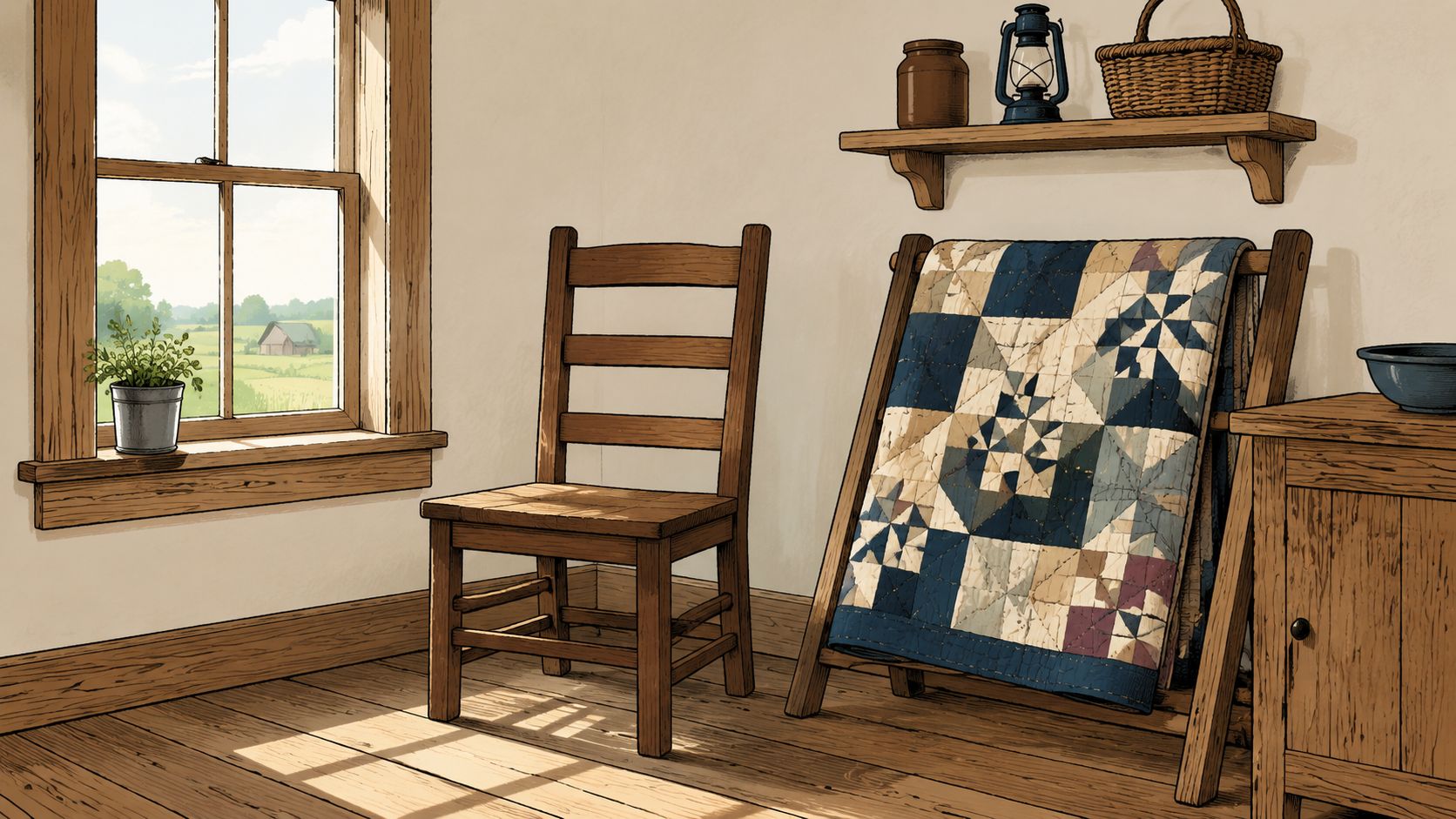
Amish home decor follows a logic similar to a well-prepared meal. A few excellent ingredients, handled with care, produce a stronger result than a long list of additions competing for attention. In furniture terms, that means clean forms, dependable function, and materials that don't need disguise.
A survey of 50 Amish homes found they averaged 2.3 wall items per room compared with 17.8 in nearby non-Amish rural homes, and visitors consistently rated the Amish spaces as more peaceful. The same survey noted that 94% of Amish families use at least one seasonal nature item as decor (survey findings on Amish interiors). That balance is one reason these rooms feel calm rather than bare.
Simplicity that clears the room
Simplicity in Amish interiors isn't emptiness. It's editing.
When walls, tables, and shelves carry less visual noise, the grain of a dining table or the curve of a chair back has room to register. That's why homeowners exploring a more classic look often respond well to the discipline behind traditional design style. The room becomes easier to read because the furniture isn't fighting a crowd of decorative interruptions.
Function before ornament
A true Amish-inspired piece usually solves a real household need first. Dining tables have presence because they're built to host use. Bedroom case goods feel satisfying because drawers operate with intention. Occasional seating, including rockers and gliders, earns a place through comfort as much as silhouette.
What doesn't work is copying the look while ignoring the principle. A room filled with distressed accessories and lightweight accent pieces may hint at rustic style, but it misses the point if nothing in it performs well.
- A table should anchor traffic. It needs scale, leg placement, and finish durability that suit daily use.
- A chair should invite sitting. Form matters, but support matters more.
- Storage should reduce strain. Well-built case pieces should help the room function, not merely occupy it.
Material honesty
Material honesty is the least flashy principle, and often the most important. It asks the furniture to be transparent about what it's made from and how it's built. Wood grain should read naturally. Joinery should support the structure rather than hide weakness. Finishes should enhance the surface, not impersonate another material.
Practical rule: If a room depends on decorative props to feel warm, the main furniture likely isn't doing enough work.
That's the quiet strength behind Amish home decor. It isn't sparse for its own sake. It's selective so the right materials and proportions can carry the space.
Signature Materials and Unmistakable Craftsmanship
Authentic Amish furniture separates itself long before a brand tag comes into view. The first clue is usually physical. The piece has real mass. It doesn't skate across the floor when touched, and it doesn't sound hollow when a hand lands on the top. That substance comes from 100% solid hardwood construction and traditional joinery such as mortise-and-tenon connections, with genuine Amish pieces often running 20 to 30% heavier than engineered equivalents because of their solid-core density.
What authentic construction feels like
The feel matters because it reveals how the furniture will age. A solid walnut nightstand or solid-maple dresser doesn't just look richer on day one. It handles stress differently over time. Tight joinery distributes load through the structure. Drawer boxes hold shape better. Tabletops retain authority because the material itself has depth and integrity.
The same logic applies to design choices in decor. Textiles and accessories may soften a room, but the furniture carries the burden of permanence. For homeowners who appreciate the visual language around handmade interiors, this Amish quilt patterns guide offers useful context on how traditional craft values show up in pattern, restraint, and color without reducing Amish design to ornament alone.
A close look at the joints often tells the story. Well-executed joinery has a kind of calm precision. It doesn't need metal brackets to prove its strength. Homeowners curious about how these assemblies work can get a clear overview through this guide to various wood joints, which helps explain why bench-made furniture behaves differently from mass-market construction.
Good joinery isn't decorative trivia. It's the reason a table remains steady after years of family use.
Solid Hardwood Comparison for Heirloom Furniture
Not every hardwood behaves the same way in a room. Some species read lighter and cleaner. Others bring more depth and gravity.
Solid Hardwood Comparison for Heirloom Furniture
| Hardwood Type | Grain & Color | Key Benefit | Best For |
|---|---|---|---|
| Oak | Pronounced grain, warm traditional tone | Strong visual character and enduring everyday presence | Amish-made dining sets, trestle tables, larger case pieces |
| Cherry | Fine grain, deepens beautifully with age | Refined warmth and a more formal feel | Bedroom furniture, smaller statement pieces |
| Maple | Smooth, subtle grain with a cleaner appearance | Crisp look that adapts well to transitional homes | Shaker-inspired dining, bedroom sets, cleaner-lined interiors |
| Walnut | Rich, darker tone with elegant grain movement | Natural depth and a tailored, architectural mood | Statement beds, accent tables, sophisticated mixed-style rooms |
A common mistake is selecting wood by color sample alone. The better method is to match species to the way the room will live. Maple often suits lighter, more contemporary homes. Oak brings presence to active family dining rooms. Cherry rewards patience. Walnut introduces gravity fast, so it works best where the room needs a focal point rather than more decoration.
For homeowners searching for Solid wood furniture Ohio, this is the heart of the decision. The investment isn't just in style. It's in the density of the wood, the credibility of the joinery, and the way the piece will continue to function when trends have already moved on.
Styling Amish Furniture in Your Modern Columbus Home
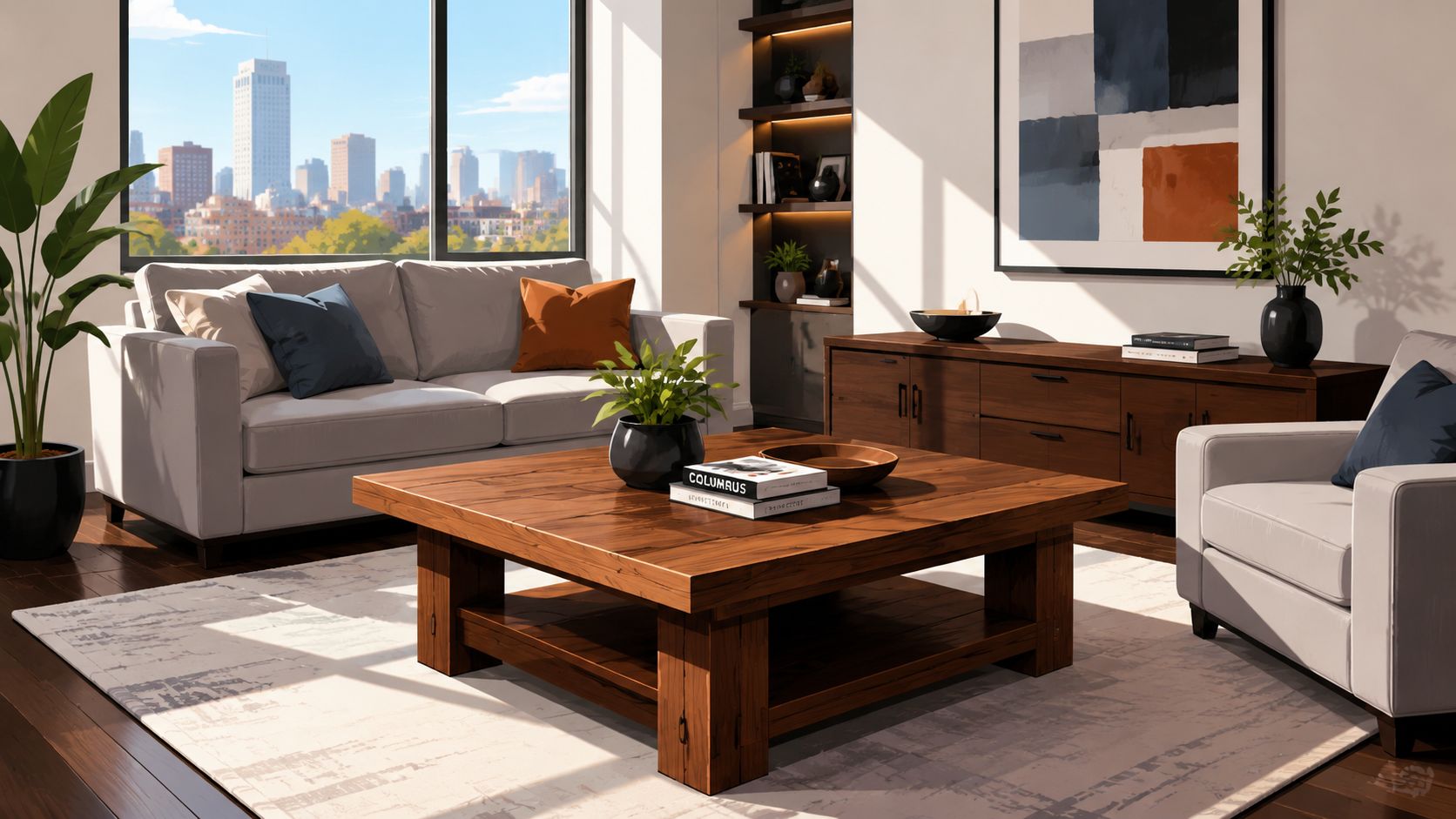
The most successful modern interiors in Columbus don't copy a period room. They balance restraint with comfort. Amish furniture helps because its lines are often cleaner than people expect, especially when paired with current lighting, fitted upholstery, and open negative space. Homeowners wanting a clearer sense of balance often benefit from guidance on how to mix furniture styles.
A dining room that feels current
A solid-wood dining set can carry a modern room without making it feel rustic. The key is contrast.
Use a substantial oak or maple table as the anchor, then keep the surrounding elements lighter. Upholstered dining chairs, a simple chandelier, and fewer tabletop accessories let the wood remain the hero. It's in this setting that Amish-made dining sets earn their keep. They create permanence in a room that otherwise risks feeling temporary.
A bedroom with restraint
An Amish bedframe works best when the room doesn't overexplain it. A clean walnut or cherry bed paired with quieter textiles and limited bedside clutter feels composed, not themed. Matching every piece exactly can make the space feel too rigid, so it's often better to let the bed lead and let supporting pieces stay understated.
- Let one wood tone dominate. Mixing too many species in one bedroom often weakens the sense of calm.
- Keep vertical surfaces quieter. Strong headboards already create enough visual architecture.
- Choose storage with real purpose. A well-scaled chest or dresser should solve a need, not fill a blank wall.
A living room with warmth and motion
Amish values also translate well into upholstered rooms, especially when solid wood occasional tables ground softer seating. A clean-lined leather chair or sectional can bring warmth without visual clutter, particularly when paired with honest wood species and simpler silhouettes.
Custom leather sectionals Columbus shoppers often get better results by thinking less about matching sets and more about balance. A high-performance leather sectional with power motion can sit comfortably alongside a solid walnut coffee table and a pair of swivel chairs. The room feels collected, not staged.
The goal isn't to make every room look Amish. The goal is to let Amish craftsmanship give the room weight, order, and staying power.
Bringing Your Vision to Life with Customization
A room usually tells you what it needs the moment you stand in it. The table is six inches too long for the traffic path. The sectional sits too deep for the scale of the windows. The stain that looked good on a sample chip turns flat under the home's actual light. Customization solves those problems before the piece is built, which is one reason Amish furniture works so well as a long-term investment rather than a short-term decorating decision.
Good customization is not about adding options for the sake of options. It is about getting the fundamentals right. In our Easton showroom, the strongest results usually come from a few disciplined choices made early. Size, wood species, finish character, and upholstery need to agree with the room and with the way the household lives.
The custom order starting guide is useful because it starts with those practical decisions first. Homeowners can sort through measurements, wood character, finish depth, and seating priorities before they get distracted by smaller details.
That process matters even more in homes where solid wood furniture shares space with upholstered seating, motion pieces, or mixed-use rooms. A dining table may need enough mass to anchor an open floor plan. A bedroom suite may need cleaner lines and a quieter finish so the wood does not overpower the space. A family room may call for durable leather that wears in gracefully rather than fabric that looks tired after a few years.
A strong custom plan usually covers:
- Wood selection: Choose cherry, oak, maple, or walnut based on grain pattern, color movement, and how much visual weight the room can carry.
- Finish direction: Decide whether the piece should read lighter and more refined or darker and more architectural.
- Upholstery performance: In high-use spaces, leather and other durable coverings often make better long-term sense than softer materials that show wear quickly.
- Motion preferences: Reclining, swivel, and gliding functions should support daily use without compromising the room's balance.
- Proportion: Table length, case piece height, seat depth, and arm width all need to respect circulation and scale.
There is also a trade-off to acknowledge. More customization usually means more decisions, a longer lead time, and less room for impulse buying. For serious furniture purchases, that is often a benefit. It slows the process down enough to avoid expensive mistakes.
Collectors use similar discipline when assessing old pieces for long-term value. The same mindset behind an expert antique identification guide applies here. Materials, construction, proportion, and finish quality tell you more than trend language ever will.
A custom piece earns its price when the scale feels right, the joinery feels honest, and the materials still look better after years of daily use.
That is the advantage of customization in Amish home decor. It gives homeowners the chance to buy furniture with staying power, built in solid hardwood and specified with enough care that it belongs in the home for decades, not just for the current version of the room.
How to Source and Authenticate Genuine Amish Furniture
Buying authentic Amish furniture requires more than reading a product description. The market has blurred the line between Amish-made and Amish-style, and that creates risk for homeowners trying to invest well. The challenge has become sharper as online shopping has expanded. There has been a 62% increase in consumers buying Amish-style furniture online, and 78% of those buyers are unaware of key authenticity markers such as hand-planed joints and wood grain continuity, which is why physical inspection matters so much.
A buyer checklist for authenticity
The simplest way to protect the purchase is to inspect for evidence of honest construction rather than relying on style language alone.
- Check the grain flow. Solid wood should show believable continuity across visible surfaces rather than a repeated printed look.
- Study the joints. Hand-planed details and well-executed connections usually reveal more than a catalog label does.
- Lift what can be lifted. Authentic solid-wood furniture carries meaningful weight.
- Open the drawers. Operation should feel stable and deliberate, not loose or flimsy.
- Inspect the finish by touch. A good surface should feel smooth and substantial, not plastic-like.
For dining buyers, a product page can only go so far. A closer look at an Amish-made dining table helps clarify the kind of details worth checking in person before making a final decision.
Why an in-person inspection matters
A homeowner can learn a lot from antique evaluation methods, even when shopping for new furniture. This expert antique identification guide is helpful because it reinforces the habit of looking at construction clues, surface wear patterns, and material honesty rather than accepting labels at face value.
That same habit makes the showroom visit valuable. A sit-test tells the truth quickly. The seat depth either suits the body or it doesn't. A power recliner either moves with quiet confidence or it feels mechanical. A table either has the visual gravity of solid wood or it reads flat in person.
If a piece is meant to last for decades, it deserves to be judged by touch, weight, and construction, not by a thumbnail image.
That standard protects both style and budget. It also keeps Amish home decor anchored where it belongs, in craftsmanship that can be verified.
Budgeting for a Lifetime Investment
A family usually feels the budget question at the dining table first. One option carries a lower ticket and looks acceptable for now. The other costs more, but the top is thicker, the joinery is cleaner, and the wood has the kind of depth that still reads well after years of use. Amish furniture belongs in the second category. The price is higher up front because the construction is meant to hold up under daily living, not just a quick sale.
Think in replacements avoided
Budgeting for Amish home decor starts with use, not with trends. Put the money where the wear happens first. Dining tables, bed frames, dressers, and chairs earn their keep because they are handled every day, moved, cleaned, leaned on, and lived with hard.
That long view changes the math. Solid hardwood can be repaired, refinished, and kept in service for decades. Lower-grade furniture often gets replaced once joints loosen, veneers chip, or the surface begins to look tired in a way that cannot be corrected cleanly.
There is still judgment involved.
A higher price does not excuse a poor fit for the room, an oversized scale, or a wood choice that fights the rest of the house. I usually advise homeowners to buy fewer pieces, but buy the right ones. One well-built bedroom suite or dining set often does more for a home than several scattered purchases made for short-term effect.
Where value enters the equation
Broader spending trends show how easy it is for decor purchases to drift toward volume instead of quality. The U.S. Census Bureau tracks strong consumer activity in furniture and home furnishings retail, which reflects an active market, not necessarily careful buying (U.S. Census Bureau retail trade data). Growth in the category can just as easily mean more frequent replacement as it can better long-term decisions.
That is why budgeting should include service life, maintenance, and resale dignity. A solid wood piece that still looks grounded after ten or fifteen years is usually the better value than a cheaper substitute that needs to be replaced halfway through that span.
For shoppers watching timing, pricing discipline matters too. Clearance events, floor sample opportunities, and seasonal inventory turns can make a meaningful difference without forcing a compromise on materials or construction. Shoppers who like following broader furniture industry timing and seasonal buying patterns may also find FurnitureConnect's 2026 event guide useful for general market context.
The practical approach is straightforward. Start with the pieces your household uses hardest. Spend on solid wood where structure matters most. Test seating in person before committing, and leave room in the budget for delivery, placement, and the custom details that make a piece feel right in the home for the next twenty years, not just the next season.