Bedroom Furniture Clearance: An Investment Shopper’s Guide


A bedroom often reaches the same decision point. The homeowner wants a room that feels settled, substantial, and beautifully made, but doesn't want to compromise with lightweight pieces that look finished on day one and tired a few years later. That's where bedroom furniture clearance becomes useful, not as a shortcut, but as a way to buy better furniture more intelligently.
For design-conscious shoppers, clearance works best when it's approached like selection, not scavenging. A solid cherry bed from a floor sample group, a maple dresser from an overstock order, or an Amish-made nightstand from a discontinued finish can offer lasting value when the piece is inspected properly, measured properly, and matched to a broader room plan.
Table of Contents
- Why Smart Shoppers Love Furniture Clearance
- Measure Twice Buy Once Your Bedroom Blueprint
- The Art of Evaluating Showroom Samples
- Decoding Clearance Pricing and Guarantees
- Integrating Your Find with Custom Designs
- Your Investment in Timeless Quality and Comfort
Why Smart Shoppers Love Furniture Clearance
A thoughtful clearance purchase usually starts with a familiar situation. The homeowner has seen the difference between disposable furniture and bench-made furniture. The weight is different. The drawer action is different. The finish has depth. The question isn't whether quality matters. It's whether quality can be bought at the right moment.
That moment appears more often than many shoppers think. The U.S. furniture stores industry reached $170.9 billion in revenue in 2026 and included 56,620 businesses, according to IBISWorld's furniture stores industry data. At that scale, clearance isn't unusual. It's a normal inventory tool used to move floor samples, overstocks, and discontinued assortments.
Clearance is a retail practice not a warning sign
This is why seasoned buyers don't treat clearance as a side room filled with leftovers. They treat it as a timing advantage.
A retailer refreshes a gallery. A finish is retired. A complete bedroom vignette is reset for a new season. A customer changes direction on an order grouping. The furniture may still be excellent. What changed is its place in the merchandising calendar.
Practical rule: The reason a piece is leaving the floor matters more than the word "clearance" on the tag.
For shoppers who like to understand seasonal timing before they walk into a showroom, these insights for mattress brands and retailers are a useful read. They help explain why furniture categories often cycle through planned markdown periods rather than random fire sales.
A related perspective appears in Vinson's own article on end-of-season furniture finds to love year-round, where the focus stays on carrying quality forward even when a collection is rotating out.
What investment shoppers are really buying
The strongest bedroom furniture clearance purchases are rarely about getting the lowest ticket. They're about getting a better piece for the same budget.
That distinction matters most in the bedroom. A solid maple bed, a walnut chest, or an Amish-made dresser built for daily use can remain part of a home for years. The homeowner isn't only buying a lower price. The homeowner is buying joinery, material integrity, and a look that won't feel temporary after the room is finished.
A useful way to frame bedroom furniture clearance is this:
| Buyer mindset | Short-term thinking | Long-term thinking |
|---|---|---|
| Bed purchase | Lowest visible price | Strong wood construction and scale that fits the room |
| Storage purchase | More drawers at any cost | Drawers that open smoothly and hold up over time |
| Design decision | Take whatever matches enough | Use the clearance find as the foundation for a cohesive room |
That's why experienced shoppers get excited when they find a well-made clearance piece in a timeless wood species such as cherry, oak, maple, or walnut. A beautiful sample isn't a compromise when the underlying construction is right. It's often the smarter way into heirloom-quality furniture.
Measure Twice Buy Once Your Bedroom Blueprint
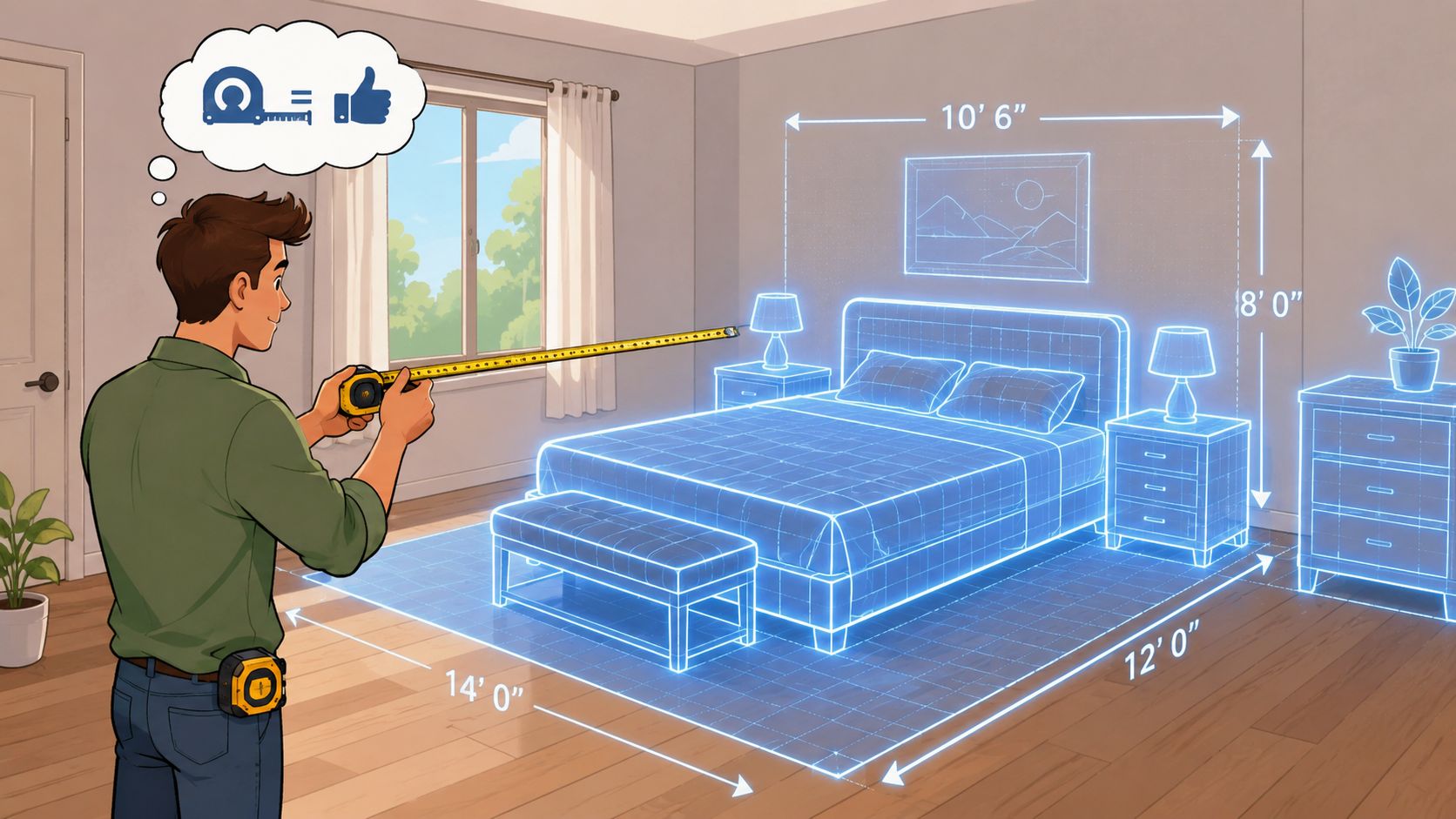
The costliest clearance mistake usually happens before the shopper ever reaches the store. It's not choosing the wrong wood tone. It's falling in love with a piece that technically fits the room dimensions but fails once doors, drawers, and walking lanes are tested.
Start with the room itself. Then build outward to the furniture.
Start with the room not the furniture tag
Expert layout guidance recommends at least 24 to 30 inches around the bed, plus up to 36 inches (or 900 mm) in front of dressers so drawers can extend comfortably, as outlined in this guide on how to arrange bedroom furniture. Clearance pieces are often final sale, so those dimensions aren't optional.
A practical measuring process looks like this:
- Measure the full room first. Record wall lengths, ceiling interruptions, windows, vents, and trim.
- Mark every swing point. Bedroom doors, closet doors, and drawers all need operating space.
- Map the bed wall. Note where nightstands would sit and whether lamps, plugs, or switches create conflicts.
- Trace walking routes. The path from the doorway to the bed, dresser, and closet should stay open and comfortable.
- Check delivery access. Hallways, stairs, elevator turns, and entry doors matter just as much as the bedroom itself.
When a homeowner is moving at the same time, logistics can complicate that plan fast. During transition periods, resources on stress-free Armadale house moves can be a useful reminder that successful furniture placement starts well before delivery day, with route planning and access checks already sorted.
A bedroom can hold the furniture on paper and still fail in daily use if drawers open into the main passage or the bed crowds the natural path across the room.
The clearance checklist to bring to the showroom
A tape measure helps at home. A preparation packet helps in-store.
Before shopping bedroom furniture clearance, it helps to bring:
- Room measurements: Include wall lengths, ceiling constraints, and location of doors and windows.
- Photos from multiple angles: Corner shots reveal circulation issues better than straight-on images.
- Existing finish samples: Flooring, paint swatches, and rug photos help with wood tone decisions.
- Comfort priorities: Note whether the room needs extra storage, easier access, or a lighter visual footprint.
- A simple sketch: Even a rough plan helps a design consultant test scale quickly.
Some shoppers prefer to organize all of that before visiting by using a guide like how to measure furniture. The format matters less than the discipline. Good clearance purchases reward preparation.
A bedroom blueprint should also account for storage use, not just furniture placement. Dressers need room for full drawer extension. Wardrobes need operating clearance in front. Nightstands need to feel reachable from bed without crowding the route around it.
That's the difference between a room that looks complete and a room that lives well.
The Art of Evaluating Showroom Samples
The best bedroom furniture clearance shoppers know how to inspect with their hands, not just their eyes. A showroom sample can be a remarkable value, but it has to be judged as a real object, not as a styled display.
The showroom visit holds the greatest significance.

How to inspect solid wood like a professional
A good inspection starts at the quiet points. Open the drawer. Run a hand under the rail. Look at the back panel. Check the base where vacuums, shoes, and feet have the most contact.
For solid hardwood bedroom furniture, these are the signs worth checking closely:
- Drawer operation: Open each drawer fully. It should glide evenly and sit square when closed.
- Joinery feel: Look for clean, sturdy intersections at rails, legs, and case corners. Nothing should rack or wobble.
- Finish consistency: Lightly view the piece from different angles. A quality finish should have depth without cloudy patches.
- Top surface wear: Floor samples often show the first signs of use on tops, edges, and corners.
- Hardware attachment: Pulls and knobs should feel anchored, not loose or twisting under light pressure.
With Amish-made furniture and brands such as Mavin bedroom furniture, this inspection often rewards the buyer. The materials usually tell the story clearly. Solid wood has a visual and tactile honesty that engineered substitutes can't fake.
A bedroom suite should also be tested in motion. Stand where the piece will be used. Step back from the dresser as if reaching a drawer. Move around the footboard as if making the bed. Clearance furniture should still work beautifully once the room returns to normal life.
What to ask before saying yes
The most overlooked part of the clearance decision is policy, not wood species. A National Furniture Industry Survey found that 68% of clearance buyers are unaware that floor samples may have reduced warranty coverage, according to this summary on clearance buyer warranty awareness. That's why policy questions belong in the inspection process.
Ask these directly:
- Is this a floor sample or overstock? Those aren't the same thing.
- What cosmetic wear has already been noted? Ask the seller to point out every mark.
- Does the original warranty apply in full? Never assume it does.
- What is the return status of this specific piece? A final-sale item should be treated with extra scrutiny.
- Has the item been repaired, refinished, or touched up? If yes, where and how?
Buyer check: A tiny finish rub on a footboard is character. A loose case, a misaligned drawer, or an unclear warranty is risk.
This same diligence applies when the bedroom includes upholstered elements such as a bench, headboard, or accent chair. Material quality, leather grade, and fabric performance affect long-term value just as much as the wood frame. For shoppers comparing tactile differences in upholstery, everything to know about upholstery materials is a useful companion to the in-store inspection.
A well-bought showroom sample should feel transparent. The buyer knows what the piece is, what wear it carries, and how it will be supported after the sale. That clarity is part of the value.
Decoding Clearance Pricing and Guarantees
A markdown only means something when the buyer understands what caused it. In bedroom furniture clearance, that story often determines whether the deal is ordinary or exceptional.
The common discount range for bedroom furniture clearance is 20% to 70% off, based on advertised clearance pricing collected here on bedroom furniture clearance discounts. Within that range, the spread usually reflects condition, quantity, and how urgently the retailer needs floor space.
Why the markdown exists matters
A lower ticket can come from several situations:
| Clearance reason | What it often means for the buyer |
|---|---|
| Floor sample | Visible handling is possible, but the buyer can inspect the exact piece |
| Overstock | Often cleaner value, since the piece may be new but excess to plan |
| Discontinued finish or style | Lower price without necessarily lower quality |
| Seasonal reset | Retail space is being cleared for the next display story |
A disciplined shopper asks one question before reacting to the percentage: "What exactly is being discounted?" Sometimes it's wear. Sometimes it's timing. Sometimes the collection no longer fits the showroom plan.
That's why a modest markdown on a beautifully built solid wood dresser can be a better buy than a steeper markdown on a piece with visible fatigue or policy limitations.
Value lives beyond the percentage off
True value in bedroom furniture clearance has three parts.
First, there's material quality. Solid cherry, oak, maple, and walnut age differently than lower-grade substitutes. They hold their presence in the room.
Second, there's support after the sale. If a store offers a clear low-price promise and straightforward guidance on financing or delivery, the buyer is getting more than a ticket reduction. The buyer is getting structure around the purchase.
Third, there's usable life. A bedroom chest that still feels steady, smooth, and relevant years later usually costs less over time than a cheaper piece that has to be replaced.
Shoppers should think like owners, not bargain hunters. The clearance price matters. The quality behind the clearance price matters more.
Integrating Your Find with Custom Designs
A client finds a beautifully made clearance bed, then hesitates because the matching nightstands are gone and the dresser feels too large for the room. That is usually the moment a good purchase turns into a better design plan.
Clearance does not require a full matched suite. In higher-end bedrooms, a single strong piece often sets the standard for everything that follows. The job is to read that piece correctly, then build around its scale, wood character, finish depth, and visual weight.

A clearance piece can anchor a personalized room
The strongest clearance rooms rarely come from buying every piece in one collection. They come from choosing one heirloom-grade anchor, then adding custom or made-to-order pieces that solve the room's actual needs.
A solid maple bed may have the right stance and craftsmanship, but the room may need narrower nightstands because of window trim or door swing. A walnut dresser may be the best object in the gallery, while the bed should stay quieter so the room does not feel heavy. These are design decisions, not compromises.
The practical questions are specific:
- Does the wood species need to match, or just relate well? Cherry, walnut, and maple can coexist if the undertones are handled with discipline.
- Should the finish coordinate closely or create contrast? Exact matching can look flat. Controlled contrast often gives the room more depth.
- What dimensions should change? Clearance pieces are fixed. Custom pieces can answer the room, especially at bedside and storage points.
- Where should upholstery soften the composition? A bench, headboard panel, or chair can break up a room that has too much hard wood surface.
I often advise clients to treat the clearance piece as the benchmark. Match its quality first. Match its function second. Match its color only after those two are settled.
That is why getting started with custom order matters in this stage. It helps connect the piece available today with the case goods, upholstery, or scale adjustments that make the finished room feel considered rather than pieced together.
True value shows up in the join between clearance and custom
This part is often missed in clearance guides. The value is not only in the markdown. It is in the ability to buy one exceptional piece at a reduced price and avoid forcing the rest of the room into a poor fit.
For example, a floor sample bed with excellent construction may save enough in the budget to justify custom nightstands built to the right width and height. That usually performs better than buying an entire discounted group with weak proportions. Over time, the room feels more resolved and functions better day to day.
The finishing layers should support that structure, not distract from it. Wall art, textiles, and lighting can tie mixed woods and finishes together. For readers refining that last layer, this guide to choosing framed art for bedrooms offers helpful direction on scale, mood, and placement.
Finishing the room with delivery and detail
The final fit happens in the home. Clearance pieces are often the exact items leaving the floor, so placement matters down to the inch. Bedside reach, drawer travel, bench clearance, and sightlines from the doorway all need to work once the furniture is installed.
White-glove delivery helps protect that investment because bedroom furniture is finish-sensitive and awkward to move through stairs, corners, and narrow halls. It also gives the homeowner a clean handoff point to confirm that the clearance piece and the custom pieces belong together in real use, not just on paper.
Your Investment in Timeless Quality and Comfort
A strong bedroom furniture clearance purchase follows a simple pattern. The buyer measures carefully, inspects thoroughly, understands the policy details, and chooses a piece that deserves to stay in the home for a long time.
That process protects against the two most common regrets. The first is buying something attractive that doesn't function once it arrives. The second is buying a discount that looked impressive on paper but wasn't supported by quality, fit, or clarity.

A confident buying path
For homeowners furnishing with a long view, the buying path is usually this:
- Measure the room with functional circulation in mind. Bedrooms must work in motion, not just in photographs.
- Inspect the exact piece. Clearance means the buyer often gets the actual item on the floor, so every edge and mechanism should be checked.
- Ask policy questions early. Warranty, returnability, and condition disclosures shape the true value.
- Think in layers. One excellent bed or dresser can lead the entire room design.
- Prioritize solid hardwood. Lasting furniture starts with lasting material.
That final point shapes nearly every good clearance decision. A room anchored by solid cherry, oak, maple, or walnut has a permanence that lighter substitutes rarely achieve. For those comparing options before shopping, this guide to the best solid wood bedroom furniture is a useful place to refine expectations around material and construction.
Why the showroom visit still matters
Bedroom furniture is highly physical. The scale of a bed rail, the hand of a finish, the glide of a drawer, and the proportion of a chest against a wall all become clearer in person.
That's why the Easton Town Center showroom remains such an important stop for Columbus homeowners and others seeking solid wood furniture Ohio shoppers can live with for years. A clearance gallery is most valuable when the shopper can test the piece, review the details with a consultant, and compare it against the room plan already in hand.
The goal isn't to leave with the most discounted item in the building. The goal is to leave with the right piece. One that feels grounded, functions beautifully, and belongs in the home long after the clearance tag is gone.
For homeowners ready to explore bedroom furniture clearance with a long-term eye, Vinson Fine Furniture offers a practical starting point. Browse the clearance selection, explore the design resources, and use the showroom visit to test solid hardwood pieces in person. A thoughtful next step is the online Design Quiz, followed by a visit to Easton Town Center with room measurements, photos, and finish ideas in hand.