Sideboard vs Buffet: A Complete Furniture Comparison


A shopper can spend an evening comparing dining furniture online and still face the same silhouette under two different names. One retailer calls it a sideboard. Another calls it a buffet. The finish looks similar, the doors appear to open in the same way, and the price difference can seem difficult to justify.
In a Columbus dining room, the useful question isn't which label sounds more refined. It's which cabinet supports the room's traffic, storage habits, hosting style, and long-term expectations. The distinction becomes clear through four tests: origin, physical form, everyday use, and construction quality.
Why the Sideboard vs Buffet Question Trips Up So Many Shoppers
You find the right-looking cabinet online, then see it listed as a sideboard on one page and a buffet on another. The finish, doors, and silhouette may be nearly identical. That naming overlap sends shoppers back to product photos when they should be checking how the piece will work at home.
In Columbus dining rooms, the label matters less than the job. A cabinet for occasional holiday service needs different access from one that stores linens, displays lamps, and supports daily meals. The right choice also depends on traffic. A deep cabinet with doors opening into the route between the kitchen and table will irritate you every day, regardless of its name.
A buffet usually points toward serving. It suits homeowners who host often, need room for platters and drinkware, and want the top surface ready for arranging food. A sideboard generally gives you more freedom. It can anchor a dining room, sit in a living space, or provide storage in a hallway when your needs change. Modern makers borrow from both forms, so treat those descriptions as useful starting points, not fixed rules.
Check the cabinet itself before trusting the title. Its height, depth, interior layout, top surface, and leg treatment tell you how it will function. A raised sideboard can serve a holiday meal comfortably. A restrained buffet can provide excellent everyday storage. The name cannot answer those questions.
Use the room and your hosting habits to make the call:
- Frequent hosts should prioritize serving access, a generous working surface, and compartments that accept large dishes.
- Homes with mixed storage needs should prioritize adaptable shelves and drawers, plus proportions that can work outside the dining room.
- Tight walkways require careful attention to depth and door clearance.
- A long-term purchase should earn its space through sound construction and a design you will still welcome after your current dining set changes.
The best decision often comes from seeing both forms together. Bring your table dimensions and a quick room sketch to a Columbus-area Easton showroom, then test the reach, clearance, and surface height in person. Sit at the table, walk the route a guest would take, and open the doors fully. That short sit-test exposes awkward proportions faster than another evening of online comparison, while helping you choose a piece with genuine heirloom potential.
The Origins of Each Piece and Why the Terms Still Stick
A dining room built for regular hosting often calls for a cabinet with service in mind. A home that needs flexible storage may benefit from the broader role associated with a sideboard. Those differences began as practical habits, not marketing labels, and the history still helps explain why the terms overlap.
The sideboard has a distinctly English furniture history. Historical accounts place its emergence as a separate form in late 18th-century England, with stronger popularity during the 19th century, when prosperous households could dedicate a room to dining. Its earlier version was simple: a plank on trestles or a wall shelf where food could be placed during service. Drawers and cupboards later added storage and display. This history of the sideboard and its development explains the sideboard's lasting connection to dining-room presentation and enclosed storage.
The buffet grew from the same serving tradition, but its identity reflects broader European food service. The term connects with customs such as the Swedish smorgasbord and later French usage. In French, buffet could describe both the cabinet holding food and the self-service meal arranged for guests. That background gives the buffet a stronger association with presenting a spread, not just storing plates, linens, or serving pieces.
Two traditions, one modern silhouette
Furniture names preserve old habits even after construction changes. A sideboard began as a service surface placed against a dining-room wall and gradually became a cabinet. A buffet kept its connection to presenting food and drink, even as doors, drawers, and enclosed compartments became standard.
Modern retail language has softened the boundary. Buffets are often presented as taller, dining-focused cabinets, while sideboards are given wider placement throughout the home. This guide to buffets, sideboards, servers, and related cabinet terms reflects that overlap.
The names still communicate useful expectations. Buffet suggests a surface prepared for service. Sideboard suggests a dining cabinet that can also organize another room. Neither term confirms quality. Inspect the proportions, joinery, door movement, and drawer construction before you buy. To compare enclosed storage options, browse the buffets and servers collection.
For Columbus homeowners, history should guide the choice without controlling it. Hosting frequency and room flow matter more than the label, while solid construction determines whether the piece can remain useful as your home changes. At an Easton showroom, use a sit-test to judge the cabinet beside your table, then choose the form that feels capable of serving today and worthy of becoming an heirloom.
Side by Side on Size Storage and Everyday Function
A Columbus dining room often exposes the difference between these cabinets quickly. A piece that looks right in a photograph can feel awkward once chairs, serving dishes, and daily routines enter the room. Judge the relationship between height, depth, length, storage access, and surface use before you judge the label.
One buying guide places sideboards around 30 to 36 inches high and about 16 to 22 inches deep, while buffets often stand around 36 to 40 inches high. Buffets may also provide a more service-friendly surface, although the two categories overlap in both purpose and dimensions. These ranges appear in this sideboard versus buffet furniture guide.
| Feature | Sideboard | Buffet |
|---|---|---|
| Height | Typically lower, supporting display and flexible storage | Often taller, supporting standing service |
| Depth | Provides room for lamps, frames, and mixed storage | Usually planned around dinnerware and serving access |
| Interior | Drawers, doors, and shelves can be mixed | Cabinets and broad drawers often prioritize larger dining pieces |
| Top surface | Works as a display, utility, or bar surface | Works as a temporary serving station |
| Placement | Dining room, living room, hallway, or bedroom | Primarily dining and entertaining areas |
| Style associations | Shaker, Mission, transitional, and modern interpretations | Traditional, French country, farmhouse, and formal interpretations |
Storage should follow the objects
Choose a sideboard when your storage list changes from room to room. Flatware fits in drawers, linens sit behind doors, and shelves can hold barware or serving bowls. That mixed arrangement works well in a dining room, living room, hallway, or bedroom when the cabinet's proportions suit the space.
A buffet earns its footprint when dinner service drives the decision. Wide compartments handle large platters, serving boards, and oversized dishes that do not fit comfortably in narrow drawers. Adjustable shelves are a practical advantage because dinnerware collections change. Fixed interiors can leave useful vertical space unused.
Count the objects before choosing the cabinet. A household with mixed storage needs will use a sideboard more often, while a frequent host with a dedicated dinnerware collection will benefit from a buffet's broader compartments.
The top determines daily behavior
A deeper sideboard top can hold a lamp, framed art, a beverage setup, or items used every day. That flexibility suits an open-plan home where one cabinet must support several routines without looking like event equipment.
A buffet becomes more useful when food moves from kitchen to table. Its slightly higher surface can make serving easier, especially when the cabinet sits near the dining table and the route between them stays clear. That same specialization can make the piece feel less natural in a living room or hallway.
My recommendation is direct: choose a sideboard for mixed storage and flexible placement. Choose a buffet for dining-focused service, enclosed dinnerware storage, and regular entertaining. For a handcrafted option with natural character and an individual profile, compare the case proportions in this solid wood sideboard collection. Then use a sit-test at an Easton showroom. Sit at your table, reach toward the top, and assess whether the cabinet supports the way you host now and the heirloom role you want it to keep.
Room Planning and Proportion in a Real Dining Space
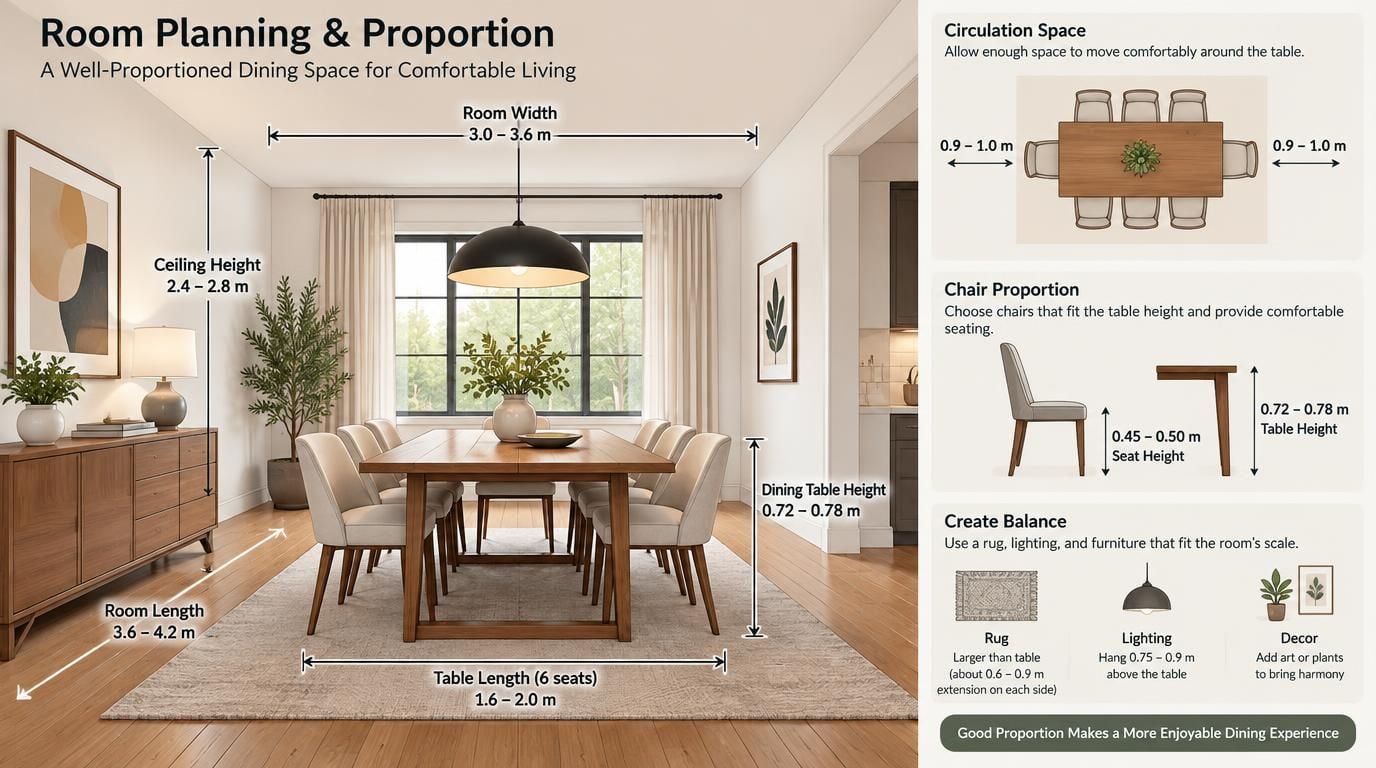
A beautiful cabinet can still fail in a real dining room. Door swings, window trim, ceiling height, table position, and the main walking route determine whether a sideboard or buffet feels settled or cramped. Measure the room before choosing the finish, wood, or hardware.
Start with circulation. Leave at least 24 inches between the cabinet and nearby furniture for ordinary movement. Where chairs pull out or people pass behind seated guests, plan for 36 inches from the furniture edge to the front of the sideboard. Use this dining storage and buffet placement guidance as a reference, then confirm the actual clearances in your room.
Proportion beats the product label
A sideboard usually looks balanced at roughly two-thirds to three-quarters the width of the dining table. Apply the same rule to a buffet. The cabinet should support the table visually, not compete with it. This dining-room sideboard proportion guide offers a useful way to compare cabinet length with table length.
A long wall beside a generous table can handle a substantial sideboard with a broad visual footprint. In a tighter room, a shorter buffet often protects the passage and keeps the furniture from dominating the table. Count every route that must remain open once chairs are occupied. Room function matters more than the label on the floor plan.
Watch the vertical lines
A tall cabinet or hutch can overwhelm an 8-foot ceiling, particularly beside heavy trim, large windows, or a prominent chandelier. A low, clean-lined sideboard keeps sightlines open and gives a compact dining room more visual calm. A raised buffet base works when the ceiling, wall width, and table provide enough breathing room.
Check the window sill before ordering. A cabinet beneath a window must clear it, and a piece near a doorway must leave the door swing untouched. Mark the intended footprint with painter's tape. Measure the delivery route from the exterior door to the final wall as carefully as the room itself.
For table spacing and circulation context, review these Chennai interior design tips. Then use this room-layout planning resource to test the arrangement before selecting a cabinet.
Corner placement changes the priority. Storage access may matter more than a long serving top, so control the depth and confirm that doors and drawers open fully. In a floating-island arrangement, every exposed side needs a finished appearance, and traffic clearances should guide the choice before styling does. Bring your measurements to an Easton showroom and sit at the table. A proper sit-test reveals whether the piece supports the room's flow and deserves a long-term heirloom role.
Matching the Piece to How You Actually Live and Host
Saturday dinner for eight, Tuesday coffee at the table, and a constant stream of keys and mail require different furniture decisions. Choose the cabinet around the week you live, then make sure it can handle the occasions you host. Hosting frequency matters, but so do daily routines, storage habits, and whether the top must hold permanent decor or serving dishes only during meals.
The frequent host
If holiday meals, dinner parties, and weekend guests are regular events, prioritize access. Platters, linens, barware, and serving bowls should be easy to reach without unloading half the cabinet. Broad drawers, adjustable shelves, and a generous top make a sideboard practical for both storage and service.
Keep service close to the dining table, with enough room for people to pass while doors and drawers are open. A cabinet that looks impressive but interrupts the route from kitchen to table will frustrate you at every gathering. In this setting, a sideboard with buffet-level service function is usually the strongest choice. It provides working space and organized storage without forcing a formal silhouette.
The weekday family
A dining room used every day needs order more than ceremony. Keys, mail, coffee supplies, school items, and everyday dishes can quickly cover the nearest surface.
Choose a compact buffet with closed storage to contain that clutter. Its dining-focused shape gives the room definition without assuming frequent large gatherings. Adjustable interior storage earns its space because it adapts as household routines change. Fixed shelves can leave unusable gaps, while a well-organized cabinet keeps daily items accessible and the surface clear.
The downsizing couple
A couple moving into a condo great room often needs one cabinet to work across several uses. A slim modern sideboard can store seasonal linens, support a media setup, and conceal household items while keeping the shared dining and living area open.
Check the depth against the room's sightlines and the equipment it must hold. Every visible side should be finished if the cabinet can be seen from the living area. A buffet remains a good choice for couples who host often and want a stronger dining presence. For occasional hosts, a sideboard usually provides more useful long-term value because it can move between dining, living, display, and seasonal storage without looking temporary.
Practical rule: Choose for the ordinary week first. Let hosting shape the storage and work surface, not force an oversized cabinet into a room used casually.
The recommendation is straightforward. Frequent hosts need accessible serving storage and a broad top. Everyday families benefit from flexible compartments and a controlled footprint. Downsizers should select the piece that can serve more than one room and still look intentional years later. Bring those priorities to an Easton showroom, sit at your table height, and test how the cabinet feels in the room before treating it as an heirloom purchase.
Why Solid Hardwood and Customization Change the Decision
Once the room is measured, construction quality matters more than the sideboard-versus-buffet label. A long cabinet supports substantial weight across its top, shelves, drawers, and doors. Solid hardwood gives the case a substantial feel and supports the long ownership expected from heirloom furniture. For a dining room that hosts often, that durability matters even more because the cabinet will be opened, loaded, and wiped down regularly.
The hardwood standard at the Easton showroom is strict. The collection focuses on solid cherry, solid oak, solid maple, and solid walnut, without promoting lesser wood-based construction. Dovetailed drawers, accurately fitted doors, durable finishes, and precise joinery deserve close attention. Daily use exposes weak construction quickly, especially in serving storage that sees frequent opening and closing.
Custom proportions solve real room problems
A stock cabinet can leave an awkward gap beside a doorway, collide with window trim, or sit too high beneath a favorite piece of art. The custom solid wood furniture program lets homeowners adjust dimensions, storage arrangements, and finishes around the room instead of forcing the room to accept a fixed cabinet.
The Custom Order Program includes fabrics, finishes, and 3D visualizers for selected partner lines. Those options let a homeowner coordinate the case piece with the dining chairs and adjoining rooms while keeping the room's proportions under control. North American craftsmanship also has a clear place in a Columbus dining plan, particularly when the piece is intended to remain in the home for years.
Custom ordering changes the decision from “sideboard or buffet” to “which service height, interior layout, and footprint suit this wall?” That question produces a better result for an investment homeowner. Specify more drawers for linens, wider shelves for platters, or a lower profile that protects the sightline beneath a window. A frequent host may need a broad serving surface, while an occasional host should prioritize a flexible cabinet that can move to another room later.
Quality should stay consistent across the room
The dining cabinet should relate to the rest of the home in material, finish, and workmanship. Amish-made dining sets, solid wood furniture Ohio shoppers can inspect in person, and carefully finished case pieces should feel connected rather than collected at random. Search terms such as custom leather sectionals Columbus reflect the same preference for durable materials and customized dimensions, but the practical test remains the same: check how the furniture supports daily routines and room flow.
Top-grain and performance leathers, motorized power motion in sectionals and reclining pieces, and occasional seating such as swivel chairs, rockers, and gliders show how customization can extend beyond the dining room without giving up durability. Visit the Easton showroom for a sit-test at your table height, then judge the cabinet by its construction, proportion, and likely heirloom value.
A Practical Checklist and Where to See the Options
A sideboard or buffet should earn its place before you choose a finish. Start with the room, your hosting habits, and the piece's expected lifespan. Frequent hosts need a dependable serving surface and storage that keeps platters ready. Occasional hosts should choose a cabinet that can serve the dining room now and move elsewhere later. Either way, judge construction and proportion as seriously as appearance.
Measure the room before choosing the style
- Wall length: Measure usable wall space, excluding trim, outlets, and door casings.
- Height clearance: Check windows, artwork, vents, crown molding, and ceiling lines.
- Depth and circulation: Preserve at least 24 inches for comfortable movement. Use 36 inches where the main route needs more room, as noted in the earlier placement guidance.
- Drawer reach: Open every drawer fully and confirm it will not strike chairs or nearby furniture.
- Shelf adjustability: Match shelf spacing to platters, serving bowls, linens, and barware.
- Chair clearance: Pull chairs out and tuck them back without hitting the cabinet.
- Finish durability: Choose a surface suited to spills, frequent handling, and your maintenance routine.
- Delivery access: Measure entry doors, turns, stairways, and the final approach. The Webster Moving Co. office move tips reinforce the same practical point: access planning comes before large furniture arrives.
Use a home furnishing checklist to organize measurements before visiting a showroom. Then open the drawers, check door alignment, inspect the finish under real lighting, and stand beside the cabinet. Scale is easier to judge in person than on a screen.
The In-Store Design Studio provides Complimentary Design Consultations for homeowners who want a room drawn to scale and matched to available finishes. Ask about the Low Price Guarantee and available clearance floor samples, overstocks, and seasonal closeouts.
Columbus homeowners can visit Vinson Fine Furniture at Easton Town Center for a hands-on sit-test, room-planning help, and custom options. The design team can match hardwood construction, storage, finish, and delivery requirements to the room's traffic pattern and the household's long-term plans. That in-person test is the right final step before choosing between a sideboard and a buffet.