Difference Between Top Grain and Full Grain Leather on Sofas

A leather sofa often looks settled the moment it reaches the floor. The shape is right. The color is right. The room suddenly feels finished. Then the next question lands, and it’s the one that matters over the next decade or two: is this top-grain or full-grain leather, and what does that mean for daily life?
That question comes up because the difference between top grain and full grain leather isn’t obvious at first glance. Two sofas can both look refined under showroom lighting, yet behave very differently once you add movie nights, winter dryness, summer humidity, pets jumping up, and the ordinary friction of people using a room the way it’s meant to be used.
If you live in Central Ohio, that choice becomes even more practical. Leather has to handle seasonal swings, active households, and the expectation that a well-made piece should keep earning its place year after year. Some buyers want a leather sofa that records life and becomes richer with age. Others want a cleaner, more uniform look that asks less of them week to week.
Your Guide to Choosing Heirloom Leather Furniture
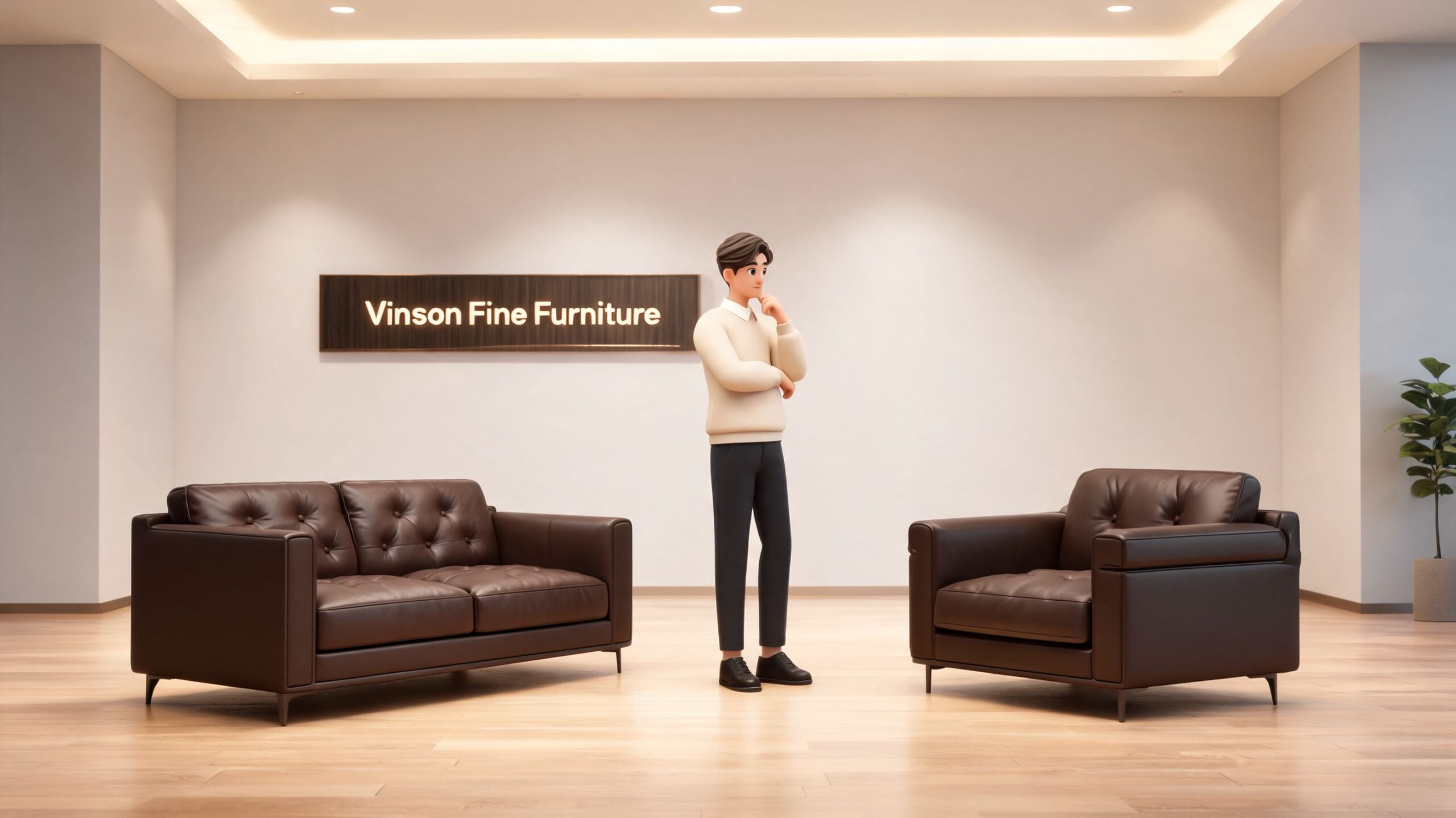
A client stands between two sectionals. Both are handsome. Both feel substantial. One has a surface with subtle variation, tiny natural marks, and a softer, more organic texture. The other looks more even and polished, with color that reads consistently from cushion to cushion. The tag says one is full-grain and the other is top-grain.
That moment can feel strangely high stakes because leather jargon tends to sound more dramatic than it is. Buyers hear “top” and assume it must be best. They hear “full” and aren’t sure whether that means thicker, stronger, or more expensive. In furniture, those words aren’t marketing poetry. They describe how the hide was handled before it ever became a sofa, chair, or ottoman.
The useful way to think about it is simple. Full-grain leather keeps the hide’s outermost surface intact. Top-grain leather also comes from that top layer, but it’s been sanded or buffed for a more uniform finish. Both can be high quality. They just solve different problems.
A leather sofa isn’t only a style choice. It’s a maintenance choice, a comfort choice, and an aging choice.
That’s why the difference between top grain and full grain leather matters so much in furniture. You’re not choosing only how a sofa looks on delivery day. You’re choosing how it feels in February, how it handles scratches, how much care it wants, and what kind of beauty it develops with use.
Understanding the Source of Leather Quality
Leather quality starts with the hide itself. The key term is grain, which refers to the natural surface of the hide, including its pores and original texture. That outermost area contains the densest fiber structure, which is why so much of leather quality comes down to how much of that surface remains untouched.
When shoppers feel confused by leather labels, it usually helps to stop thinking in retail terms and start thinking in material terms. The hide isn’t uniform from top to bottom. The strongest, tightest fibers sit at the outside. As you move deeper, the structure becomes looser.
What grain actually means
If the natural outer surface stays intact, the leather keeps more of its original character. That includes visible variation, pores, and the markings that prove it came from a real hide rather than a perfectly manufactured surface.
If that outer surface is altered, the leather can still be attractive and durable, but it won’t behave exactly the same way. That one processing decision affects texture, breathability, aging, and the way the leather responds to scuffs and everyday contact.
For a homeowner comparing upholstery options, that’s the foundation. The terms aren’t about abstract status. They describe a real physical difference in the material. This guide to choosing leather furniture is helpful if you want to pair that material knowledge with room-by-room buying decisions.
Why the outer layer matters
The outer layer matters because it carries the hide’s natural strength. That’s why full-grain leather is usually discussed as the benchmark for long-term durability. It hasn’t been sanded down to create a more consistent face.
Top-grain leather still comes from the top portion of the hide, which is why it remains a premium upholstery material. But once that natural surface is corrected, some of the original structure and visual individuality are reduced. For many households, that trade-off is completely worthwhile because it gives a cleaner, more uniform appearance.
A practical way to remember it
Use this shorthand:
- Full-grain leather keeps the natural surface.
- Top-grain leather refines the natural surface.
- Both are real leather, but they’ll age and feel different over time.
That distinction clears up most of the confusion buyers bring into a showroom.
Full-Grain Leather The Connoisseur's Choice
Full-grain leather is the version many furniture makers and leather enthusiasts reserve for pieces meant to stay in a home for a very long time. It uses the hide’s outermost layer without sanding away the original grain. That means you see more authenticity on the surface, including variation that a machine-made material could never reproduce.
Some buyers hesitate when they notice a natural mark or slight tonal shift. In full-grain leather, those are not defects. They’re evidence that the material hasn’t been corrected into sameness.
Why it performs so well
Because full-grain keeps the strongest outer fibers intact, it leads in the performance categories that matter most for heirloom furniture. According to Hop Lok Leather’s explanation of leather grades, full-grain leather reaches quality grades of 4000-5000 with tear strength exceeding 20 MPa, and its natural pore structure supports 20-30% higher moisture vapor transmission rates. In plain language, it’s stronger and more breathable.
That breathability is easy to underestimate until you sit on leather through changing seasons. In a Central Ohio home, where indoor air can feel very different from January to July, breathable leather tends to feel less sealed off and less plasticky.
The patina question
Patina is where full-grain leather earns its reputation. Instead of trying to resist every sign of life, it changes with use. The surface gains depth. Minor scratches can blend into the character of the piece rather than reading as obvious damage.
That aging pattern appeals to buyers who like furniture with a lived-in elegance. The sofa doesn’t stay frozen in time. It becomes more individual.
Practical rule: If you want leather that tells a story instead of hiding one, full-grain is usually the better fit.
What to expect in a real home
Full-grain leather often suits spaces where people value tactile richness and don’t mind a material that evolves. Think of:
- A formal living room with daily use where the sofa should become more handsome, not just older
- A reading room or home office where texture and depth matter as much as color
- A statement chair or heirloom sofa that you expect to keep for decades
It’s also the leather that tends to appeal to buyers who already appreciate handcrafted materials such as solid-wood case goods or Amish-made furniture. The attraction is similar. You’re seeing honest material, not a perfected imitation of it.
For a broader look at how leather compares with other upholstery choices, this guide to upholstery materials helps place full-grain in the larger furniture conversation.
Top-Grain Leather The Practical Luxury
Top-grain leather lives in the sweet spot that many households prefer. It comes from the top layer of the hide, but the surface is sanded or buffed to remove imperfections and create a more even appearance. After that, a protective finish is applied.
That process gives top-grain leather a polished consistency that many people love at first sight. If full-grain feels like a natural material with a visible history, top-grain feels edited. Cleaner. More uniform. Easier to coordinate across a larger sectional or a room with a more tailored design language.

What the sanding changes
The biggest misunderstanding around top-grain leather is that buyers hear “sanded” and assume the material is weak. That’s too blunt. Top-grain is still premium leather and still a strong upholstery choice for everyday use.
The more accurate view comes from Carl Friedrik’s breakdown of top-grain leather. It notes that top-grain leather undergoes sanding that removes 10-20% of the hide’s thickness. Because of that processing, it doesn’t develop the same protective patina as full-grain. At the same time, it remains an excellent luxury-grade option for a typical 10-20 year ownership cycle.
Why many homeowners prefer it
Top-grain works well for people who want leather’s richness without as much visual unpredictability. The finish helps the surface hold a more consistent look. That can be especially appealing on larger pieces where you want all seats and cushions to read as one clean composition.
It also tends to fit homes where leather has to look composed under busy conditions. Children, guests, entertaining, and everyday traffic all put different demands on upholstery. Top-grain often makes sense when the goal is less “old-world patina” and more “refined durability.”
Where it shines in furniture
Top-grain leather is often the practical luxury pick for:
- Family sectionals that need to balance comfort and easier day-to-day upkeep
- Custom seating where color consistency matters
- Open-concept rooms where the sofa is visible from several angles and a uniform finish helps the whole space feel calmer
That’s part of why it shows up so often in custom upholstery programs. The edited surface supports a wider range of design looks, from traditional to transitional to modern.
If you’re comparing actual sofa construction and comfort alongside material choice, this article on a top-grain leather sofa adds useful context.
Comparing Full-Grain and Top-Grain for Your Investment
The easiest way to understand the difference between top grain and full grain leather is to compare them where homeowners feel the consequences: durability, aging, comfort, appearance, and long-term value.
Here’s the quick-glance version first.
| Feature | Full-Grain Leather | Top-Grain Leather |
|---|---|---|
| Surface | Natural outer grain remains intact | Outer surface is sanded or buffed, then finished |
| Look | More variation and authenticity | More uniform and polished |
| Aging | Develops patina and character | Keeps a more consistent appearance |
| Breathability | Higher natural breathability | Less breathable because of processing and finish |
| Maintenance style | More involved, especially conditioning | Simpler routine cleaning |
| Best for | Buyers seeking heirloom character | Buyers wanting practical luxury and visual consistency |

Durability and lifespan
Full-grain is the stronger long-haul material. Because the original grain remains intact, the leather keeps more of the hide’s densest fiber structure. That matters most after years of repeated use, not just in the first season.
According to Saddleback Leather’s leather durability discussion, full-grain leather retains 90% of its initial tear strength after 10 years of simulated daily use, while top-grain retains 70%. The same source notes that full-grain pieces often hold 15-20% higher resale value.
Top-grain still performs well in real homes. It gives up some long-range structural advantage in exchange for a corrected surface and a more controlled appearance.
Aging and patina development
This is the emotional difference as much as the practical one.
Full-grain ages with visible depth. It gains patina, softens into itself, and tends to absorb the history of use in a way many people find beautiful. That can make a well-used sofa feel better after years, not merely older.
Top-grain ages more subtly. It doesn’t produce the same rich patina, and its protective finish keeps the look more stable for longer. Some people strongly prefer that.
The right choice depends on whether you want your leather to evolve visibly or stay visually consistent as long as possible.
Appearance and texture
Full-grain usually feels more organic. You may notice natural marks, grain variation, and a less uniform face. On a high-quality piece, that irregularity is part of the appeal.
Top-grain reads cleaner. It’s often easier to match to a specific interior plan because the surface is more predictable. In rooms with clean lines, repeatable finishes, and a controlled palette, that consistency can be a major advantage.
Cost and long-term value
Full-grain usually asks for more upfront, but it tends to reward buyers who think in decades. The stronger retention of tear strength and better resale profile support that position.
Top-grain often feels more accessible while still delivering real luxury. For many households, that makes it the smarter buy. If you want premium leather seating that performs well through ordinary ownership without stepping all the way into heirloom-grade expectations, top-grain is a compelling answer.
Which one makes more sense for you
Use this framework:
- Choose full-grain if you love natural texture, want the strongest long-term durability, and see furniture as something to keep for a very long time.
- Choose top-grain if you want a refined look, easier visual consistency, and durable everyday performance that aligns with normal ownership cycles.
- Pause and compare in person if you’re torn between “beautiful now” and “beautiful later.” That’s often where the decision really sits.
For buyers narrowing actual sofa silhouettes, cushion styles, and seating depths alongside leather type, this guide to choosing the best sofa for you helps translate material theory into a room-ready decision.
Proper Care for Your Leather Furniture
A leather sofa ages best when the care routine matches the leather type. Many owners, however, often misunderstand this. They assume all leather wants the same treatment, then either over-maintain a protected finish or under-maintain a natural one.
Caring for full-grain leather
Full-grain leather needs regular nourishment because it remains more open and natural. According to Domini Leather’s comparison of full-grain and top-grain leather, full-grain requires weekly or bi-weekly conditioning with oils to improve water resistance and help prevent cracking over 10+ years.
That doesn’t mean the process has to be complicated. It means consistency matters.
A practical full-grain routine usually includes:
- Dusting gently so grit doesn’t grind into the surface
- Conditioning on schedule rather than waiting for the leather to look dry
- Buffing minor scratches with a soft cloth so they blend into the developing character
- Keeping it out of harsh sun and heat to avoid drying stress
Caring for top-grain leather
Top-grain leather is simpler for many households because the protective finish does more of the day-to-day defensive work. The same Domini Leather source notes that top-grain usually needs quarterly wipes with pH-neutral cleaners, though the coating can wear 20-30% faster under heavy friction.
That means the care strategy shifts from feeding the leather to preserving the finish.
For top-grain, focus on:
- Quick cleanup of spills before they settle around seams or creases
- Gentle cleaners only so you don’t strip the finish
- Watching high-contact spots like arm tops and seat fronts
- Avoiding abrasive scrubbing that can wear the protective layer prematurely
Care note: The easier leather to live with isn’t always the one that ages most beautifully. Decide which trade-off fits your household before you buy.
If you want a more detailed maintenance routine by finish type, this guide on protecting leather furniture is worth keeping bookmarked.
Choosing the Best Leather for Your Columbus Home
Material choice becomes much easier when you stop asking, “Which leather is best?” and start asking, “Which leather fits the way my home works?”
A busy family room in Dublin has different needs than a quiet study in Bexley. A polished condo near Easton has different priorities than a character-filled home in German Village. Leather should support the room’s real life, not an imaginary version of it.
For the family sectional
If the sofa is going to host school-night lounging, weekend movies, and regular traffic, top-grain often makes the most practical sense. Its more uniform finish suits larger sectionals well, and many homeowners appreciate the lower-maintenance routine.
This is also where customization matters. A strong custom order program helps you fine-tune not just the leather, but the scale, arm style, seat depth, and configuration. Digital 3D visualizers can be especially helpful here because leather color and sectional layout have to work together.
For the statement piece
If you’re selecting one exceptional leather sofa, library chair, or office seating piece and you want it to age with visible richness, full-grain usually earns the nod. It has the kind of presence that gets better with time, especially in rooms with solid wood, layered textiles, and a collected look.
That’s often the choice for homeowners who view furniture the way they view flooring or cabinetry. It isn’t disposable. It should deepen, not flatten, with age.
For the value-focused luxury buyer
Not every smart purchase means chasing the most premium specification available. Sometimes the right move is finding a well-made top-grain piece at strong value, especially if it’s a floor sample or part of a clearance selection.
That’s where value programs and clearance galleries become important. A good retailer should make premium materials attainable through transparent pricing, meaningful savings, and clear support after purchase. Flexible financing also matters when you’re furnishing more than one room at once and don’t want to compromise on construction quality.
For shoppers who want help narrowing the choice
This decision is easier in person than online. Leather is tactile. You need to feel the hand of the material, notice the surface variation, sit on the cushion, and see how color shifts under natural and overhead light.
The most useful shopping experience usually includes:
- A real sit-test so comfort and leather type are considered together
- A design consultation to match the material to your floor plan and lifestyle
- Custom order guidance if you want a specific configuration or finish
- Delivery support so the piece arrives, gets placed properly, and starts life in your home the right way
In Central Ohio, that kind of full-service process matters. Good leather furniture is a long-term decision. It deserves more than a quick click and a vague product description.
Frequently Asked Questions About Leather Furniture
How can I tell full-grain from top-grain in person
Start with the surface. Full-grain usually shows more natural variation, pore character, and subtle markings. Top-grain tends to look more even and refined.
Then use your eyes and your hands together. If the leather looks almost too uniform, especially across a large piece, it may be top-grain. If it feels more organic and visually complex, full-grain becomes more likely.
Is full-grain always the better choice
No. It’s the stronger heirloom choice for many buyers, but “better” depends on what you value. If you want a leather that develops character and you’re willing to maintain it, full-grain may be ideal. If you want a cleaner, more controlled appearance with a simpler care routine, top-grain may suit you better.
Which one is better for homes with kids or pets
There isn’t one universal answer. Top-grain often appeals to active households because its finish keeps the look more consistent in the near term. Full-grain can also work beautifully, but owners need to be comfortable with a surface that records use more visibly.
The main question is whether you want leather that hides life at first or leather that incorporates life over time.
Does leather feel different in Ohio weather
Yes, especially across seasons. More breathable leather often feels different from more finished leather when indoor conditions shift. That’s one reason in-person testing matters. Sit on the sofa. Touch the arms. Notice whether the leather feels natural and open or more sealed and slick.
Can I find good value on premium leather furniture
Yes, especially through floor samples, closeouts, or clearance inventory from quality makers. That can be a smart path if you’re flexible on exact dimensions or color. It’s often one of the best ways to step into premium leather without paying full custom-order pricing.
Should I choose leather before I choose the sofa frame
Choose them together. Leather quality matters, but so do suspension, cushion construction, seat depth, and scale. A wonderful leather on the wrong frame won’t become a wonderful sofa.
What matters most in the end
Match the leather to your temperament.
If you want a sofa that becomes more personal every year, full-grain has a special pull. If you want a refined luxury that feels easier to manage day to day, top-grain is often the wiser fit.
If you’re comparing leather sofas, sectionals, or chairs in Central Ohio, Vinson Fine Furniture at Easton Town Center offers a thoughtful way to shop in person. You can explore the In-Store Design Studio through complimentary consultations, use the Custom Order Program and 3D visualizers to personalize fabrics, finishes, and configurations, and shop with confidence thanks to the Low Price Guarantee with a 110% refund and the Clearance Gallery with savings up to 70%. Flexible purchasing is available through Synchrony HOME financing, and White-Glove In-Home Delivery makes the final step feel as polished as the showroom visit.